Wolf Update

528624c939a88_preview-620
WOLF UPDATE 5.26.2014
Latest Posted Idaho Wolf Hunt Kill total (current season): 188
Latest Posted Idaho Wolf Trapping Kill total: 104
Latest Posted Montana Wolf Hunt Kill Total (current season): 144
Latest Posted Montana Wolf Trapping Kill total: 86
Wyoming Wolf Kill Total (2014):0 
Regional Total Reported Killed Since Delisting: 1744
 
WEST COAST
NATIONAL
NORTHERN ROCKIES
ELSEWHERE AND OTHER

Grey wolf appears in Iowa for first time in 89 years – and is shot dead

http://www.theguardian.com/environment/2014/may/12/grey-wolf-iowa-shot-dead

Hunter mistook animal for a coyote and escapes being cited despite wolves being a protected species in the state, reports Mongabay

Grey wolves have been confirmed as far west as California and Oregon and as far east as Michigan
Grey wolves have been confirmed as far west as California and Oregon and as far east as Michigan AP

DNA testing has confirmed that an animal shot in February in Iowa’s Buchanan County was in fact a wolf, according to the Iowa Department of Natural Resources. This is the first confirmed grey wolf (Canis lupus) in the US state since 1925.

Experts believe the wolf likely travelled south from Wisconsin or Minnesota, the latter of which has the largest wolf population in the lower 48.

The Iowa wolf, which was a 65-70 pound healthy female, was shot and killed in February of this year by a hunter who mistook it for a coyote. Although wolves remain a protected species in Iowa, the hunter was not cited, because he believed the animal to be a coyote and has cooperated with authorities, including bringing the wolf to them in the first place.

“I was surprised but not that surprised,” DNA specialist Vince Evelsizer told the Gazette. “Large animals can cover great distances, and state lines mean nothing to them.”

After being nearly exterminated across the continental US, grey wolves have returned to many states in the last two decades, both due to reintroductions and populations migrating from Canada. Grey wolves have been confirmed as far west as California and Oregon and as far east as Michigan.

During the same time wolves have been vindicated by science as key ecological species. As top predators, wolves not only manage prey populations of animals such as deer and elk, but also change their behavior, curbing unhindered grazing. For example, the wolf’s return to Yellowstone National park led to a resurgence in young forest and a subsequent explosion in biodiversity.

But in many states wolves are now actively hunted and trapped. A legislative rider stripped the wolves of protection from the Endangered Species Act in 2011, the only animal to ever lose its protection in this way.

As of January this year, hunters and trappers have killed 2,567 grey wolves in the US’s lower 48 states since 2011. In all, around 6,000 wolves are thought to inhabit the lower 48 now, up from a nadir of 300 before the grey wolf gained protection in 1974.

Restore Protection to Michigan Wolves

From Keep Michigan Wolves Protected:

Connect on Facebook
Keep Michigan Wolves Protected

Great news! Today the Board of State Canvassers certified a second ballot referendum challenging the reckless trophy hunting of Michigan’s small wolf population — on Nov. 4 Michiganders will have the opportunity to vote to restore the people’s right to have a say on wildlife policy.

After we submitted signatures for our first referendum to stop the pointless wolf hunt, politicians hastily passed a second law that was an end-run around the voters, trying to put all new hunting and trapping seasons in the hands of an unelected, politically appointed commission that is aligned with the legislature’s views. But once again, Michigan voters have proven that they simply won’t be silenced, and won’t give up our rights to participate in decision-making when it comes to wildlife policy! And now we need everyone to help us get out the word. Restore protection to our wolves and protect our voting rights — vote NO on both proposals!
We truly couldn’t have gotten here without supporters like you! Every single person that collected signatures, signed a petition, made a donation, shared our messages, or volunteered their time has helped us take one more step toward protecting our majestic wolves.

Proposed wolf hunting quotas in Wyoming nearly double

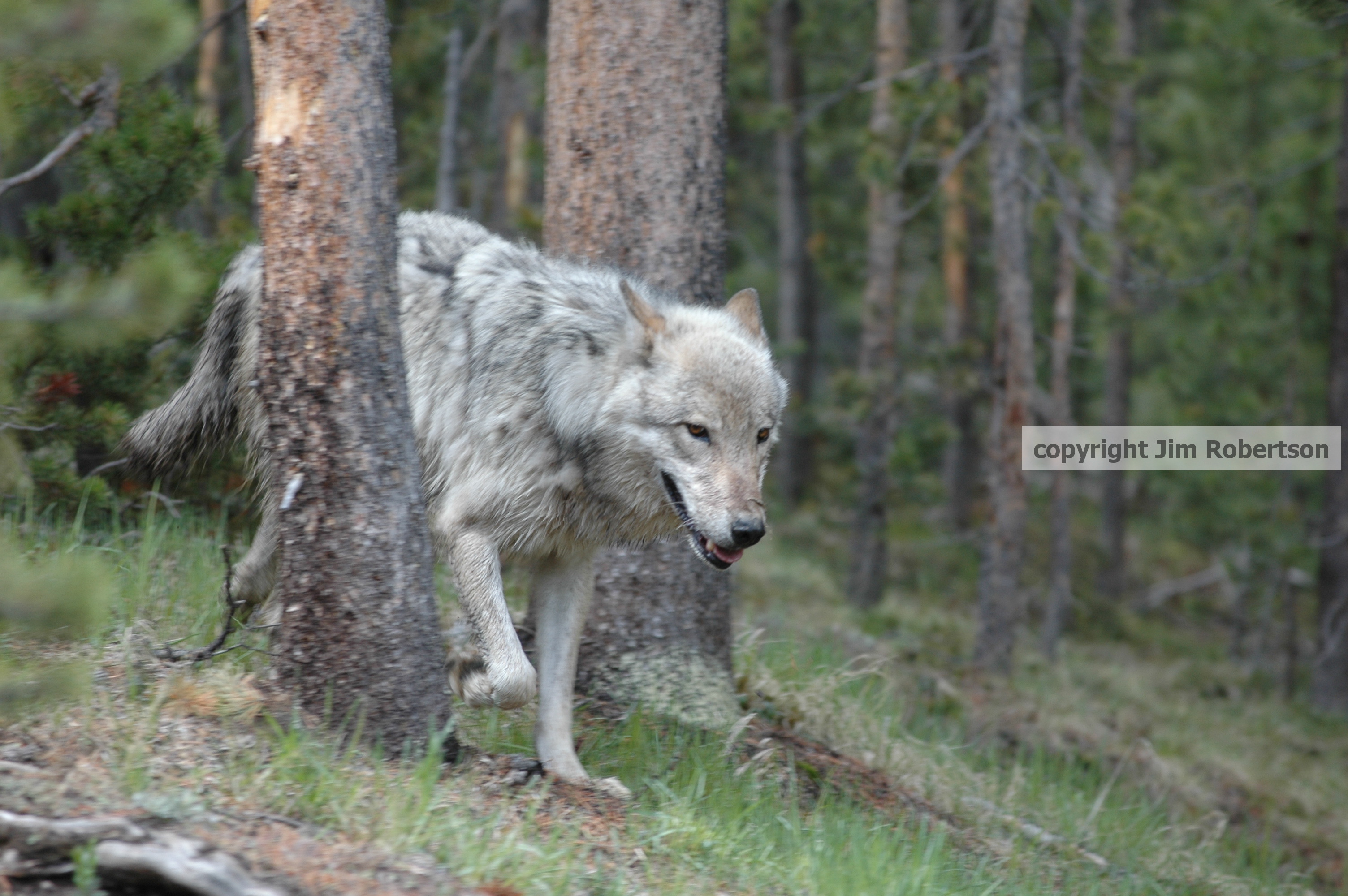
copyrighted Hayden wolf walking

http://trib.com/news/state-and-regional/proposed-wolf-hunting-quotas-in-wyoming-nearly-double/article_4faeb151-ec8f-5dc2-9677-2ac311b50d2e.html

This fall, hunters in Wyoming may be able to shoot almost twice as many wolves as they could in 2013, according to proposed regulations by the Wyoming Game and Fish Department.

Proposed hunting quotas would allow 46 wolves to be hunted in the trophy game area, 20 more than in 2013, but still less than the 2012 harvest of 52 wolves.

“Our quotas are based adaptively on where the wolf population is at, and we ended up with more wolves than we thought this year,” said Dan Thompson, large carnivore section supervisor for the department. “We’re managing for the same number as last year, but we’re increasing quotas because we had more wolves at the end of the year.”

Game and Fish officials estimated that about 160 wolves would be in Wyoming’s trophy hunting area, which is roughly the northwest corner of the state outside Yellowstone and Grand Teton national parks and the Wind River Indian Reservation.

Estimates from December placed the number of wolves roaming the trophy area at 179, he said.

Thompson credits the rise in the wolf population to greater restraint by agencies in hunting and killing wolves, and to a rise in the number of cubs born.

“If you have a population that is growing or at carrying capacity and you remove individuals … they respond by producing more (cubs),” he said.

Increased quotas are the only changes to wolf regulations this year. No hunting area boundaries or hunting dates will be changed. Wolves in Wyoming and outside the trophy hunt area can still be shot on sight.

Lawsuits are pending in Wyoming and Washington D.C. over Wyoming’s hunting regulations. A decision from a federal judge in Washington D.C. is pending, according to the Associated Press.

The department is holding public meetings across the state about the new quotas. The Game and Fish Commission will vote on the changes during its meeting in July in Dubois.


  <iframe id=”52799e7f88f48″ name=”52799e7f88f48″ src=”http://us-ads.openx.net/w/1.0/afr?auid=502074&cb=804731100″ frameborder=”0″ scrolling=”no” width=”300″ height=”250″><a href=”http://us-ads.openx.net/w/1.0/rc?cs=52799e7f88f48&cb=804731100″ ><img src=”http://us-ads.openx.net/w/1.0/ai?auid=502074&cs=52799e7f88f48&cb=804731100″ border=”0″ alt=””></a></iframe>

Wis. wolf population falls following hunting season

copyrighted Hayden wolf in lodgepoles

Wis. wolf population falls following hunting season

Amid continuing controversy about hunting Wisconsin’s gray wolves, preliminary data shows Wisconsin’s wolf population has decreased by 19 percent over the past year due to hunting and trapping across the state.

According to the report released by the Department of Natural Resources, Wisconsin’s wolf population at the end of this winter sat at a minimum of 658, down from 809 wolves last year.

“The Wolf Advisory Committee last year recommended a more aggressive harvest to start bringing the population down towards the goal that is stated in the 1999 Wolf Management Plan, which is 350 animals,” Jane Wiedenhoeft, assistant large carnivore biologist at the DNR, said.

The decrease this year is the first major decline in Wisconsin’s wolf population since the grey wolf’s addition to the federal endangered species list in 1974. Wisconsin’s wolf population hit an all time low in 1979 with 25 wolves, Wiedenhoeft said.

After the species was removed from the Endangered Species List in 2012, 117 wolves were killed by hunters in the first regulated wolf hunt in Wisconsin history, according to DNR figures.

“Opinions differ on how many wolves are good for the state. Some people think we could have more wolves in the state, and others think we could have much fewer wolves in the state. We’re trying to find that balance between what people can tolerate and what is a sustainable number,” Wiedenhoeft said.

With the removal of the gray wolf from the endangered species list in 2012 came a variety of changes in the ways in which Wisconsin’s wolf population is monitored, as well as what information is shared with the public, a topic of concern for some wildlife biologists.

University of Wisconsin environmental studies professor Adrian Treves, an expert on public opinion about wolves, raised concerns regarding the DNR’s new reporting processes.

“Wisconsin has had a long tradition of transparency and openness in the presentation and analysis and interpretation of data of the wolf population,” Treves said. “For almost 30 years, it’s been a public process with quite a bit of participation and transparency until the end of January 2012.”

The monitoring processes for wolves have not changed other than the addition of wolf harvest data from across the state, Wiedenhoeft said.

The meeting in which preliminary wolf count data is shared and discussed was moved behind closed doors for the first time this year, while it was previously public, she said.

Treves said this new practice reduced transparency for the scientific community to analyze data.

“There’s a great deal of scientific concern about the data released this week because the methods have changed, the reporting has changed, and I’m not able to evaluate the quality of the data in the way I was able to do for the last 14 years,” Treves said.

Wiedenhoeft said the purpose of moving the meeting to a staff-only setting was to prevent information about wolf numbers and locations from reaching hunters keen on finding wolf hot spots.

With significant concerns among conservationists regarding the state’s current goal of 350 wolves, more than double the current population, the DNR in coordination with the Wisconsin Wolf Advisory Committee are currently working on an updated quota for wolf populations in the state, she said.

Incredible Scam to Kill Inedible Wolves


 Michael Markarian: Animals & Politics

There is more fallout from the Michigan wolf hunt scandal, in which state legislators relied on and trafficked in exaggerated and even fabricated stories about wolf incidents as they went about authorizing a hunt on the state’s small population of wolves. Nearly two-thirds of all wolf incidents in the Upper Peninsula occurred on a single farm, where the individual farmer baited wolves with cattle and deer carcasses. As John Barnes of MLive.com reported yesterday, that farmer, John Koski, has agreed to plead guilty to charges of neglecting the guard donkeys provided to him by the state and funded by Michigan taxpayers. Two of the donkeys starved to death and a third was removed due to neglect.
As Barnes noted, “Koski received nearly $33,000 in cattle-loss compensation from the state. Taxpayers also footed the bill for more than $200,000 in staff time and other measures to assist the farm against wolf attacks, documents obtained by MLive.com show.” So here we have one farmer who pocketed tens of thousands of dollars, refused to use the fencing provided by the state, allowed guard donkeys to starve to death, and lured wolves to his property with a free buffet of rotting corpses. This was the poster child for Michigan’s “need” for a wolf hunt.
Politicians and state officials continue to point to wolf depredation statistics in the Upper Peninsula to justify their decision to open a wolf hunting season for the first time in four decades. But if Koski’s self-inflicted wolf incidents were removed from the statewide numbers, the true picture of wolf conflicts is miniscule at best. It’s one more example of state officials cooking the case against wolves: lawmakers and DNR staff have admitted that stories they told of wolves stalking daycare centers and staring at people through glass doors were false and never happened.
After voters demanded a say on the issue, state legislators went out of their way to end-run the people, handing off the decision on wolf hunting to seven, unelected members of the Natural Resources Commission whose collective opinion was in line with the state legislature’s view. These seven individuals are political appointees, and not accountable to voters. The sole scientist on the commission proved to be the only dissenting vote against their plan to open a trophy hunting season for wolves.
Graywolfinwild

Photo by MacNeill Lyons/National Park Service/AP
It is reckless to allow trophy hunters to kill wolves from the small, still recovering population of only about 650 wolves in Michigan. Hunters aren’t targeting problem wolves, but randomly killing animals in national forests and other wilderness areas. In fact, it’s already legal to kill problem wolves in the rare instances when livestock, pets, or human safety are or may be perceived to be at risk. This system works and allows for selective control of wolves causing any problems.
Wolves are an economic and ecological boon to the state, promoting tourism to the Upper Peninsula and checking the growth of abundant deer populations. Wolves help maintain a healthy deer population and cull weak and sick animals, preventing the spread of dangerous diseases such as Chronic Wasting Disease. Wolves also lower the risk of deer-auto collisions and depredations on crops. This can save humans lives and tens of millions of dollars for the state.
Responsible hunters eat what they kill, and because wolves are inedible, most hunters have no interest in killing them. Responsible hunters also don’t go for the use of painful steel-jawed leghold traps, hunting over bait, and even using packs of dogs to chase down and kill wolves—and all of that may be in store if the Natural Resources Commission decides to allow these cruel methods.
Koski’s plea agreement provides one more example of why Michigan’s wolf hunt is based on a pack of lies. The politicians and state officials apparently cannot be trusted, but the voters can. Join Keep Michigan Wolves Protected to help set things right and stop this abuse of power.


Hunting reduces local ID wolf numbers

F&G releases 2013 wolf report


By GREG MOORE
Express Staff Writer

A pair of Idaho wolves rests in the snow. Photo courtesy of Idaho Fish and Game

About half the wolves living in the Wood River Valley and surrounding area last year were killed by hunters and government control actions, leaving about 42 wolves living in the area following the end of the 2013-14 hunting season, according to figures recently made public by the Idaho Department of Fish and Game.

     During the hunting season, which ended in the Southern Mountains Zone on March 31, hunters killed 26 wolves, well under the quota of 40.

     On Friday, the department released its 2013 Idaho Wolf Monitoring Progress Report, which estimates the wolf population statewide at 659, down from a high of 856 prior to the establishment of hunting seasons in 2009. The number remains well above the 150 wolves and 15 breeding pairs required to keep gray wolves off the endangered species list under the 2009 delisting rule.

     The report stated that at the end of last year, Idaho contained 107 wolf packs, down from 117 in 2012. Generalizing from the packs whose members could be counted, the department calculated a statewide average pack size of 5.4 wolves, down 33 percent from the 8.1 wolves per pack that existed during the three years prior to 2009.

     The report states that 28 wolves were counted in nine packs in the Southern Mountains Wolf Zone, which includes the Wood River Valley. However, it points out that the number of individual wolves seen cannot be relied on for an accurate total. If the zone’s nine packs are typical of packs throughout the state, about 49 wolves were living there by the end of the year.

     The report documents 54 wolf mortalities in the zone last year. Thirty wolves were killed through government control actions, 21 by hunters and three as the result of other human causes.

     Twenty-three pups were known to have been born, though only eight survived.

http://www.mtexpress.com/index2.php?ID=2007151522