Update: Sheriff’s office: Shooting of dog near Lolo Pass wasn’t criminal

90823_Pred_ATACShttp://missoulian.com/news/local/sheriff-s-office-shooting-of-dog-near-lolo-pass-wasn/article_cbe9343c-5081-11e3-9f2f-001a4bcf887a.html

The hunter who shot a Missoula man’s dog on the assumption it was a wolf near Lee Creek campground on Sunday committed a tragedy but probably not a crime, according to county and state law enforcement officials.

“If we have any more information, if the guy comes forward, it will be investigated further,” Missoula County Sheriff’s Office spokeswoman Paige Pavalone said Monday. “This is an awful accident. But if it doesn’t fit into a state statute that we can enforce, it’s very difficult to investigate. We’re more than willing to help this person. We want to figure out what happened.”

But beyond taking the initial report from dog owner Layne Spence about the shooting, the sheriff’s office did not see evidence of a crime to be investigated, Pavalone said. The report was passed on to the state Department of Fish, Wildlife and Parks and the U.S. Forest Service, whose law enforcement agents reached the same conclusion Monday.

That’s because, according to the statement Spence gave to law enforcement, the shooter tried to apologize after mistaking the brown-and-white malamute dog for a wolf. Spence told the deputy that he told the man to leave him alone and the man left.

That conversation, according to Pavalone, made it extremely difficult to show criminal intent on the part of the shooter. Without criminal intent, the accidental shooting of a domesticated dog is not a crime. It could trigger a civil lawsuit over the loss of personal property, but the sheriff’s office does not investigate civil disputes.

Spence reported the killing of his dog, Little Dave, to the sheriff’s office Sunday afternoon. Spence told a deputy he was cross-country skiing on a road above the Lee Creek campground with his three malamute dogs when a hunter shot one of them on the road. According to the deputy’s report, Spence said Little Dave was wearing a collar with a light when it was shot about 20 yards in front of him.

“The hunter resumed fire and shot approximately four more times, killing the dog,” Pavalone quoted from Spence’s statement. The deputy confirmed the dog was wearing a lighted collar and was shot at least twice, in the neck and rear leg.

Spence told the deputy the hunter approached him and said he thought the dog was a wolf, according to the report. He said the hunter asked if there was anything he could do, but Spence said he was so distraught he told the man to leave. Spence told the deputy the hunter did not make any threatening gestures toward

On Monday, FWP Warden Capt. Joe Jaquith said his agency is strictly limited to crimes involving game animals. Because the dog was a domesticated pet, it would not fall under a game warden’s jurisdiction. And even though it was allegedly shot while standing in a forest road, and hunters may not shoot game animals on a road, that law doesn’t apply to domesticated pets.

Spence told the deputy the man was wearing camouflage with a hunter orange vest, and was pulling an orange sled. He told the deputy the man had a black rifle that appeared to be semiautomatic, but “didn’t believe it was an assault rifle,” Pavalone said, quoting the report. Spence had earlier told the Missoulian the shooter was carrying “an assault weapon.”

Spence could not be reached for comment on Monday. A phone number he previously gave the Missoulian was reported out of service or disconnected.

Wolf hunting is legal in Montana for any qualified hunter with an over-the-counter license. There is no rule prohibiting the use of military-style rifles in hunting, as long as they are legal for civilian ownership.

The U.S. Forest Service maintains the Lee Creek campground for non-motorized winter use. Lolo National Forest recreation manager Al Hilshey said the area is popular with cross-country skiers who like to bring their dogs.

Reporter Rob Chaney can be reached at 523-5382 or at rchaney@missoulian.com

Gotta love this comment”crowe – 3 hours ago
“Let me see if I understand this correctly: It’s not criminal to “mis-shoot” something? Not even a fine or license suspension?

And, it is the responsibility of those NOT HUNTING to avoid getting shot, not the people who are licensed by the state to hunt? However, wouldn’t an expert hunter and outdoorsman be able to recognize what it is they are hunting? “Sorry ma’am, but your horse should’ve been wearing a vest. I thought you were riding an elk.”

So, to take this a step further, how are wolves supposed to recognize commercial livestock from say, wild animals open for hunting, if we, the superior species, can’t do it?”

Managing wolves by the numbers makes no sense

Missoula Independent

News/Opinion November 14, 2013

Pack Pride by Marybeth Holleman

The U.S. Fish and Wildlife Service’s decision to delist gray wolves nationwide is flawed because it’s based on the total number of wolves, a statistical approach that, according to wolf biologist Gordon Haber, is “ecological nonsense.”

Haber spent over 43 years observing Alaska’s wild wolves, mostly in Denali National Park, before dying in a plane crash while tracking wolves. To locate wolves, he snowshoed, skied and flew in winter; he backpacked and hiked in summer. He endured temperatures 50 below zero, blizzards, thunderstorms, mosquitoes, and the risk of grizzly and moose attacks. Few modern biologists have such unassailable experiential authority.

Haber’s take-home message was this: You can’t manage wolves by the numbers. You can’t count the number of wolves in an area and decide whether it’s a “healthy” population, because what really counts is the family group, or pack, as some still call it.

“Wolves are perhaps the most social of all nonhuman vertebrates,” wrote Haber. “A ‘pack’ of wolves is not a snarling aggregation of fighting beasts, each bent on copyrighted wolf in waterfending only for itself, but a highly organized, well-disciplined group of related individuals or family units, all working together in a remarkably amiable, efficient manner.”

Haber devoted his career to studying intact family groups, especially the Toklat wolves of Alaska. First made famous by Adolph Murie’s 1944 The Wolves of Mount McKinley, the Toklats rank with Jane Goodall’s chimpanzees as the two longest-studied mammal social groups in the wild.

Wolves go to great lengths to stay with family; when important members are lost, families can disintegrate and remaining individuals often die. Haber knew this firsthand after an alpha female wolf, who, after her mate was killed in a botched government darting study, died of starvation, alone. Relocated wolves travel hundreds of miles to return home. And the first wolf seen in California in 90 years, OR7, has never stopped moving: He’s searching for a mate, for family.

Left unexploited (that is, not killed) by humans, wolves develop societies that are astonishingly complex and beautifully tuned to their precise environment. Once, Haber observed the Toklat wolves moving their den because heavy winter snow had decimated the moose population; a week before pupping, the wolves shifted to another den closer to caribou. He also recorded unique hunting methods, among them moose hunting by the Savage River family that he called “storm-and-circle.”

Family groups develop unique and highly cooperative pup-rearing and hunting techniques that amount to cultural traditions, though these take generations to mature and can be lost forever if the family disintegrates. After the entire Savage River family was shot illegally in the winter of 1982-’83, Haber never saw the storm-and-circle technique again.

A healthy wolf population is more than x number of wolves inhabiting y square miles of territory. The notion that we can “harvest” a fixed percentage of a wolf population corresponding to natural mortality rates and still maintain a viable population misses the point. According to Haber, it’s not how many wolves you kill, it’s which wolves you kill.

Natural losses typically take younger wolves, whereas hunting and trapping take the older and more experienced wolves. These older wolves are essential because they know the territory, prey movements, hunting techniques, denning sites, pup rearing—and because they are the breeders. Haber observed this many times: Whenever an alpha wolf was shot or trapped, it set off a cascade of events that left most of the family dead and the rest scattered, rag-tag orphans.

It happened again in April 2012. A trapper dumped his horse’s carcass along the Denali National Park boundary, surrounded it with snares, and killed the pregnant alpha female of the most-viewed wolf group in Denali. With her death, the family group had no pups, and it disintegrated, shrinking from 15 to three wolves. That summer, for hundreds of thousands of park visitors, wolf-viewing success dropped by 70 percent.

This is not unique to Alaska. In 2009, Yellowstone National Park’s Cottonwood group disappeared after losing four wolves to hunting, including both alphas. In 2013, the park’s Lamar Canyon family group splintered when the alpha female—nicknamed “rock star”was shot.

So it’s never about numbers. It’s about family. A wolf is a wolf when it’s part of an intact, unexploited family group. Wolves are no longer endangered when these groups have permanent protection, and when we manage according to this essential functional unit. If we leave wolves alone, we’ll be the ones to benefit.

The government has extended the comment period for delisting gray wolves from Endangered Species Act protection to Dec. 17, 2013. Go to regulations.gov and click on Gray wolf: Docket N. (FWS-HQ-ES-2013-0073).

________________________________________

Marybeth Holleman is a contributor to Writers on the Range, a service of High Country News (hcn.org). With Gordon Haber, she is the author of Among Wolves: Gordon Haber’s Insights into Alaska’s Most Misunderstood Animal. She also runs the blog Art and Nature (artandnatureand.blogspot.com) and lives in Anchorage, Alaska.

Missoula man says wolf hunter shot, killed pet malamute

http://missoulian.com/news/local/missoula-man-says-wolf-hunter-shot-killed-pet-malamute/article_56b74a38-5003-11e3-9610-0019bb2963f4.html

by Betsey Cohen

A Missoula man is heartbroken and angry after a day of cross-country skiing with his malamute dogs near Lolo Pass turned into his worst nightmare Sunday afternoon.

Layne Spence was skiing with his three dogs on a quiet logging road in Lee Creek when, according to Spence, a rifle shot echoed through the air.

Then, Spence saw his 2-year-old brown and white dog, “Little Dave,” fall down with a shot to a leg.

About 15 yards away from him and his dogs, Spence saw a man in camouflage holding an assault weapon.

“I started screaming ‘Stop, stop,’ and the man kept shooting,” said Spence, 48, and who is often seen walking his dogs around Missoula’s river front. “And he kept shooting.”

“My dog is lying there, dead and I shouted ‘What are you doing?’ and the guy said, ‘I thought it was a wolf.’ ”

After the man allegedly shot Spence’s dog six times, he took off without another word, leaving Spence to deal with the tragedy of his dead dog.

Spence abandoned his skiing gear to carry Little Dave out, and to get his other two malamutes, Frank and Rex, to the safety of his truck.

When he got back to Missoula, Spence filed a report with the Missoula County Sheriff’s Department.

“This doesn’t have to happen,” said an obviously distraught Spence. “Not every big dog is a wolf. These are pets, they all had their collars and lights on, they were all with me the entire time.

“People need to know what a wolf looks like before they start shooting,” he said. “And I was standing right there.

“What if I had a child on a sled, what would have happened if a bullet ricocheted?”

“There are other people who use the woods besides hunters this time of year.”

The incident remains under investigation by the Missoula Sheriff’s Department.

Anyone who has information about the shooting is asked to call Crimestoppers at721-4444.

E95688ABF88792AE42A8914230F586_h316_w628_m5_cBUxDElwb

Lupophobia: Wolf Fear and Hatred

 Article from All-Creatures.org

By Dr. Michael W. Fox November 2013

The fear and hatred of wolves goes back in our European history for centuries. Such lupophobia is manifested still today in such purportedly advanced civilizations as the United States of America, a mental pathology which is certainly not shared by indigenous native American Indians.

Any rational person visiting these Sportsmen Against Wolves Facebook and other internet sites will see beyond their passionate, self-righteous rhetoric, which at deeper levels reveals their own insecurities and fears of extinction of a ‘way of life’ that they are enjoining across wolf-inhabiting states to justify and protect.

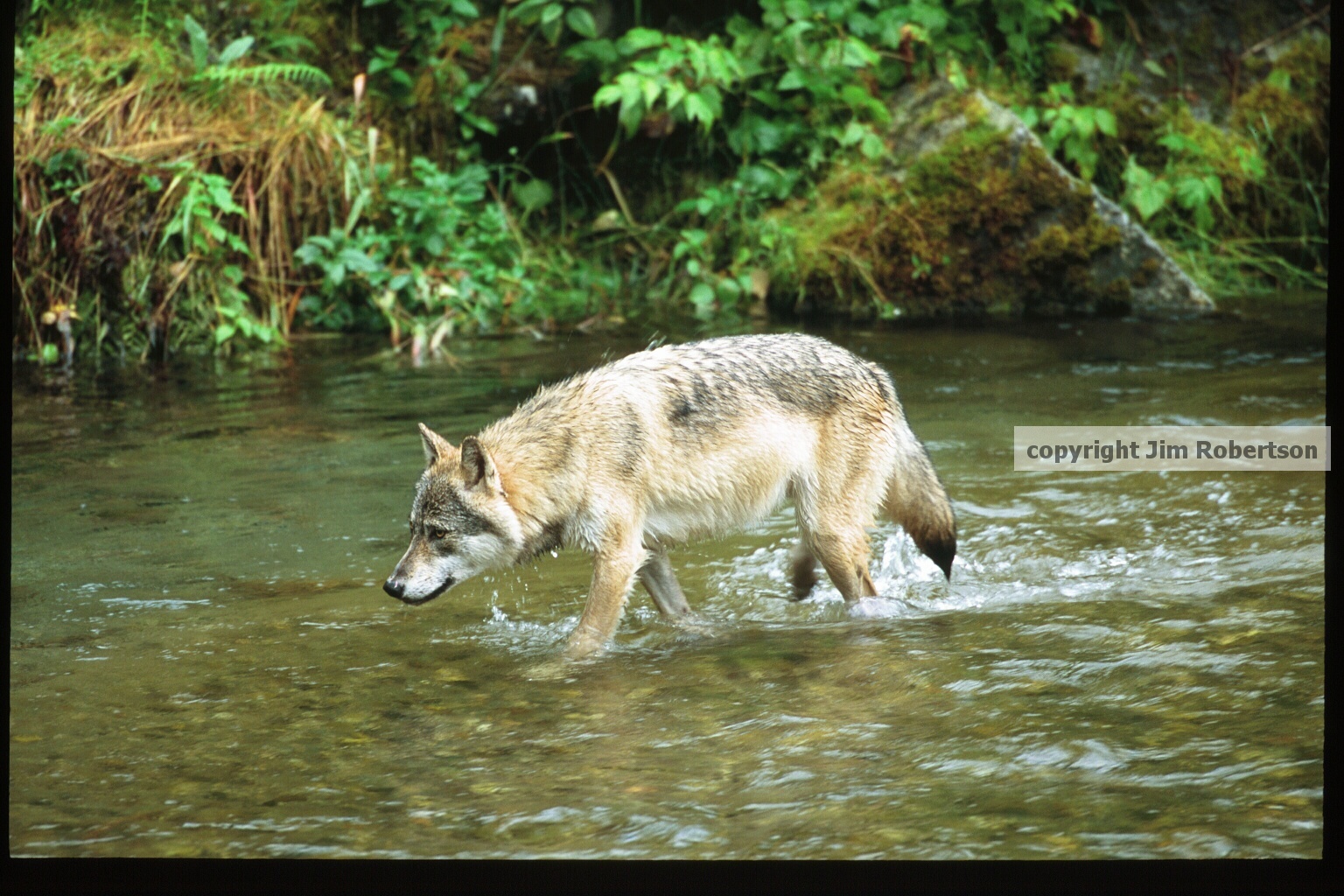
wolf wolves Jim Robertsonwolf wolves Jim Robertson Images Copyright Jim Robertson, Animals in the Wild

The fear and hatred of wolves goes back in our European history for centuries. Such lupophobia is manifested still today in such purportedly advanced civilizations as the United States of America, a mental pathology which is certainly not shared by indigenous native American Indians. The internet pages being put out today by “Sportsmen Against Wolves” are especially instructive, combining graphic photographs of slaughtered wolves with supportive comments by hunters who see wolf protectors and wildlife conservationists as representing the kind of society that they abhor: A society of tree-hugging Bambi-lovers who are challenging their right to shoot wolves and any wild animal who crosses their paths that may threaten them; provide them with a meal; offer them a challenge of manhood as a ‘worthy adversary’ to test their survivalist skills to track and kill to win a trophy head or pelt to sport on their walls or to decorate their homes or adorn their women.

Supportive letters from wolf hunting advocates on these internet pages also disclose a degree of ignorance about the balance of nature, wolf-deer and prey-predator relationships. They amount to endorsing the self-affirming mythology of wolf hunters that exterminating competing hunters such as the wolf is their right, scientifically/biologically justified, so they can have an abundance of prey all for themselves. The notion of co-existence, as being promoted by organizations such as Project Coyote, is anathema to this  community which lives in close association with the last of the wild and which most American citizens are calling for better protection.

Any rational person visiting these Sportsmen Against Wolves Facebook and other internet sites will see beyond their passionate, self-righteous rhetoric, which at deeper levels reveals their own insecurities and fears of extinction of a ‘way of life’ that they are enjoining across wolf-inhabiting states to justify and protect.

Their critics may see them as evidence of the devolution of Homo sapiens, of a regression to the hunter-stage of our ancestral past. The anarchistic individualism and anachronistic pioneer spirit are barely concealed under the camouflage of their costly hunting attire and high-tech scopes and other killing gear. But to be charitable and offer a paw or frond of hope and recovery fro this American sub-culture, if they were to connect their fate with the fate of the wolf and every tree in the forest and frog in the swamp, they might, as Henry David Thoreau advised over a century ago that in wildness is the preservation of the world.

That does not mean the preservation their way of life and of lupophobia but of their evolution as an effective, non-governmental community of wildlife monitors and conservators. Many deer hunters, for instance, like traditional Native American Indians, have discovered the wisdom of biophilia, seeing themselves and wolves and other predators as essential components of healthy ecosystems. This is especially germane considering that across much of the U.S. the white tailed deer population has risen over the past century from some 300,000 to an estimated 30 million.  With such an ecological perspective they can begin to articulate a hunting ethic, acknowledge the vital importance of wolves and other predators in helping prevent deer overpopulation and loss of biodiversity, and become a ‘boots on the ground’ force and voice for conservation, habitat preservation and restoration in concert with wolves.

But so long as lupophobia persists, wolves and other essential predators will continue to be killed by some hunters as well as by cattle and sheep ranchers whose subsidized grazing rights on public lands should come with a caveat prohibiting lethal methods of predator control. Putting the wolf on the protective federal Endangered Species list to prohibit sport hunting and trapping of these highly intelligent and social species is a limited deterrent against their illegal killing by lupophobes when there is virtually no effective local enforcement and informant network.

The many thousands of applicants for licenses to kill wolves now that it is legal in most wolf-inhabited states is surely indicative of a significant degree of lupophobia with many others seeing the wolf as a trophy animal, a mere object to be ‘sustainably harvested’ for personal gratification. Both of these attitudes are part of the ‘moral pluralism’ of America’s culture which makes a mockery of democratic process revealing minority rule and the power of vested interests when the majority of the populace want full protection for the wolf. Without a unified sensibility, like those deer hunters who also abhor the killing of wolves as sporting trophies along with the majority of non-hunters, the disunited states will surely continue to fall short of becoming a truly civilized society.

________________________________________________

The author of the best selling book The Soul of the Wolf, Michael W. Fox has done research on wolves and other wild canids.

Former USFWS Whistleblower Says Wolves Illegally Introduced

Just FYI, so you know this is out there…

Non Native Wolves Illegally
Introduced, Says Whistleblower
Former USFWS Official Speaks of Malfeasance, Misappropriated Funds, and Transplanting Wrong Subspecies to Yellowstone

11/04/13

BY QUINCY ORHAI

Half a century after the last native Northern Rocky Mountain Timber Wolf, Canis lupus irremotus, was said to be hunted to extinction locally by public and private efforts, the U.S. Fish & Wildlife Service, in 1995, under then Director Mollie Beattie, presided over the introduction of the Canadian Gray Wolf, Canis lupus occidentalis, into the Northern Rocky Mountain eco-system.

According to whistleblower Jim Beers (former USFWS Chief of National Wildlife Refuge Operations), after Congress denied funding for his agency to carry out the Northern Rockies Wolf Recovery Project, the agency acted illegally as it brought the Canadian wolves into the Yellowstone ecosystem.

Speaking in Bozeman in May 2010, at the Gran Tree Inn, before Congress on wolf recovery issues in 1998 and 1999, and in October 2013 to the Montana Pioneer, Beers insisted that, after Congress denied USFWS funding for wolf recovery, the agency illegally expropriated Pitman-Robertson funds (federal excise taxes required by law to be distributed to the states as reimburse-ments), helping themselves to tens of millions of dollars.

When contacted by the Montana Pioneer for this article, Beers further stated, “The General Accoun-ting Office verified that at least $45 to $60 million was taken, diverted, by USFWS from P-R funds.”

Beers went on to say that the Pittman-Robertson excise taxes, by law, could only be used by State wildlife agencies for their wildlife restoration projects. “These funds were then used primarily…to pay bonuses to top USFWS managers that had no right to such funds [and] to trap wolves in Canada, import them, and release them into Yellowstone National Park.”

Beers, a 32-year veteran USFWS biologist, whose job included overseeing the Pitman-Robertson funds, alleges that the agency misapprori-ated monies for the trapping and transportation of Canadian wolves into the U.S. To conceal its misuse of the funds spent on the project, the true number of wolves imported, and the subspecies brought in, USFWS intentionally did not file mandatory paperwork, according to Beers, that would have established a paper trail. Or, he speculates, somehow that paperwork mysteriously disappeared.

Beers also alleges USFWS failed to file an appropriate and accurate Environmental Impact Statement. In recent comments to the Montana Pioneer, he elaborated, saying, “The EIS was and remains a document of lies, misinformation and woefully incomplete coverage of the matter.”

In print and in public speaking engagements, Beers has claimed the Wolf Recovery Project deliberately dismissed established wolf science and research, including known wolf depredation impacts on livestock and wildlife, and ignored the dangers parasites and diseases carried by wolves present to wildlife, livestock, pets, and humans.

The Canadian Gray Wolf, introduced into Yellowstone Park by USFWS 18 years ago, is widely described in scientific literature as thirty to fifty percent larger than the said-to-be extinct local native timber wolf. The initial 14 and subsequent transplanted wolves were captured in Canada, although wolves that were more genetically similar were available from surplus populations in Minnesota, as reveal-ed by the Smithsonian Institution, in a scholarly work titled: Physiological Basis for Establishing a Northern Rocky Mountain DPS [Distinct Population Segment Area].

The importation of Canadian Gray Wolves was criticized at the time by American biologists who believed the larger wolves would kill more elk, a position many now say has proved correct, and that the introduction of a non-native sub-species was of questionable legality when the smaller-sized native populations were beginning to recover naturally, on their own, positions similar to those advanced by the Farm Bureau’s of Idaho, Wyoming and Montana.

Although the official position of the government is that native wolves were locally extinct, according to Dr. Ralph Maughan, professor emeritus of political science at Idaho State University, with specialties in natural resource politics and public opinion, USFWS reported 48 native wild wolves in Montana in 1994, the year before the controversial introduction of the Canadian Gray Wolf into Yellowstone National Park—mostly timber wolves traveling down from Canada.

On his website, The Wildlife News, Maughan writes: “It’s reasonable to assume that without reintroduction, wolves would have naturally reestablished themselves in most of Montana [under the protection of the Endangered Species Act], but migration would have been slow with a lot of wolves up north before they made it to Yellowstone and Wyoming. Because these wolves were fully ‘endangered,’ rules governing them would have been a lot more strict than with those finally reintroduced in 1995.”

However, the larger and more aggressive central and northern Alberta, Canada wolves USFWS introduced here eliminated any survival chance of native wolves [as a result of competition or elimination], as USFWS knowingly violated the Endangered Species Act, according to Maughnan.
It was and is common scientific knowledge that the native male wolf (Canis lupus irremotus) of the Northern Rockies averaged 90 to 95 pounds at maturity. The wolf USFWS brought in as a replace-ment was a noticeably larger wolf (Canis lupus occidentalis) from north-central Alberta, with mature males topping 140 pounds, and some specimens weighing up to 175 pounds.

According to the Smithsonian study, the native wolf, which local residents claimed existed in small pockets in wilderness areas in the 1990s, generally roamed an area of about 100 square miles, hunting alone or in small groups of 4 or 5 at most. The non-native Canadian gray wolves USFWS introduced to the region typically hunted 300 or more square miles back in their home range, with packs often numbering 20 or more.

Under the direction of Mollie Beattie, USFWS developed the Environmental Impact Statement for the reintroduction of wolves. That EIS made a number of assumptions about bringing wolves back to Yellowstone and the Northern Rockies. Almost none of those assumptions has proven to be correct, according to Toby Bridges of the Montana Chapter of Sportsmen for Fish and Wildlife. Writing in 2010, on the group’s website, Bridges says: “Instead of getting just the 150 wolves Montanans agreed to back in the mid 1990s, the state is now home to likely 1,000 to 1,200 wolves… This year a minimum of 43,500 elk will be eaten alive or killed and left behind by wolves in the Northern Rockies…”

Bridges also states that “The U.S. Fish and Wildlife Service manipulated science, and replaced the native wolf of this region with a totally non-native…larger…and more aggressive wolf, and has consistently underestimated wolf numbers by half or one third of actual numbers.”

According to USFWS, “As of December 31, 2012, the most recent minimum wolf population size determined for Montana was 625 wolves in 147 packs, 37 of which were confirmed breeding pairs.”

Those numbers are inaccurate, says Bridges, because for the annual wolf count USFWS typically ignores wolf sightings by anyone except agency biologists, who are understaffed. Also, wolves typically are active in timbered areas where they are impossible to count from the air, says Bridges. Thus, the deceptive wording of the report: “minimum wolf population size determined.”

Norm Colbert, a veteran wildlife tracker who lives near Nye, Mont., in the area of the Rosebud wolf pack, told the Pioneer in February 2012 that at least several wolves comprised the nearby local pack, based on his repeated sightings of tracks and wolf related activity, while the official count listed the Rosebud pack as having consisted of only two wolves, a discrepancy, accoridng to Colbert’s estimates, that may fall 300 percent short of the actual number of wolves in the pack.
According to Bridges, writing on LoboWatch, in an article titled Voodoo Math Still Haunts Montana Wolf Control: “Other well respected wolf biologists have claimed that ‘real wolf biology’ and ‘real wolf reproductive rates,’ and allowing for natural and man induced mortality, puts the current wolf population somewhere much closer to the 2,000 mark. The sportsmen of this state, based on the degree of damage done to elk and other big game populations, say it’s even higher—perhaps as many as 3,000 wolves.”

One thing is clear to local ranchers losing livestock, and to local big game guides losing elk-hunting clients—the northern Yellowstone elk herd has declined by 80 percent from the 19,000 elk of 1995 (according to a Feb. 2013 aerial survey by the Montana Department of Fish, Wildlife and Parks and the National Park Service), that 1995 number of elk having been part of the justification for bringing wolves to Yellowstone in the first place.

What was not made clear at the time of the Canadian Wolf introduction, according to wolf critic Bridges, writing on Lobo Watch, was that “The reality of living with wolves is that wolves are extremely non-discriminating predators, killing just about anything that gets in front of them—the young, the healthy, the pregnant and the prime…the sick and weak.”
Bridges charges that “agenda driven biologists” within wildlife agencies avoid acknowledging that each “average” wolf accounts for the loss of some 25, or so, big game animals (or head of livestock) annually, just for sustenance, that each “average” wolf also kills just about as much game, known as “surplus killing,” without eating the kill, and that wolves are the primary carrier of the Echinococcus granulosus tapeworm, a parasite that infects game, pets, and humans with Hydatid cysts “that in turn makes these living things sick and weak.”

In the recent documentary film Crying Wolf, Exposing the Wolf Reintroduction to Yellowstone National Park, David Allen, President of the Rocky Mountain Elk Foundation, takes the issue a step further, stating, “The Northern Yellowstone elk herd was the showcase herd in the world…I believe that the reintroduction of wolves is, in many ways, an assault on the sportsmen and hunting culture. The North American model of wildlife conservation is built around the sportsman, since the days of Teddy Roosevelt. We have the most bountiful, successful wildlife resources in the world.”

With Crying Wolf, filmmaker Jeffrey King depicts the introduction of non-native Canadian gray wolves into the Northern Rockies ecosystem as destroying the livelihood of back-country residents by deva-stating free range ranching. According to the ranchers interviewed in the documentary, it is fast becoming uneconomical to raise livestock in areas where wolf packs range, and big game hunting and guiding opportunities and occupations are quickly disappearing from the rural Northern Rockies.

Veteran wolf biologist, John Gunson, formerly with the Alberta Fish and Wildlife Division, and also featured in Crying Wolf, echoed the concerns of sportsmen regarding elk hunting, saying, pointedly, “Really, there isn’t any room for harvest by man if you have a healthy wolf population.”

Regarding the introduction of wolves to the Northern Rockies, Ed Bangs, former Northern Rockies Wolf Recovery Coordinator for the U.S. Fish and Wildlife Service, is quoted as saying the following on the Montana Fish, Wildlife and Parks website, separating wolf science from wolf ideology: “Wolves and wolf management have nothing to do with wolves. I think the folks who didn’t like them still don’t like them, and the folks who did like them still do. Wolves are mainly a symbolic issue that relates to core human values…I think the only reason wolf reintroduction finally happened was that people with different values moved to Montana and diluted the strong agricultural influence. Plus, the economy changed from straight agriculture and natural resource consumption to areas such as tourism.”

Column: Michigan’s wolf hunt will do more harm than good

 The Jackson Citizen Patriot on November 12, 2013
copyrighted wolf in water
By Mark Muhich

Michigan’s first ever wolf hunt begins Nov. 15.

This wolf hunt is anti-scientific, anti-democratic and has little to do with hunting.  Legislative skull-doggery by Upper Peninsula State Senator Tom Casperson voided the constitutional right of Michiganders to petition their government.

Casperson  shifted the listing of “game species”, animals hunted in our state, to a politically appointed committee.  The Natural Resources Committee cannot be reviewed by the voting public, so the 250,000 citizens who signed the ballot initiative calling for a vote on the wolf hunt, were disenfranchised, told to keep quiet, and take a hike.

While hiking in Michigan there is one thing you need not fear; a wolf attack. There has never been in Michigan’s history an attack by wolves on humans. Of course Capserson’s fairy tales tell of children being cornered by wolf packs at school. Casperson has made numerous bogus claims on the floor of the State Senate in Lansing, though admittedly,  he is not sworn to tell the truth while speaking.

Worse, professional Department of Natural Resource biologists now confess to falsifying testimony to the State Senate.  The Legislature resolved that wolves should be de-listed from the endangered species act, and then included wolves on the schedule of game species in Michigan.

If the DNR had enforced its own regulations requiring farmers to bury within 24 hours the carcasses of  dead animals then many of the wolf attacks on cattle could have been avoided in the first place.

Cattlemen have every right to kill wolves that are attacking their herds. That is the law and always has been. The DNR pays farmers and ranchers for the loss of their livestock killed by wolves.

The upcoming wolf hunt is not designed to manage wolves in the wild; but it could make wolf attacks worse.  Wolves are pack animals, they depend on an intricate social network to survive. If an alpha wolf is slaughtered the pack disintegrates, turning the survivors into rogues.

Only one biologist sits on the NRC, which listed the wolves as “game species”, and hers was the sole committee vote against the wolf hunt.

Other respected northern Michigan scientists have argued against the wolf hunt. With the deer population holding steady in the U.P., and wolf populations slightly declining, an ecological balance in the forests of northern Michigan is served by the apex predator, wolves.

Many sportsmen also oppose the new wolf hunt.

Hunting ethics written by Teddy Roosevelt, the North American Wildlife Conservation Model, warned against “frivolous hunts” like Michigan’s wolf hunt.

Michigan’s wolf hunt ignores the science of wildlife management. Michigan wolves do not need “management,” they are management.

Sen. Casperson has snatched the constitutional right of citizens to petition their government. The DNR has failed to enforce its own rules. Michigan’s wolf hunt will do more harm than good, leaving Michigan’s forests weaker.  Put the wolf hunt to a vote of the people next year.

— Mark Muhich lives in Summit Township and is the conservation chairman of the Central Michigan Group Sierra Club.

Idaho Wolf Kill Numbers

Associated Press, January 11, 2007: “Idaho’s governor [Butch Otter] said Tuesday he will support public hunts to kill all but 100 of the state’s gray wolves after the federal government strips them of protection under the Endangered Species Act…. ‘I’m prepared to bid for that first ticket to shoot a wolf myself,’ Otter said earlier Thursday during a rally of about 300 hunters…copyrighted wolf in waterThe hunters, many wearing camouflage clothing and blaze-orange caps, applauded wildly during his comments.”

Since 2009, 887 Idaho wolves have been killed by licensed hunters, with many hundreds more killed in official “control” operations.  It is estimated that there were fewer than 500 wolves remaining in the state by August, 2013. The 2013-2014 Idaho wolf season began August 30 and will continue in most of 13 state zones until the end of June 2014. The current 2013-2014 wolf season will constitute a mop-up operation by the state’s ferocious anti-wolf mob.

The Idaho political apparatus, controlled absolutely by the hunting and agricultural lobbies, is a vigorous proponent of trap-torture for Idaho wildlife. It has thus encouraged, trained and deployed an army of trappers, both amateur and professional, to prolong the suffering of Idaho wolves since 2011.

Idaho wolf trapping season opened November 15, 2013, and will continue across nine game zones until March 31, 2014.  Thus, Idaho wolves continue to be subjected to the terror and cruelty of steel foothold traps and choking snares. Many of these animals, including the youngest of pups, are routinely forced to await their violent death for up to 72 hours while suffering terror, pain, hunger and dehydration.

Zone 1–Idaho Panhandle Zone:  (12) Idaho wolves gunned with rifles or hand guns.  One animal shot with a handgun was a tiny black pup so young that it had no teeth visible.  A bow hunter in this zone also arrowed a gray puppy, a particularly painful way for a canine to die.  Two others wolves were killed on private property in August before the season officially began. Licensed wolf kill is legal year round in the Panhandle zone as long as the carnage takes place on private property.  These two pre-season wolves were seen together and shot at the same time.  Their bodies were retrieved days later, indicating that they were able to run while wounded and therefore suffered for an unknown number of hours or days before dying.

Note: One of our three selected wolf packs for adoption, the Bumblebee Pack, resides in Zone 1. Adoption bracelets are available [link]. Your donations will help sustain our website so that volunteers can monitor and report activities by state, federal and private interests bent on reducing wolves to a genetically unsustainable population. Adoption bracelets are available.

Zone 2–Palouse-Hells Canyon Zone: (1)  wolf  arrowed. This was a gray animal listed as a pup.

Zone 3–Lolo Zone:  (1) Idaho wolf gunned.

Note:  One of our three packs selected for adoption is the Kelly Creek Pack, which undoubtedly lives a perilous existence in the Lolo “hot” zone. Lolo wolves have been among the hardest hit in the great Idaho wolf purge. Government agents in helicopters gunned-down some of the wolves killed in this zone during 2011-2012. Adoption bracelets for survivors are available. Adoption bracelets for survivors are available.

Zone 4–Dworshak-Elk City Zone:   (3)  wolves gunned, one wolf arrowed.  One of the wolves, listed as a puppy, was blasted with a hand gun.  The arrowed animal was listed as a yearling.

Zone 5–Selway Zone:   (3)  wolves gunned.  Two of the three were listed as pups.

Zone 6–Middle Fork Zone:   (3) wolves gunned.   Two of the three were listed as pups.

Zone 7–Salmon Zone:   (2)   gunned.  One animal was listed as a pup, the other a yearling.

Zone 8–McCall-Weiser Zone:  (3)  wolves gunned.  One animal was listed as a young of year pup.

Zone 9–Sawtooth Zone:   (1)  wolf arrowed.

Zone 10–Southern Mountain Zone:  (5) wolves gunned. Three of these animals  were listed as yearlings.  Another was listed as a  pup terminated by a hand gun.

Note:  One of our three packs up for adoption is the Red Warrior Pack, located in the Sawtooth Mountains within this zone. Adoption bracelets are available. Adoption bracelets are available.

Zone 11–Beaverhead Zone:   (0)  wolves gunned.

Zone 12—Island Park Zone:  (3)  wolves gunned.

Zone 13—Southern Idaho Zone:  (0) wolves gunned.

Of the 38 wolves obliterated during this time period, 15  (39%) were listed as puppies or yearlings.

– See more at: http://adoptawolfpack.org/summary-of-2013-2014-big-game-mortality-reports/#sthash.xjOOXuKF.dpuf

Wolf by Numbers

From Nature Notes: 2012 wolf management, by the numbers
During 2012, at least 1,674 gray wolves, in 321 packs, lived in the states of Washington, Oregon, Montana, Idaho and Wyoming. Going by states, Montana had 625 wolves in 147 packs, Idaho had 683 wolves in 117 packs, Wyoming had 277 incopyrighted wolf in water 43 packs, Washington had 43 in 7 packs, and Oregon had 46 in 7 packs. No packs are known in Utah or Nevada. This population for the Northern Rockies has fallen approximately 7 percent from the 2011 population. “… the wolf population may be stabilizing at some yet undetermined lower equilibrium based on natural carrying capacity in suitable habitat and human social tolerance,” according to the U.S. Fish and Wildlife Service’s document “Rocky Mountain Wolf Recovery 2012 Interagency Annual Report” report.

Total confirmed livestock depredations by wolves during 2012 were 194 cattle, 470 sheep, six dogs, three horses and one llama. From 2007 through 2011, an average of 191 cattle depredations occurred each year, while an average of 339 sheep have been killed. These depredations were committed by 99 wolf packs. In livestock control actions, 231 wolves were killed, which is about 9 percent of the minimum number of wolves.

During 2012, Montana hunters and trappers removed 175 wolves, Idaho took 329 and Wyoming took 66 wolves. Idaho’s take amounted to about 30 percent of their wolf population. In total, 861 wolves were killed in human-caused mortality in the Northern Rockies, about 34 percent of the total minimum number of known wolves.

The minimum delisting goal has been to maintain 300 wolves, including 30 breeding pairs in Montana, Idaho and Wyoming, for three consecutive years. This has been exceeded in the Northern Rockies since 2002.

During 2012, federal funding amounted to $3,345,618 for wolf monitoring, management, control and research. State and private compensation programs spent $564,558 to compensate livestock producers for depredations.

— — —

This data comes from the U.S. Fish and Wildlife Service’s document “Rocky Mountain Wolf Recovery 2012 Interagency Annual Report” and is the most recent summary available.

Wisconsin Adds Crossbows to Their Quiver

Now the only question that remains is, what cruel kill method is NOT allowed in Wisconsin?

I can think of only a few offhand:

-Grenade launcher
-Flame thrower
-Nerve gas
-Chemical weapons

Hell, why doesn’t the state DNR just nuke itself every fall (starting with this one) and be done with it? That should take care of their deer, rabbit, squirrel, duck, geese, sandhill crane and wolf “problems” once and for all.

__________________

Assembly unanimously passes crossbow hunting bill

By Paul A. Smith of the Journal Sentinel

Nov. 9, 2013

In an era of deep political divisions, Wisconsin legislators can agree on at least one thing: increased crossbow hunting opportunities.

On Oct. 27, the Assembly unanimously passed an amended version of AB 194.

The bill would create a crossbow hunting license and a crossbow hunting season. Hunters of all legal ages could purchase the license.

Under current state law, only hunters with physical disabilities and those age 65 and over are allowed to hunt deer with crossbows.

The crossbow hunting season would run concurrent with the archery deer season.

The amended version creates a three-year trial period during which the Department of Natural Resources will monitor harvest rates by crossbow hunters. The Senate approved the bill in September.

The Assembly vote was 91 ayes, 0 no.

The bill now awaits the signature of Gov. Scott Walker. If the governor signs it as expected, the crossbow hunting season will take effect in September 2014.

Wolf season update: As of Friday, hunters and trappers had registered 201 wolves in the 2013-’14 Wisconsin wolf season, according to the DNR.

Harvest quotas were filled in five of the six wolf management zones.

Trappers have taken 82% of the wolves; the balance have been killed by hunters with firearms.

Zone 3 in north central and northwestern Wisconsin remains open. Nineteen wolves had been registered in Zone 3 as of Friday morning; the quota is 71.

The zone will be open to wolf hunting and trapping until the quota is filled or Feb. 28, whichever comes first.

Given the fast pace of wolf kills since the season opened Oct. 15, the season could be over before the Wisconsin gun deer hunt begins Nov. 23, as well as before wolf hunters could begin using dogs Dec. 2.

The DNR had sold 1,837 resident and 11 nonresident wolf hunting and trapping licenses as of Friday. It authorized the sale of 2,510 licenses through a lottery.

State wildlife managers set a kill goal of 251 wolves for the season.

Hunters and trappers are responsible to know the status of zone closures. Information is available at dnr.wi.gov and by phone at (888) 936-7463 .

Read more from Journal Sentinel: http://www.jsonline.com/sports/outdoors/assembly-unanimously-passes-crossbow-hunting-bill-b99137922z1-231303281.html#ixzz2kGrLqn3p
Follow us: @NewsHub on Twitter

90641_Varminter

A (Wolf) Pack of Lies

Michael Markarian: Animals & Politics

There is more fallout this week in the wake of the MLive.com investigative series exposing politicians and state officials who made up stories out of whole cloth in order to prompt Michigan’s first wolf hunting season in half a century. A leading booster of the wolf hunt, Sen. Tom Casperson, took to the floor of the state Senate yesterday and apologized to his colleagues and to voters for including a fictional account about wolves at a daycare center in a resolution he authored in 2011.

Wolf2Sen. Casperson acknowledged, “I was mistaken, I am accountable, and I am sorry. Words matter. Accuracy matters. Especially here, with a topic that is so emotional and is so important to so many, especially those whose way of life is being changed in my district. A decision here of whether or not we use sound science to manage wolves, as with all decisions this body makes, should not be based on emotions, agendas or innuendo, but rather on facts.”

The Michigan DNR’s furbearer specialist, Adam Bump, also took an apology tour this week, appearing on Michigan Radio to explain the comments he previously made in May, when he had said that wolves were showing up on people’s porches and staring at them through glass doors. Bump says he misspoke back then, and the scenario didn’t exist.

Lawmakers and agency staff who claim the mantle of “sound science” have been telling tall tales, trying to drum up an irrational fear of wolves as part of the public debate to push through their political agenda. They used heated rhetoric and scare tactics to pass a law designating wolves a game species, and then to pass a second law circumventing the voter referendum process because they didn’t like the fact that citizens gathered more than 250,000 signatures to place the wolf hunting issue on the statewide ballot. The fact is, there has never been a wolf attack on a person in Michigan, it’s already legal to shoot wolves that threaten livestock or public safety, and more than half of all the reported incidents of wolf depredation have come from a single feckless farm that leaves dead cattle out to rot and attract wolves to a free buffet.

It’s one thing for these public officials to own up to their mistakes. But the people of Michigan need more than apologies—they need compensatory action. The first wolf hunting season, set to begin one week from today, is the result of a public policy decision based on false information, and it must be suspended. Wolves have just recently come off the endangered species list and have not been hunted in Michigan for decades. What harm would it do to retain the status quo for another year, and allow a fair and honest debate to play out based on the facts so Michigan voters can hear from both sides and make an informed decision in November 2014?

It’s up to Gov. Rick Snyder to bring some accountability and transparency to state government, by suspending next week’s wolf hunt. This was an abuse of power and an abuse of the process, and the only way to repair some of the damage and restore the public trust is to let the people have a say on whether wolves should be hunted, or not.

copyrighted wolf in river