NYT: Wolves Under Review

http://www.nytimes.com/2013/08/16/opinion/wolves-under-review.html?_r=0

By 
Published: August 15, 2013

In June, the Fish and Wildlife Service prematurely proposed to end federal protection for gray wolves in the lower 48 states in the belief that wolves had fully recovered from near eradication in the early 20th century. This was politics masquerading as science. The Fish and Wildlife Service would love to shed the responsibility of protecting large carnivores, like the wolf and the grizzly bear, and hunters and ranchers throughout the Rocky Mountains would love to see wolves eradicated all over again.

By law, a decision like this one — to remove an animal from the endangered species list — requires a peer review: an impartial examination of wolf numbers, population dynamics and the consequences of proposed actions. But science and politics have gotten tangled up again. The private contractor, a consulting firm called AMEC, which was hired to run the review, removed three scientists from the review panel. Each of the scientists had signed a May 21 letter to Sally Jewell, the interior secretary, criticizing the plan to turn wolf management over to the states.

In the peer-review process, there is only the illusion of independence, for the simple reason that the Fish and Wildlife Service controls the appointment of panelists. The agency would like to pretend that these panelists were removed for their lack of impartiality. In fact, they failed to measure up to the agency’s anti-wolf bias. The Fish and Wildlife Service is now busy covering its tracks. It postponed evaluation of the delisting plan because, it says, the identities of the panelists, which were supposed to be hidden from agency officials, had been discovered.

If wolves can’t get a fair hearing at the federal level, what chance do they have at the state level? The answer is, very little. Scientists have already noted a 7 percent decline in Rocky Mountain wolves since they were delisted, and hunts authorized, in Idaho, Montana and Wyoming.

Wolves arouse passions that seem to preclude any effort to treat them the way they should be treated: as part of a natural, healthy ecosystem. That is how the Clinton administration understood wolves when it reintroduced them to the region in the mid-1990s, and it’s how they should be understood now.

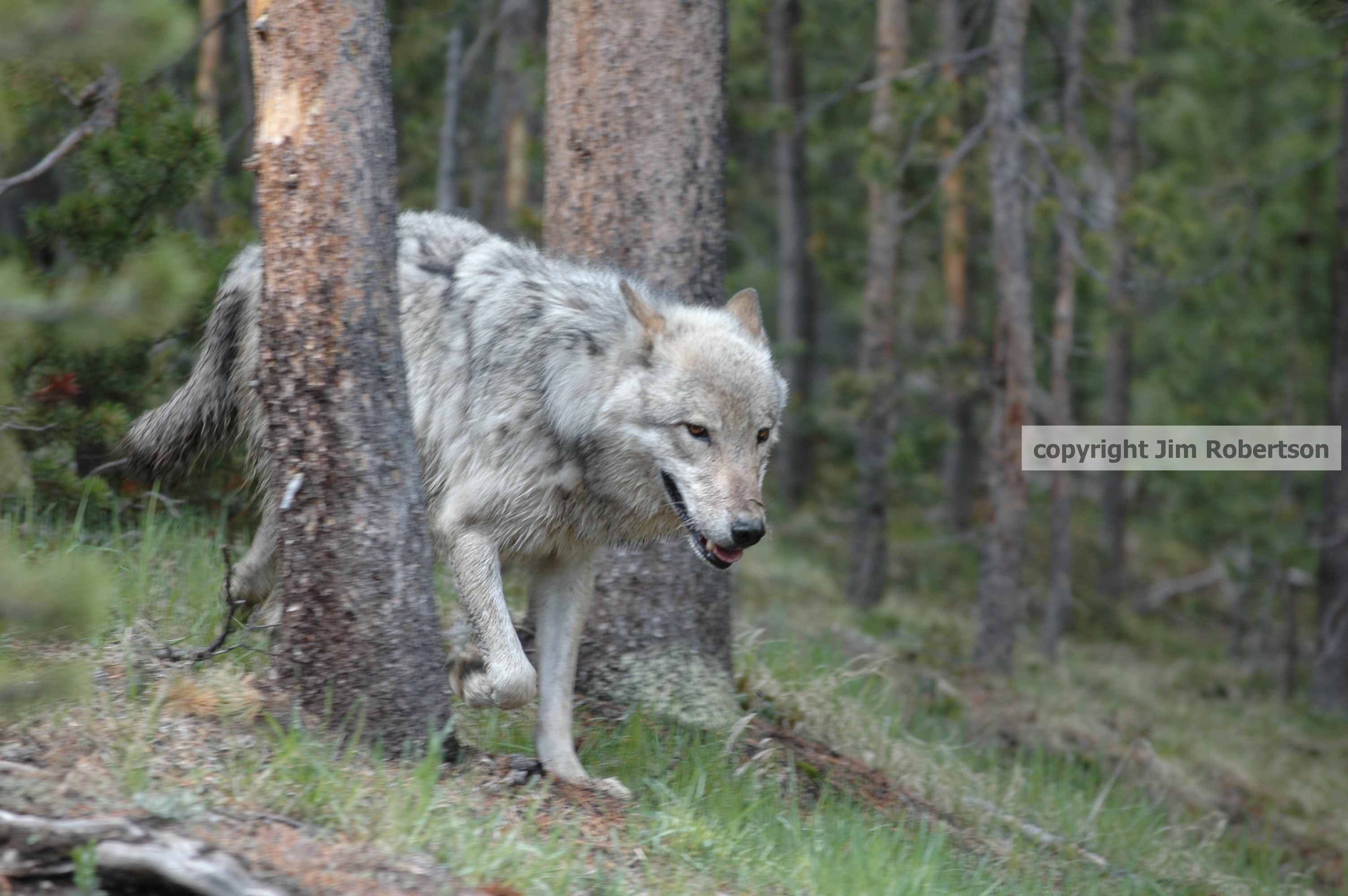
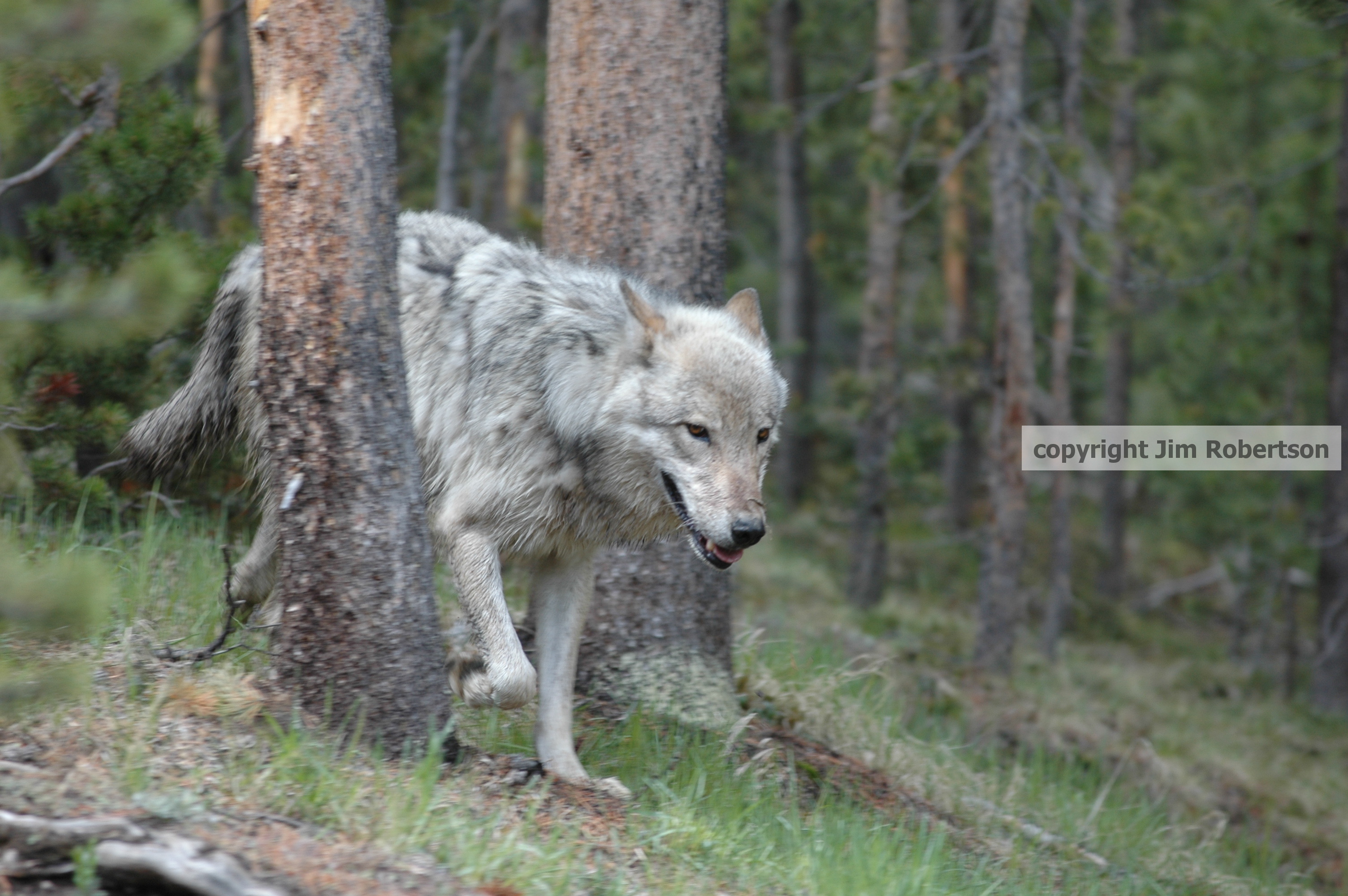
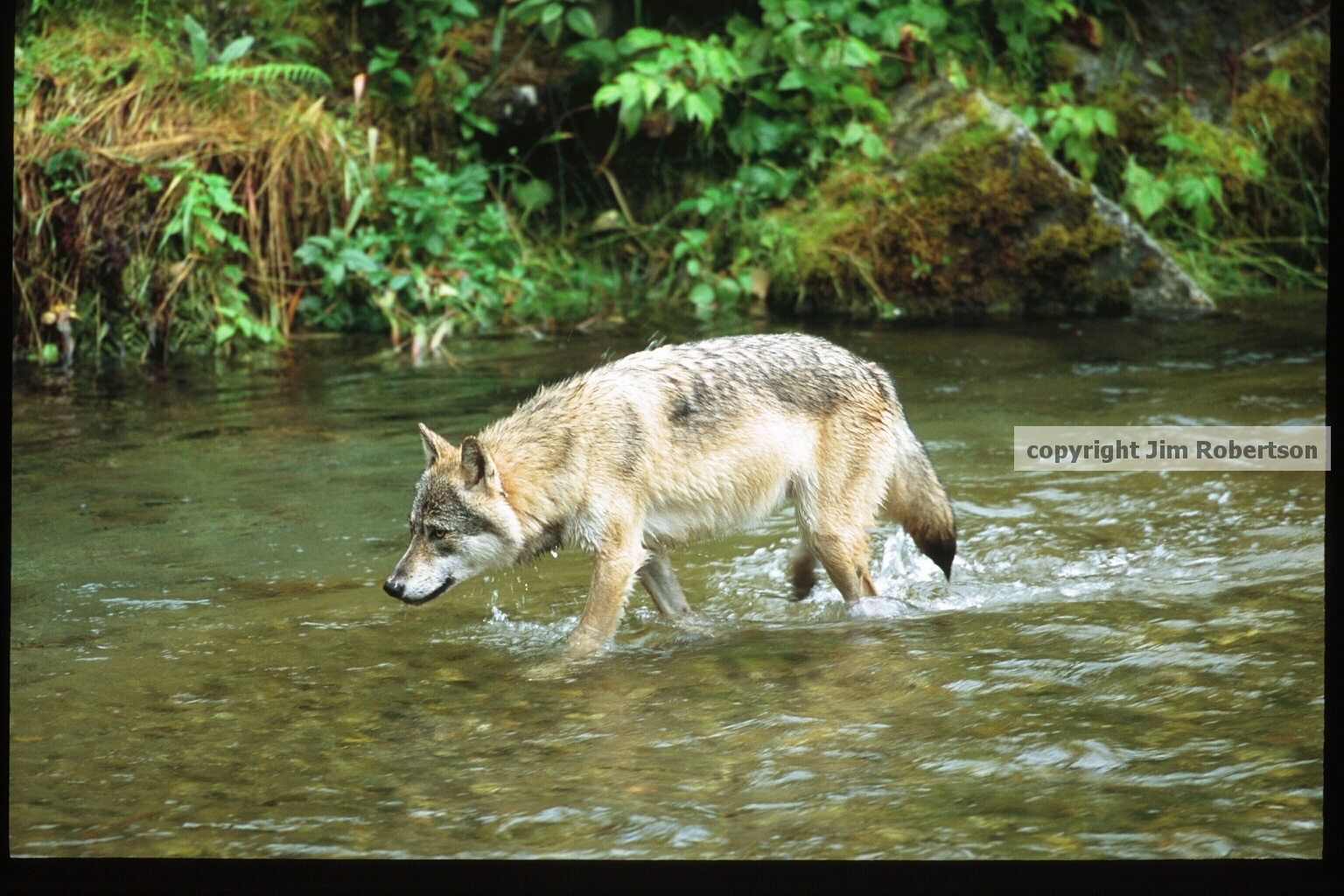
copyrighted wolf in water

Wolf advocates post how-to manual for saboteurs

http://www.capitalpress.com/newsletter/AP-wolf-trapping-081413

HELENA, Mont. (AP) — Environmentalists upset with a federal proposal to remove protections for wolves across most of the U.S. have posted a manual on how to disrupt wolf hunts and sabotage traps.

The 12-page manual published online Monday by Earth First! tells would-be saboteurs that Internet activism alone can leave activists with an empty feeling, so “why not try direct action?”

The manual instructs how to find traps and take them out by destroying or hiding them. It also instructs how to release a trapped wolf, noting that doing so is very dangerous, and suggests forming blockades where wolf permits are sold and walking ahead of hunters with air horns.

Earth First! Media spokesman Grayson Flory said his organization published the manual written by a group calling themselves the “Redneck Wolf Lovin’ Brigade.” The impetus was the Obama administration’s announcement in June that it plans to end Endangered Species Act protections for almost all wolves in the United States, he said.

“We don’t believe something being illegal automatically makes it right or wrong,” Flory said. “The wolf hunt manual that we’re redistributing is only about protecting life, not killing it. We’re completely against the harming of living things.”

[Oh really, that’s a welcome switch from their statement in the manual that, “We are hunters and proud of it…feral hogs beware.”]

Wolf hunts already are allowed in Montana, Idaho, Wyoming and Minnesota. A hunt is scheduled for this fall in Michigan’s Upper Peninsula.

Montana Fish, Wildlife and Parks spokesman Ron Aasheim said the state’s wolf hunting policy was a public process that deserved respect.

“This shows you the extremes people are willing to go to in making their points and affecting public policy,” Aasheim said. “But if something comes to pass and people do break the law, they will be prosecuted.”

Montana Trappers Association president Tom Barnes said hunters and trappers help manage the wolf population.

“All we ask is that we can manage these wolves,” Barnes said. “Hunting is a tool to do that, just like trapping, for any other animal species.”

A draft of the U.S. Department of Interior proposed rule to lift wolf protections said the roughly 6,000 wolves now living in the Northern Rockies and Great Lakes are enough to prevent the species’ extinction.

The agency says having gray wolves elsewhere — such as the West Coast, parts of New England and elsewhere in the Rockies — is unnecessary for their long-term survival.

A small population of Mexican wolves in the Southwest would continue to receive federal protections, as a distinct subspecies of the gray wolf.

Federal officials have delayed a required analysis of the proposal after a contractor provided the U.S. Fish and Wildlife Service with information that could have identified scientists on the anonymous review panel. At least two scientists were told they couldn’t serve on the panel because they signed a letter supporting continuing wolf protections.

More mainstream coverage here: http://www.greatfallstribune.com/article/20130812/NEWS01/308120015/Radical-environmental-group-advocates-wolf-hunt-sabotage

copyrighted wolf in river

Heed the call of the wild: don’t cull the wolf

copyrighted Hayden wolf in lodgepoles

There are better ways to control North America’s wolf populations than removing wildlife protections and permitting hunting

http://www.theguardian.com/commentisfree/2013/aug/14/wolf-cull-hunting

by  www.theguardian.com,

Wednesday 14 August 2013

They encroach on natural habitats, kill wildlife and destroy native landscapes.

While this is, in many ways, the modus operendi of human populations, it is the excuse now being given by the US Fish and Wildlife Services (FWS) in its call on the federal government to remove the gray wolf from endangered species lists. All for the purpose of using human “ingenuity” (read: guns) to help reduce the population to a more “manageable” level.

Activists are beginning to take to the social media networks in calling for the government to not slaughter wolves. One petition, began last week, has already garnered several thousand signatures en route to its 10,000 goal.

With thousands of wolves across the country struggling to survive after decades of reintroduction since humans slaughtered nearly the entire population, it seems odd that calls have grown stronger to remove them from the Endangered Species Act (ESA). According to the FWS, in the Great Lakes region, there are roughly 4,000 wolves; in the Northern Rocky Mountains around 1,700; Washington State has nine total; the southwest about 60 wolves. In Alaska, where wolves are not protected by the ESA, there live about 10,000.

So, why have the calls for “culling” wolves increased so dramatically over the past five years, in a plan to reduce the populations which the FWS terms “control”?

The modern wolf story largely begins in 1995, in Idaho (my home state), when the state reintroduced a number of gray wolves into the state as part of the “experimental, non-essential” clause of the ESA. From there, the animals developed and grew in numbers across the state as wildlife biologists helped support the small ecosystems that were developed for the animals’ use. And in the United States Pacific northwest, the Nez Perce Native American tribe also started their own project, which enabled a pack of wolves to live and create familial ties in a large fenced area.

Not everyone was pleased that hills covered in snow and jagged mountains – the difficult terrain of Idaho’s mountains – are now home to wolves: some government officials and ordinary citizens claim the species has now overpopulated the wilderness areas and is a threat to “human activity”.

As one family friend, a hunter, told me recently, the wolves are “killing livestock, attacking people in the natural parks and without action could overrun our landscape”. Although he is right that wolves do attack livestock (and wild prey), there is little evidence that people are being attacked. Wolves rarely are aggressive toward humans unless threatened.

The problem is rather with the continued development on what had, historically, been remote areas; there, wolves are simply attempting to survive. With calls for removing wolves from the protection of the ESA, however, it could soon be open season for hunters – in what officials argue are “conservation” efforts to ensure the wolves’ survival.

I spoke with an Idaho biologist who has worked with both the FWS and the wolf reintroduction program. He argues that human populations continue to “overuse” hunting in the name of sport and this has reduced deer and elk populations, not just in Idaho, but in the Great Lakes and Alaska. The result?

Wolves have been forced to look elsewhere for food and sustenance. This results in cattle being attacked because the regular food chain has been disrupted. Hunting wolves won’t stop this problem unless all the wolves are killed.

He also pointed out that during such culls – which we have seen in Idaho and other areas – it is the adult wolves that are killed, often leaving cubs unprotected and unable to fend for themselves. “It is sad that this sort of thing continues,” he added.

Activists have called for a blanket ban on wolf-killing, but there is a need to work with the FWS and those who feel threatened by wolves. We must understand that the issue of wolves is a nuanced controversy in which those directly affected by the encroaching wolf populations must be heard. There needs to be compromise that does not threaten the whole wolf population and finds sustainable solutions in the specific environments where the reintroduction process has occurred.

At the same time, we can’t afford to reverse the good work of reintroduction programs and go back to the days when wolves were seen as a deadly menace to humans and their livestock – and had to be exterminated because of that perception.

Sab All Hunting, Not Just the Wolf Hunt

It never pays to procrastinate. Although I re-blogged Earth First’s “Manual for Sabotaging Wolf Hunts” a few days ago, I just now read the first speciesist lines of its pro-hunting introduction: “Lets shoot straight right from the start. We are hunters and proud of it.” (What part of the universal truth, that hunters are psychopaths and total scumbags, does EF fail to understand?) Their inconsistent attitude that it’s ok to hunt other species besides wolves prevents me from spreading the word about their manual any further.

It’s always sad when good-hearted people try to align themselves with their enemies and take on their ugly traits in order to boost the popularity of their cause. While it may seem like fun to emulate Elmers, when it comes right down to it, hating and killing wolves is a natural component of the redneck hunter’s credo. Rare is the hunter out to get “his” deer—whether for the purpose of subsistence, sport or trophy hunting—that doesn’t eventually resent the competition from natural predators.

Species like deer, moose, elk or feral hogs are every bit as sentient, and can experience fear and pain in the same way, as wolves. All animals value their lives; the frivolous taking of an innocent life is not something to be proud of. If we modern humans (7 billion and counting) can lead healthier lives without killing and consuming animal flesh, and thereby messing with the food chain, why should we inject ourselves into natures’ intricate web by playing top predator?

Remember, every grazer or browser we claim for ourselves is one less for the wolves who really need them.

Text and Wildlife Photography © Jim Robertson

Text and Wildlife Photography © Jim Robertson


Mohave County board opposes bigger wolves area

Tuesday, August 6, 2013

KINGMAN, Ariz. (AP) — Mohave County is on record as saying Mexican gray wolves aren’t welcome in the northwestern Arizona county.

The Kingman Daily Miner (http://bit.ly/1epSnXT ) reports that a resolution approved unanimously Monday by the Board of Supervisors says the wolves aren’t welcome unless they’ve been vaccinated, have a dog license and have been spayed or neutered.

The U.S. Fish and Wildlife Service is studying the possibility of expanding the range that Mexican gray wolves could roam in Arizona and New Mexico.

Some livestock owners and hunting guides oppose any expansion, saying the wolves would endanger their livelihoods by killing cattle and wild game.

U.S. Fish and Wildlife Mexican Wolf Recovery Coordinator Sherry Barrett says spaying or neutering the animals would defeat the project’s purpose. She says wolves are vaccinated before being released.

copyrighted Hayden wolf in lodgepoles

Cost to Shoot a MT Wolf: $19.00. Add a Dollar if You Want to Let it Struggle for Two Days in a Trap

Although the kind of sick fucks who get a kick out of killing wolves in Montana would pay ten times that amount, their “game” departments are handing out wolf tags like candy—so much for the notion that hunting licenses raise a lot of money for wildlife.

But, as evidenced by the article below, the mainstream media would not judge or condemn anyone who gets a thrill from killing non-human animals. Instead, their informative yet dispassionate reporting legitimizes the ongoing atrocity of wolf hunting…

MT: Changes in store for Montana’s 2013-14 wolf hunt

Posted on July 26, 2013 by TWIN Observer

Written by Tribune Staff

Montana’s Fish & Wildlife Commission recently approved regulations for the upcoming wolf season.

For the 2013-14 seasons, hunters will have the opportunity to pursue wolves throughout Montana beginning Sept. 7 for archery hunting, Sept. 15 for the general rifle season and Dec. 15 for trapping. The archery only season will close Sept. 14, and the general season will end March 15. Wolf trapping season ends Feb. 28

Wolf hunting licenses cost $19 for residents and $50 for nonresidents. License sales should begin by Aug. 5. Montana trapping licenses are currently on sale for $20 for residents and $250 for nonresidents.

New prospective wolf trappers must attend a mandatory wolf-trapping certification class to use a Montana trapping license to trap wolves and can sign up at fwp.mt.gov. Trappers who successfully completed a wolf trapping certification class in Montana or Idaho in the past do not need to retake one this year.

There is no statewide hunting harvest or trapping quota, but each wolf harvest must be reported. There is, however, a quota of two wolves in Wolf Management Unit 110 near Glacier National Park; four wolves in WMU 313 and three wolves in WMU 316, which borders Yellowstone National Park. Additionally, hunters and trappers are limited to taking only one wolf per person in WMUs 110, 313 and 316.

FWP urges hunters to avoid harvesting wolves with radio collars that provide researchers and managers with important scientific information.

The combined maximum hunting and trapping bag limit is five wolves per person. A hunter can purchase up to five wolf hunting licenses but can harvest only one wolf with each license. The use of electronic calls by wolf hunters is allowed.

Trappers must check their traps every 48 hours and immediately report any unintended animal caught in a trap, including domestic animals. Wolf traps must be set back 1,000 feet from trailheads and 150 feet from roads, the commission will consider in August a new measure that requires additional setbacks along more than 20 specific roads and trails popular among hikers and other recreationists in western Montana. If approved, the locations will be posted on FWP’s website.

Montana wolf specialists counted 625 wolves, in 147 verified packs, and 37 breeding pairs in the state at the end of 2012. The count dropped about 4 percent from the previous year and marked the first time since 2004 that the minimum count declined.

Last season the total hunting and trapping harvest was of 225 wolves. Hunters took 128 wolves and trappers 97.

Delisting allows Montana to manage wolves in a manner similar to how bears, mountain lions and other wildlife species are managed, guided completely by state management plans and laws.

7d547853b294cf28b7b6c4ff5a69dda1

Protections still needed for wolves

http://www.utsandiego.com/news/2013/jul/27/protections-still-needed-for-wolves/

By Patrick C. Valentino July 27, 2013

In June, the U.S. Fish and Wildlife Service proposed to remove gray wolves from the endangered species list despite wolves occupying only about 5 percent of their historic range. The service reminds us that the Endangered Species Act was not intended to provide indefinite life support. This is certainly true, and there might have been a compelling case for delisting today had the science supported it and had wolves reached a fuller stage of recovery.

But that hasn’t happened. In fact, three states in our Northern Rockies, already charged with wolf management, have unleashed an intense and partisan desire to reduce wolf numbers to the barest minimum allowable. Montana, Idaho, and Wyoming now have recreational hunting and trapping seasons, and in the past two years nearly 1,200 wolves have been killed. Well-known and well-loved wolves from Yellowstone National Park were killed, including the cherished Lamar Canyon pack’s alpha female. This degree of backlash questions whether our society has advanced past treating predators as a disposable commodity, a mindset that nearly wiped out wolves by the early 1900s.

There is an alternative path: one that recognizes that the majority of Americans support wolves as part of our wilderness and heritage, looks beyond managing wolves on the basis of population numbers along, recognizes the inherent value of wolves to exist in the wild as nature intended, and focuses on solutions to conflicts with livestock, such as nonlethal predator deterrents.

California is currently developing a wolf management plan and reviewing whether to protect wolves under state law in preparation for a future wolf population. Californians have a chance to lead the way and demonstrate how to afford the wolf the value it deserves, work together to reduce conflicts, and hopefully one day celebrate the recovery of wolves in our state.

The mission is far from accomplished. Delisting now is a political decision defying the majority’s desire for a more complete, science-based recovery of gray wolves. We owe it to ourselves and future generations to protect gray wolves and maintain their rightful place on our wild landscape.

Valentino is director of California Wolf Recovery.

copyrighted Hayden wolf in lodgepoles

(At Least) Michigan’s first wolf hunt will no longer include trapping

By Keith Matheny
Detroit Free Press staff writer

Michigan’s first-ever wolf hunt this fall and winter will no longer include trapping, after the state Natural Resources Commission rejected the use of steel-jaw leg traps on private and public land as part of the hunt.

The commission, for the second time in two months, approved a wolf hunt on July 11 for three zones of the Upper Peninsula. The second approval came in light of the passage of Public Act 21, a bill by Republican state Sen. Tom Casperson of Escanaba allowing the commission to designate animals as game species — a bill critics say was designed specifically to circumvent a petition drive to put the wolf hunt to a public vote.

The hunt approved in May allowed steel-jaw leg traps. But trapping was removed in the second approved hunt.

“The primary reason was just looking at starting conservatively with our approach in how we move forward with implementing public harvest of wolves as a management tool,” said Adam Bump, the Michigan Department of Natural Resources’ fur-bearing animal specialist.

But Jill Fritz, state director of the Humane Society of the United States, which is spearheading a second petition drive to try to repeal Casperson’s bill, suspects a different motive for dropping trapping from the hunt.

“It’s to make it more public-friendly, because they know Michiganders are horrified by the thought of this still-recovering species writhing and dying in traps,” she said.

Wolves were all but eradicated in much of the country by the 1930s. Michigan and other Great Lakes states lost almost all of their wolves by the end of the 1950s.

In 1973, Congress enacted the Endangered Species Act and officially protected the wolf that same year, sparking a resurgence in the wolf population. Michigan’s Upper Peninsula was known to have three wolves as recently as 1989. The population today stands at 653 wolves. The wolves have made an even more substantial recovery in Wisconsin (834 wolves) and Minnesota (3,000).

The U.S. Fish and Wildlife Service removed wolves from the federal endangered species list in January 2012, and several states, including Michigan, began planning for wolf hunting seasons.

Wisconsin and Minnesota established their initial wolf hunts last year, and trapping proved by far a more effective means of harvesting wolves than firearms hunting. In Minnesota, wolf takes by rifle were about 4% successful, compared with about 25% through trapping.

Michigan’s season will begin Nov. 15 and run through December, or until 43 wolves are harvested. Bump said the number was established with firearm hunting in mind.

“Our expectation is even with just hunting we will be able to achieve our targeted harvest,” he said.

Tony Hansen, spokesman for the Michigan United Conservation Clubs, said the coalition is disappointed that trapping was removed.

“It’s a viable, effective and scientific method to control wildlife populations,” he said.

Bump said the DNR will continue to use traps as necessary to take problem wolves throughout the year, and trapping will be reconsidered as part of the hunt in future years.

“The department’s position is trapping is a humane and effective wildlife management tool,” he said.

Nancy Warren, an Ontonagon County resident and Great Lakes regional director of the nonprofit National Wolfwatcher Coalition, is opposed to trapping — and the hunt in general.

The state is establishing the hunt to reduce conflicts between wolves and humans, such as wolves coming into towns or preying on cattle or pets. But Warren said the state’s own data on wolf depredations show the vast majority are occurring on one farm in her county, whose owner, John Koski, has been criticized for his actions and inaction that may contribute to wolf attacks on his livestock.

“When you take that farm out of the equation, there is no need for a wolf hunting season in this unit,” she said. “The truth is, some people want a hunting season; they want to kill wolves out of hatred, and they are using this as an excuse.”

Wolf hunting licenses go on sale starting Aug. 3 until Oct. 31, or when 1,200 licenses are sold. The licenses are $100 for Michigan residents and $500 for nonresidents and are available at authorized license agents, a number of DNR offices statewide or online at http://www.michigan.gov/huntdrawings.

copyrighted wolf in water

Wolf Perceptions

Scarcely without exception, the wolf stirs more emotion—from love to loath, reverence to revile—in people than do any other non-human animal. That’s because wolves embody all that is wild.

Those who love wilderness see the presence of wolves as evidence of an ecosystem intact. But wolf-haters see them as a direct threat to the unnaturally structured world their ancestors tried to impose on the Earth.

Meanwhile wolves see humans as strange awkward fleshy monkeys who can never be fully trusted.

Text and Wildlife Photography ©Jim Robertson, 2013. All Rights Reserved

Text and Wildlife Photography ©Jim Robertson, 2013. All Rights Reserved

Oregon panel OKs ‘last resort’ wolf-killing rule

http://www.redding.com/news/2013/jul/12/oregon-panel-oks-last-resort-wolf-killing-rule/

by JEFF BARNARD, Associated Press

Posted July 12, 2013

GRANTS PASS, Ore. (AP) — The Oregon Fish and Wildlife Commission on Friday adopted provisions of a lawsuit settlement that will make Oregon the only state in the West where killing wolves that attack livestock is a last resort.

The rules adopted by the commission amend Oregon’s Wolf Management Plan, along with statutory provisions enacted by the Legislature that will be signed by Gov. John Kitzhaber.

The rules require ranchers to show they have taken non-lethal steps, such as alarm boxes and low strings of fluttering plastic flags known as fladdery, to protect their herds before the state will send out a hunter to kill a wolf. There must also be hard evidence, such as GPS data showing a radio-collared wolf was in the area when a cow was killed, that wolves have attacked four times.

In return, ranchers get new rights to shoot wolves that they see attacking their herd, but only if those non-lethal protections are in place, and attacks have become chronic.

The settlement represents a new level of cooperation between conservation groups and ranchers, who have long fought over restoring wolves in the West, where they were wiped out by bounty hunters in the early part of the 20th century.

Ranchers downplayed the significance of the settlement.

“I don’t think it’s a whole lot different from the wolf plan already being implemented,” said Kate Teisl, executive director of the Oregon Cattlemen’s Association. “Now there’s just more documentation. Ranchers are out there doing all they can to keep their animals alive, including the non-lethal measures.”

But wolf advocates said it was that documentation of non-lethal steps that was groundbreaking.

Rob Klavins of Oregon Wild said the old plan talked about conservation of wolves being a priority, but it was so ambiguous that it was ineffective.

“It’s now up to the Oregon Department of Fish and Wildlife, the livestock industry, and the conservation community to honor the agreements that we have made,” he said. “If we do so, I am optimistic we will continue to see conflicts between wolves and livestock continue to be rare, and the need to kill wolves even rarer still.”

Brett Brownscombe, natural resources adviser to the governor, said making the rules clear was important as Oregon’s wolf population continues to grow, and the Obama administration moves toward lifting federal protections for wolves in areas they have yet to repopulate.

Oregon Wild and other conservation groups had sued the Oregon Department of Fish and Wildlife, claiming that a kill order on the Imnaha pack, the first to establish in Oregon as well as the first to attack livestock, threatened to wipe out the pack. Conservation groups claimed the actions violated the Oregon Endangered Species Act, which still protects wolves in the eastern two thirds of the state, where federal protections have been lifted.

The Imnaha pack only has one more strike against it before a kill order can be imposed, but so far, it has not been linked to an attack.

The Oregon Court of Appeals barred the state from killing wolves for more than a year before the settlement was reached between conservation groups, the Oregon Cattlemen’s Association, and the governor’s office. During that time, the number of wolves in Oregon went up, while the lethal attacks on livestock went down. In Idaho, where the Oregon packs had migrated from, the numbers of lethal livestock attacks went up, along with the numbers of wolves killed, primarily by trophy hunters and trappers.

copyrighted Hayden wolf walking