Bloodthirsty ‘factual’ TV shows demonise wildlife

From: http://www.guardian.co.uk/environment/nature-up/2013/may/17/bloodthirtsty-wildlife-documentaries-reality-ethics

Major US TV channels are promoting hysterical and outdated ideas about wildlife in popular, blood-soaked shows

Most people’s wild beasts live in the TV.

What I mean is that, in my experience, most people are highly unlikely to come eyeball-to-eyeball with a large wild animal in their everyday lives, and much of their knowledge of wildlife comes from a screen.

If you’re North American or get US-produced satellite TV, you’ve probably learned a lot about wildlife from outlets like the Discovery Channel, Animal Planet and History. You might trust these channels because you’ve seen educational, factually accurate shows on them, unlike the ‘trashy’ material that dominates free-to-air network TV.

But not everything on on these ‘factual’ channels might be as ethical or even as accurate as you might think, and the implications for conservation could be profound.

I recently spent a few entertaining hours watching episodes of Discovery’s Yukon Men, a hit ‘reality’ series about the residents of the small town of Tanana in central Alaska. Launched in August last year, it’s consistently gained over two million US viewers in its Friday night slot, been syndicated overseas, and helped the channel win some of its biggest audiences ever.

The first episode brings us to midwinter Tanana, which a theatrical, husky male voiceover tells us is “one of America’s most remote outposts” where “every day is a struggle to survive”. A dramatic, orchestral score pounds as we see a lynx struggling in a leghold trap, guns firing, a man attacking a squealing wolverine with a tree trunk, a wolf which a voice tells us “might eat one of those kids”, a hand lifting up the head of a bloodied, dead wolf to show us its teeth, and then a gloved hand dripping blood while the voiceover rumbles that in Alaska, it’s “hunt or starve, kill or be killed”.

That’s all in the first minute.

In the second minute the voiceover tells us that “the town is under siege by hungry predators”. We see wolves eating a bloody carcass, a growling bear, men with guns shouting bleeped-out words, then a coffin. Another voice says that “there’s always somebody that’s not going to make it home”.

We’re soon told that Tanana’s water pipes are freezing up “but that’s not the only crisis. Wolves have been spotted on the edge of town.” Charlie, a hunter, shows us the tracks of “a lone wolf”. “Wolves are mean, ferocious animals and they can tear a man apart real easy” he says, so “we have to get this wolf, it’s not an if, its a must, because he’ll go to any measure to eat. They’re the worst kind.”

We then meet Courtney, a local mother, who’s scared that the wolf could eat her young daughter. Charlie agrees, “if we turned our backs for a couple of minutes, that baby would be gone.”

“There have been twenty fatal wolf attacks in the last ten years”, the voiceover intones.

Charlie kills the wolf in the next episode, pursuing it on a snowmobile and shooting it outside town with an AR-15, the same semi-automatic assault rifle used by the Sandy Hook school shooter. “The only good thing about a wolf is the quality of their nice fur”, says Charlie, holding up the blood-smeared pelt. Courtney agrees: “Dirty little rotten bastard.”

Another scene shows Stan, a fur trapper, dealing with a wolverine. Wolverines, about as big as a medium-sized dog, are the largest members of the weasel family. One has been caught by its front paw in one of Stan’s steel leghold traps and is trying to get away, squealing and snarling as he approaches. “He’s really dangerous”, says Stan, “I don’t think any human being could keep an attacking wolverine from killing them.”

Stan chops down a small tree, which he bashes the struggling wolverine with — to “stun” it, he says. Once the wolverine’s strength is somewhat depleted, he approaches it with a small handgun. The animal’s head turns, tracking the gun, and he shoots it. The camera zooms in to show steam rising from the carcass.

Charlie, too, sets a leghold trap for a wolverine, and catches it. As it squeals in the trap, trying to run away, the voiceover tells us dramatically that “wolverines are capable of tearing human beings apart.”

“He could gut me”, says Charlie, before raising his AR-15 and opening fire on the hapless animal. Many of his shots miss, but he eventually kills it.

All through Yukon Men we see predatory animals being killed: a leghold-trapped lynx is strangled to death with a wire noose by Stan’s son, a grizzly bear is shot in the head, etcetera, and every time the producers use the techniques of the reality TV genre to convince us that the animals are man-woman-and-child killers which are best turned into fur coats.

Joey Zuray kills a lynx – Yukon Men promo video

(Click here to view this video on YouTube.)

Frenetic edits and manic music are used to build drama, authoritative-sounding voiceovers combine with the tightly edited words of the on-screen characters tell how dangerous, vicious or deadly the creatures we’re seeing on screen are. I spot occasions where animal noises seem to have been overdubbed to make them sound scarier. It makes for gripping viewing, but I wondered if Discovery wasn’t betraying its viewers who trust it to deliver reliable, factual TV. As a trained zoologist and filmmaker, much of what I was seeing didn’t make sense to me.

Take wolverines for example: I lived in Alaska for almost a year and never saw one. They’re extremely shy and avoid humans. Although they’re capable predators of small animals and found in many cold, high-latitude regions of the northern hemisphere, I’d never heard of a wolverine killing a person.

I searched the web and could not find a single documented case of a wolverine even attacking a person anywhere in the world, ever.

To double-check, I emailed Jeff Copeland of the Wolverine Foundation, who told me that “we are not aware of any instance in which a wolverine has killed a human, or even attempted to do so”, which perhaps explains why the wolverines in Yukon Men are doing their desperate best to get away from their human assailants.

Wolves are a lot larger than wolverines, of course. But even though the US and Canada hold over 60,000 wolves, I found only two records of fatal attacks by wild wolves in these countries in last ten years; one controversial case in Saskatchewan, Canada, in 2005, which some experts think was actually a bear attack, and another in Alaska in 2010.

Why did the producers of Yukon Men tell their viewers that there had been twenty fatal wolf attacks in the last ten years, implying that these had taken place around Tanana? Why does a ‘factual’ show portray Alaskan wolves as man-eating monsters straight out of Victorian fairytales, a serious threat to life and limb, when the data show that wolf attacks are extremely rare in North America?

Idaho-based wolf expert Suzanne Stone told me that she’d once been surrounded by a howling pack of gray wolves while sitting by a campfire in the twilight, armed only with a marshmallow on a stick. The animals were only twenty or thirty yards away. Was she scared, I asked? “No, not at all. It was an incredible experience. I howled back and forth with them”, adding that people and domestic livestock were the most dangerous creatures she’d encountered in many years of walking in wolf-inhabited backcountry.

Yukon Men isn’t the only ‘factual’ show about people who kill wild animals that seems to hysterically hype up the danger the animals pose to humans while minimising (or completely failing to address) their important ecological roles.

The Louisiana alligator hunter stars of the History Channel’s blockbuster show Swamp People use huge baited hooks to snare alligators and various guns to blow their brains out, all the while telling us how desperately dangerous they are. Despite Louisiana having almost two million alligators, I could not find a single record of a fatal alligator attack there in the last century, although Florida ‘gators do occasionally eat people. (Swamp People gets record ratings for the channel, despite the contemporary alligator hunt’s tenuous connection to history.)

“It’s a Texas thing” – Rattlesnake Republic promo video

(click here to watch this video on YouTube.)

Animal Planet’s Rattlesnake Republic shows Texan snake wranglers capturing dozens of rattlesnakes at a time while repeatedly playing up their lethality. In the episodes I watched I never saw anything about how snake hunters have helped make the Eastern Diamondback Rattlesnake so rare that it’s now a candidate endangered species. Rattlesnake Republic sends a clear meta-message that the only good rattlesnakes are dead ones, sewn into boots.

Discovery and the BBC Natural History Unit have arguably similar status in the wildlife filmmaking industries on their respective sides of the Atlantic, and have co-produced high-profile series like Planet Earth and Africa. The BBC displays its editorial guidelines for natural history shows on a public website which, on the face of it, Discovery’s Yukon Men seems to fall afoul of. The BBC guidelines say that “audiences should never be deceived or misled by what they see or hear”, that “we [the BBC] should never be involved in any activity with animals which could reasonably be considered cruel”, for example.

This begs the question: What are Discovery’s editorial guidelines?

After numerous calls and emails to the Discovery Channel and Animal Planet, I’ve yet to find out. I’ve not received any indication that either of these channels (which are owned by the same company) even have editorial guidelines or an ethics policy. The Discovery Channel gave me only one line in response to my questions: “We are committed to the highest standards of natural history filmmaking.”

Despite partnering with them on multimillion-dollar shows, the BBC’s Natural History Unit also seems to have no idea what Discovery’s policies are; when I asked, the BBC would only say that they expected any versions of their programs aired by co-producers to adhere to BBC standards.

The History Channel told me that their standards and practices department ensures that all their shows meet “the standards of good taste and community acceptability while also allowing our creative departments the freedom to explore new and innovative ideas.” Each programme is individually evaluated, but “given the subjective judgments that are required, it is difficult to come up with a detailed list of guidelines.” History’s statement said nothing about factual accuracy or animal cruelty.

I contacted National Geographic TV, assuming that this flagship brand would have a policy something like that of the BBC’s. Christopher Alberts, the Senior Vice President of Communications for the National Geographic Channels, told me that they have “one of the best policies there is”, but refused to send it to me or tell me anything about it.

Why are these factual networks, whose survival depends on building trust with their audiences, so reluctant to clarify their ethics policies with respect to wildlife?

What does it mean for conservation if high-rating shows on leading channels are portraying wildlife in a negative, seemingly misleading way to millions of viewers worldwide? And why are so few people saying anything about it?
copyrighted-wolf-argument-settled

Letter From Wolf Scientists to Sec. Sally Jewell

May 21, 2013

Secretary Sally Jewell Department of Interior 1849 C Street NW Washington, DC 20240

CC: Dan Ashe, Director U.S. Fish and Wildlife Service 1849 C Street NW Washington, DC 20240

Dear Secretary Jewell,

As scientists with expertise in carnivore taxonomy and conservation biology, we are writing to express serious concerns with a recent draft rule leaked to the press that proposes to remove Endangered Species Act protections for gray wolves across the Lower 48 States, excluding the range of the Mexican gray wolf. Collectively, we represent many of the scientists responsible for the research referenced in the draft rule. Based on a careful review of the rule, we do not believe that the rule reflects the conclusions of our work or the best available science concerning the recovery of wolves, or is in accordance with the fundamental purpose of the Endangered Species Act to conserve endangered species and the ecosystems upon which they depend.

The Service’s draft rule proposes to: 1) “remove the gray wolf from the List of Threatened and Endangered Wildlife”; 2) “maintain endangered status for the Mexican wolf by listing it as a subspecies (Canis lupus baileyi)”; 3) “recognize a new species of wolf known as Canis lycaon [that] occurs in southeastern Canada and historically occurred in the northeastern United States and portions of the upper Midwest (eastern and western Great Lakes regions)”; and 4) deny protection to wolves in the Pacific Northwest because they do not qualify as a distinct population segment for lack of discreteness from wolves in the northern Rocky Mountains.

We find these proposals problematic both in terms of their scientific support and their consistency with the intent of the statute. Specifically:

1) Removal of the gray wolf from the List of Threatened and Endangered Wildlife The gray wolf has barely begun to recover or is absent from significant portions of its former range where substantial suitable habitat remains. The Service’s draft rule fails to consider science identifying extensive suitable habitat in the Pacific Northwest, California, the southern Rocky Mountains and the Northeast. It also fails to consider the importance of these areas to the long-term survival and recovery of wolves, or the importance of wolves to the ecosystems of these regions.

2) Maintain endangered status for the Mexican wolf by listing it as a subspecies Although the taxonomic distinctness of the Mexican wolf is well-supported, and we thus support subspecific listing as appropriate, the draft rule fails to delineate the geographic extent of the area in which wolves would receive protection, specifying only that Mexican wolves would be

protected “where found”. Genetic analysis of historic Mexican wolves showed that the range of the Mexican wolf likely extended beyond the historic range initially inferred from limited record data. At the same time, the Service has inexplicably delayed completion of the recovery plan for the Mexican wolf, the draft of which had concluded that habitat to the north of the current recovery area may be essential for recovery of the subspecies. The lack of specificity in the rule, coupled with past actions by the Service, encourages continued efforts by stakeholders to block recovery actions essential to recover a subspecies that is among the most endangered mammals in North America.

3) Recognize a new species of wolf known as Canis lycaon There is not sufficient information to support recognition of a new species of wolf, C. lycaon, and the geographic range reduction for Canis lupus in the eastern US as currently proposed. The Service acknowledged this problem in 2011, concluding:

While Chambers et al. (in prep.) provide a scientific basis for arguing the existence of eastern wolves as a distinct species, this represents neither a scientific consensus nor the majority opinion of researchers on the taxonomy of wolves, as others continue to argue that eastern wolves are forms of gray wolves (Koblmuller et al. 2009, vonHoldt et al. 2011). 76 Fed Reg. 81669.

While we encourage the Service to continue to review the taxonomic history of wolves in the eastern US, any future proposed taxonomic revision of canids should be a reflection of a more settled, broader scientific consensus rather than a premature policy decision based on ongoing and unsettled scientific debate. New evidence from complete genome sequencing efforts will likely supersede previous limited genetic evidence. Whether the Service moves forward with recognizing C. lycaon should have no bearing on the possibility that C. lupus’ range may have extended into some, if not many, of the eastern states. If the Service is intent on recognition of C. lycaon, this new species itself needs immediate protection as an endangered species. The draft rule provides no coherent scientific or statutory basis for not protecting wolves in the northeastern United States. The rule also ignores the threat that interspecific hybridization may have on the listed wolf species.

4) Conclude that wolves in the Pacific Northwest do not qualify as a distinct population segment Finally, we cannot support the conclusion that wolves in the Pacific Northwest do not qualify as a distinct population segment due to lack of discreteness from other wolf populations. In 2007, the boundary between the northern Rocky Mountains population and the Pacific Northwest was established by the Service in order to recognize the recovery that has occurred, and delist Northern Rocky Mountain (NRM) wolves. The 2007 rule correctly stated that the “DPS policy does not require complete separation of one DPS from other U.S. packs or populations..if occasional individual wolves or packs disperse among populations, the NRM DPS could still display the required discreteness.” It defies logic for the Service to now argue that “dispersal of wolves across the NRM DPS boundary is likely to continue” and that such occasional dispersal prevents recognition of a DPS that would protect wolves that are beginning to establish in the Pacific Northwest. Additionally, genetic testing of gray wolves that have migrated naturally into the Pacific Northwest has established that some derive from British Columbia coastal wolf populations which are genetically distinct from the inland stock of wolves used as a source for reintroduction to the northern Rocky Mountains.

The extirpation of wolves and large carnivores from large portions of the landscape is a global phenomenon with broad ecological consequences. There is a growing body of scientific literature demonstrating that top predators play critical roles in maintaining a diversity of other wildlife species and as such the composition and function of ecosystems. Research in Yellowstone National Park, for example, found that reintroduction of wolves caused changes in elk numbers and behavior which then facilitated recovery of streamside vegetation, benefitting beavers, fish and songbirds. In this and other ways, wolves shape North American landscapes.

Given the importance of wolves and the fact that they have only just begun to recover in some regions and not at all in others, we hope you will reconsider the Service’s proposal to remove protections across most of the United States.

Respectfully,

Bradley Bergstrom, PhD Valdosta State University Valdosta, Georgia

Christine Bozarth, PhD Northern Virginia Community College, Alexandria, Virginia

Jeremy Bruskotter, PhD The Ohio State University Columbus, Ohio

Carlos Carroll, PhD Klamath Center for Conservation Research Orleans, California

Phil Hedrick, PhD Arizona State University Tempe, Arizona

Roland Kays, PhD North Carolina State University Raleigh, North Carolina

Jennifer Leonard, PhD Estación Biológica de Doñana Sevilla, Spain

Jesus Maldonado, PhD Center for Conservation and Evolutionary Genetics, Smithsonian Washington DC

Michael P. Nelson, PhD Oregon State University Corvallis, Oregon

Reed F. Noss, PhD University of Central Florida Orlando, Florida

Stuart L. Pimm, PhD The Nicholas School, Duke University, Durham, North Carolina

John P. Pollinger, PhD University of California, Los Angeles Los Angeles, California

Michael Soulé, PhD Prof. Emeritus, University of California, Santa Cruz Paonia, Colorado

Bridgett vonHoldt, PhD University of California, Los Angeles Los Angeles, California

John Vucetich, PhD Michigan Technological University Houghton, Michigan

Robert Wayne, PhD University of California, Los Angeles Los Angeles, California

copyrighted Hayden wolf in lodgepoles

Utah Leads the Pack of Anti-Wolf A-Holes

Before news of a full federal wolf delisting even came off the presses, anti-wolf assholes from the wolfless state of Utah are front and center, spouting their bullshit lines to the press. And the feeble-minded mainstream media are gobbling it up…

In an article just out entitled, “Feds want to remove gray wolf from endangered species list,” Salt Lake City’s Desert News opened with the cutesy lead-in: “Top Utah politicians are howling with delight over a federal proposal to remove the gray wolf from protections under the Endangered Species Act, while advocates are growling in disgust.”

Followed by a quote from Sen. Orrin Hatch, R-Utah, “I appreciate the Fish and Wildlife Service hearing our concerns and making this right decision…An unmanaged wolf population threatens livestock and native wildlife, and threatens our communities. I know that our wildlife managers in Utah and throughout the West are fully capable of managing the wolf populations in a way that benefits all.”

That benefits “all”? What about the wolves? Or wolf advocates? Bob Brister with the Utah Environmental Congress was quoted next, trying to counter the senator’s hype:

“We are deeply disappointed with the Obama administration’s decision to delist the gray wolves in the West. State wildlife management agencies have proven to be either incapable or disinclined to manage wolves in an ecologically responsible and humane way.”

Another Utah anti-wolf fanatic, Rep. Rob Bishop, R-Utah, said the decision by the agency is long overdue. “For quite some time, the gray wolf has been ‘recovered’ and the issues with their being listed as an endangered species has limited states from employing responsible management practices, thus allowing the wolves to terrorize public land users and other animal species.”

If the agency ultimately chooses to delist the wolf, management of the species will be rightfully put in the hands of the states, Bishop said.

“I am pleased that states will now be able to actively manage the gray wolf population in a way that is beneficial to the wolf population as well as public land users, the sportsmen’s community, and all those whose livelihoods have been impacted by the current listing,” he said.

[Again, how does active “management” benefit wolves?]

Brister, however, said the decision makes no sense, especially given that Utah has no verified wolf population.

“We have been campaigning for the last three years to get the wolves back into Utah, so this is very disappointing to us,” he said.

The service will have a 90-day comment period on both of its proposals, but the date has not been determined.

___________

You can read the full article here: http://www.deseretnews.com/article/865581317/Feds-want-to-remove-gray-wolf-from-endangered-species-list.html

Stay tuned to this blog for a updates on the public comment period…

copyrighted-wolf-argument-settled


Wolf or Coyote, Which Should You Shoot?

At the bottom of this post is a photo quiz to test your skill at species identification and/or differentiation to go along with this action alert from WildEarth Guardian…..

Poachers [hunters] are shooting Mexican wolves in cold blood and the government is doing almost nothing about it.

Why? Because the Department of Justice has a policy that basically allows the killers to make the excuse that they thought they were shooting at a coyote.

And so anti-wolf forces are just laughing it off.

Sound outrageous?  Well it is.  What’s worse is that it’s now happened dozens of times. With the body count mounting, we said enough is enough. So last week we filed a landmark lawsuit to stop the practice of letting killers get off scot free. Now we urgently need your help!

We need to raise $20,000 in the next 21 days to ensure we can defend wolves in court – thanks to a fellow outraged Guardian, the first 50 gifts will be matched dollar for dollar, up to $10,000! With less than 75 Mexican wolves in the wild we need to act urgently. Please contribute to our Mexican Wolf Protection Fund.

The Department of Justice has decided to simply walk away from enforcing the Endangered Species Act, which strictly prohibits killing of endangered species—no matter the excuse. As a result it’s not only killers of Mexican wolves that have not been prosecuted, but also killers of other endangered species, including Grizzly bears, whooping cranes and California Condors.

Because of its so-called “McKittrick Policy,” the Department of Justice is loathe to charge or prosecute individuals who kill “endangered” species if they claim that they mistook the identity of the animal as their defense.

Since 1998, at least 48 endangered Mexican wolves have been shot, but the government has only pursued two cases! WildEarth Guardians believes it’s time the wildlife poachers are brought to justice, but we need your financial support.

________________

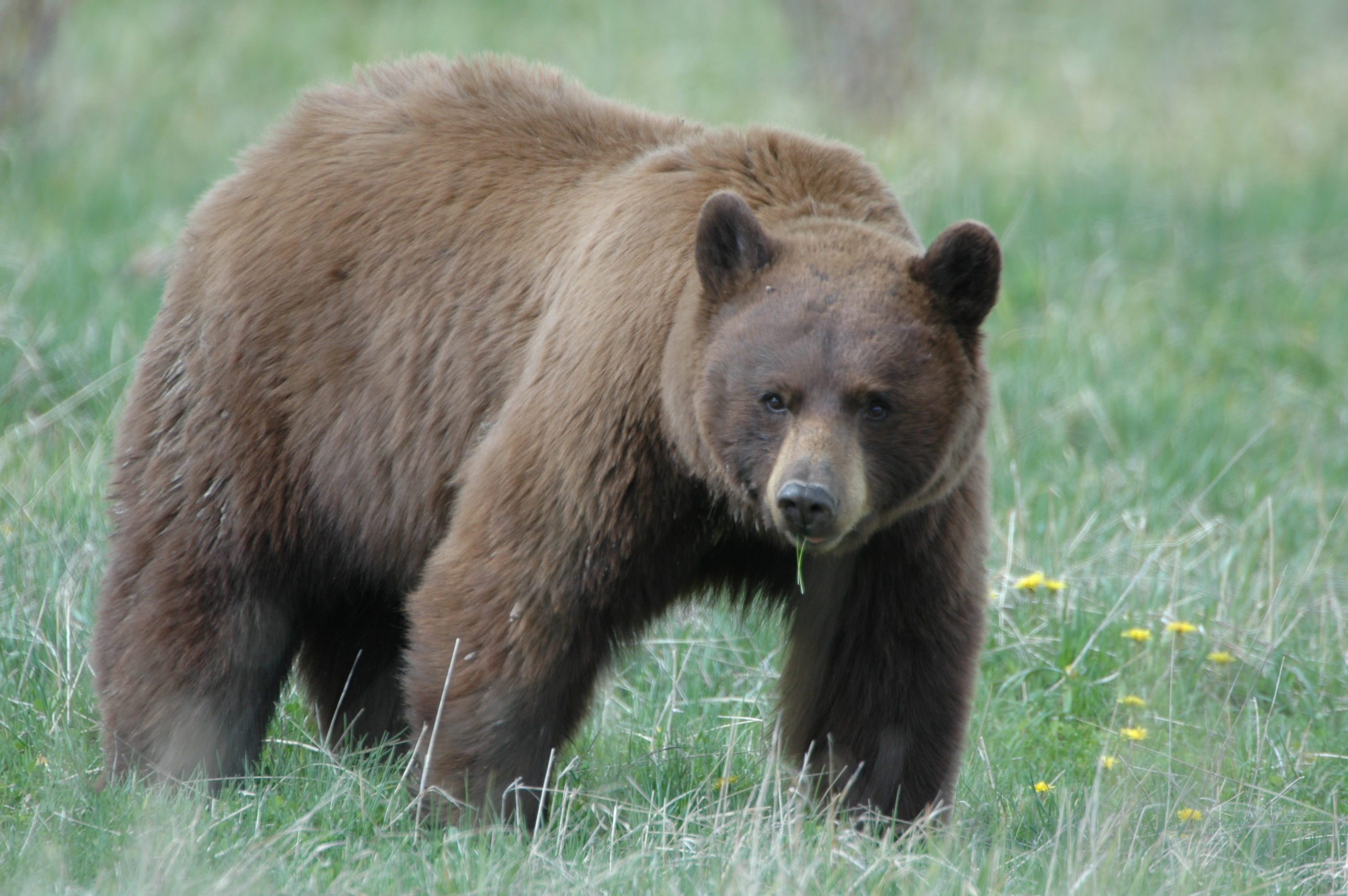
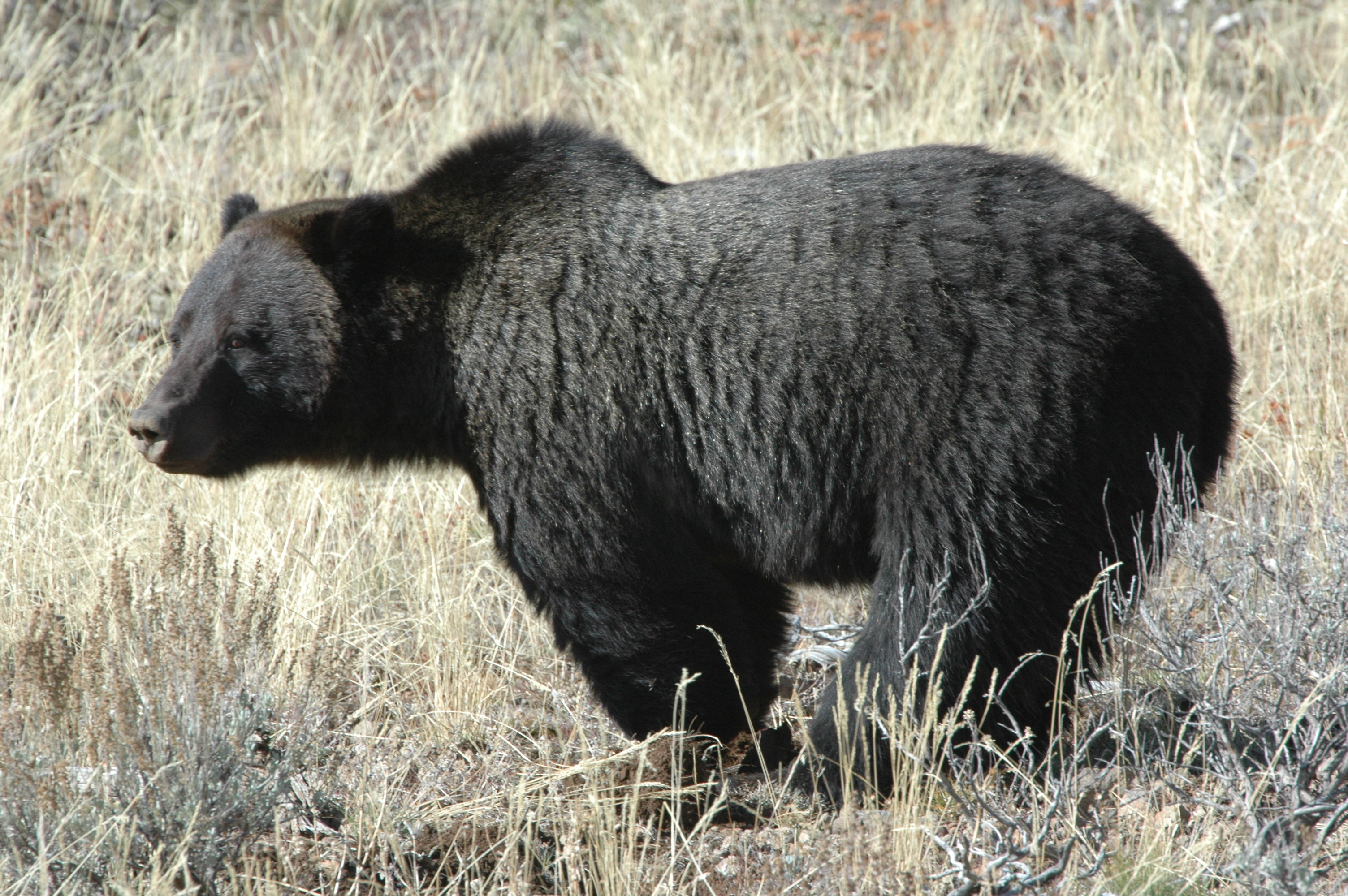
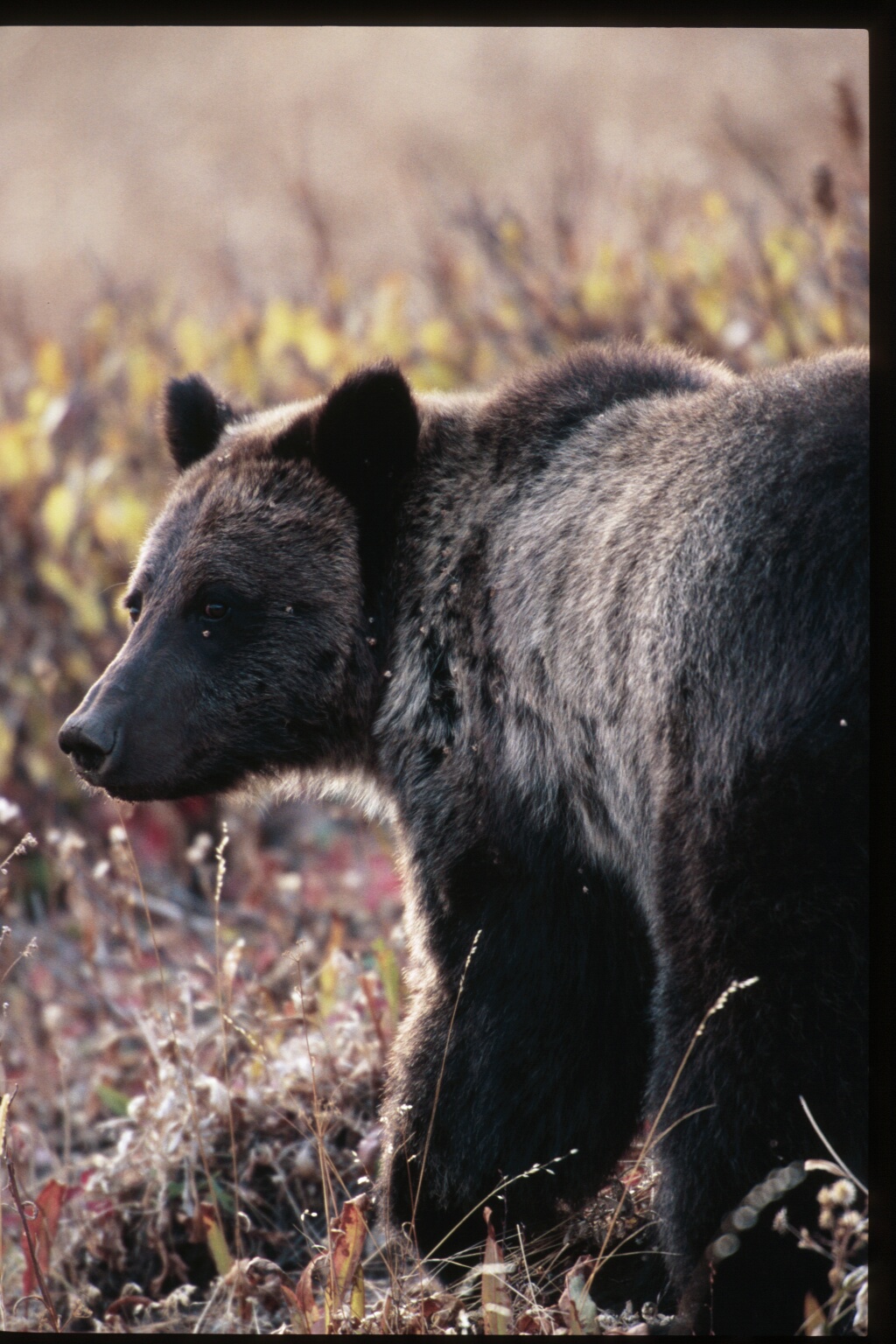
…So, just how hard is it to tell a wolf from a coyote? A black bear from a grizzly? Should hunters be trusted to make that call?

I’ve posted some of my photos below so you can decide for yourself whether coyote hunting should be legal in an area where only 75 individuals of a critically endangered subspecies of wolves exist; or if black bears should be hunted in a grizzly recovery zone.

(Answers at bottom of post.)

Let’s start with an easy one. Choose which is the grizzly bear from the following two photos:

1.

Wildlife Photography Copyright Jim Robertson

Wildlife Photography Copyright Jim Robertson

2.

DSC_0262

So how about these two; same question, (left or right)?

82236aa124e9099856c9b595bcea598c  blue eyed black bear

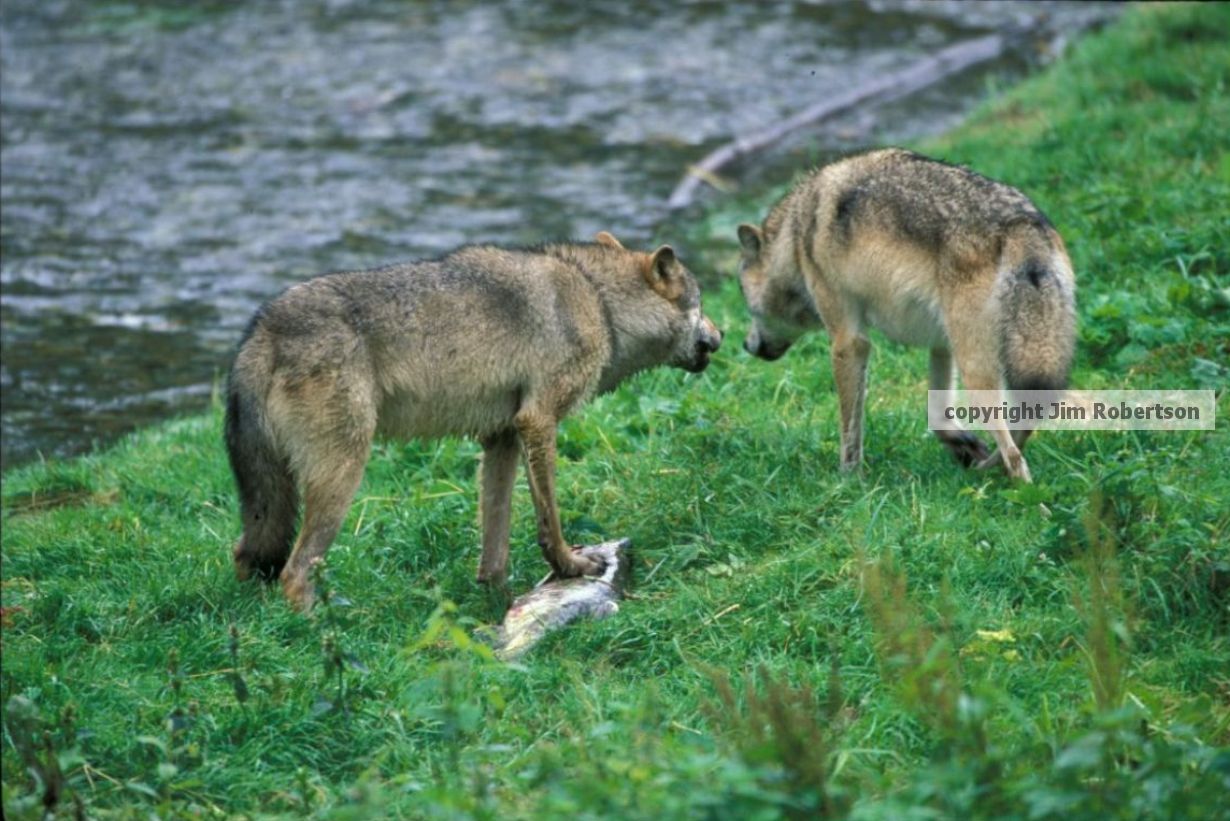
Now, which of these is the wolf?

DSC_0054

DSC_0298

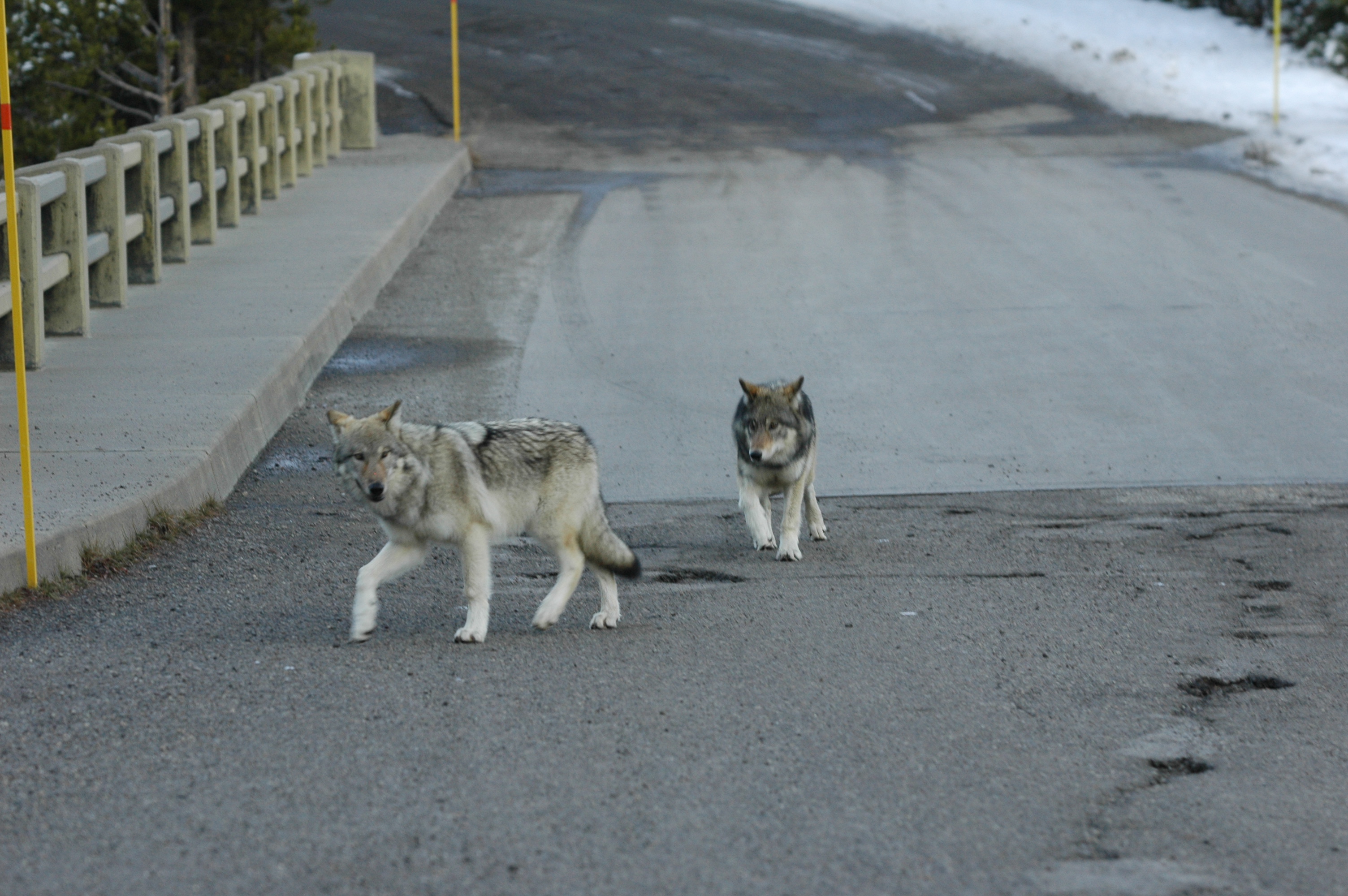
Ok, this last one was a trick question; the two crossing the bridge are young wolves. But you get the point, it’s sometimes hard to tell.

Number 2. is the grizzly, as is the photo on the left below it.

Part of the credo of the alleged “ethical” hunter is, don’t pull the trigger unless you’re dead sure of your target. Better yet, don’t pull it at all; none of these animals deserve to die for your sporting pleasure.


Revise Montana’s Wolf Hunt Proposal

This action alert is from a group of Yellowstone Park wolf watchers; your comments will likely be a bit more “extreme” (such as, “No hunting–leave the wolves alone,” etc.) but there’s good contact info here…


Please Write Montana Fish, Wildlife, and Parks Commissioners: Ask to Revise FWPs Wolf Hunt Proposal 2013-14
June 24 at 5 pm is the Deadline for Public Comment

On May 9, advocates for Yellowstone wolves spoke in Helena and Bozeman, asking for revisions to the FWP Wolf Hunt Proposal. The Commissioners want public comments before they make changes or ratify the Proposal. Now’s the time to send in your comments!

Email Chairman Vermillion and the Commissioners at this link: http://fwp.mt.gov/hunting/publicComments/2013_14proposedWolfSeason.html

Comments can be mailed to FWP – Wildlife Bureau, Attn: Public Comment; P.O. Box 200701; Helena, MT 59620-0701

Send copies of your letter to:

FWP Director Hagener: jhagener@mt.gov

Governor Bullock at this link: governor.mt.gove/contact.aspx

Office of the Governor: P.O. Box 200801: Helena, MT 59620-0801

Overview:

Yellowstone wolves rarely depredate on livestock and are essential for Montana tourism and research. Tourism and the science are intertwined in Yellowstone. For 18 years,data coming out of the Yellowstone Wolf Project has been is one of Montana’s great exports to the world. Science creates radio collared wolves, which can be located, drawing millions of tourists to Montana each year. This sort of tourism encompasses wolf biology, creating citizen scientists who learn about wolf behavior and collect and share data with biologists.

Suggested Points for your Comments:

Applaud the expansion of WMU 316 to include HD 313in your 2013-14 Wolf Hunt Proposal as a big step forward.

FWP gave us something we wolf advocates asked for. Expanding WMU 316 to include parts of HD 313 will save many Yellowstone wolves—because most YNP wolves were killed in HD 313. These wolves live within Yellowstone 95% of the time and leave the park in autumn to follow elk and scavenge on elk gut piles from the hunt.

Ask FWP to extend 316 to include the rest of HD 313.

This closes the gap on Eagle Creek and allows FWP to legally close the hunt around YNP. The new Montana law allows FWP to set low quotas or close hunting around Yellowstone only in designated Wolf Management Units (WMUs.)

Ask FWP to set the quota in expanded WMU 316 at 3 or fewer wolves.FWP has set the quota at 7 wolves. 7 wolves is the same number of Yellowstone park wolves that were killed in 2012—a disaster for wolf tourism and for Yellowstone Wolf Project research.WHY NOT ASK FOR A QUOTA OF ZERO or 1 WOLF IN 316? The Chairman of the Commission, Dan Vermillion, says they will not consider a quota that low.

4. Ask FWP to restrict wolf tags in WMU 316 to one tag per hunter. With a limited quota in WMU 316, one hunter could easily fill the quota all by himself.

5. Ask FWP to delete baiting over traps. It is unethical and unsporting.

6. Ask FWP to close the season in February when hunters will kill and disturb pregnant females as they try to den up.

7. Ask FWP to include wolf tourism and research in FWPs Measurable Objective #3 Objective #3 reads: “Maintain positive and effective working relationships with livestock producers, hunters, and other stakeholders. Revise it to add “wolf tourism, research, and other stakeholders.”

copyrighted Hayden wolf in lodgepoles

After Years of Progress, a Setback in Saving the Wolf

From the New York Times

By VERLYN KLINKENBORG

Published: June 1, 2013

The 1973 Endangered Species Act provides federal protection — breathing space, in a very real sense — to plants and animals threatened with extinction. Had this task been left to the states alone, almost none of the species that have returned to health would have done so.

But the Interior Department’s Fish and Wildlife Service now plans to remove wolves from the endangered list in all 48 contiguous states and transfer control over their fate to the states. This may save the department from running battles with Congress, state officials and hunters about protecting the wolf. Whether it will save the animal is another matter.

Thanks entirely to federal protections, wolves have rebounded remarkably in some places. There are now about 4,000 in Michigan, Minnesota and Wisconsin, and 1,600 or so more in the Rocky Mountain states of Idaho, Montana and Wyoming. Interior has gradually delisted the wolves in all these places because, it says, their numbers are enough to guarantee survival. And it is not necessary to their survival, the service says, to protect wolves elsewhere.

But many scientists argue, persuasively, that these delistings are premature — that the service is giving up on recovery before the job is done. For one thing, they note a 7 percent decline in Rocky Mountain wolves since they were delisted and controlled hunts were authorized. They also note that other recovered species — notably the bald eagle and the American alligator — were allowed to expand into much of their historical range before they were removed from the list.

The historical range of the wolf is nearly the whole contiguous United States. There is suitable habitat all across the West still unoccupied by wolves, including the Pacific Northwest, Northern California and Colorado. A recovering wolf population isn’t static. It spreads as wolves rebound. The northern Rockies and the upper Midwest are proof of that. Can wolves recover suitable parts of their historical range without federal protection? The answer is almost certainly no.

Interior’s plan has little to do with science and everything to do with politics. Congress bludgeoned President Obama’s first interior secretary, Ken Salazar, into delisting the Rocky Mountain wolf. But there is no reason his successor, Sally Jewell, has to accept a plan to delist the wolves everywhere. It is hard enough to protect species that occupy hidden ecological niches. Politics has made it harder still to protect an intelligent, adaptive predator living openly in the wild.

copyrighted Hayden wolf in lodgepoles

Save the Wolves: Support the Rights of All Animals

Make no mistake, I love wolves as much as just about anyone; yet some people practically worship them, putting them above any other species except perhaps whales and dolphins. To be sure, wolves are sacred, but there are folks who think of them as hyper-sentient—the great Northern furred land-dolphin, if you will.

I’m not for a minute denying wolves’ intelligence or adherence to an almost human-like social caste system, but I can’t get behind campaign slogans such as “Real hunters don’t hunt wolves.” I call bullshit on that. Real hunters hunt wolves, coyotes, elk, deer, prairie dogs, pigeons, pronghorn, bears, cougars, raccoons— anything and everything that moves or has ever moved. Hell, they’d probably hunt whales and dolphins if it weren’t for the Federal Marine Mammal Protection Act. Most hunters just want a target and a trophy, they don’t really care what species it is.

Granted, some hunters are more sadistic than others, just as some serial killers revel in their victims’ suffering, while others dispatch their prey as quickly as possible—they’re only interest: harvesting a trophy corpse to have around, for whatever morbid reason. The most sadistic hunters are probably fueled by the fact that there are people out there who adore wolves while state laws still consider delisted wolves “property” like every other non-human animal.

Serial killers have been known to derive sick pleasure from taunting the families of their victims, calling them from prison to recount their murders. The same kind of thing likely goes on in the minds of sadistic wolf hunters who boast and post photos of their kills, knowing that some sentimental environmentalist or animal rightsists might come across one and be hurt or outraged by it. They’d love to know that one of us broke down, burned out or resorted to lethal action because of their post (as long as they weren’t on the receiving end of the action).

The wolf situation is unique among modern-day animal atrocities, in that it’s as yet perfectly “legal” for hunters and trappers to film themselves in action. In sharing them online, they’re banking on the fact that the general public is unmoved and apathetic. But I’d like to think that if factory farmers readily shared footage of their routine acts of animal abuse online, there would be a lot more vegans in this world.

For now, the only way anti-wolf sadists can be stopped is by eliminating them from the world of the living. But if you happen to reside in one of those backward states that have yet to implement a death penalty for wolf hunting, the best advice is to just ignore them like you would the taunts of any other bully. Meanwhile, keep petitioning Facebook and other social media outlets where their death porn appears. As long as animals, including wolves, are seen only as “property” by the powers that be, the people who run Facebook will feel entitled to allow anti-wolf evil to be spread throughout their pages and posts.

Eventually common decency will prevail and violent anti-wolf/anti-animal sites will come under serious scrutiny, just as misogynistic sites recently have. We need to step up the pressure on Facebook and let them know that freedom of speech does not give one the right to victimize. Be sure to sign this petition and pass it on: http://www.change.org/petitions/facebook-executives-ban-sadistic-pages-of-wildlife-torture

Meanwhile, let’s fight for the rights and personhood of all animals, not just a chosen few.

Text and Wildlife Photography ©Jim Robertson, 2013. All Rights Reserved

Text and Wildlife Photography ©Jim Robertson, 2013. All Rights Reserved

Wyoming Proposes Halving its Wolf Quota

Proposed Wyoming wolf quotas attract little public comment;  The Billings Gazette

MAY 25, 2013 12:00 AM • BY CHRISTINE PETERSON CASPER STAR-TRIBUNE

SHERIDAN, Wyo. — A proposed plan to cut the Wyoming wolf-hunting quota in half has generated little public comment during the first several statewide meetings.

Two people went to a wolf meeting held by the Wyoming Game and Fish Department on Wednesday night in Sheridan. Dozens of people went to the Sheridan meeting last year to discuss the first wolf-hunting season, said Mark Bruscino, large-carnivore section supervisor for Game and Fish.

The Pinedale meeting in early May had two attendees. Eleven people went to Dubois and four to Laramie. The upcoming meetings in Cody and Jackson may see larger crowds, said Dan Thompson, large-carnivore biologist with Game and Fish.

“Maybe people think (Game and Fish) has it under control,” said Ron Crispin, one of the two Sheridan meeting attendees.

Game and Fish officials are proposing cutting the wolf quota in northwest Wyoming from 52 to 26 this year. Wyoming’s first hunting season since wolves were delisted ended in December. Hunters killed 42 wolves, filling the quota in six of the 12 hunt areas.

The new quota will reduce Wyoming’s wolf population slightly, but also keep it above 100 wolves and 10 breeding pairs outside of Yellowstone National Park and the Wind River Indian Reservation, a requirement when they were removed from the endangered-species list.

Crispin thinks the new number is conservative. But he also thinks Game and Fish should probably be conservative to avoid wolves going back on the list for protection, he said.

The Jackson Hole Outfitters and Guides Association publicly supported the new quotas in early May, citing the same concern that wolves not return to the list, according to The Associated Press.

Thompson said lower public participation compared to last year may also be because the first hunting season went smoothly and with little controversy.

“People didn’t lose interest, but there was more of a normalization of it,” he said.

Public participation, whether high or low, won’t change how wolves are managed in Wyoming, he added.

At the end of 2012, wildlife officials estimated there were at least 169 wolves, 25 packs and 15 breeding pairs in the trophy game and seasonal trophy game management area, which is most of the northwest corner of Wyoming outside of federal lands. In all of Wyoming, including federal lands, wildlife officials estimated there were 277 wolves, 43 packs and 21 breeding pairs.

That’s about 16 percent fewer wolves in Wyoming than the end of 2011, Bruscino said.

Wildlife officials need to keep about 140 wolves in Wyoming outside of the Yellowstone and the Wind River Reservation to be sure it also has at least 10 breeding pairs. If the number of individual wolves drops closer to 100, breeding pairs could fall below 10, which could eventually trigger relisting, Bruscino said.

The hunting quota is decided by taking the number of wolves at the end of a hunting season, adding an estimate of the number of pups that are born and survive, and removing an estimate of the number of human-caused deaths such as removal for livestock depredation and car wrecks.

Slightly more wolves were killed last year because of livestock issues than biologists planned, and a slightly lower number of pups were brought into the population, Bruscino said. As a result, this year’s hunting-season quota was lower than anticipated.

Wyoming should probably expect a future hunting quota to stabilize between 15 and 25 wolves.

copyrighted Hayden wolf in lodgepoles

PEER Sue Over ‘Political Deals’ Behind Wolf Delisting

From Environmental News Service

WASHINGTON, DC, May 22, 2013 (ENS) – The Obama Administration’s plan to remove the gray wolf from the protections of the Endangered Species Act, as detailed in a draft Federal Register notice released today by Public Employees for Environmental Responsibility, PEER, is temporarily on hold.

The reasons for the indefinite delay announced this week were not revealed nor were the records of closed-door meetings to craft this plan that began in August 2010.

Today a federal Freedom of Information Act lawsuit to obtain the records from those meetings was filed by PEER, a nonprofit national alliance of local, state and federal resource professionals.

The draft Federal Register notice would strike the gray wolf from the federal list of threatened or endangered species but would keep endangered status for the Mexican wolf. No protected habitat would be delineated for the Mexican wolf, of which fewer than 100 remain in the wild.

This step is the culmination of what officials call their National Wolf Strategy, developed in a series of federal-state meetings called Structured Decision Making, SDM. Tribal representatives declined to participate.

On April 30, 2012, PEER submitted a Freedom of Information Act request to the U.S. Fish and Wildlife Service for all SDM meeting notes, handouts and decision documents. More than a year later, the agency has not produced any of the requested records, despite a legal requirement that the records be produced within 20 working days.

Today, PEER filed suit in the U.S. District Court for the District of Columbia to obtain all of the SDM documents.

“By law, Endangered Species Act decisions are supposed to be governed by the best available science, not the best available deal,” said PEER Executive Director Jeff Ruch, pointing to a letter from the nation’s leading wolf researchers challenging the scientific basis for the de-listing plan.

“The politics surrounding this predator’s legal status have been as fearsome as the reputation of the gray wolf itself,” said Ruch.

To support its argument that politics trumps science in deciding how to handle the nation’s wolves, PEER also made public today a letter from 16 scientists to the new Interior Secretary Sally Jewell and U.S. Fish and Wildlife Service Director Dan Ashe expressing “serious concerns with a recent draft rule leaked to the press that proposes to remove Endangered Species Act protections for gray wolves across the Lower 48 States…”

“Collectively, we represent many of the scientists responsible for the research referenced in the draft rule,” wrote the scientists, who specialize in carnivores and conservation biology. “Based on a careful review of the rule, we do not believe that the rule reflects the conclusions of our work or the best available science concerning the recovery of wolves, or is in accordance with the fundamental purpose of the Endangered Species Act to conserve endangered species and the ecosystems upon which they depend.”

Among other problems with the delisting proposal, the scientists say it ignores the positive influence of large carnivores such as wolves on the ecosystems they inhabit.

“The gray wolf has barely begun to recover or is absent from significant portions of its former range where substantial suitable habitat remains. The Service’s draft rule fails to consider science identifying extensive suitable habitat in the Pacific Northwest, California, the southern Rocky Mountains and the Northeast. It also fails to consider the importance of these areas to the long-term survival and recovery of wolves, or the importance of wolves to the ecosystems of these regions,” the scientists wrote.

“The extirpation of wolves and large carnivores from large portions of the landscape is a global phenomenon with broad ecological consequences,” the scientists wrote. “There is a growing body of scientific literature demonstrating that top predators play critical roles in maintaining a diversity of other wildlife species and as such the composition and function of ecosystems. Research in Yellowstone National Park, for example, found that reintroduction of wolves caused changes in elk numbers and behavior which then facilitated recovery of streamside vegetation, benefitting beavers, fish and songbirds. In this and other ways, wolves shape North American landscapes.”

“Given the importance of wolves and the fact that they have only just begun to recover in some regions and not at all in others,” the scientists wrote, “we hope you will reconsider the Service’s proposal to remove protections across most of the United States.”

PEER charges that the resulting National Wolf Strategy used political and economic factors to predetermine the answer to scientific questions, such as the biological recovery requirements for wolves and ruling out areas in states within the species’ historical range which lack sufficient suitable habitat.

“This closed-door process lacked not only transparency but also integrity. It involved no independent scientists, let alone peer reviewed findings,” Ruch said. “It is not surprising that the Fish and Wildlife Service does not want to see this laundry airing in the public domain.”

Jamie Rappaport Clark, president of the nonprofit Defenders of Wildlife, is a former director of the Fish and Wildlife Service who served during the Clinton Administration.

“The gray wolf delisting proposal represents a major retreat from the optimism and values which have been the hallmark of endangered species recovery in this country for the past 40 years,” says Clark. “Instead, the proposal reflects a short-sighted, shrunken and much weaker vision of what our conservation goals should be. The Service has clearly decided to prematurely get out of the wolf conservation business rather than working to achieve full recovery of the species.”

Clark and five other heads of environmental organizations – Center for Biological Diversity, Earthjustice, Endangered Species Coalition, Natural Resources Defense Council and Sierra Club – last week sent a letter to Secretary Jewell asking that she reconsider the nationwide wolf delisting plan.

“Maintaining federal protections for wolves is essential for continued species recovery,” the letter says, adding that the unwarranted assault on wolves in the northern Rocky Mountains after wolves in those states lost federal protections highlights the “increasingly hostile anti-wolf policies of states now charged with ensuring the survival of gray wolf populations.”

Since wolves in Montana, Idaho and Wyoming were delisted in 2011, more than 1,100 wolves have been killed in these Northern Rockies states.

Gray wolf populations were extirpated from the western United Stated by the 1930s, explains the Fish and Wildlife Service. Public attitudes towards predators changed and wolves received legal protection with the passage of the Endangered Species Act in 1973.

Subsequently, wolves from Canada occasionally dispersed south and successfully began recolonizing northwest Montana in 1986. In 1995 and 1996, 66 wolves from southwestern Canada were reintroduced into Yellowstone National Park and central Idaho.

Recovery goals of an equitably distributed wolf population containing at least 300 wolves and 30 breeding pairs in three recovery areas within Montana, Idaho, and Wyoming for at least three consecutive years were reached in 2002, according to the Service.

Copyright Environment News Service (ENS) 2013. All rights reserved.

copyrighted-wolf-argument-settled


Great News For Wolves! For Now

Decision on wolf protections in Lower 48 delayed
May 20, 2013 22:00 GMT

http://ktvl.com/template/inews_wire/wires.national/20f04fe9-www.ktvl.com.shtml

Wildlife advocates and some members of Congress argue that the wolf’s recovery is incomplete because the animal occupies just a fraction of its historical range….

BILLINGS, Mont. (AP) — Federal wildlife officials are postponing a much-anticipated decision on whether to lift protections for gray wolves across the Lower 48 states.

In a court filing Monday, government attorneys say “a recent unexpected delay” is indefinitely holding up action on the predators. No further explanation was offered.

Gray wolves are under protection as an endangered species and have recovered dramatically from widespread extermination in recent decades.

More than 6,000 of the animals now roam the continental U.S. Most live in the Northern Rockies and western Great Lakes, where protections already have been lifted.

A draft proposal to lift protections elsewhere drew strong objections when it was revealed last month.

Wildlife advocates and some members of Congress argue that the wolf’s recovery is incomplete because the animal occupies just a fraction of its historical range.

copyrighted Hayden wolf in lodgepoles