It’s Official: Montana Hates Wildlife

To the casual observer, it would surely seem that Montana hates its wildlife.

Not only does the state continue to escalate its attack on wolves by prolonging its hunting and trapping season and increasing the per hunter quota even as the number of wolves there drops, but now their state legislature is proposing to eliminate free-roaming wild bison altogether, outside the confines of Yellowstone National Park.

The same Montana politicians who just rushed through a bill to expand the state’s ongoing wolf hunting and trapping are now considering new lethal bills to:

•prohibit reintroduction of wild bison into Montana;

•establish a year-round hunting season for bison, with virtually no limitations;

•authorize private landowners to shoot on sight any bison that wandered onto their property;

•order state officials to exterminate or move any wild bison that migrate into Montana.

The grizzly bear is soon to come off the federal Threatened Species list, and thereby lose federal protection. You can bet that states like Montana, Idaho and Wyoming—those few places fortunate enough to still support the bears in their wilderness areas—are planning to add trophy hunting of grizzlies to their long hit list of “big game” species as soon as (in)humanly possible.

But to hear them tell it, Montanans don’t hate all wildlife. They love having out of control populations of ungulates around to “harvest” between shopping trips to WalMart. As long as their Fish, Wildlife and Parks department provides them with huntable populations of “surplus” elk, deer and pronghorn, those token other species—the wolves, grizzly bears and bison—can stay in the national parks, “where they belong.”

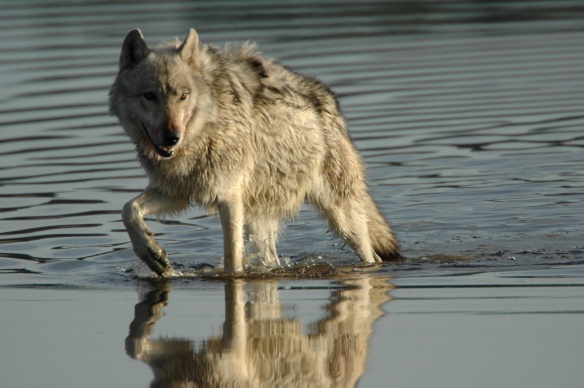
Photos Copyright Jim Robertson

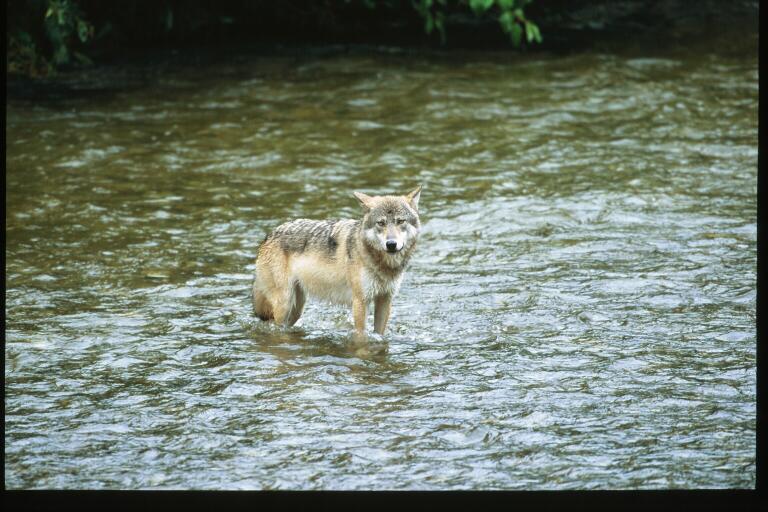
Photos Copyright Jim Robertson


Let Montana Governor Bullock know: “Our Voice Counts, Too!”

The following, from WolfWatcher.org, includes contact info for the MT governor.  More on this issue can be found in my previous blog post, Montana: Love the Place, Hate the Politicians …

Montana Governor Bullock: “Our Voice Counts, Too!”

Montana Governor Bullock: “Our Voice Counts, Too!”

Feb 10th, 2013

Posted in: All News, Front Page News, News, North American Wolves News, Northern Rockies News, Take Action, WolfWatcherYellowstone Wolf Project biologists are speaking out about a record number of wolves that were lost to this year’s hunting season in an article, “YNP biologists struggle to maintain wolf research,”  published in the Bozeman Daily Chronicle, Feb. 9, 2013.

“This is the first year that wolves were hunted on every side of the park. They’ve learned to tolerate people in the park, but that gets them in trouble if they leave. Some wandered outside the park, and within six hours, they were dead…The park has an international constituency and our mission is preservation. The kills are a big hit on our research, but another big concern for us is that too many kills affect visitor enjoyment,” said YNP wolf biologist Doug Smith.

More state bills have been introduced seeking to reduce the wolf populations with even more aggressive management ‘tools’ that make it easier to hunt and trap more wolves – even in areas near Yellowstone and Glacier National Parks. House Bill 73 has been fast-tracked to the Governor’s office, too.

Yellowstone National Park is posting record attendance numbers – a 2% increase to 3.4 million visitors in 2012.  With a projected 65 million international visitors to the USA in 2012 and more in 2013, Yellowstone National Park is the largest international draw in the Northern Rockies region.    With three of the five gateways accessed through Montana, the state serves to benefit from this increased traffic.

We heard that Montana’s Governor’s Office is disregarding calls and emails from tourists. Interestingly, the North Entrance at Gardiner, the area where zone closures were recently proposed and denied near Yellowstone , suffered a 5% loss in visitors in 2012.

We conclude that potential tourists are turned off when they learn about more aggressive hunting and trapping practices in the state.  So, is Montana killing the largest growing industry in the region – eco/wildlife tourism along with this apex predator?    We think so!

It’s time for us to remind Governor Bullock that our tourism dollars affect the economic future of his state and our voice counts!  We ask that you call the following officials to tell them you oppose the bill because it is anti-science, anti-eco-tourism, and anti-jobs!

1 – Montana Governor Bullock: tell him to VETO HB 73

Telephone: Toll Free Number: 855-318-1330;  Montana: 406-444-3111

governor@mt.gov and  http://governor.mt.gov/contact.aspx

2 – Gov. Bullock’s Natural Resources Adviser, Tim Baker: tbaker@mt.gov and 406-444-7857

3 – Montana Office of Tourismmt-webmaster@visitmt.com   Phone: 1-406-841-2870

4 – Montana’s Official Travel Sitehttp://www.visitmt.com/feedback/ or call 1-800-847-4868


REFERENCE:

House Bill 73 – introduced at the request of Montana Fish, Wildlife & Parks to increase the tools available to hunters to successfully kill more wolf populations (http://data.opi.mt.gov/bills/2013/billpdf/HB0073.pdf)

  • Reduces the price of nonresident licenses REDUCING THE PRICE OF A NONRESIDENT LICENSE;
  • Allows use of recorded or electronically amplified calls in wolf hunting; ALLOWING USE OF RECORDED OR ELECTRONICALLY AMPLIFIED CALLS;
  • Exempts hunters from wearing orange outside the general deer and elk hunting season
  • Prevents the creation of wolf harvest buffer zones and wolf harvest closures around national parks; In an area immediately adjacent to a national park, the commission may not: prohibit the hunting or trapping of wolves; or close the area to wolf hunting or trapping unless a wolf harvest quota established by the commission for that area has been met.”

Montana’s Wolf “Problem” Doesn’t Add Up

Montana’s resident human population recently topped a million, according to census takers. That may not seem like a lot in today’s grossly overcrowded world, where dozens of U.S. cities could boast three or four times that number (if wall to wall people were something to boast about). But compare 1,000,000 humans to the estimated 650 or so wolves in the state and it’s pretty clear which species’ population is out of control.

It’s not like I’m comparing apples and oranges here, either. Both species are predatory mammals (although human beings don’t have to predate, they just do it for fun), and carnivorous (unlike wolves, we can get by–a lot healthier, I might add–on a plant-based diet). Both wolves and humans would be considered large animals, roughly equal to each other in size and weight (well, actually, the average wolf weighs around 100 pounds, whereas the average Montanan weighs in at 3 or 4 times that nowadays).

Meanwhile, thanks to humans, there are two and a half million cows in the state. That’s two and half million cows, each of whom is slated to eventually be killed and eaten by humans. Wolf livestock predation amounts to only a tiny of that number; in 2011 for instance, 74 cows were killed by wolves. As Roger commented yesterday, 74 divided by 2,500,000 is .00029 percent, statistically zero. Range cattle are 147 times more likely to fall prey to intestinal parasites than to wolves. Yet those 74 cows amount to a wolf “problem,” according to the state of Montana and are cause to declare open season on wolves there.

So far this season, hunters and trappers have killed nearly 200 wolves. Montana wildlife officials say they are hoping to reduce the wolf population to around 450. That number does not even come close to representing a recovered state wolf population by any historical standards when you consider that in 1884, 5,450 wolves were killed in the Montana Territory, after a bounty was first initiated there. Before that, wolves probably outnumbered people.
How I long for the good old days.

Text and Wildlife Photography ©Jim Robertson, 2013. All Rights Reserved

Text and Wildlife Photography ©Jim Robertson, 2013. All Rights Reserved

California Lynch Mob Targeting Coyotes

In a scene all too reminiscent of something out of the movie, Mississippi Burning, a rural sheriff is urging his hate-filled, violence-prone constituents to defy federal law enforcement officers and continue their attacks on the objects of their redneck derision. This time, instead of the Deep South, the setting is extreme Northeastern California, and rather than the Civil Rights Amendment, the federal law being defied is the Endangered Species Act. The potential victim warranting protection is a wolf known as OR7, who could be caught in the crossfire of a depraved tradition know as a “contest hunt” targeting coyotes with the savage glee of an angry lynch mob.

The above analogy highlights how far we’ve come in terms of civil rights since the early ‘60s—and just how far we have to go before the country embraces the mere concept of animal rights. Try to suggest relegating any group of people to the back of the bus these days and see how many friends you make. But any asshole with an evil will (and maybe an extra shotgun or semi-automatic rifle or two to offer as grand prize for the highest body count) can legally propose a contest to kill as many intelligent, highly social—yet woefully unprotected—canines as state “game” laws allow. (And most western state game departments don’t even set a “bag limit” on coyotes.) Sadly, non-humans still have a ways to go before any but the most endangered are granted even the right to their very lives.

From Project Coyote:

For Immediate Release, February 8, 2013

Modoc County Sheriff Goes Rogue, Vows to Defy Federal Laws During Coyote Hunt

Hunt Continues Despite Public Opposition, Concerns over California’s Lone Wolf

SAN FRANCISCO — The Animal Welfare Institute, Project Coyote and Center for Biological Diversity are seeking an immediate investigation of Modoc County Sheriff Mike Poindexter for his decision to defy federal laws and advocate the violation of those laws during this weekend’s Coyote Drive 13, a coyote-killing contest in and near Modoc County.

A letter to the editor of the Modoc County Recorder on Feb. 7 by Sheriff Poindexter said he won’t “tolerate any restriction of legal hunting on our public lands” despite federal laws prohibiting or regulating coyote hunting on federal lands in and near Modoc County.  He also recommended that any hunt participant who is questioned or detained by federal enforcement officials for illegally hunting on federal lands to “cooperate but stand their ground and call the Sheriff’s Office” and that sheriff deputies “absolutely will not tolerate any infringement upon your liberties pertaining to accessing or legally hunting on your public lands.”

“Despite claiming to uphold the U.S. Constitution, Sheriff Poindexter has decided he will not enforce and is encouraging others to flout those federal laws which he opposes,” said D.J. Schubert, wildlife biologist with the Animal Welfare Institute. “This is a blatant breach of his duty as a law enforcement officer and a violation of the Law Enforcement Code of ethics.”

The groups have contacted the district attorney for Modoc County, the California Attorney General’s office, the U.S. Attorney for the Eastern District of California and a number of state and federal agencies advising them of Sheriff Poindexter’s comments and asking for urgent intervention.

“These laws are on the books to protect our public lands and the wildlife that live there. Not only does this coyote hunt put OR-7 and other wolves at risk, but now it’s also shaping up to be some kind of Wild West misadventure where the sheriff is thumbing his nose at federal laws,” said Amaroq Weiss, West Coast wolf organizer at the Center for Biological Diversity.

Poindexter’s statement comes in the wake of public outcry that generated more than 20,000 letters, emails, and petition signatures into the California Department of Fish and Wildlife and the California Fish and Game Commission calling for an end to Coyote Drive 2013 and a top-to-bottom evaluation of the state’s approach to managing predators in California.

“Given the serious potential for violations of state and federal laws barring predator hunting on public lands, the threat this hunt poses to OR-7 and any un-collared wolves in the area, and the public’s clear opposition to this killing contest, the state should take immediate action to call off Coyote Drive 2013 now,” said Camilla Fox, Project Coyote executive director and a wildlife consultant to the Animal Welfare Institute.

—-

Project Coyote promotes educated coexistence between people and coyotes by championing progressive management policies that reduce human-coyote conflict, supporting innovative scientific research, and by fostering respect for and understanding of America’s native wild “song dog.” http://www.projectcoyote.org/

The Animal Welfare Institute is dedicated to reducing animal suffering caused by people. AWI engages policymakers, scientists, industry and the public to achieve better treatment of animals everywhere — in the laboratory, on the farm, in commerce, at home, and in the wild. http://awionline.org

The Center for Biological Diversity is a national, nonprofit conservation organization with more than 450,000 members and online activists dedicated to the protection of endangered species and wild places. http://www.biologicaldiversity.org/

You can find the Stop the Coyote Contest Hunt Petition at Change.org:

http://www.change.org/petitions/ca-dept-of-fish-wildlife-f-g-commission-stop-coyote-killing-contest

Text and Wildlife Photography ©Jim Robertson, 2013. All Rights Reserved

Text and Wildlife Photography ©Jim Robertson, 2013. All Rights Reserved

Save the Animals—For Their Sake, Not Mine

Anthropocentricism is so deeply imbedded into the human psyche that these days it’s even hard to find a wildlife-related action alert which doesn’t focus on how some group of people might benefit from the continued existence of a given species. The well-being of the individual animal—let alone its species—so often takes a back seat to the ways humans benefit or profit from them.
Take wolves, for example. When Montana’s wildlife lawmakers were considering closing a few small areas around Yellowstone to wolf hunting and trapping, the primary reasons given by most wolf proponents for wanting the exclusion zones had to do with the value wolves have as tourist attractions and as part of a scientific study. To the majority of those who testified, the facts that the wolves themselves are sentient beings and/or are essential elements in nature’s design—who don’t deserve to be shot on sight as vermin—seemed secondary to the ways in which watchers and biologists were affected by the wrongful deaths of Yellowstone wolves.

Similarly, a petition to force Facebook to remove the page, Wolf Butchering, Cooking, and Recipes reads, “To protect the Wolves, and the Sensitivities of Native Americans. It is offensive, and a discrimination against the Religious Beliefs of Native Americans.” Of course I signed the petition, but I did so for the sake of the wolves, not because of anyone’s purported religious beliefs. I’m against cannibalism as well—for the sake of the victims of such barbarity, not because the culinary choice is considered a cultural taboo. At the same time, I don’t want migratory waterfowl habitat set aside just so I can go bird watching, or to save the whales so I can go whale watching. It’s about them, not about our perception or enjoyment of them.

As we’ve all heard, ad nauseam, “sportsmen” help wildlife by hunting—or so they would have us believe. As James McWilliams blogged in a timely post entitled Hunting, Land Conservation, and Blood Lust, “This land preservation defense of hunting is a common one. Get enough people who like to blow away animals on board and you can prevent undeveloped land from becoming a Walmart,” dispelling this myth with, “The vast majority of conservation-driven hunting policies are designed not to improve the quality of a particular ecosystem but to improve the quality of the hunt.”

Westerners didn’t know okapis or orangutans even existed until around a century ago. Were the lives of such unutilized and therefore unappreciated animals meaningless up until the day they were “discovered”? You or I may never get the chance to see a black rhino or a snow leopard, but that certainly doesn’t diminish their intrinsic value.

Text and Wildlife Photography ©Jim Robertson, 2013. All Rights Reserved

Text and Wildlife Photography ©Jim Robertson, 2013. All Rights Reserved

Starting to Look Like Speciescide

It’s been another bad week for wolves in the Rocky Mountain States…

MFWP reports: On January 25th the Montana State wildlife officials canceled the Jan. 29 conference call to reconsider a recent court-challenged decision to close the wolf hunting and trapping seasons in two areas north of Yellowstone National Park. The areas were closed by the Montana Fish, Wildlife & Parks Commission on Dec. 10, in response to concern about the harvest of wolves with collars that supply scientific information to YNP researchers. The seasons, however, were reopened by the district court in Livingston in response to a lawsuit brought by several sporting groups and a state representative from Park County.

FWP officials said today that the best course of action is to fully follow the judge’s Jan. 18 order that prohibits FWP from enforcing the wolf hunting and trapping closure.


“The judge clearly stated that FWP would have to return to the court to apply for an order to dissolve the injunction and have proof that requisite public notice was given. We have simply run out of time,” said Ron Aasheim, FWP’s spokesman in Helena. Aasheim noted that wolf hunting and trapping season is set to end in 34 days, on Feb. 28, and that obtaining a hearing and court action prior to the end of the wolf hunting season would be unlikely.

Meanwhile, The Jackson Hole News and Guide ran an article stating:

Predator zone eliminates wolves

By Mike Koshmrl, Jackson Hole, Wyoming

Date: January 25, 2013

Wyoming officials wanted wolves removed from much of the state, and their hands-off management method has worked as designed.

Wolves can be killed in a “predator zone,” which covers 85 percent of the state, by almost any method, at any time, in any number and without a license. The anything-goes rules have had the desired effect: Wyoming Game and Fish Department harvest reports show that 31 of the canines have been killed in the predator zone since October. That’s more than the 20 to 30 animals department biologists estimated roamed the zone last year.

“It appears the predator zone is reducing wolf numbers there significantly,” said Mark Bruscino, Game and Fish’s large carnivore supervisor. “That’s what the management strategy was designed to do.”

Wyoming’s latest wolf management plan regulates wolf hunting in a trophy game area that encompasses about 15 percent of northwest Wyoming, including most of Jackson Hole. A portion of the trophy game area south of Highway 22 and Wilson is a flexible zone that rotates between being a free-fire zone and regulated hunting area.

Duane Smith, the wild species program director for the Biodiversity Conservation Alliance, said the state’s management plan outside the trophy hunt area is “essentially an eradication program.”

“If you cut off the ability of a species to disperse, you essentially fence them in,” Smith said.

The alliance has filed one of three lawsuits against the U.S. Fish and Wildlife Service to try to re-establish protections for wolves in Wyoming.

But Bruscino defended the predator zone approach.

“Minnesota, Idaho and Montana also have incredibly liberal hunting provisions in some areas,” he said. “They aren’t that dissimilar from the predator area.”

And in Colorado, the group Wild Earth Guardians asks:

Sharpshooters, but not Wolves, in Rocky Mountain National Park?

WildEarth Guardians was frustrated but not yet defeated in early January when, in a stunning blow, the 10th Circuit Court of Appeals ruled that it wasn’t feasible for Rocky Mountain National Park to consider a wild wolf restoration, in spite of the Park being overrun by elk. The court concluded that it made more sense for hunters rather than wolves to kill elk in a national park. We believe allowing hunting in a national park sets a dangerous policy precedent. More importantly, wolves would have done what hunters cannot: keep sedentary elk constantly on the move preventing overbrowsing and protecting fragile streamsides and aspen groves. Wolves easily detect and remove diseased and sick prey animals. Guardians is committed to having wolves roam free in Colorado.

Add it all up and it’s seriously starting to look like a policy of speciescide for wolves…

Wildlife Photography ©Jim Robertson, 2013. All Rights Reserved

Wildlife Photography ©Jim Robertson, 2013. All Rights Reserved


Restoring the Imbalance–for Hunters

First, here’s an urgent message from Defenders of Wildlife:

…In the past year more than 400 wolves have been killed in Idaho, and last week the Idaho Fish and Game Commission approved a proposal to pay Wildlife Services $50,000 to launch a new round of wolf killing – which could include aerial gunning of wolves under the excuse of artificially inflating elk herds to make hunting them easier. This death-by-helicopter or airplane plan is misguided and wrong!

Last year, Idaho called in Wildlife Services to kill wolves in the central part of the state to artificially boost game populations in the region – and it appears that they’re planning on doing it again…

Clearly, hunters want their cake and eat it too. Out of one side of their mouth they declare there are too many elk and that they are doing the animals a favor by killing them to prevent overgrazing. Yet when wolves spread out and successfully reclaim some of their former territories, hunters resent the competition and call for every brutal tactic imaginable to drive wolves back into the shadows, thereby restoring the imbalance that hunters depend on to justify their exploits.

The point of recovering endangered species should be to bring back and/or protect enough biodiversity to allow nature to function apart from human intervention. The presence of predators like wolves can help to restore a sense of natural order and nullify the claims by hunters that their sport is necessary to keep ungulate populations in check.

Wolves in Yellowstone have been keeping elk on the move enough to allow willows to thrive once again in places like the Lamar Valley. Newly emerging willow thickets in turn provide food and shelter for an array of species, from beavers to songbirds. The loss of each thread of biodiversity brings us one step closer to a mass extinction spasm that would wreak more destruction and animal suffering than the Earth has seen in some 50 million years.

Now more than ever we need to counter the hunter agenda at every turn, for the sake of a functioning planet. It’s time to put an end to the notion that wildlife are “property” of the states, to be “managed” as their “managers” see fit. The animals of the Earth are autonomous, each having a necessary role in nature. Only human arrogance would suppose it any other way.

Text and Wildlife Photography ©Jim Robertson, 2012. All Rights Reserved

Text and Wildlife Photography ©Jim Robertson, 2012. All Rights Reserved

State Agency Game Farming Is Not Compatible with Ecosystem Integrity

The following pro-wildlife/anti-wolf hunting article puts today’s “game” department policies into perspective…

State Agency Game Farming Is Not Compatible with Ecosystem Integrity
by George Wuerthner

With the delisting of wolves from protection under the Endangered Species Act, management of wolves has been turned back to the individual states where wolves occur. In most of these states, we see state agencies adopting policies that treat wolves as persona no grata, rather than a valued member of their wildlife heritage. Nowhere do I see any attempt by these state agencies to educate hunters and the general public about the ecological benefits of predators. Nor is there any attempt to consider the social ecology of wolves and/or other predators in management policies. Wolves, like all predators, are seen as a “problem” rather than as a valuable asset to these states.

In recent years state agencies have increasingly adopted policies that are skewed towards preserving opportunities for recreational killing rather than preserving ecological integrity. State agencies charged with wildlife management are solidifying their perceived role as game farmers. Note the use of “harvest” as a euphemism for killing. Their primary management philosophy and policies are geared towards treating wildlife as a “resource” to kill. They tend to see their roles as facilitators that legalize the destruction of ecological integrity, rather than agencies dedicated to promoting a land ethic and a responsible wildlife ethic.

Want proof? Just look at the abusive and regressive policies states have adopted to “manage” (persecute) wolves and other predators.

Idaho Fish and Game, which already had an aggressive wolf killing program, has just announced that it will transfer money from coyote killing to pay trappers to kill more wolves in the state so it can presumably increase elk and deer numbers.

The Montana Department of Fish, Wildlife and Parks (MDFWP) which many had hoped might be a bit more progressive in its predator attitudes, supports new regulations that will expand the wolf killing season, number of tags (killing permits), and reduces the license fee (killing fee) charged to out of state hunters who want to shoot wolves.

Wyoming is even more regressive. Wolves are considered “predators” with no closed season in many parts of the state.

Alaska, perhaps displaying the ultimate in 19th Century attitudes that seem to guide state Game and Fish predator policies, already has extremely malicious policies towards wolves, and is now attempting to expand wolf killing even in national parks and wildlife refuges (it is already legal to hunt and trap in many national parks and refuges). For instance the Alaska Fish and Game is proposing [aerial?]-gunning of wolves in Kenai National Wildlife Refuge and wants to extend the hunting/trapping season on wolves in Lake Clark National Park, Katmai National Park, and Aniakchak National Preserve until June, long after pups have been born. Similar persecution of wolves to one degree or another is occurring in Minnesota, Wisconsin and Michigan, which have been given management authority for wolves in those states.

Although some states like Montana changed their name from “game” to wildlife, their attitudes and policies have not changed to reflect any greater enlightenment towards predators.

Montana recently increased the number of mountain lions that can be killed in some parts of the state to reduce predation on elk.

South Dakota Game, Fish and Parks is on a vendetta against a newly established mountain lion population in that state, and greatly increased mountain lion kill in a small and recently established population of these animals.

The Wyoming Game and Fish is almost salivating at the prospect of grizzly delisting so hunters can kill “trophy” grizzly bears.

I could give more examples of state game agencies that have declared war on predators in one fashion or another.

The point is that these agencies are still thinking about predators with a 19th Century mindset when the basic attitude was the “only good predator is a dead predator” and the goal of “wildlife management” was to increase hunter opportunities to shoot elk, deer, moose and caribou. These ungulates are seen as desirable “wildlife” and predators are generally viewed as a “problem.”

Many state game farming agencies suggest that they have to kill these carnivores to garner “social acceptance” of predators. Killing wolves, bears, coyotes and mountain lions is suggested as a way to relieve the anger that some members of the ranching/hunting/trapping community have towards predators. Is giving people who need counseling a license to kill so they can relieve their frustrations a good idea? Maybe we should allow frustrated men who are wife beaters to legally pound their spouses as well?

Despite the fact that many of these same agencies like to quote Aldo Leopold, author of Sand County Almanac, and venerate him as the “father” of wildlife management, they fail to adopt Leopold’s concept of a land ethic based upon the ecological health of the land.

Aldo Leopold understood that ALL wildlife have an important role to play in ecosystem integrity. Decades ago back in the 1940s he wrote: “The outstanding scientific discovery of the twentieth century is not television, or radio, but rather the complexity of the land organism. Only those who know the most about it can appreciate how little we know about it. The last word in ignorance is the man who says of an animal or plant: “What good is it?” If the land mechanism as a whole is good, then every part is good, whether we understand it or not. If the biota, in the course of aeons, has built something we like but do not understand, then who but a fool would discard seemingly useless parts? To keep every cog and wheel is the first precaution of intelligent tinkering.”

To keep every cog and wheel means keeping not only species from going extinct, but maintaining the ecological processes that maintain ecosystem function. What makes state game farming policies so unacceptable is that there is no excuse for not understanding the ecological role of predators in ecosystem integrity. Recent research has demonstrated the critical importance of predators for shaping ecosystems, influencing the evolution of prey species, and maintaining ecosystem integrity. We also know that predators have intricate social relationships or social ecology that is disrupted or destroyed by indiscriminate hunting.

Yet state game farming agencies continuously ignore these ecological findings. At best the policies of game farming agencies demonstrates a lack professionalism, or worse, maybe they are just as ignorant of recent scientific findings as the hunters/trappers they serve.

Ironically these same state game farming agencies see that the numbers of hunters and anglers are declining, along with their budgets. Agencies depend upon the killing fees (licenses and tags) charged to hunters and anglers for the privilege of killing and privatizing public wildlife to run their operations. Yet instead of broadening their base of support from other wildlife watchers to those interested in maintaining ecological integrity, these agencies are circling the wagons, and adopting policies that reflect the worse behaviors and attitudes of the most ignorant and regressive hunting/trapping constituency. In the process, they are alienating more moderate hunters and anglers, as well as the general public.

The problem is that state game farming agencies have a conflict of interest. Their budgets depend on selling killing permits which depends upon the availability of elk, deer, moose and caribou to kill, not more predators. Any decline in the population of these “game” animals is seen as a potential financial loss to the agency. Therefore, these agencies tend to adopt policies that maintain low predator numbers. Yet these same agencies are never up front about their conflict of interest. They pretend they are using the “best available science” and “managing” predators to achieve a “balance” between game and predators.

Because of this conflict, game farming agencies turn a blind eye to ethical considerations as well. Most of the public supports hunting if one avoids unnecessary suffering of the animals—in other words, makes a clean kill. They also want to know the animal did not die in vain and the animals is captured and/or killed by generally recognized codes of ethical behavior. In other words, the animal is consumed rather than killed merely for “recreation” or worse as a vendetta and the wildlife has a reasonable chance of evading the hunter/trapper. But when the goal is persecution, ideas about ethics and “fair chase” are abandoned.

Personally I would rather see state agencies reform themselves and adopt more inclusive, informed and progressive attitudes towards all wildlife, especially predators. But judging from what I have seen, it appears these state game farming agencies are headed in the opposite direction.

If they continue down this path, it’s clear that they will lose legitimacy with the public at large. Efforts to take away management authority will only strengthen. For instance, voters in a number of states have already banned the recreational trapping of wildlife, always over the objections of state game farming agencies. Efforts are now afoot to ban trapping in Oregon and I suspect other states will soon follow suit.

The next step will be to take away any discretion for hunting of predators and perhaps ultimately hunting of all wildlife. The trend towards greater restrictions is seen as the only way to rein in the abusive policies of state game farming agencies. In California, the state’s voters banned hunting of mountain lions in 1991. Oregon banned hunting of mountain lion with dogs. In other states, there are increasing conflicts between those who love and appreciate the role of predators in healthy ecosystems, and state game farming agencies.

Bans on all hunting has even occurred in some countries. Costa Rica just banned hunting and Chile has so limited hunting that it is effectively banned.

I suggest that the negative and maltreatment of predators displayed by game farming agencies in the US, will ultimately hasten the same fate in the U.S.

ABOUT THE AUTHOR
George Wuerthner is an ecologist and former hunting guide with a degree in wildlife biology

Contact info for MFWP

Here are two things you can do for wolves in the Yellowstone area…

1. Plan to attend the Montana FWP meeting Tuesday January 29, 2013 at 10 am to make a public comment: asking MTFWP to close the wolf hunt. You will have 2 minutes to speak.

2. Send a letter to MTFWP: Email Montana FWP Commissioners: fwpcomm@mt.gov, FWP Director Hagener: jhagener@mt.gov and Montana Governor Bullock: governor@mt.gov

Here are some things Bear Creek Council’s has written to FWP, which you might use as talking points:

YNP Wolf Project had lost 8 or more radio-collared and uncollared Yellowstone research wolves to hunting in Montana. Millions of tourists around the world were outraged to hear of the deaths of wolves they have observed. Montana’s economy depends on wolf and wildlife tourism, which brings in more dollars than ranching or hunting outfitting.

We want to see wolves protected in Yellowstone National Park and in the Gallatin National Forest/Absaroka-Beartooth Wilderness areas:

1. Our region depends economically on wolf tourism in Yellowstone Park and our National Forest. People come here to hike in wolf country or to visit the number one place in the world to observe wild wolves, Yellowstone National Park. Montana has begun hammering away at the wolves here, allowing hunters to take an inordinate number from our region and damaging an invaluable economic, educational, and research wildlife population.

2. We value and want to advance YNP Wolf Project research on predator-prey relationships and other science about wolves.

MTFWP claims its management polices are based on hard science, but aside from the YNP Wolf Project’s 18 years’ work, there are very few long-term studies of wolf predator-prey relations. Why isn’t Montana protecting the some of the best research on wolf-prey relationships? Why aren’t we protecting the study subjects—Yellowstone wolves?

One value of YNP Wolf Project is that it studies one of the largest unexploited wolf populations in the world. Until Montana’s hunts in opened the hunts in 2009 and 2012, there were practically no human-caused wolf mortalities in the park. Does Montana FWP want to be responsible for destroying one of the best research projects on wolves in the world?

3. We want to see wolves valued as native Montana and North American wildlife and for their role in our predator-prey ecosystem.

WTF’s Up w/MFWP?

What the Fuck (WTF) is up with the Montana state wildlife officials these days? Now they want to make it even easier to hunt and trap wolves in their state.

Last year, just after wolves were removed from federal endangered species protection, the Montana Fish, Wildlife and Parks department (MFWP) seemed comparably tame (well, compared to Idaho anyway). Though they wasted no time in implementing the state’s first season on wolves in seventy-some years, at least they spared wolves the torment of trapping.

Ignoring 7,000 letters in support of wolves, this year they added trapping to their wolf assault and upped the original “bag limit” from one to three per trapper—before the season even started. Instead, they’re bowing to the whims and whinings of ranchers, hunters and trappers who have called for an expansion of wolf killing and more liberal rules than the state had last year, when “only” 166 wolves were ruthlessly murdered. MFWP officials responded to anti-wolf, anti-nature, anti-environmental pressure by making the 2012 season longer, eliminating most quotas and allowing wolf trapping for the first time.

The agency is now mercilessly asking for additional measures in the form of a state House Bill, HB 73. Their proposal would let hunters and trappers buy multiple tags; use electronic wolf calls; reduce the price of a non-resident tag from $350 to $50 and eliminate the potentially life-saving requirement that hunters wear fluorescent orange outside of elk and deer season. (Okay, I’ll go along with that last one—who cares if wolf hunters shoot each other?)

“We want to get a wolf bill out of the Legislature so we can implement those things that can potentially make a difference,” said FWP spokesman Ron Aasheim, adding selfishly, “More management flexibility. That’s what we want now.”

The House committee will also take up a second bill by Republican Rep. Ted (oh shit, not another Ted!) Washburn, of Bozeman, which would also limit the total number of wolves allowed to live in the entire state (we’re talking 147,046 square miles) to no more than 250. Washburn’s plan also asks for an Oct. 1-Feb. 28 wolf hunting season and an even longer season for special districts next to Yellowstone and Glacier National Parks!!

No doubt you all remember that fateful day in 2011 when congress lifted federal protections for wolves in Montana and Idaho, handing management over to those openly hostile states.

Meanwhile, the nefarious Montana state wildlife officials are currently opposing federal Threatened Species protection for the depressingly rare wolverine, down to only 35 breeding individuals in the lower 48.

Not many hunters can honestly say that they don’t mind sharing “their” elk, moose or deer with the likes of wolves, cougars or coyotes. But those few who claim to support a diversity of life need to realize that every time they purchase a hunting license and a deer or elk tag, they validate wolf hunting and trapping. To game managers, every action, right down to the purchase of ammo and camo at Outdoor World, is a show of support for their policies—including killing wolves to ensure more deer, elk, moose or caribou for hunters to “harvest.”

A far cry from living up to their laughably undeserved reputation as the “best environmentalists,” hunters are just foot-soldiers carrying out a hackneyed game department program of “harvesting” ungulates and “controlling” predators. It’s an agenda based not on science or the time-tested mechanisms of nature, but on the self-serving wants of a single species—Homo fucking sapiens (HFS). Modern hunting is about as anti-environmental as mining, clear-cut logging, commercial fishing or factory farming.

Text and Wildlife Photography ©Jim Robertson, 2012. All Rights Reserved

Text and Wildlife Photography ©Jim Robertson, 2012. All Rights Reserved