http://www.speakforwolves.org/
West Yellowstone, Montana
An opportunity for the American people to unite and demand wildlife management reform and restore our national heritage.
http://www.speakforwolves.org/

http://www.speakforwolves.org/
West Yellowstone, Montana
An opportunity for the American people to unite and demand wildlife management reform and restore our national heritage.
http://www.speakforwolves.org/

Around this time last year, wolf advocates celebrated news that after traveling thousands of miles alone looking for love and a new home, Oregon’s famous lone wolf OR-7 had found a mate and welcomed a litter of pups into the world.
Now wolf advocates are celebrating confirmation that not only are the three known pups who were born last year thriving, but the family, now formally known as the Rogue Pack, has welcomed yet another litter this spring.
Remote cameras caught last year’s pups playing in the Rogue River-Siskiyou National Forest in late June and officials collecting the cameras found pup scat in the area, which led to the recent confirmation of
Read more: http://www.care2.com/causes/oregons-famous-wolf-welcomes-more-pups.html#ixzz3gvsOokze

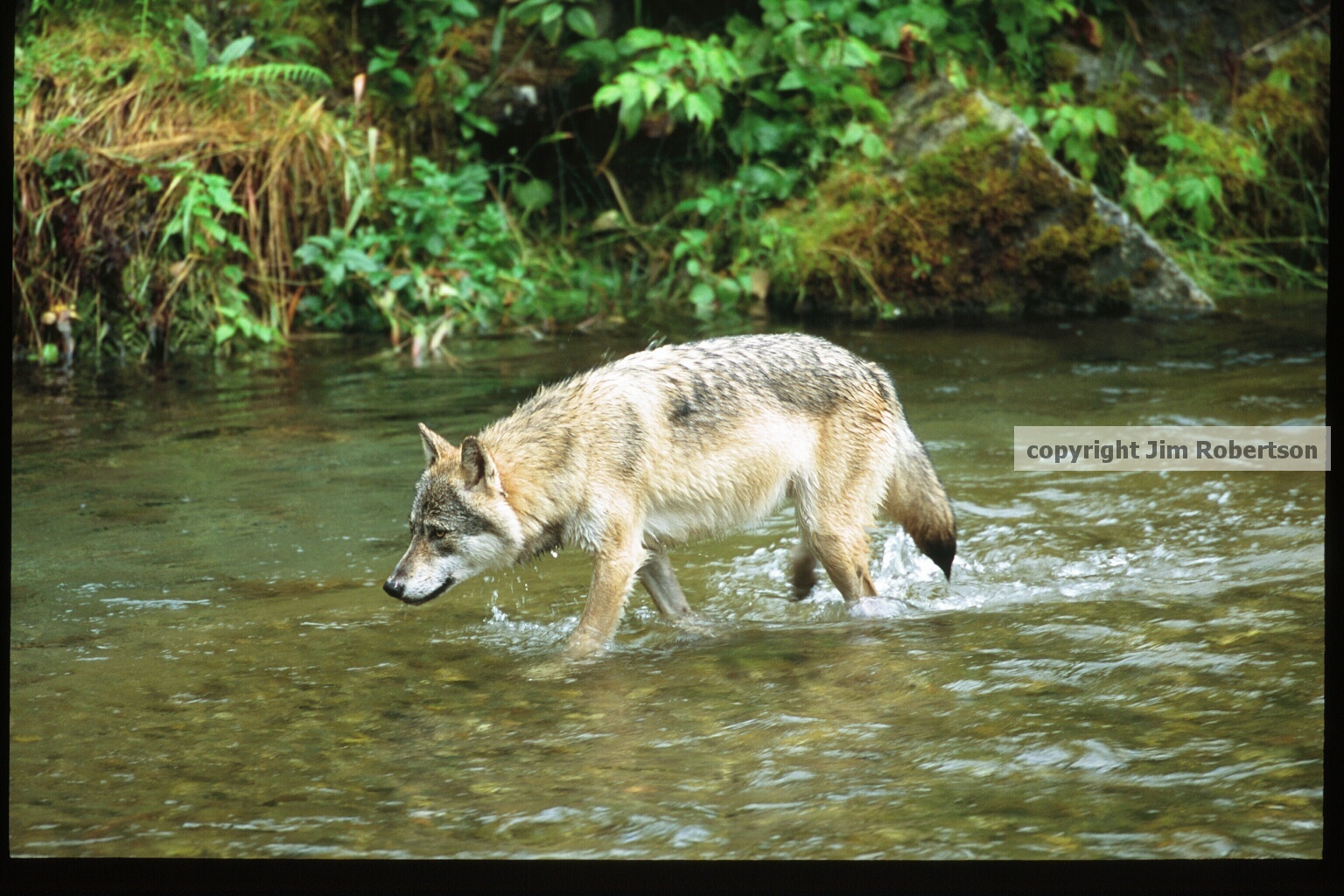
A gray wolf patrols its territory in the mountains of Idaho.
Wednesday, July 8, 2015 4:00 am
Idaho Wildlife Services has killed five wolves due to two incidents of sheep depredation that occurred on BLM land at the head of Croy Canyon and two incidents of cattle depredation that occurred on private land about 10 miles northeast of Fairfield.
Wildlife Services director Todd Grimm said the Idaho Department of Fish and Game confirmed that wolves had killed a ewe and a lamb on May 26 and a second ewe on June 3. He said the department confirmed a wolf kill of a calf on June 24 and a probable wolf kill of a cow on July 3.
Grimm said three wolves were shot on May 28 and two were shot on June 4.
He said the sheep were attended by herders and guard dogs, but said he did not know whether any scare devices were employed. He said the agency does not release the names of livestock producers whose animals are involved in depredation incidents.
Local wolf advocate Lynne Stone, director of the Boulder White Clouds Council, said the wolves were part of the Red Warrior pack, which had been viewed by people this winter on the hillside opposite the Warm Springs base area. She said that at that time, the pack consisted of nine wolves, though the alpha female died before the depredation incidents occurred.
“These wolves were in a great place with lots of wild country,” she said. “Then in came the sheep and we lose the wolves.”
Stone contended that Wildlife Services was “jumping the gun” by using lethal means before giving other methods a chance to scare off the wolves.
“When one ewe and one lamb get killed, they go in with their airplanes and shoot the whole pack,” she said. “We’re not going to have wolves in Blaine County if this is what the sheep industry and Wildlife Services are going to continue to do.”
Grimm said that elsewhere in the state this season, Wildlife Services killed three wolves due to depredation incidents in the Pahsimeroi Valley and three near Cascade. In February, the federal agency killed 19 wolves in the Lolo zone in northern Idaho at the request of the Department of Fish and Game to boost a declining elk population there.
What would happen if there were no Mexican grey wolves in Arizona? We asked two experts to weigh in on federal programs to reintroduce the species
—————————–
IT WOULDN’T MAKE MUCH DIFFERENCE
Arizona would be identical to Texas in that respect and the Mexican wolf population would more closely resemble its historic range (90 percent of the Mexican wolf’s original habitat is in Mexico).
However, I am not advocating for Mexican gray wolf eradication. I simply want the U.S. Fish and Wildlife Service to leave species conservation efforts to the states, to comply with federal law, and to stop implementing a flawed experimental program that poses a serious threat to Arizona ranchers, citizens and economies.
Mexican wolves have repeatedly stalked citizens, devastated big game herds and killed livestock. In Catron County, N.M., the wolf’s presence has resulted in a $5 million economic hit and “1,172 calves lost annually,” according to the Southwest Center for Resource Analysis.
In January, Fish and Wildlife implemented new regulations that dramatically expanded the area Mexican wolves can roam and designated the wolf as an endangered subspecies. The agency acknowledged its failure to secure appropriations prior to implementing the new regs, in violation of federal law.
The Mexican wolf has lingered on the Endangered Species list for nearly 40 years. During that time, Fish and Wildlife has failed to work with local stakeholders and has been using an illegal recovery program, as it is not based on the best available science and fails to establish a recovery goal. Arizona recently sued as a result.
The agency has acknowledged the recovery plan violates federal law and that the new regulations will not result in a de-listing. In the U.S., the Mexican wolf population now exceeds the primary goal of 100 wolves, and there are another 250 in captivity. The wolf is no longer in danger of extinction.
The bipartisan Mexican Wolf Transparency and Accountability Act rejects the new January mandates as Arizonans deserve a viable solution that adequately protects local communities.
U.S. Rep. Paul Gosar is a Republican representing Arizona.
—————————–
IT WOULD BE A TRAGEDY
If there were no Mexican gray wolves in Arizona, this rarest gray wolf would be on a direct path to extinction. Essentially eradicated from the southwestern United States by the 1930s, the Mexican gray wolf It is one of the most endangered mammals in North America. There are fewer than 120 wild Mexican gray wolves in the entire world: 109 in Arizona and New Mexico and a handful in Mexico.
Why does that matter? Lobos hold profound cultural significance in our region, and are important apex predators that contribute to the environmental health of the areas they inhabit. Sadly, despite the work that has been done to recover them, the Mexican gray wolf is still noticeably rare on our beautiful landscape in Arizona. The truth is, Without lobos, Arizona would not be safer or more productive, but it would be lacking an iconic part of our heritage.
No one has ever been killed by a Mexican gray wolf, and in Arizona, wolves account for less than 1 percent of total cattle and calf losses. On the other hand, 87 percent of voters polled in Arizona agree that wolves are a “vital part of America’s wilderness and natural heritage,” and 83 percent of Arizonans agree that “the US Fish and Wildlife Service should make every effort to help wolves recover and prevent extinction.”
To lose the lobo would be a tragedy of our lifetime.
Eva Sargent is Southwest program director for Defenders of Wildlife.

by Rosemary Lowe
MEN often face pressure to measure up as alpha males, to “wolf up” as it were. Alpha male connotes the man who at every moment demonstrates that he’s in total control in the home, and who away from home can become snarling and aggressive.
This alpha male stereotype comes from a misunderstanding of the real thing. In fact, the male wolf is an exemplary male role model. By observing wolves in free-living packs in Yellowstone National Park, I’ve seen that the leadership of the ranking male is not forced, not domineering and not aggressive to those on his team.
“The main characteristic of an alpha male wolf,” the veteran wolf researcher Rick McIntyre told me as we were watching gray wolves, “is a quiet confidence, quiet self-assurance. You know what you need to do; you know what’s best for your pack. You lead by example. You’re very comfortable with that. You have a calming effect.”
The point is, alpha males are not aggressive. They don’t need to be. “Think of an emotionally secure man, or a great champion. Whatever he needed to prove is already proven,” he said.
[I lived next door to Rick McItyre, just outside Yellowstone. His description of alpha male wolves matches the Hayden Pack’s alpha male I wrote about in my book, Exposing the Big Game, Jim]

Niv Bavarsky
There is an evolutionary logic to it.
“Imagine two wolf packs, or two human tribes,” Mr. McIntyre said. “Which is more likely to survive and reproduce? The one whose members are more cooperative, more sharing, less violent with one another; or the group whose members are beating each other up and competing with one another?”
Mr. McIntyre has spent 20 years watching and studying wolves in Yellowstone for the National Park Service. He rises early, uses radio telemetry to pinpoint the location of a pack with a radio-collared member, then heads out with his spotting scope to observe them, keeping careful notes of their activities.
In all that time, he has rarely seen an alpha male act aggressively toward the pack’s other members. They are his family — his mate, offspring (both biological and adopted) and maybe a sibling.
This does not mean that alpha males are not tough when they need to be. One famous wolf in Yellowstone whose radio collar number, 21, became his name, was considered a “super wolf” by the people who closely observed the arc of his life. He was fierce in defense of family and apparently never lost a fight with a rival pack. Yet within his own pack, one of his favorite things was to wrestle with little pups.
“And what he really loved to do was to pretend to lose. He just got a huge kick out of it,” Mr. McIntyre said.
One year, a pup was a bit sickly. The other pups seemed to be afraid of him and wouldn’t play with him. Once, after delivering food for the small pups, 21 stood looking around for something. Soon he started wagging his tail. He’d been looking for the sickly little pup, and he just went over to hang out with him for a while.
Of all Mr. McIntyre’s stories about the super wolf, that’s his favorite. Strength impresses us. But kindness is what we remember best.
If you watch wolves, it’s hard to escape the conclusion that perhaps no two species are more alike behaviorally than wolves and humans. Living as we do in families, we can easily recognize the social structures and status quests in wolf packs. No wonder Native Americans recognized in wolves a sibling spirit.
The similarities between male wolves and male humans can be quite striking. Males of very few other species help procure food year-round for the entire family, assist in raising their young to full maturity and defend their packs year-round against others of their species who threaten their safety. Male wolves appear to stick more with that program than their human counterparts do.
Biologists used to consider the alpha male the undisputed boss. But now they recognize two hierarchies at work in wolf packs — one for the males, the other for the females.
Doug Smith, the biologist who is the project leader for the Yellowstone Gray Wolf Restoration Project, said the females “do most of the decision making” for the pack, including where to travel, when to rest and when to hunt. The matriarch’s personality can set the tone for the whole pack, Dr. Smith said.
Or, as Mr. McIntyre put it: “It’s the alpha female who really runs the show.”
Clearly, our alpha male stereotype could use a corrective makeover. Men can learn a thing or two from real wolves: less snarl, more quiet confidence, leading by example, faithful devotion in the care and defense of families, respect for females and a sharing of responsibilities. That’s really what wolfing up should mean.☐
Sign on date by Friday April 17th
Attachments report and letter and list of signatures to date
Hello friends and colleagues,
Some of you have helped me in the past by signing onto a letter to request a ban on carnivore hunting in the National Seashore. I am writing again to ask for your help in signing another important letter.
As you know, federal protection for Wyoming wolves was restored September 2014. Then in December 2014, federal protections for wolves in the Great joh States was restored through judicial action (HSUS v. Jewell). In response to the decisions, two separate bills have been introduced: The Western Great Lakes Wolf Management Act (HR 843), introduced by Representative John Kline (R MN) now has 11 co-sponsors and Reissuing Final Rules Regarding Gray Wolves in the Western Great Lakes (HR (884) introduced by Representative Reid Ribble (R WI) now has 11 co-sponsors.
We have every reason to fear these bills since a bad precedent was set in 2011 when federal protections for wolves was removed through Congressional intervention in the Western states when legislation was attached as a rider to the “must pass” budget bill. It could happen again.
Although several sign-on letters have been circulated, this one is different as it asks for a NO vote for each of the two bills but also offers two alternatives: 1) the HSUS petition to downgrade wolves from endangered to threatened and 2) to ask Congress to do some real work and use the Bruskotter/Vucetich Framework for Recovery as a start to address ambiguities in the ESA.
We are asking that you sign on to the attached document by submitting:
YOUR NAME
YOUR ORGANIZATION + ONE LINE SUMMARY OF EITHER YOU IF SIGNING AS AN INDIVIDUAL OR BUSINESS OR ORGANIZATION
CITY& STATE
YOUR EMAIL (Your email will not be included in the document, it will only be used in case we need to contact you)
DO NOT PUT YOUR NAME IN THE DOCUMENT, WE WILL DO THAT. DO NOT ALTER THE DOCUMENT, IF YOU SEE AN ERROR, NOTIFY US.
SEND TO louise@kaneproductions.net BY Friday, APRIL 17 , 2015
We plan to send the letter with all the signatories to members of Congress, their aids and USFWS along with Secretary Jewell when Congress returns from spring break.
Below is the link to the document (if you need a link to share) that is on the carnivore conservation act website.
http://www.carnivoreconservationact.com/wp-content/uploads/ReportCongressAgainstHR843and884_2.pdf
Please distribute this message to colleagues and/or organizations or businesses that would be willing to sign. Our goal is to get a minimum of 150 signatories. Please be one!

March 10, 2015
Howling For Wolves President and Founder Dr. Maureen Hackett was recently highlighted in the article, “Do We Need Wolves?” in the March, 10 edition of In These Times magazine.
The article explores the history of wolves in the United States – how their population dwindled, and then increased, and what past and current challenges they face. Author John Collins particularly explains the many ways wolves are vital to our ecology – citing Yellowstone National Park’s revitalization after they reintroduced wolves as a case study. Collins also addresses myths about wolves – such as how they actually have a net positive and not net negative as widely believed by hunters, when it comes to deer populations.
Dr. Hackett is quoted in the article explaining support for the use of non-lethal and scientific wolf management practices. She also provides information about state wolf management and the unfortunate negative attitude towards wolves.
Read the full article at the link above.
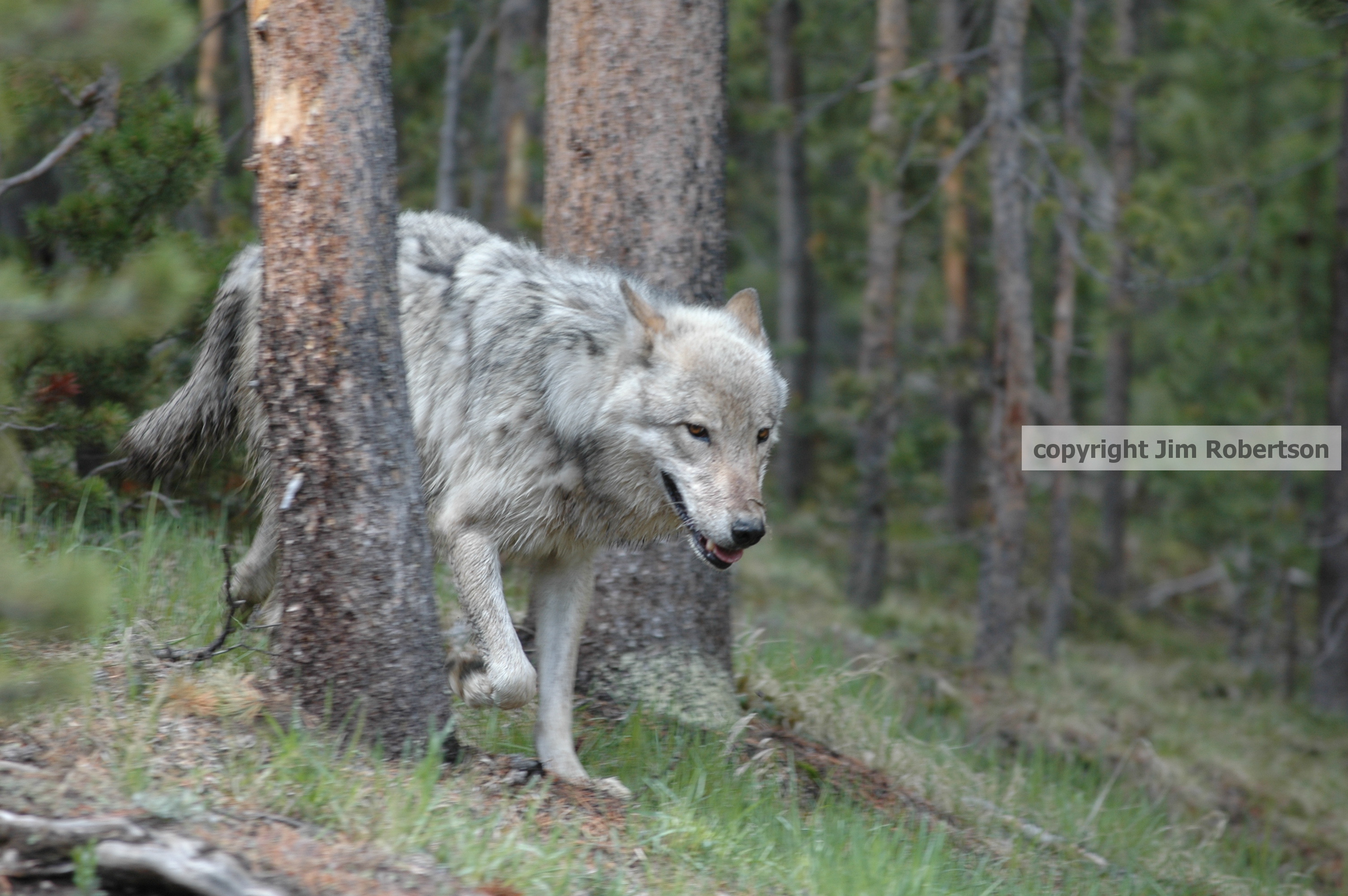
FAIRBANKS — Crews from the Alaska Department of Fish and Game shot 18 wolves from the air this week near Allakaket in the third year of a program to boost moose populations in the upper Koyukuk River drainage.
The wolf-control program is to continue as long as weather permits, said Cathie Harms, 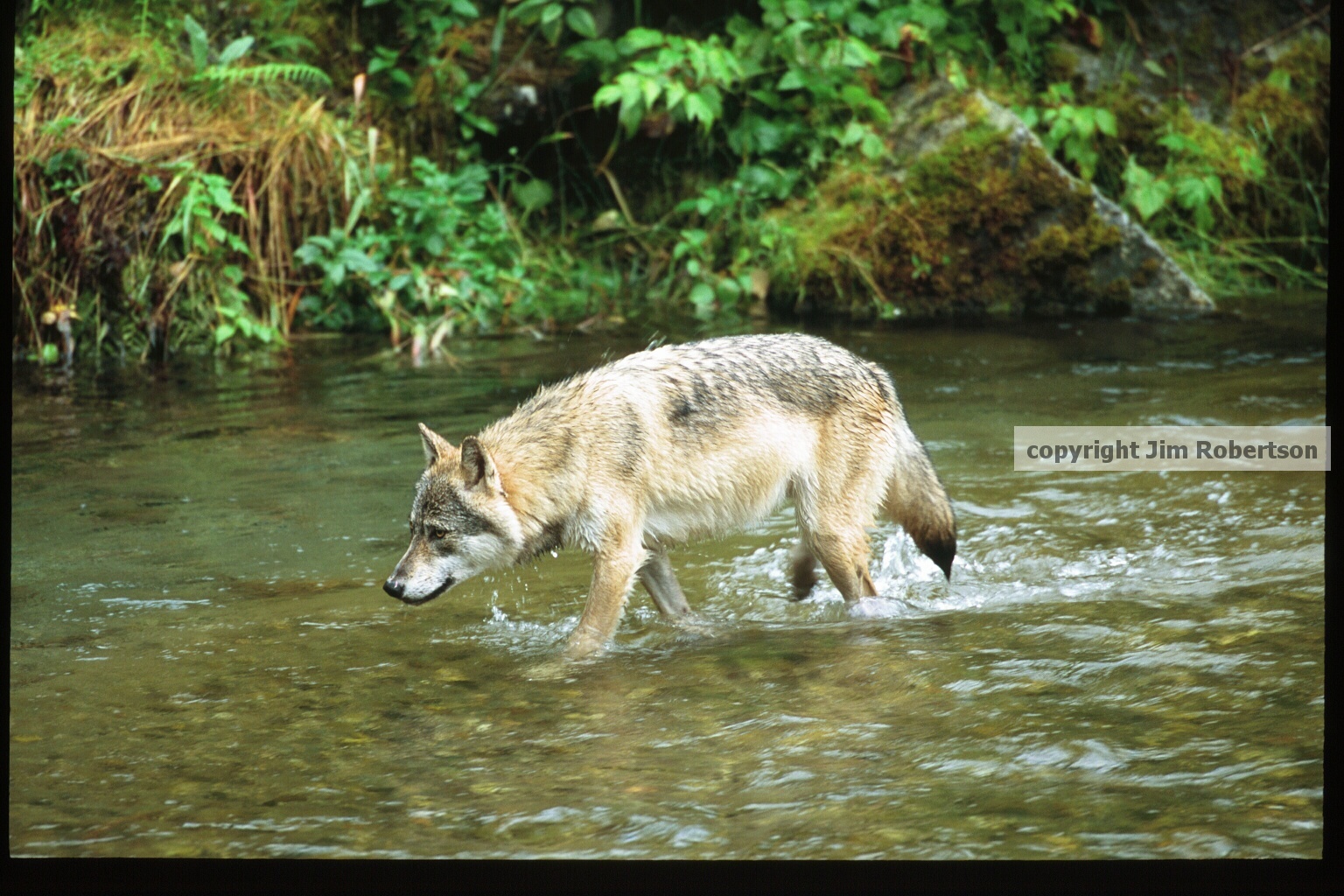 a spokeswoman for the department. The goal is to reduce the wolf population to as low as possible in an area of about 1,360 square miles near Allakaket and Alatna to allow more moose to be hunted by humans, according to a report by the Division of Wildlife Conservation.
She said the crews use a fixed-wing airplane to spot wolves and call in a helicopter, from which shotgun-wielding agents take aim. The bodies are recovered afterward, she said. The area about 180 miles northwest of Fairbanks is mostly owned by Native corporations.
The wolf-control program, approved in 2011, came about because the moose harvest near the two villages had become increasingly difficult over the previous 15 years. Up to 60 wolves were believed to be within the area before the program began. In 2012, the Fish and Game killed 23 wolves.
It snowed earlier in the week and with the extended daylight hours, the conditions for tracking wolves from the air were good, she said. While black and grizzly bears are the main predators of moose calves in the area, a 2011 report said, there are “strong cultural taboos in the area concerning bears,” which prompted the department to leave the bear population alone.
Bears are believed to be the main predators of calves, but wolves are believed to be the main predators of moose that are more than 1 year old, particularly yearling bulls.
The feasibility study said that because the area is about 10 percent of Unit 24B, the killing of the wolves is not expected to have a significant impact on the overall wolf population in the 13,500-square-mile unit. The report predicted that within 10 years, the moose population close to the villages would increase by 300 to 350 animals.
The cost of the program has varied by year depending upon whether the conditions for tracking wolves were good. In 2012, when 23 wolves were shot, the program cost about $200,000.
Because it is limited to 1,300 square miles, the wolf control program “is simply a reallocation of the moose resource from wolves to humans in a confined area,” the feasibility report said, not necessarily leading to an overall increase in moose numbers in the larger region.
 Exposing the Big Game
