I’m About Sick of Control Freaks

What the hell’s going on with state lawmakers and wildlife agencies lately? With just a cursory glance at the headlines this morning I counted at least a half dozen cases of puffed-up politicians overstepping their bounds by offering up some non-human species to appease the bloodlust of a few of their freakiest constituents.
Headlines like “State lawmaker wants open season on woodchucks,” about Wisconsin state representative, Andre Jacque (R-De Pere), who is pedaling a bill that would remove woodchucks from Wisconsin’s protected species list and allow people to kill an unlimited number of them during a season that would run nearly year-round. Jacque said woodchucks are abundant and a “nuisance.”

Though newspaper journalists are, as a rule, impartial, the article’s reporter couldn’t help but see the disturbing trend going on across the dairy state:

Deer, bears, wolves, mourning doves, even wild pigs – if it walks, crawls or flies in Wisconsin, hunters can probably shoot it. Now a state lawmaker wants to declare open season on one more animal: the wily woodchuck.

The bill represents another expansion of hunting rights in Wisconsin and promises to reignite a years-old debate over whether hunters really need another target species. Attempts over the last decade to create hunts for feral cats and mourning doves, the state’s symbol of peace, drew fierce opposition. The state’s new wolf season sent animal lovers into a rage last year and an attempt to create a sandhill crane hunt last spring went nowhere after opponents mounted an intense campaign to stop it. Woodchucks, also known as groundhogs, aren’t as near and dear to Wisconsinites’ hearts as wolves, mourning doves and cranes.

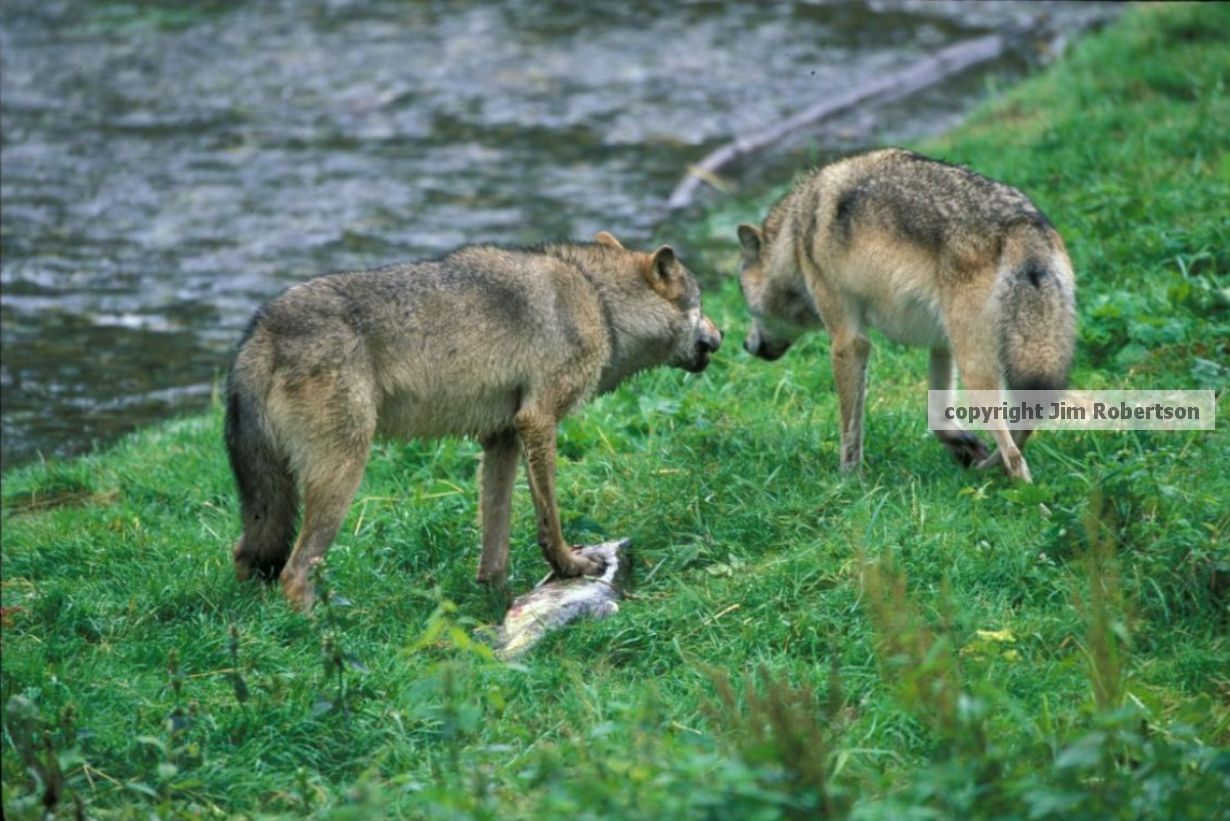
Here’s an idea, why not let their “nuisance” wolves control the “nuisance” woodchucks? Predators like wolves and coyotes have been in charge of “controlling” woodchucks, beavers, prairie dogs, ground squirrels and other scary rodents for thousands of centuries. But I guess letting nature take care of itself would cheat hunters and other human control freaks out of some of their coveted “shooting opportunities.”

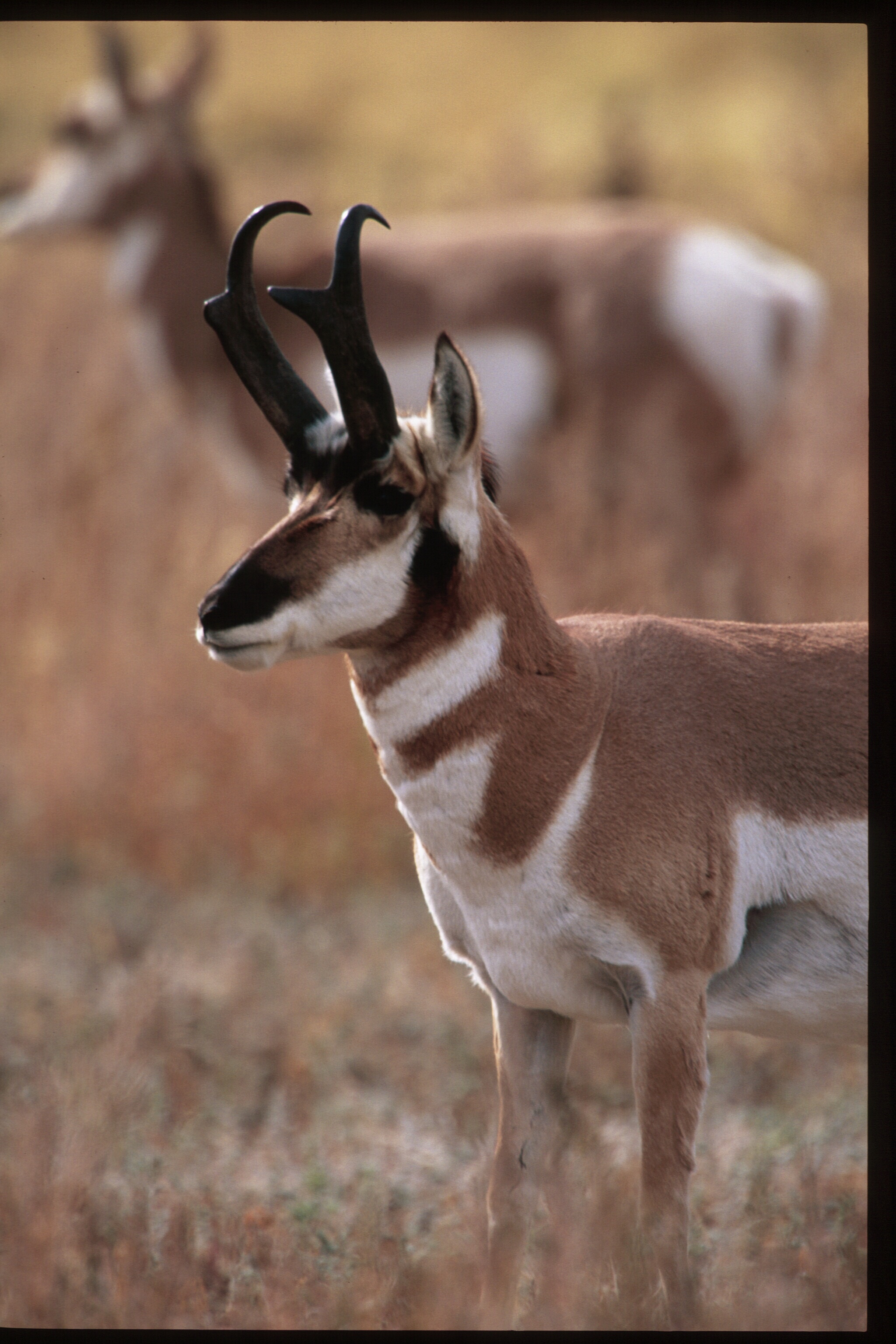
Meanwhile, a Spokane Spokesman Review article, “Idaho sets 2013 big-game hunting seasons, rules,” reports: permits for antlerless elk hunting will be increased statewide under the 2013 hunting seasons for deer, elk, pronghorn, black bear, mountain lion and gray wolf adopted today in Boise by the Fish and Game Commission. The new seasons also include an increase in pronghorn tags and expanded wolf hunting and trapping seasons. Wolf hunting on private lands in the Idaho Panhandle will be allowed year round.

Again, like in Wisconsin, Montana and so many other trigger-happy western states, populations of both wolves and deer or elk are slated for reduction. It seems the work of control freaks is never ending.

Since they don’t have any wolves to scapegoat, wildlife policy-makers in Utah are setting a $50.00 bounty on coyotes, presumably to keep in practice.
And in Oklahoma, spring youth turkey season will begins today for youth hunters ages 17 and younger. Turkeys won’t be safe in that state until sometime in May.

Also in Oklahoma hunting news, on Wednesday 1200 students and 64 teams from Oklahoma high schools, middle schools and elementary schools will convene at the OKC State Fairgrounds to compete in the state’s ninth archery championship tournament. Archery in the Schools has become the most popular educational program the Okla. Dept. of Wildlife “Conservation” has ever introduced. More than 400 schools and almost 50,000 students in Oklahoma are taking an eight week archery session taught indirectly by the Oklahoma Wildlife Department.

Now, I like to shoot arrows at straw bales as much as the next guy, but you know it doesn’t end there for most of these Okies. Sure enough, the success of their archery program has inspired the Oklahoma Wildlife Dept. to introduce other courses in schools such as hunter education, bow hunting and fishing. And this spring the Wildlife Dept. will introduce a scholastic shooting sports program in several pilot schools.…

I could go on, but trying to keep up with every state’s new anti-wildlife programs is really getting to be a nuisance.
 Text and Wildlife Photography ©Jim Robertson, 2013. All Rights Reserved


Text and Wildlife Photography ©Jim Robertson, 2013. All Rights Reserved
Hope for a Humane and Environmentally Sane Future

The following is my review of a new book published by Earth Books

Often, over the years, I’ve thought about taking on the task of chronicling the ways in which humankind is destroying the Earth, and how we need to change to survive as a species. Now, equally sensing the dire need for such a book, long-time animal activist, Will Anderson, has risen to the challenge with his new book, This is Hope: Green Vegans and the New Human Ecology.

I have to admit, the title, This is Hope, sounded to me like it could be almost, well, overly-hopeful. But in fact the book takes a hard, realistic look at where we’re headed if we don’t make some major changes in our destructive ways, our eating habits and our view of non-human animals as commodities. For instance, Anderson doesn’t buy into the increasingly popular fallacy that hunting can somehow be sustainable in this rapidly growing human world. Not only does he take on hunting, and those groups who promote it, he employs the term “neo-predation” for the myriad of ways in which the modern world disrupts biodiversity—to the peril of all who share the Earth.

And the author does not fall prey to the politically correct notion that human overpopulation is an overstated myth. Instead we learn that as environmentally-conscious, green vegans who truly want to see a future for all life on the planet, addressing and reversing our overpopulation is a must.

If we are willing to embrace Will Anderson’s prescription for a “new human ecology,” there truly could be hope for the future. As Anderson puts it, “The new human ecology can be the transformation of human behavior all of Earth has waited for.” Some of the positive results he foresees from this transformation include:

• Vast landscapes subjected to grazing and growing food for livestock are released from animal agriculture.
• Some of that land will be banked and rotated with other croplands. Soil erosion and pollution are sharply reduced. Sustainably grown, organic food becomes more reliably available.
• Conceivably, fewer people on Earth and the efficiency of botanical agriculture will allow lower food prices and raise food availability.
• We will reduce our greenhouse gas emissions immediately by 18% to 51%.
• Other human pressures on ecosystems decrease and allow them to trend toward recovery.
• Vegan diets will create better human health. This should result in lower health care costs.
• We stop the intentional impregnation of billions of domesticated individuals from other species, the torment of their enslavement and denial of their innate needs, and their early, violent deaths.
• The science and implementation of wildlife and habitat management is transformed…control by the small minority of people who hunt, fish and trap is ended.
• Livestock fences will be removed. Wild herds of indigenous wildlife can reoccupy habitat and have room to migrate long distances. Ecosystem keystone species like black-tailed prairie dogs will not be cruelly persecuted on behalf of animal agriculture.
• There are no new ghost nets, those fishing nets that break away from vessels, drift with oceanic currents, and continue to trap fish, turtles, marine birds, and marine mammals.
• We stop bottom trawling that destroys sea bed marine ecosystems. Since vegan human ecology does not require fish, it ends the trashing of millions of tons of unwanted bycatch (non-targeted species), eliminates shark-finning that is decimating shark populations, stops the killing of octopi, and ends the drowning of dolphins and turtles.
• We finally create a moral code of behavior that is based upon biocentric innate value; it is more consistently applied to all individuals of all species and ecosystems.

Photograph ©Jim Robertson

Photograph ©Jim Robertson

TIME TO END A TWISTED TRADITION!

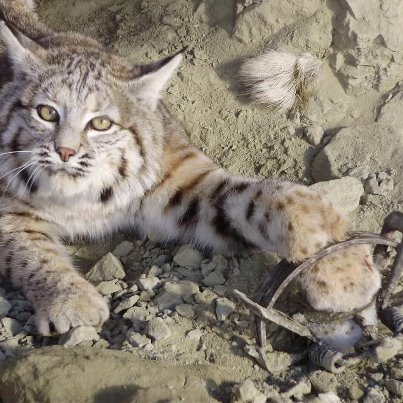
Unless a severe blow to the head or some congenital brain disorder has rendered them incapable of feeling empathy, anyone who has witnessed the harrowing ordeal suffered by an animal caught in a leg-hold trap should be appalled and outraged that trapping is legal in a society that considers itself civilized.

The continuation of this hellish violation in a country governed by the people suggests that either most folks have brain damage, or the majority of the voting populace is blissfully unaware of the terrible anguish someone caught in a trap goes through.

They must never have heard the cries of shock and agony when an animal first feels the steel jaws of a trap lock onto his leg. They must never have looked into the weary eyes of a helpless captive who has been stuck for days and nights on end…

525140_440817092654544_311118433_n

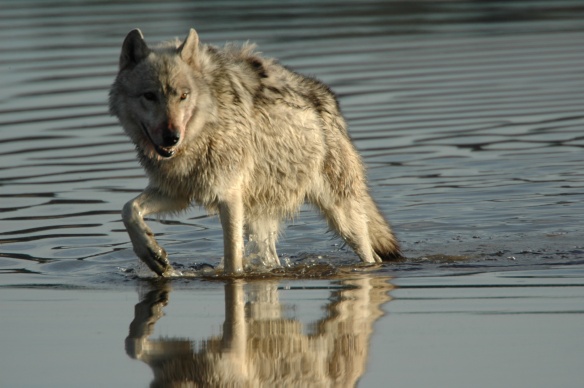
Sidestepping the indisputable cruelty issue, pro-trapping factions try to perpetuate the myth that this demonic practice is “sustainable,” but time and again entire populations are completely trapped out of an area, often within a single season. The winter after I found wolf tracks in Alaska’s Katmai National Park, all seven members of a pack who had filled a niche in and around that preserve were killed by trappers. Though wolves are extinct or endangered in most of the US, but 1500 are permissibly “harvested” in Alaska each year.

Leg-hold traps are now banned in 88 countries and a few enlightened US states. Yet in most states, as in Canada, this twisted tradition is not only legal, it’s practically enshrined as a sacred human right. Compassionate people everywhere must add their voice to the rising call to end this gratuitous torture for good.

__________________________________________

Text excerpted from the chapter “Time to End a Twisted Tradition” in the book, Exposing the Big Game: Living Targets of a Dying Sport.

Photo Copyright Jim Robertson

Photo Copyright Jim Robertson

Snaring’s About the Sickest

In Alaska, bears—in addition to wolves—are routinely hunted, trapped and shot from planes under the deathly ill-advised notion that eliminating those animals leaves more moose or caribou for more hunters to slay. What the Alaska state Board of “Game” can’t seem to figure out is, as the number of hunters goes up, the quantity of moose goes down, simple as that. Will we have to see an Alaska devoid of bears and wolves before the game players finally figure out who’s to blame?

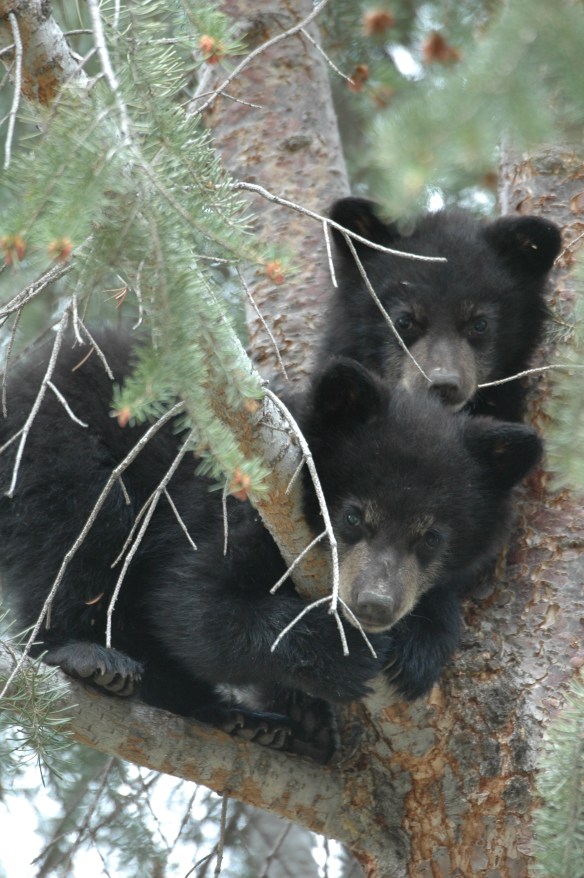
But if anything could be sicker than aerial gunning for bears, it’s snaring them. Bear snaring is a recent addition to Alaska’s long history of animal abuse and exploitation; this new act of depravity was allowed “experimentally” for the first time in 2008.

In the following excerpt from an article, posted January 12, 2012 in the Anchorage Press, Bill Sherwonit dared to imagine just what snaring is really like for its victims:

Picture this: An adult female grizzly bear is roaming forested lowlands on the western side of Cook Inlet when she gets a whiff of ripe, decaying flesh. Sensing an easy meal, the bear follows her nose to a large tree. Several feet above the ground, a bucket partly filled with rotting guts and skin has been attached to the tree; placed on its side, the open-lidded container faces outward, inviting inspection. The grizzly stands and sniffs around the cavity, then sticks her right paw into it. When the paw hits the bottom of the pail, it triggers a metal snare that closes around the animal’s foot. Feeling the pinch of the trap, the grizzly pulls back. As she does, the metal loop tightens.

Two cubs have followed her to the bait. Now, sensing their mother’s agitation, they too become upset. One begins to bawl. This only deepens the adult bear’s determination to free herself. With her free paw she swats and tears at the bucket and tree and she pulls even harder against the snare, which begins to cut through the animal’s thick fur and into her flesh. Now the embodiment of rage, the adult grizzly roars and snaps her jaws, thrashes about. The cubs wail louder.

Eventually exhausted by her struggles, the grizzly mom slumps against the tree, while the whimpering cubs huddle together nearby. More time passes and the trapped grizzly resumes her fight for freedom. The cubs again cry in panic.

It goes like this for hours. A day might pass before the trapper-called a “snare permittee” by state wildlife officials-comes to check the snare, even longer if he’s delayed for some reason. When he does show up, the grizzly mom goes berserk. Depending on their age and personalities, the cubs might charge the person, run off, or huddle in fear. These two retreat into nearby bushes.

The trapper could legally shoot the cubs, now in their second year, but he chooses to ignore the small, frightened bears and heads for their mom. He takes aim, fires his gun, and kills her…

The cubs remain in hiding. Without their mother, it’s more likely they will starve than survive the summer.

Even five years ago, the idea was unimaginable: trap and shoot Alaska’s bears so that human hunters might kill more moose.

Okay, that’s not entirely true. Always trying to come up with new ways to rid Alaska’s landscape of competitors for moose and caribou meat, at least a few predator-control proponents, Ted Spraker among them, were looking toward Maine, then the only state to allow the snaring of bears. The retired Department of Fish and Game biologist worked nearly three decades to increase kills of wolves and bears, primarily to benefit sport hunters.…

Stomach churning stuff—those “snare permitees” must be as callous as they come. I’m just glad Sherwinot saved me the heartache of making the imaginary journey myself this time.

The late, Canadian naturalist and author, R D Lawrence, wrote:

“Killing for sport, for fur, or to increase a hunter’s success by slaughtering predators is totally abhorrent to me. I deem such behavior to be barbaric, a symptom of the social sickness that causes our species to make war against itself at regular intervals with weapons whose killing capacities have increased horrendously since man first made use of the club—weapons that today are continuing to be ‘improved’.”

Contact in for the Alaska Board of Game can be found here: https://exposingthebiggame.wordpress.com/2013/01/31/stop-bear-snaring-and-wolf-trapping-adjacent-to-denali/

Wildlife Photography ©Jim Robertson, 2013. All Rights Reserved
Wildlife Photography ©Jim Robertson, 2013. All Rights Reserved

Stop Bear Snaring and Wolf Trapping Adjacent to Denali

copyrighted-wolf-argument-settled
Please Tell the Board of Game to Vote “Yes” to Stop Bear Snaring and “Yes” to Create a No-Trapping Buffer Zone Adjacent to Denali!

Dear Wildlife Supporter,

The Alaska Board of Game will meet in Wasilla from February 8 – 15, 2013 to vote on proposals governing wildlife management regulations for the Central and Southwest regions of Alaska.

The BOG has many, many proposals to consider at this meeting – there are many worthy proposals to support and even more that need to be opposed. However, AWA is focusing on two crucial issues: bear snaring (Proposal 105) and protecting Denali’s wolves (Proposal 86).

You may review all of the proposals online via the link below and make additional comments on as many as you choose.

E-mail comments on the proposals are due to info@akwildlife.org by 5:00 pm on Friday, February 1, 2013, and we will deliver them to the Board of Game prior to the start of the meeting. (The BOG does not accept comments via e-mail.)

Comments should specifically state “support” or “oppose” and the proposal number(s) on which you are commenting.

Comments also may be faxed or mailed so they are received by the Board of Game before February 7.

Comments:

ATTN: Board of Game Comments
Alaska Department of Fish and Game
Boards Support Section
P.O. Box 115526
Juneau, AK 99811-5526

Fax comments to:
(907) 465-6094

The current BOG proposal book is available in pdf format online at: http://www.adfg.alaska.gov/index.cfm?adfg=gameboard.meetinginfo. Proposal numbers 45 through 126 (pages 62 – 198) are scheduled to be considered at this meeting.

We are asking you to please comment in support of the following two proposals:

Proposal 105 (page 158), submitted by AWA, would ban grizzly and black bear snaring in the Southwest and Central regions.

* Scientists overwhelmingly agree that bear snaring is indiscriminate, cruel and not biologically sustainable.

* Bear snaring is an extremely controversial method of killing animals. The BOG tarnishes Alaska’s image for residents and non-residents alike by insisting on continuing its war on predators. Bear snaring has never been allowed in Alaska since statehood until the BOG approved an experimental program in 2008.

* Because bear snaring is indiscriminate, females with dependent cubs and cubs themselves are at risk. Bears have one of the lowest reproductive rates and it is for this reason modern scientific management principles discourage the harvest of females.

* Enforcement will be a nightmare for the Alaska State Troopers, who are already stretched thin.

* There are the dangers to other consumptive users, hikers and their pets who may come upon a situation where one bear is caught while its siblings or mother remain free in the area, creating the very real possibility of severe injuries or fatalities.The baited traps also create food-conditioned bears, and animals which learn to associate food with humans are a danger to our communities.

* Bear snaring is archaic, cruel and should be banned.

* Living bears have a very high value as a tourism draw and a source of revenue. They are almost always cited as one of the “big three” species visitors come to Alaska to see.

Proposal 86 (page 126) would re-establish a no-trapping buffer zone adjacent to Denali National Park. This proposal would provide crucial protection for wolves that wander across the Park boundary onto state land in search of prey or mates, where they are targeted by several recreational trappers.

* Wolf populations (and therefore viewing opportunities) have declined significantly in the Park due in part to trapping along the east and south Park boundary. The most recent official survey (Spring 2012) found a total of only 70 wolves in nine packs in the six million acre park – one of the lowest populations in decades.

* Several hundred thousand visitors annually travel to Denali to view wolves and other wildlife. Two or three recreational trappers targeting wolves habituated to the sight and smell of humans should not be allowed to negate visitors’ viewing opportunities (nor the millions of dollars they spend in the state).

* The loss of only one wolf to these trappers can result in a huge impact on viewing opportunities in the Park. Last spring the alpha female of the Grant Creek pack was trapped and killed just outside the Park boundary. The pack produced no pups last year, and subsequently dispersed. For years the Grant Creek pack had offered hundreds of thousands of Park visitors the best, most frequent opportunities to view wild wolves.

[Note: a six year moratorium on submitting proposals to re-establish a Denali buffer zone was enacted by the BOG in 2010. A request to the BOG in January to rescind its moratorium was met with a quick, unanimous refusal to even consider the matter. It is not known how the BOG will deal with Proposal 86 at the February meeting.]

Please take the time to speak out on behalf of Alaska’s wildlife. Our bears and wolves need your support.

As ever, thank you for your support and for your commitment to Alaska’s wildlife.

Best regards,
Tina M. Brown
President
Alaska Wildlife Alliance

PS: We will of course let you know the outcome of these and other proposals after the conclusion of the BOG meeting.

Alaska Wildlife Alliance
P.O. Box 202022
Anchorage, AK 99520
info@akwildlife.org
http://www.akwildlife.org

A Day in the Sun for the Hayden Wolf Pack

The following is an excerpt from the book, Exposing the Big Game: Living Targets of a Dying Sport. The wolf in the photo is the alpha male of the Haden Pack…


Winters come early to the interior of Yellowstone, but the third week in October, 2007, was unseasonably warm, and the Hayden wolf pack lay stretched out in the bright afternoon light on a west-facing slope below the tree line, taking full advantage of what might be their last chance to sunbathe until spring. With a snow level creeping towards the valley bottom, the adult wolves knew that temperatures were soon to plummet and they may not get another restful nap like this for a long, long time.

The Hayden pack consisted of nine members, including a gray alpha male, a pure white alpha female, three gray pups born that spring, the sole black pack member (another half-grown pup sporting an extra thick coat) and three gray yearlings—one of whom was away on his own excursion.

As the waning sun sank behind the western hills enough to shroud their rendezvous site in shadows, the alpha male grew restless, slowly getting up to stretch. One by one, the rest of the pack rose and fell in line as their leader started in the direction of the Yellowstone River.

The wolves moved fluidly down a sagebrush slope that led to a bank above the river. The veteran male led the pack south along the bank to a point that provided an easy crossing. He was the first to take to the water, followed by the two yearlings. The stark white female was a harsh, blinding streak as she swam ahead of the pups on this, the safer part of their journey…

Text and Wildlife Photography ©Jim Robertson, 2012. All Rights Reserved

Text and Wildlife Photography ©Jim Robertson, 2012. All Rights Reserved

Be of Good Cheer

I get the feeling some people won’t be satisfied until I’ve plumbed the deepest, darkest depths of hunter/trapper depravity. I’ve had people ask me to write blog posts on issues as nauseating to cover as Wyoming’s new bounty on coyotes, and the glib manner in which some Wyomingites brag about cutting off coyotes ears in the parking lot of the “Sportsmen’s” Warehouse to claim their $20.00 bounty (following the same ugly tradition of  their forbearers who claimed cash at the fort for Indian scalps); incidents as horrible as the black bear (pictured here) who got caught in a 217855_388677001217027_1495584697_ntrap that some sick, twisted asshole set for pine marten; or report on how poachers are killing off the last of the world’s big cats; or go into how vacuous bowhunters sound when they praise one another for impaling animals for sport, or the malevolent tone used by wolf hunters or trappers when they get away with murdering beings far superior to them in every way.

The problem is, whenever I go there I get so irate I could end up saying something like, “They should all be lined up and shot, their bodies stacked like cordwood and set ablaze to rid the world of every last speck of their psychopathic evil once and for all.”

Well I’m not going to do that…at least not during the holiday season…

December should be a time for being of good cheer and spreading hopeful news, such as the pleasantly surprising announcement that, thanks to a lawsuit filed by Footloose Montana, along with several other litigants, the state of Montana put on hold its annual trapping season on wolverine this year, just 24 hours before that particular brand of butchery was set to begin! Of course, nearly every other “fur-bearing” animal in the state—from beavers and muskrats, to marten, fisher and mink; from otters and bobcat, to wolves, foxes and coyotes—is fair game for any sick fuck who feels the sadistic urge to set out a trapline in the wilderness…or just out of town.

But at least the wolverines—critically endangered from years of falling prey to a “celebrated” historic tradition, now down to only 35 successfully breeding individuals in the western United States—are illegal to trap right now.

Hallelujah! Thank goodness there’s some happy news to share with you this time of year!

Text and Wildlife Photography© Jim Robertson

Text and Wildlife Photography© Jim Robertson

Correction: Contest Hunts on WOLVES Are a New Moral Low Point

In addendum to my earlier post, “Contest Hunts Are a New Moral Low Point”: the truth is, contest hunts on wolves—like the one scheduled to take place in northeastern British Columbia, Canada—are the lowest of low points.

Not because coyotes (the species typically targeting by modern day contest hunts) are any more deserving of being killed en masse for the sake of some sick sporting event reminiscent of Buffalo Bill’s reckless era or something out of the bloody Roman Games. And granted, coyotes are no less sentient than wolves—or the family dog for that matter. All canines are highly evolved and capable of suffering intense stress and fear when pursued, and pain when hit by bullets or arrows. These physical and emotional capacities are even shared by such “lowly” creatures as fish, snakes or salamanders. But in addition, birds and mammals—notably canines—experience profound sadness (perhaps more than most human beings) when their mates or another of their kind are killed.

No, the reason a contest hunt on wolves is one step lower of a low point is because wolves, as a species, have been completely annihilated from so much of their former range. It’s like those calling for a wolf contest hunt are thumbing their noses at the extinction of wolves across so much of North America (not to mention Eurasia), while giving the thumbs up to those who massacred them. Many Canadians practically put on airs about not being as backwards and barbaric as we “Yanks” here in the States, but obviously some of their countrymen are every bit as philistine and morally vacant as any American redneck.

As with the coyote contests held in the U.S., the B.C. wolf contest hunt does not violate any wildlife regulations, according to an article in the Vancouver Sun—a point that does not address the morality of the action, but speaks volumes about the psychopathic behaviors that are still perfectly legal, even in presumably progressive Canada. There is no closed hunting season on wolves below 1,100 meters elevation in that region of the province, which is also considering a no “bag-limit” on wolves in the area.

The contest event claims to support “fair hunt” methods, which include, in addition to high-powered weapons, pickup trucks and snowmobiles to access wolves. It is set to run through March 31 and allows each hunter to submit three wolves. It costs $50 to enter, with winners receiving prizes (for the largest animal killed) of $150 to $1,000. Sponsors of the wolf-kill contest include Raven Oilfield Rentals; “Backcountry” (a fishing and hunting store) and T & C Taxidermy.

“It’s just kind of a social thing…” said Rich Petersen, a hunter and realtor in Fort St. John who is co-sponsoring the event. Well, you won’t find a more social species than wolves. Wolves may not spend their leisure time drinking excessively, listening to Celine Dion or watching hockey on the boob tube, but as far as showing concern for their extended family, I’ll lay down odds they’ve got the hunters beat.

Text and Wildlife Photography ©Jim Robertson, 2012. All Rights Reserved

Call Today! The “Sportsmen’s” Act of 2012 Must Fail

URGENT!  Before you read another line, pick up your phone, call your Senators and tell them to OPPOSE S 3525 (the so-called, “Sportsmen’s” Act of 2012)! You can find the contact numbers for your senators at the following web page: http://www.senate.gov/

Though the threat of having to watch bowhunter Paul Ryan by crowned Vice President has passed, the specter of sport hunting still haunts the halls of Congress. Under the cunning guise of “conservation,” the Sportsmen’s Act of 2012, S 3525, is a Senate version of the House’s ridiculous “Sportsmen’s Heritage Act” (what will they think of next, a Serial Murderer’s Heritage Act?).

No animal should be reduced to the level of mere object only to be “harvested” at the casual whim of jaded trophy seekers out for a diversion from their meaningless lives.

For the sake of wildlife, public lands and unspoiled wilderness nationwide, we must stop this absurd act from becoming law.

Of course, the animal’s enemies are lining up behind it. According to a new post in Outdoor Life (a popular “sportsmen’s” magazine that actually promotes outdoor death) entitled, “Must-Pass Legislation: Sportsmen’s Act of 2012,”

“The fight for the Sportsmen’s Act isn’t over. The NRA, National Shooting Sports Foundation, Theodore Roosevelt Conservation Partnership, Boone and Crocket Club, Congressional Sportsmen’s Foundation, and a host of other national, regional and local groups are calling all hands to lobby their Senators for passage.”

Make no mistake, those of us who truly care about wildlife wouldn’t want to see this pass even if it were a painfully annoying kidney stone. The Sportsmen’s Act of 2012 is a must-fail piece of legislation.


Thanks to the Animal Welfare Institute for the following action alert:

On November 13, their first day back in session following the recent election, the U.S. Senate will resume consideration of The Sportsmen’s Act of 2012 (S. 3525). Please call and urge your Senators to oppose S. 3525.

If enacted, S. 3525 will have substantial and direct adverse impacts on wildlife, public health and existing conservation efforts. This bill would weaken protections offered by laws such as the Marine Mammal Protection Act, Toxic Substances Control Act and Endangered Species Act. Included in the bill’s language are provisions that would:

•Eliminate the Environmental Protection Agency’s authority under the Toxic Substances Control Act to regulate hazardous substances—including lead, a dangerous neurotoxin—released by ammunition and sport fishing waste.

•Encourage federally-funded construction and expansion of public shooting ranges on state and federal land, including land managed by the U.S. Forest Service and the Bureau of Land Management.

•Amend the Marine Mammal Protection Act to permit importation of polar bear carcasses taken before the species was listed as “threatened” under the Endangered Species Act in 2008—including those taken despite multiple warnings of an imminent ban on imports.

This legislation, if enacted, will interfere with important statutory protections affecting animal welfare, human health, and the environment.

The Senate is moving quickly on this bill, so your help is urgently needed TODAY.  Please contact your Senators by phone, email, or fax and tell them to oppose S. 3525!

You can identify your Senators and their contact information here.

Sample Message:

As one of your constituents, I urge you to help protect human health, wildlife and public lands by voting against S. 3525. This legislation, if passed, will undermine provisions of existing conservation statutes including the Marine Mammal Protection Act and the Toxic Substances Control Act. It will also interfere with the exercise of authority by federal agencies responsible for managing federal lands and protecting public health. Please oppose S. 3525, and help to protect wildlife, habitat and the public.

Thank you,

Hunting Perverts Kids’ Natural Affinity for Animals

In yesterday’s post I mentioned that the serial killer, Keith Hunter Jesperson, first got his taste for killing animals at the early age of six. I bring this up again because of the fact that our potential vice president-to-be intends for his 10 year-old daughter to get her first taste for killing deer this fall.

Candidate Paul Ryan said in a recent interview with the Safari Club International: “Lately, I’ve had the great pleasure of introducing my children to the hunt.  I have some two-seated ladder stands, so I take my kids with me for deer gun season (one at a time of course).  I also take my kids pheasant and duck hunting.”

Children are impressionable and easily influenced in their pre-teens. What kind of person wants his daughter to imprint on the killing, death and dismemberment of a creature as beautiful as a deer, duck or pheasant before she’s even old enough to date—let alone drive a car? And what kind of society encourages its children to learn to blast living beings out of existence? Are we trying to send a message to our youngsters that non-human life has no value and that an animal’s death is meaningless? Or are we purposefully trying to recruit more serial killers like Keith Hunter Jesperson, Jeffry Dahmer, Zodiak or Alaskan trophy hunter, Robert Hansen, who began their fledgling murder careers by killing animals?

The media has largely joked-off Paul Ryan’s plan to corrupt his little girl with killing, but when there are innocent lives at stake, it’s no laughing matter. In some cases it’s the hunting industry and their state game department puppets that are to blame for pushing kids into the killing fields earlier and earlier. Although no state issues a driver’s license to anyone less than 16 years old, most states don’t even have a minimum age for shooting at an animal with a gun.

In direct answer to the drop in sportsmen’s numbers over the years, meddlesome state game departments are encouraging grade-schoolers to get a taste for killing (thereby perverting their natural affinity for animals). For example, Alabama opens deer season two days early for children under the age of 16 (so they’ll have a better crack at “bagging” one), and Maine holds a “Youth Deer Day,” allowing pre-season bow hunting for children ages 10 to 16.

Farley Mowat, author of Never Cry Wolf and A Whale for the Killing, wrote the following about his indoctrination to hunting in his foreword to Captain Paul Watson’s Ocean Warrior:

“Almost all young children have a natural affinity for other animals, an attitude which seems to be endemic in young creatures of whatever species. I was no exception. As a child I fearlessly and happily consorted with frogs, snakes, chickens, squirrels and whatever else came my way.

“When I was a boy growing up on the Saskatchewan prairies, that feeling of affinity persisted—but it became perverted. Under my father’s tutelage I was taught to be a hunter; taught that “communion with nature” could be achieved over the barrel of a gun; taught that killing wild animals for sport establishes a mystic bond, “an ancient pact” between them and us.

“I learned first how to handle a BB gun, then a .22 rifle and finally a shotgun. With these I killed “vermin”—sparrows, gophers, crows and hawks. Having served that bloody apprenticeship, I began killing “game”—prairie chicken, ruffed grouse, and ducks. By the time I was fourteen, I had been fully indoctrinated with the sportsman’s view of wildlife as objects to be exploited for pleasure.

“Then I experienced a revelation.

“On a November day in 1935, my father and I were crouched in a muddy pit at the edge of a prairie slough, waiting for daybreak.

“The dawn, when it came at last, was grey and sombre. The sky lightened so imperceptibly that we could hardly detect the coming of the morning. We strained out eyes into swirling snow squalls. We flexed numb fingers in our shooting gloves.

“And then the dawn was pierced by the sonorous cries of seemingly endless flocks of geese that cam drifting, wraithlike, overhead. They were flying low that day. Snow Geese, startling white of breast, with jet-black wingtips, beat past while flocks of piebald wavies kept station at their flanks. An immense V of Canadas came close behind. As the rush of air through their great pinions sounded in our ears, we jumped up and fired. The sound of the shots seemed puny, and was lost at once in the immensity of wind and wings.

“One goose fell, appearing gigantic in the tenuous light as it spiralled sharply down. It struck the water a hundred yards from shore and I saw that it had only been winged. It swam off into the growing storm, its neck outstreched, calling…calling…calling after the fast-disappearing flock.

“Driving home to Saskatoon that night I felt a sick repugnance for what we had done, but what was of far greater import, I was experiencing a poignant but indefinable sense of loss. I felt, although I could not then have expressed it in words, as if I had glimpsed another and quite magical world—a world of oneness—and had been denied entry into it through my own stupidity.

“I never hunted for sport again.”

There is a 50-50 chance that an avid (and possibly rabid) bow hunter, who is taking “great pleasure” in perverting his young children’s natural affinity for animals, could become our next vice president. Let’s hope Mitt Romney doesn’t lend Ryan his magic underpants for the upcoming debate with Vice President Biden. Our family values are really at stake this time.

Text and Wildlife Photography ©Jim Robertson