
Use a Camera
Image
7

|
|
SAN FRANCISCO— New evidence released by the California Department of Fish and Wildlife suggests there may be a wolf in Lassen County. The information — not yet conclusive — includes photos from four trail cameras between August and May and a hair sample from one of the sites. While DNA test results were inconclusive as to whether the animal is a wolf, dog or wolf-dog hybrid, the fact the animal persisted through the winter in this remote location leads agency officials to believe the animal is likely a wolf. The animal is not wearing a radio-collar, so its movements will be detectable only by trail camera, tracks, scat and sightings.
|
“We’re crossing our fingers that another wolf has arrived in California as part of the ongoing recovery of wolves across the West,” said Amaroq Weiss, West Coast wolf organizer with the Center for Biological Diversity. “Wolves continue to prove what scientists have said all along – that California has great habitat for wolves.”
The first wolf in nearly a century to enter California was OR-7, a radio-collared wolf from Oregon that dispersed from the Imnaha pack in northeastern Oregon and entered California in late 2011. OR-7 ranged across seven northeastern counties in California before returning to southwestern Oregon, where he found a mate and has now had litters of pups for three consecutive years. Then, in August 2015, California’s first known wolf family was confirmed from trail camera images captured in Siskiyou County. Named the Shasta pack, the all-black wolf family was comprised of two adults and five pups. And in December 2015, wolf OR-25, also originally from the Imnaha pack, crossed the border into California for three weeks before returning to Oregon, and has made several more forays into the Golden State since that time.
The California Department of Fish and Wildlife also reported this month that scat samples from the two adults and four pups of the Shasta pack collected last October have been DNA-tested, and the results indicate that both the breeding male and female adults are related to wolves from Oregon’s Imnaha pack. Of the four pups whose scat was tested, one is female and the other three are males
Gray wolves (Canis lupus) are native to California but were driven to extinction in the state by the mid-1920s. After OR-7 dispersed from Oregon into California, the Center for Biological Diversity and allies petitioned the state to fully protect wolves under California’s state endangered species act. In June 2014 the California Fish and Game Commission voted in favor of the petition, making it illegal to intentionally kill any wolves that enter the state. In 2012 the California Department of Fish and Wildlife convened a citizen stakeholder group to help the agency develop a state wolf plan for California, and then circulated a draft version of the plan for public comment in early 2016. The agency anticipates releasing the final version of the plan sometime this year.
“With the potential confirmation of another wolf in California, we’re glad that that these magnificent animals are fully protected under state and federal law because each new wolf we gain is critical for the species to be able to recover here,” said Weiss. “We drove this species to extinction here and we are extremely fortunate to get a second chance to see these ecologically essential and beautiful animals return.”
The Center for Biological Diversity is a national, nonprofit conservation organization with more than 1 million members and online activists dedicated to the protection of endangered species and wild places.
A wolf has been killed due to repeated human error at one state’s zoo and people are outraged.
The incident began late last month at Menominee Park Zoo, a small public zoo in Oshkosh, Wisconsin, when a worker left a gate to an off-limits area of the zoo open. Several visitors took advantage of the open gate to slip into the staff-only area and get up close to the zoo’s wolf pack.
While one mother was busy snapping pictures of the captive animals, her four-year-old son approached the enclosure and stuck his fingers through the chain-link fence. A curious 12-year-old wolf named Rebel wandered up and nipped the child’s hand.
The child suffered four small puncture wounds, which were easily patched up after the incident. But when the Wisconsin Division of Public Health became involved, things got much worse for Rebel, who was the alpha of his four-wolf sibling pack.
According to the Oshkosh Police Department, the Division of Public Health (DPH) considered Rebel a rabies threat because the rabies vaccine hasn’t been proven effective in wolves.
Spencer Wilhelm, operations manager for the Wolf Conservation Center, told The Dodo that the vaccine hasn’t been studied because no one wants to kill the requisite number of wolves to research it, but that all evidence points to the vaccine working. Rebel was up-to-date on his rabies shots through 2018.
Despite the zoo’s protestations, the DPH let the parents decide whether to give their child preventative rabies shots. If they didn’t want to, Rebel would be killed so he could be tested.
The parents chose to kill him. Rebel tested negative.
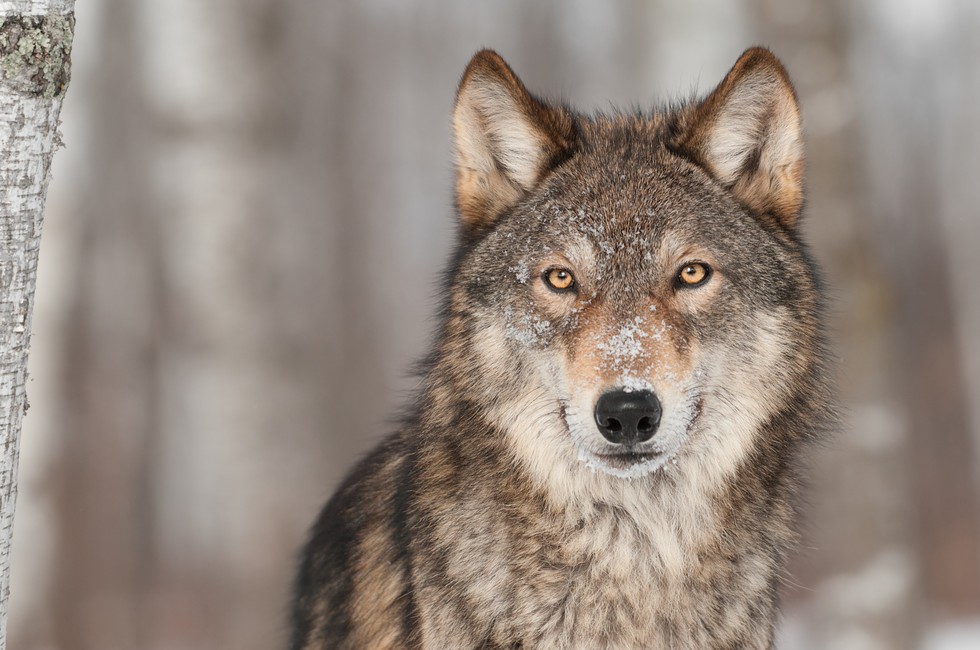
ShutterstockNow, former fans of the zoo are up in arms about the treatment of Rebel, with many pointing out that the wolf was just acting naturally and should never have been in captivity in the first place.
“I don’t understand why this wild animal had to suffer for what idiotic humans did,” one person wrote on the zoo’s Facebook page. “Parents should have been punished for allowing their child into a NON-PUBLIC area.”
“Why would a zoo educate children that it’s OK to murder a wild animal who doesn’t even belong behind bars?” another person asked.
Wilhelm said that while rabies vaccines are unpleasant, they only last a few seconds. To avoid that temporary discomfort, he explained, “a life was ended that didn’t need to be ended.”
People have questioned whether Wisconsin’s public officials handled the situation appropriately, considering they immediately placed killing Rebel on the table. But unfortunately, Rebel’s death is just the latest in a string of tragic decisions backed by questionable wildlife policies.
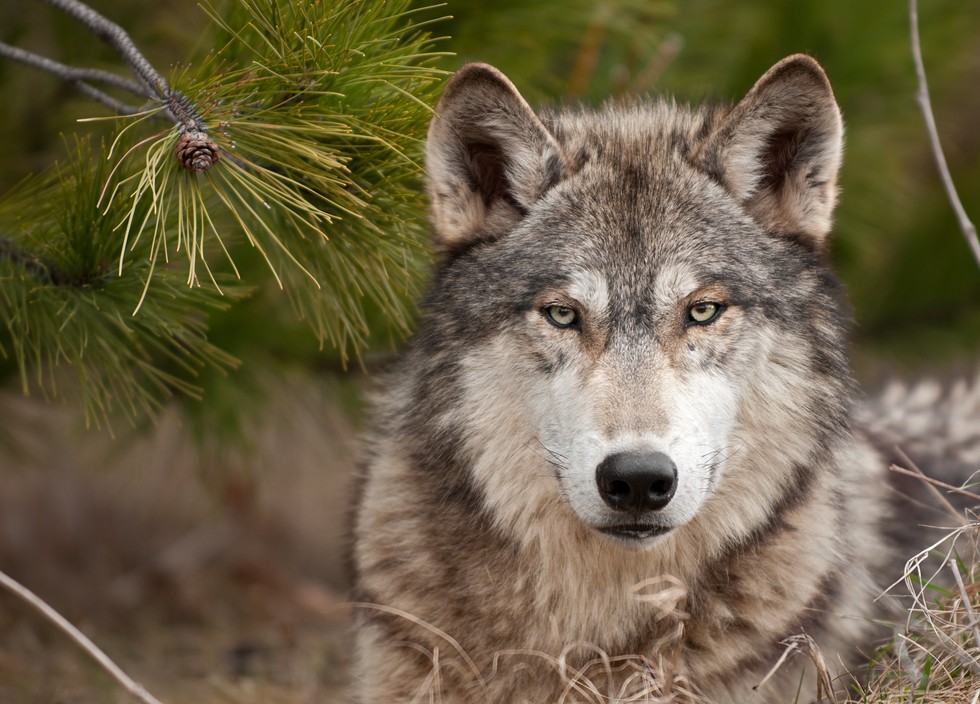
ShutterstockIn April, Alaska sentenced a family of black bears to death for exhibiting defensive behavior — because a group of tourists surrounded them and chased them up a tree. The decision was fortunately reversed due to public outcry.
In May, a sleeping mountain lion was brutally killed in a minute-long shower of close-range gunshots in Nebraska simply for taking a nap next to a building.
And while rabies concerns are certainly valid, Wilhelm said, Rebel’s death was an unnecessary one.
“If the parents were concerned, they should have put their child through those shots,” he noted. “I don’t, in my opinion, think that the wolf should have been put down at all.”
To read about a similar case where a gorilla was killed after a child entered his cage, click here.
 Gray wolf pups. (Oregon Department of Fish and Wildlife)
PREDATORS — Idaho Fish and Game is asking for the public’s help in determining who is responsible for removing and killing young wolves from a den in North Idaho.
The incident occurred in Kootenai County, about 15 miles from Coeur d’Alene, in the Sage Creek drainage, says Phil Cooper, department spokesman. The incident likely occurred sometime during the week of May 16.
“Fish and Game manages wolves in Idaho as big game animals,” he said. “There was no open season for wolves in the area when the juvenile wolves were killed.”
Fish and Game officers collected evidence at the scene and are following leads.
Information about the incident can be called in to the Citizens Against Poaching Hotline, (800) 632-5999.
“Callers may remain anonymous,” he said. “A reward is available for anyone providing information that leads to criminal prosecution of the case.”
from Defenders of Wildlife:
It’s supposedly an energy bill, but the “North American Energy Infrastructure Act of 2016” contains a lethal dose of anti-wildlife amendments that will lead to dead wolves, dead bears and the destruction of many important wildlife protections.
And while the pro-oil, pro-coal, climate change-denying provisions of the bill are despicable, the anti-wildlife measures are equally catastrophic.
Tell your senators to oppose this bill’s wide array of anti-wildlife provisions.
This bill has incorporated the so-called “Sportsmen’s Heritage and Recreational Opportunity Act,” with all of its horrific attacks on wildlife and public lands that we have spoken about before.
The deadly wildlife provisions include:
The anti-wildlife forces just won’t give up. It’s up to you and me to stop them.
Tell your senators to protect wildlife by opposing this harmful House Energy Bill!
Thanks for your tireless help on behalf of the wildlife we love.
Spring 2016 newsletter from Predator Defense
It hurts tremendously to have to report ever-increasing kill numbers for gray wolves. But these indefensible losses are the natural and predictable result of the political gamesman-ship that occurred five years ago when wolves were stripped of federal endangered species protection and management was turned over to state wildlife agencies. Since 2011 over 4,200 wolves have been senselessly slaughtered by sport hunters and trappers alone. Nowhere is the killing worse than Idaho, but Oregon recently took a very bad turn, removing protections for their fledgling population of around 100 wolves (see pg. 2).
Thankfully, we also have good news to report—a legal victory for wolves in Washington state, as well as two wolf protection lawsuits we’re part of in Idaho and Oregon. In April we returned to Idaho for the fourth time in 12 months, meeting with attorneys and other activists to strategize a way to stop Idaho Fish and Game’s out-of-control killing program. We also rallied against the wolf slaughter at the Idaho state capitol in February. (See feature on pgs. 2-3.)
Speaking Out for Imperiled Grizzly Bears in Greater Yellowstone Ecosystem
As we went to press, the public comment period closed on a proposal to delist grizzly bears in the area around Yellowstone National Park. Hunters are now chomping at the bit to buy a $50 license to kill a bear to adorn their wall and floor.
The delisting debate has been heated, but opposi-tion has been strong, with the majority
of the public and scientists against removing protections. Over 63,000 people submitted comments to the U.S. Fish & Wildlife Service (USFWS). We signed on to an official comment letter with 80 other environmental organizations urging USFWS to keep grizzly bears protected, and 58 top scientists joined Jane Goodall in an anti-delisting campaign. We have all forcefully stated that grizzlies have not recovered, and the decision to …Hunting and livestock interests control 99% of wildlife policy.
The Wolf Wars
Over 4,200 gray wolves have been killed since federal protections were removed in April 2011. The slaughter won’t stop until wildlife “management” policies reflect science and the public will, rather than the tiny minority— hunting and livestock interests. Our work to raise awareness and demand change continues.
PREDATOR DEFENSE | Spring 2016 | page 2
Oregon Takes Giant Step Backward, Delisting Wolves
Until recently, Oregon was thought of as a progressive state in terms of wolf “man-agement.” While wolves were driven out over 50 years ago and never reintroduced, those who migrated to Oregon from Idaho in recent years were allowed to coexist. As of March 2016 Oregon’s wolf population numbered around 100, a recovery that was considered a great start. And contrary to what the agricultural interests expected, depredation on livestock decreased during the time the wolf population increased.
But Oregon’s “honeymoon with wolves” appears officially over. When the population reached the benchmark established by the Oregon Wolf Plan, classifying it as Phase 2, hunting and livestock interests won the day. Circumventing both best-available science and public will, the Oregon Fish & Wildlife Commission removed state endangered species protection in November 2015. In March 2016 Governor Kate Brown caved to special interests and signed the delisting bill (HB 4040) into law. This delisting decision makes the future for Oregon wolves look increasingly grim. If the current trend continues, Oregon could soon look a lot like Idaho and Montana, which have been wolf-slaughtering fields since 2011, with grisly sport hunting and trapping seasons.
While Oregon’s current wolf management plan does not permit hunting or trap-ping seasons, wolves can be killed if seen predating on livestock and in recent years ranchers have pushed their political clout. The ink had barely dried on the Governor’s signature when wildlife agents in a helicopter gunned down a family of four from Oregon’s first established pack, the Imnaha. They killed legendary 10-year old alpha male, OR-4, his mate, and two yearling pups for allegedly preying on livestock on a rancher’s land. Contrary to what the media and state wildlife officials say, nonlethal methods were not used correctly, nor were all the appropriate methods attempted.
The existing Oregon Wolf Management Plan is in early stages of being rewritten. We will comment on the new draft as soon as the comment period opens. We are also co-plaintiffs in the wolf protection lawsuit described below.
Wolves Win Legal Victory in Washington State
Wolves in Washington state were given reason to celebrate in December 2015, when a federal judge put a hold on a plan to kill more wolves to reduce livestock predation. The judge found that the federal agency proposing the killings (Wildlife Services) violated the law, which requires an Environmental Impact Statement. He also found their plan to be highly controversial and unlikely to work.
So Washington state is actually requiring that science be considered. This is fab-ulous news! We’re proud to have been co-plaintiffs in this important case, and we’d like to thank our friends John Mellgren and Andrea Rodgers at the Western Environ-mental Law Center for handling it so expertly.
Oregon Wolf Protection Lawsuit Filed; Idaho Soon to Follow
We have reason to hope that two new lawsuits in Oregon and Idaho will produce similarly positive results to Washington’s. We are co-plaintiffs in a suit filed in February that challenges Wildlife Services’ authority to kill any of Oregon’s fledgling population of around 100 wolves. We are contending that Wildlife Services failed to explain why killing wolves on behalf of livestock interests should replace common-sense, proactive and nonlethal alternatives, such as those already reflected in the Oregon Wolf Management Plan. We have joined a similar lawsuit against Wildlife Services that will be filed in Idaho shortly.
As you likely know, Idaho is the nation’s biggest wolf-killing state. Over 1,500 wolves have been slaughtered there by hunters and trappers alone since the 2011 delisting. This does not include the scores slaughtered by state and federal predator control agencies. Adding insult to this outrage, early this year federal agents secretly aerial gunned 20 wolves from helicopters in the Lolo Zone of Clearwater National Forest, one of the most pristine native predator habitats in the country.
Since Idaho is a state run amok in brutality against wildlife and denial of sci-entific reality, they can only be stopped if enough of us speak out and demand wholesale change incessantly, from now until we succeed.
We rallied in protest of Idaho’s ongoing slaughter at the state capitol build-ing in Boise on Feb. 15, 2016. Our numbers were not huge, but our voices were loud. Over 70 people showed up during the course of the rally to demand an end to Idaho’s wasteful Wolf Control Board and the termination of the USDA Wildlife Services aerial gunning program. We will also bring legal action soon, along the same lines as the wolf protection lawsuits described on pg. 2.

Continued from https://exposingthebiggame.wordpress.com/2016/05/23/excerpt-from-the-howl-of-the-hunted/ and https://exposingthebiggame.wordpress.com/2016/05/26/the-howl-of-the-hunted-part-two/
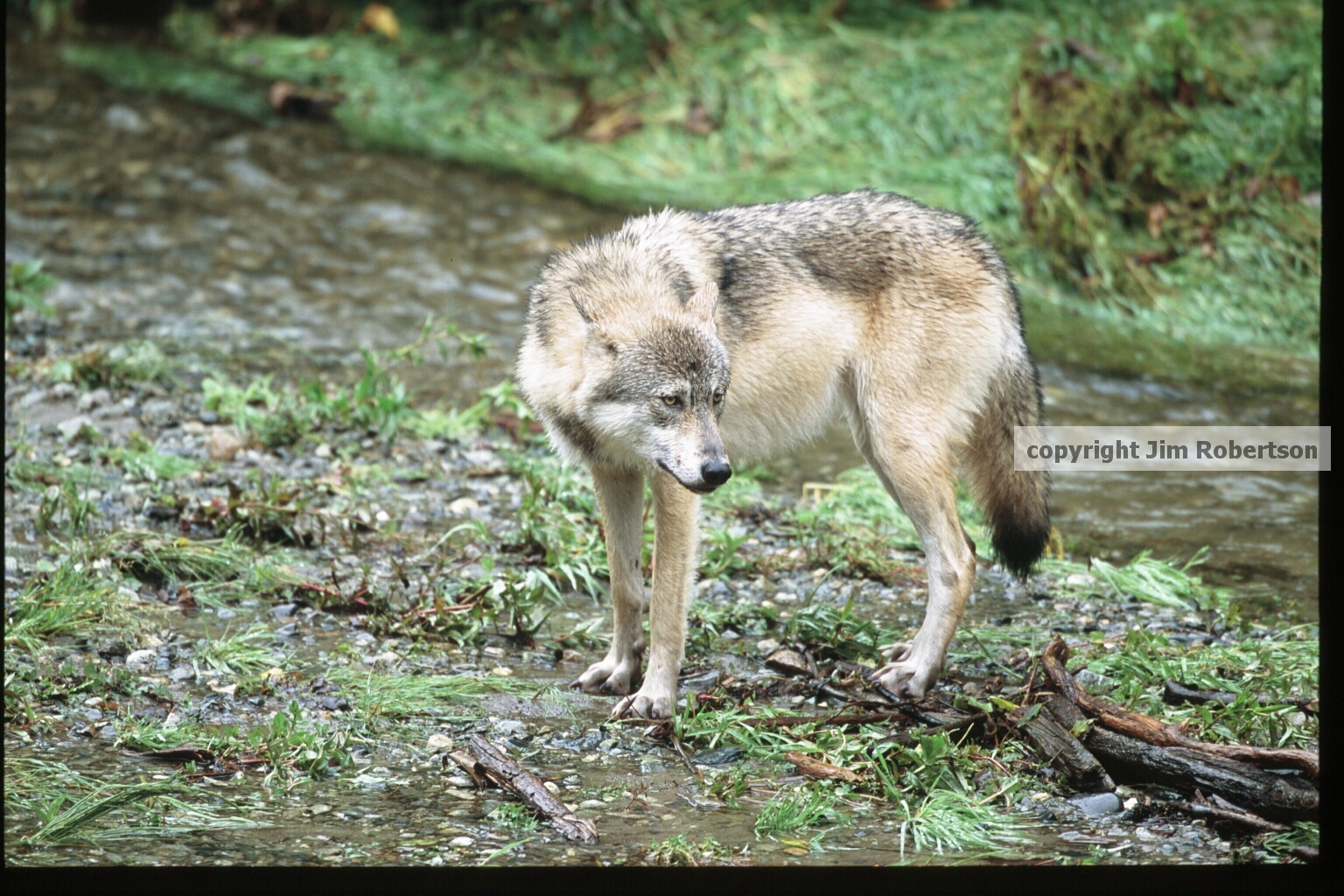
“Lone wolves are rare. Normally wolves live in packs ranging in size from three to thirty members, but averaging less than eight. The pack is essential for the species’ survival and its size is determined by the abundance of prey in a given area. A single wolf can rarely bring down an animal as large as a deer or elk, but a pack–working together with each individual taking a role–can usually, procure enough food for all members. Wolves often have great difficulty overcoming a hoofed animal contrary to older beliefs. This well known by the wolf himself and is reflected in the way he chooses his prey. If the prey does not run at first rush but holds his ground, he’s usually left alone. A good example of wolves ‘testing’ prey comes from L. David Mech’s book, The Wolves of Isle Royale, a study of wolf/moose relationships on a large protected island in Lake Michigan:
‘Seven wolves encountered three adult moose standing a few yards inland among sparse conifers and heavy blowdown. The wolves ran fifteen yards to the nearest moose, but the animal stood at bay and threatened the wolves. Immediately they headed for the second moose, which started running. However, they soon abandoned pursuit, for the animal had a head start. Then they turned to the third moose, which had watched them chase the others. This animal ran upon their approach and when during the pursuit it charged the wolves, one got ahead of the moose. The moose charges this wolf and chased it down the trail for fifty yards while the rest of the pack pursued it. Finally the moose stood next to a spruce and defied the wolves. Within half a minute they gave up.’
“On Isle Royale, Mech regularly observed moose from the air. Of the 160 in the range of the hunting wolves, 29 were ignored by wolves, 11 discovered the wolves first and eluded detection, 24 refused to run when confronted and were left alone. Of the 96 that ran, 43 got away immediately, 34 were surrounded but left alone, 12 made successful defensive stands, 7 were attacked, 6 were killed and 1 was wounded but escaped. These cases he observed over several winters in the 1960s.
“Wolves must be very economical in their energy expenditure if they are to survive. A healthy adult moose has a good chance of escaping and the wolves know they can’t afford to chase for long distances without results. Also a wolf knows he can be seriously injured or killed by his hoofed prey, if it is strong and healthy. Weaker individuals, logically, are easier to catch and the wolves–not caring about making trophy kills or obtaining fine hides–go for the easiest prey possible. Wolves often stare down their prey before deciding which one is healthiest and which one is weakest. The weaker usually show some sign of nervousness not exhibited by healthier individuals.
“The personality of wolves was summed up by Adolf Murie, who spent long periods of time with wolves in Mount McKinley National Park. In his 1944 book, The Wolves of Mount McKinley, he writes, ‘The strongest impression remaining with me after watching wolves on numerous occasions, was their friendliness. The adults were friendly towards each other and were amiable toward the pups.’
“His social nature contributes greatly to the wolf’s personality traits. One of the strongest traits is his capacity to make emotional attachments to other individuals. This is very important to the formation of a pack as the unit of a wolf’s society. Another characteristic necessary for wolf pack system cohesion is the aversion to fighting. This non-violent nature is advantageous considering they must spend much of their time together.”
to be continued…
http://www.seattletimes.com/opinion/stiffer-penalties-needed-for-poaching-wolves/

Poaching may be limiting progress toward wolf recovery goals.
WOLVES are important native predators and vital pieces of our wildlife heritage. The news [“Four new wolf packs recorded in state,” Local News, March 14] that Washington is now home to at least 90 wolves, 18 packs and eight breeding pairs is exciting.
However, eight years after wolves were first confirmed back in the North Cascades, there are only three wolf packs in that designated recovery area. There remain no confirmed wolf packs in the Cascades south of Interstate 90 or in Western Washington. In order to meet wolf-recovery goals agreed upon under the Washington Wolf Conservation and Management Plan (Wolf Plan), and for the long term viability of the species in our state, it’s important that wolves recolonize the high-quality habitat in the Olympic Peninsula and Washington’s South Cascades.
Wolves are protected by both state and federal endangered-species laws in Washington. Yet wolf poaching has occurred with tragic frequency in recent years. Several members of the Methow Valley’s Lookout Pack were poached in 2010. A wolf from the Smackout Pack was poached in late 2013. The 2014 poaching of a Kittitas County breeding female wolf is still unprosecuted. In September 2015, shamefully minimal fines were announced for a Whitman County wolf poacher. Also in 2015, investigators announced that a lone wolf killed by a vehicle on I-90 west of Snoqualmie Pass had previously been shot. Numerous other unconfirmed rumors of wolf poaching reach us each year, and some are most certainly true.
It doesn’t matter whether it’s a bull elk or a wolf, poaching is never acceptable.

Courtesy of Oregon Department of Fish and Wildlife
Oregon Department of Fish and Wildlife biologists place a new GPS collar on OR-4, the Imnaha wolf pack’s alpha male, after darting him from a helicopter in March 2012.
Eric Mortenson/Capital Press
<!–
–>
They called him OR-4, and by some accounts he was Oregon’s biggest and baddest wolf, 97 pounds of cunning in his prime and the longtime alpha male of Wallowa County’s influential Imnaha Pack.
But OR-4 was nearly 10, old for a wolf in the wild. And his mate limped with a bad back leg. Accompanied by two yearlings, they apparently separated from the rest of the Imnaha Pack or were forced out. In March, they attacked and devoured or injured calves and sheep five times in private pastures.
So on March 31, Oregon Department of Fish and Wildlife staff boarded a helicopter, rose up and shot all four.
The decisive action by the department may have marked a somber turning point in the state’s work to restore wolves to the landscape. It comes on the heels of the Wildlife Commission’s decision in November to take gray wolves off the state endangered species list, and just as the commission is beginning a review of the Oregon Wolf Plan, the document that governs wolf conservation and management.
Oregon Wild, the Portland-based conservation group with long involvement in the state’s wolf issue, said shooting wolves should be an “absolute last resort.”
“While the wolf plan is out of date and under review, we shouldn’t be taking the most drastic action we can take in wolf management,” Executive Director Sean Stevens said in an email.
The commission should not have taken wolves off the state endangered species list in the first place, but it isn’t likely to revisit that decision, Stevens said.
The commission should call upon the department to not shoot more wolves until the plan review is finished, he said.
“But, more importantly, they should recognize that delisting does not mean that we should suddenly swing open the doors to more aggressive management,” Stevens said.
The ongoing wolf plan review, which may take nine months, should include science that wasn’t considered in the delisting decision, and the public’s will, he said. It also should create more clarity on non-lethal measures to deter wolves, he said.
Both sides
Publicly, at least, no one is celebrating the shootings.
The Oregon Cattlemen’s Association, long on the opposite side of the argument from Oregon Wild, said ODFW’s action was authorized by Phase II of the state’s wolf plan.
“The problem needed addressed and ODFW handled it correctly,” spokeswoman Kayli Hanley said in an email. “We acknowledge that while this decision was necessary for the sake of species coexistence, it was a difficult decision.”
Michael Finley, chairman of the commission, said the department handled the situation properly.
“I feel that the department acted in total good faith,” Finley said. “They followed the letter and the spirit of the wolf plan.”
Another conservation group, Defenders of Wildlife, called the shootings “a very sad day for us” but also said it appeared Fish and Wildlife followed the wolf plan.
“The final plan is a compromise, but it is among the best of all the state plans in that it emphasizes the value of wolves on the landscape, and requires landowners to try non-lethal methods of deterring wolves before killing them is ever considered,” the group said in a prepared statement.
Amaroq Weiss, West Coast wolf organizer for the Center for Biological Diversity, said the Imnaha Pack shootings may lead to more poaching, because killing wolves decreases tolerance of them and leads to a belief that “you have to kill wolves in order to preserve them.”
Weiss agreed that coming across a calf or sheep that’s been torn apart and consumed — the skull and hide was all that was left of one calf after the OR-4 group fed on it — must be gut-wrenching for producers. But she said those animals are raised to be killed and eaten. “They don’t die any more a humane death in a slaughterhouse than being killed by a wild animal,” she said. “It’s a hard discussion to find a common place of agreement.”
She said such losses are the reason Oregon established the compensation program: to pay for livestock losses and to help with the cost of defensive measures that scare wolves away.
Rush to Phase II
Weiss said Oregon rushed to move to Phase II of its wolf conservation and management plan in the eastern part of the state, which was prompted by reaching a population goal of four breeding pairs for three consecutive years. That also prompted the Fish and Wildlife Commission to take wolves off the state endangered species list in 2015, although they remain on the federal endangered list in the Western two-thirds of the state.
Like others, Weiss believes the state should have held off on such changes until it finished the mandated review of the wolf plan.
“Under Phase I, Oregon was the state we could all point to” for successfully managing wolves, Weiss said. “I would hope they look at what parts of the wolf plan are working, and look at the parts that are not working.”
Politics and policy aside, the shooting of OR-4 gave people pause. He was a bigger-than-life character; he’d evaded a previous state kill order and had to be re-collared a couple times as he somehow shook off the state’s effort to track him.
Pack history
OR-4’s Imnaha Pack was the state’s second oldest, designated in 2009, and it produced generations of successful dispersers. OR-4’s many progeny included Oregon’s best-known wanderer, OR-7, who left the Imnaha Pack in 2011 and zig-zagged his way southwest into California before settling in the Southern Oregon Cascades.
OR-25, which killed a calf in Klamath County and now is in Northern California, dispersed from the Imnaha Pack. The alpha female of the Shasta Pack, California’s first, is from the Imnaha Pack as well.
Rob Klavins, who lives in Wallowa County and is Oregon Wild’s field representative in the area, ran across OR-4’s tracks a couple times and saw him once.
Despite his fearsome reputation, the wolf tucked his tail between his legs, ran behind a nearby tree and barked at Klavins and his hiking group until they left.
“Killing animals four or five times your size is a tough way to make a living,” Klavins said. “Some people appreciate OR-4 as a symbol of the tenacity of wolves, even a lot of folks who dislike wolves have sort of a begrudging respect for him.”

A bill that ratifies the removal of wolves from Oregon’s list of endangered species was signed by Gov. Kate Brown, dashing environmentalist hopes of a veto. More

 Exposing the Big Game