The Mistreatment of Colorado Wolves Ignores Their Emotional Needs

September 27, 2024


The Mindset of Colorado’s Wolf Snafu Needs a Pro-Wolf Reset

To date, this project cannot be called any sort of success. 

Colorado Parks and Wildlife’s unnecessary and uncompassionate dismantling of a Colorado pack of wolves sets a dire precedent.

Current management practices disregard their rich and deep emotional lives and physical and psychological wellbeing.

CPW has not uttered one compassionate word about what the deeply sentient wolves were feeling during their trap and relocate debacle during which the father wolf died and his mate and their four children were placed in captivity. 

Colorado Parks and Wildlife (CPW) recently dismantled the Copper Creek pack—a family of wolves consisting of the father, mother, and their four children—because they denned on the land of a rancher who did little to nothing to deter them.1 These parents were the first breeding pair in the state and they and their children represent the DNA of Colorado’s future wolves. Doing their best to survive, they discovered the rancher’s food animals were an easy option—basically “room service”—compared to hunting wild prey. 

The problems presented here aren’t going to be isolated incidents, nor can we keep the public in the dark and hope to ignore them. Nor should we ignore what the wolves themselves are feeling as they are mistreated by humans responsible for their wellbeing. 

The Current and Ever-Changing State of Affairs

“This was—and continues to be—a complex, tragic and ultimately avoidable situation, and it’s essential that we all examine the facts and the context to prevent any similar fate for other wolves in the future.”—Kitty Block, CEO of the Humane Society of the United States, see: The tragic fate of Colorado’s Copper Creek wolf pack

Months of silence from the agency in charge and a hostile and oftentimes pessimistic media created perfect conditions for dark-age thinking and fearmongering. It’s time the voters of Colorado learn the truth about the wolves they voted to bring home. No less will do than a full accounting of the scientific and ethical missteps that led to an entirely avoidable and completely unforgivable assault on the lives of these amazing, sentient beings. 

After hearing from countless people about this entirely avoidable and unforgivable assault on the lives of these amazing sentient beings, I wanted to do my part in getting information to the public. 

Simply put, CPW’s “trap and relocate operation” fails in three ways. In the grand scheme of things, it represents a failure by its very nature: uprooting and traumatizing the lives of the pack members, just for being wolves. 

1. Scientific grounds: Science shows that interfering in the lives of these animals was most likely going to have serious negative consequences, and it did—the father died after being captured and the rest of his family are being held in captivity, the details of which remain undisclosed to the public. Even if some or all of this captive pack are released at a later date, experts fear it likely won’t be an easy transition back to the wild in what is proving to be a wolf-unfriendly state.

Of course, there is hope that those of us in the scientific community are wrong. But one thing is certain: had CPW used the “best available science,” it would not have engaged with or captured the wolves at all, instead allowing them time to adapt to their new home, with nearby ranchers doing their part to employ sensible nonlethal deterrence measures, If only, then this founding group of wolves would have been celebrated rather than scorned and ill-treated. 

Interfering in the lives of this family group also would have been discouraged had those responsible for the wellbeing of the wolves paid any attention to what scientific research has shown us about the emotional lives of these sentient beings—what they need to thrive among themselves and in the presence of humans with whom they are trying to cohabit. 

Among wolf advocates, the trap and relocation was also a failure for the precedent it set and for how it ignored what the wolves were feeling. 

2. Ethical grounds: Wolves are sentient beings, not merely objects to be moved here and there as if they aren’t impacted by what happens to them. Science shows they are, of course, extremely sensitive to changes in their social lives and where they live. They were once wild in Oregon and once wild in Colorado, and now they’ve lost their father and are being held in captivity with an uncertain fate. Surely their being trapped and relocated and the loss of their father and mate wreaks havoc with how they feel and deeply compromises their individual wellbeing. 

3. Commonsense: It was never the intent of anti-wolf ranchers to go along with the reintroduction, regardless of how often the government stepped in to offer assistance and how much it offered to pay in compensation. Reintroduction may have passed by a majority of Colorado voters, but in meeting the demands of a vocal minority, CPW has rewarded bad behavior. Within days of removing the Copper Creek pack, the same ranchers who demanded their removal began complaining that relocation wasn’t enough. And now there is a move to keep the names of complaining ranchers who ask for compensation from going public

Would you do it to your dog? Another element of commonsense rests on the fact that dogs share a common wolf ancestor and have wolf genes and wolf-like neural pathways in their brains. Commonsense and science mandate that if dogs have rich and deep emotional lives which of course they do, so too do wolves. That is an undebatable scientific fact. I’ve known a few dogs in my life named Cody, Ninja, Rascal, Sadie, and Dolly and I am sure that they and others would have suffered greatly by being treated like their wild relatives were treated. If you wouldn’t do it or allow it to be done to a dog, why would you do it or allow it to be done to a wolf?

CPW also ignore the possibility that the male died after being caught in a leg-hold trap and held in a cage because he was highly stressed and already was suffering from an injured leg. 

There is no doubt that each member of this family group has suffered greatly by being trapped and moved and by having their family uncompassionately dismantled by CPW. 

The treatment of the wolves requires a new mindset that incorporates their point of view

We now know that there is a plan to bring in around 15 more Canadian wolves in a few months. We must not lose sight of the fact that all this easily avoidable turmoil was the result of only two wolves mating to form a pack of six individuals. Is it not unreasonable to wonder how ranchers will better prepare to meet the moment when Colorado’s wolf population doubles? 

All signs point to trouble ahead as wolves try to settle into their new homes, begin competing with one another and other predators, and hopefully breed. Without a mandate for non-lethal management and the use of all available deterrents, the wolves will surely face calls for more trap and relocate operations, or worse. We can’t just move the “problem” around, as it begets more chaos. Surely, if there is a repeat of what has happened to the original group, the emotional lives of other wolves will be severely compromised. 

As Kylie Mohr writes:

“…wolves move quickly, spreading out in search of food, mates and territory. Next February, more of the newly arrived wolves might pair up and breed, forming new packs. More wolves will likely mean more wolf-human interactions — and more opportunities for both state wildlife officials and ranchers to keep what happened to Middle Park’s livestock and the Copper Creek Pack from happening again.”

The physical and emotional wellbeing of every individual wolf matters

If wolves are going to be punished and made an example of for finding the wrong food source, why bring in more? It’s a double-cross that cannot be defended scientifically, ethically, or using a healthy dose of commonsense.

People who want to see and hear (and possibly smell) wolves on Colorado’s landscapes want live, wild wolves who live wild wolf-appropriate lives, not severed family units, punished for doing things that wolves evolved to do.

The emotional lives and physical and psychological wellbeing of every single individual matters, and none are disposable simply for expressing their lupine—wolf-like—ways of being. One of the basic tenets of the ever-growing field of compassionate conservation is that the life of every individual matters because they are alive. Their inherent or intrinsic value is what counts, not their instrumental value that focuses on what they can do for us. 

All in all, conservation science must value individuals because they experience different emotions and their joys and pains are their own personal joys and pains. Individual wolves do not care if their species is on the brink and conservation efforts should be guided by compassion rather than by harming and killing. 

What the wolves think and feel matters and must be factored into how we choose to interfere in their lives. If you are outraged by how the wolves were treated you’re right on the mark. 

There are many lessons to be learned for how we choose to interact with our wild neighbors of any species. Respecting their rich and deep emotional lives is good for them and good for us and must be factored in to how humans choose to interfere in the lives of Colorado’s wolves and other animals. 

References

1) For more information, see: Colorado’s New Wolves: Why Was This Pack Decimated?Colorado’s New Family of Wild Wolves Must be CelebratedColorado Wolves: Hyped Media Derails Neighborly Coexistence; KGNU Interview: https://howonearthradio.org/archives/9710 (CPW did not reply to their request for an update on the fate of Colorado’s newly captured wolf family/); Colorado Wolves Receive Mixed Hellos and Muddy MediaWolf Packs Suffer When Humans Kill Their LeadersWhy We Misjudge Wolves, Bears, and Other Large CarnivoresThe Hidden Slippery Slopes of Animal Reintroduction ProgramsDo Individual Wolves Care if Their Species Is on the Brink?; LET’S KEEP COLORADO’S WOLVES OUT OF THE SPOTLIGHTThe Perks of Appreciating Wild Neighbors as Sentient Beings. More details can be seen here: Why was Colorado’s Precious, Promising First Wolf Pack Decimated?

Conservation Science Must Value Individuals and Anthropomorphism

Bekoff, Marc. The Emotional Lives of Animals: A Leading Scientist Explores Animal Joy, Sorrow, and Empathyand Why They Matter. New World Library, 2024. 

Mohr, Kylie. A mixed report for Colorado’s wolves. High Country News, September 19, 2024. 

Ordiz, A. et al. Large carnivore management at odds: Science or prejudice? Global Ecology and Conservation, 2014.

Image: patrice schoefolt/Pexels.

Waterfowl hunter shoots and kills wolf near St. Germain

A man shot and killed a gray wolf Saturday morning while he and two others were waterfowl hunting near St. Germain. Two wolves reportedly approached as close as five yards to their blind.

Paul A. Smith

Milwaukee Journal Sentinel

0:50

0:50

The Department of Natural Resources is investigating an incident in which a man shot and killed a gray wolf Saturday as he and two others were waterfowl hunting on public land near St. Germain.

Chase Melton, 19, of Sugar Camp, said about 6:15 a.m. Saturday two wolves approached the hunters’ blind.

Melton was accompanied by hunters aged 14 and 13. Saturday was opening day of the 2024 Wisconsin duck hunting season in the north zone.

He initially attempted to scare the wolves off, Melton said in an interview with WJFW in Rhinelander.

“I tried making some noise, I was clapping, stomping, breaking some sticks, whatever,” Melton said.

One of the wolves got as close as 5 yards to the hunters, Melton said. “I probably could have touched it with my hand, that was extremely scary,” Melton said. “So now, we’re really panicking. We’re like alright, we’re surrounded and we have a wolf charging us right now.”

Melton said he picked up his shotgun and when one of the wolves kept coming he shot it in the head; he estimated the animal was 8 to 10 yards away.

The wolf died nearby.

Melton said it was not what he wanted but the hunters “felt harmed” so he pulled the trigger.

He called the DNR to report the incident.

An updated population estimate for gray wolves in Wisconsin is expected sometime this fall.

Randy Johnson, DNR large carnivore specialist, said Wednesday an investigation of the incident remains open so he could not provide many details.

Johnson said a DNR conservation warden and wildlife biologist traveled to the scene to investigate. They confirmed the animal was a wolf.

The gray wolf is under protections of the Endangered Species Act in Wisconsin and most other states. As a result of its status, lethal force can be used against a wolf only in defense of human life.

Get the First Nations newsletter in your inbox.

Covering the 12 Indigenous nations in Wisconsin and other tribal news.

Delivery: WedYour Email

The investigation will use information from interviews with the hunters and others in the area to try to determine if the shooting was justified.

No wolf attack on a human has been documented in Wisconsin in the modern era, according to the DNR.

However, wolves have caused reports of threats to human safety in the state.

A 2017 incident on public land in Adams County, in which a man fired a handgun at and reportedly hit a wolf that approached him, did not qualify as a wolf attack, the DNR concluded.

An investigation was not able to find the wolf; the man was not cited.

A December 2023 incident in which an Ashland County man shot and killed a wolf in his yard remains under investigation. The man reportedly claimed the wolf threatened his safety.

There have been two verified complaints of wolf threats to human safety in Wisconsin this year, according to the DNR. The incidents were reported April 30 in Washburn County and May 30 in Price County. No wolf was shot in either instance.

In another hunting-related case, a ruffed grouse hunter in October 2012 in Minnesota shot and killed a wolf that approached him and his dog. The wolf was 8 yards away when the hunter shot. He was not cited.

The most common form of wolf conflict reported in Wisconsin is with livestock producers. As of last week, 73 confirmed or probable wolf depredations were recorded this year in the state, most on livestock. Other animals killed by wolves include bear hounds and family pets.

The number of wolf depredations this year already has surpassed the annual totals in 2023 (69 confirmed or probable) and 2022 (49).

Johnson said wolf depredations are likely higher this year for multiple reasons, including a mild winter in 2023-24 that made it harder for wolves to catch their primary prey, white-tailed deer. When wolves come into spring and summer in poorer condition they are more likely to attempt to kill livestock.

In addition, lethal controls have been unavailable to wildlife staff since the February 2022 ruling that put the wolf under protections of the Endangered Species Act. Johnson said non-lethal abatement methods such as visual and auditory deterrents lose their effectiveness over time.

In April 2023, Wisconsin had 1,007 wolves in 283 packs, according to the most recent population estimate from the DNR.

An updated population estimate is expected sometime this fall.

Waterfowl hunting safety tips

The south zone duck hunting season opens Saturday in Wisconsin. Waterfowl hunters should follow best boating safety practices as they hit the water this season, according to the DNR.

The top safety tips include wearing a life jacket, avoiding overloading boats, safely transporting firearms, making sure boat lights are working, and sharing your hunting plan with someone on land, including your expected return time and location.

For 2024 waterfowl hunting regulations, visit dnr.wi.gov and search for the 2024 Wisconsin Hunting Regulations booklet.

Green light to wolf protection status revision, EU countries want more flexibility for trapping and culling

European Commission proposal to downgrade wolves from “strictly protected” to “protected” species approved in COREPER. It is expected to be formally approved tomorrow by the ministers of the 27, and then the EU will request an amendment to the international Bern Convention

<img src="https://www.eunews.it/wp-content/litespeed/avatar/5d23c06eea463262126e6eca4aea1d3b.jpg?ver=1727181155&quot; alt="Simone De La Feld @SimoneDeLaFeld1” height=”80″ width=”80″ srcset=”https://www.eunews.it/wp-content/litespeed/avatar/a615b8d9e3d771c9fd3e856add6b4108.jpg?ver=1727181158 2x”> by Simone De La Feld @SimoneDeLaFeld1

 25 September 2024

in In the spotlightPolitics

(Photo by THOMAS KIENZLE / AFP)

(Photo by THOMAS KIENZLE / AFP)

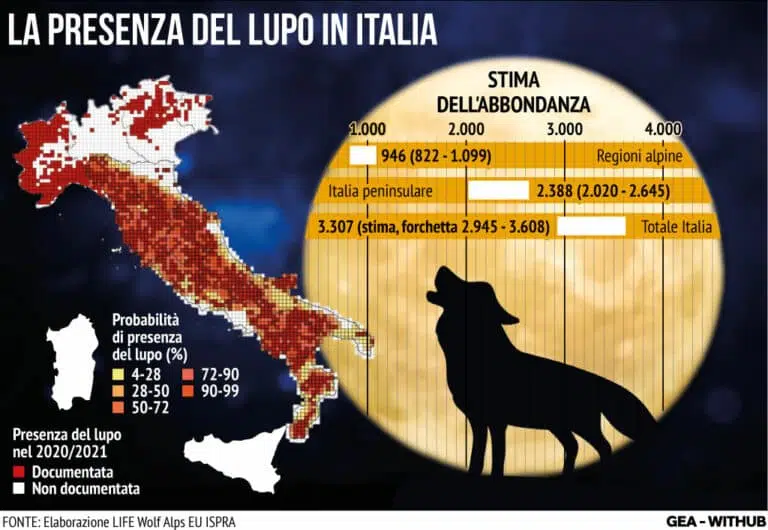
Brussels – More than “Beware of the wolf,” “Wolf beware!”  It is getting closer to revising the predator’s protection status proposed by the European Commission last December from “strictly protected” to “protected” species: member state ambassadors gave their green light today (Sept. 25). Now the confirmation by the ministers of the 27, meeting tomorrow for the EU Competitiveness Council, is a mere formality.

The adjustment of the protection status “will be an important step in addressing the challenges posed by the increasing wolf population while maintaining the goal of achieving a favourable conservation status for the species,” commented Adalbert Jahnz, spokesperson for the European Commission. With the downgrading to “protected species”, the now 20,000 wolves in Europe will move out of the inner circle of large carnivores protected by the Habitats Directive: the brown bear, the wolverine, the golden jackal, and the Eurasian and Iberian lynxes, for which there is a ban on deliberate killing and capture, as well as the deterioration or destruction of their breeding and resting sites in all EU territories.

European sources explain that member states will be given more flexibility to “deal with the most difficult cases of coexistence between wolves and communities in states that need it.” More room for trapping to culling, in any case already allowed by the Habitats Directive itself, allows derogating from obligations on large carnivores when measures to prevent or reduce predation risks are not enough. Reportedly, at COREPER (the body that brings together EU ambassadors), Italy supported the proposal, while only two countries opposed it, and four others chose to abstain. Not enough to block the decision made by a qualified majority. “We are waiting for formal approval by the Council, and then the EU will submit the proposal to the Standing Committee of the Bern Convention in time for the next meeting of the Committee, scheduled for the first week of December,” Jahnz announced.

Amending the international Bern Convention on the conservation of European wildlife and natural habitats, to which the EU and its member states are parties, is the “precondition for any change under EU law.” Only once the treaty has been amended can the European Commission amend the regime under the Habitats Directive.

The Convention is based on scientific data available at the time of the treaty negotiations in 1979. While the European Commission’s proposal is based on “requests that have been made to us by local and national authorities,” Jahnz pointed out, “as something necessary and useful to address the challenges posed by wolves. In September 2023, Ursula von der Leyen had invited the scientific community, local authorities, and all stakeholders to submit updated data on wolf populations and their impacts. On the basis of that “in-depth examination of the changing reality analysis,” Brussels proposed the downlisting of the species a few months later—in line with what the European Parliament called for as early as November 2022.

“A step forward that fills us with satisfaction. It is unacceptable that it has taken years to recognize a reality before everyone’s eyes,” commented the head of the Lega’s delegation in Brussels, Paolo Borchia. Fratelli d’Italia MEP Pietro Fiocchi reiterated the concept: “We are on the right track, and today’s result rewards the battles over downgrading that we have been conducting for a long time alongside Italian farmers.” The same Fiocchi who posed with a shotgun in posters for June’s European elections and former executive of the family company that produces ammunition.

Almost as playing defence, the European Commission spokesman pointed out that “the solution to all the problems posed by wolves also and above all lies in investment in appropriate damage prevention measures.” But according to WWF, the EU has taken “a grave decision that dangerously opens the door to wolf culls in Europe and ignores the call of more than 300 civil society organizations and hundreds of thousands of people who have urged governments to follow the recommendations of science and intensify efforts to foster coexistence with large carnivores through preventive measures.”English version by the Translation Service of Withub

19-year-old hunter shoots wolf to defend himself and fellow hunters amid pack encounter near St. Germain

https://trinitymedia.ai/player/trinity-player.php?pageURL=https%3A%2F%2Fwww.wjfw.com%2Fnews%2F19-year-old-hunter-shoots-wolf-to-defend-himself-and-fellow-hunters-amid-pack-encounter%2Farticle_83671a54-7acc-11ef-8f4b-d35a97259d14.html&partner=Flex&FAB=1&textSelector=I2FydGljbGUtYm9keQ%3D%3D&unitId=2900003117&userId=d87d6c70-698d-425c-a490-50e59507f6c4&isLegacyBrowser=false&isPartitioningSupport=1&version=20240925_1816a3f5dfad16eae13ac3cdc77597a010b7bd6f&useBunnyCDN=0&themeId=140&unitType=tts-player

Saturday morning at approximately 6:15 AM near St. Germain, a young 19-year-old hunter from Sugar Camp had to make an instinctual decision to shoot and kill a wolf to protect himself and two younger hunters from a pack of brazen wolves.

“We pulled up to the spot at like 3:45 in the morning to get our spot because it was opening morning. We got to the spot we built our blind. A little bit before shooting light, we threw our decoy outs we had some goose silhouettes some mallards and some teal,” said Chase Melton the 19-year-old hunter.

But come daybreak, that normal opening morning quickly became a nightmare.

LATEST VIDEOS

Tom’s Drawing Board Studio (9-24-24)5pm Newscast

Powered by

“The one kid next to me he was 14 years old said ‘hey you have a deer coming down on your left side,’ so I stood up and looked over at it was a wolf,” said Melton.

Melton said it was hard to identify at first whether it was a wolf or coyote.

“I tried making some noise, I was clapping, stomping, breaking some sticks, whatever. This wolf turned at me and we locked eyes, and it started to come at us not like a walk but like a jog almost and it was at about 40-50 yards. So, I started to panic a little bit they started panicking because they’re younger kids and they’re like oh my god we’ve got wolves around us,” said Melton.

“So, I grabbed my gun just in case something would happen,” said Melton. “Then, the 13-year-old who was two people down from me said ‘Chase right behind you!’ I looked, and we had a wolf at about five yards – I probably could have touched it with my hand, that was extremely scary. So now, we’re really panicking were like alright were surrounded we have a wolf charging us right now.” Said Melton.

A witness that was hunting 300 feet away reported seeing at least five wolves surrounding the young hunters’ blind and another four in the general area. The witness also reported hearing barks, growls and howls coming from the wolves surrounding the young hunters’ blind.

“This wolf got within 15 yards and I’m like he’s still coming, he’s still coming, he got withing 8-10 yards and it’s not what I wanted to do but to protect us and to protect them we felt harmed, so I pulled the trigger,” said Melton.

Melton fired one shot, close range at the wolf’s face using a 12-gauge loaded with non-toxic waterfowl load.

“This wolf that was five yards behind us went off into the woods, came down, and then grabbed this wolf that I shot by the neck and started dragging it off. I’ve never witnessed something like that.”

Melton said he’s witnessed wolves in this spot once before but never an encounter like this.

“So after this wolf grabbed the one that I shot by the neck, they were yipping super loud, beyond scary,” said Melton

Melton said he contacted the DNR immediately after the encounter occurred after the wolves retreated into woods. A DNR official confirmed the incident.

“They reported that incident to DNR right away that morning. A DNR conservation warden and biologist were able to follow up that morning to investigate and confirmed that it was a wolf. At this time the investigation remains open so unfortunately, I’m unable to share any more details at this time,” said Randy Johnson, Large Carnivore Specialist for the Wisconsin Department of Natural Resources.

As for Melton – an avid outdoorsman – it’s a day he won’t forget.

“Even just being out in the woods in the future it might have an impact on me its just hard to say,” said Melton.

Reader Letter on MT Wolf Hunting/Trapping

https://dailyinterlake.com/news/2022/jan/30/wolf-hunting-and-trapping-down-despite-added-oppor/

Hello Mr. Laughlin,

it is the kind of articles like yours, “Wolf hunting and trapping down despite added opportunities,” that does nothing to inspire a better relationship between humans and nature in general, and wild animals, in this case with wolves.

And this at a time when we need to cultivate empathy and compassion for others, especially for nonhuman animals–domestic and wild,–and are in need for education on how to co-exist, become more tolerant and appreciative of nature–recall that we are in the midst of an accelerating rate of plant and species extinction, global destruction of ecosystems and mass killings of nonhuman animals, oh and let’s not forget climate change.

Your article presents the activity of killing wolves as something that is valuable, when an opposing view would call it an activity of ‘very sick’ individuals.

Stating that hunters and trappers have “achieved” killing a mere third of the allowable number of wolves in Montana is supporting the status quo of this ecologically and ethically indefensible madness brought on by legislators, and a Governor and his choice of FWP Commissioners –a representative of the Safari Club International and Outfitters, who are wolf haters and have no sense of respect for wild animals here in our state. The only decent member of this commission with decency is Pat Byorth.

Repeating the new language of “threshold,” which has a much better sound than a “quota,” shifts the focus of the tragedy of the high number of wolves killed to the human, who then will act. This tells the public that there is nothing to worry about, no need for concern, let alone empathy. This trivializes the lives of wolves even further.

Putting your emphasis on the “harsh weather conditions” and increased gas prices that make wolf killing so hard for the poor sportsmen, omits the animal side completely. It really does not get more anthropocentric–only the human side matters; forget that wolves and tens of thousands of other wild animals are getting killed by trappers this year alone; forget that these sentient animals greatly suffer from physical pain and psychological trauma in neck snares, and other body-gripping and killing devices set by ‘poor’ trappers; forget that this mass killing impacts not only on these animals themselves but also on their mates and young, the latter of whom may die as a result of their mother killed in traps or shot by a so-called ‘hunter.’

How many wolf pups are going to die in their den, now that their mother won’t come home to nurse them? Do you really not care about this?

Just like sometime ago in the Bitterroot, when a mountain lion mother who was found, strangled to death by a snare with her two little cubs also dead next to her body.

In conclusion, presenting the disaster of the ongoing wolf slaughter as a game where ‘sportsmen’ compete, achieve and are allowed etc., could not be further from reality.

It would be very helpful for the public to read articles that are more sensible, consider the animal side for a change, and encourage us not to engage in aggressive, violent and cruel behavior such as most hunting and all trapping, and the ongoing wolf slaughter but rather cultivates empathy and compassion for ‘others’ as stated before.

It is one thing if you personally support killing of wolves, but please do not put your opinions in a public article that presents us with a biased information. As you certainly know, words matter.

Best, Anja Heister, Missoula

Action Alert Yellowstone Wolves

Very dark days lie ahead for us, for our state’s reputation, for tourism, for our state’s economy, and particularly for wolves and other animals. The wildlife and beloved family pets will pay the ultimate price in this unethical, indiscriminate, and unnecessary war declared on wolves in Montana.

In support and collaboration with some of our closest allies, Plan B to Save Wolves, Wolves of the Rockies, The 06 Legacy, and the Apex Protection Project, Trap Free created this action alert, below, focused on the Yellowstone Wolves. We did not make this decision lightly. The Yellowstone wolves are the poster child of wolves. They are both deeply valued and deeply despised. We do not want to put them in further jeopardy. However, they are the trophies, wolf haters, and outfitters will target. They have no quota, anymore, on the number of Yellowstone wolves who can be killed, and these wolves are clueless. Their deaths will be heard worldwide and felt through the heart and the wallet. We cannot sit back, wait, and watch.  As WOTR founder once said to us, “If we cannot save Yellowstone wolves, we cannot save any.” 

Please take action below and make the calls. With enough pressure we should be able to at least stop this pending targeted slaughter we know will be on the prized Yellowstone wolves and the foreseen annihilation of hundreds of unknown wolves will not be muted!

YELLOWSTONE WOLVES NEED YOU NOW

If you are a fan of Yellowstone, a future or past visitor, or a business owner who benefits from 
Yellowstone National Park, then WE ARE IMPLORING YOU to be a voice for Yellowstone Wolves.

This is an EMERGENCY. In Montana, killers will be targeting Yellowstone wolves as a badge of honor, for revenge, and for the ease now in killing them. The fascination and love of wolves viewed and watched by millions in the park, annually, have habituated many wolves into thinking that humans will cause them no harm. However, they are about to be seriously betrayed.

The Montana Fish & Wildlife Commission removed the quotas outside the park, so those who hate wolves CAN NOW KILL countless Yellowstone wolves as they cross the imaginary park
boundary lines.
 

Effective August 20, 2021, in sync with the Montana 2021 legislature’s passing of anti-wolf bills, here is how wolves in Montana can legally be killed:

  1. By outfitters, landowners, and others with landowner permission, enticing wolves with bait onto private land so they can also shoot them at night using artificial light or night vision scopes.

   2. With baited unattended indiscriminate massive secreted leghold traps and countless cheap snares. 

   3. With archery beginning September 5, guns September 15, and trapping and snaring as early as November 29. The Montana wolf season closes on March 15 during the wolves’ latter stage of 
pregnancy and birthing.

    4. And with monetary reimbursements ~$1,000, a bounty, from an Idaho based organization for Montana wolf killers.

The Yellowstone wolves have significant intrinsic and extrinsic value:

  1. They are the poster child of wolves. These wolves are known, observed, photographed, studied, and treasured.
  2. They will represent the secreted and disturbingly unethical, cruel fate that will befall all the unknown wolves in Montana and in which the recent overwhelming majority of 25,000 submitted public comments opposed.
  3. Tourism is Montana’s second and fastest-growing industry. Many come here for wildlife, and especially to Yellowstone to see wolves. 
  4. In 2005, 10 years after wolves returned to Yellowstone, a study estimated wolf-centered ecotourism generated > $35 million in the park’s surrounding gateway communities.
  5. In 2019, Yellowstone National Park reports tourism generated a  cumulative economic benefit of $642 million for local economies near the park.
  6. Years of scientific research and educational discoveries will be lost with this pending slaughter.                                                                                                   

Montana Fish & Wildlife Commission’s approval of these wolf “hunts” has nothing to do with hunting, or as anti-wolf bills’ sponsor, Rep. Paul Fielder said, fair chase. They will become culls, potentially decimating, even eliminating entire naive Yellowstone packs.

PLEASE, TAKE A FEW MINUTES, now to try to stop this, using your own words, and being respectful, do the following:

1. Contact MONTANA OFFICE OF TOURISM AND BUSINESS DEVELOPMENT and tell them that you are demanding protections for wolves as a patron of Yellowstone, a tourist, or a relevant business owner. 
1-406-841-2870 / Toll-free 800-847-4868 Email: travelcounselor@visitmt.com 
Online contact: https://www.visitmt.com/contact.html

Post a respectful comment on their Facebook page to amplify the need to protect wolves in Montana: https://www.facebook.com/visitmontana

2. Contact MONTANA GOVERNOR GREG GIANFORTE about the negative economic impact this will have; the economic benefit in 2019 from tourism to local Yellowstone Park communities was an estimated $642 million.
1-406-444-3111, or online https://svc.mt.gov/gov/contact/shareopinion
 

3. Contact SECRETARY OF THE INTERIOR, DEB HAALAND and urge her to protect Yellowstone wolves, save the Northern Rocky Mountain region wolves from this unethical and unnecessary slaughter, and move to a federal emergency listing of all wolves to prevent the imminent eradication of the species. 1-202-208-3100
email: feedback@ios.doi.gov or online https://www.doi.gov/contact-us
 

4. Contact PRESIDENT JOE BIDEN and insist he put the wolves back on the endangered species list as the states have demonstrated their inability to manage wolves responsibly and through science; and this is not what the American public supported for wolf reintroduction and recovery.1-202-456-1414 (Switchboard) 1-202-456-1111 (Comments) or online https://www.whitehouse.gov/contact/
 

 5. Contact YELLOWSTONE NATIONAL PARK. Trust they do not like this either, but help them document all the opposition. email: yell_visitor_services@nps.gov or online: https://www.nps.gov/yell/contacts.htm 
1-307-344-7381

TAKE ACTION BEFORE IT IS TOO LATE!

On behalf of a consortium of wolf supporters, thank you! 

For an excellent comprehensive article on the plight of wolves and the drastic harm this will cause, Montana Defiantly Puts Yellowstone Wolves in its Crosshairs.

Group asks US to cut funding to Idaho over wolf-killing bill

Group asks US to cut funding to Idaho over wolf-killing bill – The Washington Post

By Keith Ridler | APMay 4, 2021 at 12:13 p.m. PDT

BOISE, Idaho — A conservation group is asking the U.S. government to cut off millions of dollars to Idaho that is used to improve wildlife habitat and outdoor recreation opportunities because of legislation that could lead to 90% of the state’s wolves being killed.

The Center for Biological Diversity sent a letter Monday to Interior Secretary Deb Haaland, saying states may be deemed ineligible to receive federal wildlife restoration money if states approve legislation contrary to that goal.

Idaho received about $18 million last year in that funding, which comes from a tax on sporting firearms and ammunition. States can use it to pay 75% of the cost for projects including acquiring habitat, wildlife research and hunter education programs.

The conservation group’s request is a reflection of the long-simmering tension between ranchers and those seeking to protect wolves in the American West. About 1,500 wolves are in Idaho, with disagreement over whether that is too many or not enough because the predators are known to attack cattle, sheep and wildlife. Ranchers say they lose hundreds of thousands of dollars a year to those attacks.

The Idaho legislation, backed by the agriculture industry, allows the state to hire private contractors to kill wolves and opens up ways the predators can be hunted.

Those methods include hunting, trapping and snaring an unlimited number of wolves on a single hunting tag and allowing hunters to chase down wolves on snowmobiles and ATVs. The measure also allows the killing of newborn pups and nursing mothers on private land.

“We won’t stand idly by while federal taxpayers are forced to fund Idaho’s wolf-slaughter program,” said Andrea Zaccardi, a senior attorney at the Center for Biological Diversity. “Idaho is entrusted with protecting its wildlife for all Americans, and its failure to do so should be met with serious repercussions, including the loss of federal funding.”

Idaho lawmakers have approved the legislation. Republican Gov. Brad Little, whose family has a long history with sheep ranching in Idaho, hasn’t said whether he’ll sign the measure.

Last week, nearly 30 former state, federal and tribal wildlife managers sent a letter to Little asking him to veto it, saying the methods for killing wolves would violate longstanding wildlife management practices and sportsmen ethics.

The Idaho Fish and Game Commission also opposes the bill because it removes wildlife management decisions from the commission and its experts and gives them to politicians.

Supporters say the changes could help reduce the wolf population from about 1,500 to 150, alleviating attacks on cattle and sheep. The Idaho Cattle Association said it supports the measure because it allows the free-market system to play a role in killing wolves.

The Idaho Department of Fish and Game, using remote cameras and other methods, reported in February that the wolf population has been holding at about 1,500 the past two years.

About 500 wolves have been killed in the state in each of the last two years by hunters, trappers and wolf-control measures carried out by state and federal authorities.

Idaho’s wolf conservation and management plan calls for at least 150 wolves and 15 packs. Supporters of the measure say the state can increase the killing of wolves to reach that level.

According to the plan, if Idaho’s wolf population fell to 100, there is a possibility the U.S. Fish and Wildlife Service could resume management of the predators in the state.

Biden administration mum on gray wolves endangered species listing

Biden administration mum on gray wolves endangered species listing (ktvq.com)

items.[0].image.alt

Photo by: National Park Service via AP, FileFILE – In this March 21, 2019, aerial file photo provided by the National Park Service, is the Junction Butte wolf pack in Yellowstone National Park.By: Jacob Fischler – Daily MontananPosted at 8:51 AM, Apr 05, 2021 and last updated 7:51 AM, Apr 05, 2021

A controversial decision in the last months of the Trump administration to remove gray wolves from the endangered species list led to a massive overhunt in Wisconsin this year that Ojibwe tribal representatives said disrespected their wishes.

But there’s no indication yet that the Biden administration will attempt to roll back that move, despite an order the day President Joe Biden took office that departments across the government review decisions from the previous four years that were “damaging to the environment, unsupported by the best available science, or otherwise not in the national interest.” The order specifically cited the gray wolf delisting as one to reconsider.

It’s also unclear what effect the three-day hunting season in Wisconsin, where hunters killed nearly double the state’s non-tribal quota, will have on other states.

The season was held in late February after a Nov. 3 Fish and Wildlife Service order removed gray wolves from the endangered species list in all of the lower 48 states, mostly affecting the Great Lakes region. Wolves in the Northern Rocky Mountains had already been delisted federally.

A Wisconsin judge ruled in February that state law required a wolf hunting season. The state set a limit of 119 wolves that could be harvested by the general public, with an additional 81 reserved for the Ojibwe tribes.

The tribes intended not to harvest wolves, but to use their quota as a means for conservation, said Dylan Jennings, a spokesman for the Great Lakes Indian Fish and Wildlife Commission, a group that represents 11 Ojibwe tribes in Wisconsin, Minnesota and Michigan.https://85a9b590766c8489fb86c7a4c79aed8b.safeframe.googlesyndication.com/safeframe/1-0-38/html/container.html

Hunters killed 216 in just three days.

“The second it gets beyond a certain threshold, there’s a quick and irrational desire to hunt them again,” Jennings said.

Jennings’ group opposed the hunt because of biological factors and because of the reverence for wolves in Ojibwe culture.

The animal’s fate is seen as tied to the Ojibwe people, and they view policies throughout U.S. history where the government has sought to remove both Native Americans and wolves as strengthening that shared existence, Jennings said.

“What happens to one happens to the other,” he said. “There’s a mirror prophecy…. And that mirrored history is pretty fresh in the minds of a lot of our tribal nations.”

Although the state was forced by the court decision to hold a hunting season, Jennings said tribes were not meaningfully consulted.

“When you’re pushing for a hunt to happen in a week’s time, you’re essentially saying ‘We’re going to bypass the tribal consultation process,’” Jennings said. “And that’s exactly what tribal communities viewed as happening.”

The timing of Wisconsin’s hunt, when females may be pregnant and wolf pelts are not as valuable, added a layer of disrespect, the group said in a statement before the season opened.

Representatives for the Wisconsin Department of Natural Resources did not return messages seeking comment Friday.

Managing large carnivores

Government management of large carnivores like wolves is often controversial. The animals can pose a danger to people, livestock and the livelihoods of ranchers.

“Wolves are strong, smart and vicious predators,” Luke Hilgemann, the CEO of Hunter Nation, the organization that sued the state to force a wolf season, wrote in a March 19 op-ed for the Wisconsin State Journal. “Wolves are to be respected and revered. But too many of any species — particularly predators — can wreck the entire ecosystem.”

In neighboring Minnesota, wolf populations have remained strong since before the animal was listed on the federal endangered species list, said Dan Stark, a large carnivore specialist with the Minnesota Department of Natural Resources. The population has hovered around 2,700 for the past three years, about double the 1,250-1,400 goal that federal authorities set.

Stark said he didn’t have enough information about the Wisconsin season to speculate about how it might affect Minnesota’s management plan, but that examples from across North America, including Wisconsin’s, helped inform best practices for wolf hunting.https://85a9b590766c8489fb86c7a4c79aed8b.safeframe.googlesyndication.com/safeframe/1-0-38/html/container.html

“Anything we can learn about what methods were allowed or what steps were taken to manage and provide the controls for that season closure could help inform us as we develop or if we adopt a proposal for a season,” he said.

Minnesota DNR policymaking committees include tribal members and formal tribal consultation is also part of the process, as is consultation with people concerned about wolves preying on livestock, Stark said.

The department’s review of its wolf management policy was slowed by the pandemic, Stark said. A review committee would likely have a plan ready for public review in the summer and a final recommendation in the fall.

Jennings said there was no indication of how the federal government might act. Interior Secretary Deb Haaland is the first Native American person to hold that office, but tribal communities understand her job goes beyond their concerns, Jennings said.

Other than citing the gray wolf in the executive order, the Biden administration has not given any other sign it intends to undo the delisting, which could be a lengthy process.

“The administration cannot simply yank back the rule,” said Kristin Boyles, a staff attorney with Earthjustice, an environmental group suing the federal government over the delisting.https://85a9b590766c8489fb86c7a4c79aed8b.safeframe.googlesyndication.com/safeframe/1-0-38/html/container.html

If the agency agreed the rule was invalid, it could begin a new rulemaking process to put the gray wolf back on the list, she said.

The government’s answer to the Earthjustice suit is due April 19.

A spokeswoman for the Fish and Wildlife Service declined to comment. A spokesman for the Interior Department did not return a request for comment.

The Fish and Wildlife Service kept the grizzly bear, another well-known large and potentially dangerous mammal, on the endangered species list, the service announced this week.

Wolf hunting in Montana

In Montana, where wolf hunting has been legal since a 2011 law authored by Sen. Jon Tester and Rep. Mike Simpson, R-Idaho, the state Legislature has pursued measures to expand hunting.

The Montana Wildlife Federation, which supported the 2011 law, has asked Gov. Greg Gianforte, a Republican, to veto seven bills. The proposals include measures to allow the use of spotlights in hunts, baits near traps, the killing of more than one wolf with a single license, and other measures conservationists consider unethical.https://85a9b590766c8489fb86c7a4c79aed8b.safeframe.googlesyndication.com/safeframe/1-0-38/html/container.html

“What we’re seeing this session is an all-out war against wolves,” Nick Gevock, the conservation director for MWF, said. “We support ethical wolf hunting, but this is something different. This is a purposeful effort to drive their numbers to a bare minimum.”

Gilles Stockton, the president of the Montana Cattlemen’s Association, said the state’s official tally of around 870 wolves is likely an undercount. The animals are overpopulated throughout the state and are a threat to livestock producers, he said. Hunting is an important tool in managing that threat, he added.

The group didn’t have a position on the specific bills the Legislature has passed, but said “more aggressive methods are necessary and should be allowed.”

Many in western Montana, where wolf populations are more plentiful, have advocated for similar measures for years, Gevock said. But with the state now led by a Republican governor after 16 years of Democratic control, the chances of enactment are greater.

Gevock said the governor’s office has not said if it will veto the bills.

State authorities fined Gianforte earlier this month for killing a wolf without first taking the proper training course.

Stop SB314 “The Wolf Extermination” bill

It’s here.
SB314 “The Wolf Extermination” bill will he heard and voted on Tuesday afternoon, 4/13, in the Montana House of Representatives. It will then have a final hearing and vote most likely the following day before dying or going to Governor Gianforte.

SB314 by Rep. Bob Brown mandates the Montana Fish & Wildlife Commission reduce wolves in our state down to the bare minimum, but no less than 15 breeding pairs in order to avoid re-listing. It enables them to do so by the “most liberal” and unethical methods such as hunting over bait, killing latter stage pregnant wolves, night hunting, night vision scopes, multiple wolves on one tag, and of course indiscriminate cruel traps and snares. One can easily anticipate killing contests inclusive of wolves.

Passage of SB314 will mean ~85-90% of wolves in Montana will have a legal and unjust target on their backs. Yet, they are having no difficulty killing wolves in Montana. Every year they break a new record. This 2020 wolf season was no exception. Hitting a new high, over 325 wolves were reported killed by trapping and hunting. This does not account for poaching, SB200 landowner wolf kills, highway mortality, etc. in which an estimated 500 wolves are killed every year in Montana.  Depending on who is talking, Montana’s estimated wolf population is between 800-1200 wolves, or was.

SB314 takes the other trap and kill wolves bills, HB224 Wolf Snaring, HB225 Extended Wolf Season, SB267 Wolf Bounties, passing into law now in our state with Governor Gianforte’s signature and ties them all up in a bow requiring the Wildlife Commission implement these means, methods, and more, to exterminate wolves in Montana….but avoid the Feds.

CONTACT Montana Representatives and respectfully Urge a NO on SB314. Be sure to use your own words.
Look them up and their contact info.

Let us know if you want to email them all.

In response to an email with the data, science, and our objections to SB314 we sent to all Montana Representatives, today, we already heard back from one.
Rep. Gunderson, HD1, Libby, Montana.
Gunderson Steven <steve.gunderson@mtleg.gov>
Tue 4/13/2021 
To: Trap Free Montana Public Lands TFMPL
Thanks for reminding me of the many reasons to vote for Senator Brown’s bill!!

Steve

We have not received a reply in requesting his reasons.

Call the front desk and leave a message for up to 5 Representatives urging a NO on SB314.
1-406-444-4800

Send a message via the legislative web to Montana Representative/s to vote AGAINST SB314.

Note as of 4/1/21, there were 33 message For SB314 and 344 Against SB314.

It certainly doesn’t hurt to Do ALL of the above!

SB314 already passed in Montana Senate 29:20.

This is our last chance to try to stop SB314.Please take effective action!

To listen to the House floor hearing and 4/13 vote on SB314:
They meet at 1:00.

Also today, Tuesday, the 13thHB367, by Rep Paul Fielder, Senate Fish & Game hearing is this afternoon and we will be testifying against it. They meet at 3pm. HB367 is to amend our Montana constitution making hunting, fishing and trapping a right and the preferred methods to manage wildlife in our state. In 2004, Montana voters overwhelming supported amending the constitution to preserve the opportunity to hunt and fish, not to trap. If this reaches the Senate floor and passes with 34 out of 50 Montana Senators it will go before Montana voters in November 2022.

Do not let up on contacting and urging our Montana Senators to Vote NO on HB367 a significant far reaching Constitutional amendment disastrous to wildlife and that will cost us a small fortune to defeat if it winds up going to the voters.

To see and learn more about 2021 Montana trapping & related bills visit our TFMPl website. 

To Contact Governor Gianforte.  1-406-444-3111

Non-Residents continue to Contact Montana Department of Tourism

To see how legislators voted re trapping and related bills in 2019

Please keep those letters to the editor going! They are educational, powerful, and amplify what is befalling our wildlife in Montana. 

Donate to help with our fight. Thank you to all who have! A monthly donation, no matter how small, helps us!

Take action, now, and help us kill this disturbing unethical extreme kill wolves bill and more!

KC York 
President/Founder
on behalf of the board of directors

Thank you friends of Trap Free Montana Public Lands and to all who have been doing what they can to help!