Animal Planet falsely portrays wolves as killers “who threaten us as never before”

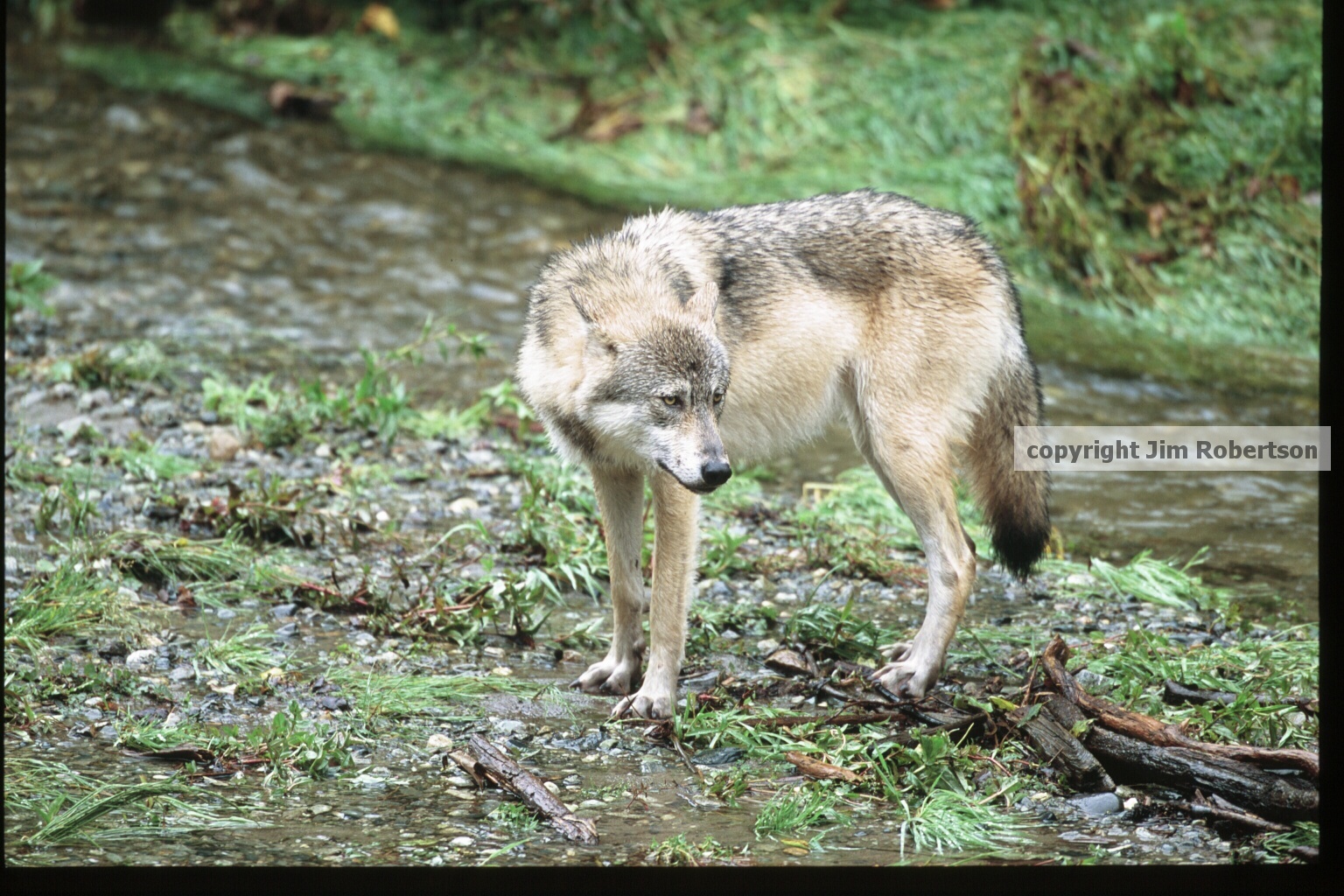
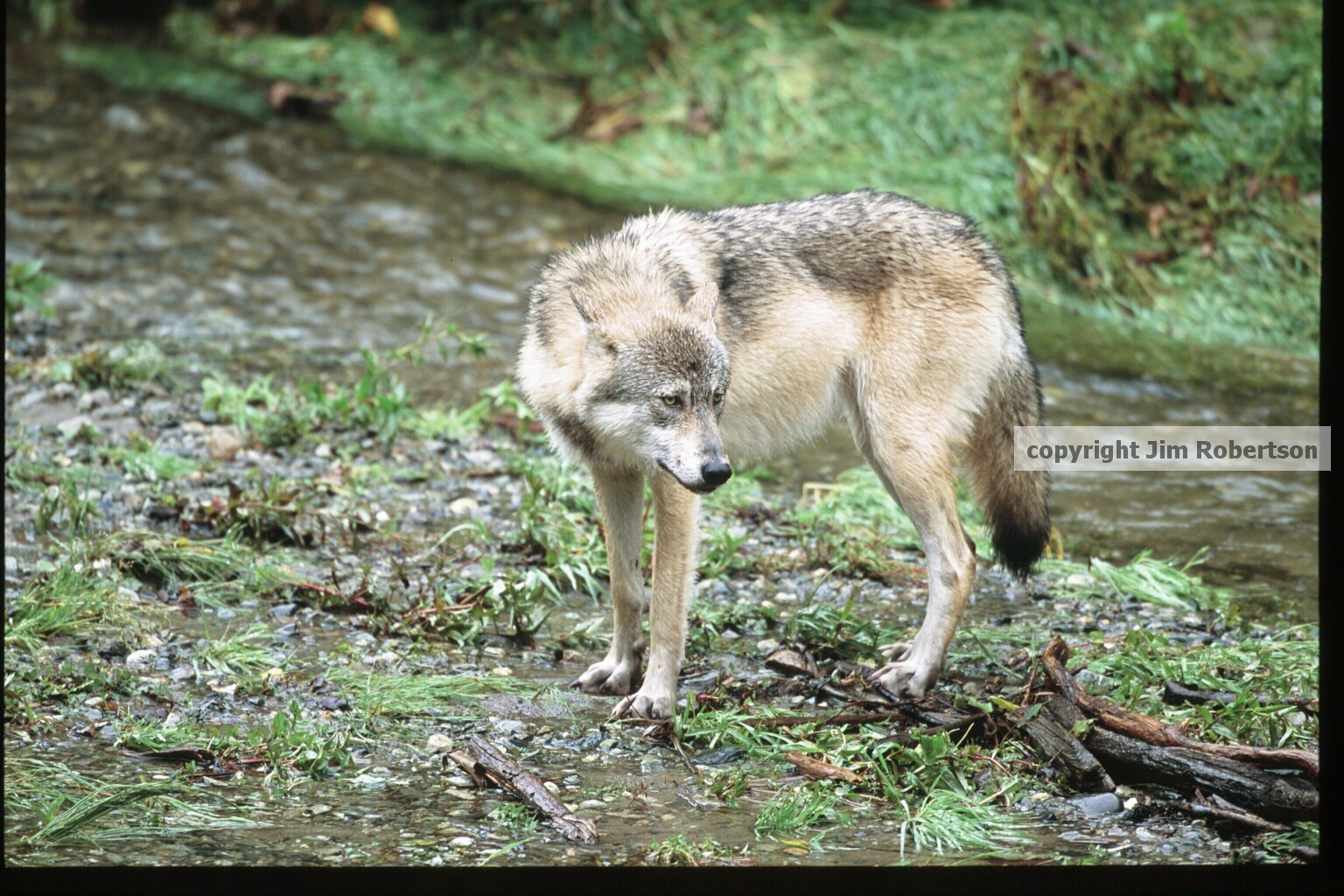
copyrighted wolf in river

You can leave a comment for Animal Planet at this number  1-571-262-4899 begin_of_the_skype_highlighting 1-571-262-4899 FREE  end_of_the_skype_highlighting – it’s the best way to do so – thank you!

http://www.psychologytoday.com/blog/animal-emotions/201405/wolves-have-razor-sharp-teeth-and-hear-your-beating-heart

Blood sells but it shouldn’t

I’ve written many essays about how media (print and film) often offers sensationalist and thoroughly misleading stories about various nonhuman animals (animals). Now, Animal Planet is guilty of putting forth sensationalist lies about wolves. Concerning gray wolves, Brooks Fahy, Executive Director of Predator Defense, alerted that they’ve recently written: “Razor sharp teeth, killer instincts, and senses so precise they hear your beating heart, and your fear. They’re on the hunt, and now with numbers growing out of control, they’re threatening humans like never before.”

These lies — there have been only two verified accounts of wolves killing humans — are to publicize Anmal Planet’s series called Monster Week and their episode titled “Man-Eating Super Wolves.”

As research is anthrozoology has clearly shown, our relationship with other animals is a complex and challenging affair and the least we should expect — and demand — is that media represent animals as they really are, not as some imagine them to be. And, surely, misleading advertisements and stories about animals should not be used to make money or to induce fear when, indeed, existing data show that they are not dangerous at all. Shame on Animal Planet. Blood and lies should not sell.

PLEASE CONTACT ANIMAL PLANET – to protest their reprehensible misrepresentation of wolves and other animals and please find something else to do when these programs air. THIS IS HORRIFIC AND MISLEADING HYPE!

Wolves Control Their Own Populations

http://www.ksl.com/?nid=148&sid=29873051

http://www.sltrib.com/sltrib/news/57939764-78/wolves-park-wolf-yellowstone.html.csp

UT: Utah study: ‘Crowded’ wolves raid other packs, kill pups

Posted on May 15, 2014 by 

Wildlife » Utah State scientist studied 13 years of data on the Yellowstone National Park wolf population.

By Lindsay Whitehurst | The Salt Lake Tribune

Wolves kill one another and the pups of competing packs in battles over territory even if there is plenty to eat, according to a new study from Yellowstone National Park.

The research is a rare glimpse into the way wolves behave when humans are generally out of the picture, said Utah State University ecologist Dan MacNulty.

“At the end of the day, the success of a wolf from an evolutionary perspective is based on how many pups it leaves behind,” said MacNulty, who worked with scientists from the University of Oxford and the Yellowstone Wolf Project on a new paper published online in the Journal of Animal Ecology. “If they’re packed close together, they have the opportunity to raid each other and kill pups and eliminate the competition.”

For a wolf, closeness is relative — as in 65 wolves per 1,000 square miles, the point at which adult survival rates drop below 70 percent.

The study, which will also appear in a print edition of the British Ecological Society publication, is based on 13 years of data from radio-collared wolves at Yellowstone. Until now, it’s been hard to say how a large population of the animals interact with one another in the wild because their numbers were tightly controlled.

The animals were eliminated from Yellowstone by the National Park Service in the 1920s. They were reintroduced starting in 1995 and grew to something unique in the country — a group of wolves protected from human development and hunting.

The population peaked in 2004, though, and has declined since — but not for lack of food. The canines had plenty of their main prey: elk, as well as bison, bighorn sheep and mule deer.

Rather, the No. 1 cause of death during the study period was other wolves.

“They need more than simply food,” MacNulty said. “That’s sort of an unappreciated aspect of their biology.”

If wolves leave the park looking for more elbow room, they can be hunted, hit by cars or otherwise affected by people, though they occasionally survive to establish new packs with Wyoming wolves.

Researchers, though, generally don’t follow the predators after they leave Yellowstone.

The research suggests wolf populations are self-limiting, MacNulty said.

“There’s a perception that if wolves come into a new area, there will be no holding them back,” he said, “but ultimately what will be holding them back, if humans don’t, is themselves.”

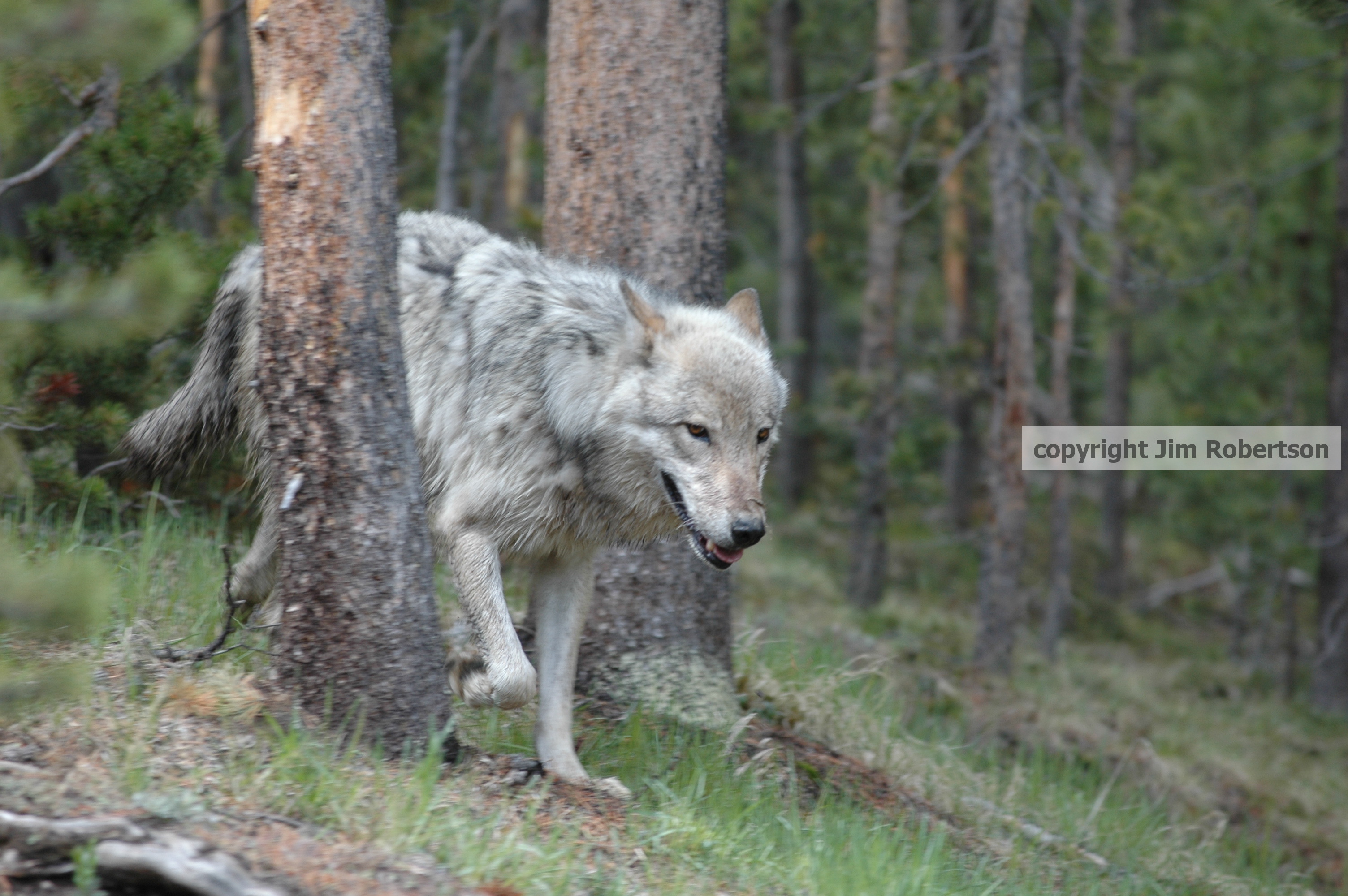
copyrighted wolf in water


LOGAN — Having your own space not only brings peace of mind, but it also correlates strongly to a greater chance of survival for wolf families at Yellowstone National Park.

A new study involving Logan’s Utah State University and University of Oxford found wolves will fight to the death to protect their turf if they lack adequate space to raise their pups.

The aggressive behavior of families looking out for their own is not limited to wolves, or the wilds of nature, said researcher Dan MacNulty, a USU ecologist and assistant professor in the Department of Wildland Resources.

“These family groups of wolves that are competing with each other for space and resources. That is not unlike humans,” he said. “It is well-demonstrated that chimpanzees will compete and war with each other over space and resources and certainly humans are known to do so, if in a more sophisticated way.”

The study, published in the online issue of the Journal of Animal Ecology in the British Ecological Society, followed 280 collared wolves in northern Yellowstone for 13 years.

“This study produced a generally novel result because the conventional thinking is that large carnivores are limited by the abundance of prey in a given area,” MacNulty said. “But what these wolves are ultimately limited by is the amount of space they have to raise their pups in safety.”

Wolves killing wolves is their No. 1 cause of death in Yellowstone and MacNulty said the research showed that adult survival rates dropped below 70 percent if there were greater than 65 wolves per 1,000 square kilometers.

This study produced a generally novel result because the conventional thinking is that large carnivores are limited by the abundance of prey in a given area. But what these wolves are ultimately limited by is the amount of space they have to raise their pups in safety.

–Dan MacNulty, USU ecologist

These key observations in wolf infanticide may provide helpful lessons for management of wolf populations because of the insights they deliver, he said.

“For those concerned about wolf populations, even when you have super abundant prey like in Yellowstone, there are limits to wolf population growth. There is an intrinsic limit to the number of wolves that occupy a given space,” MacNulty said, adding that because rival packs will attack and kill rival wolf pups, their numbers are self-limiting.

“What this paper does say is, though there is this notion that wolves will increase like a locust without any sort of natural limit, that idea is not supported by the data,” he said.

MacNulty, who has been studying the wolves at Yellowstone for 19 years, said the rivalry among wolf families ramps up despite ample food when they are packed in too closely to one another.

“One of the things everyone needs to realize is that these wolf packs are not random collections of individuals,” he said. “They are packs led by parents, with the offspring of the current year and preceeding years, often with aunts and uncles who are related to the breeding male and females. … More wolves meant more fighting and killing. As a result, survival rates declined as wolf density increased.”
Read more at http://www.ksl.com/?nid=148&sid=29873051#Jt2mbQIpqIVSvXx6.99

LOGAN — Having your own space not only brings peace of mind, but it also correlates strongly to a greater chance of survival for wolf families at Yellowstone National Park.

A new study involving Logan’s Utah State University and University of Oxford found wolves will fight to the death to protect their turf if they lack adequate space to raise their pups.

The aggressive behavior of families looking out for their own is not limited to wolves, or the wilds of nature, said researcher Dan MacNulty, a USU ecologist and assistant professor in the Department of Wildland Resources.

“These family groups of wolves that are competing with each other for space and resources. That is not unlike humans,” he said. “It is well-demonstrated that chimpanzees will compete and war with each other over space and resources and certainly humans are known to do so, if in a more sophisticated way.”

The study, published in the online issue of the Journal of Animal Ecology in the British Ecological Society, followed 280 collared wolves in northern Yellowstone for 13 years.

“This study produced a generally novel result because the conventional thinking is that large carnivores are limited by the abundance of prey in a given area,” MacNulty said. “But what these wolves are ultimately limited by is the amount of space they have to raise their pups in safety.”

Wolves killing wolves is their No. 1 cause of death in Yellowstone and MacNulty said the research showed that adult survival rates dropped below 70 percent if there were greater than 65 wolves per 1,000 square kilometers.

This study produced a generally novel result because the conventional thinking is that large carnivores are limited by the abundance of prey in a given area. But what these wolves are ultimately limited by is the amount of space they have to raise their pups in safety.

–Dan MacNulty, USU ecologist

These key observations in wolf infanticide may provide helpful lessons for management of wolf populations because of the insights they deliver, he said.

“For those concerned about wolf populations, even when you have super abundant prey like in Yellowstone, there are limits to wolf population growth. There is an intrinsic limit to the number of wolves that occupy a given space,” MacNulty said, adding that because rival packs will attack and kill rival wolf pups, their numbers are self-limiting.

“What this paper does say is, though there is this notion that wolves will increase like a locust without any sort of natural limit, that idea is not supported by the data,” he said.

MacNulty, who has been studying the wolves at Yellowstone for 19 years, said the rivalry among wolf families ramps up despite ample food when they are packed in too closely to one another.

“One of the things everyone needs to realize is that these wolf packs are not random collections of individuals,” he said. “They are packs led by parents, with the offspring of the current year and preceeding years, often with aunts and uncles who are related to the breeding male and females. … More wolves meant more fighting and killing. As a result, survival rates declined as wolf density increased.”
Read more at http://www.ksl.com/?nid=148&sid=29873051#Jt2mbQIpqIVSvXx6.99

Grey wolf appears in Iowa for first time in 89 years – and is shot dead

http://www.theguardian.com/environment/2014/may/12/grey-wolf-iowa-shot-dead

Hunter mistook animal for a coyote and escapes being cited despite wolves being a protected species in the state, reports Mongabay

Grey wolves have been confirmed as far west as California and Oregon and as far east as Michigan
Grey wolves have been confirmed as far west as California and Oregon and as far east as Michigan AP

DNA testing has confirmed that an animal shot in February in Iowa’s Buchanan County was in fact a wolf, according to the Iowa Department of Natural Resources. This is the first confirmed grey wolf (Canis lupus) in the US state since 1925.

Experts believe the wolf likely travelled south from Wisconsin or Minnesota, the latter of which has the largest wolf population in the lower 48.

The Iowa wolf, which was a 65-70 pound healthy female, was shot and killed in February of this year by a hunter who mistook it for a coyote. Although wolves remain a protected species in Iowa, the hunter was not cited, because he believed the animal to be a coyote and has cooperated with authorities, including bringing the wolf to them in the first place.

“I was surprised but not that surprised,” DNA specialist Vince Evelsizer told the Gazette. “Large animals can cover great distances, and state lines mean nothing to them.”

After being nearly exterminated across the continental US, grey wolves have returned to many states in the last two decades, both due to reintroductions and populations migrating from Canada. Grey wolves have been confirmed as far west as California and Oregon and as far east as Michigan.

During the same time wolves have been vindicated by science as key ecological species. As top predators, wolves not only manage prey populations of animals such as deer and elk, but also change their behavior, curbing unhindered grazing. For example, the wolf’s return to Yellowstone National park led to a resurgence in young forest and a subsequent explosion in biodiversity.

But in many states wolves are now actively hunted and trapped. A legislative rider stripped the wolves of protection from the Endangered Species Act in 2011, the only animal to ever lose its protection in this way.

As of January this year, hunters and trappers have killed 2,567 grey wolves in the US’s lower 48 states since 2011. In all, around 6,000 wolves are thought to inhabit the lower 48 now, up from a nadir of 300 before the grey wolf gained protection in 1974.

Wolf OR7 may have found a mate

May 12, 2014

PORTLAND, Ore.— OR7, a wolf originally from northeast Oregon, may have found a mate in southwest Oregon’s Cascade Mountains.

In early May, remote cameras on the Rogue River-Siskiyou National Forest captured several images of what appears to be a black female wolf in the same area where OR7 is currently located. The images were found by wildlife biologists when they checked cameras on May 7.

The remote cameras were set up by U.S. Fish and Wildlife Service (Service) and Oregon Department of Fish and Wildlife (ODFW) as part of ongoing cooperative wolf monitoring efforts.  New images of OR7 were also captured on the same cameras and can be accessed and viewed at ODFW’s wolf photo gallery (see first three images).

“This information is not definitive, but it is likely that this new wolf and OR7 have paired up.  More localized GPS collar data from OR7 is an indicator that they may have denned,” said John Stephenson, Service wolf biologist. “If that is correct, they would be rearing pups at this time of year.”

The Service and ODFW probably won’t be able to confirm the presence of pups until June or later, the earliest pup surveys are conducted, so as not to disturb them at such a young age.  Wolf pups are generally born in mid-April, so any pups would be less than a month old at this time.

If confirmed, the pups would mark the first known wolf breeding in the Oregon Cascades since the early 20th century.

Wolf OR7 is already well-known due to his long trek and his search for a mate—normal behavior for a wolf, which will leave a pack to look for new territory and for a chance to mate.  “This latest development is another twist in OR7’s interesting story,” said Russ Morgan, ODFW wolf coordinator.

The Service and ODFW will continue to monitor the area to gather additional information on the pair and possible pups. That monitoring will include the use of remote cameras, DNA sample collection from scats found, and pup surveys when appropriate.

Wolves throughout Oregon are protected by the state Endangered Species Act.  Wolves west of Oregon Highways 395-78-95, including OR7 and the female wolf, are also protected by the federal Endangered Species Act, with the Service as the lead management agency.

At the end of last year, there were 64 known wolves in Oregon.  Except for OR7, most known wolves are in the northeast corner of the state.

About OR7

OR7 was born into northeast Oregon’s Imnaha wolf pack in April 2009 and collared by ODFW on Feb. 25, 2011.  He left the pack in September 2011, travelled across Oregon and into California on Dec. 28, 2011, becoming the first known wolf in that state since 1924.

Other wolves have travelled further, and other uncollared wolves may have made it to California.  But OR7’s GPS collar, which transmits his location data several times a day, enabled wildlife managers to track him closely.

Since March 2013, OR7 has spent the majority of his time in the southwest Cascades in an area mapped on ODFW’s website.

###

Contact:

Department of the Interior
U.S. Fish and Wildlife Service, Oregon Fish & Wildlife Office
2600 SE 98th Avenue, Suite 100, Portland, Oregon  97266
Contact: Elizabeth Materna, Phone: 503-231-6179 Fax: 503-231-6195
http://www.fws.gov/oregonfwo/

Oregon Department of Fish and Wildlife
Michelle Dennehy
Michelle.N.Dennehy@state.or.us
Tel. (503) 947-6022

http://www.dfw.state.or.us/news/2014/may/051214.asp

copyrighted wolf in river

Restore Protection to Michigan Wolves

From Keep Michigan Wolves Protected:

Connect on Facebook
Keep Michigan Wolves Protected

Great news! Today the Board of State Canvassers certified a second ballot referendum challenging the reckless trophy hunting of Michigan’s small wolf population — on Nov. 4 Michiganders will have the opportunity to vote to restore the people’s right to have a say on wildlife policy.

After we submitted signatures for our first referendum to stop the pointless wolf hunt, politicians hastily passed a second law that was an end-run around the voters, trying to put all new hunting and trapping seasons in the hands of an unelected, politically appointed commission that is aligned with the legislature’s views. But once again, Michigan voters have proven that they simply won’t be silenced, and won’t give up our rights to participate in decision-making when it comes to wildlife policy! And now we need everyone to help us get out the word. Restore protection to our wolves and protect our voting rights — vote NO on both proposals!
We truly couldn’t have gotten here without supporters like you! Every single person that collected signatures, signed a petition, made a donation, shared our messages, or volunteered their time has helped us take one more step toward protecting our majestic wolves.

Wolves Don’t Kill For Sport

This picture backs up number nine in the Top Ten Retorts to Hunter Fallacies

9) Animals kill other animals, so we can too.
That’s an example of what’s known as the naturalistic fallacy—the notion that any behavior that can be found in nature is morally justifiable. But wolves and other natural predators need to hunt to survive, humans don’t—for them it’s nothing more than a thrill kill. Human beings have moved beyond countless other behaviors such as cannibalism or infanticide, so why can’t some people tear themselves away from hunting?

10172782_486237174810952_1604406170771652512_n


Wis. wolf population falls following hunting season

copyrighted Hayden wolf in lodgepoles

Wis. wolf population falls following hunting season

Amid continuing controversy about hunting Wisconsin’s gray wolves, preliminary data shows Wisconsin’s wolf population has decreased by 19 percent over the past year due to hunting and trapping across the state.

According to the report released by the Department of Natural Resources, Wisconsin’s wolf population at the end of this winter sat at a minimum of 658, down from 809 wolves last year.

“The Wolf Advisory Committee last year recommended a more aggressive harvest to start bringing the population down towards the goal that is stated in the 1999 Wolf Management Plan, which is 350 animals,” Jane Wiedenhoeft, assistant large carnivore biologist at the DNR, said.

The decrease this year is the first major decline in Wisconsin’s wolf population since the grey wolf’s addition to the federal endangered species list in 1974. Wisconsin’s wolf population hit an all time low in 1979 with 25 wolves, Wiedenhoeft said.

After the species was removed from the Endangered Species List in 2012, 117 wolves were killed by hunters in the first regulated wolf hunt in Wisconsin history, according to DNR figures.

“Opinions differ on how many wolves are good for the state. Some people think we could have more wolves in the state, and others think we could have much fewer wolves in the state. We’re trying to find that balance between what people can tolerate and what is a sustainable number,” Wiedenhoeft said.

With the removal of the gray wolf from the endangered species list in 2012 came a variety of changes in the ways in which Wisconsin’s wolf population is monitored, as well as what information is shared with the public, a topic of concern for some wildlife biologists.

University of Wisconsin environmental studies professor Adrian Treves, an expert on public opinion about wolves, raised concerns regarding the DNR’s new reporting processes.

“Wisconsin has had a long tradition of transparency and openness in the presentation and analysis and interpretation of data of the wolf population,” Treves said. “For almost 30 years, it’s been a public process with quite a bit of participation and transparency until the end of January 2012.”

The monitoring processes for wolves have not changed other than the addition of wolf harvest data from across the state, Wiedenhoeft said.

The meeting in which preliminary wolf count data is shared and discussed was moved behind closed doors for the first time this year, while it was previously public, she said.

Treves said this new practice reduced transparency for the scientific community to analyze data.

“There’s a great deal of scientific concern about the data released this week because the methods have changed, the reporting has changed, and I’m not able to evaluate the quality of the data in the way I was able to do for the last 14 years,” Treves said.

Wiedenhoeft said the purpose of moving the meeting to a staff-only setting was to prevent information about wolf numbers and locations from reaching hunters keen on finding wolf hot spots.

With significant concerns among conservationists regarding the state’s current goal of 350 wolves, more than double the current population, the DNR in coordination with the Wisconsin Wolf Advisory Committee are currently working on an updated quota for wolf populations in the state, she said.

Run! It’s huge wolves from Canada!

http://www.thenewstribune.com/2014/05/03/3177585/run-run-its-huge-wolves-from-canada.html?sp=/99/447/

May 3, 2014

It has been brought to my attention that some Canadians aren’t nearly as nice as I had thought.

Oh, the humans of that neighborly nation are every bit as affable as we’ve always believed. But I’m here to warn you that giant Canadian wolves are a far different matter.

I was reading a letter to the editor the other day in which a worried gentleman from the USA insisted that the wolves who have been reintroduced into the United States are actually Canadian wolves.

“These are not timber wolves like we had here years ago,” the guy warned. “These are Canadian wolves that are three and four times as big.”

That gets my attention. The wolves we used to have were about the size of a collie. Four times that would be a wolf about the size of a pony. How would you like to bump into something in the forest that resembles a pony with fangs?

Every few years, I see letters to the editor like that, (sometimes warning me against Bigfoot at the same time). I get curious and take a look at the latest reports on the Internet to see how many humans those cruel critters have killed recently.

For about the last 50 years, the figures are a grand total of eight fatal attacks on humans in Europe and Russia. But oddly enough, there have been no wolf-induced deaths of humans in North America in the past half century. And if you remember your third-grade geography you will know that North America includes Canada.

So if anything, wolves are less likely to kill us than cougars, bears and giant Canadian tsetse flies. So what’s going on here? The problem isn’t that big hulking Canadian wolves are killing people left and right. The wolves haven’t killed anybody on this continent for decades.

But they have killed plenty of elk and sheep and calves, and that’s a legitimate problem for hunters and ranchers.

Isn’t it enough for a hunter or a rancher to warn people of actual, normal-sized wolves without trying to scare the pants off everybody?

I sometimes sit and watch our two cats romping around the house, practicing their predatory ways. If house cats are ever bred up to dimensions three or four times larger than their present size, muscle them out of the house and call the Royal Canadian Mounted Police.

But beware lest the Mounties are riding Canadian-sized wolves.

However that’s probably not going to happen. If there really are Canadian wolves three or four times the size of our former wolves, then we are in deep trouble.

If our original wolves were four feet long, two feet tall and weighed 100 pounds, then the giant Canadian wolves would be 15 feet long, eight feet tall, 400 pounds and much too fond of human flesh.

But I will grant those among you who are personally terrified of wolves that maybe there is something in the water up there that should concern everyone in North America, including Mexicans.

This whole business worries me. I have friends in Canada. And that agitated letter writer makes me wonder about my friend Greg, a Canadian newspaper editor, who has been astute enough to carry this column for years. I have corresponded with Greg though I have never met him in the flesh. But now I wonder about the possibility of everything being massively bigger up there — mountains, salmon, wheat production and maybe even Greg.

Please don’t tell me he is three to four times larger than newspaper editors down here, though that may be true of his great heart. After all, he is a Canadian.

Smalfut


What’s the Motive?

psychopaths

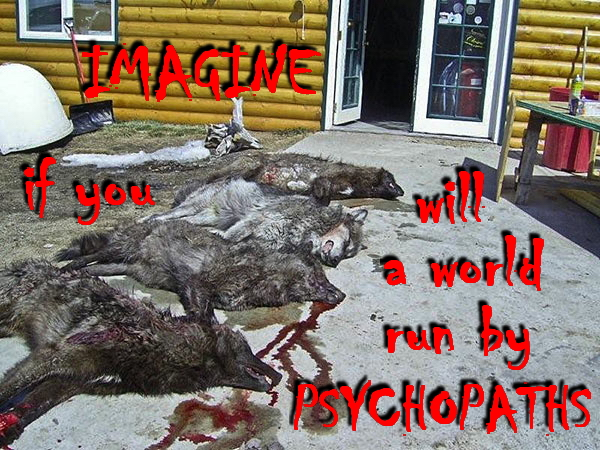
In response to this horrible crime scene photo, a Facebook friend innocently asked me, “What is the reason they do this?”

As I’ve said before, forget hunters’ feeble rationalizations. All I could tell her was: For fun? Sport? Hate? Intolerance? An overinflated sense of entitlement? Because they’re psychopaths?

Take your pick.

It seems there are a lot of reasons people can dream up to want to kill the wildlife their area is blessed with—especially if they already have their minds made up to be intolerant. Folks need to decide to accept their animal neighbors and adopt the old adage, “live and let live.”

While speculating on a murderer’s motive might make interesting tea time conversation, when it comes down to it, I don’t want to hear their justifications, their misguided notions, how they compartmentalize their killings or objectify their victims, I just want the behavior to end—one way or another.


Female wolf spayed in Washington

The wolf was impregnated after encountering a domesticated sheep dog


 By Rich Landers

The saga of wolf recovery in Washington has taken a strange twist.

A large domestic guard dog that took a month-long romp on the wild side in Pend Oreille County forced Washington Fish and Wildlife officials to capture and spay an endangered female gray wolf Saturday.

The wolf was one of two females in the new Ruby Creek Pack that biologists have been tracking with GPS collars since July.

The unusual action came after biologists learned an Akbosh sheep dog climbed a 7-foot-tall fence from its yard near Ione and disappeared with the two female wolves for more than a month during February when wolves go into heat.

“If there had been a male wolf in the group, the dog would have been killed instantly,” Martorello said.

Biologists easily tracked the GPS signal and used a helicopter to shoot tranquilizers and capture the wolves. One female was pregnant; the other was not, he said. Both were released in the Pend Oreille River area.

“Spaying (the pregnant wolf) was a better alternative than trying to go out and kill all the pups after they’re born,” he said.

The dog had run off with the wolves for about a week in early January, but biologists were able to monitor the wolves and tell the dog’s owner when they were back near the home. The homeowner was able to call the dog in.

“We were already suspicious,” Martorello said. “Dogs and wolves usually don’t mix.”

Wildlife officials advised the dog owner to restrain the dog for the rest of the winter. While dogs can come into heat throughout the year, wolves generally come into estrus only in January and February, Martorello said.

“But when those females came back in a few days, one must have been in estrus because that big, intact dog climbed a seven-foot orchard fence and took off with them from mid-January through February,” he said.

copyrighted wolf in river