The meat industry could be driving wildlife extinct

http://www.salon.com/2014/03/21/its_not_just_cows_the_meat_industry_could_be_driving_wildlife_extinct/?source=newsletter
by Lindsay Abrams

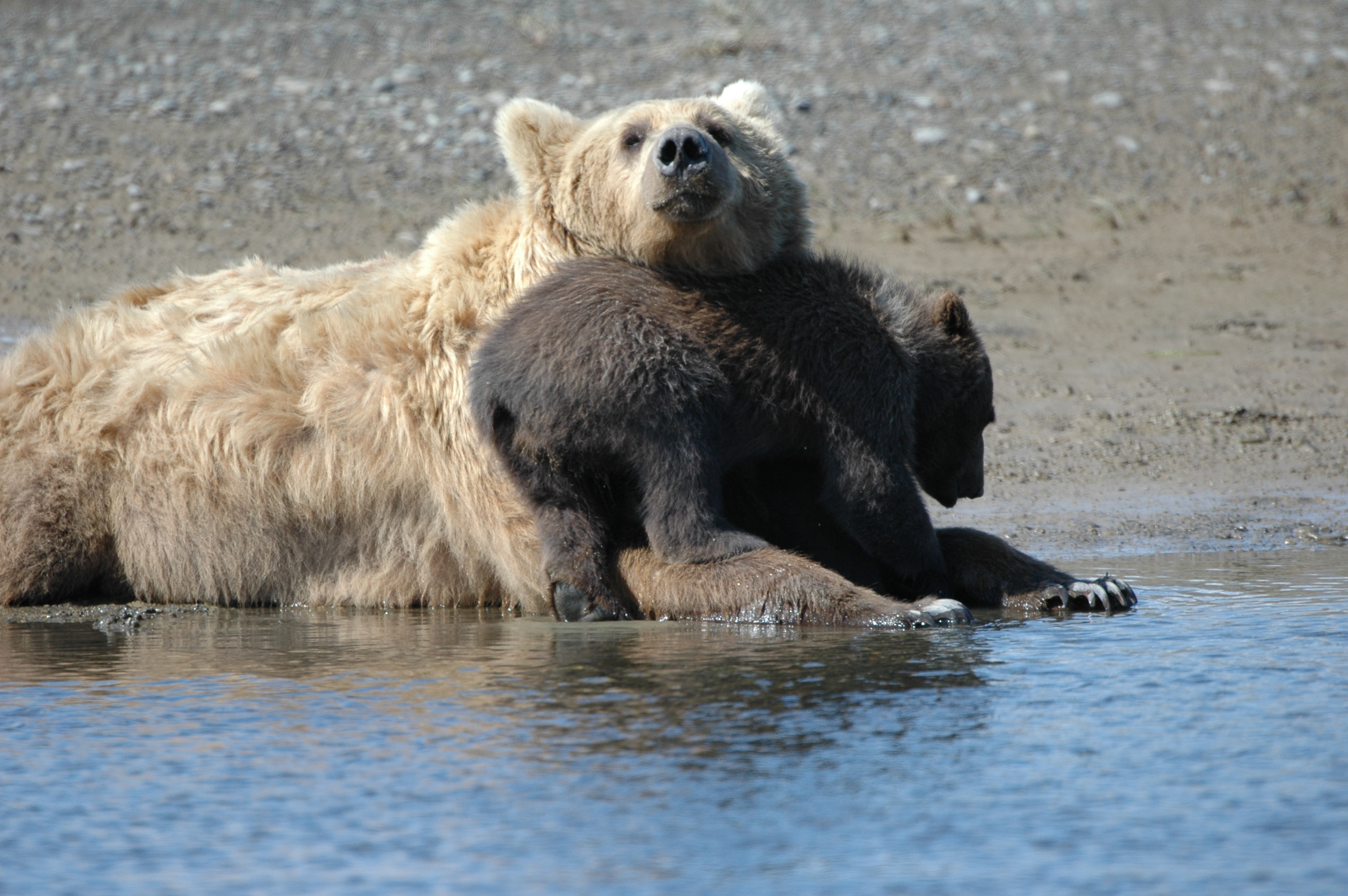
Ok, so you don’t feel bad about cows having to die in order for you to enjoy a hamburger. That’s fine — most people feel the same way. But what about the grizzly bears? Or the wolves? Or the 175 other species threatened by extinction? Would you keep eating that burger if you found out it was endangering all of those animals, too?

Well, would you?

A new campaign from the Center for Biological Diversity is presenting a broader perspective on the environmental damage wrought by the livestock industry. NPR has the scoop:

The conservation group says that some populations of grizzly bears and wolves have already been driven extinct by the livestock industry, and an additional 175 threatened or endangered species, like the prairie dog, could be next. Most of this drama is playing out on federal lands, where the needs of wildlife conflict with the needs of grazing cattle, says [population and sustainability director Stephanie Feldstein].

The federal government has for decades promoted and subsidized cattle grazing on 270 million acres of public lands in 11 Western states. According to Feldstein, one of the hot spots of livestock-wildlife conflict is predator species like wolves and bears preying on cattle.

The California grizzly subspecies, for example, was driven extinct in the 1920s by hunters assisting farmers and ranchers, according to historical documents at the University of California, Berkeley.

Ranchers also all but wiped out the Mexican gray wolf, the most endangered wolf species in the world, in the U.S. (A few survived in Mexico and in zoos, and scientists have been trying to bring them back through breeding, the group Defenders of Wildlife says.)

A study published back in January adds large carnivores, like pumas, lions and sea otters, to the list of meat industry casualties. All that, of course, comes along with the major impact our growing demand for meat has on the climate. Taken together, it’s worth considering whether that burger is, in fact, worth it.

Photo Copyright Jim Robertson

Photo Copyright Jim Robertson

Idaho Passes Bill to Kill Hundreds of Wolves

http://ecowatch.com/2014/03/21/idaho-bill-to-kill-hundreds-of-wolves/

The Idaho Legislature yesterday passed House Bill 470, a bill to create a new lethal “Wolf Depredation Control Board” to administer a fund for widespread killing of wolves in the state. The bill, expected to be signed into law by Gov. Otter (R-ID), sets aside $400,000 in state funds to kill roughly 500 wolves, leaving just 150 in the entire state.

wolfFI
The wolf population in Idaho is under serious threat of dropping near—or even below—minimal recovery levels that Idaho promised to maintain in 2011. Photo courtesy of Shutterstock

The new board will consist of members appointed and overseen by Gov. Otter, who said in 2007 that he wanted to be the first to kill an Idaho wolf after federal protections were taken away. The board will be made up of representatives of the agricultural, livestock and hunting communities. The bill does not require any members of the board to represent the wolf conservation community.

“Political leaders in Idaho would love nothing more than to eradicate Idaho’s wolves and return to a century-old mindset where big predators are viewed as evil and expendable,” said Amaroq Weiss, West Coast wolf organizer at the Center for Biological Diversity. “The new state wolf board, sadly, reflects that attitude. The legislature couldn’t even bring itself to put a single conservationist on the board, so the outcome is predictable: many more wolves will die.”

Congress in 2011 stripped Endangered Species Act protection from wolves in Idaho and Montana. Since then, 1,592 wolves have been killed in those states.

The bill is the latest in a series of anti-wolf actions in Idaho that could ultimately backfire and force the return Endangered Species Act protections for gray wolves in the northern Rocky Mountains. Other commitments made by Idaho, including promises to maintain refugia for wolves in remote areas and wilderness, have been rolled back. The Idaho Department of Fish and Game sent a hunter-trapper into the Frank Church-River of No Return Wilderness this winter to eliminate two wolf packs. It recently announced a new predator-management plan designed to kill 60 percent of the wolf population in the Middle Fork area over the next several years, and contracted with USDA’s Wildlife Services to gun down 23 wolves in the Lolo management zone in February.

“Yet again, Idaho has put a black eye on decades of tireless work to return wolves to the American landscape,” said Weiss. “This bill sets aside $400,000 in state funds to wipe out as many wolves as legally possible in Idaho. Reducing these wolf populations to below even the absolute bare minimum sets a dangerous precedent and ensures that true wolf recovery will be little more than a pipedream in Idaho.”

In combination with mortality from annual hunting and trapping seasons, the wolf population in Idaho is under serious threat of dropping near—or even below—minimal recovery levels that Idaho promised to maintain when wolves in the northern Rockies lost federal protections in 2011. The sponsor of H.B. 470, Rep. Marc Gibbs (R-Dist. 32), says the intent of the bill is to reduce Idaho’s wolf population to as few as 10 packs.

The U.S. Fish and Wildlife Service is required by its own delisting criteria to review the population if changes in Idaho law or management objectives significantly increase the threat to the population. It must then decide whether to reinstate federal Endangered Species Act protections or extend the post-delisting period for federal oversight.

Living in wolf country

March 21, 2014 By BJORN DIHLE

  FOR THE JUNEAU EMPIRE

This Monday, during a hike with my brothers, we came across fresh tracks of wolves. Three or four had milled around the trail before heading off into the dark woods. There was something electric knowing they were nearby, perhaps watching and listening. When we returned an hour later the tracks had nearly been erased by the falling snow.

The Alaska Department of Fish and Game estimates there’s between 7,000 and 11,000 wolves in the state. The densest populations are in Southeast where deer, by and large, make up their main food source. The U.S. Fish and Wildlife Service estimates there’s around 5,400 gray wolves in the lower 48. According to the International Wolf Center there are between 53,600 and 57,600 wolves in Canada.

One of many reasons I love living in Juneau is because all I have to do is go outside and I’m in wolf country. Their range stretches from the edge of suburbia to the Juneau Icefield — I’ve seen tracks on the upper stretches of the Mendenhall Glacier, in Death Valley and on the Meade Glacier. Many of us have encountered tracks, kills and if, we’re lucky, wolves in the woods and mountains surrounding town. Watching a pack moving along an alpine ridge, or listening to howling in deep forest is something you don’t easily forget. While healthy wolves almost always avoid people, sometimes if they’re sick, old, starving or if there’s a lot of deer near a residential area, they may come to the edge of a town. Out of desperation or irritation, they’ll occasionally turn to attacking dogs.

In North America attacks on humans are very rare. You’re more likely to be trampled by pigs while vacationing in Iowa. The few attacks that have occurred usually involved habituated, injured, starving or sick animals. There’s been one verified fatal attack in Alaska since statehood. Most people living in wolf country know this, but due to movies like The Grey, the misperception of North American wolves having a penchant for hunting humans is still being perpetuated.

According to ADF&G each year in Alaska around 1,300 wolves are killed by hunters and a trappers, and up to an additional 200 or so are taken in state sponsored control programs. Populations remain stable and in some areas, according to many locals who compete with wolves for moose and caribou, they’re too abundant. With the ability to breed at two years of age and having several pups in a litter, wolf numbers rebound quickly if prey populations are healthy.

In the last month there’s been reports of two wolf attacks on dogs in northern Southeast Alaska. One dog, as reported in the Chilkat Valley News, north of Haines was killed and eaten. The dog’s owner, Hannah Bochart, when interviewed, despite having what for most would be a very traumatizing experience, spoke of the attacking wolf with compassion. She described it approaching her while she was walking four dogs, and looking “weak and wobbly” and “scared and exhausted”. Though it killed one of her dogs, Bochart stated she “wouldn’t want this to end with the wolf being shot”.

Living in wolf country is a gift to some, a curse to others and for some it’s just normal. Many people have strong and sometimes irrational opinions of wolves that frequently tell more about human nature than the actual wolves. No other creature has been as villianized and, in contemporary times, as romanticized.

A while back I had conversation with an older man, a lifelong hunter and fisherman, who offered one of the best opinions on wolves I’ve heard.

“Wolves are perfect,” he said with a twinkle In his eyes, “at being wolves.”

I can’t imagine living anywhere without wolves. A hike would be a lot less interesting. The woods would feel empty. The mountains would seem lonesome.

Thankfully, living in Juneau, wolves are never too far away.

Who Should Read Exposing the Big Game?

Imagine you’re a hunter and you just bought a copy of Exposing the Big Game to add to your collection of books and magazines featuring photos of prize bull elk, beefy bison and scary bears (the kind of animals you objectify and fantasize about one day hanging in your trophy room full of severed heads). This one also includes pictures of “lesser” creatures like prairie dogs and coyotes you find plain ol’ fun to trap or shoot at.

You don’t normally read these books (you’re too busy drooling over the four-legged eye candy to be bothered), but for some reason this one’s burning a hole in your coffee table. So you take a deep breath and summon up the courage to contemplate the text and its meaning. Several of the words are big and beyond you, and you wish you had a dictionary, but eventually you begin to figure out that Exposing the Big Game is more than just a bunch of exposed film featuring the wild animals you think of as “game.”

This book actually has a message and the message is: hunting sucks!

You don’t want to believe it—the notion that animals are individuals rather than resources goes against everything you’ve ever accepted as truth. But reading on, you learn about the lives of those you’ve always conveniently depersonalized. Finally it starts to dawn on you that animals, such as those gazing up at you from these pages, are fellow earthlings with thoughts and feelings of their own. By the time you’ve finished the third chapter your mind is made up to value them for who they are, not what they are. Now your life is changed forever!

Suddenly you’re enlightened and, like the Grinch, your tiny heart grows three sizes that day. The war is over and you realize that the animals were never the enemy after all. You spring up from the sofa, march over to the gun cabinet and grab your rifles, shotguns, traps, bows and arrows. Hauling the whole cache out to the chopping block, you smash the armaments to bits with your splitting maul. Next, you gather up your ammo, orange vest and camouflage outfits and dump ‘em down the outhouse hole.

Returning to the book, you now face the animals with a clearer conscience, vowing never to harm them again. You’re determined to educate your hunter friends with your newfound revelations and rush out to buy them all copies of Exposing the Big Game for Christmas…

Or suppose you are a non-hunter, which, considering the national average and the fact that the percentage of hunters is dropping daily, is more than likely. Avid hunters comprise less than 5 percent of Americans, while you non-hunters make up approximately 90 percent, and altruistically avid anti-hunters represent an additional 5 percent of the population. For you, this book will shed new light on the evils of sport hunting, incite outrage and spark a firm resolve to help counter these atrocities.

And if you’re one of the magnanimous 5 percent—to whom this book is dedicated—who have devoted your very existence to advocating for justice by challenging society’s pervasive double standard regarding the value of human versus nonhuman life, the photos of animals at peace in the wild will provide a much needed break from the stress and sadness that living with your eyes open can sometimes bring on. As a special treat cooked up just for your enjoyment, a steaming cauldron of scalding satire ladled lavishly about will serve as chik’n soup for your anti-hunter’s soul.

So, who should read Exposing the Big Game? Any hunter who hasn’t smashed his weapons with a splitting maul…or any non-hunter who isn’t yet comfortable taking a stand as an anti-hunter. The rest of you can sit back and enjoy the pretty pictures.

______________________________________________________________

The preceding was an excerpt from the book, Exposing the Big Game: Living Targets of a Dying Sport.

front-cover-low-res6

America’s Wolves Are Under Attack

The U.S. Fish and Wildlife Service (FWS) received feedback from nearly a million citizens and a host of conservation biologists for its decision to remove federal protections from wolves last year, and recently convened a new panel of experts to revisit the issue. This new panel found that the FWS relied upon one faulty paper to make its wrongful decision to strip wolves of their Endangered Species Act protections.

Without their federal safeguards, several states have opened trophy hunting and trapping seasons, and thousands of wolves have been mercilessly slaughtered. Help protect wolves and demand that they be given adequate federal protections to prevent future inhumane acts.

TAKE ACTION Here.
The FWS needs to hear from you before March 27. Please fill out the form below to submit a letter to U.S. Secretary of the Interior Sally Jewell.
Dear Secretary Jewell,

I value wolves and I want to see them protected by the Endangered Species Act. Without these federal safeguards, wolves are pitted against an unfair arsenal of traps, snares, baits, hounds, and shooters who kill them from low-flying aircraft. Killing wolves puts their family packs in disarray and leaves young pups to starve.

Most Americans love wolves, and wolf-watching tourists spend millions of dollars to see them in places like Yellowstone National Park. After receiving pressure from the livestock industry and extreme groups, the government has given up on wolves and literally put them in the crosshairs before they could recover to most of their historic range. It’s quite simple: wolf populations are still recovering, and the best available science does not support their removal from the protections afforded to them by the Endangered Species Act. Please provide adequate protections for this iconic and beautiful species.

528624c939a88_preview-620


Clan of the Cougar (and Wolf) Slayers

[Surprise, surprise, the White’s are at it again…]

A Young Girl’s Family Secret

11-year-old Shelby White grabbed headlines when she reportedly shot a cougar stalking her brother in rural Washington state. But there’s a bit more to the story—the White family actually has a long, bloody history of poaching endangered wolves and other wildlife

AUTHOR:   Mar 10, 2014
Shelby White’s shot was heard round the world. But her family’s cold-blooded past didn’t make it into the newspaper reports.

The 11-year-old girl captured hearts and headlines last week when she reportedly whipped out a rifle and bravely gunned down a cougar sneaking up behind her brother in rural Washington. It wasn’t the first time the White family has drummed up publicity for killing exotic animals.

The pint-size slayer comes from a clan of convicted poachers that slaughtered a pair of endangered gray wolves and tried to smuggle their skins across the U.S. border a few years ago. The revelation, absent in the mainstream media accounts of the Shelby’s cougar killing, recasts the tale of the adorable deadeye and has caused the history of her kin to resurface.

“The Whites are known sons of bitches,” says Mitch Friedman, executive director of Conservation Northwest, which has championed wolf recovery in the region. “I don’t think anyone is the least bit surprised that they remain in the news.”

Authorities first caught wind of the White clan’s illegal killings in 2008 when a FedEx employee stumbled across a blood-soaked parcel postmarked for Canada. The sender, eventually identified as Shelby’s mother, Erin White, used a bogus name and phone number and claimed the package contained a rug, according to federal prosecutors.

 Instead of a rug, authorities discovered that the sodden parcel contained a wolf hide belonging to a butchered member of the Lookout Pack, the first gray wolves to repopulate Washington since the 1930s. The pack, protected under state law and the Endangered Species Act, roamed an area near the White’s 700-acre ranch in the Methow Valley, which rests of the eastern slope of the North Cascades.

Tom White, Shelby’s father, copped to killing the wolf. Federal agents later found evidence that he slayed a second member of the Lookout Pack and that Shelby’s grandfather, William White, had concocted a conspiracy to kill wolves and smuggle a wolf hide into Canada. Agents also discovered the elder White had a penchant for poaching animals, including big game he unlawfully shot in Canada and snuck back into the U.S.

Tom White, Shelby's father, poses with an endangered wolf he shot and killed back in 2008. Tom White, Shelby’s father, poses with an endangered wolf he shot and killed back in 2008. (Washington Department of Fish and Wildlife)

In 2012, the White family pleaded guilty to a host of federal charges, including conspiracy to kill an endangered species, conspiracy to export an endangered species and unlawful importation of wildlife. William and Tom White also pleaded guilty to state charges of illegally hunting bears with dogs.

The family managed to dodge jail time, but had to fork over more than $70,000 in fines, the Seattle Post-Intelligencer reported. William White was sentenced to six months of home detention, while his son was sentenced to three months.

As a result of their convictions, both White men also lost their hunting licenses. But that hasn’t stopped Tom White’s children from apparently picking off animals left and right, most notably the cougars that have flocked to the Methow Valley.

Shelby White was not the first of her siblings to bag one of the wildcats this winter, her grandfather William White tells Vocativ in a phone interview. Cody, her 9-year-old brother, blasted a 120-pound cougar earlier in February. Shelby’s 14-year-old brother Tanner also killed one on the family’s property that month, White says.

 “Their dad has been showing the kids how to track them every weekend,” White says, adding that all three children had tags to hunt cougars. White says the wildcats have become a scourge in the area since state lawmakers banned cougar hunting with hound dogs in 1996.

Cougar sightings and encounters have been unusually high in the Methow Valley this winter, say wildlife officials, though they’ve been unable to pinpoint a precise reason. At least 10 cougars have been killed in the area alone this winter by hunters or state officials, the Methow Valley News reported.

Four of those killings have occurred on the White ranch, according to the family.

Cougars can pose a threat to livestock and sometimes humans, William White says. The big cat that Shelby White shot on Feb. 20 may have been stalking her older brother Tanner. The boy had just entered the family’s home from outside when Tom White spotted the animal in the driveway, the grandfather says.

“My son yelled, ‘Shelby, grab your gun,” says William White. The girl trained her .270-caliber rifle on the animal and gunned it down from about 10 feet away.

Wildlife officials say the animal was an emaciated female that weighed 50 pounds. It was likely starving to death. Because her father and grandfather are barred from hunting and because her brothers already bagged cougars this year, Shelby was the sole person in the family that could legally kill the wildcat, her grandfather says.

“The reason my granddaughter shot the cougar was because she was only one in our family that had a tag,” William White says. “We’re trying to follow the law as best we can.”

Still, given the White family’s history with hunting, the cougar killings raised eyebrows among Friedman and other members of Washington’s environmental community.

A photo of the wolf pelt that Erin White, Shelby’s mom, allegedly tried to send to friends in Canada. (Washington Department of Fish and Wildlife)

“It certainly smells a little funny,” Friedman says…

Government-funded wolf slaughter continues‏

From: Defenders of Wildlife/www.defenders.org

The 23 Idaho wolves shot from a helicopter last month were just the latest in a decades-long trail of carnage and indiscriminate bloodshed. And Idaho Wildlife Services admitted to their plan only after all the wolves werecopyrighted-wolf-argument-settled dead.

It has to stop.

Of the literally millions of animals killed in recent years by the Wildlife Services agency of the U.S. Department of Agriculture, wolves are a favored target.

Wolves are killed for the convenience of ranchers and hunters. In most instances, essential non-lethal methods are never tried. And the slaughter is funded in part by you.

From the agency’s own records, an accounting of more than 500 wolves killed in one year alone reads like something from a horror movie:

•64 wolves gunned down from helicopters
•316 killed in foothold traps
•30 killed using neck snares
•37 shot from fixed wing aircraft

These were all deliberate killings. Two more wolves were “accidentally” killed by cyanide poison left for other “target” animals.

Wildlife Services is currently being audited by the USDA Office of the Inspector General. But the killing continues.

Wildlife Services has operated for years as killers for hire serving private and state interests, using cruel and indiscriminate methods, covering up gross errors, and resisting all calls for accountability.

Rethinking predators: Legend of the wolf

http://www.nature.com/news/rethinking-predators-legend-of-the-wolf-1.14841?WT.ec_id=NEWS-20140311

Predators are supposed to exert strong control over ecosystems, but nature doesn’t always play by the rules.

by Emma Marris 07 March 2014

copyrighted wolf in water

The return of grey wolves to the western United States has sparked debate over their role in structuring ecosystems.

In 2008, Kristin Marshall was driving through Yellowstone National Park in Wyoming. Marshall, a graduate student at the time, had come to the park to study willow shrubs — specifically, how much they were being eaten by elk.

She pulled to the side of the road and was preparing to hike to one of her study plots when she ran into two sisters from the Midwest, who were touring the park. The women asked what Marshall was doing and she said, “I am a researcher. I am working in that willow patch down there.”

The tourists gushed: “We watched all about the willows on this nature documentary. We hear that all the willows are doing so much better now because the wolves are back in the ecosystem.” That stopped Marshall short. “I didn’t want to say, ‘No, you are wrong, they aren’t actually doing that well.’”

Instead, she said: “The story is a probably a little more complicated than what you saw on the nature documentary.” That was the end of the conversation; the tourists seemed uninterested in the more-complicated story of how beavers and changes in hydrology might be more important than wolves for willow recovery. “I can’t say I blame them,” says Marshall, now an ecologist with the US National Oceanic and Atmospheric Administration in Seattle, Washington. “What you see on TV is captivating.”

On television and in scientific journals, the story of how carnivores influence ecosystems has seized imaginations. From wolves in North America to lions in Africa and dingoes in Australia, top predators are thought to exert tight control over the populations and behaviours of other animals, shaping the entire food web down to the vegetation through a ‘trophic cascade’. This story is popular in part because it supports calls to conserve large carnivores as ‘keystone species’ for whole ecosystems. It also offers the promise of a robust rule within ecology, a field in which researchers have yearned for more predictive power.

But several studies in recent years have raised questions about the top-predator rule in the high-profile cases of the wolf and the dingo. That has led some scientists to suggest that the field’s fascination with top predators stems not from their relative importance, but rather from society’s interest in the big, the dangerous and the vulnerable. “Predators can be important,” says Oswald Schmitz, an ecologist at Yale University in New Haven, Connecticut, “but they aren’t a panacea.”

Predators on top

In the early years of ecology, predators did not get so much respect. Instead, researchers thought that plants were the dominant forces in ecosystems. The theory was that photosynthesis from these primary producers determined how much energy was available in an area, and what could live there. Bottom-up control was all the rage.

Interest in top-down trophic cascades emerged in 1963, when ecologist Robert Paine of the University of Washington in Seattle started to exclude predators from study plots at his coastal research site. He pried predatory starfish off intertidal rocks and hurled them into deeper waters. Without the starfish to control their numbers, mussels eventually carpeted the plots and kept limpets and algae from taking hold in the region. A new ecosystem emerged (see Nature 493, 286–289; 2013).

After this and other aquatic studies, the conventional wisdom in the field was that top-down trophic cascades happened only in rivers, lakes and the sea. An influential 1992 paper1 by Donald Strong at the University of California, Davis, asked: “Are trophic cascades all wet?” As if in answer, ecologists began looking for similar carnivore stories on land.

SOURCE: 1 & 2: Ref. 5; 3: Ref. 7

Expand

They soon found them. In 2000, a review2 tallied 41 terrestrial studies on trophic cascades, most of which showed that predation had significant effects on the number of herbivores in an area, or on plant damage, biomass or reproductive output. These studies were all on small plots involving small predators: birds, lizards, spiders and lots of ants.

Research on terrestrial trophic cascades moved to much larger scales with the work of John Terborgh and William Ripple. In 2001, Terborgh, an ecologist at Duke University in Durham, North Carolina, reported3 on dramatic ecosystem changes that came after a dam was built in Venezuela. Flooding from the dam created islands that were too small to support big predators such as jaguars and harpy eagles. The population densities of their prey — rodents, howler monkeys, iguanas and leaf-cutter ants — boomed to 10–100 times those on the mainland. Seedlings and saplings were devastated.

In the same year, Ripple, an ecologist at Oregon State University in Corvallis, published a key paper4 on the most famous, and probably the best-studied, example of a terrestrial carnivore structuring an ecosystem: Yellowstone’s wolves. The ecosystem offered a natural experiment because the US National Park Service had the park’s exterminated wolves (Canis lupus) by 1926 and then reinstated them in the 1990s, after public sentiment and ecological theory had shifted. In 1995, 14 wolves from Alberta, Canada, were introduced into the park. Seventeen from British Columbia followed in 1996. By 2009, there were almost 100 wolves in 14 packs in the Yellowstone area. (That number is now down to 83 in 10 packs.)

During the years when there were no wolves, ecologists grew increasingly worried about the aspen trees (Populus tremuloides) in the park. It seemed that intensive browsing by Rocky Mountain elk (Cervus elaphus) was preventing trees from reaching adult height, or ‘recruiting’. In the early twentieth century, aspen covered between 4% and 6% of the winter range of the northern Yellowstone herd of elk; by the end of the century, they accounted for only 1% (ref. 4).

“Predators can be important, but they aren’t a panacea.”

When Ripple and his co-authors checked aspen growth against the roaming behaviour of wolves in three packs, they found that aspen grew tallest in stream-side spots that saw high wolf traffic. That pattern hinted at an indirect behavioural cascade: rather than limiting browsing by reducing elk populations throughout the park, wolves apparently made elk more skittish and less likely to browse in the tightly confined stream valleys, where prey have limited escape routes (see ‘The tangled web’). A 2007 study5 by Ripple and Robert Beschta, also of Oregon State, seemed to strengthen the behavioural-cascade hypothesis. It found that the five tallest young aspen in stream-side stands where there were downed logs — a potential trip hazard for elk — were taller than the five tallest young aspen in stands away from streams or without downed logs.

Similar evidence of indirect wolf effects emerged from a study of willows. In 2004, Ripple and Beschta found6 that the shrubs were returning in narrow river valleys, where the researchers thought that the chances of wolves attacking elk were greatest.

More recently, Ripple has been documenting the regrowth of cotton­wood trees. “When we look around western North America, we see a big decrease in tree recruitment after wolves were removed. And when wolves returned to Yellowstone, the trees started growing again. It is just wonderful to walk through that new cottonwood forest.”

Tales from trees

But some ecologists had their doubts. The first major study7 critical of the wolf effect appeared in 2010, led by Matthew Kauffman of the Wyoming Cooperative Fish and Wildlife Research Unit in Laramie. When researchers drilled boreholes into more than 200 trees in Yellowstone and analysed growth patterns, they found that the recruitment of aspen had not ended all at once. Some trees had reached adult size as late as 1960, long after the wolves had gone. And some stands had stopped growing new adults as early as 1892, well before the wolves left. The aspen petered out over decades, as elk populations slowly grew, suggesting that the major influence on the trees is the size of the elk population, rather than elk behaviour in response to wolves. And although wolves influence elk numbers, many other factors play a part, says Kauffman: grizzly bears are increasingly killing elk; droughts deplete elk populations; and humans hunt elk that migrate out of the park in winter.

When Kauffman and his colleagues studied7 aspen in areas where risk of attack by wolves was high or low, they obtained results different from Ripple’s. Rather than look at the five tallest aspen in each stand, as Ripple had done, they tallied the average tree height and used locations of elk kills to map the risk of wolf attacks. By these measures, they found no differences between trees in high- and low-risk areas.

Questions have also emerged about the well-publicized relationship between wolves and willows. Marshall and two colleagues investigated the controls on willow shrubs by examining ten years’ worth of data from open plots and plots surrounded by cages to keep the elk out. Her team found8 that the willows were not thriving in all the protected sites. The only plants that grew above 2 metres — beyond the reach of browsing elk — were those in areas where simulated beaver dams had raised the water table.

If beavers have a key role in helping willows to thrive, as Marshall’s study suggests, the shrubs face a tough future because the park’s beaver populations have dropped. Researchers speculate that the removal of wolves in the 1920s allowed elk to eat so much willow that there was none left for the beavers, causing an irreversible decline.

“The predator was gone for at least 70 years,” says Marshall. “Removing it has changed the ecosystem in fundamental ways.” This work suggests that wolves did meaningfully structure the Yellowstone ecosystem a century ago, but that reintroducing them cannot restore the old arrangement.

Arthur Middleton, a Yale ecologist who works on Yellowstone elk, says that such studies have disproved the simple version of the trophic cascade story. The wolves, elk and vegetation exist in an ecosystem with hundreds of other factors, many of which seem to be important, he says.

Dingo debate

Another classic example of a trophic cascade has come under attack in Australia. … More: http://www.nature.com/news/rethinking-predators-legend-of-the-wolf-1.14841?WT.ec_id=NEWS-20140311

How to Kill a Wolf

[Note: I chose to start this piece part way into it in order to spare the reader the gory detail of its title question.]

An Undercover Report from the Idaho Coyote and Wolf Derby

By Christopher Ketcham

…After digging into the wolf-hate literature featured on Idaho for Wildlife’s website, I wondered whether the residents of Salmon were looking to kill wolves out of spite. They hated these creatures, and I wanted to understand why.

Besides killing wolves, one of the group’s core missions, according to its website, is to “fight against all legal and legislative attempts by the animal rights and anti-gun organizations who are attempting to take away our rights and freedoms under the Constitution of the United States of America.” The website also suggested that media coverage of the event was not welcome. The only way I’d be able to properly report on the derby, I figured, was to go undercover as a competing hunter. So I showed up in Salmon a few days before the event, paid the $20 sign-up fee, and officially became part of the slaughter.

The derby called for hunters to work in two-person teams. In the weeks leading up to the competition I recruited pro-wolf activists Brian Ertz and his sister Natalie Ertz, native Idahoans who have worked for local conservation groups. Rounding out our teams was Brian’s friend Bryan Walker, a gnarled former Marine and an Idaho lawyer who has studied shamanism and claims to have an ability to speak with animals.

The nice old man in the bar, whose name was Cal Black, bought the four of us a round of drinks when we told him we were in town for the derby. Cal had grown up on a ranch near town, and his thoughts on wolves reflected those of most other locals we met. Salmon is livestock country—the landscape is riddled with cows and sheep—and ranchers blame wolves for huge numbers of livestock deaths. Therefore wolves needed to be dispatched with extreme prejudice. The derby was a natural extension of this sentiment.

“Gut-shoot every goddamn last one of them wolves,” Cal told us. He wished a similar fate on “tree huggers,” who, in Cal’s view, mostly live in New York City. “You know what I’d like to see? Take the wolves and plant ’em in Central Park, ’cause they impose it on us to have these goddamn wolves! Bullshit! It’s said a wolf won’t attack you. Well, goddamn, these tree huggers don’t know what. I want wolves to eat them goddamn tree huggers. Maybe they’ll learn something!”

We all raised a glass to the tree huggers’ getting their due. I fought the urge to tell Cal that I live in New York part-time, and that in college Natalie trained as an arborist and had actually hugged trees for a living. Her brother, who is 31 and studying to be a lawyer in Boise, Idaho, had warned me about the risks of going undercover when I broached the idea over the phone. As a representative for the nonprofit Western Watersheds Project, which has lobbied for wolf protections, he’d attended numerous public meetings about “wolf management” in communities like Salmon. “Salmon is the belly of the beast,” he told me. “There is not a more hostile place. It’s Mordor.”

Brian’s former boss at the Western Watersheds Project, executive director Jon Marvel, has received death threats for speaking out in favor of wolves and against the powerful livestock industry. Larry Zuckerman, a conservation biologist for the pro-wolf environmental nonprofit Wild Love Preserve, suspects that it was pro-wolf-hunting residents from Salmon who fatally poisoned his three dogs. Many pro-wolf activists across the American West, especially those who have publicly opposed the ranching industry, have reported similar threats and acts of aggression—tires slashed, homes vandalized, windows busted out with bricks in the night. Idaho for Wildlife’s opinion on the situation is made clear on its website: “Excess predator’s [sic] and environmentalists should go first!”

Prepping for the derby, we disguised ourselves according to the local style: camo pants and jackets, wool caps, balaclavas, binoculars, and heavy boots. When he wasn’t mystically communicating with elk, Walker enjoyed hunting them. He didn’t look out of place in Salmon, carrying his M4 rifle with a 30-round magazine and a Beretta .45 on his hip. He loaned me his bolt-action .300 Win Mag with a folding bipod, while Brian carried a .30-06 with a Leupold scope. Natalie, who is tall and good-looking, was armed only with a camera and played the part of a domesticated wife “here for the party,” as she put it.

At the derby registration the night before the killing was to commence, we were so convincing that the organizers didn’t even bother to ask for our hunting licenses or wolf permits. Instead they suggested spots in the surrounding mountains where we could find wolves to shoot illegally.

From left to right: Bryan Walker, Brian Ertz, and Natalie Ertz

In Wolves and the Wolf Myth in American Literature, S. K. Robisch presents the wolf as a “mystical force in the human mind,” one that for thousands of years has been associated with the purity of bloodlust, the unhinged cruelty of nature. The wolf as mythological super-predator brings terror and chaos, devouring our young, our old, the weak, the innocent, and the foolish, operating through trickery and deceit.

From Matthew 7:15: “Beware of false prophets, who come to you in sheep’s clothing but inwardly are ravenous wolves.” Little Red Riding Hood loses her grandmother to a cross-dressing wolf, and the Three Little Pigs pay the price as well. In the late Middle Ages the Roman Catholic Church declared the wolf an agent of the Devil, or possibly the shape-shifting manifestation of Satan himself. And of course the werewolf, a human turned beast by the contagion of a bite, also lived in the imagination as a demonic figure, killing for sport under the light of the full moon, indiscriminate and lunatic.

In Anglo-Saxon and the Germanic languages, certain words for wolf—warg, warc, verag—were also used to describe bandits, outlaws, and evil spirits. In Swedish, the word varg simply meant “everything that is wrong.” Even Teddy Roosevelt, the conservationist president and lover of the wilderness, referred to wolves as “the archtype of ravin [sic], the beast of waste and desolation.”

In reality, Homo sapiens shares a long and intimate relationship with Canis lupus. The gray wolf was the first animal to be domesticated out of the wild, long before the cow, horse, or goat. Its direct descendant is classified as Canis lupus familiaris, better known as the common dog, which, despite its wide subset of breeds, is almost genetically identical to the wolf. The bear, the tiger, the lion—feared predators of the human race, even today far more dangerous to man than wolves—never came out of the dark to join the fire circles of early hominids. The wolf did, though the humans in its midst became food on some occasions.

It’s theorized that wolves and humans, some 20,000 years ago, hunted the same prey—large herbivores—and, like us, wolves worked in packs. We fed at their kills, and they fed at ours. Antagonism gave way to mutualism, symbiosis, cooperation.

Around 8,000 BC, however, humans began to domesticate livestock and gather in villages. The wolf was no longer our friend, as it stalked and devoured the sheep and cows we now kept as property. Hatred of the beast was born, and it grew in proportion to our divorce from the wild.

Western man, armed with gunpowder and greedy for land, proved from the moment he arrived in the New World to be a more capable beast of waste and desolation, as predators of all kinds—the wolf, the cougar, the coyote, the black bear, the grizzly, the lynx, the wolverine—fell before his march. Wolves were shot on sight, trapped, snared, fed carcasses laced with poison or broken glass, their pups gassed or set on fire in their dens. “Such behavior amazed Native Americans,” writes wildlife journalist Ted Williams. “Their explanation for it was that, among palefaces, it was a manifestation of insanity.”

The sprawling roads, farms, towns, and cities of the young republic completed the job by systematically razing the wolf’s habitat. By 1900, wolves had disappeared east of the Mississippi. By the 1950s, they could only be found in isolated regions of the American West, with perhaps a dozen wolves remaining in the contiguous 48 states, compared with a pre-Columbian population estimated at several hundred thousand.

The point of this slaughter was not to protect human beings, although this remains the enduring perception. Only two fatal wolf attacks on Homo sapiens in North America have been reported during the past 100 years, with perhaps a few more over the course of the 19th century (the records prior to 1900 are uncertain and the stories undocumented, often embellished and tending toward the folkloric). A 2002 study conducted by the Norwegian Institute for Nature Research reviewed the history of wolf predation on humans in Europe, Asia, and the US from 1500 to the present and found that wolf attacks were “extremely rare,” that “most attacks have been by rabid wolves,” and that “humans are not part of their normal prey.” Wolves in the United States died at our hands for the most part because of the ancient grievance: They ate our cattle and sheep, representing viscerally that which could not be tamed.

Then, in 1974, wolves in the United States got a reprieve. The passage of the Endangered Species Act the previous year had cleared the path for Congress to declare the animals endangered, making it illegal to hunt them. Wolves had survived by the thousands in the forests, mountains, and prairies of western Canada, and now, protected from widespread slaughter in the US, portions of the population began a slow march of recolonization, dispersing south from Alberta and British Columbia and into Montana. In 1995, Congress expedited this process by mandating the reintroduction of captured Canadian wolves to the mountains of Idaho and Wyoming.

Thereafter, wolves thrived as never before in our recorded history, and ecologists noted with astonishment the beneficial effects on ecosystems in the West. In Yellowstone National Park, a centerpiece of this reintroduction, wolves pared the overabundant populations of elk, which had stripped the park’s trees and grasses. With fewer elk, the flora returned, and the rejuvenated landscape created habitats for dozens of other creatures: beaver in the streams, songbirds in the understory, butterflies among the flowers.

Such was the perception of success that by 2009 the US wolf population was declared fully recovered. In 2011, when Congress rescinded the wolves’ protected status, scores of biologists, ecologists, and wildlife scientists protested the decision. Critics observed that the removal of Canis lupus from the endangered species list had been accomplished mostly due to the lobbying efforts of the livestock industry. For the first time since 1974, wolves across the Northern Rocky Mountains—in Idaho, Wyoming, Montana—were legally hunted, trapped, and shot with vengeance. The winter hunting seasons decimated whole packs. At the behest of ranchers, the US government joined in the slaughter, dispatching predator-control agents from the federal Wildlife Services.

The view of wolves as vermin bent on stealing ranchers’ livelihood has carried through to the present, though little evidence supports this stigma. The number of cattle and sheep lost to wolves and other predators each year is negligible. In 2010, just 0.23 percent of cattle in the US died from “carnivore depredations” (as wolf attacks on livestock are officially categorized).

And it didn’t matter that aggressive “predator management” has no basis in ecological science. “The myth we’ve been fed is that predators like wolves need to be hunted because otherwise they’ll grow out of control, exponentially,” said Brooks Fahy, director of the nonprofit Predator Defense, in Oregon. “But no scientific study backs this up. Wolves self-regulate if left alone.” Wolf management, Fahy said, “is a form of rationalized madness.”

Proud derby contestants displaying a pair of coyotes

More: http://www.vice.com/read/how-to-kill-a-wolf-0000259-v21n3