Wolf quota reached outside Yellowstone, 4 shot

copyrighted wolf in river

Montana’s gray wolf season around the town of Gardiner ends 30 minutes after sunset Thursday after hunters filled a four-wolf quota in the area near Yellowstone National Park.

Montana Fish, Wildlife and Parks spokesman Ron Aasheim says the closure applies to both hunting and trapping in Wolf Management Area 313. That’s one of two areas near Yellowstone where hunting has been restricted following requests from federal park officials.

The only other place in Montana with restrictions on how many wolves can be shot is west of Glacier National Park, where there’s a two-wolf quota.

Hunters statewide have reported shooting 106 wolves since the season began Sept. 7. Wolf hunting ends March 15.

Trappers have taken three wolves so far, in a season that began Sunday and runs through February 28…..

Read more: http://billingsgazette.com/news/state-and-regional/montana/wolf-quota-reached-outside-yellowstone-shot/article_2523bc3d-0921-5448-9211-646a2b0d8533.html#ixzz2nsVXxliK

One Million Protest Stripping Wolves of Endangered Listing

http://ens-newswire.com/2013/12/17/one-million-protest-stripping-wolves-of-endangered-listing/

WASHINGTON, DC, December 17, 2013 (ENS) – The public comment period closed today on a proposal by the U.S. Fish and Wildlife Service to remove federal protections for all gray wolves across the country. Close to one million Americans stated their opposition to the plan – the largest number of comments ever submitted on a federal decision involving endangered species.

Also today, conservation groups challenged as “premature” the Service’s removal of federal Endangered Species Act protections for gray wolves in Wyoming. Arguments were heard at the U.S. District Court in Washington this morning.
wolves
The court’s decision will determine whether Endangered Species Act protections will be restored to gray wolves in Wyoming unless and until state officials develop a stronger wolf conservation plan.

The delisting of wolves in Wyoming turned wolf management over to the state, which the plaintiff groups say is “promoting unlimited wolf killing across more than 80 percent of Wyoming and providing inadequate protections for wolves in the remainder.” Since the delisting last year, 119 wolves have been killed in Wyoming.

Twelve small areas of Wyoming are designated as wolf hunt areas where wolves are classified as trophy game animals, quotas are set, and hunters who kill wolves must present the skulls and skins to state wildlife officials.

In all other areas of the state wolves are designated as predatory animals. There, no license is required to kill a wolf, and there are no closed seasons or bag limits. Anyone who takes a wolf in these areas must report the kill to a state wildlife official within 10 days. Presenting the skull and pelt is not required.

The conservationists claim that Wyoming “has a history of hostile and extreme anti-wolf laws and policies, which in the past caused the Fish and Wildlife Service to deny Wyoming the authority to manage wolves in the state.” But the Service reversed that position in 2012 and delisted wolves in Wyoming after state officials made what conservationists describe as “cosmetic” changes to the Wyoming wolf management laws.

“The extreme hostility toward wolves demonstrated by some who participated in this fall’s Wyoming wolf hunt shows why adequate legal protections are especially important for wolves in Wyoming,” said Earthjustice attorney Tim Preso, who argued the case on behalf of Defenders of Wildlife, Natural Resources Defense Council, the Sierra Club and the Center for Biological Diversity.

“The questions asked by Judge Jackson at today’s hearing got to the heart of the issue,” said Jason Rylander, senior staff attorney with Defenders of Wildlife. “The U.S. Fish and Wildlife Service cannot ensure sustainable populations of wolves in Wyoming when the state’s laws allow so much unregulated wolf killing.”

“If allowed to stand, Wyoming’s current wolf management plan will set wolf recovery back decades, and potentially take wolves back to the brink of extinction,” said Bonnie Rice of Sierra Club’s Our Wild America campaign.

“Wolves in Wyoming must have federal protection until the state develops a management plan that treats wolves as valued native wildlife, not vermin that can be killed by any means without a license in over 80 percent of the state,” said Rice.

But the Wyoming delisting is just one state’s experience. The Fish and Wildlife Service is proposing to remove federal Endangered Species Act protections for gray wolves across the country.

“Americans overwhelmingly oppose removing protections for wolves, and for good reason. Wolves have recovered to just a fraction of their range and are severely threatened by state-sanctioned hunts intended to decimate them,” said Kieran Suckling, executive director of the Center for Biological Diversity. “We hope the Obama administration will hear the pleas of hundreds of thousands of citizens and maintain these critically needed protections for wolves.”

The 750,000-plus comments delivered today to the Fish and Wildlife Service by many conservation groups will bring the total number of opposing comments to well over one million.

The wolf conservationists followed delivery of the comments with a candlelight vigil with music and costumes in Triangle Park across from the C Street entrance of the Department of the Interior headquarters.

Fish and Wildlife Service Director Dan Ashe defends the agency’s decision to remove federal protections for wolves.

“From the moment a species requires the protection of the Endangered Species Act, our goal is to work with our partners to address the threats it faces and ensure its recovery,” said Ashe, announcing the proposal in June.

“An exhaustive review of the latest scientific and taxonomic information shows that we have accomplished that goal with the gray wolf, allowing us to focus our work under the Endangered Species Act on recovery of the Mexican wolf subspecies in the Southwest,” Ashe said.

The Service’s proposes to remove existing protections for wolves everywhere except Arizona and New Mexico, where the Mexican wolf is clinging to survival with an estimated population of 75 wolves.

There were once up to two million gray wolves living in North America, but the animals were driven to near-extinction in the lower 48 states by the early 1900s.

After passage of the federal Endangered Species Act in 1973 and protection of the wolf as endangered, federal recovery programs resulted in the rebound of wolf populations in some parts of the country.

Roughly 5,500 wolves now live in the continental United States.

After its most recent population assessment, the Service said, “In the Western Great Lakes and Northern Rocky Mountains, the gray wolf has rebounded from the brink of extinction to exceed population targets by as much as 300 percent. Gray wolf populations in the Northern Rocky Mountain Distinct and Western Great Lakes Population Segments were removed from the Federal List of Endangered and Threatened Wildlife in 2011 and 2012.”

Conservationists argue that the delisting would remove protections for wolves in places where wolf recovery is just beginning, such as Oregon and Washington, and would prevent wolves from recovering in other places where good wolf habitat has been identified, such as northern California, the southern Rocky Mountains and the Northeast.

“Oregon wolves have taken the first tentative steps toward recovery in the last few years,” said Sean Stevens, executive director of Oregon Wild. “If the Obama administration takes away the strong protections of the Endangered Species Act, we pull the rug out from the fragile success story here on the West Coast and leave the fate of wolves in the hands of state agencies in Idaho, Montana and Wyoming who have proven incapable of balanced management.”

But Roy Elicker, director of the Oregon Department of Fish and Wildlife, said when the proposal surfaced in June, “With a solid state conservation and management plan in place for the Northern gray wolf, an experienced wildlife management agency that is committed to wolf recovery, and established populations recovering at an increasing rate, Oregon is ready to take on further responsibility for wolf management in this state.”

“The Washington Department of Fish and Wildlife is firmly committed to the long-term persistence of wolves in Washington,” said Miranda Wecker, who chairs the Washington Fish and Wildlife Commission. She says the state should be responsible for wolf management and supports the delisting proposal.

But Defenders of Wildlife President Jamie Rappaport Clark, a former director of the U.S. Fish and Wildlife Service, said today, “The incredible volume of comments give voice to a sad fact – the delisting proposal is a radical departure from the optimism and courage we need to promote endangered species recovery in this country. The comments show that Americans believe the Fish and Wildlife Service’s proposal falls well short of the conservation ideals this country stood for 40 years ago when the Endangered Species Act was signed.”

Copyright Environment News Service (ENS) 2013.

528624c939a88_preview-620

Last Chance To Comment to the USFWS on Wolves

To those who want to send the USFWS a quick note on their plan to delist wolves, here’s the email address to their comment form: http://www.regulations.gov/#!submitComment;D=FWS-HQ-ES-2013-0073-30560

TODAY IS THE LAST DAY THEY WILL BE ACCEPTING COMMNTS!

In addition to written comments earlier this year, I just sent them the following comment:

In light of the fact that Western and Great Lakes states have proven time and again that they can’t be counted on to manage an endangered species such as wolves fairly–Wisconsin uses hounds to run wolves to exhaustion; Montana changes their wolf hunting rules, to the benefit of hunters, on a regular basis; Wyoming treats wolves like vermin outside the park; Idaho has hired a professional hunter/trapper to kill off two packs within a Wilderness Area at the behest of trophy elk hunters and now has added wolves to a coyote contest hunt–I respectfully urge you not to delist gray wolves from the Endangered Species List.

States with small populations of wolves adjoining the tri-state area are poised to start in with the same misguided policies of Montana, Wyoming and Idaho. Utah has taken steps to disallow wolves to expand their territory, South Dakota has listed wolves as vermin–ahead of their possible expansion–and Washington has implemented the same loopholes for ranchers to kill wolves that their neighbors came up with a few years ago.

The job of wolf recovery is unfinished. Please don’t remove them from ESA protections only to see them subjected to irresponsible contest hunts and eradicated once again.

copyrighted Hayden wolf walking

Montana is a backward wolf massacre state

http://billingsgazette.com/news/opinion/montana-is-a-backward-wolf-massacre-state/article_4125d0d7-2f81-53b8-be26-a95b9c59af7f.html

Regarding allowing ranchers to kill perceived “threatening wolves” (Senate Bill 200): Montana policy wolf qualifies it, from wolf conservationists’ perspectives, as a backward wolf massacre state.

This attitude is evidenced by $19 tags for five wolves; not having a real quota; by having a trapping season beyond and through the hunting season; an attitude of “we need to drive down the population” without any science behind such thinking; an attitude of not holding the rancher responsible in any way for taking preventive, good husbandry, measures.

It is political management, not scientific management. Now it will be in evidence with a policy of allowing a rancher to kill a wolf “perceived” as a threat, which to a rancher and guests will likely mean any wolf seen, which will all equate to open season on wolves, with much of it on leased public land.

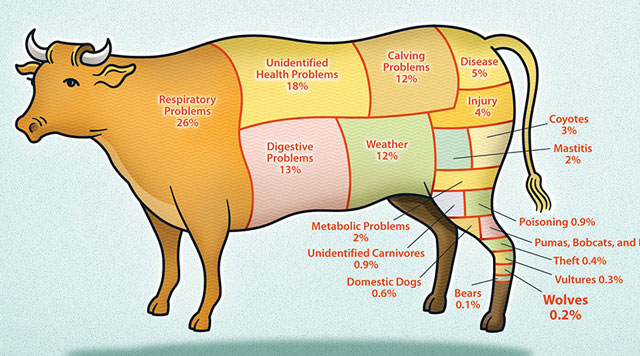
Wolves kill around 65 cattle annually in a state that has 5.5 million which is 0.001 percent. There are 3,776 leases on BLM land and 772 on national forest lands. Ranchers are reimbursed for losses. Oregon has a model for Montana, although Montana rule makers are too backward and obstinate to listen and learn. The Oregon wolf management model requires ranchers to have nonlethal deterrents in place and to have used them, and then only kill chronic offenders.

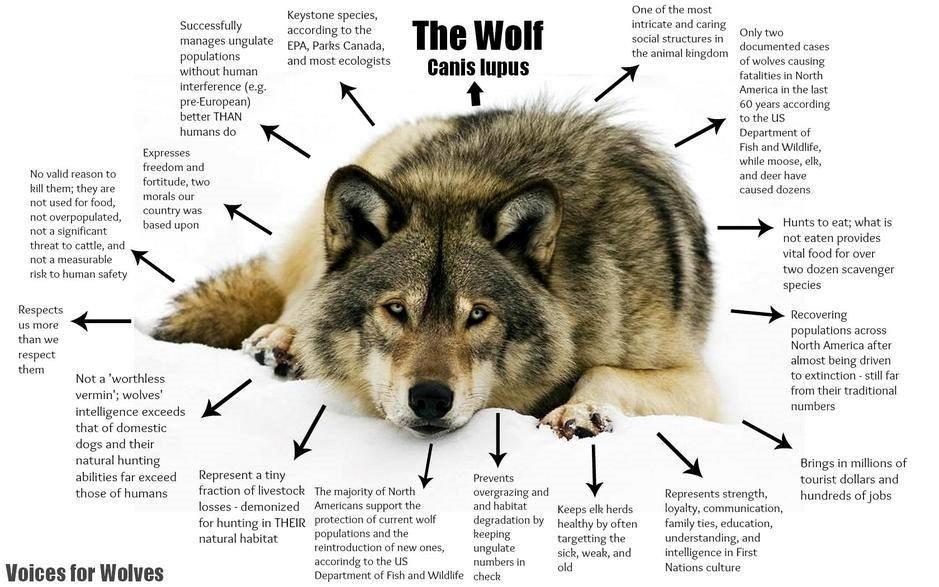
Wolves are not vermin. Wolves are apex predators that are good for wildlife ecology, having a positive cascading effect throughout the food chain versus ecological unhealthy man wildlife killing.

References: The Hidden Life of Wolves, Jamie and Jim Dutcher; The Wolf Almanac, Robert Busch

Roger Hewitt

Great Falls
Read more: http://billingsgazette.com/news/opinion/montana-is-a-backward-wolf-massacre-state/article_4125d0d7-2f81-53b8-be26-a95b9c59af7f.html#ixzz2nl6OgwYZ

Idaho Wildlife Officials Hire Hunter to Kill Wolves

528624c939a88_preview-620

BOISE, Idaho (AP) — State wildlife officials have hired a hunter to eliminate two wolf packs in a federal wilderness area in central Idaho because officials say they are eating too many elk calves.

Fish and Game Bureau Chief Jeff Gould tells the Idaho Statesman that hunters are having a difficult time getting into the Frank Church-River of No Return wilderness, so the agency hired hunter-trapper Gus Thoreson of Salmon to kill the wolves in the Golden and Monumental packs.

The U.S. Forest Service allowed the state agency to use an airstrip and cabin in the Payette National Forest as a base.

Fish and Game paid $22,500 for aerial killing of 14 wolves in the Lolo area in 2012. Gould said Monday he didn’t know how much the agency would end up paying for Thoreson’s salary and expenses.

_______________________

Make no mistake, Idaho officials and their constituents aren’t concerned about elk for the elk’s sake. They want ’em all for themselves–especially the big-antlered, trophy ones. Here are headlines for a couple more articles on the subject, linked from the same page:

Hunters Bemoan Idaho Elk Numbers, Blame Wolves

Elk Hunters Face Tougher Test with Wolves in Woods

ST. MARIES, Idaho (AP) — Calob Wilson sat on the tailgate of his dad’s pickup, dangling a rack of antlers on his knees. Read more: http://magicvalley.com/news/local/idaho-wildlife-officials-hire-hunter-to-kill-wolves/article_c6d2a9c4-6733-11e3-8002-0019bb2963f4.html


Missing Idaho hiker found dead after government shutdown hinders search

Here’s the real story regarding the fairy tale, “Liberals’ Wolves Murder Two Women.”  No wolf attack mentioned–No surprise there.

Jo Elliott-Blakeslee, 63, was found in Craters of the Moon National Monument and Preserve about a mile from where searchers found her hiking partner, Amy Linkert, in September. The pair went missing on Sept. 24.

By      / NEW YORK DAILY NEWS

Thursday, October 24, 2013

http://www.nydailynews.com/news/national/idaho-hiker-found-dead-gov-shutdown-hurt-search-article-1.1495407#ixzz2mchZizYU

A missing hiker turned up dead in a national park on Tuesday after the government shutdown forced many rescuers to postpone their search for her.

The body of Jo Elliott-Blakeslee, 63, was found in Craters of the Moon National Monument and Preserve in central Idaho just a mile from where the body of her hiking partner, Amy Linkert, 69, was discovered late last month, park rangers said.

RELATED: GOVERNMENT SHUTDOWN HINDERS HUNT FOR MISSING HIKER

The pair was reported missing Sept. 24, but the federal government shutdown, which went into effect Oct. 1, hindered the search. Unpaid yet undeterred, ten park service rangers continued to look for Elliott-Blakeslee on foot without access to government resources, such as search helicopters, dogs or planes, reported ABC News.

RELATED: SHUTDOWN ENDS: FEDERAL EMPLOYEES RETURN TO WORK, NATIONAL PARKS AND MONUMENTS REOPEN AFTER 16 DAYS

Elliott-Blakeslee’s body was finally located in the lava fields northwest of the Tree Molds Trail during a helicopter search. Authorities are awaiting autopsy results to determine the cause of her death. It is believed that Linkert died of exposure, and she showed signs of dehydration.

Read more: http://www.nydailynews.com/news/national/idaho-hiker-found-dead-gov-shutdown-hurt-search-article-1.1495407#ixzz2mcdnyaE2

Montana Rewriting the rules on wolf hunting, trapping…Again

Rewriting the rules on wolf hunting, trapping

13 hours ago • By Mike Ferguson

Through Dec. 20, Montanans can weigh in on proposed rule changes that will give landowners more latitude in killing a wolf that threatens their livestock or their pet — and doing so without a hunting license.

By video conference Tuesday evening, the Montana1453351_1488724231352782_186999841_n Department of Fish, Wildlife and Parks took comments and answered questions on the proposed changes from three sites — Billings, Helena and Great Falls.

The department is charged with writing the rules to implement Senate Bill 200, which was passed during the most recent legislative session. The new law allows landowners to kill a wolf if it’s a “potential threat” to human safety, livestock or dogs. Current law requires the wolf be in the act of attacking, threatening or killing livestock before the wolf can be killed.

The landowner or his/her agent must notify the department when a taking occurs and must preserve the carcass of the wolf.

In addition, the law lowers the cost of a nonresident wolf license from $350 to $50. Montana residents pay $19.

Quentin Kujala, the department’s wildlife bureau coordinator, said the rulemaking process to implement SB 200 has trimmed language and eliminated redundancies in existing rules. Under the new law, the same process will continue to apply when a landowner kills a wolf that’s threatening livestock, people or pets, he said. That rule requires the U.S. Department of Agriculture’s Wildlife Services to investigate the taking, and that the taking be reported to Fish, Wildlife and Parks.

The state’s wolf population has been on the rise in recent years. Montana’s most recent wolf count released last spring showed 147 verified packs consisting of 625 wolves. Thirty-seven of the packs had confirmed breeding pairs.

Two Helena residents who attended the video conference said they have concerns with the proposed rules.

Jonathan Matthews said bite marks on livestock don’t necessarily equate to predation and said “scientific precision” is being removed under the new rules.

“I like the fact … that we are not regarding wolves as vermin that should be shot almost without consideration,” he said. Wolves are wildlife, he noted, “and should be treated with respect like other wildlife.”

Sarah Sadowski said she doesn’t support “folks taking measures into their own hands.” She said she’d rather landowners be required to obtain a permit and to contact the department “before making a kill.”

To read the proposed revisions, visit fwp.mt.gov/news/publicNotices/armRules/pn_0143.html.

Send comments to: Fish, Wildlife and Parks Wildlife Division, P.O. Box 200701, Helena MT 59620-0701. Or email comments to fwpwld@mt.gov.

Read more: http://billingsgazette.com/news/local/rewriting-the-rules-on-wolf-hunting-trapping/article_1a17f2d7-94a5-517d-8d4a-145b698afdd5.html#ixzz2mWmE3POu

Anti-wolf hunt group hopes to dispel evil fairy tale portrayal

Wolf Hunt Michigan.JPG
                    This file photo provided by the U.S. Fish and Wildlife shows a gray wolf.

Tim Skubick: Is the big bad wolf for real? Anti-wolf hunt group hopes to dispel evil fairy tale portrayal

By Tim Skubick | Politics Columnist for MLive.com
on December 03, 2013

If those who want to stop the next wolf hunt in Michigan fail, Walt Disney may be to blame.

One of the leaders of the Protect the Wolves coalition concedes the public’s view of wolves is based on “a lot of misinformation.”

Maybe it started at a tender young age with the reading of the classic, “The Three Little Pigs,” featuring none other than the “Big Bad Wolf.” Talk about a sinister label.

Jill Fritz in her pitch to protect the BBW does use that reference because she claims it’s wrong.

She argues the attitude that “wolves are snarling and stalking people and being very aggressive,” is not accurate. “That’s not consistent” she counters, because they are “shy animals and elusive.”

Hence the need for an image re-do. “There does need to be a lot of public education leading up to the election about wolf behavior,” she asserts.

So can we expect to see the three little pigs in an ad welcoming Mr. Wolf into their brick house via the front door and not the chimney?

The movement probably won’t go there but as they gather petition signatures to place the issue before you, they will have to find a message to soften the image.

It’s not that Michigan voters are unsympathetic to animals. They voted overwhelmingly to stop the killing of doves, but you don’t need to be Mort Neff (anybody remember him?) to realize the difference between a tiny dove and a mean-looking wolf.

The petition drive, of course, resulted when state lawmakers voted to render a previous petition drive null and void, even thought the pro-wolf lobby was this close to blocking a wolf hunting season.

Ms. Fritz contends many citizens were offended by the end-run by legislators, which is providing fuel for the petition drive fires.

“They are upset,” she explains while refusing to disclose how many signatures they have in hand.

Yet here comes another effort to mute this petition drive. The Citizens for Professional Wild Life Management are set to launch their own counter-petition drive to allow the state to control hunting seasons. So it’s possible voters will face dueling ballot questions next year, one to protect the wolves and another to render that amendment useless.

Then perhaps we can identify who is really afraid of the big bad wolf.

Watch “Off the Record with Tim Skubick” online anytime at video.wkar.org