Denali wolves need a buffer from Hunting and Trapping

Compass: Denali wolves need a buffer of state land

By MARYBETH HOLLEMAN December 2, 2013

The recent news that wolf sightings by visitors to Denali National Park this past summer were the lowest on record is disheartening but not surprising. This is precisely what many scientists warned would happen in 2010, when the Alaska Board of Game eliminated the small no-take wolf buffer on state lands east of the national park.

And it is precisely what Gordon Haber, whose research on Denali’s wolves spanned 43 years, concluded: hunting and trapping of park wolves on these state lands often kills the alphas of the family group,1453351_1488724231352782_186999841_n thus causing the entire group to fragment and disintegrate–resulting in fewer park wolves, and fewer park visitors seeing wolves.
Along with Yellowstone National Park, Denali had been known as one of the best places in the world to view wild wolves, but no longer. Over 400,000 visitors come to Denali each summer–many of them Alaskans–contributing over $140 million to our state’s economy. Many cite their desire to see wolves as a primary reason for visiting the park. As Denali superintendent Don Striker says, seeing wolves in the wild is an “amazing, oftentimes transformative experience” for park visitors.

But when park wolves range across the park’s eastern boundary following the winter migration of prey, they’re killed by hunters and trappers. The three most-often-seen wolf family groups in Denali have been decimated by losses here, and visitor viewing success has consequently suffered.

Recognizing the economic value of wolf viewing in Denali, from 2000-2010 the state closed some of these lands to wolf take. But, as Haber warned, this small buffer wasn’t sufficient; in some winters, as many as nineteen park wolves were killed east of the buffer – 15 percent of the total park wolf population.

This prompted many organizations, including the Park Service, to propose at the 2010 meeting of the Alaska Board of Game–just a few months after Haber’s untimely death in a research flight crash–that the inadequate buffer be expanded. Instead, the Board eliminated the buffer and passed a moratorium on considering the issue again until 2016. Many predicted this would accelerate the already precipitous decline in park wolf numbers and viewing success–and it has.

Today, the numbers of wolves within the six-million-acre national park and preserve has declined from 143 in fall 2007 to just 55 in spring 2013 – a drop of more than half in six years. And, since the state removed the buffer in 2010, wolf-viewing success for the park’s 400,000 annual visitors has plummeted: from 44 percent in 2010 to just 4 percent in 2013. This downward spiral in wildlife viewing success may be unprecedented in the history of the entire national park system.

As Gordon Haber concluded, it’s not how many wolves killed, it’s which wolves are killed. In 2012, the last breeding Grant Creek female, from the park’s most-viewed family group, was trapped in the former buffer. The death of this one wolf left the survivors with no pups that spring, whereupon they abandoned their den site and fragmented, shrinking from fifteen to three wolves. Rather than visitors witnessing the fifteen-member family group attending new pups at the den site, they saw nearly none. Viewing success dropped by 50 percent that summer alone–all from the loss of one wolf.

Last week, in a letter to U.S. Secretary of Interior Jewell and Gov. Parnell, a coalition of Alaska citizens and organizations proposed a “win-win” solution: that the state transfer a permanent no-take wildlife buffer conservation easement east of the national park, in exchange for the federal government transferring a like-valued easement, or purchase value, to the State of Alaska.

This would fix the problem. It would allow Alaskans and visitors a better chance of seeing wild wolves, and would sustain and grow Denali’s valuable wildlife viewing economy for generations of Alaskans to come. Let’s hope the Governor and Interior Secretary can get together and solve this issue once and for all.

_______________

Alaska writer Marybeth Holleman is co-author with the late Gordon Haber of “Among Wolves: Gordon Haber’s insights into Alaska’s most misunderstood animal.”

Read more here: http://www.adn.com/2013/12/02/3207873/compass-denali-wolves-need-a-buffer.html#storylink=cpy
DNR: At least 11 wolves killed in Michigan hunt

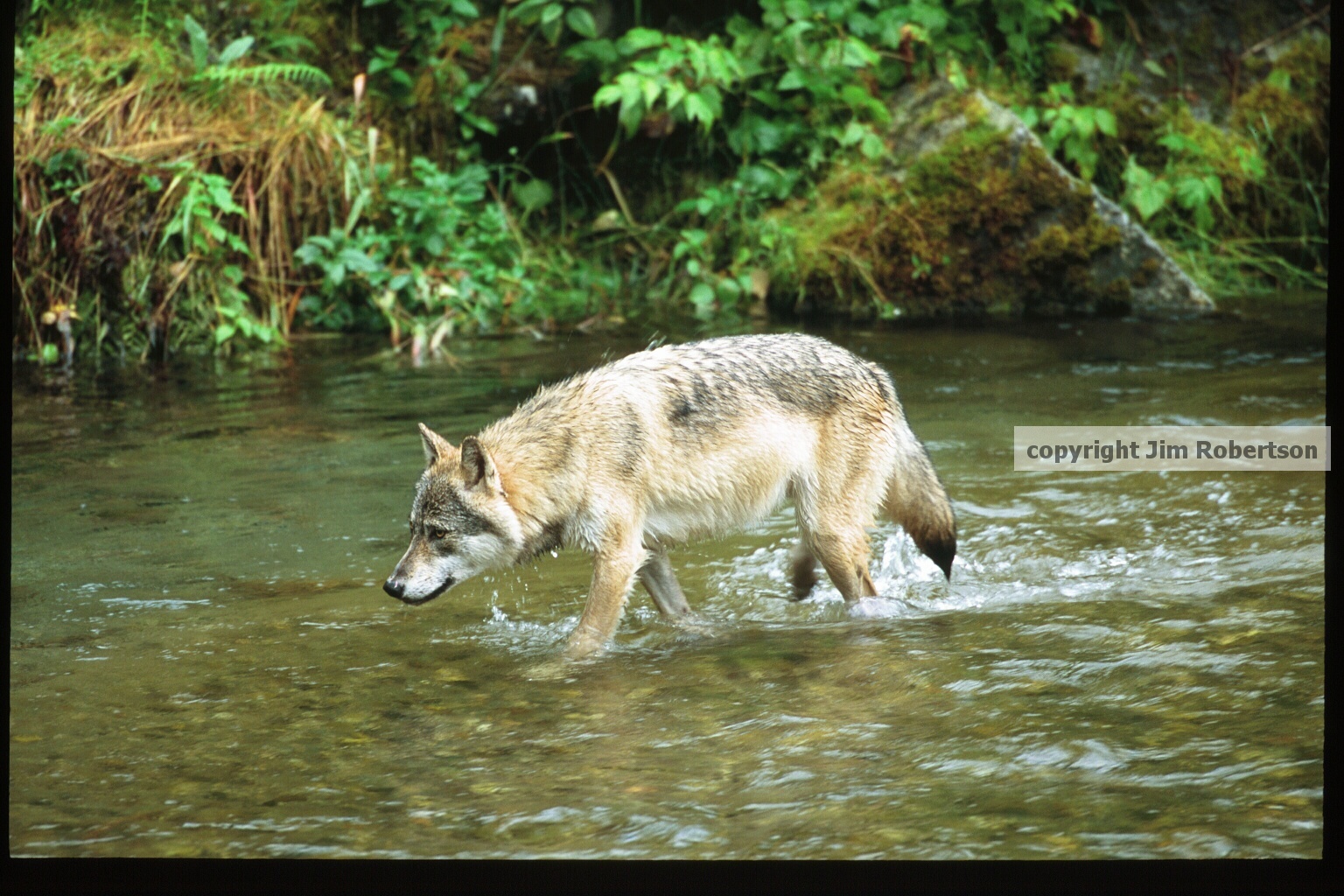
November 25, 2013copyrighted wolf in water

Associated Press

LANSING, Mich. (AP) — At least 11 wolves have been killed during Michigan’s wolf hunt in the Upper Peninsula.

The state Department of Natural Resources updated the results Monday. The wolf season started on Nov. 15 and runs through December, unless 43 are killed before the end of the year.

It’s the first hunt in Michigan since the wolf was placed on the endangered species list nearly 40 years ago. A total of 1,200 people are licensed to participate with firearm, crossbow or bow and arrow.

The DNR had estimated the state’s wolf population at 658.

http://www.mininggazette.com/page/content.detail/id/414425/DNR–At-least-11-wolves-killed-in-Michigan-hunt.html?isap=1&nav=5014

___

Online:

Updates on wolf hunt from DNR: http://1.usa.gov/17EOq

Understanding the Great Divide

http://boldvisions.businesscatalyst.com/opinion.html

Stephen Capra

Another week has passed and we have lost more wolves. Not really a surprise, but we also lost a beloved malamute while its owner was hiking. Shots were fired, screams persisted and a beautiful dog lay dead with seven bullets penetrating his body. This is becoming the mantra from Montana on a daily basis. When walking a family canine, a dog must always wear blaze orange and the master must say his prayer of protection when on a trail. The killing of wolves has become a sickness for the depraved and wicked.

This past week in Albuquerque we had a hearing on the Mexican wolf, with ideas the Fish and Wildlife Service has about expanding their range, what the count will be when they are deemed no longer endangered and perhaps easing the means of killing for ranchers. Perhaps 300-400 people showed up for the hearing in a large meeting room at the Comfort Inn. Clearly the pro wolf people held the majority, but there remained plenty of ranchers and county commissioners and other wolf haters who spoke out with rage about the wolf.

Several things struck my mind as they talked. First, why do ranchers not understand it’s rude to leave your hat on at such hearings? It is clearly designed to show their personal arrogance and sense of control. Yet, to me it just shows ignorance. Then there is this obsession with the constitution. Since when did the people that robbed, killed and destroyed our public lands have such a deep feeling about the constitution? The answer is only when it seems politically viable to their own good. Not for any other more altruistic goal.

Then it was time for the fear game rhetoric-Our children……Their safety……We are losing our entire herds…..We are being wiped out…….Poor me……….

It was the usual regurgitation of lies and their dream of an antiquarianism way of life, circa 1870.

What makes this issue so frustrating and demoralizing are the people- the killers, who seem to glee in the chance to steal life. This is the group I characterize as the “angry mob.” They are collectively the people that best define Obama haters, anti-tax loathers, people, who feel that issues like Gay marriage, Climate Change, Health Care are things that liberals like the President have brought to their doorstep and they must fight back, with pride and furry. They do this by collecting an arsenal of weapons, ammo, scopes, night vision equipment. They speak in chat rooms and share their rage against this new America.

They seek in their twisted way a chance to have power and control. The victim of this demented mind-set is wolves. Wolves represent freedom and the power of true spirit. Wildness is at their core, but also love and a sense of family. Yet, for those who feel they have lost control, this animal and its demise makes them feel a sense of power, a place of control, the means to settle their rage. To allow themselves a sense of freedom and spirit, they must kill and steal it from the very symbol of that, which they seek. It also allows them to show their disdain for conservation. Ignorance it seems is truly bliss.

However, there is another aspect to this fight which is often overlooked and it stems from the conservation side. First, as we have said many times, groups like Defenders of Wildlife, tried to find common ground with ranchers from the start. In fact, even when it was clear it was not working, they simply kept doubling down on a flawed strategy. But some of their rational for this stems from the reality of dealing with foundations.

Foundations in America today define how we work in Conservation. They are the funding, which is the lifeblood of any campaign and any organization. Foundations like much of America tend to be more conservative in how they give. By this I mean they do not tend to like direct conflict or issues that cannot fit into a nice collective ending. Therein lies the problem with wolves. This is a fight that is not likely to have a happy, feel good ending; one side will lose. Right now unless we as a community say, we refuse to lose and we will not compromise any longer, all will be lost. But the pressure on many conservation groups is to find a road to compromise. That in turn has led to hunting seasons and other such destructive outcomes.

The opposition has rallied under one voice, which is to say no to all wolf recovery; to push as hard as possible to fight expanded ranges, to create longer hunting seasons, and to say repeatedly that our children and the livestock industry are threatened! The conservation community by contrast seems to have twenty positions and no clear unified strategy. Instead, wolf recovery has turned into an endless fund-raising opportunity, with little success to speak of.

Bold Visions Conservation stands by its 10-point wolf recovery proposal. It is designed to rally support from urban areas to dwarf that which comes from the rural hot spots. It means changing our rhetoric and understanding we are truly in a war, not just to save wolves, but a war of culture which will define the future of the West.

During the hearing a rancher from eastern Washington got up to thank Fish and Wildlife for not creating a sub-species category for wolves in eastern Washington, meaning they can be killed. My first thought was why was he here in Albuquerque? The answer, I believe, is that the ranching community is sharing strategy, working in a unified manner to take what has worked in Montana and bring it to New Mexico, Colorado or any place that could harbor wolves. They are funded to fight and fight they will.

There comes a time in conservation, as David Brower clearly understood, when you fight for what you believe, and when you do so, people respect you. In order to protect and expand wolf recovery we cannot be cute, or speak in only scientific jargon, rather we must get in the trenches and fight, this is a battle we can surely win, it’s for the heart and soul  of the America we want to be a part of and the future of our western heritage.

Wolves define the freedom and spirit that is the West of my soul. Join us in the trenches. Victory is ours, when we cross that great divide, united.

“I am he and you are me, and we are all together.”

 -John Lennon and Paul McCartney

Hateful A-holes Kill Wolves in Mine Shaft

Thanks to William for this information:

Two wolves were killed in Granite County, Montana. The older male was wounded and tracked down for over a mile, at the end of which he had desperately sought escape in a mine shaft. The husband who killed a puppy, videoed his wife LeRee (both of Royal Tine Outfitters) and himself crawling in, killing, and dragging out the older packmate’s body.

Here’s how the killers describe the incident on “Hunting Washington Forum:”

Got a couple wolfs off a kill last week.  Mine was a 60 pound male pup and my wifes was a 90 pound male.  Had to get hers out of a mine shaft….

And here are a sampling of the comments they received:

–great job!!!!

You followed a wounded wolf into a mineshaft…

That’s a whole ‘nother level of crazy than I’m used to seeing on here.  Way to get it done, though  :tup:

You wanna adopt me for a week or so ? I want to kill a wolf more than anything I’ve ever shot.  Good job by the way……

If it ain’t dead, shoot it again at a 1000 yards !!                                               

–Kudos to you and your wife sir! 

–That there is SWEET!

7d547853b294cf28b7b6c4ff5a69dda1

Deer Hunters Would Freak if They Saw a Wolf

Despite news that wolves are starting to spread out to other states, after their re-introduction to the Tri-state area of the Northern Rockies, wolves are still extinct in most of their former range in the continental U.S. Yet, it seems there’s no shortage of deer; in fact ungulate populations have been booming since the near continent-wide extermination of wolves and other predators that left the lower 48 in ecological turmoil.

Take Oklahoma for example. According to their “local OKC weekend hunting news”:

Oklahoma’s gun season opens Saturday. The rut is expected to be going  strong across the state in the coming days. State wildlife biologists in Okla. expect the peak of the rut in most areas of the state to happen sometime before Saturday’s opening. 

Barring any major weather events that keeps hunters at home,  Saturday will be the biggest deer hunting day of the year.  More deer are taken on the opening day of gun season than on any other. The rut, the mating season of deer, is triggered primarily by moon phases. However, the rutting activity that hunters see has more to do with the weather.

The first time Oklahoma hunters checked in 100,000 deer for all  seasons combined was 13 years ago.  Since then, there have been only three years that Oklahoma’s deer harvest has not exceeded 100,000.

Wildlife biologists estimate deer hunters take about 10 percent

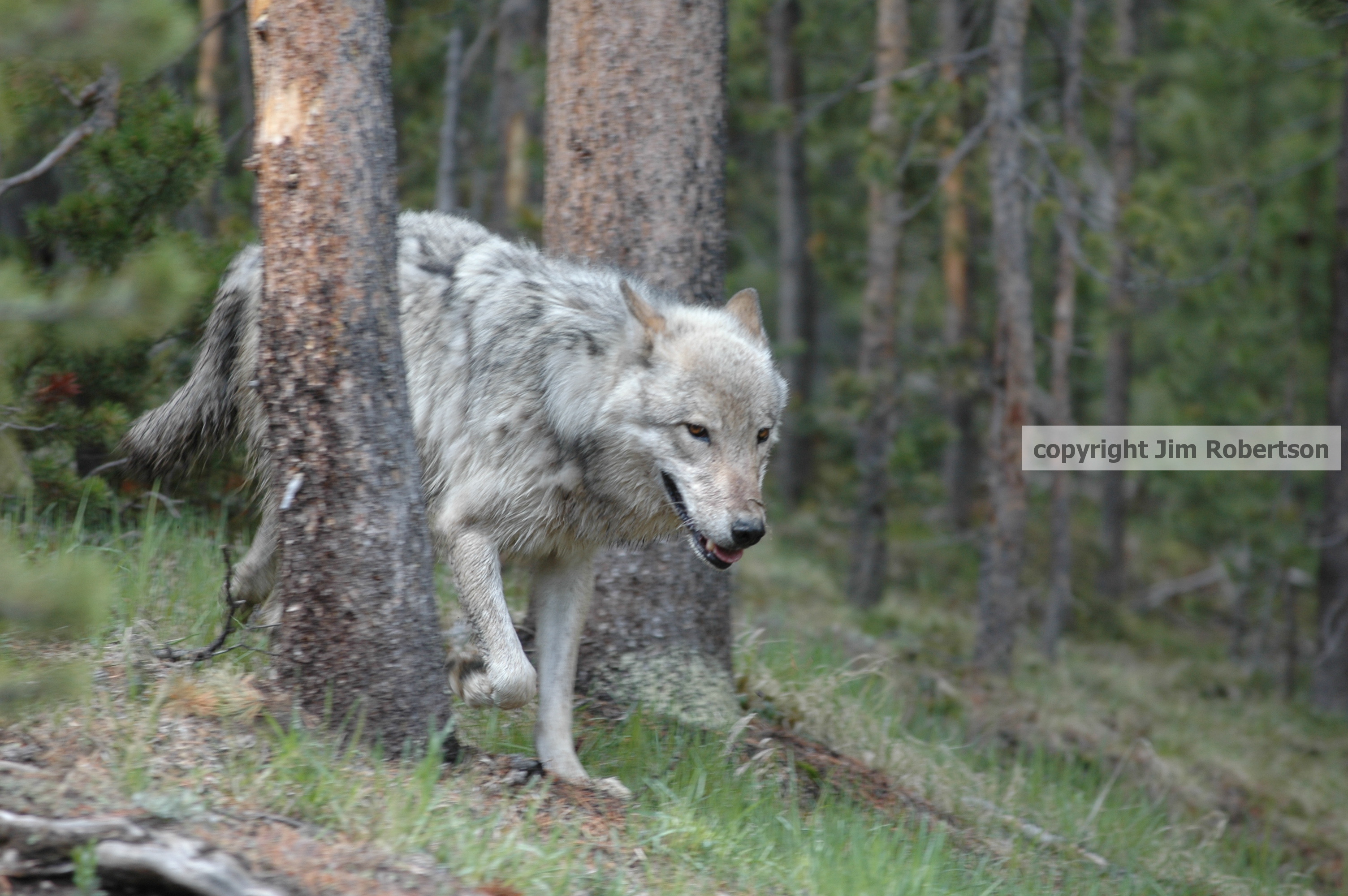
Photo by Jim Robertson

Photo by Jim Robertson

of the deer population during hunting seasons. This gives Oklahoma an estimated deer population about one million.

Approximately one million deer in a state as small as Oklahoma. And exactly ZERO wolves. 100,000 deer killed during hunting season, and it’s not even a dent in the deer population. Natural processes have been ousted and ignored–hunters there would freak if they if they saw a wolf. I can just hear their screams of, “Those wolves are going to eat all our game…” It’s the same story that’s going on across the country. Hunters don’t want healthy deer or elk populations, they want a surplus to justify their “harvests.”

Managing wolves by the numbers makes no sense

Missoula Independent

News/Opinion November 14, 2013

Pack Pride by Marybeth Holleman

The U.S. Fish and Wildlife Service’s decision to delist gray wolves nationwide is flawed because it’s based on the total number of wolves, a statistical approach that, according to wolf biologist Gordon Haber, is “ecological nonsense.”

Haber spent over 43 years observing Alaska’s wild wolves, mostly in Denali National Park, before dying in a plane crash while tracking wolves. To locate wolves, he snowshoed, skied and flew in winter; he backpacked and hiked in summer. He endured temperatures 50 below zero, blizzards, thunderstorms, mosquitoes, and the risk of grizzly and moose attacks. Few modern biologists have such unassailable experiential authority.

Haber’s take-home message was this: You can’t manage wolves by the numbers. You can’t count the number of wolves in an area and decide whether it’s a “healthy” population, because what really counts is the family group, or pack, as some still call it.

“Wolves are perhaps the most social of all nonhuman vertebrates,” wrote Haber. “A ‘pack’ of wolves is not a snarling aggregation of fighting beasts, each bent on copyrighted wolf in waterfending only for itself, but a highly organized, well-disciplined group of related individuals or family units, all working together in a remarkably amiable, efficient manner.”

Haber devoted his career to studying intact family groups, especially the Toklat wolves of Alaska. First made famous by Adolph Murie’s 1944 The Wolves of Mount McKinley, the Toklats rank with Jane Goodall’s chimpanzees as the two longest-studied mammal social groups in the wild.

Wolves go to great lengths to stay with family; when important members are lost, families can disintegrate and remaining individuals often die. Haber knew this firsthand after an alpha female wolf, who, after her mate was killed in a botched government darting study, died of starvation, alone. Relocated wolves travel hundreds of miles to return home. And the first wolf seen in California in 90 years, OR7, has never stopped moving: He’s searching for a mate, for family.

Left unexploited (that is, not killed) by humans, wolves develop societies that are astonishingly complex and beautifully tuned to their precise environment. Once, Haber observed the Toklat wolves moving their den because heavy winter snow had decimated the moose population; a week before pupping, the wolves shifted to another den closer to caribou. He also recorded unique hunting methods, among them moose hunting by the Savage River family that he called “storm-and-circle.”

Family groups develop unique and highly cooperative pup-rearing and hunting techniques that amount to cultural traditions, though these take generations to mature and can be lost forever if the family disintegrates. After the entire Savage River family was shot illegally in the winter of 1982-’83, Haber never saw the storm-and-circle technique again.

A healthy wolf population is more than x number of wolves inhabiting y square miles of territory. The notion that we can “harvest” a fixed percentage of a wolf population corresponding to natural mortality rates and still maintain a viable population misses the point. According to Haber, it’s not how many wolves you kill, it’s which wolves you kill.

Natural losses typically take younger wolves, whereas hunting and trapping take the older and more experienced wolves. These older wolves are essential because they know the territory, prey movements, hunting techniques, denning sites, pup rearing—and because they are the breeders. Haber observed this many times: Whenever an alpha wolf was shot or trapped, it set off a cascade of events that left most of the family dead and the rest scattered, rag-tag orphans.

It happened again in April 2012. A trapper dumped his horse’s carcass along the Denali National Park boundary, surrounded it with snares, and killed the pregnant alpha female of the most-viewed wolf group in Denali. With her death, the family group had no pups, and it disintegrated, shrinking from 15 to three wolves. That summer, for hundreds of thousands of park visitors, wolf-viewing success dropped by 70 percent.

This is not unique to Alaska. In 2009, Yellowstone National Park’s Cottonwood group disappeared after losing four wolves to hunting, including both alphas. In 2013, the park’s Lamar Canyon family group splintered when the alpha female—nicknamed “rock star”was shot.

So it’s never about numbers. It’s about family. A wolf is a wolf when it’s part of an intact, unexploited family group. Wolves are no longer endangered when these groups have permanent protection, and when we manage according to this essential functional unit. If we leave wolves alone, we’ll be the ones to benefit.

The government has extended the comment period for delisting gray wolves from Endangered Species Act protection to Dec. 17, 2013. Go to regulations.gov and click on Gray wolf: Docket N. (FWS-HQ-ES-2013-0073).

________________________________________

Marybeth Holleman is a contributor to Writers on the Range, a service of High Country News (hcn.org). With Gordon Haber, she is the author of Among Wolves: Gordon Haber’s Insights into Alaska’s Most Misunderstood Animal. She also runs the blog Art and Nature (artandnatureand.blogspot.com) and lives in Anchorage, Alaska.

Lupophobia: Wolf Fear and Hatred

 Article from All-Creatures.org

By Dr. Michael W. Fox November 2013

The fear and hatred of wolves goes back in our European history for centuries. Such lupophobia is manifested still today in such purportedly advanced civilizations as the United States of America, a mental pathology which is certainly not shared by indigenous native American Indians.

Any rational person visiting these Sportsmen Against Wolves Facebook and other internet sites will see beyond their passionate, self-righteous rhetoric, which at deeper levels reveals their own insecurities and fears of extinction of a ‘way of life’ that they are enjoining across wolf-inhabiting states to justify and protect.

wolf wolves Jim Robertsonwolf wolves Jim Robertson Images Copyright Jim Robertson, Animals in the Wild

The fear and hatred of wolves goes back in our European history for centuries. Such lupophobia is manifested still today in such purportedly advanced civilizations as the United States of America, a mental pathology which is certainly not shared by indigenous native American Indians. The internet pages being put out today by “Sportsmen Against Wolves” are especially instructive, combining graphic photographs of slaughtered wolves with supportive comments by hunters who see wolf protectors and wildlife conservationists as representing the kind of society that they abhor: A society of tree-hugging Bambi-lovers who are challenging their right to shoot wolves and any wild animal who crosses their paths that may threaten them; provide them with a meal; offer them a challenge of manhood as a ‘worthy adversary’ to test their survivalist skills to track and kill to win a trophy head or pelt to sport on their walls or to decorate their homes or adorn their women.

Supportive letters from wolf hunting advocates on these internet pages also disclose a degree of ignorance about the balance of nature, wolf-deer and prey-predator relationships. They amount to endorsing the self-affirming mythology of wolf hunters that exterminating competing hunters such as the wolf is their right, scientifically/biologically justified, so they can have an abundance of prey all for themselves. The notion of co-existence, as being promoted by organizations such as Project Coyote, is anathema to this  community which lives in close association with the last of the wild and which most American citizens are calling for better protection.

Any rational person visiting these Sportsmen Against Wolves Facebook and other internet sites will see beyond their passionate, self-righteous rhetoric, which at deeper levels reveals their own insecurities and fears of extinction of a ‘way of life’ that they are enjoining across wolf-inhabiting states to justify and protect.

Their critics may see them as evidence of the devolution of Homo sapiens, of a regression to the hunter-stage of our ancestral past. The anarchistic individualism and anachronistic pioneer spirit are barely concealed under the camouflage of their costly hunting attire and high-tech scopes and other killing gear. But to be charitable and offer a paw or frond of hope and recovery fro this American sub-culture, if they were to connect their fate with the fate of the wolf and every tree in the forest and frog in the swamp, they might, as Henry David Thoreau advised over a century ago that in wildness is the preservation of the world.

That does not mean the preservation their way of life and of lupophobia but of their evolution as an effective, non-governmental community of wildlife monitors and conservators. Many deer hunters, for instance, like traditional Native American Indians, have discovered the wisdom of biophilia, seeing themselves and wolves and other predators as essential components of healthy ecosystems. This is especially germane considering that across much of the U.S. the white tailed deer population has risen over the past century from some 300,000 to an estimated 30 million.  With such an ecological perspective they can begin to articulate a hunting ethic, acknowledge the vital importance of wolves and other predators in helping prevent deer overpopulation and loss of biodiversity, and become a ‘boots on the ground’ force and voice for conservation, habitat preservation and restoration in concert with wolves.

But so long as lupophobia persists, wolves and other essential predators will continue to be killed by some hunters as well as by cattle and sheep ranchers whose subsidized grazing rights on public lands should come with a caveat prohibiting lethal methods of predator control. Putting the wolf on the protective federal Endangered Species list to prohibit sport hunting and trapping of these highly intelligent and social species is a limited deterrent against their illegal killing by lupophobes when there is virtually no effective local enforcement and informant network.

The many thousands of applicants for licenses to kill wolves now that it is legal in most wolf-inhabited states is surely indicative of a significant degree of lupophobia with many others seeing the wolf as a trophy animal, a mere object to be ‘sustainably harvested’ for personal gratification. Both of these attitudes are part of the ‘moral pluralism’ of America’s culture which makes a mockery of democratic process revealing minority rule and the power of vested interests when the majority of the populace want full protection for the wolf. Without a unified sensibility, like those deer hunters who also abhor the killing of wolves as sporting trophies along with the majority of non-hunters, the disunited states will surely continue to fall short of becoming a truly civilized society.

________________________________________________

The author of the best selling book The Soul of the Wolf, Michael W. Fox has done research on wolves and other wild canids.

Column: Michigan’s wolf hunt will do more harm than good

 The Jackson Citizen Patriot on November 12, 2013
copyrighted wolf in water
By Mark Muhich

Michigan’s first ever wolf hunt begins Nov. 15.

This wolf hunt is anti-scientific, anti-democratic and has little to do with hunting.  Legislative skull-doggery by Upper Peninsula State Senator Tom Casperson voided the constitutional right of Michiganders to petition their government.

Casperson  shifted the listing of “game species”, animals hunted in our state, to a politically appointed committee.  The Natural Resources Committee cannot be reviewed by the voting public, so the 250,000 citizens who signed the ballot initiative calling for a vote on the wolf hunt, were disenfranchised, told to keep quiet, and take a hike.

While hiking in Michigan there is one thing you need not fear; a wolf attack. There has never been in Michigan’s history an attack by wolves on humans. Of course Capserson’s fairy tales tell of children being cornered by wolf packs at school. Casperson has made numerous bogus claims on the floor of the State Senate in Lansing, though admittedly,  he is not sworn to tell the truth while speaking.

Worse, professional Department of Natural Resource biologists now confess to falsifying testimony to the State Senate.  The Legislature resolved that wolves should be de-listed from the endangered species act, and then included wolves on the schedule of game species in Michigan.

If the DNR had enforced its own regulations requiring farmers to bury within 24 hours the carcasses of  dead animals then many of the wolf attacks on cattle could have been avoided in the first place.

Cattlemen have every right to kill wolves that are attacking their herds. That is the law and always has been. The DNR pays farmers and ranchers for the loss of their livestock killed by wolves.

The upcoming wolf hunt is not designed to manage wolves in the wild; but it could make wolf attacks worse.  Wolves are pack animals, they depend on an intricate social network to survive. If an alpha wolf is slaughtered the pack disintegrates, turning the survivors into rogues.

Only one biologist sits on the NRC, which listed the wolves as “game species”, and hers was the sole committee vote against the wolf hunt.

Other respected northern Michigan scientists have argued against the wolf hunt. With the deer population holding steady in the U.P., and wolf populations slightly declining, an ecological balance in the forests of northern Michigan is served by the apex predator, wolves.

Many sportsmen also oppose the new wolf hunt.

Hunting ethics written by Teddy Roosevelt, the North American Wildlife Conservation Model, warned against “frivolous hunts” like Michigan’s wolf hunt.

Michigan’s wolf hunt ignores the science of wildlife management. Michigan wolves do not need “management,” they are management.

Sen. Casperson has snatched the constitutional right of citizens to petition their government. The DNR has failed to enforce its own rules. Michigan’s wolf hunt will do more harm than good, leaving Michigan’s forests weaker.  Put the wolf hunt to a vote of the people next year.

— Mark Muhich lives in Summit Township and is the conservation chairman of the Central Michigan Group Sierra Club.

Idaho Wolf Kill Numbers

Associated Press, January 11, 2007: “Idaho’s governor [Butch Otter] said Tuesday he will support public hunts to kill all but 100 of the state’s gray wolves after the federal government strips them of protection under the Endangered Species Act…. ‘I’m prepared to bid for that first ticket to shoot a wolf myself,’ Otter said earlier Thursday during a rally of about 300 hunters…copyrighted wolf in waterThe hunters, many wearing camouflage clothing and blaze-orange caps, applauded wildly during his comments.”

Since 2009, 887 Idaho wolves have been killed by licensed hunters, with many hundreds more killed in official “control” operations.  It is estimated that there were fewer than 500 wolves remaining in the state by August, 2013. The 2013-2014 Idaho wolf season began August 30 and will continue in most of 13 state zones until the end of June 2014. The current 2013-2014 wolf season will constitute a mop-up operation by the state’s ferocious anti-wolf mob.

The Idaho political apparatus, controlled absolutely by the hunting and agricultural lobbies, is a vigorous proponent of trap-torture for Idaho wildlife. It has thus encouraged, trained and deployed an army of trappers, both amateur and professional, to prolong the suffering of Idaho wolves since 2011.

Idaho wolf trapping season opened November 15, 2013, and will continue across nine game zones until March 31, 2014.  Thus, Idaho wolves continue to be subjected to the terror and cruelty of steel foothold traps and choking snares. Many of these animals, including the youngest of pups, are routinely forced to await their violent death for up to 72 hours while suffering terror, pain, hunger and dehydration.

Zone 1–Idaho Panhandle Zone:  (12) Idaho wolves gunned with rifles or hand guns.  One animal shot with a handgun was a tiny black pup so young that it had no teeth visible.  A bow hunter in this zone also arrowed a gray puppy, a particularly painful way for a canine to die.  Two others wolves were killed on private property in August before the season officially began. Licensed wolf kill is legal year round in the Panhandle zone as long as the carnage takes place on private property.  These two pre-season wolves were seen together and shot at the same time.  Their bodies were retrieved days later, indicating that they were able to run while wounded and therefore suffered for an unknown number of hours or days before dying.

Note: One of our three selected wolf packs for adoption, the Bumblebee Pack, resides in Zone 1. Adoption bracelets are available [link]. Your donations will help sustain our website so that volunteers can monitor and report activities by state, federal and private interests bent on reducing wolves to a genetically unsustainable population. Adoption bracelets are available.

Zone 2–Palouse-Hells Canyon Zone: (1)  wolf  arrowed. This was a gray animal listed as a pup.

Zone 3–Lolo Zone:  (1) Idaho wolf gunned.

Note:  One of our three packs selected for adoption is the Kelly Creek Pack, which undoubtedly lives a perilous existence in the Lolo “hot” zone. Lolo wolves have been among the hardest hit in the great Idaho wolf purge. Government agents in helicopters gunned-down some of the wolves killed in this zone during 2011-2012. Adoption bracelets for survivors are available. Adoption bracelets for survivors are available.

Zone 4–Dworshak-Elk City Zone:   (3)  wolves gunned, one wolf arrowed.  One of the wolves, listed as a puppy, was blasted with a hand gun.  The arrowed animal was listed as a yearling.

Zone 5–Selway Zone:   (3)  wolves gunned.  Two of the three were listed as pups.

Zone 6–Middle Fork Zone:   (3) wolves gunned.   Two of the three were listed as pups.

Zone 7–Salmon Zone:   (2)   gunned.  One animal was listed as a pup, the other a yearling.

Zone 8–McCall-Weiser Zone:  (3)  wolves gunned.  One animal was listed as a young of year pup.

Zone 9–Sawtooth Zone:   (1)  wolf arrowed.

Zone 10–Southern Mountain Zone:  (5) wolves gunned. Three of these animals  were listed as yearlings.  Another was listed as a  pup terminated by a hand gun.

Note:  One of our three packs up for adoption is the Red Warrior Pack, located in the Sawtooth Mountains within this zone. Adoption bracelets are available. Adoption bracelets are available.

Zone 11–Beaverhead Zone:   (0)  wolves gunned.

Zone 12—Island Park Zone:  (3)  wolves gunned.

Zone 13—Southern Idaho Zone:  (0) wolves gunned.

Of the 38 wolves obliterated during this time period, 15  (39%) were listed as puppies or yearlings.

– See more at: http://adoptawolfpack.org/summary-of-2013-2014-big-game-mortality-reports/#sthash.xjOOXuKF.dpuf