
There’s a-near crisis situation going on in the cheese and crackers state, Wisconsin. It seems their hound hunters are losing dogs to wolves. Too bad for the dogs, but then again the only time they’re allowed out of their pen is to chase down and tree black bears so their “masters” can stumble up and shoot the terrified ursine.
Apparently the taxpayers are expected to foot the bill if a one of the hound hunters’ frantic dogs has a lethal run-in with a wolf. As the article below informs us, the Wisconsin Department of Natural “Resources” has a compensation program wherein hounders are paid $250.000 for their losses, if they choose to take up the barbaric sport. Of course, “it is possible, however, that because of the potential for compensation a hunter might be more likely to

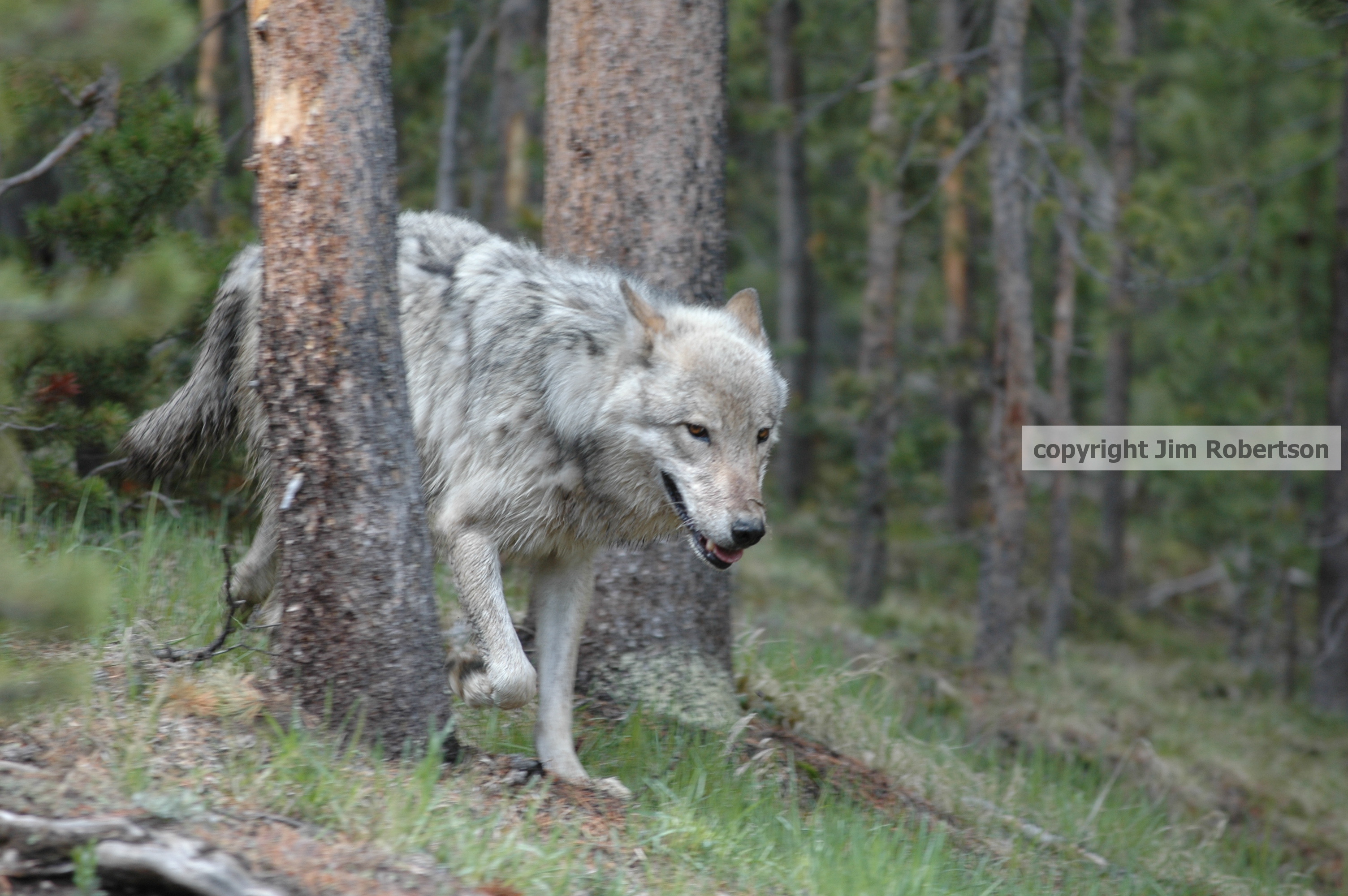
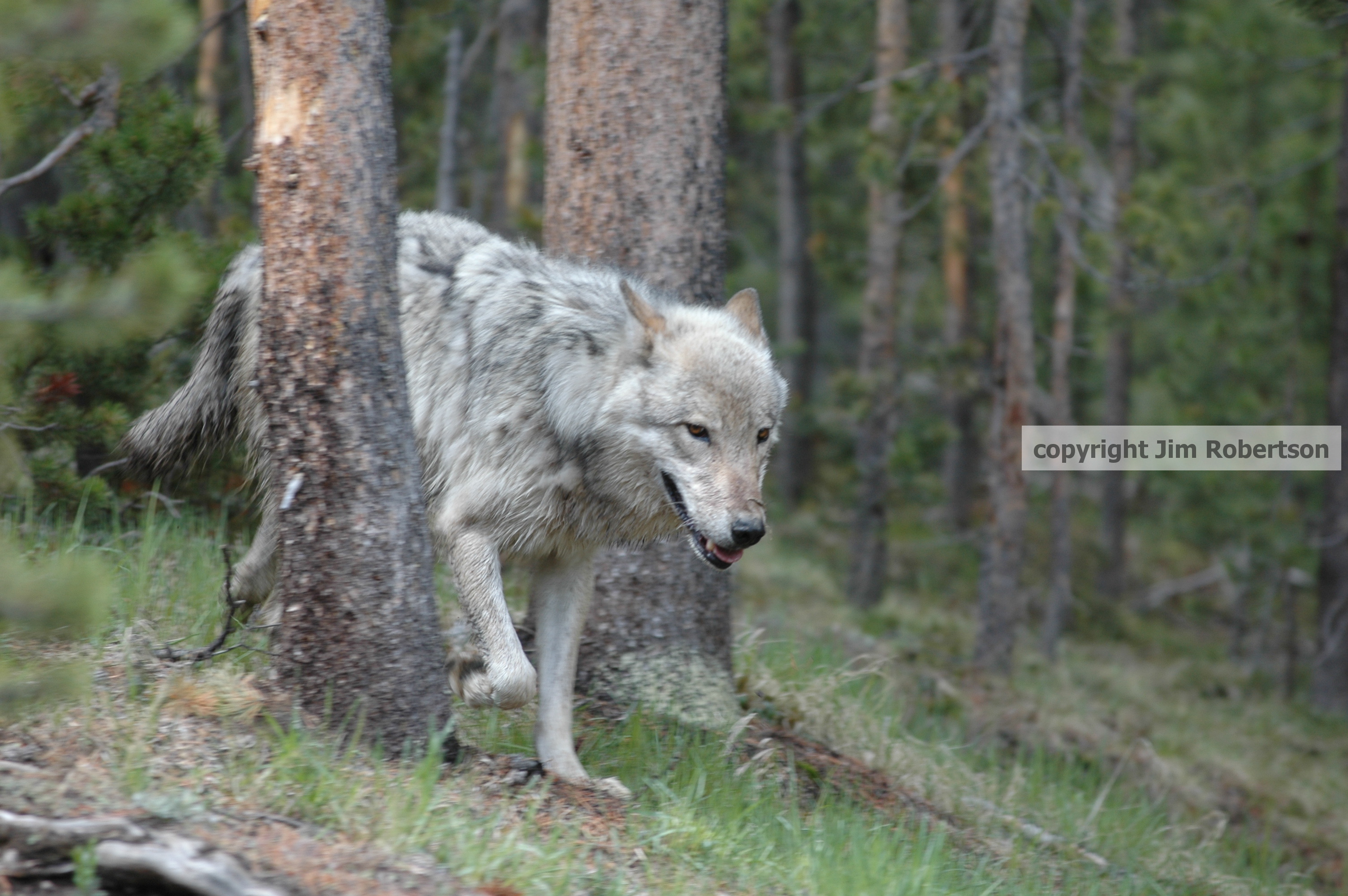
photo Jim Robertson
put a dog at risk.”
According to Wisconsin newspapers:
This has been a deadly year for bear-hunting hounds.
According to the Wisconsin Department of Natural Resources’
<http://dnr.wi.gov/topic/wildlifehabitat/wolf/dogdeps.html#table> dog
depredation report, 23 hounds have been killed by wolves while being used to
hunt bears or being trained to hunt bears since June 3, tying the record 23
killed in 2006, according to Brad Koele, DNR wildlife damage specialist.
Three pet dogs have also been killed.
Only six dogs were killed last year, but Koele says that was an aberration –
at least 20 were killed in each of the four years before that. Black bear
hunters in Wisconsin can use dogs until Oct. 1 and can hunt without dogs
until Oct. 8.
“It’s not that this year is abnormally high, it’s that last year was
abnormally low,” says Koele. “I don’t have an answer for why.”
The owners of the dogs can claim up to $2,500 from the state, though Koele
says not all of them receive or ask for the full amount.
“Not all claims are maximum payments,” he says.
Livestock, hunting dogs and pets are all eligible for compensation.
The death toll could be higher. Last year Republicans passed a bill
establishing a wolf hunt in the state, but a provision in the bill allowing
hunters to use dogs is tied up in court. However, dogs used to hunt wolves
would not be eligible for compensation.
According to a <http://www.ncbi.nlm.nih.gov/pubmed/23613910> study earlier
this year from Michigan Tech, Wisconsin DNR data show that payouts for wolf
attacks on hounds “costs the state more than it has spent for wolf attacks
on any other category of domesticated animal, including calves, missing
calves or cattle.”
(Here’s a
<http://dnr.wi.gov/topic/wildlifehabitat/wolf/documents/wolfdamagepayments.p df> table showing the compensation paid out in Wisconsin since 1985, when
the program started.)
The Michigan Tech study found that the rate of wolf attacks on bear-hunting
hounds in Wisconsin is two to seven times higher than in Michigan.
Researchers at the college, who teamed up with Michigan DNR researchers for
the study, have a couple of ideas as to why.
<http://www.mtu.edu/news/stories/2013/april/story88261.html> This bulletin
from Michigan Tech says the research team found that bear baiting season
starts earlier in Wisconsin and lasts longer.
“The longer you bait, the more opportunity you provide for wolves to
discover and potentially defend bear-bait sites,” said Joseph Bump, a
Michigan Tech wildlife ecologist, in the bulletin. “Most hunters release
their dogs at bait sites, and the longer the bait has been around, the more
likely hunting dogs are to encounter territorial wolves who have found and
are possibly defending the bait. So it appears that baiting is an important
factor.”
There’s another factor: Michigan doesn’t pay dog owners for their dead dogs.
“Compensation can have multiple effects,” Bump says. “It is a reporting
incentive, but it also creates an incentive for abuse. The net effect of
compensation is far from clear, and it is an important factor to study
further.”
Koele says providing an incentive for reporting attacks is important for
tracking efforts by the state. Wisconsin contracts with USDA Wildlife
Services to do a site investigation to verify that the depredation was
caused by wolves, he says.
“We don’t just pay based on what a hunter tells us,” he says. “There’s
actually an investigation to make sure we’re justly paying them.”
He says it is possible, however, that because of the potential for
compensation a hunter might be more likely to put a dog at risk.
“There could be that abuse occurring out there,” he says. “We really
wouldn’t know.”


 Exposing the Big Game