Oregon panel OKs ‘last resort’ wolf-killing rule

http://www.redding.com/news/2013/jul/12/oregon-panel-oks-last-resort-wolf-killing-rule/

by JEFF BARNARD, Associated Press

Posted July 12, 2013

GRANTS PASS, Ore. (AP) — The Oregon Fish and Wildlife Commission on Friday adopted provisions of a lawsuit settlement that will make Oregon the only state in the West where killing wolves that attack livestock is a last resort.

The rules adopted by the commission amend Oregon’s Wolf Management Plan, along with statutory provisions enacted by the Legislature that will be signed by Gov. John Kitzhaber.

The rules require ranchers to show they have taken non-lethal steps, such as alarm boxes and low strings of fluttering plastic flags known as fladdery, to protect their herds before the state will send out a hunter to kill a wolf. There must also be hard evidence, such as GPS data showing a radio-collared wolf was in the area when a cow was killed, that wolves have attacked four times.

In return, ranchers get new rights to shoot wolves that they see attacking their herd, but only if those non-lethal protections are in place, and attacks have become chronic.

The settlement represents a new level of cooperation between conservation groups and ranchers, who have long fought over restoring wolves in the West, where they were wiped out by bounty hunters in the early part of the 20th century.

Ranchers downplayed the significance of the settlement.

“I don’t think it’s a whole lot different from the wolf plan already being implemented,” said Kate Teisl, executive director of the Oregon Cattlemen’s Association. “Now there’s just more documentation. Ranchers are out there doing all they can to keep their animals alive, including the non-lethal measures.”

But wolf advocates said it was that documentation of non-lethal steps that was groundbreaking.

Rob Klavins of Oregon Wild said the old plan talked about conservation of wolves being a priority, but it was so ambiguous that it was ineffective.

“It’s now up to the Oregon Department of Fish and Wildlife, the livestock industry, and the conservation community to honor the agreements that we have made,” he said. “If we do so, I am optimistic we will continue to see conflicts between wolves and livestock continue to be rare, and the need to kill wolves even rarer still.”

Brett Brownscombe, natural resources adviser to the governor, said making the rules clear was important as Oregon’s wolf population continues to grow, and the Obama administration moves toward lifting federal protections for wolves in areas they have yet to repopulate.

Oregon Wild and other conservation groups had sued the Oregon Department of Fish and Wildlife, claiming that a kill order on the Imnaha pack, the first to establish in Oregon as well as the first to attack livestock, threatened to wipe out the pack. Conservation groups claimed the actions violated the Oregon Endangered Species Act, which still protects wolves in the eastern two thirds of the state, where federal protections have been lifted.

The Imnaha pack only has one more strike against it before a kill order can be imposed, but so far, it has not been linked to an attack.

The Oregon Court of Appeals barred the state from killing wolves for more than a year before the settlement was reached between conservation groups, the Oregon Cattlemen’s Association, and the governor’s office. During that time, the number of wolves in Oregon went up, while the lethal attacks on livestock went down. In Idaho, where the Oregon packs had migrated from, the numbers of lethal livestock attacks went up, along with the numbers of wolves killed, primarily by trophy hunters and trappers.

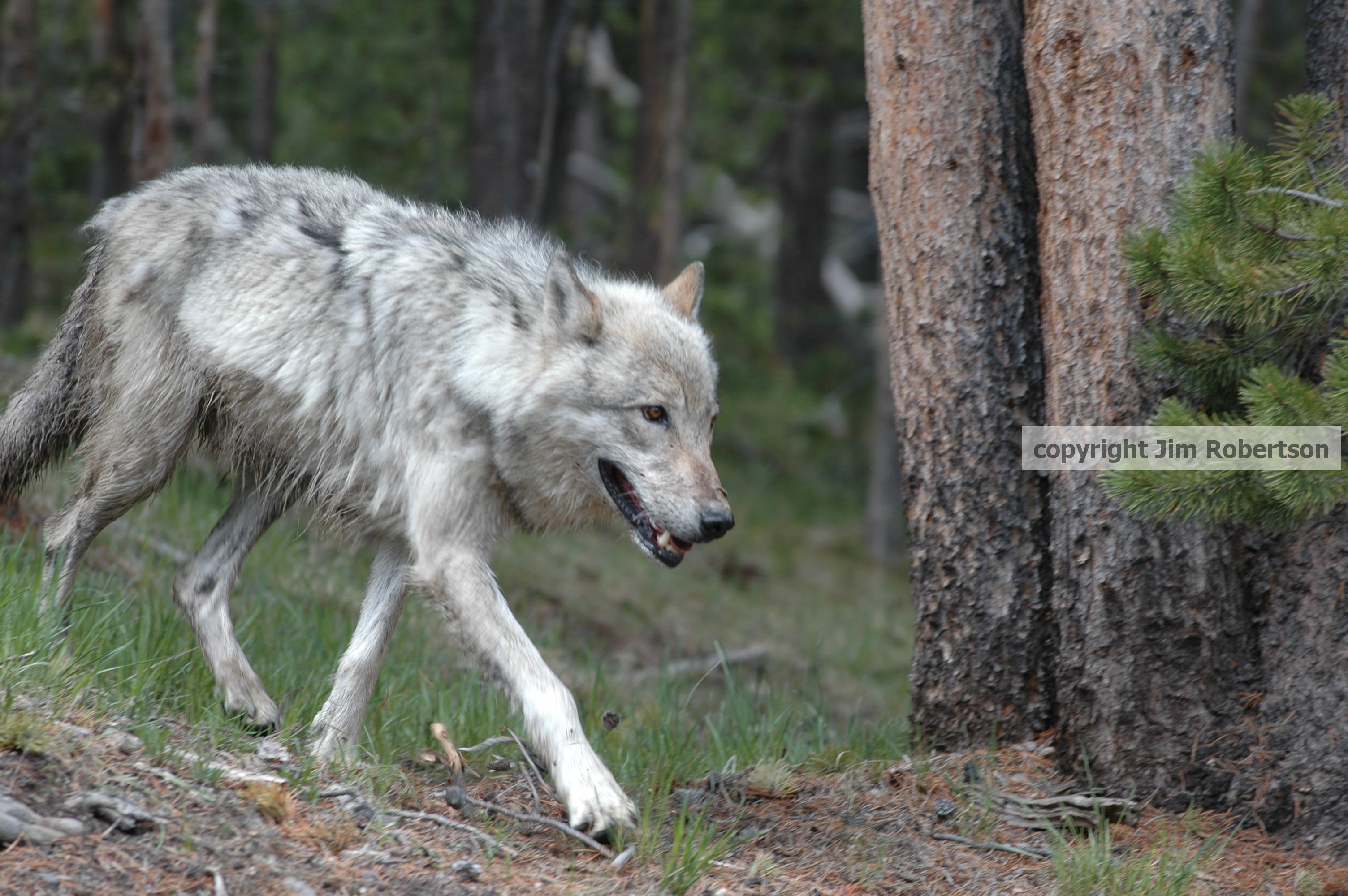
copyrighted Hayden wolf walking

Upper Peninsula wolf hunt approved, again, by Michigan’s Natural Resources Commission

http://www.mlive.com/news/index.ssf/2013/07/wolf_hunt_michigan.html

by Fritz Klug

The Michigan Natural Resources Commission has again voted to allow a wolf hunt in parts of the Upper Peninsula this fall.

The commission voted 5 to 1 on Thursday to designate wolves as a game species and allow the hunt, starting in mid-November. While the wolves will be hunted this fall, an opposition group is working to block any future wolf hunting in the state through a second planned voter referendum.

“Managing wildlife through science is far better than managing wildlife through ballot questions, which some organizations support for Michigan,” said NRC Chair J.R. Richardson. “The conservative public harvest proposal approved by the NRC ensures the long-term presence of wolves while providing a valuable tool for managing conflicts between wolves and human populations.”

The NRC vote comes after a new law approved by the Michigan Legislature which gave the NRC the authority to establish new game species. While the NRC voted to allow the hunt earlier this year, it needed to vote again under terms of the new law. In May, the commission voted 6-1 to allow the hunt.

Members of the NRC are appointed by the governor.

The hunt will be limited to 43 wolves in three separate areas of the UP in an attempt to decrease population in those specific areas. There are an estimated 658 wolves in Michigan’s UP overall.

Supporters of the hunt say wolves are causing problems in the Upper Peninsula. There are reports of wolves killing livestock and pets. Residents also said wolves have become increasingly comfortable around humans and fear that they may attack small children.

Those opposed to the hunt, however, question if the wolf population — which was once endangered — could handle a hunt. They also say wolves are a natural resource and voters should decide if there should be a hunt.

“The voters of Michigan—not politicians and bureaucrats—should have their voices heard on whether our state’s fragile wolf population is needlessly hunted for trophies,” said Jill Fritz of Keep Michigan Wolves Protected, who is the state director for The Humane Society of the United States.

The organization Keep Michigan Wolves Protected has organized petition drives to get the wolf-hunting question on the 2014 ballot.

The group collected 250,000 signatures aimed at overturning the previous state law that allowed a wolf hunt. But the Legislature’s approval of a newer law made that effort moot, and opponents now would have to mount a second petition drive aimed at overturning the newer law — enacted earlier this year.

Earlier this month, the group submitted new language to stage a second petition drive aimed at banning wolf hunting in Michigan. Tomorrow, the Board of State Canvassers will meet and consider the ballot language.

“It would be extremely difficult” to finish the petition drive by the November vote, said Fritz.

During the meeting, several members of the public spoke against the wolf hunt.

The first referendum seeks to overturn Public Act 520 of 2012. The new referendum would seek to overturn Public Act 21 of 2013. Both measures could make the November 2014 ballot.

The Upper Peninsula is home to an estimated 658 wolves. That’s up from roughly 500 in 2008 and approximately 200 in 2000. The state counted just three wolves in 1989.

The thee zones for the fall hunt are:
1.A portion of Gogebic County including the city of Ironwood.
2.Portions of Baraga, Houghton, Ontonagon and Gogebic counties.
3.Portions of Luce and Mackinac counties.

There will be 1,200 licenses available for over-the-counter purchase starting Aug. 3. The hunt will begin Nov. 15.

Hunters will be required to report a killed wolf by phone on the day the wolf is killed. Once the target number of wolves are killed in a specific hunting zone, that unit is closed to hunting. Licensed hunters will be required to check daily by phone or online to determine whether any management units have been closed.

Watch Out Washington Wolves, the “Experts” are Coming

WDFW NEWS RELEASE Washington Department of Fish and Wildlife 600 Capitol Way North, Olympia, WA 98501-1091 http://wdfw.wa.gov/

July 11, 2013

Contact: Wildlife Program, 360-902-2515

[Self-proclaimed] “experts” from three western states to discuss effects of wolves on hunting opportunities

OLYMPIA – Big game managers from Washington, Idaho and Montana will discuss their experiences managing game animals in areas populated by wolves during a live webcast July 18.

The event will take place from 6:30 to 9:30 p.m. via the Washington Department of Fish and Wildlife’s (WDFW) website ( http://wdfw.wa.gov/ ). Viewers will have an opportunity to provide questions via email at july18event@dfw.wa.gov .

Montana and Idaho have been managing wolves longer than Washington and their experience can provide context to inform the department and citizens on how to confront the challenges that lie ahead, said Phil Anderson, WDFW director.

“We’ve been consulting with a number of experts, including our counterparts from other states, since wolves began to reappear in Washington to better prepare us for meeting the many challenges that come with having wolves back in the state,” said Anderson, who will participate in the discussion. “This will give the public an opportunity to hear directly from those who have been involved in wolf management in other areas of the west.”

Jon Rachel, Idaho Department of Fish and Game’s state wildlife manager and Jim Williams, Montana Fish, Wildlife and Parks’ northwest wildlife program manager will discuss the impacts wolves have had on deer, elk and other big game animals in their states. They will also discuss strategies that successful big game hunters have adopted while hunting in their states.

Dave Ware, WDFW statewide game program manager, will describe the status of wolves and big game hunting in Washington.

For those unable to view the live webcast on July 18, it will remain available from the department’s webpage after the event.

copyrighted wolf in water

Non-lethal Control of Humans Key to Future

After receiving 25,000 comments from across the country and around the world, the Montana Fish, Wildlife and Parks commissioners refused to listen to wolf advocates and compromise on their proposed plan to increase the “bag limit” on wolves from one to five for each hunter or trapper (except on a few paltry acres around Yellowstone) and extend the hunting season to six months, without any annual cap on the culling. Despite heartfelt pleas from wolf lovers the world over to spare the lives of wolves in Montana, the commission took a “no compromise” position.

Well, two can play at that game (it seems to me I’ve heard the slogan, “No Compromise” somewhere before). God only knows what some folks might resort to when they feel their voice is being completely ignored, as though their side—the wolves’ side—is of no significance.

An article in an Idaho paper the other day carried the title, “Non-lethal control of wolves key to future.” While that may sound sensible to some people, there are others who feel the reverse would be more appropriate: non-lethal control of humans is the answer. (Some may even be tempted drop the prefix “non.”) In order for wolves to thrive (or at least survive) and for nature to begin to heal from centuries of abuse, cattle and sheep ranchers need to back off and get their forcibly domesticated grazers off the land. Meanwhile, hunters (like the outspoken members of the Rocky Mountain Elk Foundation) need to realize that wildlife were not put here purely for their sporting pleasure.

And as long as “game” departments keep allowing and promoting lethal control, there’s always the chance that Nature’s side might follow suit. History has shown that when push comes to shove, people won’t continually stand by while their voices are being squelched and those they care about are being “controlled” or made sport of.

 Text and Wildlife Photography ©Jim Robertson, 2013. All Rights Reserved


Text and Wildlife Photography ©Jim Robertson, 2013. All Rights Reserved

Montana increases bag limit for next wolf hunt

The bastards!!

http://www.seattlepi.com/news/article/Montana-increases-bag-limit-for-next-wolf-hunt-4657694.php          

 By MATT VOLZ, Associated Press Wednesday, July 10, 2013

HELENA, Mont. (AP) — Montana Fish and Wildlife commissioners on Wednesday increased the bag limit from one to five wolves per person and extended the state’s next hunting season, but they also set new restrictions in areas adjacent to Yellowstone National Park.

The commission voted to loosen hunting regulations during its meeting in Helena in an attempt to further decrease the state’s wolf population. They amended their plans and set new quotas around Yellowstone after park administrators expressed concern over the effects on the wolf population there.

Hunting and trapping wolves next to Yellowstone, which is a no-hunt zone, flared as an issue after several Yellowstone wolves wearing radio tracking collars were shot last year by hunters in Montana, Idaho and Wyoming.

Commission Chairman Dan Vermillion said the limits are the result of an attempt to reach a middle ground.

“It’s not going to cause a long-term threat to the wolf population there,” Vermillion said.

There is no statewide quota limiting the total number of wolves that can be killed during the season, but in two special wolf-management units north of Yellowstone, the commission limited the total number of wolves that can be killed to seven.

Hunters and trappers will only be allowed to take one wolf each in those areas.

To the west of Glacier National Park, a quota of two wolves has been set in that management unit, the same as last year.

The rifle season for wolves will run from Sept. 15 to March 15, giving hunters a six-month season this year. The trapping season, the state’s second, will again run from Dec. 15 through Feb. 28.

Archery season will be from Sept. 7 through Sept. 14.

Opponents of the new regulations wanted an even lower quota around Yellowstone, saying the combined effects of Montana’s and Wyoming’s hunts would likely hurt the park’s wolf population. They also objected to lengthening the rifle season beyond February, saying that is the time when female wolves are pregnant.

“Yellowstone’s wolf packs are the foundation for the ecosystem’s wolf population and must be provided special considerations,” said Bart Melton of the National Parks Conservation Association. “It’s imperative that we protect this iconic species adjacent to the park as well as the vibrant wolf-related tourism that benefits our local economy.”

Wolf opponents argued the animals’ burgeoning population hurts other big-game animals and results in more livestock being killed. Blake Henning of the Rocky Mountain Elk Foundation said the National Park Service’s lack of wildlife management creates problems for hunters and ranchers outside the park.

“We don’t believe the park needs special protections or designations for its wolves,” Henning said.

In all, nearly 25,000 people submitted comments on the plans to loosen regulations for the upcoming hunt since the commission first announced the proposal in May.

A total of 225 wolves were killed by hunters and trappers last season. Montana Fish and Wildlife estimated the state’s wolf population at 625 at the end of 2012, a decline of about 4 percent from 2011.

Congress lifted federal protections of wolves in Montana and Idaho in 2011, handing management over to those states and allowing them to hold hunts. Wyoming held its first hunt last year.

Montana’s management plan calls for a population of at least 150 wolves and 15 breeding pairs within its borders.

copyrighted-wolf-argument-settled

The War on Wolves: Who Are the Real Predators?

Michael Markarian, of the HSUS Legislation Fund, wrote the following on their “Animals and Politics” page:


The Chicago Tribune weighed in with an editorial this weekend on the Obama Administration’s latest in a series of proposals to strip recovering gray wolves of their federal protections—leaving the fate of wolves to the blood lust of hostile state politicians and trophy hunting and ranching interests. More than 1,000 wolves have been killed with painful steel-jawed leghold traps, hound hunting, and other methods since Wisconsin, Minnesota, Idaho, Montana, and Wyoming legalized hunting seasons—including storied Yellowstone National Park wolves whose packs had been studied for decades, but were gunned down in their GPS collars over the park border.

WolvesAs if that wasn’t bad enough, Montana officials now propose lengthening the wolf hunting season and increasing the bag limit. It’s alarming to Yellowstone administrators who say it places more of the park’s wolves in jeopardy when they step over the border into Montana—putting the Department of the Interior in the awkward position of handing wolf management to the states and then watching from the sidelines as they kill the very descendants of the wolves reintroduced to the park 17 years ago. And just last month, Wisconsin raised its quota to 275 wolves which, when combined with other forms of human-caused wolf mortality, likely will result in 50 percent of the entire wolf population in the state being killed—despite the fact that Wisconsin voters oppose wolf hunting by a more than eight-to-one margin.

You’d think the pogrom for wolves in the Northern Rockies and Great Lakes regions would cause the Obama Administration to pause before adding to the carnage. But the U.S. Fish and Wildlife Service has announced its plans to drop endangered species protections for the gray wolf population in virtually all of the lower 48 states, with the exception of about 75 wild Mexican wolves in Arizona and New Mexico.

Some states have set up sound, capable management plans for wolves—such as Washington, which this year passed legislation to create a state gray wolf conflict account to be used for mitigation, assessment, and payments for injury or loss of livestock caused by wolves. But many others have taken a regressive, dangerous approach. The Utah legislature even handed out hundreds of thousands of taxpayer dollars to a private group to advocate for killing wolves. Instead of hoping for the best from a patchwork of state authorities subject to varying degrees of political power exerted by ranching and hunting interests, the federal government should be overseeing and working with the states and driving the nation toward full recovery of wolves.

The Tribune is urging concerned citizens to submit comments to the U.S. Fish and Wildlife Service by visiting this web site before the September 11 deadline, and urging the agency to keep protections intact for one of America’s most ecologically valuable creatures.

Meanwhile, in Michigan, state politicians are so dead-set on killing wolves that they pulled a fast one on voters who gathered more than 250,000 signatures to place the question of wolf hunting on the ballot. Michigan lawmakers passed a second bill, signed into law by Gov. Rick Snyder, to subvert a vote of the people and allow wolf hunting, after their first bill was the subject of a citizen referendum. They want to take the power to decide wildlife issues away from the state’s voters, and put it in the hands of seven unelected bureaucrats—paving the way to kill wolves and other protected species.

But Michigan citizens are fighting back against this undemocratic power grab, and have launched a second referendum campaign to stop the trophy hunting and trapping of wolves and restore the right of Michigan voters to weigh in on critical wildlife issues. With the bodies of wolves piling up around the country, Michigan citizens are taking a stand for these rare and majestic treasures. You can join them by visiting the Keep Michigan Wolves Protected campaign.

Minnesota’s wolf population down from 2008

Minnesota’s wolf population down from 2008
A survey across Minnesota’s northern forest last winter showed the state has about 2,211 wolves, down some from the most recent survey in 2008.

http://www.duluthnewstribune.com/event/article/id/272049/
By: John Myers, Duluth News Tribune

Wolf numbers down

A survey across Minnesota’s northern forest last winter showed the state has about 2,211 wolves, down some from the most recent survey in 2008.

The Minnesota Department of Natural Resources announced the revised estimate today after a winter-long survey taken by biologists and other wildlife experts.

The number is down about 710 from the state’s last major wolf count taken during the winter of 2007-2008 and comes on the heels of last autumn’s controversial wolf hunting and trapping seasons when 413 wolves were killed. They were the first regulated wolf seasons in Minnesota and the first sanctioned public killing of wolves since the 1960s and were allowed only after the animals had recovered enough to be taken off the federal endangered species list earlier in 2012.

Another 200 or so wolves were trapped and killed last year, as they are each year, under a government-sanctioned program that targets wolves near where livestock have been attacked.

The 2007-08 survey estimated that 2,200 to 3,500 wolves roamed over about 30,000 square miles across the northern third of Minnesota. That was down from the 2004 survey estimate of 2,300 to 3,700. The 1998 survey showed 2,000 to 3,000 wolves.

Although lower than the 2008 wolf population survey midpoint estimate of 2,921 wolves, the population exceeds the state’s minimum goal of at least 1,600 wolves and is above the federal recovery goal range of 1,251 to 1,400 animals.

“Results from the 2013 wolf survey continue to demonstrate that Minnesota’s wolf population is fully recovered from its once-threatened status and the population is responding naturally to the availability of deer, wolves’ primary food source,” said Dan Stark, DNR large carnivore specialist.

The survey doesn’t include wolf pups born this year, which will substantially increase the population, at least until humans and other factors begin to take their toll.

Critics of hunting and trapping in Minnesota say the low end of the population estimate could be too few wolves to sustain ongoing wolf killing. But supporters of wolf hunting and trapping say the survey shows the population remains robust under state management.

After a century of unrestricted shooting and trapping as a nuisance animal, Minnesota is believed to have fewer than 500 wolves, all in the Superior National Forest in Northeastern counties, when the animal was first given federal protections in the 1970s.

Left alone, wolves gradually rebuilt their numbers and expanded their range, with Minnesota wolves also moving into Wisconsin and Michigan, which now have thriving populations.

Wolf numbers in the western Great Lakes reached the government’s official “recovered” level by the late 1990s but it took more than a decade for the U.S. Fish and Wildlife Service to overcome political and legal opposition to the move leaving wolves unprotected.

Lawsuits are pending that seek once again to place wolves back under protections of the Endangered Species Act, especially noting they have reached safe population levels in only a small fraction of their original range in the U.S.

copyrighted Hayden wolf walking

Wolf and Grizzly Count Skewed

Photo copyright Jim Robertson

Photo copyright Jim Robertson

Counting Bears

New York Times Editorial                                               http://nytimes.com

By THE EDITORIAL BOARD

Published: July 7, 2013

There is nothing simple about counting grizzly bears. But counting them accurately will help determine whether they remain on the endangered species list or are delisted. The Interior Department’s Fish and Wildlife Service says there are about 700 grizzlies in the greater Yellowstone ecosystem, more than the 500 it deems essential for a healthy population. But a new study in the journal Conservation Letters calls those numbers into question.

A count is a projection, based on assumptions about the reproductive and survival capacity of grizzlies. The agency assumes that the bears live until they are 30 years old and reproduce at constant rates all along. This is a mathematical convenience, not a biological observation. The study argues that the inaccuracy of previous counts means that biologists know less than they think and concludes that grizzly numbers appear to have increased simply because government biologists are working harder to count the bears.

For these reasons, one federal researcher has said that current estimates are “essentially worthless.” Some biologists argue that a total of 500 bears isn’t nearly enough to guarantee a genetically healthy population. Their natural habitat — high-elevation pine forest — has been devastated by the mountain pine beetle. This has resulted in more frequent contact with humans, which nearly always ends in dead bears.

With some species, the Fish and Wildlife Service has done a good job chronicling and aiding their recovery. But those species do not include top predators like the gray wolf and the grizzly bear. Fish and Wildlife needs to pay close attention to the criticisms of its bear count and bear management plan. It is hard to imagine how a species whose habitat has been devastated and whose numbers are uncertain could be removed from federal protection.


Editorial: Making war on wolves

The feds want your comment on a plan to strip protection from these endangered creatures. Comment!

July 07, 2013
The gray wolf once numbered 2 million in North America, but relentless hunting nearly led the species to extinction.

The gray wolf once numbered 2 million in North America…
Yellowstone National Park’s best-known wolf, beloved by many tourists and valued by scientists who tracked its movements, was shot and killed Thursday outside the park’s boundaries, Wyoming wildlife officials reported. The wolf, known as 832F to researchers, was the alpha female of the park’s highly visible Lamar Canyon pack and had become so well known that some wildlife watchers referred to her as a “rock star.” The animal had been a tourist favorite for most of the past six years.

http://articles.chicagotribune.com/2013-07-07/opinion/ct-edit-wolves-20130707_1_best-known-wolf-wolves-federal-protection

They’re intelligent, majestic and, owing to the blood lust of Homo sapiens, never far from extinction. Yet to biologists and ecologists worldwide, the best case for saving wild wolves is their role as predator of some species and, paradoxically, shepherd to others: By stalking abundant elk, moose and other forest browsers, wolves unwittingly enhance the growth of crucial vegetation that gives foxes, beavers, songbirds, pronghorn antelopes and other critters a chance to survive.

Today, though, the survival most imminently threatened is that of the American gray wolf itself. Early in June an arm of the Obama administration pleased the politically influential livestock industry — plus hunting interests still smarting over gun control bills — by proposing that the wolves no longer need protection under the Endangered Species Act of 1973.

Until Sept. 11, citizens can submit comments to the U.S. Fish and Wildlife Service. We hope you’ll join the fray (details below) and tell the feds how premature and reckless that policy reversal would be: Continuing today’s level of protection would give wolves a chance to widen their territories and continue to recover — as bald eagles, alligators, brown pelicans and falcons were allowed to do when they, too, faced obliteration.

Thanks to federal protection that actually dates to the mid-1960s, wolves have begun to rebound from near-extinction — although today they roam less than 5 percent of their ancestors’ range. Stripping away that protection likely would freeze in place — and limit forever — this fledgling recovery. Expansion of packs to areas bulging with potential wolf habitat in the Pacific Northwest, California, the Southern Rockies and some Northeastern states would be virtually impossible.

This proposal, if enacted, would free the administration from passionate political clashes between environmentalists and livestock growers in several states. But it also would leave the wolf’s recovery not only unfinished, but seriously imperiled: The Center for Biological Diversity, one of many national environmental groups fighting the administration’s proposal, says the isolation of too many packs in small, disconnected locales promotes dangerous inbreeding; for lack of genetic variety, wolf litters grow smaller — as do pup survival rates.

Some 2 million gray wolves once roamed North America. By the mid-1900s, though, they had been hunted almost to oblivion in the 48 contiguous United States. A half-century of preservation efforts — federal protections chief among them — have rebuilt that population to about 6,000 in the Upper Midwest and Northern Rockies. Alaska’s vast hinterland has another 8,000 or more, living without endangered-species protection.

That “lower 48 states” head count, of course, doesn’t include the more than 1,000 wolves killed now that Wisconsin, Minnesota, Idaho, Wyoming and Montana have legalized wolf hunting. A group called Keep Michigan Wolves Protected is trying to block hunting scheduled to begin later this year in that state, too.

How can states legalize the hunting of such rare treasures? In a precursor to today’s across-the-board proposal, the administration unwisely released those states from federal wolf protection rules in recent years. Some of the killings to date have been barbarous. An Idaho trapper, Josh Bransford, became an Internet pariah after he posed, smiling, in front of a wolf caught in a leg-hold trap; rather than put out of its misery an animal standing in a circle of blood-reddened snow, Bransford used it as his photo prop.

Wolves rarely threaten humans but sometimes do attack livestock: Environmentalists calculate that last year wolves killed 645 of the 7 million cattle and sheep in Montana, Idaho and Wyoming. Ranchers who lose livestock to wolves receive government reimbursements.

That compensation helps balance what can be a good equilibrium. We’ve noted before that in some states the gray wolf has become a routine and accepted player in humanity’s interaction with nature. Other states, though, encounter a familiar collision of two forces: the desire of humans to control what they see as their environment alone, and potential extinction if wolf populations fall so low that disease can exterminate them.

Care to join the thousands of Americans who already have urged Fish and Wildlife to keep protection of gray wolves intact? Easy: chicagotribune.com/wolf takes you to the appropriate federal website and its blue “Comment Now!” button.

Comment now to protect one of America’s most ecologically valuable creatures.

Comment now in memory of 832F — shot down while wearing the GPS tracking collar that told researchers all about her storied life at Yellowstone.

Exposing that Other Big Game: Cannibalism

People were appropriately appalled at recent news that Syrian rebel leader, Abu Sakkar, ate part of a government soldier’s innards in a primitive display of human evil possibly unrivaled on film (aside from those clandestine videos taken in slaughterhouses to expose animal cruelty, or the footage wolf hunters themselves spread around the internet to impress their buddies and sicken wolf-advocates).

Cannibalism, an abhorrent, aberrant act practiced by carnivorous humans in one form or another the world over since the earliest of times (according to archaeological finds), has fallen out of fashion today for all but the most warped, serial killer-types.

In a new, almost apologetic article called Face-to-face with Abu Sakkar, Syria’s ‘heart-eating cannibal,’ BBC’s Paul Wood tells of his meeting with the Hannibal Lecter of the Mid-East (safely restrained in a straightjacket and hockey mask, one would hope)……

It sounded like the most far-fetched propaganda claim – a Syrian rebel commander who cut out the heart of a fallen enemy soldier, and ate it before a cheering crowd of his men. The story turned out to be true in its most important aspect – a ritual demonstration of cannibalism – though when I met the commander, Abu Sakkar, in Syria last week, he seemed hazy on the details.

“I really don’t remember,” he says, when I ask if it was the man’s heart, as reported at the time, or liver, or a piece of lung, as a doctor who saw the video said. He goes on: “I didn’t bite into it. I just held it for show.”

[A quasi-denial reminiscent of Bill Clinton’s bogus, “But I didn’t inhale” defense.]

The video says otherwise. It is one of the most gruesome to emerge from Syria’s civil war. In it, Abu Sakkar stands over an enemy corpse, slicing into the flesh.

“It looks like you’re carving him a Valentine’s heart,” says one of his men, raucously. Abu Sakkar picks up a bloody handful of something and declares: “We will eat your hearts and your livers you soldiers of Bashar the dog.”

Then he brings his hand up to his mouth and his lips close around whatever he is holding. At the time the video was released, in May, we rang him and he confirmed to us that he had indeed taken a ritual bite (of a piece of lung, he said).

Now, meeting him face-to-face, he seems a bit more circumspect, though his anger builds when I ask why he carried out this depraved act.

“I didn’t want to do this. I had to,” he tells me. “We have to terrify the enemy, humiliate them, just as they do to us…”

Before the uprising, he was working as a labourer in Baba Amr. He joined the demonstrations when they started in the spring of 2011. Then, he says, a woman and child were shot dead at a protest. His brother went to help. He, too, was shot and killed.

Abu Sakkar seems unsure how to respond to his notoriety. He is, by turns, sheepish, nervous, angry and bitter. He definitely has the look of a man who has seen too many bad things. At the end of our interview he says he is an “angel of death” coming to cash in the souls of the enemy.

It is possible that Abu Sakkar was mentally disturbed all along. Or perhaps the war made him this way. War damages men – and Syria is no different.

As the poet W H Auden wrote: “Those to whom evil is done, do evil in return.”
…………………………..       HumanWeapons_170
Where will it all end?   Eating human organs (whether heart, lung or liver) out of hatred, rage, to steal another’s life force or to terrify one’s enemies, definitely amounts to evil in my book.

With very few exceptions, most animal species don’t eat others of their own kind. (Some species of gulls will scavenge on the remains of another washed up on the beach; on the other hand, wolves may kill wolves from other packs, but will not eat them.) But cannibalism is not such a stretch for a species like Homo sapiens which eats or has eaten everything that creepeth, swimeth or otherwise moveth on the Earth—from snails to whales and everyone in between.

Indeed, if ancient humans had video cameras, Abu Sakkar’s stunt would seem like small potatoes.

As recently as the early 1800s, New Zealand’s Maori people practiced warfare-related cannibalism, such as the type Sakkar resurrected. New Zealand was blissfully human-free until only a thousand years ago. The Maori were the first settlers of the islands, arriving by canoe several centuries before Europeans. Known for practicing cannibalism in the heat of “battle rage,” the Maori made it onto the list of the Top Ten cases of human cannibalism:

In October 1809 a European convict ship was attacked by a large group of Maori warriors in revenge for the mistreatment of a chief’s son. The Maori killed most of the 66 people on board and carried dead and alive victims off the boat and back to shore to be eaten. A few lucky survivors who were able to find a hiding spot inside the mast of the boat were horrified as they watched the Maori devour their shipmates through the night until the next morning.

North of Australia, an anthropologist studying the Mianmin, a mountain-dwelling tribe in Papua New Guinea, witnessed them carrying off the dead of a neighboring tribe, the Atbalmins, after a successful lethal raid and asked them, “Why?” The Mianmins told the scientist they considered them “good meat.” The Atbalmins were outsiders, different from the Mianmins, who thought of them as “game.”
Also in New Guinea, during the 1950s and ’60s, How Stuff Works tells us: anthropologists studying the Fore people of Papua New Guinea documented an outbreak of kuru, a degenerative spongiform brain disease. The Fore contracted the disease by consuming the brain of their relatives as part of a funerary ritual. Kuru, which is the human version of mad cow disease, is highly contagious.

The only reason cows ever acquired “mad cow disease” is that “beef” producers began the capitalistic ritual of grinding up animal flesh and mixing it with their feed to produce a high protein gruel, thus creating unwitting cannibalistic cattle (possibly the only thing more bizarre than human cannibalism itself).

Ted Turner (the T.V mogul, oldies colorizer, big-time bison-flesh-peddler and former hubby to fellow activist Jane Fonda) predicted in 2008 that unless we drastically curb global warming, by 2040 “…none of the crops will grow. Most of the people will have died and the rest of us will be cannibals,”

Turner also said the population is another problem that must be handled. “We’ve got to stabilize the population,” he told PBS interviewer, Charlie Rose, “We’re too many people. That’s why we have global warming. We have global warming, because too many people are using too much stuff. If there were less people, they’d be using less stuff,” he said.

He also launched verbal offensives against the U.S. war on terror, describing war as senseless and suggesting a cutback in military budgets. “Right now the U.S. is spending $500 billion a year on the military, which is more than all [other] 190 countries in the world put together.

The timing of Turner’s prediction might be a bit off the mark as far as complete crop failure, mass starvation and rampant cannibalism, but one thing’s for certain: as long as people continue to feed their taste for the flesh of others—whether hunted venison, free-range bison, grass-fed beef or factory-farmed pig meat—the thought of moving laterally to include their fellow man in their bill of fare will be much easier to swallow.

It certainly stands to reason that starving humans in future decades might eventually turn to the most numerous flesh foods available—other humans—for survival. But the vegan diet cuts out the middle man (so to speak), allowing for more plants and grains to go to feeding human beings themselves, rather than cows, pigs and chickens. The only solution to avoid a nightmarish future that includes the depravity of cannibalism and is to move beyond the evils of animal exploitation.

264431_455824994498980_1177070538_n