Wolves: Brutal management, false facts

This letter to the editor by Roger Hewitt, a regular reader and commenter to this blog, appeared in today’s Missoulian. Way to go, Roger!

http://missoulian.com/news/opinion/mailbag/wolves-brutal-management-false-facts/article_98bac2b4-e57a-11e2-b13a-0019bb2963f4.html

The wolf is politically managed in Montana, Wyoming, Idaho, Wisconsin and other states, not scientifically or compassionately, but by a set of minds that are wolf jihad-minded, who intend to marginalize the wolf and other predators in the mistaken belief that nature needs to be controlled by man instead of lived with in a sharing attitude. It is being managed by a set of minds that go forward in their brutal management rationalizing it by claiming basically two false facts

• Myth 1: That wolves are harming elk populations which are, to the contrary, up in the states mentioned and other states. Elk populations are up 37 percent in Montana, from 89,000 before wolf re-introduction to more than 141,000 elk now, and elk populations are up in the Bitterroots contrary to popular beliefs (myths); and elk numbers have stabilized in Yellowstone at historic normal levels contrary to popular beliefs.

• Myth 2: The stock depredation by wolves in Montana is at 0.002 percent – 67 cattle in 2012, and it has been 67-80’s range.

Sheep depredation is 0.1 percent. So, the elk and stock depredation arguments are myths. What Fish, Wildlife and Parks is doing is farming elk, which the agency claims is 55 percent above desirable population. But the FWP and sportsmen and ranchers are of the same mindset, anti-predator and somewhat anti-wildlife unless it is a recreational killing opportunity. Predators are something to control-manage-dominate, not something to live with, not part of balanced ecology, which reflects our heritage, our prevalent mindsets that live against the environment not with it.

Roger Hewitt, Great Falls

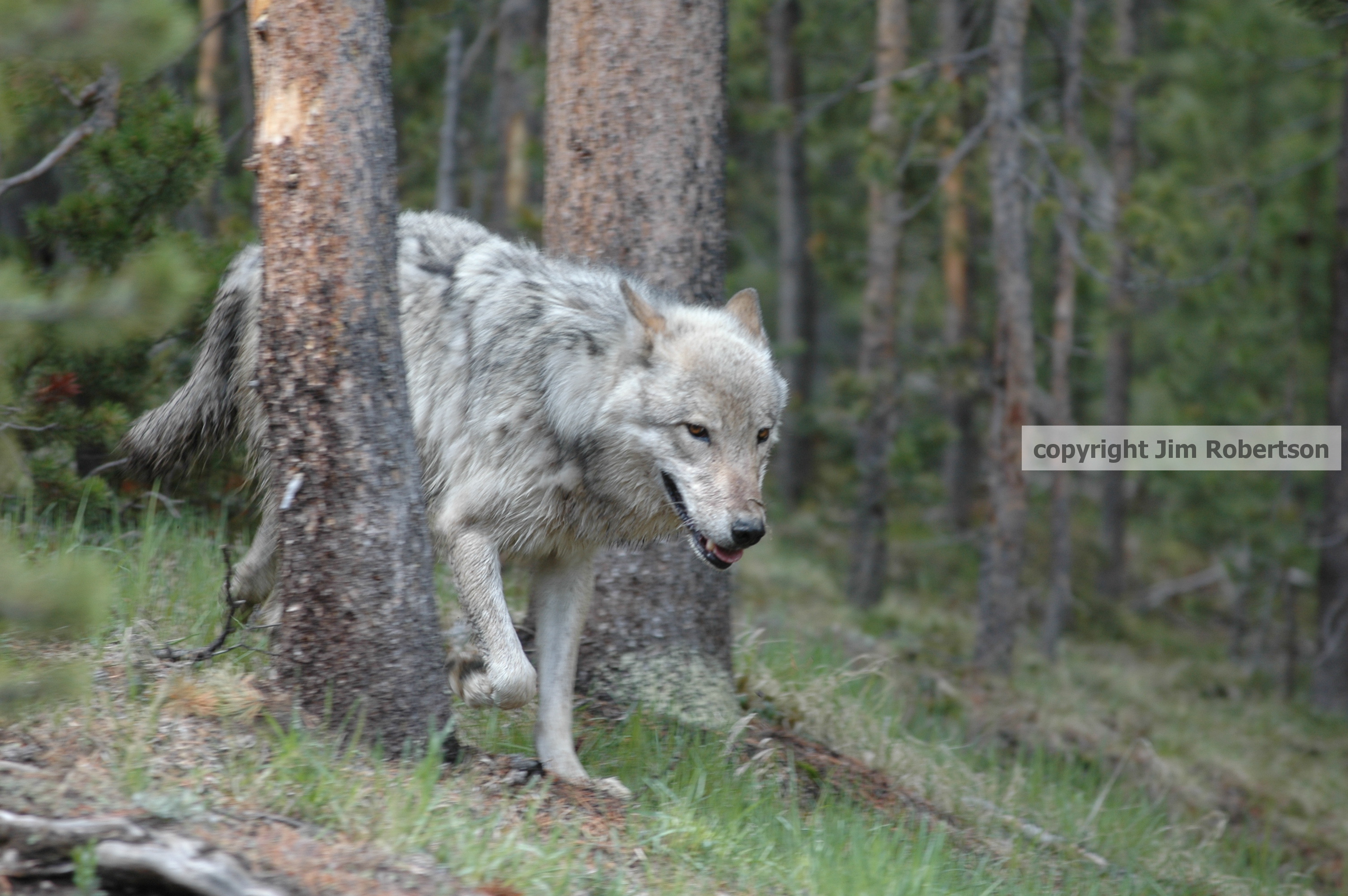
copyrighted Hayden wolf in lodgepoles

Slate: Is the far right driving gray wolves to extinction?

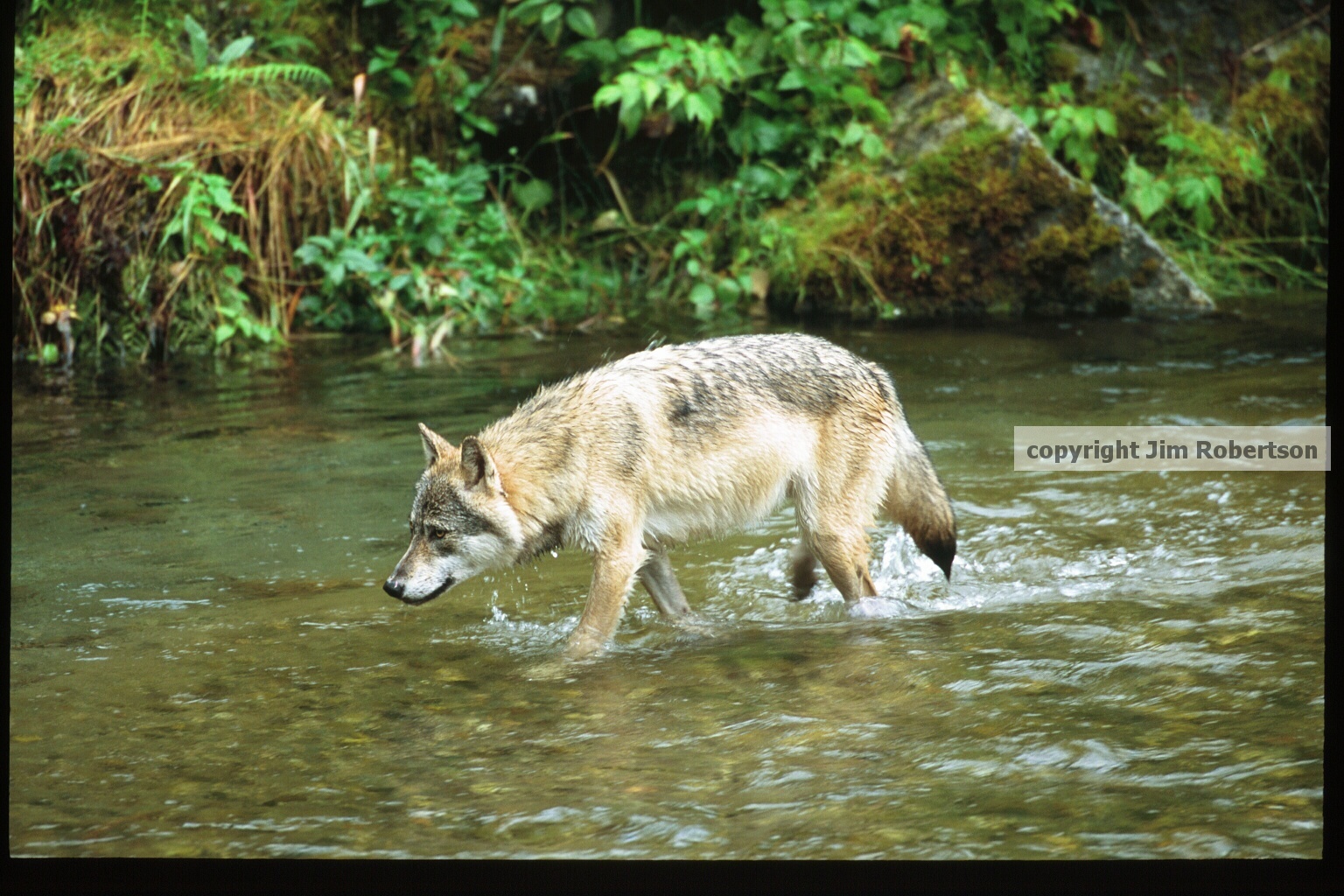
copyrighted wolf in river

The Fish and Wildlife Service bows to pressure from antigovernment groups, removing the animals’ endangered status

By

The US Fish and Wildlife Service’s recent announcement that it is beginning the process for removing gray wolves across the country from the protection of the Endangered Species Act surprised no one. The Fish and Wildlife Service’s mid-1990s reintroduction of gray wolves — a species virtually extirpated in the nineteenth and twentieth centuries — into Yellowstone National Park and central Idaho marked a triumph for conservationists and ranks as one of the most striking fulfillments of the Endangered Species Act. But as I have reported here and here, the wolves quickly met enemies.

By the early 2000s a loose coalition of hunters’ groups, outfitters, and ranchers — along with the many disaffected men embracing militia groups, local “sovereignty” and states rights, particularly rights to use public lands without federal regulation — coalesced around the idea that wolves represented icons of the hated federal government. The wolves, they all-but-screamed, constituted lethal threats to deer and elk, livestock, and ultimately, people. The long, bitter wolf war reached its climax in the summer of 2011, when Congress took the unprecedented act of removing the wolf populations of the Northern Rockies from the endangered species list. In May 2011, the Fish and Wildlife Service, weary of the many problems involved in wolf management (or, rather, public relations management), delisted gray wolves in the Western Great Lakes states, where some 4,400 wolves resided. Idaho, Montana and Wyoming subsequently initiated hunts and the use of government marksmen to reduce wolf numbers from around 1,700 to a much lower level.

The FWS’s proposed delisting of gray wolves across the country is simply the continuation of the agency’s long retreat in the face of wolf hater intimidation. Still, it’s important to understand how the FWS legitimizes its abandonment of wolves. A close examination of the FWS’ proposed rule change is a case study in the politicization of science. The FWS report excels at cherry picking, choosing certain scientific studies while rejecting others. It’s also an excellent example of bureaucratic hand-waving, simply dismissing long established facts whenever they become inconvenient. The final result is like a weird game of scientific Twister: The FWS bends itself into all sorts of contortions to conform to a political agenda.

The article continues here: http://www.salon.com/2013/06/25/is_the_far_right_driving_gray_wolves_to_extinction_partner/

Wolves threatened: Ending federal protection is a mistake

http://www.mercurynews.com/opinion/ci_23578921/wolves-threatened-ending-federal-protection-is-mistake

By Winston Thomas

Special to the Mercury News

Posted: 07/02/2013 10:55:26 AM PDT

Updated: 07/02/2013 12:51:06 PM PDT

Until recently the restoration of the gray wolf to a portion of its natural habitat in the lower 48 was one of the success stories of the Endangered Species Act of 1973. However, the job is far from complete, and now the U.S. Department of the Interior wants to allow the states to return to many of the same methods of the late 1800s and early 1900s that led to the eradication of the wolf in California and elsewhere.

On June 7, the US Fish and Wildlife Service announced its plan to remove the gray wolf, Canis lupus, from the federal list of endangered wildlife in the remainder of the lower 48 states where it is not already delisted (except for the Mexican wolf in New Mexico and Arizona). The gray wolf will

Gray wolf at the Wildlife Science Center in Forest Lake, Minn. (DAWN VILLELLA / AP)
be dropped, not because it has recovered across most of its former range, but because the Department of the Interior appears to be responding to political pressure rather than peer reviewed science.

Elk hunting groups mistakenly see the wolf as competition for their sport. This represents a grave misunderstanding of the ecology of predator-prey relationships.

Many livestock producers have not begun to explore the non-lethal methods proven to reduce conflict between wolves and livestock. Even though livestock losses to wolves accounted for less than .01 percent of the total livestock in Idaho, Wyoming and Montana in 2012, many sheep and cattle ranchers want to see the wolf eradicated.

If the gray wolf is delisted, then


management of wolf populations reverts to each state. Wolves were delisted in 2011 in Idaho and Montana, and 2012 in Wyoming. Management in these states is a cruel euphemism for indiscriminate, aggressive hunting, trapping and snaring of wolves. Since delisting in Idaho, nearly 700 wolves have been killed by recreational hunting. In some areas of Idaho, wolves, including lactating females and pups, can be killed at any time. In 83 percent of Wyoming, wolves can be killed year round, in any number of ways, without a license. And Montana’s proposed management plan will allow up to five wolves to be killed per hunter/trapper. This is not scientific stewardship.


The now famous lone wolf OR-7 traveled from Oregon into California in December 2011 but wandered back into Oregon in March of this year. It defies logic to declare the gray wolf population recovered in California. The same is true in other states with excellent wolf habitat and abundant elk and deer such as Utah and Colorado. Like California, these states have no established wolf populations, yet there would be no federal protection for a wolf should it wander in. This action will end recovery in these states before it starts. Why delist the gray wolf in states where it does not yet exist, unless the goal is to keep the population at zero?

The bald eagle was delisted in 2007, but we have not allowed open hunting and trapping. Why should we do that with wolves? The stated goal of the Endangered Species Act is to save species from extinction and to fully recover the species by removing threats to its survival.

The 90-day public comment period for the proposed gray wolf delisting ends Sept. 11. Newly confirmed Secretary of the Interior Sally Jewell needs to hear from the public that wolf recovery has not even begun in California and other states. Wolves need our voices. Please howl your support for federal protection of the gray wolf until recovery is complete, and stop the wolf hunt.

Winston Thomas, a biologist and geneticist who has worked in the Bay Area biotech industry for 22 years, is Pacific Region representative and an advisory board member of Living with Wolves (www.livingwithwolves.org).

Keep Michigan Wolves Protected launching second petition drive

http://www.mlive.com/politics/index.ssf/2013/07/keep_michigan_wolves_protected.html

Keep Michigan Wolves Protected launching second petition drive after new law blocked original effort

wolf.jpeg
(AP File Photo/DNR)

LANSING, MI — A coalition supported by the Humane Society of the United States is gearing up for a petition drive aimed at banning wolf hunting in Michigan — again.

Keep Michigan Wolves Protected said Tuesday that it has filed petition language with the Secretary of State. If the petition form is approved, the group will begin efforts to collect more than 225,000 voter signatures to place a second measure on the 2014 ballot.

The coalition previously collected more than 250,000 signatures for a separate ballot referendum seeking to block wolf hunting in Michigan. The Board of Canvassers certified those signatures, estimating at least 214,000 were valid.

But legislation sponsored by Sen. Tom Casperson, R-Escanaba, and signed into law by Michigan Gov. Rick Snyder essentially sidestepped the effort by giving the Natural Resources Commission the authority to establish a new game species. The NRC had voted to establish a fall wolf hunt in three areas of the Upper Peninsula and is expected to vote again this month under the new law.

“That bill was deliberately introduced and passed to scuttle our first referendum effort to remove wolves from the valid species list for hunting,” said Jill Fritz of Keep Michigan Wolves Protected, who is the state director for The Humane Society of the United States.

“We just want Michigan voters to be able to have a say in protecting wildlife, and that was taken away from them. They’re going to go out there, collect signatures, and get their voice back.”

The old referendum seeks to overturn Public Act 520 of 2012. The new referendum would seek to overturn Public Act 21 of 2013. Both measures could make the ballot, and Fritz said she will encourage voters to reject both laws.

Supporters of a wolf hunt appear equally determined.

They say wolves are causing problems in the Upper Peninsula, killing livestock and pets while becoming increasingly comfortable around humans. State law allows farmers, ranchers and dog owners to kill wolves who attack on their property, but residents say those measures are inadequate.

Some local governments have approved resolutions indicating that “overpopulation of wolves is threatening the tourism, recreation and business industries in the Western U.P.,” noting that “this situation has become a public safety issue for our citizens.”

Michigan is the sixth state to authorize a wolf hunt since federal protections were removed over the past two years in the western Great Lakes and Northern Rockies, according to the Associated Press.

The Upper Peninsula is home to an estimated 658 wolves — down from 687 a couple of years ago, but up from roughly 500 in 2008 and approximately 200 in 2000. The state counted just three wolves in 1989.

Jonathan Oosting is a Capitol reporter for MLive Media Group.

States must demonstrate respect for wolves before assuming management

http://missoulian.com/news/opinion/mailbag/states-must-demonstrate-respect-for-wolves-before-assuming-management/article_90c75b9a-da84-11e2-b787-0019bb2963f4.html

letter to the editor

I was very troubled by your (June 18) editorial supporting the delisting of wolves in the lower 48.

Your editorial mentions that wildlife groups worry this could lead to the extermination of wolves in many states, and that concern isn’t unfounded. It is, in fact, supported by recent events in the form of hunting seasons in states such as Idaho and Wyoming and of course, Montana. The widespread hostility of these popular hunting states toward the wolf as a “trophy animal” and the alleged “sportsman” that are eager to simply kill the wolf is appalling. Barely on the cusp of recovery, wolves are killed for the sole purpose of a pelt, a rug or a taxidermy prize. Forty years of protection for endangered species leads to this? What a travesty.

And let’s not forget the fragile border of Yellowstone National Park in Montana, and the killing a few months back of the popular 831F, a collared Yellowstone wolf that happened to wander outside the safety of the park. How many other wolves might suffer a similar fate, a sick and sad potential future for the state of Montana if the wolves are stripped of their protection.

You also mention that if, indeed, human’s overzealous hunting practices take the wolf back to the brink of extinction, the Endangered Species Act can be applied again. What is the likelihood of the ESA being applied again once lifted? My guess is slim to none!

Certainly there can be a balance between permanent protection and wholesale slaughter. A reasonable respect to the wolf lineage that humans destroyed and have worked for many years to rebuild must be fostered before the ESA is removed from these animals, otherwise the individual states will never be able to govern themselves. This, we’ve already, unfortunately, seen.

Jennifer Selzer

copyrighted Hayden wolf in lodgepoles


Predator management by state wildlife agency biologists questioned

This is all common sense stuff we already knew, but it’s good to hear it from the mouths of state wildlife agency biologists…

Predator management by state wildlife agency biologists questioned

By On June 28, 2013 

I recently had encounters with three state wildlife agency biologists. All of them were quite open with their criticisms of their agencies predator policies.  I can’t reveal their names and I will change a few details to hide their identities.

The first biologist told me there was no reason to kill predators. He said it only creates greater social chaos which in turn leads to more unnecessary killing.  He told me that increasing the kill of predators by hunters—whether cougars or wolves—seldom reduced conflicts. If it’s good habitat, the vacuum created by killing a cougar or a wolf pack will soon be filled by immigrants. So in the end livestock operators have to learn to discourage predation by practicing good animal husbandry.  Predator killing just doesn’t work.

Another reason predator control fails is that most hunters pursue animals that live on the larger blocks of public land, while most of the conflicts occur on the fringes of towns or on private ranch lands. In other words, the majority of cougars and wolves killed by hunters are animals that are not causing any conflicts.

He went on to say that hunting predators had no benefits. Period.

The second biologist told me that wolves were not harming elk and deer herds. Rather elk and deer populations have increased in the state since wolves were introduced. He pointed out that wolves were also not destroying the livestock industry though he did acknowledge that individual ranchers might be challenged by wolf depredations.

He also reiterated that hunting predators was indiscriminate. The specific predator killing a rancher’s livestock is often not the animal killed by hunters so arguing that killing predators will reduce conflicts is at best a half truth.

The third biologist told me that his agency missed the boat by not responding to the misinformation from the Rocky Mountain Elk Foundation and Toby Bridges of Lobo Watch. By not countering the distortions put forth by these organizations, fabrications and half-truths were widely distributed by the media.

He also acknowledged that wolves could not increase indefinitely. They expand their range into new territories but their densities are socially maintained.  In other words, you will not get more and more wolves living in the same basic area.  He said people have to learn to live with natural processes which include predation.

What these encounters demonstrate to me is that many biologists working for these state agencies are sympathetic to predator supporters.  They are muzzled by their agencies and unable to speak the truth. Still it is refreshing to know that supporters of predators have some friends within state agencies—biologists who are hoping that legal attempts to stop unnecessary and indiscriminate hunting and trapping will succeed.

This also means that citizens and those who support predators have to create the political space where these biologists can feel free to speak their minds. Keep up the pressure, there are some in these state wildlife agencies who know the score, and are as devoted to wildlife as anyone.

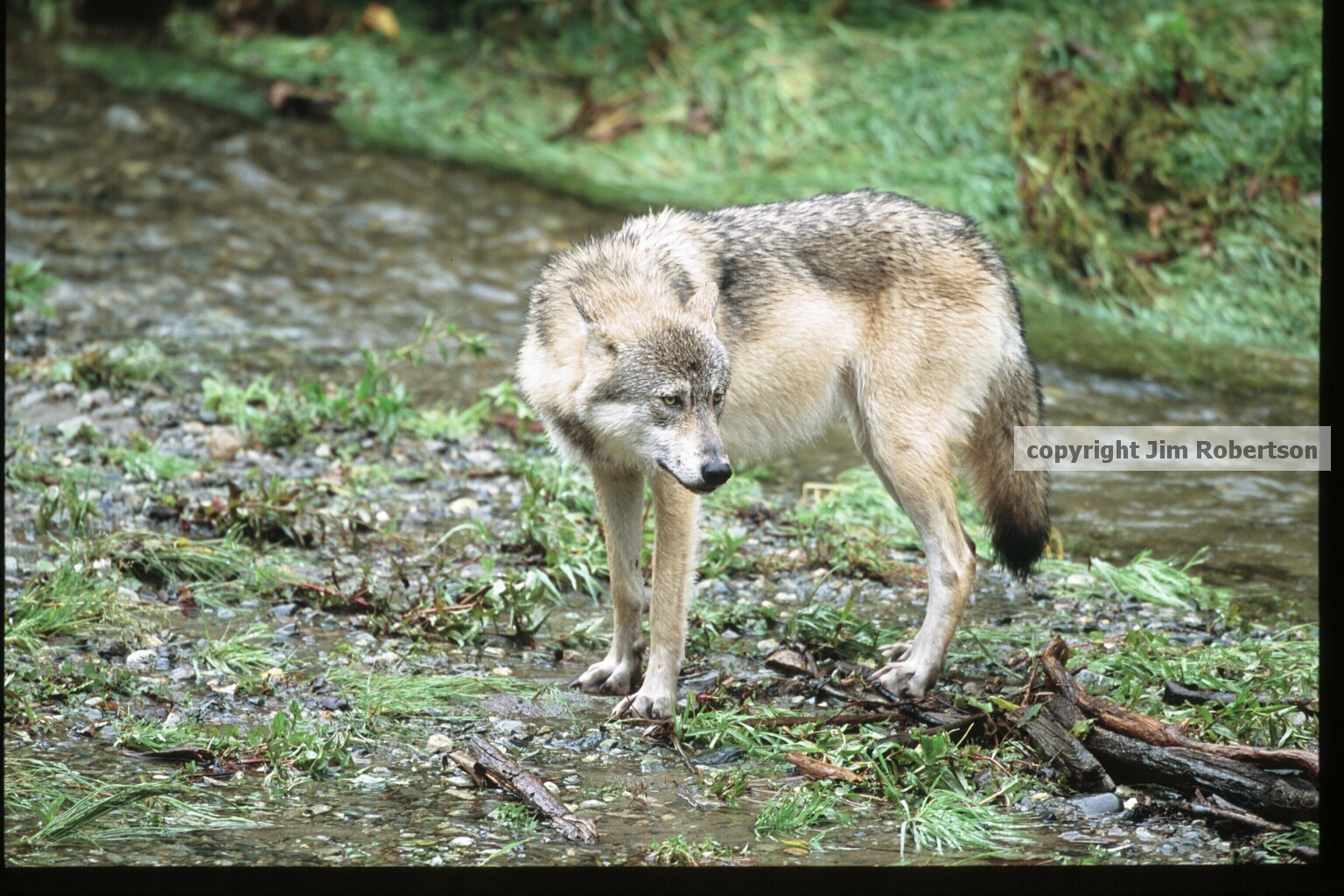
copyrighted wolf in water

POLITICS DOMINATED WOLF DE-LISTING MEETINGS

Science Was Afterthought in Developing Preferred Alternatives for Wolf Recovery.

Jun 27, 2013

http://www.peer.org/news/news-releases/2013/06/26/politics-dominated-wolf-de-listing-meetings/

Washington, DC —The federal government’s plan to remove the gray wolf from the protections of the Endangered Species Act was hammered out through political bargaining with affected states, according to documents obtained by Public Employees for Environmental Responsibility (PEER) through a Freedom of Information Act lawsuit. Contrary to requirements of the Endangered Species Act that listing decisions must be governed by the best available science, the U.S. Fish & Wildlife Service presided over a process in which political and economic considerations were at the forefront..

The 52 documents produced by Fish & Wildlife Service detail how the “National Wolf Strategy” was developed in a series of closed-door federal-state meetings called “Structured Decision Making” or SDM beginning in August 2010. The meetings involved officials from every region of the Service and representatives from the game and fish agencies of 13 states. The SDM process featured –.
•A “Focus on Values. Determine objectives (values) first, and let them drive the analysis.” An SDM flow-chart starts with Problem and goes to Objectives, to Alternatives and then to Consequences at which stage a small box labeled “Data” finally comes into play;
•An explicit political test “Where should wolves exist? (emphasis in original) What does the public want? What can the public tolerate?”; and
•A matrix to weigh alternatives on a scale of “legal defensibility” then “public acceptance” followed by “wolf conservation” and finally “efficiency.”

“These documents confirm our worst suspicions that the fate of the wolf was decided at a political bazaar. The meeting notes certainly explain why no outside scientists were welcome,” stated PEER Executive Director Jeff Ruch who had been seeking the records since April 2012. “From what we can see, Structured Decision Making was structured primarily to deal out the lower-48 population of gray wolves.”.

Under a federal proposal currently out for public comment the gray wolf would be stricken from the federal list of threatened or endangered species. The Mexican wolf, with only a handful remaining in the wild, would keep its endangered status but no protected habitat would be delineated for it..

Much of the meetings were devoted to assuaging state threats to sue to halt wolf reintroductions. The tenor of these discussions was captured by a map titled “New Fantastic Alternative” which allowed unlimited hunting of gray wolves in Colorado and Utah. It also confined Mexican wolves to portions of Arizona and New Mexico..

“The Obama administration keeps preaching integrity of science and transparency but seems to practice neither on any matter of consequence,” Ruch added, pointing to PEER’s detailed complaint on how politics smothered the recovery plan developed for Mexican wolves by a team of scientific experts. “In simplest terms, these documents detail how the gray wolf lost a popularity contest among wildlife managers.”.

These foundational SDM documents obtained by PEER will likely provide fodder for the lawsuits that will almost certainly follow the expected final federal decision to de-list the gray wolf.

copyrighted wolf in river

“Game” “Managers” Kill 4 Idaho Wolves

http://www.mtexpress.com/index2.php?ID=2005147792#.UcZde77n9jo

Friday, June 21, 2013

4 wolves killed after livestock deaths

Kill order remains in place for wolves near Silver Creek


By GREG MOORE Express Staff Writer

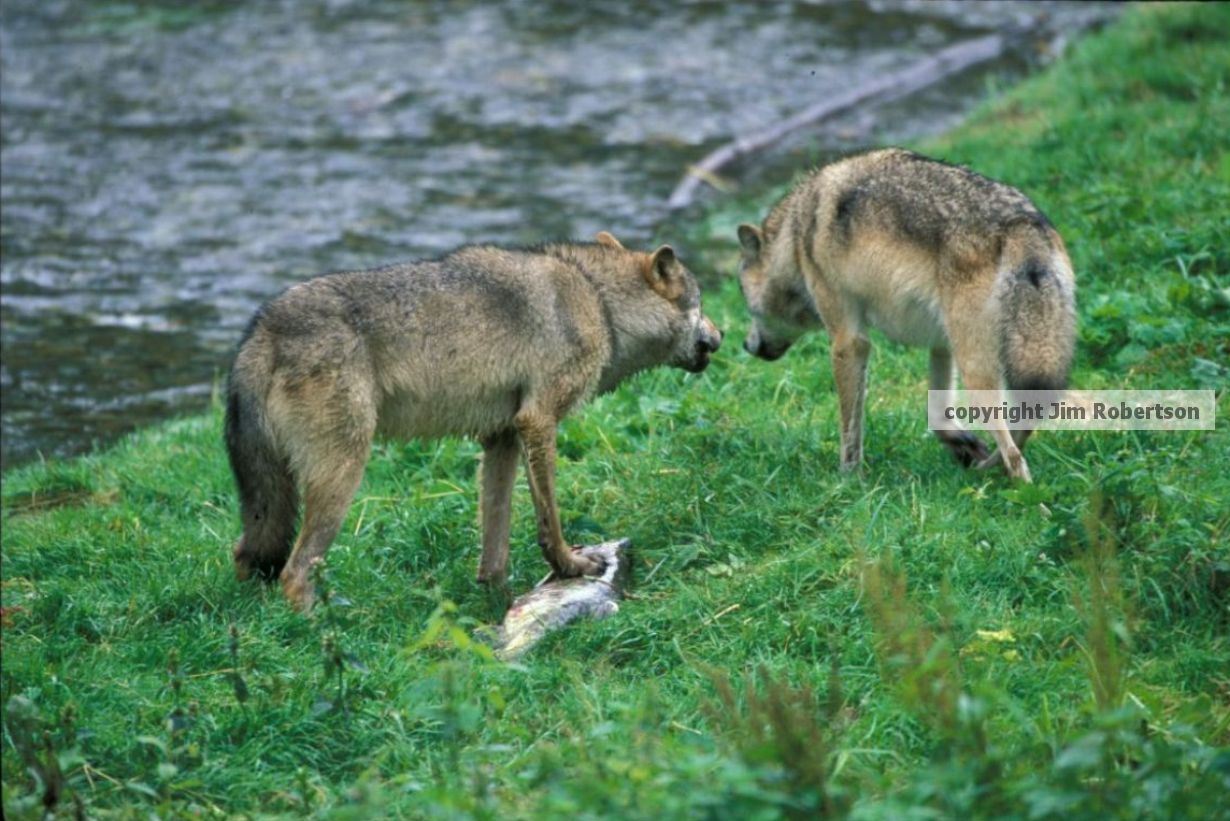
An Idaho wolf moves through a clearing. Photo courtesy of Idaho Fish and Game
 

Four wolves—one near Carey and three in the Sawtooth Valley—have been killed in recent weeks due to depredation on cattle and sheep. All were killed by Idaho Wildlife Services on private land.

According to the agency’s director, Todd Grimm, a female wolf was trapped and killed May 29 on the Flat Top Ranch following a complaint by ranch owner John Peavey that he had lost more than two dozen lambs and ewes. Peavey said he protects the bands with people, spotlights and guard dogs, but he was criticized by wolf advocates for allowing his ewes to give birth on the range rather than in sheds.

Grimm said the wolf had had pups this spring, but was not lactating at the time she was trapped and killed.

“Either the pups were no longer nursing or they had already died,” he said.

Grimm said three male wolves were trapped and killed on Decker Flat, on the west side of the Sawtooth Valley near Obsidian, on May 30 and 31 and June 10. He said the wolves were killed upon direction from the Idaho Department of Fish and Game, as is the case in all the lethal actions taken by Wildlife Services, an agency under the U.S. Department of Agriculture. He said the order came following the death of a calf on May 28.

Grimm said two of the wolves were yearlings and were wearing radio collars placed on them by the Department of Fish and Game. He said Wildlife Services sometimes refrains from killing wolves with collars, depending on their value to scientists studying them.

“In this case, we didn’t realize the wolves were radio-collared until after the fact,” he said.

Grimm said he did not know of any nonlethal deterrent actions taken before the kill order was issued, a situation criticized by pro-wolf activists. When requested, the Idaho Wolf Project, organized by nonprofit Defenders of Wildlife, provides ranchers with volunteer night guards, portable fencing, air horns and other deterrent methods.

“Here we have people willing to help with proven nonlethal methods and we’re spending taxpayer dollars to kill wolves,” said Lynne Stone, director of the Boulder-White Clouds Council.

But Grimm said nonlethal deterrents don’t work well with cattle, which stay much more spread out at night than do sheep.

He said the three wolf kills ended the control order in the Sawtooth Valley.

Grimm said a kill order has also been issued for two wolves in the Silver Creek area south of Bellevue after a calf was confirmed to have been killed there on June 8. However, he said, “the wolves haven’t shown back up, so I don’t know if we’ll be able to do anything there.”

URGENT! Montana Wolf Hunt Comments Due on 24th‏

From another list:

http://fwp.mt.gov/hunting/publicComments/2013_14proposedWolfSeason.html

We all know that it doesn’t seem to make a difference when it comes to our public comments making a difference when it comes to MFWP idiotic and reprehensible

wolf management, but it will be on public record, and will show support for seeing wolves alive rather than dead and, it will show the rest of the world that more people value wolves and but a few want to eliminate them. These new regulations are being supported by the livestock industry, Rocky Mtn Elk Foundation, and other hunting groups and have nothing to do with science.

PLEASE comment and here’s some talking points from WOTR and Kim Bean

Wolves that are coexisting with humans and livestock will be killed for no other reason than bigotry and extreme mismanagement. Critical habitat for wolves near Yellowstone (Gardiner Basin) has been excluded from the quota areas. This is a deliberate attempt to kill as many YNP wolves as possible. With less than 25 wolves in the entire northern range of YNP, this will certainly prove an end to wolf packs of Yellowstone.

Some of our concerns are as follows: Hunters & trappers will be able to hunt over baited traps, as well as use electronic calls to pull wolves from safety into their line of fire. Because of the extended season September 15, 2013 – March 31, 2014 hunters will be able to hunt wolves in the advanced stages of pregnancy. If a hunter kills an alpha female he/she has killed the future survival of the pack. Disruption of the pack structure will lead to increased depredation and smaller pack sizes, yet more packs on the land. A Visions of Walt Disney’s Fantasia “The Sorcerer’s Apprentice” comes to mind. A Wolf’s fur does not become full until late November; wolves killed prior to this are killed simply for the sake of killing.

Issues of Concern or Talking Points

1. Extended Season (15 Sept 2013 – 31 March 2014)

• Hunting Pregnant Wolves

• Pelt is Substandard

• Unethical & Immoral

• Disruption of the Pack Structure

• Killing to Hunt or Hunting to Kill

• Bitterroot Elk Study Research states Very Low Wolf Predation

2. Bag Limit of 5

• Annihilate Entire Pack

• Disrupt Pack Social Structure

• Increased Depredation

• Leads to Smaller Packs = Increase in Packs on the landscape

• Decrease in Recruitment

• Killing Pregnant Wolves ½ way through gestation

• Black Science

• In Contrast with North American Wildlife Conservation Model

3. Baiting Traps

• Not Fair Chase & Unethical

• Unenforceable

• Drastic Departure from Montana Wolf Management Plan

Yellowstone Wolves

Gardiner Basin MUST be included in the quota unit of 313

Revenue producing value of 35.5 + million sustainable dollars to the communities surrounding YNP

Research value utilized world-wide

Number 1 tourist attraction in YNP

These are not just Montana’s wolves, but the Nations wolves

Miscellaneous Talking Points

Could help slow or contain CWD Chronic Wasting Disease

Livestock Depredation continue to decline – In 2012 2.6 million cattle in MT, depredation by wolves 67

Huge deviation from the Montana Gray Wolf Management Plan

Under Public Trust Doctrine Wildlife belong to all Montanans

Elk Populations are virtually at or above objectives in Montana 55% above objective

More elk now in Montana then when wolves were reintroduced

Approximately 73 wolves in Yellowstone

Less than 25 in the Northern Range of YNP – only 18 in Lamar Valley

copyrighted-wolf-argument-settled

Study: Wolves Don’t Cause Elk Drop

Even they know that wolves are NOT the culprits…

http://www.spokesman.com/blogs/hbo/2013/jun/21/study-wolves-dont-cause-elk-drop/

June 21, 2013 1:22 p.m.

Any hunter who’s spent time in wolf country can attest to the predators’ influence. We see wolf tracks, find old kills, and often times we spot fewer game animals. But exactly how wolves affect big-game populations is still greatly unknown. Yeah, wolves eat elk. But, do they kill mostly adults or calves? Do they eat enough elk to wipe out a whole herd? Do they pressure elk into hiding in the timber or force them off their feeding patterns? Are wolves even one of the main factors in elk population dynamics? New research from the Wyoming Cooperative Fish and Wildlife Research Unit at the University of Wyoming is starting to shed light on some of these questions. After three years of studying the Clark’s Fork elk herd (about 5,000 animals) in northwest Wyoming, lead researcher Arthur Middleton found that wolves might not be as detrimental to elk populations as many outdoorsmen think/Alex Robinson, Outdoor Life. H/T: Rich Landers, SR Outdoors.

copyrighted wolf in water