After Years of Progress, a Setback in Saving the Wolf

From the New York Times

By VERLYN KLINKENBORG

Published: June 1, 2013

The 1973 Endangered Species Act provides federal protection — breathing space, in a very real sense — to plants and animals threatened with extinction. Had this task been left to the states alone, almost none of the species that have returned to health would have done so.

But the Interior Department’s Fish and Wildlife Service now plans to remove wolves from the endangered list in all 48 contiguous states and transfer control over their fate to the states. This may save the department from running battles with Congress, state officials and hunters about protecting the wolf. Whether it will save the animal is another matter.

Thanks entirely to federal protections, wolves have rebounded remarkably in some places. There are now about 4,000 in Michigan, Minnesota and Wisconsin, and 1,600 or so more in the Rocky Mountain states of Idaho, Montana and Wyoming. Interior has gradually delisted the wolves in all these places because, it says, their numbers are enough to guarantee survival. And it is not necessary to their survival, the service says, to protect wolves elsewhere.

But many scientists argue, persuasively, that these delistings are premature — that the service is giving up on recovery before the job is done. For one thing, they note a 7 percent decline in Rocky Mountain wolves since they were delisted and controlled hunts were authorized. They also note that other recovered species — notably the bald eagle and the American alligator — were allowed to expand into much of their historical range before they were removed from the list.

The historical range of the wolf is nearly the whole contiguous United States. There is suitable habitat all across the West still unoccupied by wolves, including the Pacific Northwest, Northern California and Colorado. A recovering wolf population isn’t static. It spreads as wolves rebound. The northern Rockies and the upper Midwest are proof of that. Can wolves recover suitable parts of their historical range without federal protection? The answer is almost certainly no.

Interior’s plan has little to do with science and everything to do with politics. Congress bludgeoned President Obama’s first interior secretary, Ken Salazar, into delisting the Rocky Mountain wolf. But there is no reason his successor, Sally Jewell, has to accept a plan to delist the wolves everywhere. It is hard enough to protect species that occupy hidden ecological niches. Politics has made it harder still to protect an intelligent, adaptive predator living openly in the wild.

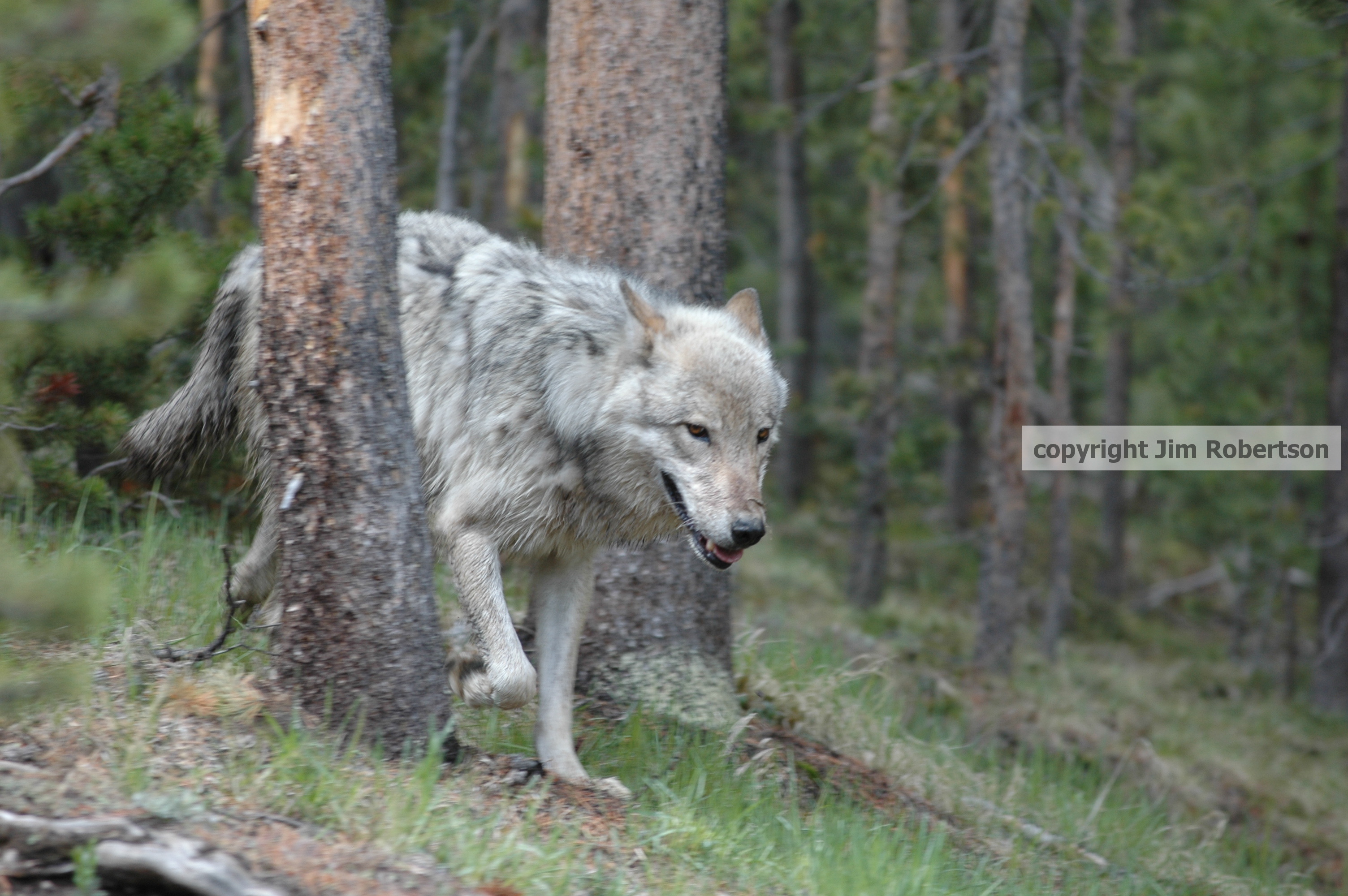
copyrighted Hayden wolf in lodgepoles

Save the Wolves: Support the Rights of All Animals

Make no mistake, I love wolves as much as just about anyone; yet some people practically worship them, putting them above any other species except perhaps whales and dolphins. To be sure, wolves are sacred, but there are folks who think of them as hyper-sentient—the great Northern furred land-dolphin, if you will.

I’m not for a minute denying wolves’ intelligence or adherence to an almost human-like social caste system, but I can’t get behind campaign slogans such as “Real hunters don’t hunt wolves.” I call bullshit on that. Real hunters hunt wolves, coyotes, elk, deer, prairie dogs, pigeons, pronghorn, bears, cougars, raccoons— anything and everything that moves or has ever moved. Hell, they’d probably hunt whales and dolphins if it weren’t for the Federal Marine Mammal Protection Act. Most hunters just want a target and a trophy, they don’t really care what species it is.

Granted, some hunters are more sadistic than others, just as some serial killers revel in their victims’ suffering, while others dispatch their prey as quickly as possible—they’re only interest: harvesting a trophy corpse to have around, for whatever morbid reason. The most sadistic hunters are probably fueled by the fact that there are people out there who adore wolves while state laws still consider delisted wolves “property” like every other non-human animal.

Serial killers have been known to derive sick pleasure from taunting the families of their victims, calling them from prison to recount their murders. The same kind of thing likely goes on in the minds of sadistic wolf hunters who boast and post photos of their kills, knowing that some sentimental environmentalist or animal rightsists might come across one and be hurt or outraged by it. They’d love to know that one of us broke down, burned out or resorted to lethal action because of their post (as long as they weren’t on the receiving end of the action).

The wolf situation is unique among modern-day animal atrocities, in that it’s as yet perfectly “legal” for hunters and trappers to film themselves in action. In sharing them online, they’re banking on the fact that the general public is unmoved and apathetic. But I’d like to think that if factory farmers readily shared footage of their routine acts of animal abuse online, there would be a lot more vegans in this world.

For now, the only way anti-wolf sadists can be stopped is by eliminating them from the world of the living. But if you happen to reside in one of those backward states that have yet to implement a death penalty for wolf hunting, the best advice is to just ignore them like you would the taunts of any other bully. Meanwhile, keep petitioning Facebook and other social media outlets where their death porn appears. As long as animals, including wolves, are seen only as “property” by the powers that be, the people who run Facebook will feel entitled to allow anti-wolf evil to be spread throughout their pages and posts.

Eventually common decency will prevail and violent anti-wolf/anti-animal sites will come under serious scrutiny, just as misogynistic sites recently have. We need to step up the pressure on Facebook and let them know that freedom of speech does not give one the right to victimize. Be sure to sign this petition and pass it on: http://www.change.org/petitions/facebook-executives-ban-sadistic-pages-of-wildlife-torture

Meanwhile, let’s fight for the rights and personhood of all animals, not just a chosen few.

Text and Wildlife Photography ©Jim Robertson, 2013. All Rights Reserved

Text and Wildlife Photography ©Jim Robertson, 2013. All Rights Reserved

Anti-Wolf Fanatics Scramble to Counter Pro-Wolf Message

First, here’s a message from PredatorDefense.org:

Introducing Our Wolf Billboards

wolves_billboard_Yellowstone

This is an image of one of the five billboards we’re having installed on highways approaching the entrances to Yellowstone National Park, starting in June. They will greet tourists visiting the park via Montana, Wyoming and Idaho and are designed to get them to wake up to the desperate plight of wolves in America.

We really need your help to sustain this billboard campaign throughout the summer and to expand it to even more locations. PLEASE DONATE TODAY!

Timing is critical. We’ve already lost 1,700 gray wolves to hunters and trappers in Montana, Idaho, Wyoming, Minnesota, and Wisconsin since wolves were removed from federal endangered species protection in 2011 and management was handed over to individual states. This slaughter has been largely unpublicized and has therefore been unnoticed by the greater public. The situation is dire, as the U.S. Fish and Wildlife Service intends to remove protections for wolves across nearly the entire country. This would be disastrous for gray wolf recovery

No sooner did Predator Defense erect their billboards for the wolves than did the bogus pseudo “conservation”/anti-wolf group “Big Game Forever” begin fundraising for a Yellowstone area billboard campaign of their own. Theirs would of course carry their standard anti-wolf rhetoric, while feigning concern for trophy target species like moose and elk. Here’s part of an intercepted “BGF” email alert meant to tug at the heart strings of self-serving trophy hunters across the west:

Folks, 

Once again, America’s moose, elk and other wildlife need your help. There is a major highway billboard campaign aimed at stopping wolf management in the Northern Rockies. Big Game Forever needs your help to educate the public and the 3.4 million annual visitors to Yellowstone National Park of the importance of restoring balance through responsible wolf, moose and elk management.
 
Here is what is happening. Over Memorial Day weekend, a new series of billboards popped up on several major highways leading to Yellowstone Park. It appears that these billboards are aimed at influencing national sentiment against responsible wolf management.

Big Game Forever has been working over the past several weeks to respond to this misplaced advertising attack.

 
We have reserved a number of billboards around Idaho and Montana to educate the public about the very real moose crisis emerging in wolf states of Montana, Idaho, Wyoming and Minnesota. We are also working with a coalition of conservation-minded sportsmen to place billboards in Cody Wyoming.
 
Please go to http://biggameforever.org and click on the “Donate” button. A number of generous private donors have already stepped up to match your donation. Your $25 dollar donation becomes $50. Your $100 donation becomes $200. Please go to http://biggameforever.org and click on the “Donate” button.  100% of the donations received during this campaign will go to this important educational campaign.  Your generous donation makes all the difference.
Keep in mind that whenever “Big Game Forever” mentions “conservation” or “responsible wolf management” they are really talking about wolf eradication–by any means possible. Donations to that group come from wealthy trophy hunters.
Now more than ever pro-wolf groups like http://www.predatordefense.org/ need your donations to spread the word for wolves, through billboard campaigns and other selfless efforts. Already, pro-wolf proponents have stepped up with the offer to match donations made in support of their support. Don’t let the pseudo conservationists dupe the public with their “it’s all here for us” attitude.

Wyoming Proposes Halving its Wolf Quota

Proposed Wyoming wolf quotas attract little public comment;  The Billings Gazette

MAY 25, 2013 12:00 AM • BY CHRISTINE PETERSON CASPER STAR-TRIBUNE

SHERIDAN, Wyo. — A proposed plan to cut the Wyoming wolf-hunting quota in half has generated little public comment during the first several statewide meetings.

Two people went to a wolf meeting held by the Wyoming Game and Fish Department on Wednesday night in Sheridan. Dozens of people went to the Sheridan meeting last year to discuss the first wolf-hunting season, said Mark Bruscino, large-carnivore section supervisor for Game and Fish.

The Pinedale meeting in early May had two attendees. Eleven people went to Dubois and four to Laramie. The upcoming meetings in Cody and Jackson may see larger crowds, said Dan Thompson, large-carnivore biologist with Game and Fish.

“Maybe people think (Game and Fish) has it under control,” said Ron Crispin, one of the two Sheridan meeting attendees.

Game and Fish officials are proposing cutting the wolf quota in northwest Wyoming from 52 to 26 this year. Wyoming’s first hunting season since wolves were delisted ended in December. Hunters killed 42 wolves, filling the quota in six of the 12 hunt areas.

The new quota will reduce Wyoming’s wolf population slightly, but also keep it above 100 wolves and 10 breeding pairs outside of Yellowstone National Park and the Wind River Indian Reservation, a requirement when they were removed from the endangered-species list.

Crispin thinks the new number is conservative. But he also thinks Game and Fish should probably be conservative to avoid wolves going back on the list for protection, he said.

The Jackson Hole Outfitters and Guides Association publicly supported the new quotas in early May, citing the same concern that wolves not return to the list, according to The Associated Press.

Thompson said lower public participation compared to last year may also be because the first hunting season went smoothly and with little controversy.

“People didn’t lose interest, but there was more of a normalization of it,” he said.

Public participation, whether high or low, won’t change how wolves are managed in Wyoming, he added.

At the end of 2012, wildlife officials estimated there were at least 169 wolves, 25 packs and 15 breeding pairs in the trophy game and seasonal trophy game management area, which is most of the northwest corner of Wyoming outside of federal lands. In all of Wyoming, including federal lands, wildlife officials estimated there were 277 wolves, 43 packs and 21 breeding pairs.

That’s about 16 percent fewer wolves in Wyoming than the end of 2011, Bruscino said.

Wildlife officials need to keep about 140 wolves in Wyoming outside of the Yellowstone and the Wind River Reservation to be sure it also has at least 10 breeding pairs. If the number of individual wolves drops closer to 100, breeding pairs could fall below 10, which could eventually trigger relisting, Bruscino said.

The hunting quota is decided by taking the number of wolves at the end of a hunting season, adding an estimate of the number of pups that are born and survive, and removing an estimate of the number of human-caused deaths such as removal for livestock depredation and car wrecks.

Slightly more wolves were killed last year because of livestock issues than biologists planned, and a slightly lower number of pups were brought into the population, Bruscino said. As a result, this year’s hunting-season quota was lower than anticipated.

Wyoming should probably expect a future hunting quota to stabilize between 15 and 25 wolves.

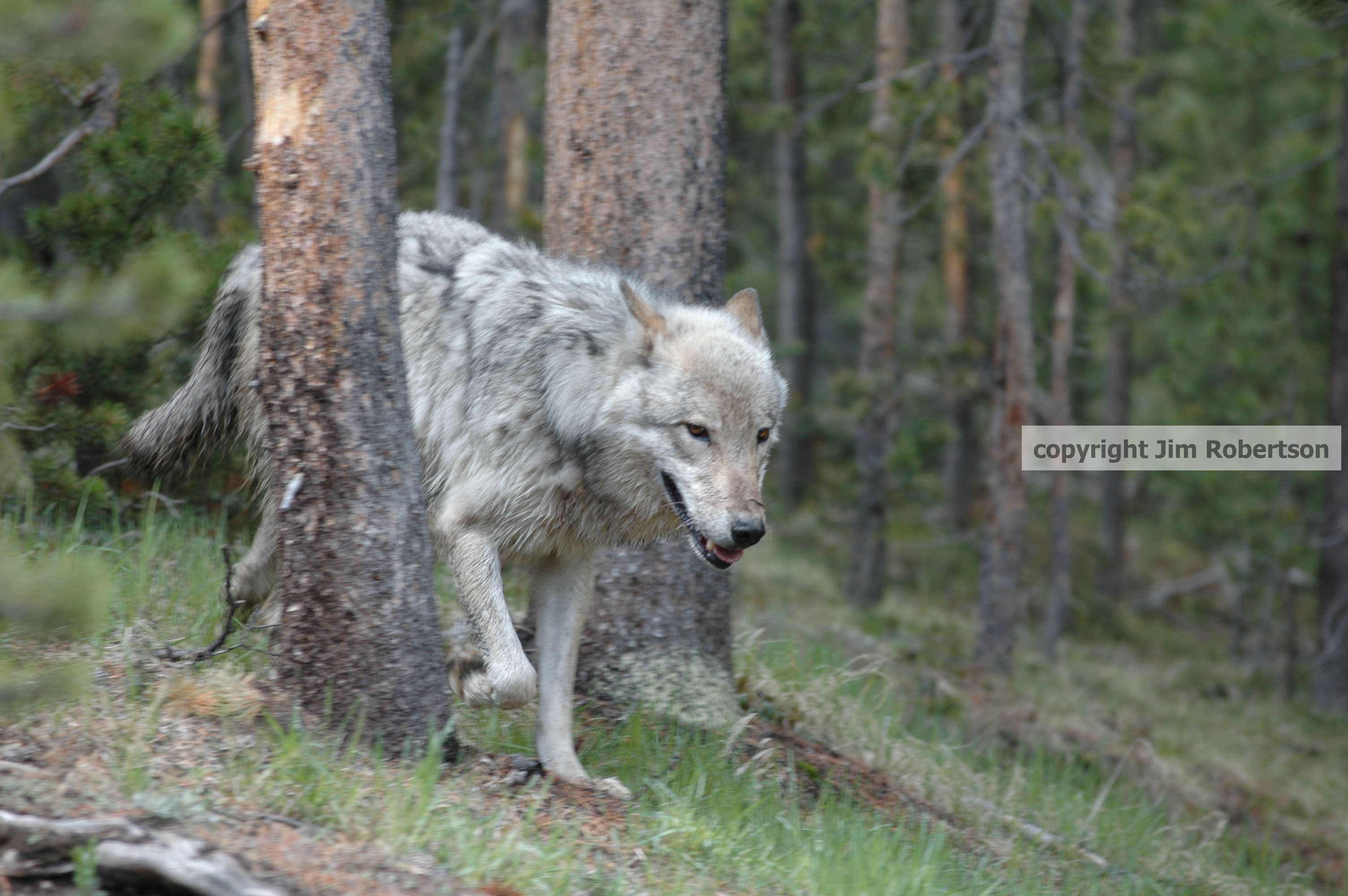
copyrighted Hayden wolf in lodgepoles

PEER Sue Over ‘Political Deals’ Behind Wolf Delisting

From Environmental News Service

WASHINGTON, DC, May 22, 2013 (ENS) – The Obama Administration’s plan to remove the gray wolf from the protections of the Endangered Species Act, as detailed in a draft Federal Register notice released today by Public Employees for Environmental Responsibility, PEER, is temporarily on hold.

The reasons for the indefinite delay announced this week were not revealed nor were the records of closed-door meetings to craft this plan that began in August 2010.

Today a federal Freedom of Information Act lawsuit to obtain the records from those meetings was filed by PEER, a nonprofit national alliance of local, state and federal resource professionals.

The draft Federal Register notice would strike the gray wolf from the federal list of threatened or endangered species but would keep endangered status for the Mexican wolf. No protected habitat would be delineated for the Mexican wolf, of which fewer than 100 remain in the wild.

This step is the culmination of what officials call their National Wolf Strategy, developed in a series of federal-state meetings called Structured Decision Making, SDM. Tribal representatives declined to participate.

On April 30, 2012, PEER submitted a Freedom of Information Act request to the U.S. Fish and Wildlife Service for all SDM meeting notes, handouts and decision documents. More than a year later, the agency has not produced any of the requested records, despite a legal requirement that the records be produced within 20 working days.

Today, PEER filed suit in the U.S. District Court for the District of Columbia to obtain all of the SDM documents.

“By law, Endangered Species Act decisions are supposed to be governed by the best available science, not the best available deal,” said PEER Executive Director Jeff Ruch, pointing to a letter from the nation’s leading wolf researchers challenging the scientific basis for the de-listing plan.

“The politics surrounding this predator’s legal status have been as fearsome as the reputation of the gray wolf itself,” said Ruch.

To support its argument that politics trumps science in deciding how to handle the nation’s wolves, PEER also made public today a letter from 16 scientists to the new Interior Secretary Sally Jewell and U.S. Fish and Wildlife Service Director Dan Ashe expressing “serious concerns with a recent draft rule leaked to the press that proposes to remove Endangered Species Act protections for gray wolves across the Lower 48 States…”

“Collectively, we represent many of the scientists responsible for the research referenced in the draft rule,” wrote the scientists, who specialize in carnivores and conservation biology. “Based on a careful review of the rule, we do not believe that the rule reflects the conclusions of our work or the best available science concerning the recovery of wolves, or is in accordance with the fundamental purpose of the Endangered Species Act to conserve endangered species and the ecosystems upon which they depend.”

Among other problems with the delisting proposal, the scientists say it ignores the positive influence of large carnivores such as wolves on the ecosystems they inhabit.

“The gray wolf has barely begun to recover or is absent from significant portions of its former range where substantial suitable habitat remains. The Service’s draft rule fails to consider science identifying extensive suitable habitat in the Pacific Northwest, California, the southern Rocky Mountains and the Northeast. It also fails to consider the importance of these areas to the long-term survival and recovery of wolves, or the importance of wolves to the ecosystems of these regions,” the scientists wrote.

“The extirpation of wolves and large carnivores from large portions of the landscape is a global phenomenon with broad ecological consequences,” the scientists wrote. “There is a growing body of scientific literature demonstrating that top predators play critical roles in maintaining a diversity of other wildlife species and as such the composition and function of ecosystems. Research in Yellowstone National Park, for example, found that reintroduction of wolves caused changes in elk numbers and behavior which then facilitated recovery of streamside vegetation, benefitting beavers, fish and songbirds. In this and other ways, wolves shape North American landscapes.”

“Given the importance of wolves and the fact that they have only just begun to recover in some regions and not at all in others,” the scientists wrote, “we hope you will reconsider the Service’s proposal to remove protections across most of the United States.”

PEER charges that the resulting National Wolf Strategy used political and economic factors to predetermine the answer to scientific questions, such as the biological recovery requirements for wolves and ruling out areas in states within the species’ historical range which lack sufficient suitable habitat.

“This closed-door process lacked not only transparency but also integrity. It involved no independent scientists, let alone peer reviewed findings,” Ruch said. “It is not surprising that the Fish and Wildlife Service does not want to see this laundry airing in the public domain.”

Jamie Rappaport Clark, president of the nonprofit Defenders of Wildlife, is a former director of the Fish and Wildlife Service who served during the Clinton Administration.

“The gray wolf delisting proposal represents a major retreat from the optimism and values which have been the hallmark of endangered species recovery in this country for the past 40 years,” says Clark. “Instead, the proposal reflects a short-sighted, shrunken and much weaker vision of what our conservation goals should be. The Service has clearly decided to prematurely get out of the wolf conservation business rather than working to achieve full recovery of the species.”

Clark and five other heads of environmental organizations – Center for Biological Diversity, Earthjustice, Endangered Species Coalition, Natural Resources Defense Council and Sierra Club – last week sent a letter to Secretary Jewell asking that she reconsider the nationwide wolf delisting plan.

“Maintaining federal protections for wolves is essential for continued species recovery,” the letter says, adding that the unwarranted assault on wolves in the northern Rocky Mountains after wolves in those states lost federal protections highlights the “increasingly hostile anti-wolf policies of states now charged with ensuring the survival of gray wolf populations.”

Since wolves in Montana, Idaho and Wyoming were delisted in 2011, more than 1,100 wolves have been killed in these Northern Rockies states.

Gray wolf populations were extirpated from the western United Stated by the 1930s, explains the Fish and Wildlife Service. Public attitudes towards predators changed and wolves received legal protection with the passage of the Endangered Species Act in 1973.

Subsequently, wolves from Canada occasionally dispersed south and successfully began recolonizing northwest Montana in 1986. In 1995 and 1996, 66 wolves from southwestern Canada were reintroduced into Yellowstone National Park and central Idaho.

Recovery goals of an equitably distributed wolf population containing at least 300 wolves and 30 breeding pairs in three recovery areas within Montana, Idaho, and Wyoming for at least three consecutive years were reached in 2002, according to the Service.

Copyright Environment News Service (ENS) 2013. All rights reserved.
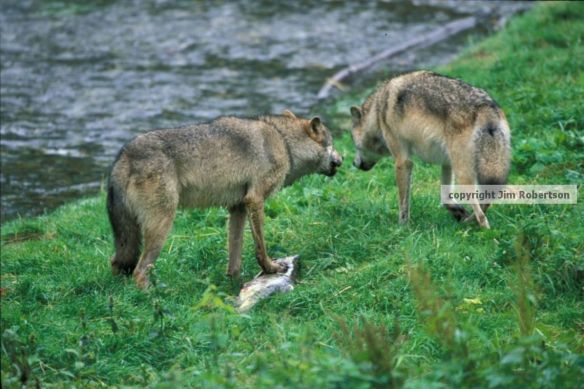
copyrighted-wolf-argument-settled


Great News For Wolves! For Now

Decision on wolf protections in Lower 48 delayed
May 20, 2013 22:00 GMT

http://ktvl.com/template/inews_wire/wires.national/20f04fe9-www.ktvl.com.shtml

Wildlife advocates and some members of Congress argue that the wolf’s recovery is incomplete because the animal occupies just a fraction of its historical range….

BILLINGS, Mont. (AP) — Federal wildlife officials are postponing a much-anticipated decision on whether to lift protections for gray wolves across the Lower 48 states.

In a court filing Monday, government attorneys say “a recent unexpected delay” is indefinitely holding up action on the predators. No further explanation was offered.

Gray wolves are under protection as an endangered species and have recovered dramatically from widespread extermination in recent decades.

More than 6,000 of the animals now roam the continental U.S. Most live in the Northern Rockies and western Great Lakes, where protections already have been lifted.

A draft proposal to lift protections elsewhere drew strong objections when it was revealed last month.

Wildlife advocates and some members of Congress argue that the wolf’s recovery is incomplete because the animal occupies just a fraction of its historical range.

copyrighted Hayden wolf in lodgepoles

Dead Bison Found North of Yellowstone

This article includes a good overview of the kind of anthropogenic threats that the wildlife face outside of Yellowstone National Park…


Worry over dead bison found north of Yellowstone Park

By Ralph Maughan On May 19, 2013

Montana is said to be investigating-

Gardiner, MT. Given the frequent stories of wildlife killing and hate that emanate from the Gardiner, Montana area, the latest find of 2 to 4 bison carcasses north of Yellowstone Park is raising worry about more illegal and legal wildlife killing in the area and/or the spread of domestic or wildlife disease.

The bison were found in areas frequented by people, not in any remote backcountry.

The area recently had an unpleasant incident of wolf killing following the placement of domestic sheep almost next to the Park that wildlife supporters said was deliberately done to cause controversy or provoke a wolf attack. Non-park wolves were soon credited with attacking the sheep.

For years the area has been scene of Yellowstone Park wildlife poaching, bison slaughters, heated controversy over elk numbers (too high or too low), Yellowstone Park wildlife migration routes, and what some see as excessive wolf hunting so as to decimate the population of Park wolves.

The winter just past also saw the first evidence of controversy over a growing Native American bison hunt that left a large number of bison entrails (8000 pounds) that would attract grizzly bears. They were cleaned up by Montana Fish, Wildlife and Parks.

The complete story on the recent find of bison carcasses is by Eve Byron of the Independent Record (here reproduced in the Missoulian).

Wildlife Photography ©Jim Robertson, 2013. All Rights Reserved

Wildlife Photography ©Jim Robertson, 2013. All Rights Reserved

Comment info Montana Wolf Hunt Proposal, 2013-14

From Wolfwatcher.org:

NWC Official Statement: Montana Wolf Hunt Proposal, 2013-14

May 13th, 2013

Montana officials estimated that at least 625 wolves, in 147 verified packs, and 37 breeding pairs inhabited the state at the end of 2012. During Montana’s 2012/2013 wolf season, hunters and trappers killed 128 wolves and trappers took 97 wolves for a total of 225. The actual numbers of wolves killed in the state, however, estimates more than 300 when factoring in wolves that were killed by depredation control (USDA’s Wildlife Services killed 108 wolves), vehicular accidents, disease and other natural causes.

Montana FWP Commission proposed its 2013-14 wolf hunting and trapping season. Comment period begins on Mon., May 13th and ends on June 24th at 5PM. Final decision will be made at a Commission meeting on July 10th in Helena.
•Submit via online submission – or – email: fwpcomm@mt.gov
•Submit via USPS mail at FWP – Wildlife Bureau, Attn: Public Comment, P.O. Box200701, Helena, MT 59620-0701

PROBLEMS:
1.Archery-only hunting would run from Sept. 7 through Sept. 14.
2.The hunting season is extended – the general hunting season (Sept. 15 and ending March 31, 2014); trapping season (Dec. 15 through Feb. 28, 2014)
3.The overall bag limit is 5 wolves per person in any combination of wolves taken by hunting or trapping, – an increase from 1 per person last year.
4.Wolf quotas would be maintained in areas near Montana’s two national parks, with a quota of 7 wolves in an expanded Wolf Management Unit 316 near Yellowstone National Park and a quota of 2 wolves in WMU 110 near Glacier National Park.
5.A new regulation would allow hunters to take a wolf over bait placed for trapping

BACKGROUND:
• As of Jan. 2013, Montana has 2.6 million head of cattle and 225,000 sheep. FWP Director Jeff Hagener said in a press release, “Confirmed livestock depredations due to wolves included 67 cattle, 37 sheep, one dog, two horses and one llama in 2012. Cattle losses in 2012 were the lowest recorded in the past six years.”
•In April 2012, MtFWP’s former Commissioner Ream stated, “The arrival of wolves in the West Fork added to the predatory pressure on the elk herds, but does not come close to the impact that mountain lions have. Statistics show that the elk population statewide is doing well with numbers at an all-time high of 112,000. He said the state management objective calls for 90,000 which means the state is about 22,000 elk over objective.” Ream suggests, considering a number of factors, that it was “a perfect storm“ that led to elk population reductions in Hunting district 250. Those factors include hunting, predation and weather and have all have tipped the balance in that area against the elk. He said the drop in the calf/cow ratio had hit a critical low, but did show some sign of recent recovery.
•In a May 1st article in the Independent Record, FWP Recommends Expanded Wolf Hunt Season and Bad Limit , George Pauley, FWP Wildlife Management Chief, said the reasons for the proposed changes in Montana’s 2013-14 wolf hunting season are twofold. “We’re just looking for opportunities to hunt wolves … and it’s an attempt to reduce the population,” Pauley said. “We’ve always had a philosophy of incrementally increasing harvest rates and opportunities.”

The National Wolfwatcher Coalition submitted its

NWC Official Public Comment re: Montana’s wolf hunting proposal for 2013-14.

We have already reached out to the Commission so that we can ensure the voices of all stakeholders are represented in its policy objectives. You are invited to review our statement and use it as a resource to guide the drafting of your own public comment via the directions above.

Questions or Comments? Contact us via email at : info@wolfwatcher.org

Michigan Lunatics Are Running the Asylum

Apparently, the average law-abiding citizen officially has no say any more in the state of Michigan. Anyone with a modicum of compassion for non-human animals is being ignored, written off and treated like a child in a power coup led by anti-wolf fanatics in their game department, state legislature and governor’s office.

After all the information that’s come out about the benefits of wolves to an ecosystem, or the intrinsic rights of animals, wolves are still being treated as vermin, trapped, snared and bounty-hunted as blindly as they were in the ignorant 1800’s. Indeed, all hell is breaking loose across the West.

Here’s what the mainstream media wants us to know about the situation there [my comments in brackets]:
Governor signs bill that may open door for wolf hunt
by Anne Cook

LANSING — Gov. Rick Snyder signed legislation today that may open the door for a wolf hunt in Michigan.

Senate Bill 288 gives the Natural Resources Commission the responsibility to establish managed open season hunts for wild game. It exempts the taking of mourning doves, pets and livestock.

The Legislature will maintain its ability to both add and remove species on the list.

“This action helps ensure sound scientific and biological principles guide decisions about management of game in Michigan.” Snyder said. “Scientifically managed hunts are essential to successful wildlife management and bolstering abundant, healthy and thriving populations.”
[Explain how killing healthy wolves is supposed to bolster thriving animal populations.]

The legislation met plenty of opposition, however, from groups like the Keep Michigan Wolves Protected coalition. The KMWP said the legislation was an attempt to run around a proposed referendum on wolf hunting.

“The legislature wants to silence the voice of Michigan voters, circumvent the democratic process and nullify the more than 255,000 signatures submitted to the Secretary of State’s Office,” said Jill Fritz, director of the KMWP coalition.

Michigan Farm Bureau, the state’s largest farm group, however, applauded the signing of the legislation [no surprise there] calling it a “triumph of science and reason over emotion stirred by out-of-state interests.”

“Michigan voters’ strong support for Proposal G in 1996 made it clear residents want oversight of wildlife management in the hands of experts,” said Rebecca Park, legislative counsel for Michigan Farm Bureau. “Despite what opponents to this legislation would have you believe, these bills are very much about respecting and reinforcing the people’s will, not denying it.”

[No doubt Michigan residents never knowingly intended to give up their right to the voter initiative process in regards to wildlife.]

“We welcome visitors from out-of-state to come enjoy the bounty of our woods and waters, but have to remain vigilant and draw a line when deep-pocketed activist groups try to tell us how to manage those resources,” Park said.

[Deep pocketed? Surely “out of state” wolf proponents’ pockets are not as deep as the ones on the OshKosh B’Gosh coveralls worn by members of the Michigan Farm Bureau or the suits of their lobbyists.]

Meanwhile, here’s the press release from Keep Wolves Protected:
Governor signs bill allowing NRC to designate animals as game species without legislative or voter oversight

LANSING, Mich. – The Keep Michigan Wolves Protected (KMWP) coalition expressed its deep disappointment in Gov. Rick Snyder, who today signed legislation (SB 288) that circumvents voter rights by allowing the Natural Resources Commission (NRC) to establish a wolf hunting and trapping season before Michigan voters can decide the issue in the November 2014 election.

“Governor Snyder has betrayed the trust of Michigan voters by signing legislation that takes away their referendum right to challenge laws on animal issues. And Governor Snyder failed to defend Michigan’s Constitution by allowing the democratic process and referendum vote in Nov. 2014 to be circumvented. The governor’s action validates the perception that state government is broken and does not reflect the best interests of the people it is supposed to serve. This is a dark day in the history of Michigan and for people who believe in fundamental democratic principles and the humane treatment of animals. We will not give up the fight to stop wolf hunting and trapping in Michigan,” said Jill Fritz, director of KMWP.

SB 288 has resulted in Michigan’s 7.4 million registered voters losing their right to decide whether to protect Michigan’s declining population of 658 wolves in the November 2014 election. KMWP submitted more than 255,000 petition signatures on March 27 to suspend Public Act 520 – a law that was rushed through last December’s lame duck legislative session and classifies wolves as a game species, until a referendum vote in November 2014.

SB 288 was fast-tracked through the legislative process before the Board of State Canvassers has certified signatures from registered voters from every corner of the state. SB 288, which empowers the NRC, a politically-appointed panel of seven persons, to designate animals as game species without legislative or voter oversight, is an an end run around the referendum and an attempt to silence the voice of over quarter of a million Michiganders who signed petitions to stop wolf hunting and trapping . Michigan voters would be unable to reverse decisions of the NRC because it is a regulatory body and not the Legislature.

Facts
• Michigan’s wolf population has decreased from 687 to 658 according the latest census by the Department of Natural Resources.
• More than 2,000 Michigan residents from the Upper and Lower Peninsulas volunteered for Keep Michigan Wolves Protected, a coalition of animal welfare groups, conservationists, veterinarians, Native American tribes and faith leaders, to gather signatures during sub-freezing temperatures in just 67 days.
• Despite the wolf population’s fragile status and over the objections of renowned Michigan-based wolf scientists, the Michigan legislature rushed a bill through in December 2012, opening the door to the same practices that virtually eradicated the wolf population in the first place.
• Wolves are extremely shy and have a natural fear of humans. In the past 100 years, there has never been a verified attack by a wolf on a human in the lower 48 states.
• Current state law already allows farmers and dog owners to remove or shoot wolves that are attacking their animals, and farmers may obtain a permit from the DNR to remove additional wolves following a depredation incident. Fewer than 8 percent of the Upper Peninsula’s farms have reported any wolf depredations in the past 17 years.

Wildlife Photography ©Jim Robertson

Wildlife Photography ©Jim Robertson

HCN: Trappers catch a lot more than wolves

From High Country News – From the April 29, 2013 issue by Jodi Peterson

As the feds handed management of gray wolves to Idaho, Montana and Wyoming over the last few years, reactions were mixed. Conservationists worried that wolf numbers would plummet, while hunters and trappers were thrilled they’d get to legally pursue the predators. All three states have hunting seasons now. Idaho started allowing wolf trapping last year; this year, Montana had its first season.

Despite mandatory state-run education classes, though, trappers have been catching a lot more than wolves — mountain lions, coyotes, bobcats, eagles, fishers, deer, moose, even family pets. Hikers and skiers have encountered wolf traps on public lands close to trails. In January, a National Park Service employee accidentally stepped into one, just outside Glacier National Park; the next month, a dog got three of its legs caught in two different traps at once south of Livingston, Mont. Below are some figures from Idaho’s 2011-2012 wolf trapping season. (Complete data from the current season aren’t yet available for either state.)

123 Total wolves trapped

143 Number of people who reported setting traps for wolves *

557; 111 Greatest number of wolf snares set in one night in one game-management unit; foothold traps set *

45; 33 White-tailed deer caught; released alive *

45; 1 Coyotes caught; released alive *

9; 3 Mountain lions caught; released alive *

9; 7 Domestic pets caught; released alive *

39; 22 Other non-target animals caught, including bobcats, geese, skunks, raccoons, golden eagles and ravens; released alive *

$37,115 to $1,256,966 Estimated monetary value of one Northern Rockies wolf **

$38.25; $333.50 Cost for license and tag to trap one wolf for Idaho residents; for nonresidents

* Based on responses to a survey sent to 460 people who took Idaho’s wolf trapper education class and purchased a 2011-2012 trapping license.

** according to 2011 Duke University study

Sources: Idaho Fish and Game Department, Duke University.