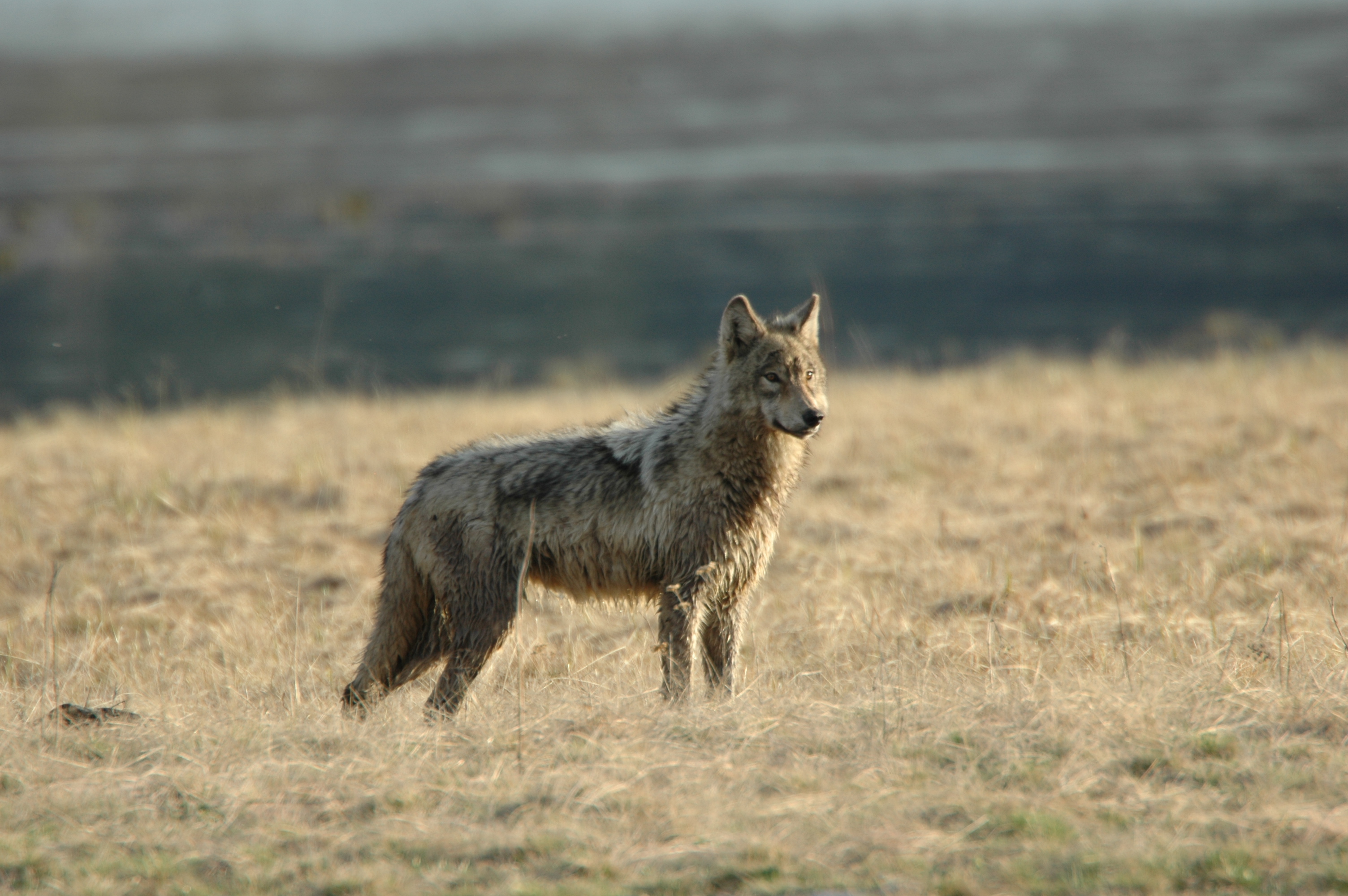
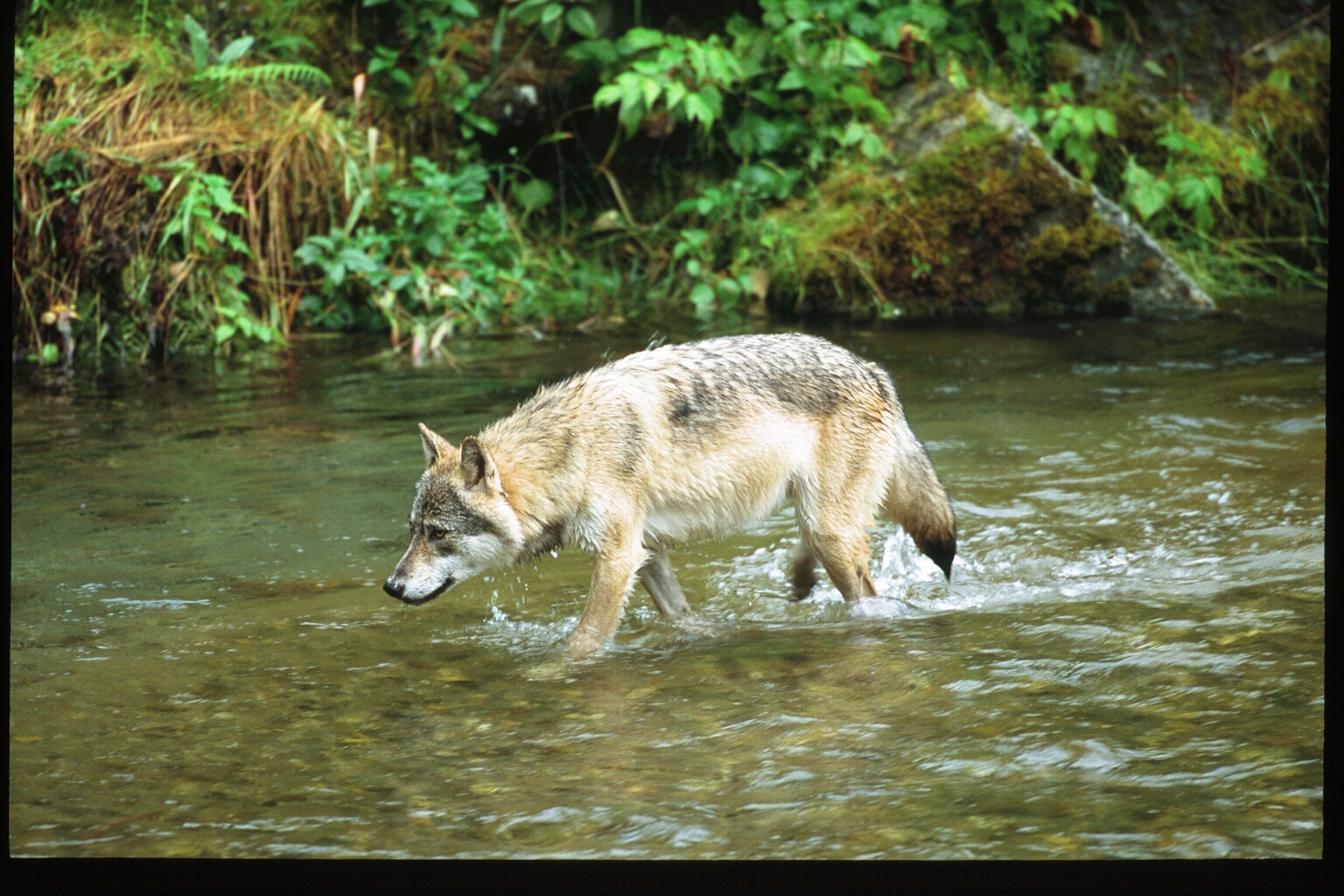
Ecological Benefits of Wolves

Here’s an overview from the Wyoming Sierra Club on some of the good things wolves do for their environment, for those who need reminding…

BENFITS OF WOLVES

Wolves play a vital role in maintaining the health and sustainability of the landscape in the greater Yellowstone region and our western lands. They are a keystone species, one that has a disproportionate impact on its environment relative to its abundance. Since their return in 1995, wolves have benefitted this ecosystem by regulating prey numbers and movements—allowing streambank habitats to recover, reducing densities of coyotes, and providing food for scavengers.

The most recognized and well-documented ecological benefit of wolves is that they have resumed the important role of maintaining healthy wildlife herds in the northern Rockies by selecting young, old, physically impaired, or diseased animals. (5) By reducing prey numbers, dispersing these animals on the landscape, and removing sick animals, wolves also may reduce the transmission and prevalence of wildlife diseases such as chronic wasting disease and brucellosis. (7)

In addition to improving the overall fitness of wildlife herds, wolves have also altered the behavior of their prey, leading to a cascade of beneficial effects on the landscape. In the absence of wolves, elk tended to browse heavily in the open flats along rivers and wetlands, since they did not need to evade predators by seeking thicker cover. Without fear of wolves, elk over-browsed the vegetation inhibiting the growth of new trees. Since the reintroduction of wolves in Yellowstone, elk spend more time in the safety of thick cover or on the move.(6) As a result, riparian areas and aspen groves that had been suppressed by decades of over-browsing are regenerating, improving habitat for species like beavers and songbirds.(3) Beavers, which create wetland habitats with their dams, have improved water quality in streams by trapping sediment, replenishing groundwater, and cooling water.

Species that rely on healthy riparian habitats and benefit from the presence of wolves in Yellowstone National Park include:

g Yellowstone cutthroat trout and other native fish

g Moose

g Waterfowl (ducks, geese, trumpeter swans)

g Songbirds (such as warblers, wrens, and thrushes)

g Small mammals (such as beavers, muskrats,

and other rodents)

g Insects, amphibians, and countless other species (3, 6)

wolves and coyotes

In the absence of wolves, coyotes became a top predator in the ecosystem, but they are not large enough to regulate elk, deer, and moose populations.(2) The return of the wolf restored a natural complement of predators to northwest Wyoming and returned the coyote to its role as a mid-level predator.

wolves and scavengers

Scavengers, such as ravens, eagles, and bears, also benefit heavily from the return of wolves. Wolf kills provide scavengers with an important source of protein, particularly in winter. Twelve species of scavengers are known to visit wolf kills in Yellowstone National Park. (10) Ravens are especially attuned to wolves and may fly over wolf packs as they pursue prey, allowing them quick access to wolf kills. In turn, wolves may benefit from ravens by following them to carcasses that can feed both species. (8)

Prior to the reintroduction of wolves, scavengers were more dependent on animals that died due to harsh winters. Since snow is thawing earlier as a result of a warming climate, there are fewer winter kills available for scavengers. Wolf kills may help buffer the impacts of climate change for scavengers by providing them with a food source in the

The return of the wolf to Wyoming has had significant ecological benefits in a relatively short period of time. Ecological concerns contributed to the decision to return wolves and should play a role in how states manage this keystone species. Although it is easy to focus on the perceived negative impacts of wolves, it is important to recognize the actual benefits they provide to our ecosystem. By regulating wildlife herds and reducing the prevalence of diseases, revitalizing riparian areas, reducing coyote densities, providing food for scavengers, and indirectly improving conditions for a host of other species, wolves play an essential role in maintaining the ecological health and integrity of the landscape.

copyrighted Hayden wolf in lodgepoles

The Perverse Logic of Wolf Hunts

I’d been wondering how many cows died from other causes, versus the fewer than 100 (or 0.0003%) killed by wolves. This article includes some of those figures…

The Perverse Logic of Wolf Hunts

by GEORGE WUERTHNER

The hysteria that surrounds wolf management in the Rockies has clouded rational discussion. Wolves are hardly a threat to either hunting opportunity or the livestock industry.

ELK NUMBERS ABOVE OBJECTIVES

For instance, the Wyoming Fish and Game reports: “The Department continues to manage to reduce Wyoming’s elk numbers. The total population of the herds with estimates increased by 16 percent in 2009 and is now 29 percent above the statewide objective of 83,640 animals.”

Things are similar in Montana. Populations have grown from an estimated 89,000 animals in 1992 prior to wolf recovery to 140,000-150,000 animals in recent years.

In Idaho we find a similar trend. According to the IDFG 23 out of 29 elk units are at and/or above objective. Hunter success in 2011 was 20%: one in five hunters killed an elk.

Wolves are clearly not a threat to the future of hunting in any of these states.

LIVESTOCK LOSSES EXAGGERATED

Ranchers are equally irrational. In 2010 Wyoming livestock producers lost 41,000 cattle and calves due to weather, predators, digestive problems, respiratory issues, calving and other problems. But total livestock losses attributed to wolves was 26 cattle and 33 sheep!

Last year Montana livestock producers lost more than 140,000 cattle and sheep to all causes. But total livestock losses attributed to wolves was less than a hundred animals.

In 2010 Idaho cattle producers lost 93,000 animals to all causes. Respiratory problems were the largest cause accounting for 25.6 percent of the cattle lost. Next came digestive problems, accounting for 13.4 percent of the cattle deaths. Total cattle losses attributed to wolves was 75 animals.

To suggest that wolves are a threat to the livestock industry borders on absurdity.

WOLF CONTROL INCREASES CONFLICTS

Worse yet, the persecution of predators does not work to reduce even these minimum conflicts as most proponents of wolf control suggest.

The reason indiscriminate killing does not work is because it ignores the social ecology of predators. Wolves, cougars, and other predators are social animals. As such, any attempt to control them that does not consider their “social ecology” is likely to fail. Look at the century old war on coyotes—we kill them by the hundreds of thousands, yet ranchers continue to complain about how these predators are destroying their industry. And the usual response assumes that if we only kill a few more we’ll finally get the coyote population “under control.”

The problem with indiscriminate killing of predators whether coyotes, wolves, cougars or bears is that it creates social chaos. Wolves, in particular, learn how and where to hunt, and what to hunt from their elders. The older pack members help to raise the young. In heavily hunted (or trapped) wolf populations (or other predators), the average age is skewed towards younger age animals . Young wolves are like teenagers—bold, brash, and inexperienced. Wolf populations with a high percentage of young animals are much more likely to attack easy prey—like livestock and/or venture into places that an older, more experience animal might avoid—like the fringes of a town or someone’s backyard.

Furthermore, wolf packs that are continuously fragmented by human-caused mortality are less stable. They are less able to hold on to established territories which means they are often hunting in unfamiliar haunts and thus less able to find natural prey. Result : they are more likely to kill livestock.

Wolf packs that are hunted also tend to have fewer members. With fewer adults to hunt, and fewer adults to guard a recent kill against other scavengers, a small pack must actually kill more prey than a larger pack. Thus hunting wolves actually contributes to a higher net loss of elk and deer than if packs were left alone and more stable.

Finally hunting is just a lousy way to actually deal with individual problematic animals. Most hunting takes place on the large blocks of public land, not on the fringes of towns and/or on private ranches where the majority of conflicts occur. In fact, hunting often removes the very animals that have learned to avoid human conflicts and pose no threat to livestock producers or human safety. By indiscriminately removing such animals which would otherwise maintain the territory, hunting creates a void that, often as not, may be filled by a pack of younger, inexperienced animals that could and do cause conflicts.

INSANITY IS DOING SAME WRONG THING OVER AND OVER

We need a different paradigm for predator management than brute force. As Albert Einstein noted, the definition of insanity is doing the same thing over and over again and expecting different results. Unfortunately, insanity has replaced rational thought when it comes to wolf management.

Montana Mulls Upping Hunter “Harverst” Limit to FIVE Wolves

HELENA — Montana wildlife commissioners may extend the hunting season for wolves and the number of predators that can be killed by a hunter or trapper.

“We’ve always had a philosophy of incrementally increasing harvest rates and opportunities,” FWP Wildlife Management Chief George Pauley said in an article in today’s Great Falls Tribune entitled, “FWP proposes extending wolf hunt, kill limit.” The changes would allow hunters more opportunities and reduce the wolf population,
he said.

Well that’s just fucking great; more hunter “harvest” opportunities, fewer wolves–what a philosophy!!

The agency also is proposing allowing hunters and trappers to take up to five wolves each, the Independent Record reported Wednesday.

Last year, hunters and trappers could take only one wolf. The state Legislature this year passed a bill that allows the agency to increase that limit.

The commission takes up the proposal at its May 9 meeting in Helena….

copyrighted-wolf-argument-settled

Top 10 Retorts to Hunter Fallacies

Hunters’ arguments and rationalizations for their sport are so repetitive and predictable that, to save valuable time and precious mental energy, it might help to have your responses printed out ahead of time like flash cards, and kept at the ready in your back pocket. Here, then, are the Top 10 Retorts to Hunter Fallacies you’re most likely to hear the next time you debate a sportsman. (I would apologize to David Letterman, but this isn’t meant to be a joke.)

10) Hunting is”sustainable.”                                              
In today’s world of 7 billion people? Never mind, that’s a joke if I’ve ever heard one.
Do we really want to encourage 7 billion humans to go out and kill wildlife for food as if wild animal flesh is an unlimited resource? The only way hunting could be sustainable for humans these days is if we drastically reduced our population…and killed off all the natural predators. Overhunting has proven time and again to be the direct cause of extinctions, from the passenger pigeon to the Eastern and the Miriams Elk. Now wolves in the Rockies and Great Lakes are being hunted and trapped to oblivion—for the second time.

9) Animals kill other animals, so we can too.
That’s an example of what’s known as the naturalistic fallacy—the notion that any behavior that can be found in nature is morally justifiable. But wolves and other natural predators need to hunt to survive, humans don’t—for them it’s nothing more than a thrill kill. Human beings have moved beyond countless other behaviors such as cannibalism or infanticide, so why can’t some people tear themselves away from hunting?

8) Humans have teeth like carnivores                                                                     Human beings have mostly flat teeth, designed primarily for chewing plant-based foods, as our primate cousins do. Our canines, or “fangs,” are teensy compared to those of gorillas, who are strict vegetarians and only show them to appear fierce. Also, our intestinal tract is long to allow for the slow digestion of high-fiber foods, while true carnivores have short intestines as needed to process meat and dispose of the resulting toxic wastes quickly.

7) Wild game meat is health food.
All animal flesh is rife with cholesterol throughout, and the protein in animal flesh is acidic, causing bone calcium losses as it is metabolized. According to the American Dietetic Association, a diet high in animal products has been linked to obesity, diabetes, colon and other cancers, osteoporosis, kidney stones, gallstones, diverticular disease, hypertension and coronary artery disease. New studies have found that another culprit in causing heart disease may be a little-studied chemical that is burped out by bacteria in the intestines after people eat meat.

6) Hunting is needed to control animal populations.
You’d really have to have no understanding of or faith in Mother Nature to make such a claim—she was doing a fine job of taking care of her own before Man came along and appointed himself “manager” and “game” keeper. No niche goes unfilled for long before some natural predator finds it and fixes a “problem”…if we allow them to. Besides, hunting animals like deer makes them breed more, resulting in more deer, not fewer.

5) If we don’t kill deer they’ll become a traffic hazard.
Two words: Slow the fuck Down. (Sorry, that was four words.)
More animals are hit by cars during hunting season than any other time of year, usually when fleeing from bloodthirsty sportsmen with guns.

4) Hunting teaches respect for wildlife and an appreciation for nature.
Ha! That’s like a serial killer claiming his crimes foster a respect for women. Tracking down and shooting something does not equal respect. Try using a camera or binoculars if you really want to respect them.

3) Hunting is a “manly” sport.
First of all, hunting isn’t even a sport—Sport is generally recognized as an activity based in physical athleticism or physical dexterity. Sports are usually governed by rules to ensure fair competition. A sport is played by two equally matched, or at least equally willing, sides. According to SportAccord, the second criteria determining if something is a sport: it be in no way harmful to any living creature. And anyway, real men respect animals (see above).

2) Hunting licenses pay for wildlife refuges.
In truth, hunting licenses pay for hunter playgrounds, not true wildlife refuges. Take a look at how many “refuges” have been opened up to hunting; or just try to close an area to hunting for the sake of wildlife and hear the nimrods wail. If hunters hadn’t hijacked all the refuges, more bird watchers, hikers and others who truly appreciate nature would gladly pay for a pass to frequent those places. Furthermore, non-consumptive wildlife watchers contribute far more to local economies than do hunters.

1) Hunting keeps kids out of trouble.
Sticking a gun in a child’s hand and telling him or her to shoot Bambi is likely to leave lasting psychological scars, whether it’s PTSD or a heart calloused for killing.

Bonus fallacy) God put Animals here for us to use.
Don’t flatter yourself.

Text and Wildlife Photography ©Jim Robertson, 2013. All Rights Reserved

Text and Wildlife Photography ©Jim Robertson, 2013. All Rights Reserved

Intolerance is Sometimes the Only Humane Stance

There’s been a lot of talk about tolerance these days, but sometimes it seems only the Left side really takes the concept of peaceful acceptance to heart. Fair-minded folk are encouraged to politely tolerate each other’s differences in order to get along. But lately the anti-wolf faction has hijacked the word to justify the killing of wolves.

For example, ten Washington state legislators recently urged their Fish and Wildlife Commission to enact a policy of allowing the unpermitted killing of wolves, “to maintain social tolerance for gray wolves in northeast Washington.” And a wolf-hunter/wildlife snuff film producer told NPR News, “Having these [wolf] hunting seasons has provided a level of tolerance again.” Sorry, but I just don’t see how killing wolves promotes tolerance for them; sounds more like enmity than tolerance.

The only way I can relate is from a converse perspective: doing away with a few wolf hunters might provide some level of tolerance for them.

Still, tolerance should not be just a catchall catchword to be bandied about whenever the mood strikes—some things don’t deserve to be tolerated. No caring person should be expected to tolerate the mistreatment of others. Anyone with a sense of right and wrong should eventually come to the conclusion that intolerance is sometimes the only humane stance to take.

Intolerant is what Japanese whalers label anti-whaling groups or non-whaling nations when they question the “right” to harpoon and butcher whales or trap and slaughter dolphins. South Koreans, who literally torture dogs to death and boil cats alive in the belief that doing so makes them taste better or improves their medicinal value, call humane activists intolerant when they oppose those barbarous customs. And European and American producers of foie gras scream cultural intolerance when animal advocates work to end the bizarre practice of shoving a pipe down the throats of geese and force feeding them until their livers swell or their stomachs burst, whichever comes first.

Meanwhile hunters and trappers expect us to tolerate the torment they unleash on wolves and other wildlife. Members of a civilized society should not hesitate to take a stand against cruelty to other sentient beings—who are fully capable of suffering—in the same way they oppose cruelty to human victims.

This post includes an excerpt for the book, Exposing the Big Game; Living Targets of a Dying Sport.

Text and Wildlife Photography ©Jim Robertson, 2013. All Rights Reserved

Text and Wildlife Photography ©Jim Robertson, 2013. All Rights Reserved

How Much Are WE Willing to Tolerate?

For the first decade or so after their reintroduction to Yellowstone and central Idaho in 1996, the Federal Endangered Species Act safeguarded wolves from overzealous hunters and trappers, but as the director of the USFWS pointed out, the ESA is “not an animal protection act.” Blanket protection of any non-human animal goes against the grain of our political agencies, which are ultimately only answerable to the one species with the any hope of representation—Homo sapiens.

The right of an American species not to be hunted to extinction is a relatively new advancement. At present, it‘s about the only right extended to the nonhumans in this, the land of the free. Now that wolves are off the Endangered Species list in any state with even a minor population, the feds plan to remove them from the U.S. list completely, casting any pioneering individual or would-be wolf pack to the mercy (or lack thereof) of whichever state is fortunate enough to be graced by their presence.

An organized bunch of thugs, anti-wolf fanatics have been on point, lying in wait for the day wolves lose all protection and are deemed “fair game” for their killing pleasure. Lately a deceptively named hate-group calling itself “Big Game Forever” has been luring Utah state funds away from essentials such as schools and into their anti-wolf agenda. Just recently they leached $300,000 for their campaign against wolves in that currently wolf-less state.

Others, such as South Dakota, have hastily re-classified wolves from the status of protected to “varmint,” in the event that any lost wolf happens by. Even “progressive” Washington state jumped on the bandwagon, allowing people to kill wolves without permit and changing the wolf’s status to “big game,” ahead of their anticipated complete removal from federal ESA protection.

A classic example of what will happen the minute wolves lose federal protections was made clear yesterday as Washington state lawmakers approved “Emergency Rule WAC 232-36-05100B Killing wildlife causing private property damage” which includes the following provisions:

1) An owner of domestic animals, including livestock, the owner’s immediate family member, the agent of an owner, or the owner’s documented employee may kill one gray wolf (Canis lupus) without a permit issued by the director, regardless of its state classification, if the wolf is attacking their domestic animals.

(a) This section applies to the area of the state where the gray wolf is not listed as endangered or threatened under the federal endangered species act.
(b) Any wolf killed under this authority must be reported to the department within twenty-four hours.
(c) The wolf carcass must be surrendered to the department.
(d) The owner of the domestic animal must grant or assist the department in gaining access to the property where the wolf was killed for the purposes of data collection or incident investigation.

(2) If the department finds that a private citizen killed a gray wolf that was not attacking a domestic animal, or that the killing was not consistent with this rule, then that person may be prosecuted for unlawful taking of endangered wildlife under RCW 77.15.120.

The “Emergency Rule” is bad enough as it stands, but if ESA wolf protections are lifted nationwide (as is currently planned), points (1a) and (2) will be moot—there won’t be any area of the state safe for wolves, nor any “endangered wildlife” designation to discourage poaching. This is why the wolves, though arguably “recovered” in some areas, need to remain under federal ESA protection nationwide.

We can’t let them lose what little protection they still have in this country. While the U.S. Fish and Wildlife Service forge ahead with their plan for full removal of wolves from the ESA, we need to continue to press our new Interior Secretary Sally Jewell for both their continued protection as well as the re-listing of wolves in those states where out-of-control culling is driving them back to the brink of oblivion.

Washington’s “emergency” rule was crafted in response to a letter from ten state legislators urging their Fish and Wildlife Commission to act quickly “to maintain social tolerance for gray wolves in northeast Washington in the timeliest manner for residents.”
Hmm, killing wolves to “maintain tolerance,” where have I heard that before? Oh that’s right, it was from wildlife snuff film producer and wolf-hunter Randy Newberg who told NPR News that wolf hunts in Wyoming, Montana and Idaho are easing the animosity many local people feel toward the predator. “Having these hunting seasons has provided a level of tolerance again,” Newberg told NPR.

Let me get this straight, in order to placate and appease good ol’ boys and get them to put up with the presence of one of North America’s most historically embattled endangered species, we have to let them kill some of them once in a while? Wolf hunting and trapping are just a salve—a bit of revenge-killing for them–why not let them have their fun? By this logic, they should also be entitled to shoot an Indian every so often (like their forefathers who tried to wipe them out), to help promote tolerance and social acceptance.

It’s time to remind our politicians that the wolf-killing Calvary is about as outnumbered by those of us who appreciate wolves as General Custer was at the Battle of Little Bighorn.

What’s happening now in Washington is just how it started out in other states whose wolf-killing policies are now completely out of control. Washington wolf proponents need to realize that their wildlife policy-makers will continue to up the ante each time we accept the new status quo.

The question is, how much of a wolf-kill massacre are we willing to tolerate before we go on the warpath?

Text and Wildlife Photography ©Jim Robertson, 2013. All Rights Reserved

Text and Wildlife Photography ©Jim Robertson, 2013. All Rights Reserved

BREAKING: National Wolf Delisting Plan Moving Forward!

From Defenders of Wildlife:

One decision could forever change the future of gray wolves in our country.

The U.S. Fish and Wildlife Service (FWS) is proposing to remove all Endangered Species Act (ESA) protections for most of the gray wolves across the United States.

Yes, you read that correctly.

The FWS is moving forward with a proposal to strip nearly all gray wolves throughout the United States — with the exception of the Mexican gray wolf — of Endangered Species Act protections.

Please send an urgent message to Secretary of Interior Sally Jewell — demand that the federal government not turn its back on wolves when there is still more important wolf recovery work that needs to be done.

This proposal reflects an unacceptable and short-sighted vision of our nation’s conservation goals, and would give up on wolf recovery well before the job is done; a true conservation tragedy!

Delisting would prematurely turn wolf management over to the states, and we’ve already seen what can happen when rabid anti-wolf politics are allowed to trump science and core wildlife management principals.

Montana, Wyoming and Idaho — all states where wolves have been delisted — are not treating wolves like other wildlife such as elk and bears. Instead they’re driving the wolves’ population numbers back down to the bottom. More than 1,100 wolves have already been killed in the Northern Rockies since Congress took ESA protections away from them in 2011.

Wolves’ lives are at stake. Please help send 250,000 signatures to the Department of Interior starting today.

This decision would derail wolf recovery efforts in areas around the country where it has barely begun — in places like the Pacific Northwest and in states that possess some of the nation’s best unoccupied wolf habitat, such as Colorado, Utah and northern California.

This proposal represents yet another monumental setback for wolf recovery in the U.S.

Tell Secretary Jewell: The important work of wolf recovery is NOT FINISHED — don’t turn back the clock on almost 40 years of wolf conservation.

Photo Copyright Jim Robertson

Photo Copyright Jim Robertson

Wolf-Killers’ Admit They’re Sadistic Perverts

7d547853b294cf28b7b6c4ff5a69dda1
Paul Watson was right. In his foreword to my book, Exposing the Big Game: Living Targets of a Dying Sport, Sea Shepherd’s Captain Paul Watson wrote:

“Any man who has to kill a magnificent bear or bull elk to mount its head on his wall has some very deep and disturbing psychological and sexual problems. Hunting is no longer necessary for our survival but trophy hunting was never necessary for human survival. Trophy hunters can be described quite adequately as sadistic perverts and social deviants.”

Worst of all, they freely admit it.

An article by Cathy Taibbi in Examiner.com entitled “Wolf-killers admit it’s all about the sadistic sexual thrill” includes photos, links and quotes from one of the many anti-wolf Facebook pages where members brag about “’getting wood’ when seeing wolves trapped, tortured and killed, whether in images or in real life.” Flaunting the fact that they’re still legally entitled to their predatory perversions as long as the abused are only wild animals, they don’t hesitate to tell their Facebook friends that they “feel ‘orgasmic’ when hunting, trapping, killing, butchering, and even eating their victims.”

And they wonder why we call them psychopaths or compare them to serial Killers?

Anyone who gets sexually aroused at the sight of a trapped, struggling or suffering animal should be preemptively executed for the good of the many. They are what the FBI’s Behavioral Science team refers to as “sexual sadists,” the most dangerous of all offenders to their victims.

The Examiner article goes on to say “…in a nutshell, what they are saying plainly is that torturing animals is sexually arousing for them. Do we really want people like this freely expressing their fetishes on the Internet (where children can be traumatized – or worse, titillated – by them), or acting them out using our wildlife or pets?

“What’s happened to our society, when any show of ethics, decorum or empathy is treated as a liability to be ridiculed, threatened and treated derisively, while a site enabling perverted, sadistic sexual thrills from abusing animals is considered free speech?

“These kinds of pages are no better than so-called ‘crush videos’ (movies of innocent, live animals being stomped, cut apart with scissors, burned, etc., and sold to perverts who like to masturbate while watching) except that, being based more in the ‘traditional sports’ of hunting and trapping, these (for now, at least) manage to sneak by legally.

“Hunting, trapping and other hate/fetish sites need to be dealt with in the same fashion as perpetrators of illegal crush videos. The penalties for gratuitous animal abuse need to be severe. The moral fiber and safety of our society is definitely at risk.

“Yup. These are scary individuals. And our politicians are pandering to them. It’s a sad and disheartening statement about where America is at this point.”

The article includes a slide show of graphic photos of which they caution: “Viewer discretion is advised.” If you’re already well aware of the depth of wolf-hater depravity, then you might want to spare yourself the mental and emotional scarring. But if you have any doubts that wolf trapping is as evil as the Inquisition, then by all means view the slide show.

Mexican gray wolves still battle bureaucracy

Fifteen years after returning to the wild, Mexican gray wolves still battle bureaucracy
by Tim Vanderpool

It was amid great fanfare and smoldering trepidation that Mexican gray wolves were released into the wilds of Arizona and New Mexico, mere decades after their near annihilation by the very government now setting them free.

Yet that reintroduction came only after a lawsuit forced the U.S. Fish and Wildlife Service to finally act, more than 20 years after declaring the animal endangered. And even today the wolf recovery program barely limps along, with any real progress prodded by litigation.

This ambivalent spirit has contributed to mysterious poaching incidents, and perhaps to this spring’s unexplained wolf shooting by a staffer with the U.S. Department of Agriculture’s Wildlife Services.

Adding to the dismal situation, say critics, are Arizona Game and Fish officials who often seem mere lackeys to the cattle-ranching industry, which would like to see wolves removed from the range entirely.

In the past, this ambivalence has also led to boundaries beyond which wolves are not allowed to roam—lest they be removed—and has instituted a dysfunctional management regime that seemed doomed from the start.

As a result, there are currently only 75 Mexican gray wolves in the wild, all sharing a shrinking genetic pool that could seal their fate. Nor does it help that the Fish and Wildlife’s progress on a bona fide wolf recovery plan remains mired in stasis. Even the recovery planning team has failed to meet for more than a year, according to team member and Defenders of Wildlife Southwest program director Eva Sargent.

To her, it’s high time for Fish and Wildlife to get on the stick. “Immediately, the service needs to release more wolves from captivity,” she says. “And I don’t mean two or three, to begin this process of genetic rescue.

More: read the full article in the Tucson Weekly here.

Montana FWP ignored public comment on wolf trapping

FWP ignored public comment on wolf trapping
Guest column in the Missoulian, by MARTY ESSEN

The ability to comment on proposed state and federal government regulations is an important right for all Americans. Since we live in a republic, not a direct democracy, public comment helps our representatives make informed decisions on our behalf.

No one expects public comment to be the equivalent of voting. But even so, public comment should not be ignored. After all, if our representatives just did what they pleased, they could hardly be considered representatives. This is especially true when government officials are appointed, not elected.

But if public comment isn’t voting, is there some percentage where public officials are morally obligated to put aside their preformed opinions and abide by the wishes of their constituents? If 60 percent is a supermajority, certainly 70 percent is a mandate, and ignoring anything over that percentage would make a mockery of the process.

What if our representatives passed a new regulation that disregarded the wishes of 90 percent of all public comments? Now that would be extreme! Yet that is exactly what the Montana Fish, Wildlife and Parks commissioners did last year.

In May of 2012, Montana FWP asked for public comments on proposed wolf killing regulations that for the first time would allow trapping. And boy did Americans speak out! Of the 7,750 comments registered, 6,997 opposed trapping. That’s 90 percent saying “no” to trapping.

Later, without publicly acknowledging the results or even indicating the general viewpoint of the public comments, our FWP commissioners voted 4 to 0 (with one abstention) to open up wolves to the barbaric practice of trapping.

What an insult to the public comment process. Not only does it prove that the FWP commissioners had already made up their minds, but it also discourages citizens from making public comments in the future. After all, if such an overwhelming landslide of comments had no effect on this decision, when would public comments ever have an effect on any decision?

Had the commissioners at least been honest enough to admit they were ignoring the thoughtful comments so many people had taken time to write, appropriate political pressure might have rectified the situation. Unfortunately, the injustice wasn’t discovered until Footloose Montana was able to count the comments, long after the damage was done. As a result, not only were wolves callously tortured, so were many family pets.

Since the terms have expired for three of the five commissioners involved, asking for resignations is impractical. Consequently, all we can do now is look forward to next season and demand that the new FWP Commission follow the wishes of the vast majority of the public. Should they ignore us again, Gov. Steve Bullock must take appropriate action.

In the meantime, the first action taken by the new Montana Fish, Wildlife and Parks Commission should be an out-loud reading of their own website, where it states: “We understand that serving the people of Montana to achieve this vision is both a privilege and a responsibility. We also understand that we cannot achieve our vision alone … We will actively involve people in decisions that affect them; help people to participate by providing them with credible and objective information; and, develop programs with a clear understanding of public expectations for FWP service.”

Marty Essen writes from Victor. He is the six-time award-winning author of “Cool Creatures, Hot Planet: Exploring the Seven Continents.” He is also a founding member and past president of Footloose Montana. His website is http://www.coolcreatureshotplanet.com.