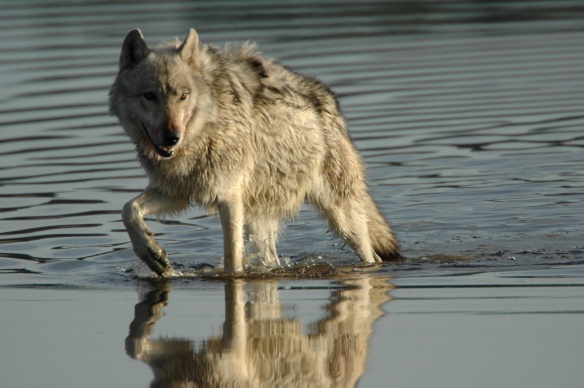
Wolf season starts this week; Three “harvests” made on first day of the hunt

http://county10.com/2013/10/02/wolf-season-starts-week-three-harvests-made-first-day-hunt/

by                                                                                                 October 2, 2013                                     

grey_wolf_1

(Jackson, Wyo.) –  Many fall hunting seasons have begun across the state of Wyoming, including wolf hunting seasons in the northwest part of the state. Hunting seasons in each wolf hunt area begin October 1 and end December 31, 2013, except for Hunt Area 12 south of Jackson, which opens October 15 and closes December 31.

As with other Trophy Game species, wolves in these areas are managed under a mortality quota system. The hunting season in each specific wolf area will remain open until the quota for the area is reached, or until December 31, whichever occurs first. All hunters must call the wolf hotline daily (1-800-264-1280) to ensure the quota for wolves in each specific area has not been reached. Wolf Hunt Area 10, southeast of Jackson, which has a quota of one wolf, has been filled.

The total quota for trophy hunt areas across this state is 26. As of Tuesday morning, three had been harvested.

Hunters harvesting wolves in areas where wolves are classified as Trophy Game Animals are required to report the kill within 24 hours by calling the hotline at 1-800-264-1280. Within five days, they are required to present the skull and pelt to a game warden, biologist, or other personnel at a WGFD regional office for registration.

In all other areas of the state where wolves are designated as Predatory Animals, no license is required to take a wolf, and there are no closed seasons or bag limits. Anyone who takes a wolf in areas of the state where wolves are designated as Predatory Animals is required to report the kill to a game warden, biologist, other personnel at a WGFD regional office, or by phone (1-800-264-1280 begin_of_the_skype_highlighting 1-800-264-1280 FREE  end_of_the_skype_highlighting) within 10 days. Anyone who takes a wolf in this area of the state is not required to present the skull or pelt, but the WGFD is encouraging them to do so to aid in department efforts to monitor wolf populations and genetic interchange throughout the state.

Hunters with questions about hunting seasons or regulations should pick up a copy of the current hunting regulations for the species they are interested in at any license selling vendor or call the Game and Fish office nearest the area they intend to hunt.

In other Wolf News:

Controversial Proposal for Wolf Conservation Gets a Reboot

Gray Wolf Killed in WA:http://www.therepublic.com/view/story/ecfdd3ddf08542cbb102934e8039533f/WA–Gray-Wolf-Killed


Former Vice President Dick Cheney in another hunting accident

Cheney’s gun malfunctioned during an antelope hunting contest in Wyoming. But, unlike the former No. 2’s 2006 hunting accident, nobody was hurt this time.

By Adam Edelman / NEW YORK DAILY NEWS

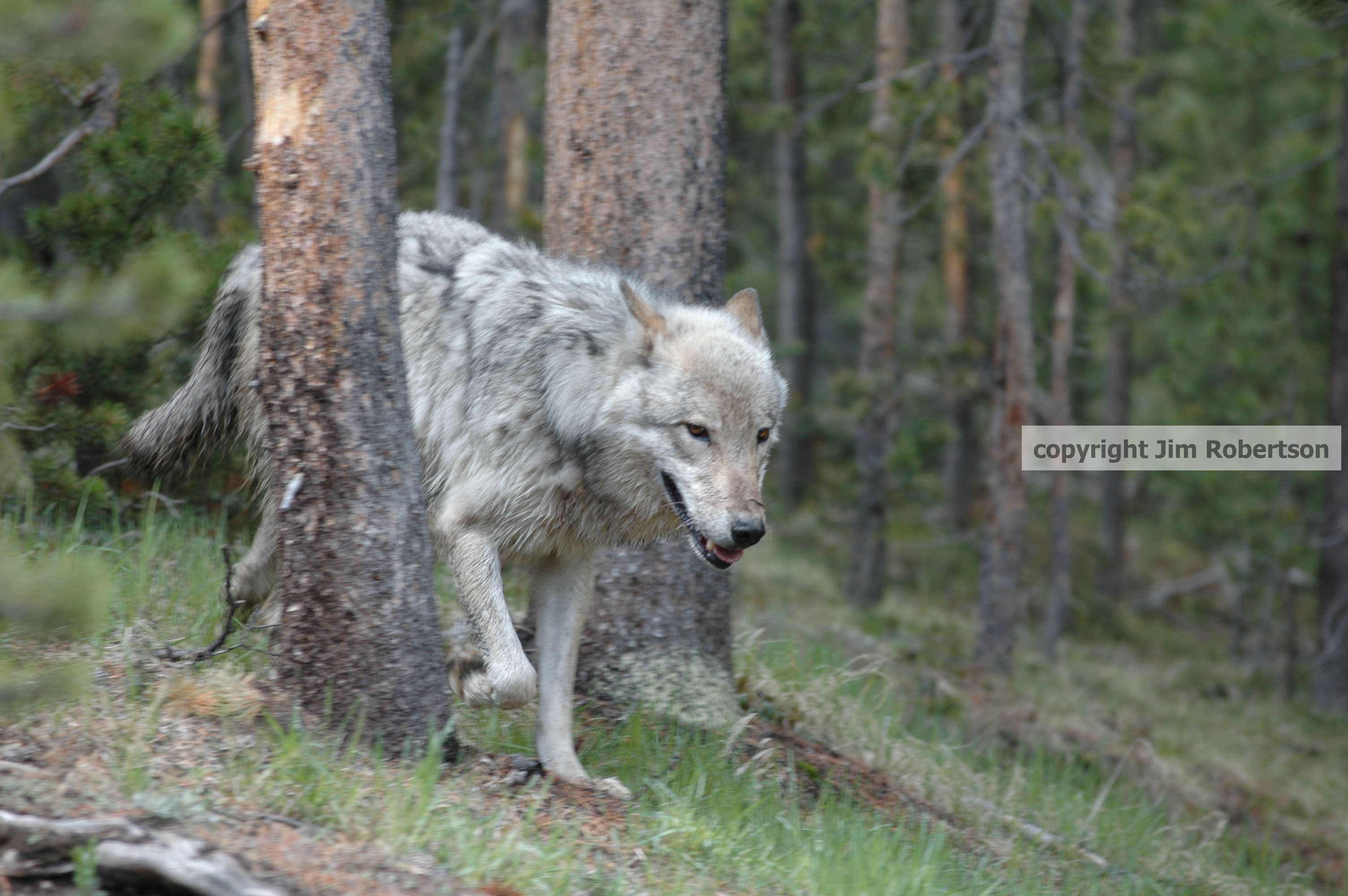
Photo Copyright Jim Robertson

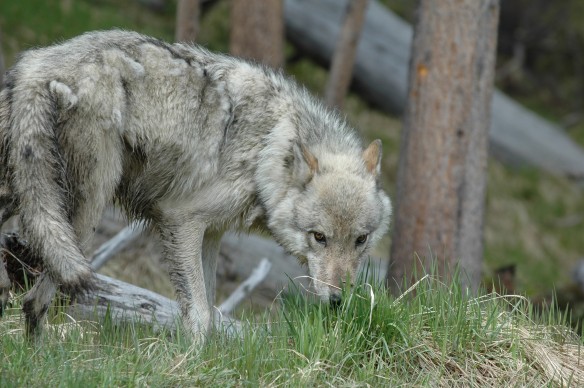
Photo Copyright Jim Robertson

Published: Tuesday, September 24, 2013 .
Former Vice President Dick Cheney suffered another hunting accident over the weekend, but this time nobody was injured.

Cheney’s gun malfunctioned during an antelope hunting contest Sunday in his native Wyoming, preventing the former lawmaker from getting his shot off.

Cheney said the gun failed due to a “problem with the manufacturer.”

“I don’t take it personally,” he told Wyoming’s K2TV. “I’m sure there was a small problem with the manufacturer. But I will be back next year.”

Cheney, an avid hunter, nearly killed his hunting partner in 2006 in a another shooting accident.

Cheney seriously injured Harry Whittington, his quail hunting partner after he accidentally shot him in the face, neck and chest.

Whittington, a Texas lawyer and contributor to the Bush-Cheney campaign, suffered a heart attack during the incident but ultimately survived.

Read more: http://www.nydailynews.com/news/politics/vice-president-dick-cheney-hunting-mishap-article-1.1466115#ixzz2fvElTDVd

Wyoming Proposes Halving its Wolf Quota

Proposed Wyoming wolf quotas attract little public comment;  The Billings Gazette

MAY 25, 2013 12:00 AM • BY CHRISTINE PETERSON CASPER STAR-TRIBUNE

SHERIDAN, Wyo. — A proposed plan to cut the Wyoming wolf-hunting quota in half has generated little public comment during the first several statewide meetings.

Two people went to a wolf meeting held by the Wyoming Game and Fish Department on Wednesday night in Sheridan. Dozens of people went to the Sheridan meeting last year to discuss the first wolf-hunting season, said Mark Bruscino, large-carnivore section supervisor for Game and Fish.

The Pinedale meeting in early May had two attendees. Eleven people went to Dubois and four to Laramie. The upcoming meetings in Cody and Jackson may see larger crowds, said Dan Thompson, large-carnivore biologist with Game and Fish.

“Maybe people think (Game and Fish) has it under control,” said Ron Crispin, one of the two Sheridan meeting attendees.

Game and Fish officials are proposing cutting the wolf quota in northwest Wyoming from 52 to 26 this year. Wyoming’s first hunting season since wolves were delisted ended in December. Hunters killed 42 wolves, filling the quota in six of the 12 hunt areas.

The new quota will reduce Wyoming’s wolf population slightly, but also keep it above 100 wolves and 10 breeding pairs outside of Yellowstone National Park and the Wind River Indian Reservation, a requirement when they were removed from the endangered-species list.

Crispin thinks the new number is conservative. But he also thinks Game and Fish should probably be conservative to avoid wolves going back on the list for protection, he said.

The Jackson Hole Outfitters and Guides Association publicly supported the new quotas in early May, citing the same concern that wolves not return to the list, according to The Associated Press.

Thompson said lower public participation compared to last year may also be because the first hunting season went smoothly and with little controversy.

“People didn’t lose interest, but there was more of a normalization of it,” he said.

Public participation, whether high or low, won’t change how wolves are managed in Wyoming, he added.

At the end of 2012, wildlife officials estimated there were at least 169 wolves, 25 packs and 15 breeding pairs in the trophy game and seasonal trophy game management area, which is most of the northwest corner of Wyoming outside of federal lands. In all of Wyoming, including federal lands, wildlife officials estimated there were 277 wolves, 43 packs and 21 breeding pairs.

That’s about 16 percent fewer wolves in Wyoming than the end of 2011, Bruscino said.

Wildlife officials need to keep about 140 wolves in Wyoming outside of the Yellowstone and the Wind River Reservation to be sure it also has at least 10 breeding pairs. If the number of individual wolves drops closer to 100, breeding pairs could fall below 10, which could eventually trigger relisting, Bruscino said.

The hunting quota is decided by taking the number of wolves at the end of a hunting season, adding an estimate of the number of pups that are born and survive, and removing an estimate of the number of human-caused deaths such as removal for livestock depredation and car wrecks.

Slightly more wolves were killed last year because of livestock issues than biologists planned, and a slightly lower number of pups were brought into the population, Bruscino said. As a result, this year’s hunting-season quota was lower than anticipated.

Wyoming should probably expect a future hunting quota to stabilize between 15 and 25 wolves.

copyrighted Hayden wolf in lodgepoles

PEER Sue Over ‘Political Deals’ Behind Wolf Delisting

From Environmental News Service

WASHINGTON, DC, May 22, 2013 (ENS) – The Obama Administration’s plan to remove the gray wolf from the protections of the Endangered Species Act, as detailed in a draft Federal Register notice released today by Public Employees for Environmental Responsibility, PEER, is temporarily on hold.

The reasons for the indefinite delay announced this week were not revealed nor were the records of closed-door meetings to craft this plan that began in August 2010.

Today a federal Freedom of Information Act lawsuit to obtain the records from those meetings was filed by PEER, a nonprofit national alliance of local, state and federal resource professionals.

The draft Federal Register notice would strike the gray wolf from the federal list of threatened or endangered species but would keep endangered status for the Mexican wolf. No protected habitat would be delineated for the Mexican wolf, of which fewer than 100 remain in the wild.

This step is the culmination of what officials call their National Wolf Strategy, developed in a series of federal-state meetings called Structured Decision Making, SDM. Tribal representatives declined to participate.

On April 30, 2012, PEER submitted a Freedom of Information Act request to the U.S. Fish and Wildlife Service for all SDM meeting notes, handouts and decision documents. More than a year later, the agency has not produced any of the requested records, despite a legal requirement that the records be produced within 20 working days.

Today, PEER filed suit in the U.S. District Court for the District of Columbia to obtain all of the SDM documents.

“By law, Endangered Species Act decisions are supposed to be governed by the best available science, not the best available deal,” said PEER Executive Director Jeff Ruch, pointing to a letter from the nation’s leading wolf researchers challenging the scientific basis for the de-listing plan.

“The politics surrounding this predator’s legal status have been as fearsome as the reputation of the gray wolf itself,” said Ruch.

To support its argument that politics trumps science in deciding how to handle the nation’s wolves, PEER also made public today a letter from 16 scientists to the new Interior Secretary Sally Jewell and U.S. Fish and Wildlife Service Director Dan Ashe expressing “serious concerns with a recent draft rule leaked to the press that proposes to remove Endangered Species Act protections for gray wolves across the Lower 48 States…”

“Collectively, we represent many of the scientists responsible for the research referenced in the draft rule,” wrote the scientists, who specialize in carnivores and conservation biology. “Based on a careful review of the rule, we do not believe that the rule reflects the conclusions of our work or the best available science concerning the recovery of wolves, or is in accordance with the fundamental purpose of the Endangered Species Act to conserve endangered species and the ecosystems upon which they depend.”

Among other problems with the delisting proposal, the scientists say it ignores the positive influence of large carnivores such as wolves on the ecosystems they inhabit.

“The gray wolf has barely begun to recover or is absent from significant portions of its former range where substantial suitable habitat remains. The Service’s draft rule fails to consider science identifying extensive suitable habitat in the Pacific Northwest, California, the southern Rocky Mountains and the Northeast. It also fails to consider the importance of these areas to the long-term survival and recovery of wolves, or the importance of wolves to the ecosystems of these regions,” the scientists wrote.

“The extirpation of wolves and large carnivores from large portions of the landscape is a global phenomenon with broad ecological consequences,” the scientists wrote. “There is a growing body of scientific literature demonstrating that top predators play critical roles in maintaining a diversity of other wildlife species and as such the composition and function of ecosystems. Research in Yellowstone National Park, for example, found that reintroduction of wolves caused changes in elk numbers and behavior which then facilitated recovery of streamside vegetation, benefitting beavers, fish and songbirds. In this and other ways, wolves shape North American landscapes.”

“Given the importance of wolves and the fact that they have only just begun to recover in some regions and not at all in others,” the scientists wrote, “we hope you will reconsider the Service’s proposal to remove protections across most of the United States.”

PEER charges that the resulting National Wolf Strategy used political and economic factors to predetermine the answer to scientific questions, such as the biological recovery requirements for wolves and ruling out areas in states within the species’ historical range which lack sufficient suitable habitat.

“This closed-door process lacked not only transparency but also integrity. It involved no independent scientists, let alone peer reviewed findings,” Ruch said. “It is not surprising that the Fish and Wildlife Service does not want to see this laundry airing in the public domain.”

Jamie Rappaport Clark, president of the nonprofit Defenders of Wildlife, is a former director of the Fish and Wildlife Service who served during the Clinton Administration.

“The gray wolf delisting proposal represents a major retreat from the optimism and values which have been the hallmark of endangered species recovery in this country for the past 40 years,” says Clark. “Instead, the proposal reflects a short-sighted, shrunken and much weaker vision of what our conservation goals should be. The Service has clearly decided to prematurely get out of the wolf conservation business rather than working to achieve full recovery of the species.”

Clark and five other heads of environmental organizations – Center for Biological Diversity, Earthjustice, Endangered Species Coalition, Natural Resources Defense Council and Sierra Club – last week sent a letter to Secretary Jewell asking that she reconsider the nationwide wolf delisting plan.

“Maintaining federal protections for wolves is essential for continued species recovery,” the letter says, adding that the unwarranted assault on wolves in the northern Rocky Mountains after wolves in those states lost federal protections highlights the “increasingly hostile anti-wolf policies of states now charged with ensuring the survival of gray wolf populations.”

Since wolves in Montana, Idaho and Wyoming were delisted in 2011, more than 1,100 wolves have been killed in these Northern Rockies states.

Gray wolf populations were extirpated from the western United Stated by the 1930s, explains the Fish and Wildlife Service. Public attitudes towards predators changed and wolves received legal protection with the passage of the Endangered Species Act in 1973.

Subsequently, wolves from Canada occasionally dispersed south and successfully began recolonizing northwest Montana in 1986. In 1995 and 1996, 66 wolves from southwestern Canada were reintroduced into Yellowstone National Park and central Idaho.

Recovery goals of an equitably distributed wolf population containing at least 300 wolves and 30 breeding pairs in three recovery areas within Montana, Idaho, and Wyoming for at least three consecutive years were reached in 2002, according to the Service.

Copyright Environment News Service (ENS) 2013. All rights reserved.

copyrighted-wolf-argument-settled


Ecological Benefits of Wolves

Here’s an overview from the Wyoming Sierra Club on some of the good things wolves do for their environment, for those who need reminding…

BENFITS OF WOLVES

Wolves play a vital role in maintaining the health and sustainability of the landscape in the greater Yellowstone region and our western lands. They are a keystone species, one that has a disproportionate impact on its environment relative to its abundance. Since their return in 1995, wolves have benefitted this ecosystem by regulating prey numbers and movements—allowing streambank habitats to recover, reducing densities of coyotes, and providing food for scavengers.

The most recognized and well-documented ecological benefit of wolves is that they have resumed the important role of maintaining healthy wildlife herds in the northern Rockies by selecting young, old, physically impaired, or diseased animals. (5) By reducing prey numbers, dispersing these animals on the landscape, and removing sick animals, wolves also may reduce the transmission and prevalence of wildlife diseases such as chronic wasting disease and brucellosis. (7)

In addition to improving the overall fitness of wildlife herds, wolves have also altered the behavior of their prey, leading to a cascade of beneficial effects on the landscape. In the absence of wolves, elk tended to browse heavily in the open flats along rivers and wetlands, since they did not need to evade predators by seeking thicker cover. Without fear of wolves, elk over-browsed the vegetation inhibiting the growth of new trees. Since the reintroduction of wolves in Yellowstone, elk spend more time in the safety of thick cover or on the move.(6) As a result, riparian areas and aspen groves that had been suppressed by decades of over-browsing are regenerating, improving habitat for species like beavers and songbirds.(3) Beavers, which create wetland habitats with their dams, have improved water quality in streams by trapping sediment, replenishing groundwater, and cooling water.

Species that rely on healthy riparian habitats and benefit from the presence of wolves in Yellowstone National Park include:

g Yellowstone cutthroat trout and other native fish

g Moose

g Waterfowl (ducks, geese, trumpeter swans)

g Songbirds (such as warblers, wrens, and thrushes)

g Small mammals (such as beavers, muskrats,

and other rodents)

g Insects, amphibians, and countless other species (3, 6)

wolves and coyotes

In the absence of wolves, coyotes became a top predator in the ecosystem, but they are not large enough to regulate elk, deer, and moose populations.(2) The return of the wolf restored a natural complement of predators to northwest Wyoming and returned the coyote to its role as a mid-level predator.

wolves and scavengers

Scavengers, such as ravens, eagles, and bears, also benefit heavily from the return of wolves. Wolf kills provide scavengers with an important source of protein, particularly in winter. Twelve species of scavengers are known to visit wolf kills in Yellowstone National Park. (10) Ravens are especially attuned to wolves and may fly over wolf packs as they pursue prey, allowing them quick access to wolf kills. In turn, wolves may benefit from ravens by following them to carcasses that can feed both species. (8)

Prior to the reintroduction of wolves, scavengers were more dependent on animals that died due to harsh winters. Since snow is thawing earlier as a result of a warming climate, there are fewer winter kills available for scavengers. Wolf kills may help buffer the impacts of climate change for scavengers by providing them with a food source in the

The return of the wolf to Wyoming has had significant ecological benefits in a relatively short period of time. Ecological concerns contributed to the decision to return wolves and should play a role in how states manage this keystone species. Although it is easy to focus on the perceived negative impacts of wolves, it is important to recognize the actual benefits they provide to our ecosystem. By regulating wildlife herds and reducing the prevalence of diseases, revitalizing riparian areas, reducing coyote densities, providing food for scavengers, and indirectly improving conditions for a host of other species, wolves play an essential role in maintaining the ecological health and integrity of the landscape.

copyrighted Hayden wolf in lodgepoles

The Perverse Logic of Wolf Hunts

I’d been wondering how many cows died from other causes, versus the fewer than 100 (or 0.0003%) killed by wolves. This article includes some of those figures…

The Perverse Logic of Wolf Hunts

by GEORGE WUERTHNER

The hysteria that surrounds wolf management in the Rockies has clouded rational discussion. Wolves are hardly a threat to either hunting opportunity or the livestock industry.

ELK NUMBERS ABOVE OBJECTIVES

For instance, the Wyoming Fish and Game reports: “The Department continues to manage to reduce Wyoming’s elk numbers. The total population of the herds with estimates increased by 16 percent in 2009 and is now 29 percent above the statewide objective of 83,640 animals.”

Things are similar in Montana. Populations have grown from an estimated 89,000 animals in 1992 prior to wolf recovery to 140,000-150,000 animals in recent years.

In Idaho we find a similar trend. According to the IDFG 23 out of 29 elk units are at and/or above objective. Hunter success in 2011 was 20%: one in five hunters killed an elk.

Wolves are clearly not a threat to the future of hunting in any of these states.

LIVESTOCK LOSSES EXAGGERATED

Ranchers are equally irrational. In 2010 Wyoming livestock producers lost 41,000 cattle and calves due to weather, predators, digestive problems, respiratory issues, calving and other problems. But total livestock losses attributed to wolves was 26 cattle and 33 sheep!

Last year Montana livestock producers lost more than 140,000 cattle and sheep to all causes. But total livestock losses attributed to wolves was less than a hundred animals.

In 2010 Idaho cattle producers lost 93,000 animals to all causes. Respiratory problems were the largest cause accounting for 25.6 percent of the cattle lost. Next came digestive problems, accounting for 13.4 percent of the cattle deaths. Total cattle losses attributed to wolves was 75 animals.

To suggest that wolves are a threat to the livestock industry borders on absurdity.

WOLF CONTROL INCREASES CONFLICTS

Worse yet, the persecution of predators does not work to reduce even these minimum conflicts as most proponents of wolf control suggest.

The reason indiscriminate killing does not work is because it ignores the social ecology of predators. Wolves, cougars, and other predators are social animals. As such, any attempt to control them that does not consider their “social ecology” is likely to fail. Look at the century old war on coyotes—we kill them by the hundreds of thousands, yet ranchers continue to complain about how these predators are destroying their industry. And the usual response assumes that if we only kill a few more we’ll finally get the coyote population “under control.”

The problem with indiscriminate killing of predators whether coyotes, wolves, cougars or bears is that it creates social chaos. Wolves, in particular, learn how and where to hunt, and what to hunt from their elders. The older pack members help to raise the young. In heavily hunted (or trapped) wolf populations (or other predators), the average age is skewed towards younger age animals . Young wolves are like teenagers—bold, brash, and inexperienced. Wolf populations with a high percentage of young animals are much more likely to attack easy prey—like livestock and/or venture into places that an older, more experience animal might avoid—like the fringes of a town or someone’s backyard.

Furthermore, wolf packs that are continuously fragmented by human-caused mortality are less stable. They are less able to hold on to established territories which means they are often hunting in unfamiliar haunts and thus less able to find natural prey. Result : they are more likely to kill livestock.

Wolf packs that are hunted also tend to have fewer members. With fewer adults to hunt, and fewer adults to guard a recent kill against other scavengers, a small pack must actually kill more prey than a larger pack. Thus hunting wolves actually contributes to a higher net loss of elk and deer than if packs were left alone and more stable.

Finally hunting is just a lousy way to actually deal with individual problematic animals. Most hunting takes place on the large blocks of public land, not on the fringes of towns and/or on private ranches where the majority of conflicts occur. In fact, hunting often removes the very animals that have learned to avoid human conflicts and pose no threat to livestock producers or human safety. By indiscriminately removing such animals which would otherwise maintain the territory, hunting creates a void that, often as not, may be filled by a pack of younger, inexperienced animals that could and do cause conflicts.

INSANITY IS DOING SAME WRONG THING OVER AND OVER

We need a different paradigm for predator management than brute force. As Albert Einstein noted, the definition of insanity is doing the same thing over and over again and expecting different results. Unfortunately, insanity has replaced rational thought when it comes to wolf management.

Intolerance is Sometimes the Only Humane Stance

There’s been a lot of talk about tolerance these days, but sometimes it seems only the Left side really takes the concept of peaceful acceptance to heart. Fair-minded folk are encouraged to politely tolerate each other’s differences in order to get along. But lately the anti-wolf faction has hijacked the word to justify the killing of wolves.

For example, ten Washington state legislators recently urged their Fish and Wildlife Commission to enact a policy of allowing the unpermitted killing of wolves, “to maintain social tolerance for gray wolves in northeast Washington.” And a wolf-hunter/wildlife snuff film producer told NPR News, “Having these [wolf] hunting seasons has provided a level of tolerance again.” Sorry, but I just don’t see how killing wolves promotes tolerance for them; sounds more like enmity than tolerance.

The only way I can relate is from a converse perspective: doing away with a few wolf hunters might provide some level of tolerance for them.

Still, tolerance should not be just a catchall catchword to be bandied about whenever the mood strikes—some things don’t deserve to be tolerated. No caring person should be expected to tolerate the mistreatment of others. Anyone with a sense of right and wrong should eventually come to the conclusion that intolerance is sometimes the only humane stance to take.

Intolerant is what Japanese whalers label anti-whaling groups or non-whaling nations when they question the “right” to harpoon and butcher whales or trap and slaughter dolphins. South Koreans, who literally torture dogs to death and boil cats alive in the belief that doing so makes them taste better or improves their medicinal value, call humane activists intolerant when they oppose those barbarous customs. And European and American producers of foie gras scream cultural intolerance when animal advocates work to end the bizarre practice of shoving a pipe down the throats of geese and force feeding them until their livers swell or their stomachs burst, whichever comes first.

Meanwhile hunters and trappers expect us to tolerate the torment they unleash on wolves and other wildlife. Members of a civilized society should not hesitate to take a stand against cruelty to other sentient beings—who are fully capable of suffering—in the same way they oppose cruelty to human victims.

This post includes an excerpt for the book, Exposing the Big Game; Living Targets of a Dying Sport.

Text and Wildlife Photography ©Jim Robertson, 2013. All Rights Reserved

Text and Wildlife Photography ©Jim Robertson, 2013. All Rights Reserved

How Much Are WE Willing to Tolerate?

For the first decade or so after their reintroduction to Yellowstone and central Idaho in 1996, the Federal Endangered Species Act safeguarded wolves from overzealous hunters and trappers, but as the director of the USFWS pointed out, the ESA is “not an animal protection act.” Blanket protection of any non-human animal goes against the grain of our political agencies, which are ultimately only answerable to the one species with the any hope of representation—Homo sapiens.

The right of an American species not to be hunted to extinction is a relatively new advancement. At present, it‘s about the only right extended to the nonhumans in this, the land of the free. Now that wolves are off the Endangered Species list in any state with even a minor population, the feds plan to remove them from the U.S. list completely, casting any pioneering individual or would-be wolf pack to the mercy (or lack thereof) of whichever state is fortunate enough to be graced by their presence.

An organized bunch of thugs, anti-wolf fanatics have been on point, lying in wait for the day wolves lose all protection and are deemed “fair game” for their killing pleasure. Lately a deceptively named hate-group calling itself “Big Game Forever” has been luring Utah state funds away from essentials such as schools and into their anti-wolf agenda. Just recently they leached $300,000 for their campaign against wolves in that currently wolf-less state.

Others, such as South Dakota, have hastily re-classified wolves from the status of protected to “varmint,” in the event that any lost wolf happens by. Even “progressive” Washington state jumped on the bandwagon, allowing people to kill wolves without permit and changing the wolf’s status to “big game,” ahead of their anticipated complete removal from federal ESA protection.

A classic example of what will happen the minute wolves lose federal protections was made clear yesterday as Washington state lawmakers approved “Emergency Rule WAC 232-36-05100B Killing wildlife causing private property damage” which includes the following provisions:

1) An owner of domestic animals, including livestock, the owner’s immediate family member, the agent of an owner, or the owner’s documented employee may kill one gray wolf (Canis lupus) without a permit issued by the director, regardless of its state classification, if the wolf is attacking their domestic animals.

(a) This section applies to the area of the state where the gray wolf is not listed as endangered or threatened under the federal endangered species act.
(b) Any wolf killed under this authority must be reported to the department within twenty-four hours.
(c) The wolf carcass must be surrendered to the department.
(d) The owner of the domestic animal must grant or assist the department in gaining access to the property where the wolf was killed for the purposes of data collection or incident investigation.

(2) If the department finds that a private citizen killed a gray wolf that was not attacking a domestic animal, or that the killing was not consistent with this rule, then that person may be prosecuted for unlawful taking of endangered wildlife under RCW 77.15.120.

The “Emergency Rule” is bad enough as it stands, but if ESA wolf protections are lifted nationwide (as is currently planned), points (1a) and (2) will be moot—there won’t be any area of the state safe for wolves, nor any “endangered wildlife” designation to discourage poaching. This is why the wolves, though arguably “recovered” in some areas, need to remain under federal ESA protection nationwide.

We can’t let them lose what little protection they still have in this country. While the U.S. Fish and Wildlife Service forge ahead with their plan for full removal of wolves from the ESA, we need to continue to press our new Interior Secretary Sally Jewell for both their continued protection as well as the re-listing of wolves in those states where out-of-control culling is driving them back to the brink of oblivion.

Washington’s “emergency” rule was crafted in response to a letter from ten state legislators urging their Fish and Wildlife Commission to act quickly “to maintain social tolerance for gray wolves in northeast Washington in the timeliest manner for residents.”
Hmm, killing wolves to “maintain tolerance,” where have I heard that before? Oh that’s right, it was from wildlife snuff film producer and wolf-hunter Randy Newberg who told NPR News that wolf hunts in Wyoming, Montana and Idaho are easing the animosity many local people feel toward the predator. “Having these hunting seasons has provided a level of tolerance again,” Newberg told NPR.

Let me get this straight, in order to placate and appease good ol’ boys and get them to put up with the presence of one of North America’s most historically embattled endangered species, we have to let them kill some of them once in a while? Wolf hunting and trapping are just a salve—a bit of revenge-killing for them–why not let them have their fun? By this logic, they should also be entitled to shoot an Indian every so often (like their forefathers who tried to wipe them out), to help promote tolerance and social acceptance.

It’s time to remind our politicians that the wolf-killing Calvary is about as outnumbered by those of us who appreciate wolves as General Custer was at the Battle of Little Bighorn.

What’s happening now in Washington is just how it started out in other states whose wolf-killing policies are now completely out of control. Washington wolf proponents need to realize that their wildlife policy-makers will continue to up the ante each time we accept the new status quo.

The question is, how much of a wolf-kill massacre are we willing to tolerate before we go on the warpath?

Text and Wildlife Photography ©Jim Robertson, 2013. All Rights Reserved

Text and Wildlife Photography ©Jim Robertson, 2013. All Rights Reserved

WY Wolf Quota May be Reduced Due to Lack of Wolves

See if you can make heads or tails of this muddled article in the Billings Gazette. I’m no mathematician, but it appears that wolves in the “cowboy” state have already been so overhunted that if many more are killed they’ll be back on the Endangered Species list…

Wyoming Game and Fish proposes cutting 2013 wolf quotas by half

April 10, 2013 5:16 pm • By CHRISTINE PETERSON Casper Star-Tribune

CASPER, Wyo. — Wyoming wolf hunting quotas may be cut in half this fall, according to a Wyoming Game and Fish Department release issued Wednesday.

The population could not withstand another 52-wolf quota without coming dangerously close to the required minimum set in Wyoming’s delisting plan, said Mark Bruscino, the department’s large carnivore program supervisor.

If wolf numbers drop below the requirement, it could lead to re-listing on the endangered-species list.

“Our intent the first year was to reduce the population,” Bruscino said. “We estimated we would reduce it in the trophy game area and seasonal game area by 11 percent, and we actually reduced it about 12 percent.”

Hunters killed 42 wolves during the trophy and seasonal trophy hunting seasons from Oct. 1 to Dec. 31. The overall population in the trophy areas dropped by about 20 wolves because of pups born in 2012, Bruscino said.

The proposed quota of 26 wolves is likely to cut the number of wolves in the trophy areas by about nine at the end of 2013, Bruscino said.

Some hunters disagree with the new quota of 26.

“They should have added 26 is my feeling, rather than subtracted,” said Fritz Meyer, a Dubois outfitter. “I don’t think they’re in any danger of going under the minimum.”

Wolves may be a little tougher to hunt this year, he said. The ones who survived last year will be wiser.

Game and Fish officials had hoped to use the 2012 hunting season to lower wolf numbers from 192 to 172 in the northwest corner of the state outside of Yellowstone National Park, said Brian Nesvik, the department’s chief game warden.

Final estimates show 169 wolves and 15 breeding pairs lived in that area after the hunting season, he said.

About 90 more wolves and six breeding pairs lived in Yellowstone and on the reservation at the end of 2012, according to estimates.

The U.S. Fish and Wildlife Service removed Wyoming wolves from the endangered species list last fall.

Under the delisting agreement, Wyoming must keep a minimum of 100 wolves and 10 breeding pairs in the state outside of Yellowstone and the Wind River Indian Reservation. Wyoming needs to maintain 150 wolves and 15 breeding pairs in the entire state, including the park and reservation.

Wolves can be shot without a license during any time of the year in about 85 percent of the state. Thus far this year, hunters have killed 14 in that 85 percent, Nesvik said.

Several lawsuits are pending against Wyoming and the Fish and Wildlife Service that argue Wyoming’s wolf plan will not protect the animals.

Game and Fish officials will announce details of the proposed new quota in meetings this spring. Meeting times and locations have not been announced.

copyrighted-wolf-argument-settled

Wolves Getting Booted Back to the Brink

When an activist friend asked me to write an overview of the wolf situation, my first thought was: “What a daunting and extremely depressing task that would be.” But having followed the wolves’ story since long before their reintroduction to Yellowstone and the Idaho wilderness, I suppose it’s only natural that I take this on. After all, I’ve covered the issue many times in articles, on my blog, and I devoted two chapters of my book, Exposing the Big Game: Living Targets of a Dying Sport, to the plight of wolves.

At the time I wrote the book’s chapter, “From the Brink of Oblivion and Back Again,” wolves were still federally protected and their removal from the Endangered Species List was just someone’s bad idea that had yet to see its dark day—I never quite realized just how apt that title would soon be. Until recently I remained hopeful that any wolf hunting would be strictly monitored and regulated, and that abusers would be fully prosecuted. Frankly, I thought we would be a little more evolved as a species by now.

But time and again states have proven themselves unworthy by declaring open seasons on wolves, without regard for the species’ future or for the welfare of individual wolves. Indeed, the ongoing warlike attack on wolves is anything but sporting or humane, with kill methods ranging from traps and snares to aerial hunting, running them down with dogs or luring them in and sniping at entire packs with semi-automatic rifles—depending on a given state’s predilection. At the same time, many hunters and trappers go out of their way to express their hatred for wolves through horrific acts of overkill. They seem to take sick pleasure in further degrading their victims by glibly posing in morbid photos of trapped or bloodied wolves, then spreading their snuff shots across the internet, fishing for praise, while taunting wolf advocates.
Text and Wildlife Photography ©Jim Robertson, 2013. All Rights Reserved

Text and Wildlife Photography ©Jim Robertson, 2013. All Rights Reserved

For thousands of years, wolves played a central role as keepers of nature’s balance across the American landscape. Wolves are the personification of untamed wilderness; their presence is a sign of an ecosystem relatively intact.

But bigotry toward wolves has thrived across the country since colonial times and wolves have long been the object of unwarranted phobias. Today’s wolf-haters panic at the thought of natural predators competing for “their” trophy “game” animals and loath anything that might threaten their exploitive way of life. They view the federal government as the enemy in their ongoing combat against wilderness, and grasp for local control of species like wolves, who, until recently, were all but extinct in the continental U.S. Far from being their foe however, the federal government has actually been a fervent ally.

The contentious removal of wolves from the federal endangered species list—long before they were truly recovered—was a coldly calculated course set in motion by the Bush Administration, dutifully followed by the Obama Administration and rendered the law of the land through an underhanded act of Congress in 2011. This crooked covenant, conjured up for the sake of ranchers and trophy hunters, left the wolves’ fate in the custody of hostile western states…and fits right in with a centuries-old, historic norm.

In 1630, Puritans of the Massachusetts Bay Colony—known for holding the first Thanksgiving Day celebration…and Salem witch hunts—felt biblically impelled and duty-bound to “subdue the earth.” Hence, they were the first to establish a bounty on wolves. Soon the other colonies followed their example and set bounties of their own, and a systematic genocide of wolves in America spread west with the “settling” of the land.

In 1818, Ohio declared a “War of Extermination” against wolves and bears. Iowa began their wolf bounty in 1858; in 1865 and 1869 Wisconsin and Colorado followed suit. State by state wolves were shot, trapped and poisoned to extinction. As the demand for wolf pelts increased, “wolfers” began killing grazers like elk or bison and poisoning the meat as bait, decimating whole packs of unsuspecting canines in one fell swoop.

By 1872, the year President Grant created Yellowstone National Park, 100,000 wolves were being annihilated annually. 5,450 were killed in 1884 in Montana alone, after a wolf bounty was initiated there. By the end of 1886, a total of 10,261 wolves were offered up for bounty (sixteen times Montana’s 2011 population of 653 “recovered” wolves). Wyoming enacted their bounty in 1875 and in 1913 set a penalty of $300 for freeing a wolf from a trap.

Not to be outdone, the US government began a federal poisoning program in 1915 that would finish off the rest of the wolves in the region—including Yellowstone. By 1926 wolves had been completely extirpated from America’s premier national park.

Having no more regard for wolves than those who originally caused their extinctions, willfully-ignorant wolf-haters in the tri-state area of Idaho, Montana and Wyoming have not received their reintroduction with open arms but rather with loaded arms, hoping to turn the clock back to the dark ages of centuries past. The posture they assume on the subject of wolves is as warped and ill-informed as any Massachusetts witch hunter’s.

With the wolf population in the tri-state area at only a fraction of its historic sum, the federal government unceremoniously removed them from the endangered species list (and consequently from federal protection) in 2009, casting their “management” (read: eradication) into the clutches of eager states that wasted no time implementing wolf hunting seasons. Montana quickly sold 15,603 wolf permits, while their confederates in Idaho snatched up 14,000 permits to hunt the long-tormented canids.

For its part, Wyoming has stubbornly held to a policy mandating that wolves be shot on sight anytime they wander outside Yellowstone, allegedly to safeguard range cattle (who are actually 147 times more likely to fall prey to intestinal parasites). Wolves have killed a grand total of only 26 cows (out of 1.3 million head of cattle in the state). Still, the livestock industry is in control of their wolf management decisions. Though hunters there have killed 74 wolves this season, as of March 1st the state of Wyoming has expanded and extended its season indefinitely, declaring an open, year-round hunt on them. Winter, spring and summertime hunts are particularly harsh since this is when wolves are denning and raising their newborn pups.

On the other side of Yellowstone, the disingenuously but suitably named “Idaho Anti-Wolf Coalition,” backed by a well-funded trophy elk hunting industry, filed and circulated an initiative petition in 2008 calling for the removal of “all” wolves there “by whatever means necessary.” Fortunately, even in the state famous for potatoes, militias and neo-Nazi compounds, they failed to gain enough public support to move forward with their avaricious initiative. Even so, the Idaho government has been quietly carrying out the “whatever means” approach by adding aerial hunting, trapping, snaring and baiting to their wolf devastation arsenal. This last season, 169 wolves were killed by trophy hunters in Idaho, while trappers there claimed the lives of 76.

It should come as no great jolt that Idaho hunters felt they could get away with asking for the renewed obliteration of an entire species—their governor, “Butch” Otter, publicly proclaimed he hoped to be the first to shoot a wolf as soon as they lost federal ESA protection. Failing that, Otter used his gubernatorial powers to declare his state a “wolf disaster area,” granting local sheriffs’ departments the power to destroy packs whenever they please.

“Meanwhile,” according to Defenders of Wildlife’s president, Jamie Rappaport Clark, “the federal government is sitting idly by as Idaho almost singlehandedly unravels one of our nation’s greatest wildlife conservation success stories. This is totally unheard of—never before has a species climbed its way back from near extinction only to be quickly decimated once again.”

Montana started out seeming to be the sensible state, appearing almost tolerant of wolves. But between their state legislature and their wildlife policy makers, they’ve made an about face and quickly caught up with their neighbors, displaying a total disregard for the public trust doctrine which holds that wildlife, having no owners, are res communes, belonging “in common to all of the citizens.” They’ve recently passed bills barring any protected zones outside Yellowstone Park, while legalizing silencers for wolf hunting and the use of recorded calls to attract wolves, as well as allowing five wolf tags per hunter, 12 years and older. (And a new state bill is proposing lowering the legal age of hunters to nine years old.) Legislators also proposed a cap of 250 on their state wolf population. Last year’s wolf hunt kill totals for Montana were 128 wolves shot to death and 97 killed in traps.

Text and Wildlife Photography ©Jim Robertson, 2013. All Rights Reserved

Text and Wildlife Photography ©Jim Robertson, 2013. All Rights Reserved

Since Congress stripped wolves of their Endangered Species status, an estimated 1,084 wolves have been killed in the Northern Rockies. Again, that’s ONE THOUSAND AND EIGHTY-FOUR living, breathing, social, intelligent wolves killed by scornful, fearful, vengeful and boastful hunters and trappers, often in the most hideous ways imaginable.

Thanks to a federal judge’s 2010 decision, the wolf was granted a one-year stay of execution. But in 2011 our federal legislators on Capitol Hill attached a rider to a budget bill circumventing that judgment. This serpentine, backbiting end-run around science and public opinion played right into the hands of anti-wolf fanatics in Idaho and Montana and cleared the way for the bloodiest butchery of wolves in almost a century. Case in point: the opening week of Montana’s nascent hunting season on wolves saw sportsmen set up just outside the park boundary gun down every adult in Yellowstone’s well-known and much-loved Cottonwood pack, leaving their dependent pups to starve.

As if that weren’t enough, on December 6, 2012, the familiar, radio-collared alpha female of the park’s Lamar Canyon pack was shot and killed by a hunter. Suddenly the average American was aware of the atrocities of wolf hunting, yet in spite of widespread public outcry, wolf-killing states have stepped up their single-minded assault.

Wyoming’s expanded wolf-killing season is all the more tragic given that spring is the time of year that wolves are denning. As Defenders of Wildlife points out, “This expanded hunt puts the most vulnerable population of wolves – pups and pregnant or nursing mothers – in greater danger of being shot on sight. This kill-at-will approach is exactly the kind of flawed policy we knew would happen if wolves prematurely lost their Endangered Species Act protection – this is why Defenders is suing the U.S. Department of Interior to restore ESA protection for wolves in Wyoming.”

It’s not like the administration didn’t know what might happen when the fate of the wolves was turned over to states with extreme anti-wolf plans already in place. In just two years nearly 1,100 wolves have been ruthlessly murdered by hunters and trappers eager to relive the gory glory days of the 1800s.

All this is going on in spite of well-documented proof that wolves are beneficial to a given environment, and despite the fact that the majority of Americans, including most visitors to Yellowstone and the tri-state area, want to see wildlife unmolested. They are not there to hunt—the money they spend reflects their strong interest in the quiet enjoyment of nature. A 2011 National Park Service report shows that the 3,394,326 visitors to Yellowstone spent $332,975,000 in communities surrounding the park. But these figures could drop dramatically if Yellowstone wolves continue to be slaughtered.

Yellowstone is fertile ground for watching and learning about wolves. Biologists studying the Yellowstone ecosystem have found that since their reintroduction to the park, wolves have kept elk herds on the move, thus allowing over-browsed streamside riparian habitats to regenerate. Among the species that rely on a healthy riparian zone—and therefore benefit from the presence of wolves—are moose, trumpeter swans, warblers, wrens, thrushes, beavers, muskrats and the Yellowstone cutthroat trout. Everywhere they’re found, wolves play an important role in maintaining the health of ungulate herds by preying primarily on infirm or diseased animals, ensuring a healthy gene pool. And the remains of their kills provide a welcome relief for hungry scavengers, from bears to ermine to wolverines to bald eagles.

But the number of animals killed by wolves is grossly overplayed by their detractors. According to Yellowstone National Park data for 2011, project staff found that wolves barely took a bite out of Yellowstone’s rich and varied biota. And it’s long been established that wolf populations, left alone, are self-regulating; data from Yellowstone backs that up as well. Like humans, when they feel the pinch of too many of their own kind in a given area, they start to turn against one another. 2011 saw seven wolves killed in intra-pack quarrels. Yellowstone’s fluctuating wolf population has declined from 174 in 2003 to around 80 in 2012. Since then, hunters and trappers targeting wolves along the park’s borders have brought the current population down to the low 70s, as of this writing.

In addition, scientists studying the relationships between keystone predators, trophic cascades and biodiversity have found that ecosystems which include these predators have more diversity and are more resilient to climate change and stresses caused by a growing human population.

Sadly, state game departments are out of touch with these concepts. For example, according to a 2012 Montana Fish, Wildlife and Parks Department survey, there are 141,078 elk in the state, 55% over their management “objective” of 90,910; but rather than allowing wolves to solve their elk “problem,” they want to reduce the number of both elk and wolves. That policy is not scientific; it’s downright kill-happy. And an alleged threat to the cattle industry is certainly no excuse for the rampant killing of these important predators. Out of the approximately 2.6 million cattle in the state, only 74, or .0003%, were taken by wolves in 2011.

Biologist Bob Hayes, author of Wolves of the Yukon, wrote: “I spent 18 years studying the effects of lethal wolf control on prey populations. The science clearly shows killing wolves is biologically wrong. As I began to better understand the wolf, I developed a clear answer to my question about the effectiveness and moral validity of lethal wolf control programs. I can now say the benefits of broad scale killing of wolves are far from worth it…It should never happen again.”

And the late Canadian naturalist and author, R D Lawrence, stated in his book, In the Presence of Wolves: “Killing for sport, for fur, or to increase a hunter’s success by slaughtering predators is totally abhorrent to me. I deem such behavior to be barbaric, a symptom of the social sickness that causes our species to make war against itself at regular intervals with weapons whose killing capacities have increased horrendously since man first made use of the club—weapons that today are continuing to be ‘improved’.”

The 1996 reintroduction of wolves to the northern Rocky Mountains in Yellowstone and wilderness areas of Central Idaho as mandated by the Endangered Species Act–along with protections against hunting and trapping all too briefly afforded them under the ESA–gave the wolf a temporary reprieve and allowed Nature to reign again over some of her sovereign lands.

Yes, wolves are spreading out, but that doesn’t necessarily mean there are more of them; each time they find a given habitat hostile to them, they continue to branch out in search of someplace safer and more hospitable. The total wolf population of the tri-state area has fluctuated, reaching a high of around 2000 individuals. An impressive figure perhaps, unless you consider that 1,089 were killed this year (not including those killed by federal “Wildlife Services” agents); or that 10,261 wolves were destroyed between 1884 and 1886 in Montana alone; or even that 380,000 wolves once roamed the country.

While all this is going on, the Great Lakes states have been racking up a high wolf body count of their own. Wisconsin in particular seems to be bucking for a most merciless award—the cruelties they’ve unleashed on wolves are the stuff of nightmares. Though recent studies suggest wolf predation may suppress CWD (chronic wasting disease—the deer equivalent of mad cow disease), Wisconsin has spent 27 million de-populating its white-tail deer to curb CWD. To underscore the irony of this: no CWD has been detected in areas where wolves live in that state. In addition to CWD, wolves have been shown to reduce or eliminate brucellosis, ironically benefitting the very Montana ranchers who vilify them

Anti-wolf fanatics are an organized bunch of thugs. Lately a deceptively named hate-group calling itself “Big Game Forever” has been luring Utah state funds away from essentials such as schools and into their anti-wolf agenda. Just recently they leached $300,000 for their campaign against wolves in that currently wolf-less state.

States, such as South Dakota, that don’t even have wolf populations are hastily re-classifying wolves from the status of protected to “varmint,” in the event that any lost wolf happens by.  Even states as progressive as Washington are jumping on the bandwagon, allowing people to kill wolves without permit and changing the wolf’s status to “big game,” ahead of their anticipated complete removal from federal ESA protection. This can’t be allowed to happen—the minute federal protections are lifted, wolves will be fair game practically everywhere in the country!

As Aldo Leopold pointed out in 1949: “If the land mechanism as a whole is good, then every part of it is good, whether we understand it or not. If the biota, in the course of eons, has built something we like but do not understand, then who but a fool would discard seemingly useless parts? To keep every cog and wheel is the first precaution of intelligent tinkering.”

Who but a fool, indeed.

With the return of widespread wolf hunting, it will take today’s anti-wolf bigots only a few years to boot this misunderstood embodiment of wilderness back to the brink of oblivion.

________________________________________

This post includes excerpts from Exposing the Big Game: Living Targets of a Dying Sport.

Text and Wildlife Photography ©Jim Robertson, 2013. All Rights Reserved

Text and Wildlife Photography ©Jim Robertson, 2013. All Rights Reserved