Exposing the Big Game

Forget Hunters' Feeble Rationalizations and Trust Your Gut Feelings: Making Sport of Killing Is Not Healthy Human Behavior

Exposing the Big Game

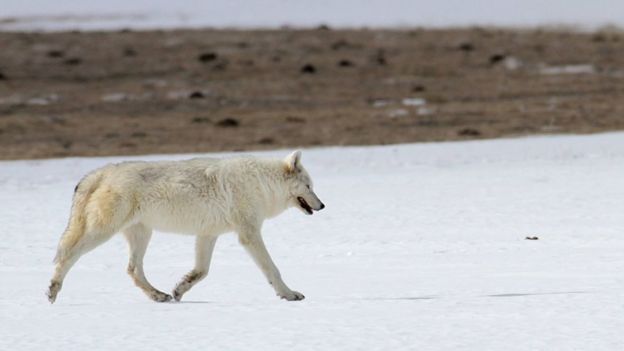
‘White Lady’ wolf shot dead prompts Yellowstone reward

http://www.bbc.com/news/world-us-canada-39930372

  • 15 May 2017
  • White LadyImage copyrightYELLOWSTONE NATIONAL PARK
Image captionThe so-called White Lady was a hit with tourists

A $5,000 (£3,900) reward has been put up for information on how a rare white wolf at Yellowstone National Park was shot dead.

The female was one of three white wolves in the park and had 14 living pups, wildlife officials say.

The reward comes after initial results of a necropsy show the so-called White Lady was shot around 10 April.

“She was one of the most recognisable wolves and sought after by visitors to view and photograph,” the park said.

“Due to the serious nature of this incident, a reward of up to $5,000 is offered for information leading to the arrest and conviction of the individual(s) responsible for this criminal act,” said Yellowstone National Park Superintendent Dan Wenk.

At 12 years old, she had lived for more than twice the average lifespan of a wolf in Yellowstone, officials say.

The Canyon Pack Alpha, as she was known to wildlife researchers (and as The White Lady to tourists), was found by hikers on 11 April.

Wildlife officials were not able to save its life, and the wolf was put down.

Her remains were brought to a US Fish & Wildlife Service Forensics Laboratory in Oregon for a necropsy, where officials determined that it had been mortally wounded by a hunter’s rifle.

As of 2014, researchers had documented at least 104 wolves in 11 packs located within the park.

White wolfImage copyrightYELLOWSTONE/ FACEBOOK
Image captionShe had birthed 20 cubs, 14 of which lived past the age of one

The wolves were reintroduced in Yellowstone in 1995, having been eradicated by hunters.

Advocates of wolves say the presence of predators helps balance the ecosystem, and leads to healthier populations of other wild animals.

Opponents say they are a threat to humans, pets and livestock.


Read more

Media captionHere’s how the bison have been reintroduced into the wild

Wildlife advocates see wolves as ‘best natural defense’ against chronic wasting disease

http://trib.com/news/state-and-regional/wildlife-advocates-see-wolves-as-best-natural-defense-against-chronic/article_9ab09c2c-03f9-57cb-bda7-4453a1ab7a39.html

  • BRETT FRENCH For the Star-Tribune
  • Apr 17, 2017

BILLINGS, Montana – Wolves are the perfect animal to help reduce the spread of chronic wasting disease among elk, deer and moose, wolf advocates told the Montana Fish and Wildlife Commission last week during the board’s meeting in Helena.

“And it doesn’t cost us anything,” said Marc Cooke, president of Wolves of the Rockies.

Cooke’s comment Friday was later endorsed by former Fish and Wildlife Commissioner Gary Wolfe, who was once the program leader for the CWD Alliance, which tracks and provides information on the fatal disease.

“I would have to agree that wolves can be an effective control,” Wolfe said. “They are the best natural defense Montana has.”

Legislature

The comments come as the Montana Legislature is considering Senate Joint Resolution 9, introduced by Sen. Mike Phillips, D-Bozeman, that would request a study of the potential impacts of and methods to prevent chronic wasting disease in Montana. The measure already passed the Senate and is now moving through the House.

Phillips also introduced SJ8, which would have asked Wyoming to discontinue artificial feeding of elk, a place where diseases like CWD could quickly spread. That resolution was tabled in the House Fish, Wildlife and Parks Committee after clearing the full Senate with a 50-0 vote.

Spreading

Meanwhile, the disease continues to spread in Montana’s neighbor to the south. In late March the Wyoming Game and Fish Department reported officials had detected CWD in a female mule deer found dead near the Pinedale airport in February, the first case of CWD found in Sublette County, which is home to 13 elk feedgrounds.

CWD map

“This deer was found in Deer Hunt Area 139, where CWD has not been previously discovered, and is not adjacent to any other positive CWD deer, elk or moose hunt areas,” according to a WDGF news release.

The discovery prompted the Sierra Club Wyoming Chapter and to issue a public plea this week to “begin phasing out winter feeding of elk to prevent the rapid spread of disease among elk densely concentrated on feed lines for months each winter,” the groups wrote in a press release.

“It is incumbent upon state officials, as well as managers of the National Elk Refuge in Jackson, to implement a realistic plan to phase out artificial winter feeding now,” said Roger Hayden, WWA executive director. “Once CWD reaches feedgrounds we likely will have a more serious problem on our hands. We need to act now.”

Elk fears

CWD was first discovered in Wyoming in 1985 when a mule deer in the southeastern corner of the state tested positive. Since then the disease, which affects the animals’ brains and is always fatal, has slowly spread north and west.

“Over the past 20 years surveillance data has shown an increase in prevalence and distribution of CWD in Wyoming, particularly in deer,” according to the WGFD. “CWD is now found across the majority of the state, with new detections suggesting continued westward spread of the disease.”

CWD has never been detected in wildlife in Montana, except in a captive elk herd that was destroyed. However, the disease has been discovered in the Dakotas and Canada, as well as Wyoming, which all border Montana.

Could wolves become an unexpected ally in protecting Montana’s most popular big game animals? That would be a hard reality to swallow for some hunters and hunting groups who have long opposed the large canines’ reintroduction to Yellowstone and spread into Montana.

Slaughter Of Yellowstone Bison At The Center Of Culture War

In the same year that Congress voted to make bison the national mammal, Yellowstone National Park had its second largest cull ever — reducing the heard by more than 1,200 animals.

RAY SUAREZ, HOST:

Americans have always liked the idea of bison, but living with them is another matter. In the same year Congress made bison the national mammal, more than 1,200 were culled from the Yellowstone National Park herd. Amy Martin reports on why the U.S. is killing so many of the animals it also idealizes.

AMY MARTIN, BYLINE: Thirty miles north of Yellowstone is a place called Paradise Valley. Picture snowy peaks, a winding river, big sweeping meadows…

(SOUNDBITE OF COWS MOOING)

MARTIN: …And cows. Drusca Kinkie runs a cattle ranch here.

DRUSCA KINKIE: I think the concept of free-roaming bison will harm agriculture immensely.

MARTIN: The annual bison cull in Yellowstone attracts controversy every year, and this winter was the second biggest ever. But Kinkie supports the reduction of the herd.

KINKIE: There’s a disease issue with bison. They’ve been exposed to brucellosis.

MARTIN: Brucellosis is a bacterial disease, which elk and bison in the Yellowstone area originally caught from livestock. Kinkie says the threat of transmission back to cattle looms large. And it’s that fear that drove the state of Montana to sue Yellowstone in 1995, forcing the park to ship more animals to slaughter. But there’s more going on here than just disease. Bison are caught in the culture wars. Kinkie says she feels misunderstood.

KINKIE: You have all these people out there fighting for free-roaming bison. And it’s a concept. It’s a vision that they have. And we’re fighting for our ability to survive here and make a living as we have for the last 60, almost 70 years. And they don’t have anything to lose in their vision. And we have everything to lose in ours.

ROBBIE MAGNAN: Buffalo has taken care of Native Americans since the beginning of time.

MARTIN: Robbie Magnan says there is a lot to lose on the other side. He’s the director of the Fish and Wildlife Department for the Fort Peck Tribes in northeastern Montana. For him, the culture wars started much further back when Europeans first arrived in North America and more than 50 million wild bison roamed the continent.

MAGNAN: The federal government massacred them because they figured out that was the only way to bring the Indians down to their knees – it was destroy their economy. And that’s why they were almost wiped out.

MARTIN: Now, only about 30,000 bison are protected in North America and, of those, less than half are living in anything close to wild conditions. As Magnan drives up into the hills of the reservation, he says wild bison are an important part of the country’s heritage. That’s why he helped to develop an alternative to slaughter.

MAGNAN: Instead of massacring these animals when they migrate out of the park in the wintertime when they’re hungry, OK, let’s get them out alive and start other cultural herds going.

MARTIN: To do that, the Fort Peck Tribes built a 320-acre brucellosis-quarantined pasture surrounded by extra high fences. Here, the Yellowstone bison can be held and tested and many eventually declared brucellosis free. Last year, the National Park Service said it supported using the facility, but then Magnan says…

MAGNAN: After they found out it works, they quit it. And why quit something when you know it works?

MARTIN: The person responsible for answering that question is Sue Masica, who oversees this region of the park service. But she declined requests for an interview.

Those guys are moving.

UNIDENTIFIED MAN: How many did you count? Yeah, they’re going.

RICK WALLEN: I’m guessing there’s 200-plus.

MARTIN: Rick Wallen is the team leader for the park’s bison management program. He’s watching a large bison herd move quickly down the valley of the Yellowstone River. It’s a cold day and their dark shapes stand out against the snow. Despite the beauty, the mood is intense. For most of the year, Wallen studies these animals. But every winter, he manages their slaughter.

WALLEN: There is a cost, and that cost is more emotional for some than others. I’ve even had people on days that we were supposed to go there and do the work call and say, you know, I can’t do this anymore. I have to resign my position. I’m sorry.

MARTIN: Wallen thinks a better solution would be quarantine. That would allow him to do what he says is his job.

WALLEN: Protect the wild in wild bison. Otherwise, they go extinct.

MARTIN: That extinction comes in the form of domestication. Bison are increasingly raised as livestock and bred with cattle to make them more docile. Wallen says Yellowstone is a bulwark against this trend, a place where bison still have to use their instincts to survive in the wild. For NPR News, I’m Amy Martin in Yellowstone National Park.

Copyright © 2017 NPR. All rights reserved. Visit our website terms of use and permissions pages at www.npr.org for further information.

NPR transcripts are created on a rush deadline by Verb8tm, Inc., an NPR contractor, and produced using a proprietary transcription process developed with NPR. This text may not be in its final form and may be updated or revised in the future. Accuracy and availability may vary. The authoritative record of NPR’s programming is the audio record.

Rare white wolf in Yellowstone park euthanized over injuries

http://www.vancouversun.com/travel/rare+white+wolf+yellowstone+park+euthanized+over+injuries/13302173/story.html

THE ASSOCIATED PRESS  04.14.2017

Rare white wolf in Yellowstone park euthanized over injuries
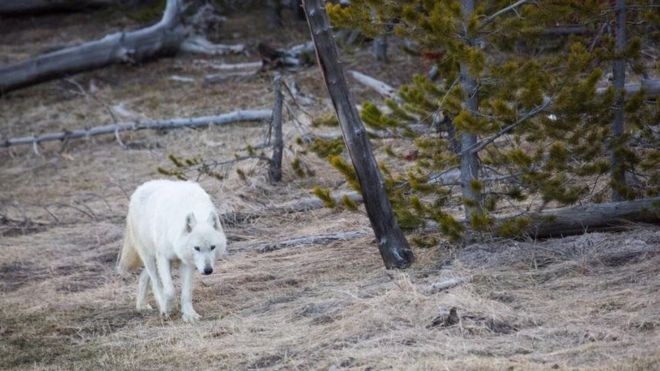
In this April 6, 2016 photo provided by the Yellowstone National Park Service a white wolf walks in Yellowstone National Park, in Wyo. One of only three white wolves roaming Yellowstone National Park has been put down by park staff after it was found with severe injuries. P.J. White of the National Park Service says the female wolf was found Tuesday, April 11, by hikers on the north side of the park. White says the wolf was in shock and dying, prompting the decision to euthanize it and investigate what caused the wolf’s injuries. The nature of the initial injuries could not immediately be determined. (Neal Herbert/Yellowstone National Park via AP)

SHAREADJUSTCOMMENTPRINT

YELLOWSTONE NATIONAL PARK, Wyo. — One of only three white wolves roaming Yellowstone National Park has been put down by park staff after it was found with severe injuries.

P.J. White of the National Park Service says hikers found the female wolf Tuesday on the north side of the park.

White says the wolf was in shock and dying, leading to the decision to euthanize it and investigate what caused the injuries. The nature of the animal’s injuries could not immediately be determined.

The predator was one of three known white wolves in the park.

It had lived to 12 years old, twice the age of an average wolf in the park, and was one of the most recognizable and sought after to view and photograph by park visitors.

More than 1,200 Yellowstone bison killed this winter

FILE (AP Photo/David Zalubowski)

AA

BOZEMAN, Mont. (AP) — Operations to kill bison in Yellowstone National Park for slaughter have come to an end, with more than 1,200 bison culled this winter.

The Bozeman Daily Chronicle reports the park released figures Wednesday showing 748 bison were consigned to slaughter this year. Another 453 were killed by hunters from Native American tribes and the state of Montana.

The total winter death toll marks the highest number of bison killed in the Yellowstone area since 2008. It also falls just short of the removal goal bison managers set in the fall.

Bison are taken from the area each year because of a management plan established in 2000 that calls for a population of 3,000 bison in the region. Park biologists estimate there are 5,500 bison there now.

Yellowstone reports 1st bear sighting of the season

http://billingsgazette.com/lifestyles/recreation/yellowstone-reports-st-bear-sighting-of-the-season/article_f8926876-9d70-5a7a-a745-8a01b287b8dc.html

At least three grizzly bears have awoken from hibernation, according to a Yellowstone National Park press release.

Early Wednesday morning a park employee observed a grizzly bear between Mammoth Hot Springs and Tower-Roosevelt. It was the first confirmed bear sighting this year, although bear tracks have been observed since Feb. 22. Later in the morning, park staff saw two more grizzly bears scavenging carcasses in the northern part of the park.

This is a little later than the first reported bear sightings have been in recent years. In 2016, the first bear in the park was reported on Feb. 23. In 2015, the first sighting was Feb. 9. In 2014, bears were spotted on March 4.

When bears emerge from hibernation they look for food and often feed on elk and bison that died over the winter. Sometimes bears will act aggressively while feeding on carcasses.

All of Yellowstone National Park is bear country. To stay safe in bear country follow these guidelines:

  • Prepare for a bear encounter.
  • Carry bear spray, know how to use it, and make sure it’s accessible.
  • Stay alert.
  • Hike or ski in groups of three or more.
  • Stay on maintained trails and make noise.
  • Avoid hiking at dusk, dawn, or at night.
  • Do not run if you encounter a bear.
  • Stay 100 yards away from black and grizzly bears.
  • Use binoculars, a telescope, or telephoto lens to get a closer look.
  • Store food, garbage, barbecue grills and other attractants in hard-sided vehicles or bear-proof food storage boxes.
  • Learn more about bear safety.

“Yellowstone visitors care deeply about preserving bears and observing them in the wild,” said Kerry Gunther, the park’s Bear Management specialist. “Carrying bear spray is the best way for them to participate in bear conservation because reducing potential conflicts protects people and bears.”

While firearms are allowed in the park, the discharge of a firearm by visitors is a violation of park regulations.

The park restricts certain activities in locations where there is a high density of elk and bison carcasses and lots of bears. Restrictions began in some bear management areas on March 10.

Visitors are asked to report bear sightings and encounters to a park ranger immediately.

Meanwhile: Bison cull in Yellowstone nearing 1,000 on the year

Hooves plodded through an alleyway toward the trailer. A park ranger standing on a catwalk above the alleyway counted the individual units of Yellowstone’s population of the country’s national mammal as each entered the trailer. When the trailer filled, a representative from the U.S. Department of Agriculture’s Animal and Plant Health Inspection Service placed locks on the trailer doors, a legal requirement and symbol that the trucks could travel on Montana’s roads.

This routine played out three times, and when the final trailer was loaded and sealed, the trucks took off. Another 45 Yellowstone bison off to slaughterhouses, where they’ll become meat for various Native American tribes. But that wasn’t the end of the day for the workers here — there were another 60 or so to prepare for shipment.

It was just another day at the park’s Stephens Creek Capture Facility, where bison are caught for slaughter each year. Park officials brought a group of bison advocates here Wednesday to watch. This season has been busier than the last, as harsh winter conditions have pushed more bison downhill from Mammoth Hot Springs than in recent years. The number of bison killed is approaching 1,000.

“And the winter’s not over,” said Rick Wallen, a Yellowstone bison biologist.

This all happens because of an agreement between the state of Montana and the park that calls for a population of 3,000 bison in the Yellowstone area. About 5,500 live there now. Officials want to remove as many as 1,400 from the population this year.

They cull the herd through public hunting and shipping bison to slaughter. Whether enough bison can be killed to reach the goal depends on how many bison migrate into the Gardiner basin — where the trap is and one place where they can be legally hunted.

Both hunters and the slaughter operation have reaped the benefits of this year’s large migration. Andrea Jones, a spokeswoman for Montana Fish, Wildlife and Parks, said hunters from five tribal nations and some licensed through the state have confirmed the take of 417 bison this winter.

Wallen said roughly 650 bison have been caught for slaughter so far and about 400 have been shipped, an average of roughly 100 per week since the beginning of February. That means they are approaching the goal, and since more shipments are scheduled and capture for slaughter is scheduled to run through March, they may reach a point where the work can stop.

“We’re going to have to make some hard decisions,” Wallen said.

Shipping bison to slaughter has long been controversial, and some of the most outspoken critics of the practice watched it happen Wednesday. Once the trucks full of bison left, the spectators were back on the tour bus. They watched from inside the bus as a vintage Chevrolet Blazer and four rangers on horseback lined up behind a corral full of bison.

“They call this domestication before assassination,” said Mike Mease, of the Buffalo Field Campaign.

The SUV and the men on horseback chased the bison into the narrow alleyways of the facility and into a holding pen. One-by-one, the bison entered a hydraulic squeeze chute.

Before operations began this year, park officials stamped parts of the chute with “2016-2017” in white lettering. They put that there so photos from the operations correlate with the correct year. That grew out of displeasure with old photos of bison wearing nose tongs surfacing online. Nose tongs haven’t been used here since the mid-2000s, park spokeswoman Morgan Warthin said.

Cattle producers worry bison could lead to transmit the disease to their herds, and even the perception of disease risk near their herds could subject ranchers to increased testing to ensure meat from infected animals doesn’t end up in grocery stores.

The disease is passed primarily through afterbirth. About half of Yellowstone bison are believed to have been exposed to the disease, though exposure doesn’t mean infection. Elk have transmitted the disease, but there has never been a documented case of bison transmitting the disease to livestock.

“A very small number of animals are truly threatening,” Wallen said.

After the blood sample is taken, the machine weighs the animal. Then, the animal is sorted into a pen based on weight and sex. Some come in bloodied, missing a horn or with a gash in their side.

Suspended above them is a ring of aluminum beer cans — Rainier in one pen, Pabst Blue Ribbon in another. Each ring is connected to a rope stretched across the pen. When it’s time to move bison out, park employees will use the rope and beer can halo to chase them. Until then, the bison wait their turn to board trailers some cold morning.

Bull Bison Brutally Stabbed by Hunters

(Warning: Contains Graphic Images)

On February 21, 2017 Crow, Cindy and I were on patrol in the afternoon heading up Jardine Road when we came upon two bull bison grazing beside the road. We stopped for a few moments to admire them. We also had severe reservations on their safety.

We continued to drive up Jardine Road to one of the lookout points and were checking on recent remains of bison kills. We heard five gunshots and our hearts sank.

It took about ten minutes to drive down Jardine Road and discover what we had feared. There were no hunting vehicles present, but we saw three teenagers and one younger boy situated about 50 yards up an incline from the road. They were busy gutting one of the bulls.


Bison Slaughter 1


We then spotted the other bull only 15 yards from the road. Cindy thought it was still breathing and Crow confirmed. Crow and Cindy immediately walked up to the teenagers to tell them this bull was still alive.


Bison Slaughter 2


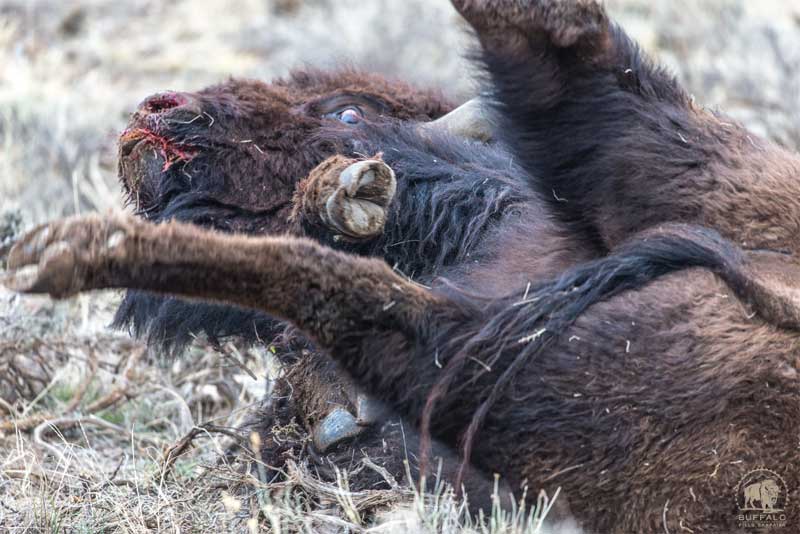
The teenagers came down to the suffering bull with knives in their hands and immediately proceeded to stab him in the neck. The bull immediately jumped to his knees and everyone scattered. The bull fell down, but was actively moving its legs and head.


Bison Slaughter 3


The teenagers once again proceeded to stab him in the neck several more times.


Bison Slaughter 4
Bison Slaughter 5


He fought for his life as they stabbed him, raising his legs and hindquarters toward the sky in a desperate attempt to get away from his attackers.


Bison Slaughter 6
Bison Slaughter 8


The teenagers were giving up.

Then the adult hunters arrived. One of the hunters walked up to the struggling bull and shot it.


Bison Slaughter 9


The three of us are incredibly distraught at having to witness such a horrendous scene. I am certain that we will never forget the experience.

These two magnificent bulls had spent their lives living within Yellowstone. They lived their lives grazing and strolling along the rivers and roads of the park. They had become immune to vehicles and people. They lacked a fear mechanism that would allow them to avoid or defend themselves from such a brutal attack. When these two magnificent bison migrated across the park boundary, they were just strolling along a road and grazing like they always did. Hunters then pulled-up in a truck and shot them from a few yards away. This murder continued with the brutal stabbing and final slaughter of one of them. There is no skill to this type of “hunting,” which is really nothing more than a slaughter.

Witnessing this brutality makes me wonder how many other bison have succumbed to a similar death.

With the Buffalo,

Larry A. Lyons
BFC Volunteer

MONTANA RESIDENTS ANGERED OVER TRIBAL ELK HUNTING IN YELLOWSTONE

https://www.gohunt.com/read/news/montana-residents-angered-over-tribal-elk-hunting-in-yellowstone#gs.4zNYYlI

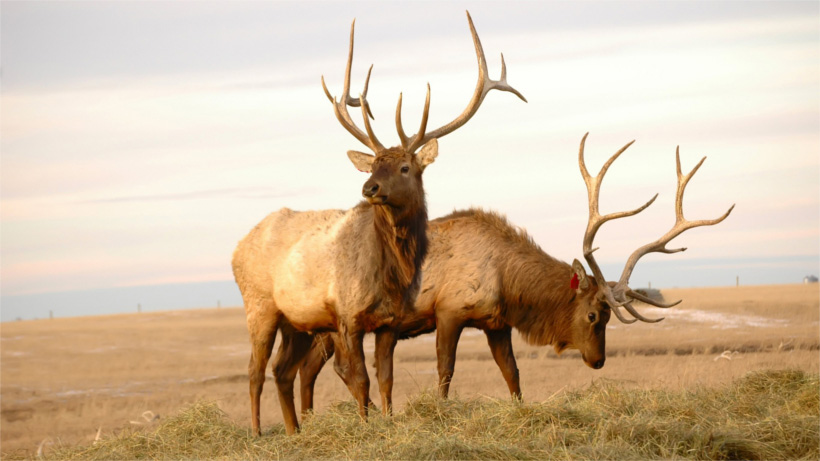
Two elk in field
Photo credits: Shutterstock

Fewer elk reside within Yellowstone National Park, but that doesn’t mean tribal hunters can’t hunt them, especially if fewer bison migrate outside of park boundaries. While this is legal under tribal law, many Montana residents – and elk hunters – think it’s unfair, considering that fewer elk mean fewer tags and opportunity for those who hunt within the established elk hunting seasons.

Local resident Bill Hoppe told The Bozeman Daily Chronicle that “allowing the tribal hunters to kill elk outside of Montana’s regular elk season is unfair to regular Montana hunters” though, legally, the state cannot intervene with established tribal regulations.

“The state of Montana has no authority over the rights of tribal governments to take wildlife negotiated under treaties with the U.S. government,” Montana Fish, Wildlife and Parks (MFWP) spokeswoman Andrea Jones told The Bozeman Daily Chronicle, adding that MFWP works closely with local tribal leadership on other law enforcement issues, but cannot enforce which big game animals tribal members can hunt.

While five tribal nations (the Shoshone Bannock Tribes, Confederated Tribes of the Umatilla Indian Reservation, Confederated Salish and Kootenai Tribes, the Yakama Nation and the Nez Perce Tribe) all hunt within the area, following the rights provided to them based upon treaties signed by the federal government over a century ago, the tribe that seems to be under fire is the Nez Perce Tribe – for hunting 25 elk instead of the overabundant bison.

This is an issue because, according to The Bozeman Daily Chronicle, the current elk tally counted roughly 5,300 animals – down from 19,000 animals in the mid-1990s. Bison, on the other hand, are plentiful – so much so that there’s an annual cull and capture-for-slaughter to keep numbers manageable. Tribal sustenance hunting helps keep bison numbers in check.

While this is clearly a concern within the state, Jones says that not much change has occurred despite Montana officials bringing up the elk hunting issue during the state and tribal officials weekly meeting. In fact, Jones says that it’s not really about hunting; instead, “this is about how a sovereign nation is exercising those rights.”

Montana activists ramp up campaign against culling Yellowstone bison

https://www.rawstory.com/2017/03/montana-activists-ramp-up-campaign-against-culling-yellowstone-bison/

Wildlife advocates are ramping up their campaign against the annual culling of bison that roam onto state lands in Montana each winter from Yellowstone National Park, erecting dramatic billboards showing buffalo bleeding in the snow.

The billboards are the latest effort in an ongoing campaign by opponents of a years-long practice aimed at reducing the number of Yellowstone’s bison to protect against disease transmission and lessen the damage to land in and around the park, which spans parts of Montana, Wyoming and Idaho. This year, wildlife managers aim to reduce the herd by up to 1,300 animals, the largest amount in nearly a decade.

“We’re fine with bison being hunted,” Michael Garrity, executive director of the Alliance for the Wild Rockies, the Montana-based conservation group behind the billboard campaign, said in a telephone interview on Friday. “But this is mass slaughter.”

His group is urging the state’s Democratic governor, Steve Bullock, to stop bison destined for slaughter from being trucked through the state.

The outsized road signs, painted by a Montana artist and bison activist, depict fallen bison with blood drenching snow and the words, in capital letters, “Stop the Yellowstone massacre!” Two billboards went up this week and two more are slated to go up later this month.

Wildlife advocates have also held rallies and a candlelight vigil against the severe cull.

The bison targeted for hunting and slaughter are among those that migrate into Montana each winter from Yellowstone. This year, the herd, the last remaining wild purebred bison in the United States, has swelled to 5,500, much higher than the target of 3,000 sought by wildlife managers.

When the herd gets too big, wildlife managers say, it can damage land through over-grazing. And Montana ranchers fear bison will transmit to cows a disease that causes them to miscarry.

In December, federal, state and tribal agencies responsible for managing the herd said they would cull between 900 and 1,300 bison, one of the largest amounts in the history of the park.

Jay Bodner, natural resource director for the Montana Stockgrowers Association, said the push to cull the herd is linked to the impacts on the landscape by too many animals.

“There needs to be management protocols in place to make sure bison aren’t over-utilizing and destroying the range,” Bodner said.

Bullock spokeswoman Ronja Abel described bison management as “a difficult and challenging issue.” She added: “The state recognizes culling efforts are not everyone’s preferred approach.”

(Editing by Sharon Bernstein and Matthew Lewis)

Wildlife Photography©Jim Robertson