Exposing the Big Game

Forget Hunters' Feeble Rationalizations and Trust Your Gut Feelings: Making Sport of Killing Is Not Healthy Human Behavior

Exposing the Big Game

Criminal charges possible in killing of Cincinnati gorilla

http://www.msn.com/en-us/news/us/criminal-charges-possible-in-killing-of-cincinnati-gorilla/ar-BBtH9Uc?ocid=spartandhp

Reuters
By Ginny McCabe2 hrs ago

  • USA TODAY

    Free

CINCINNATI, May 31 (Reuters) – Police may bring criminal charges over a Cincinnati Zoo incident in which a gorilla was killed to rescue a 4-year-old boy who had fallen into its enclosure, a prosecutor said on Tuesday.

The death of Harambe, a 450-pound (200-kg) gorilla, also prompted the animal rights group Stop Animal Exploitation Now to file a negligence complaint on Tuesday against the zoo with the U.S. Department of Agriculture. The group is seeking the maximum penalty of $10,000.

The group said in its complaint letter that the child’s ability to get past the barrier was proof the zoo was negligent and should be fined for a “clear and fatal violation of the Animal Welfare Act.”

Mounting outrage over Saturday’s killing of the Western lowland silverback, an endangered species, sparked criticism of both the zoo and the child’s parents. Online petitions at change.org drew more than 500,000 signatures demanding “Justice for Harambe.”

Cleveland Police are taking a second look at possible criminal charges in the incident after initially saying no one was charged. There was no indication of whether the investigation would focus on the zoo or the child’s parents.

“Once their investigation is concluded, they will confer with our office on possible criminal charges,” Hamilton County Prosecutor Joseph Deters said in a statement.

Witnesses said the child had expressed a desire to get into the enclosure and climbed over a 3-foot (1-meter) barrier, falling 15 feet (4.6 m) into a moat. Zookeepers took down the 17-year-old ape after he violently dragged and tossed the child, officials said.

A child touches the head of a gorilla statue where flowers have been placed outside the Gorilla World exhibit at the Cincinnati Zoo & Botanical Garden, Sunday, May 29, 2016, in Cincinnati. On Saturday, a special zoo response team shot and killed Harambe, a 17-year-old gorilla, that grabbed and dragged a 4-year-old boy who fell into the gorilla exhibit moat. Authorities said the boy is expected to recover. He was taken to Cincinnati Children's Hospital Medical Center. (AP Photo/John Minchillo)© The Associated Press A child touches the head of a gorilla statue where flowers have been placed outside the Gorilla World exhibit at the Cincinnati Zoo & Botanical Garden, Sunday, May 29, 2016, in… The boy’s mother said on Facebook that the boy suffered a concussion and scrapes but was otherwise fine.

Thane Maynard, director of the Cincinnati Zoo & Botanical Gardens, on Monday stood by the decision to shoot Harambe, saying he was not simply endangering the child but actually hurting him.

Zoo officials were not immediately available for comment on either the negligence complaint or the police investigation but said on Monday the exhibit was safe and exceeded required protocols.

The Gorilla World exhibit has been closed since the incident and will reopen on Saturday.

Looking at the incident through Harambe’s eyes, his former caretaker, Jerry Stones, said in a CNN interview that the breach of his habitat was likely confusing.

“Here is this animal that has this strange thing in his house,” Stones said on CNN. “He knew what adult people were but he’d never been around children. It smells similar, it looks similar but ‘What is it? Do I play with it? Am I supposed to be afraid of it? What do I do?'”

Even Republican presidential candidate Donald Trump jumped into the fray at a news conference, saying, “The way he held that child, it was almost like a mother holding a baby … It was so beautiful to watch that powerful, almost 500-pound gorilla, the way he dealt with that little boy. But it just takes one second … one little flick of his finger.”

In the wild, adult male silverbacks such as Harambe are leaders of groups of gorillas known as troops. They develop the silver patch on their coats as they mature. (Additional reporting by Barbara Goldberg and Gina Cherelus; Editing by Bill Trott)
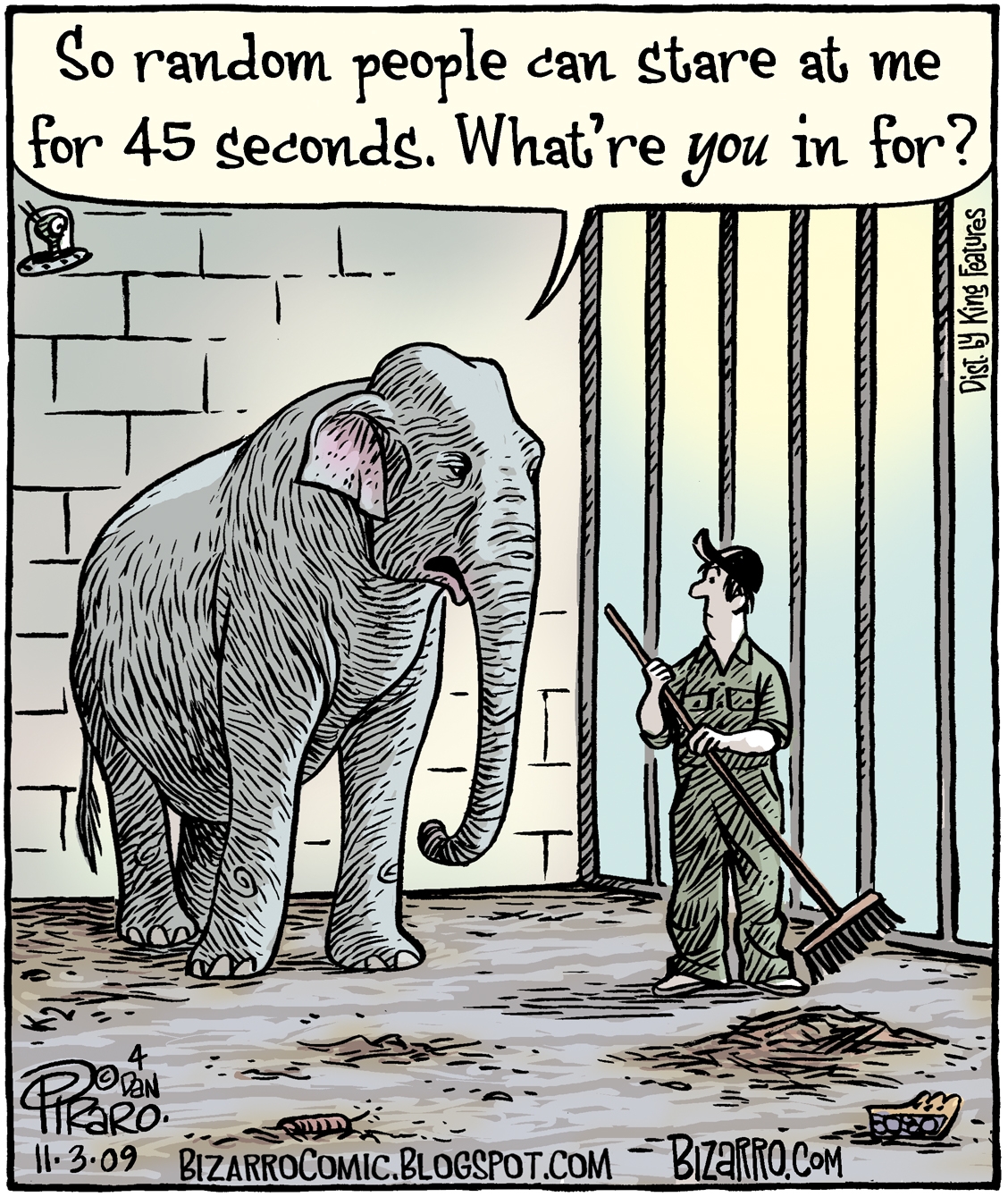
Elephants Shelter Young as Bomb Siren Rings in Israel

A group of elephants were filmed sheltering their young when bomb sirens rang out in Tel Aviv, Israel on Thursday as fighting continues in Israel and Gaza.

The elephants at Ramat gan Safari zoo near Tel Aviv began trumpeting and making other noises as they quickly gathered together when the sirens rang out, placing the young elephants in the middle of the circle with the larger adults on the outside.

ImageProxy

Apocalyptic scenes in Georgia as Lions, bears, wolves and a HIPPO are among dozens of animals to escape from zoo

More media “hype” about climate change or against zoos? NOT !

bears, lions, tigers, jaguars and wolves were among the animals that escaped.

“I can’t imagine this tragedy,” she said. “Almost the whole zoo is underwater.”

Torrential rains late Saturday and early Sunday poured down on Tbilisi, a hilly city that is along a river valley. The Tbilisi Zoo lies along the banks of the Vere River, which overflowed and caught the animals in their pens and cages.

Photos here: http://www.dailymail.co.uk/news/article-3123378/A-city-lockdown-Tigers-lions-bears-wolves-hippo-loose-Georgia-s-capital-Tbilisi-freak-flood-killed-eight-leaves-dozens-dangerous-zoo-animals-roaming-city-s-streets.html

And here: http://www.washingtonpost.com/world/zoo-animals-loose-after-floods-hit-georgian-capital/2015/06/14/178721a0-1279-11e5-9518-f9e0a8959f32_story.html

1451324_650954518277931_1616731734_n

Zoos Bring Out the Worst

http://www.komonews.com/news/national/Elephant-escapes-from-circus-kills-man-in-Germany-307258541.html

Elephant escapes from circus, kills man in Germany

BERLIN (AP) – A German man taking his regular morning stroll was killed by an elephant who had escaped from a nearby circus, police said Saturday.

The 65-year-old man was walking in the woods near Buchen, a town in southwest Germany, when the African elephant attacked him shortly after 5 a.m. (0300 GMT), said Heidelberg police spokeswoman Yvonne Schmierer. She declined to say what injuries the unnamed man suffered.

The 34-year-old female elephant, called ‘Baby,’ was captured and returned to the circus. Police are now investigating whether someone let the elephant out of its secure enclosure, and why the animal acted aggressively toward the man.

“There’s evidence of third party involvement,” said Schmierer. “Either someone forgot to shut the enclosure, or the elephant was released intentionally.”

German news agency dpa reported that the elephant had previously injured people. It quoted a representative of the German branch of animal rights group PETA calling for authorities to take the elephant away from the circus.

1924891_10152211828561061_1647642544_n

Why Not Retire the Circus Elephants Now?

2015-03-06

Retire Them Now!

Luke Sharrett for The New York Times

If the welfare of elephants were truly its only concern, the Ringling Brothers and Barnum & Bailey Circus would stop using them in performances now, and put them on a train to sunny Florida, where they could enjoy a comfortable retirement. Instead, as The Associated Press reported Thursday, its 13 wrinkly troupers will be touring the country, doing lumbering tricks in costume for paying customers, until 2018. Then they will be sent to the company’s park near Polk City, Fla., and perform no more.
Continue reading the main story
Related in Opinion

Elephants are big business for Feld Entertainment, Ringling’s parent company, and they have been for a long, long time. So it’s hardly a small thing that the circus has announced it is ending its elephant acts. Though Ringling has always had other trained animals, like horses, dogs, tigers and lions — and, notoriously, in the 1980s, goats made to resemble unicorns — Asian elephants are central to its image and marketing. Many a New Yorker remembers the elephant marches through the Midtown Tunnel to Madison Square Garden.

But big-animal circus acts belong to a different age. Circuses have long since abandoned human freak shows and brutish displays of animals as beasts to gawk at. Many cities and counties have passed ordinances forbidding some elephant shows, because of the use of chains and prods called bullhooks to control the animals. Years of pressure from animal-rights advocates surely influenced Ringling’s decision. And competitors — notably Cirque du Soleil — have shown that it is possible to dazzle audiences with entirely human feats of grace and skill.

The news from Ringling summons two powerful images: Dumbo’s mother, trapped in a circus car, cradling her child to the song “Baby Mine,” in one of the most heartbreaking of all movie scenes, and, more recently, a viral video of two adult elephants rushing to the aid of a fallen baby elephant at a zoo in Zurich. The touching video showed indelibly what scientists well know — that elephants are highly intelligent, social creatures that demonstrate powerful family bonds and nurturing skills.

Questions of cruelty aside, a concern for simple dignity and compassion leads to the conclusion that these magnificent creatures deserve better than being dolled up and sent on the road to do stunts for shrieking children.

In a world full of cruelty toward species not our own, we’ll take good news where we can. There is every reason to welcome the promise of retirement for the elephants, although it would be better if they did not have to wait so long. The Times reports that the company thinks it’s impractical to move the elephants to its 200-acre park sooner. But that seems a little convenient — a chance for a few more seasons of hucksterism that would have made P. T. Barnum proud: Come see the elephants now — before they leave the ring forever!

Death at a Zoo

 http://www.earthisland.org/journal/index.php/elist/eListRead/death_at_a_zoo

‘Zoothanasia’ is a common practice in Europe and also occurs in the US. Some wildlife advocates say it’s unnecessary

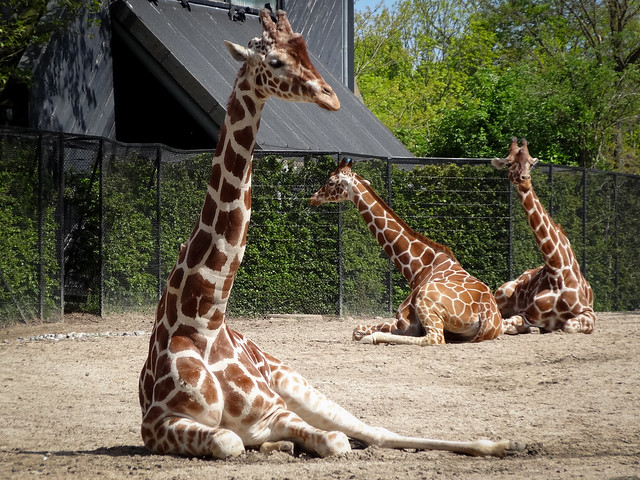
The killing of a young giraffe at the Copenhagen Zoo in February 2014 shook the world, causing protests from animal advocates and the public alike. “Marius,” an 18 month-old giraffe that had been born at the Copenhagen Zoo, was healthy and likely would have lived a long life. The animal was put down (and then fed to lions at the zoo), because officials at the zoo concluded it was unsuitable for breeding. A month later, the same zoo euthanized four lions, again on the grounds of genetic purity and breeding.

Giraffes at Copenhagen ZooPhoto by Michael ButtonGiraffes at the Copenhagen Zoo. Zoo animals are typically killed for two reasons: to control the population and manage “surplus animals,” or to maintain genetic strength and diversity within a captive breeding program.

Zoo administrators ended up receiving death threats, and the killings sparked a media feeding frenzy. The serial deaths ushered in a newfound awareness of a not-so-new practice and raised some overlooked questions: Is “zoothanasia,” as the practice has been called, really necessary? And how common is it?

Zoo animals are typically killed for two reasons: to control the population and manage “surplus animals,” or to maintain genetic strength and diversity within a captive breeding program. While many animal rights activists and some conservation biologists are against the use of euthanasia among zoo animals, organizations such as the European Association of Zoos and Aquaria and the Pan African Association of Zoos and Aquaria defend the practice. “As an organization, we believe that culling has a valid scientific basis and must remain one of the tools open to our members, provided that it is carried out humanely,” says David Williams-Mitchell, a spokesperson for EAZA.

Marc Bekoff, a professor of ecology and evolutionary biology at University of Colorado-Boulder and the person credited with coining the term “zoothanasia,” disagrees. He says that killing captive animals is the opposite of conservation. “There simply is no reason to kill any animals, members of endangered species or not, in zoos unless she/he is mortally ill or injured,” says Bekoff, who is author of the book Rewilding Our Hearts: Building Pathways of Compassion and Coexistence.

Sometimes, zoo animals are killed because there’s just too many of them in their cages and enclosures. These “surplus animals” are the result of animals that have been allowed to breed without a zoo considering how it might care for them in the future. These surplus animals then suffer due to lack of resources, money and care. According to a study from the Captive Animals’ Protection Society, at least 7,500 animals (and as many as 200,000 animals) are considered surplus at any one time. For some zoos, killing an animal is easier (and cheaper) than continuing to care for it, or even transferring it to some kind of a sanctuary. “They’ll tell you they do it for lack of money and space, for example,” Bekoff says.

Some animals are deemed ‘surplus’ because they are poor candidates for breeding. While zoos are mostly in the business of entertaining their visitors and educating them about wildlife, many are home to captive breeding programs and are under pressure to conserve the best of species to ensure they do not go extinct. Williams-Mitchell argues that, from EAZA’s perspective, there is an obligation to consider the future of a species over the future of just one animal. Williams-Mitchell said EAZA believes that “culling as a tool should be available to any zoo that is serious about maintaining a healthy population of a species,” though he was careful to caution that killing “is only one of the options.”

It’s important to note that US zoos practice euthanasia far more sparingly than zoos in the EU.

Accredited zoos in the US aren’t supposed to use euthanasia for routine population control, and typically only kill animals for medical purposes or to relieve suffering — for example, to aid ailing animals and those with deformities and terminal illnesses. In rare cases, animals are killed when the zoo cannot maintain its quality of life at an acceptable standard.

>US zoos primarily utilize contraception instead of euthanasia to manage animal populations. But veterinary birth control comes with its own risks. According to Williams-Mitchell, “Evidence from the United States shows that widespread use of contraception can and has led to catastrophic population collapse in some species, requiring severe remedial measures including the import of animals from elsewhere.”

Peter Dickinson, creator of an zoo professionals’ blog called ZooNews Digest, says the issue is complicated. Zoothanasia is a tool that can be used alongside other successful (and available) methods to help control breeding and population. And sometimes, he argues, it’s the lesser of two evils. “Within the Good Zoo/Bad Zoo way of looking at things….what is better, putting an animal to sleep or packing it off to slum facility?” he says. “Bad zoos take one of two actions. They rear the animal (hand rear) until it is just past the “cutsey” stage and then cull it. Or pack it off to some other slum facility.”

At the very least, the uproar over last year’s euthanasia is raising public awareness about this practice and sparking calls for change at European zoos. In Bekoff’s opinion, zoothanasia is accepted because in the past it was preformed routinely without the public’s knowledge. Also, few people would argue with killing in the name of “conservation.” Now, he says, that’s changing. “It’s often done behind closed doors, but more and more people today can no longer be fooled.”

Jacalyn Beales
Jacalyn Beales is a writer and animal welfare advocate in Toronto, Canada. She is also the founder of PACH (People Against Canned Hunting). You can follow PACH here.

The Indonesian Government: Shut down Surabaya Zoo

SIGN THIS PETITION
 https://secure.avaaz.org/en/petition/The_Indonesian_Government_Shut_down_Surabaya_Zoo/?sbmZYeb
The Indonesian Government: Shut down Surabaya Zoo
7,500
5,690

5,690 signers. Let’s reach 7,500

Why this is important

The conditions the animals are kept in at Surabaya Zoo are bleak, cruel, and completely inadequate. Many animals are sick and starving, and dozens die every month from bad or inappropriate food, cramped conditions with little to no enrichment, unsuitable environments, forced restraints, poor veterinary attention, and a general lack of animal welfare.

http://www.telegraph.co.uk/earth/earthpicturegalleries/9140708/Surabaya-Zoo-animals-kept-in-scandalous-conditions-at-Indonesias-largest-zoo.html

http://www.theguardian.com/world/2013/sep/26/orangutan-die-surabaya-zoo-indonesia

Please support the closure of this zoo, and the relocation of its animals to better facilities in properly managed and funded sanctuaries, where they can be given the full care and treatment that they need and deserve.

Posted December 27, 2013

Exposing How Elephants Have Their Spirits Systematically Crushed in Captivity

http://www.care2.com/causes/exposing-how-elephants-have-their-spirits-systematically-crushed-in-captivity.html

Exposing How Elephants Have Their Spirits Systematically Crushed in Captivity

Would interacting with a captive elephant still bring you joy if you knew the animal suffered extreme abuse and manipulation? If you have interacted with a captive elephant, chances are that the massive animal has gone through the tortuous process of Phajaan, or having her spirit broken, in order to make her more docile and open to human interaction.

How to Break an Elephant’s Spirit

One Green Planet explains Phajaan, as it’s known in Asia (or “crushing” in the United States), and how it makes elephant rides in the Asian tourism industry possible.

Phajaan begins when elephants are the most vulnerable. Baby elephants are forced into crates similar to gestation crates that we abhor seeing pigs in. While the baby elephant is being starved, he is also:

  • Tied from his feet with rope that will graduate to chains
  • Forced to have his limbs stretched
  • Beaten with sharp objects
  • Verbally abused and constantly yelled at
  • Mutilated through bull hooks that are used to “stab the head, slash the skin and tug the ears.”

Phajaan is relentless for many weeks until the elephant finally breaks. Heart of Ganesh explains that baby elephants are also denied medical attention during the crushing, and many will die during the process.

In case you’re wondering, circuses employ almost identical crushing methods. Paws for the News reports how elephant crushing is rampant in more captivity situations: elephants “begging in the streets, the ones in trekking camps, breeding camps, tourist camps, and zoos. At least more than half of them have gone through the Phajaan.”

Mahout Manipulation

Phajaan has a secret weapon to seal the deal, and he’s known as a mahout. The use of an elephant handler, or mahout, is arguably the most effective part of Phajaan.

The mahout sweeps in to “save” the elephant; they are not active participants in the Phajaan torture. They are the first person to bring the tortured and starved animal food and water. Mahouts also release elephants from the original gestation-like crates. A mahout will work and bond with only one elephant for his entire career. When a mahout retires, his relative will take over his mahout duties. Elephants are emotionally and mentally intelligent animals that thrive on social bonds, and mahouts are the only bonds that come close in the captive Asian tourism industry.

The Consequences of Exploiting Elephants

But wild spirits can never truly be broken. We keep seeing captive elephants in circuses and in the tourism industry retaliate:

  • In 1992, People reports how a usually calm circus elephant named Kelly became “frighteningly enraged” while she was giving five children and a mother a ride.
  • The Seattle Times reports how in 1994, a zoo elephant named Kenya “picked him [a zoo patron] up and smashed him to the ground, then tried to gore him with her tusks.”
  • In late 2014, The Independent reports how an elephant in Thailand ran off with a mother and her 9-year-old daughter from Russia on his back after he trampled his handler to death.

There’s also a major health concern that should limit our interactions with captive elephants, and it’s the spread of tuberculosis. In 2013, Maine took the extreme measure of banning elephants from entering the state because of the health threat.

Help End Elephant Exploitation

Despite the obvious evidence that elephants and captivity do not mix, many are determined to ride it out as long as possible. For example, an action plan is being drawn out to curb elephant attacks during festivals in an Indian state, says Manorama Online.

We don’t need an action plan to stop captive elephant attacks; we need an action plan to end elephant captivity. Money talks, and industries that exploit elephants listen, so don’t fund elephant exploitation. Heart of Ganesh offers more ideas on how you can help end elephant exploitation.

________________________________

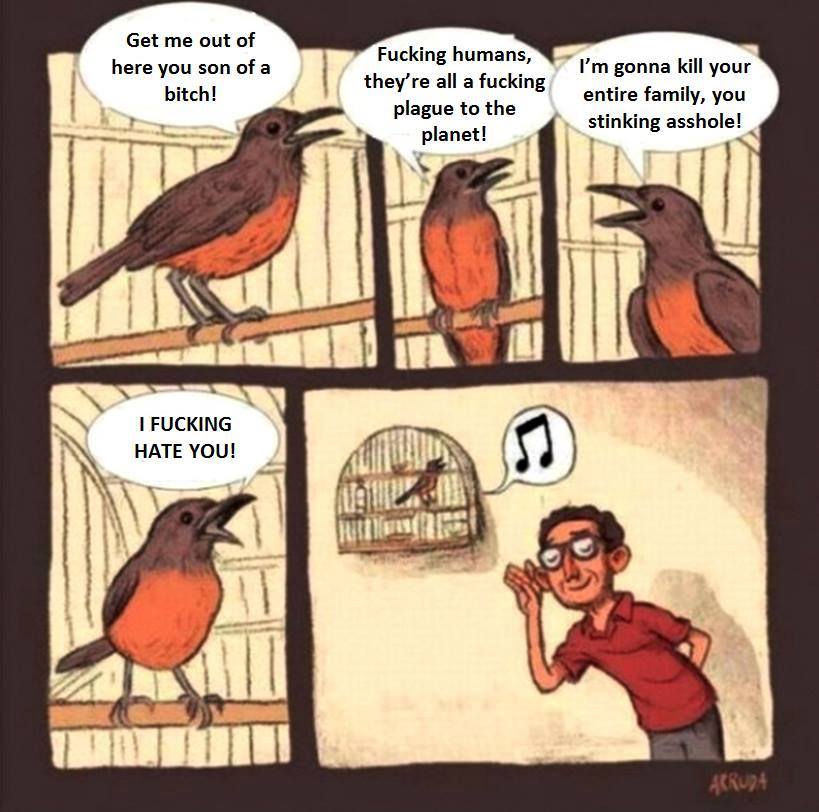
Speaking of animals in captivity, see: http://news.discovery.com/animals/ice-cream-shop-bear-150210.htm  ,and hear what they would say if they could talk:

10530913_1570877459795781_2533557188593059886_n