Alaskan wolf pups rescued from fire heading to Minnesota Zoo

The zoo plans to ‘spay and neuter them because they are no longer and endangered species’ — WTF?

http://www.startribune.com/local/266956601.html

by: JIM ADAMS , Star Tribune

 July 14, 2014 – 11:22 AM

Rescued from wildfire, the pups will replace older wolves and are expected to draw visitors.

wolf pups

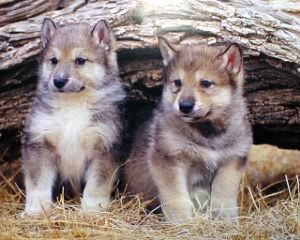
A revived and lively litter of wolves is expected Tuesday at the Minnesota Zoo, just weeks after being plucked from the smoldering aftermath of an Alaskan wildfire.

Officials at the Apple Valley zoo said the five gray wolf pups have rebounded nicely after being abandoned by their parents during the May fire and then losing a sibling to a porcupine attack.

Four firefighters discovered the 2-week-old pups in their den, dehydrated and stuck with quills. A porcupine apparently had wandered into the den to escape the smoke and flames of the massive Funny River wildfire in the Kenai Peninsula Wildlife Refuge.

Such a wildfire rescue of pups is rare, according to the Alaska Department of Fish and Game website. Officials believe the pups’ parents fled the den because of the fire and firefighter activity in the area.

The five survivors — three males and two females; three gray, two light-colored — were taken to the Alaska Zoo in Anchorage on May 27, where staff tended and bottle-fed them. One pup is named X-Ray, after the fire crew that saved them. The others were named after the four rescuers’ hometowns: Gannett, Hooper, Huslia and Stebbins, said Minnesota Zoo spokesman Josh Le.

Now eight weeks old, the pups have tripled in size and can be seen playing on video taken at the Alaska Zoo. Visitors were invited to view wolf feedings five times a day at the zoo, and as they grew, watched them romp and roll outside.

“So far they are really healthy and that is why they are coming Tuesday to the Minnesota Zoo,” Le said. “They are growing but still adorable.”

But don’t expect to see the Alaskan canines in person until mid-August. The pups will be in quarantine for a month while they are monitored and blood and fecal tests are done to ensure they carry no disease or parasites to the zoo, Le said.

The furry five will replace the zoo’s adult pair of gray wolves, Kaskapahtew and Wazi, who have never bred successfully, Le said. He said the pair will be sent to another accredited zoo in the U.S., and had no chance of being euthanized.

The five siblings likely will boost attendance by creating the wolf pack the zoo has long sought. They will have free run of the spacious wolf enclosure on the Medtronic Minnesota Trail. They will be spayed and neutered because they are not an endangered species and the zoo avoids inbreeding, Le said.

Le said the pups will be escorted by Alaska Zoo staff on a flight donated by Delta Air Lines. Two Minnesota Zoo managers will greet the Alaskans at the Minneapolis airport.

Compassion in conservation: Don’t be cruel to be kind

1959301_512822552156794_8144645164928185909_n

http://www.newscientist.com/article/mg22229740.200-compassion-in-conservation-dont-be-cruel-to-be-kind.html#.U6L6w2dOVy2

June 2014 by Marc Bekoff and Daniel Ramp

Killing and harming animals in the name of conservation is not just unethical, it is counterproductive

EARLIER this year, a hunter based in Texas paid $350,000 for the dubious privilege of being allowed to kill a male black rhino in Namibia. The rhino, Ronnie, was past reproductive age and deemed to be a danger to other wild rhinos. Profits from the hunting permit are supposed to be ploughed back into conservation in the country.

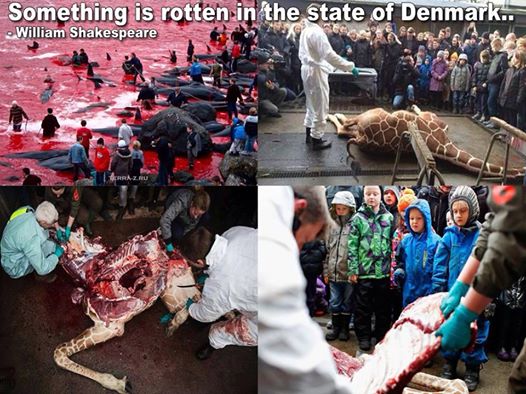
A few weeks later, keepers at Copenhagen Zoo in Denmark killed Marius, a healthy young male giraffe, publicly dissected him and fed his remains to the zoo’s carnivores because he didn’t fit into their breeding programme. Several offers to rehouse him were declined on the grounds that the facilities were unsuitable.

The same zoo later killed four healthy lions because a male lion they wanted to introduce to a female may have attacked them. Then Dählhölzli zoo in Bern, Switzerland, killed a bear cub over fears his father would kill him.

These cases made headlines and caused global outrage. But they are just the tip of the iceberg. Zoos often kill healthy animals considered surplus to their needs: around 5000 a year in Europe alone. This isn’t euthanasia, or mercy killing, but “zoothanasia”.

The killing of “surplus” animals is just one example of people making life-and-death decisions on behalf of captive and wild animals. These are difficult decisions and various criteria are used, but almost without exception human interests trump those of the non-human animals.

Often, for example, animals are harmed or killed “in the name of conservation”, or for the “good of their own (or other) species”. The result is unnecessary suffering and, commonly, a failure to achieve sustainable and morally acceptable outcomes.

Increasingly, scientists and non-scientists are looking for more compassionate solutions. Compassionate conservation, a rapidly growing movement with a guiding principle of “first do no harm”, is just such an approach. It is driven by a desire to eliminate unnecessary suffering and to prioritise animals as individuals, not just as species. It is also a route to better conservation.

Although one of us, Marc Bekoff, has been writing about the importance of individual animals in conservation for more than two decades, it took an international meeting at the University of Oxford in September 2010 for compassionate conservation to get a big push. There have since been three more meetings. NGOs are becoming interested and a Centre for Compassionate Conservation has been established at the University of Technology, Sydney, Australia.

One sign that the influence of compassionate conservation is growing is that conservationists are questioning the ethics of producing captive pandas as ambassadors for their species. These animals have no chance of living in the wild and their existence is increasingly seen as indefensible.

Biologists are also re-evaluating the merits of reintroduction projects. The reintroduction of wolves into Yellowstone National Park, for example, resulted in numerous wolves dying or being killed “for the good of other wolves”. The surviving wolves also lack protection, especially when they leave the park. As a result, scientists are concerned that the project is failing.

Other reintroduction projects are being similarly reappraised. A team at the University of Oxford assessed 199 such programmes and found potential welfare issues in two-thirds of them, the most common being mortality, disease and conflict with humans.

Urban animals also get into the mix. Marc was recently asked to apply the principles of compassionate conservation to a project in Bloomington, Indiana, which proposed to kill numerous deer even when no one knew if they were causing a problem. In Cape Peninsula, South Africa, non-lethal paintball guns are being used to reduce conflicts between baboons and humans.

Compassionate conservation is also offering solutions to previously intractable conflicts. Innumerable wolves, coyotes, dogs, foxes and dingoes are killed by livestock farmers, often by trapping or poisoning. A recent study showed that poisoning dingoes by dropping tainted meat from aeroplanes changes the dynamics of the ecosystem and reduces biodiversity.

Management of this problem is being revolutionised by the use of guard animals such as Maremma sheepdogs, donkeys and llamas. These guardians bond with the livestock and protect them, not only reducing losses but also costing considerably less than shooting programmes. Even colonies of little penguins in Australia are now protected from foxes by Maremma sheepdogs.

Compassionate conservation is also changing the way researchers tag animals. This is an integral part of conservation as it enables scientists to identify individuals and estimate population sizes. But it is often harmful or painful and can reduce the animals’ fitness, which compromises the usefulness of the data collected. More researchers are now using methods that don’t stress animals or alter their behaviour, such as unobtrusive tags or remote camera traps.

There is often conflict between those interested in animal welfare and those interested in conservation, with the latter viewing concern for the well-being of individuals as misplaced sentimentalism. It is not.

Compassion for animals isn’t incompatible with preserving biodiversity and doing the best science possible. In fact, it is a must. Mistreatment of animals often produces poor conservation outcomes and bad science. It is also immoral. Only through compassion can we advance global conservation.

This article appeared in print under the headline “Cruel to be kind?”

Marc Bekoff is professor emeritus of ecology and evolutionary biology at the University of Colorado, Boulder. He edited Ignoring Nature No More: The case for compassionate conservation (University of Chicago Press). Daniel Ramp is director of the Centre for Compassionate Conservation at the University of Technology, Sydney

Unfortunately Chimpanzee Jailbreak From Zoo Only Temporary

It took carrots, celery, lettuce — and finally malted milk balls — to lure seven escaped chimpanzees back into their Kansas City Zoo enclosure on Thursday.

Three members of the group climbed over the wall into an area that’s accessible only to zoo staff.

At no time was the public in danger, Wisthoff said.

As a precaution, however, employees ushered all zoo visitors into buildings that were locked.

Rescued grizzly bear treated for two broken elbows at Veterinary Teaching Hospital

The horses were moved, the police were alerted, and Colorado State University’s Veterinary Teaching Hospital was abuzz Tuesday as a rescued grizzly bear arrived for surgery to repair both elbows, which apparently were broken when the carnivore was confined in a concrete bunker as a roadside attraction in north Georgia.

“This is the most exciting case I’ve been part of during my two years of clinical rotations in veterinary school,” said vet student Barr Hadar, who would compile case notes on the patient thought to be a mix of grizzly bear and Syrian brown bear. “That’s what interests me in veterinary medicine, especially wildlife medicine. You never know what you’re going to get.”

Unexpected diagnosis

Last month, the Wild Animal Sanctuary in Keenesburg, Colo., rescued “Marley” and 16 fellow inmates from a foreclosed “bear park,” where the animals were kept in cramped concrete pits and fed apples and bread by tourists. The bears were released into 15-acre natural habitats on the plains northeast of Denver, but sanctuary keepers noticed Marley, a 7-year-old female, would not put weight on one of her front legs, said Rebecca Miceli, who accompanied the impressive patient.

The 300-pound grizzly came to the CSU Veterinary Teaching Hospital crated and anesthetized on Tuesday morning. Examining radiographs, veterinarians soon determined Marley had not one, but two forelimb fractures estimated to be more than a month old; one break was badly infected.

“Our main concern is the infected fracture on the left forearm,” said Dr. Terry Campbell, a CSU veterinarian specializing in wildlife and exotic animals. “A draining, open fracture on a bear is anything but ideal, and we will need to surgically treat it immediately.”

Campbell knew the procedure would require the skills of an orthopedic surgeon. But was it a job for a large-animal or small-animal orthopedist? The decision: both.

“We have to determine: Is the bear more like a dog or more like a horse?” Campbell said before surgery, referring to the patient’s bone structure. “The truth is, it’s a bear. It’s not like either. So we, as a team of veterinarians, collaborate to find the best solution.”

Dr. Felix Duerr, small-animal orthopedic surgeon, and Dr. Jeremiah Easley, equine orthopedic surgeon, jointly handled the successful surgery. In the case of the infected forelimb, vets cleaned the infection, looked for necrotic bone, cleared scar tissue and inserted antibiotic beads to promote full healing. Duerr then provided shockwave therapy to accelerate the process.

Also essential to the case were Dr. Pedro Boscan, veterinary anesthesiologist, and Dr. Gregg Griffenhagen, a resident training in the specialty.

Much better quality of life

By Tuesday afternoon, Marley was recovering, and CSU veterinarians expressed hope that their unusual patient would have a greatly improved quality of life. Miceli, director of animal care at the Wild Animal Sanctuary, said she thought Marley could potentially live another 20 years at the home for rescued large carnivores.
For veterinary students involved with the case, the memory of Marley might last just as long. As the grizzly bear arrived, excited murmurs filled the hospital halls, and students swarmed the windows and doors of the large animal wing to catch a glimpse of an ear, nose or paw.

The equine unit had been alerted about the grizzly to prevent spooking among horse patients. A police officer was on standby, a standard precaution when a large carnivore is in the hospital, Dr. Tim Hackett, hospital director, said.

The students lucky enough to be on rotation with the wildlife and exotic animal service were able to observe Marley’s treatment up-close and to weigh in on options.

“Yesterday, we saw a guinea pig, a rat and a of couple ferrets. Today we get to see a grizzly bear,” third-year vet student Katherine Alley said. “This week is definitely turning out to be pretty cool and heightens my interest in pursuing a future working with exotic animals.”

http://www.today.colostate.edu/story.aspx?id=9688

Copenhagen Zoo Kills Four Healthy Staff Members To Make Space For New Employees

http://www.theglobaledition.com/copenhagen-zoo-kills-four-healthy-staff-members-to-make-space-for-new-employees/

COPENHAGEN (The Global Edition) – The Copenhagen Zoo has killed several of its staff members early this morning in order to create four new job openings, the Zoo public relations sector reported.

Officials of the Zoo say that the four members of the staff were humanely executed after being put to sleep with a lethal injection, and then skinned and chopped up while visitors crowded around and the meat was fed to the lion population.

“Based on the recommendation of the European Association of Work and Organizational Psychology (EAWOP), we have decided to make space for new work positions, because the Zoo needs new workers, and we found that killing old staff members was the cheapest and the most efficient way to do it,” said Zoo spokesman Tobias Stenbaek Bro “Four of the oldest staff members, among them one female, were put to sleep with a lethal injection and then fed to the giraffes. However, the giraffes didn’t show interest in their meat, so they were fed to the lions,” explained the Zoo spokesman.

“Being that the oldest staff members could no longer keep track with the new Zoo technologies, and could not manage themselves in the fast and ever-changing job environment, we feel that the criticism coming from some of their family members is completely unfounded,” the Zoo spokesman was quoted as saying.

“Zoos do not own the staff, but they are in charge of their employment, and in that regard have the full right to do with them whatever is considered necessary when they are on the Zoo territory”, said Tobias Stenbeak Bro. “It was the only humane way to dispose of them, you know. We couldn’t just leave them without jobs in this economy, as some heartless observers suggested”.

The Zoo spokesman concluded that “considering that the Zoo animals were fed with the meat of the former employees, the food chain was virtually completed, which is totally in respect of the law of nature”.

APRIL FOOLS!!

8775_524935520889725_1949817662_n

Killing Healthy Zoo Animals Is Wrong—And the Public Agrees

http://news.nationalgeographic.com/news/2014/03/140327-copenhagen-zoo-giraffes-lions-animals-deaths-science-world/

Scientist calls lion, giraffe deaths “zoothanasia”—or heartless elimination.

A photo of two lionesses at the Copenhagen Zoo.

Two lionesses are seen at the Copenhagen Zoo on March 26, not long after four other lions were put to death.

PHOTOGRAPH BY JENS DRESLING, POLFOTO/AP

Marc Bekoff

for National Geographic

Published March 27, 2014

The four lions killed by the Copenhagen Zoo this week, as well as  the healthy young giraffe named Marius put to death in February, didn’t have to die.

A global uproar has followed the deaths of two African lions and their two ten-month-old cubs. Their lives ended because the zoo wants to introduce a new male to the remaining females to bear more lions.

The same outcry was heard when a healthy young giraffe named Marius, who had the wrong genes for the facility’s breeding program, was killed with a bolt to his head—so as not to contaminate his body with poisons. The giraffe was publicly dissected and then fed to the zoo’s carnivores, including lions.

None of the deaths were euthanasia, which is a mercy killing when an animal is suffering or lingering near death and must be “put down,” as zoos always refer to such situations.

Rather, it was “zoothanasia,” or killing done by zoo workers because an animal is no longer needed for one reason or another and is deemed to be a disposable object rather than a sentient being. (Related: “Opinion: Killing of Marius the Giraffe Exposes Myths About Zoos.”)

The “Marius Effect”

Many people around the world were outraged by Marius’s death. I call this the “Marius Effect.”

Many of them had never previously voiced their opinion about the common killings of what are disparagingly called “surplus animals” by zoos, or had spoken out about other animal issues. (See “National Zoo Deaths: ‘Circle of Life’ or Animal Care Concerns?“)

While some workers at the zoo and elsewhere said the giraffe had to be killed because he didn’t fit into the zoo’s breeding program, and therefore couldn’t be used as a breeding machine (like dogs at a puppy mill), countless others disagreed. An online petition asking the zoo to hold off on the killing until another home was found received tens of thousands of signatures.

Marius was killed despite the fact that another facility had offered him a home in which he could live out his life in peace and safety.

Many others and I figured that the negative attention that the late Marius brought to the Copenhagen Zoo would serve as a catalyst to change the breeding policies of zoos in Europe. We thought those responsible for killing him would reassess what they did and question their killing ways—even if such killings were required by existing regulations put forth by the European Association of Zoos and Aquaria (EAZA). (Read more about zoos and saving rare species in National Geographic magazine.)

We couldn’t have been more wrong. Now, with the deaths of the four lions, the Copenhagen Zoo wants to become a lion mill, I would argue, and still seems to think killing healthy animals is perfectly okay.

All of the newborn lions whose kin died to make way for them will spend their lives in captivity, and some will undoubtedly be “zoothanized” in the future because they, too, will be classified as disposable “surplus” animals without the right genes to pass on to future captive lions.

The zoo also argued that the new male lion brought to the zoo would kill the youngsters and the captive group, and thus the group wouldn’t resemble a wild pride of lions, as if it previously had.

Of course, there is nothing natural about the cage in which they are kept.  While some might call it an enclosure or pretty it up by calling it “lion habitat,” it is still a cage in which future lions will be mercilessly crammed, from cradle to grave.

“Perversely Justified”

I see heinous acts like killing Marius and the four lions as a perfect subject for study for researchers in the field of anthrozoology, the scientific study of human-animal relationships.

These easily avoidable deaths, perversely justified “in the name of conservation,” are horrible lessons for youngsters. They run counter to global programs in humane education and compassionate conservation, in which the life of every individual animal is valued—and not just because they can serve us in any number of ways, such as by making more of themselves for future captive breeding. (See “Is Breeding Pandas in Captivity Worth It?“)

Zoos need to change their ways and respect the caged animals for whom they are responsible as long as an individual is healthy.

Surely, people who choose to go to the Copenhagen Zoo can find other ways to spend their time and money.

Marc Bekoff is professor emeritus of ecology and evolutionary biology at the University of Colorado, Boulder. He has published numerous scientific and popular essays and 25 books, including Ignoring Nature No More: The Case for Compassionate Conservation and Why Dogs Hump and Bees Get Depressed: The Fascinating Science of Animal Intelligence, Emotions, Friendship, and Conservation.

After giraffe uproar, Copenhagen zoo kills 4 lions

01bfb39948b2f313b238ba43f926ea25

http://www.chron.com/news/world/article/After-giraffe-uproar-Copenhagen-zoo-kills-4-lions-5347528.php

COPENHAGEN, Denmark (AP) — A Danish zoo that faced protests for killing a healthy giraffe to prevent inbreeding says it has put down four lions, including two cubs, to make room for a new male lion.

Citing the “pride’s natural structure and behavior,” the Copenhagen Zoo said Tuesday that two old lions had been euthanized as part of a generational shift. It said the cubs were also put down because they were not old enough to fend for themselves and “anyway would have been killed by the new male lion.”

Zoo officials hope the new male and two females born in 2012 will form the nucleus of a new pride.

Last month the zoo triggered a wave of protests by killing a 2-year-old giraffe, and feeding its remains to the lions as visitors watched.

Also: http://www.theguardian.com/world/2014/mar/25/danish-copenhagen-zoo-kills-four-lions-marius-giraffe

Thousands of zoo animals killed in Europe yearly

By MALIN RISING / Associated Press / February 14, 2014

STOCKHOLM (AP) — People around the world were stunned when Copenhagen Zoo killed a healthy 2-year-old giraffe named Marius, butchered its carcass in front of a crowd that included children and then fed it to lions.

But Marius’ fate isn’t unique — thousands of animals are euthanized in European zoos each year for a variety of reasons by zoo managers who say their job is to preserve species, not individual animals. In the U.S., zoos try to avoid killing animals by using contraceptives to make sure they don’t have more offspring than they can house, but that method has also been criticized for disrupting animals’ natural behavior.

___

HOW OFTEN ARE LARGE MAMMALS KILLED IN ZOOS?

U.S. and European zoological groups refuse to release figures for the total number of animals killed. But David Williams Mitchell, spokesman of the European Association of Zoos and Aquaria, or EAZA, estimates an average zoo in its 347-member organization annually kills about five large mammals, which adds up to 1,735. The number doesn’t include zoos and animal parks that don’t belong to the association.

Animal rights groups suggest numbers are much higher. The Associated Press contacted 10 zoos in Europe — two refused to comment, four said they never kill any animals unless severely ill and four said they kill between one and 30 animals every year. Two zoos in the U.S. said they only ever kill animals for ‘‘quality of life reasons.’’

More: http://www.boston.com/news/world/europe/2014/02/14/thousands-zoo-animals-killed-europe-yearly/3koKD1JKOLi9acnRo8YSQK/story.html

Another giraffe named Marius may be killed changedotorg

Another Danish Giraffe Named Marius Could Be Killed By Zoo

http://www.nbcnews.com/news/world/another-danish-giraffe-named-marius-could-be-killed-zoo-n29516

A zoo in Denmark might euthanize one its giraffes, media reported Thursday,
days after another Danish zoo slaughtered an ‘unwanted’ giraffe and fed its
carcass to the lions.

Jyllands Park Zoo in western Denmark might put down its seven-year-old
Marius if the zoo manages to acquire a female giraffe, zoo keeper Janni
Lojtved Poulsen told a local news agency.

“We can’t have two males and one female. Then there will be fights,”
Poulsen said.

Staff at Copenhagen Zoo received death threats after it killed an 18-month-old healthy male giraffe – coincidentally also called Marius – because the animal’s genes were already well represented in an international breeding program.

Poulsen said that it might be possible to find another place for the giraffe to live, but that the probability is small. Like its namesake in Copenhagen, Jyllands Park Zoo’s Marius is considered unsuitable for breeding.

“If the breeding programme coordinator decides that he should be put down, then that’s what we’ll do,” Poulsen said.

She said that zoos in Denmark have been killing surplus animals for many years, and that the wave of protests following Sunday’s killing in Copenhagen is not deterring Jyllands Park Zoo.

“Many places abroad where they do not do this, the animals live under poor conditions, and they are not allowed to breed either. We don’t think that’s ok,” she said.

The giraffe at Copenhagen Zoo was dissected in front of crowds at the zoo, and afterwards, some of the carcass was then fed to other zoo animals and some was sent to research projects in Denmark and abroad for study.

Poulsen said Jyllands Park Zoo has not yet considered whether it should carry out a public dissection as the one in Copenhagen.

Reuters
First published February 13th 2014

1723934_10201528254343494_758053918_n

If you’re really saddened by the death of Marius the giraffe, stop visiting zoos

AN37096504FILES+-+Picture+t

http://www.independent.co.uk/voices/comment/if-youre-really-saddened-by-the-death-of-marius-the-giraffe-stop-visiting-zoos-9119868.html

We wouldn’t go to a prison to learn about typical human society, so it makes no sense to observe imprisoned animals in order to learn about them

by Mimi Bekhechi
Monday 10 February 2014

If there had ever been any doubt that zoos serve no purpose beyond incarcerating intelligent animals for profit, the slaughter of Marius, an 18-month-old giraffe, on Sunday has surely settled the issue. Copenhagen Zoo delivered Marius into a life of captivity, allowing his mother to give birth to the calf while knowing that the baby would be “surplus” to its requirements and “useless” for breeding because his genes were too common.

The zoo used the baby calf to attract visitors and then slaughtered him. He was shot rather than given a painless lethal injection, just so that his flesh wouldn’t be contaminated when it was cut up in front of horrified schoolchildren and, quite literally, thrown to the lions.

As the events of this weekend illustrate, breeding animals in zoos is not a sustainable practice because of space limitations and also because the practice creates a surplus of unwanted animals. It is estimated that approximately 7,500 animals in European zoos are considered “surplus” at any one time.

While Marius grabbed the headlines, it also emerged that lions were destroyed at Longleat Safari and Adventure Park in Wiltshire, owing to a rise in the population, which had caused “excessive violent behaviour”. Anyone who thought the practice of breeding and then killing animals would surely not be sanctioned in the UK should think again. It is absolutely routine for zoos to euthanise newborn males of various breeds because they have nowhere to put them when they mature. Other unwanted animals are sold at auction and carted across the globe.

Zoo breeding programmes serve no conservation purpose because giraffes and other animals born in zoos are rarely, if ever, returned to their natural habitats. They put the “con” in “conservation”, and zoos spend millions on keeping animals confined while natural habitats are destroyed and animals are killed, as there is insufficient funding for protection.

When London Zoo spent £5.3 million on a new gorilla enclosure, the chief consultant to the UN Great Apes Survival Partnership said that he was uneasy at the discrepancy between lavish spending at zoos and the scarcity of resources available for conserving threatened species in the wild. “Five million pounds for three gorillas when national parks are seeing that number killed every day for want of some Land Rovers and trained men and anti-poaching patrols. It must be very frustrating for the warden of a national park to see.”

Animals in zoos often go insane from the frustration of life in captivity, and visitors leave without having learned anything meaningful about animals’ natural behaviour, intelligence or beauty. There is nothing dignified or inspiring about seeing bored and depressed animals. In the wild, gorillas don’t eat their own sick and pull out their hair in frustration. Free polar bears don’t pace back and forth constantly on concrete. The typical behaviour of captive animals, such as bar-biting, self-mutilation, pacing and rocking, is unheard of among their free relatives.

We wouldn’t go to a prison to learn about typical human society, so it makes no sense to observe imprisoned animals in order to learn about them. Today, we have IMAX movies and entire television channels dedicated to showing wildlife documentaries, which serve as virtual field trips and teach generations of children about animals without harming them. We no longer have any excuse for keeping intelligent social animals incarcerated and denying them everything that’s natural and important to them.

From the moment he was born, Marius was destined to lead a life of misery at the hands of his human captors. Giraffes rarely die of old age in captivity. Had he not been killed yesterday, he would have spent his short life as an exhibit, stranded in a cold climate, thousands of miles away from his true home. Although his death is heartbreaking, it’s his birth that should have been prevented. I wish we could see this kind of outrage every time an animal is born at a zoo.

For everyone who genuinely cares about giraffes and all the other individuals serving life sentences in zoos, let’s hope Marius’ story is a wake-up call. Let’s avoid patronising zoos and instead donate to campaigns that actually protect animals in their native habitats.