“Recreational Shooting Opportunities” Have Taken Their Toll

Every place I have lived in the West, I’ve been fortunate enough to locate or stumble upon the rare or secretive creatures native to the locality, be they cougars, wolves, grizzly bears, lynx, otters, fisher, mink, pine marten, or badgers, even crossing paths with the shadowy wolverine on four separate occasions. So it was with confidence that I set out across eastern Montana and Wyoming in search of the amicable, diurnal rodents that call the prairie their home. Surely they must be thick out there. How hard could they be to ferret out? It’s not like I was searching for Bigfoot this time. 

I combed hundreds of miles of what should be prime prairie dog habitat, scouring gravel back roads amid over-grazed cattle allotments and between functioning and defunct oil rigs, but found almost no sign of them. What I did find were prairie dog ghost towns and a lot of lonely, parched and denuded ground desperately in need of the vital cornerstone of the treeless grasslands. 

Frustrated, I stopped at the headquarters of a national recreation area and asked the park service spokeswoman why there were no prairie dogs anywhere in the vicinity. She replied with a shrug, “Uh…Target practice?” Apparently, unregulated “recreational shooting opportunities” (glib game department jargon for their year-round open season on prairie dogs) have taken their toll. No one at that government compound could direct me to a single place where prairie dogs still existed, yet this vanishing keystone species is left unprotected by ESA safeguards. What will good ol’ boys shoot at when they run out of prairie dogs, marmots or ground squirrels—each other? Okay, fair enough, but let’s hope they don’t hit anyone who doesn’t deserve it. 

Driving back home to southwest Montana on I-90, I spotted a sign for Greycliff Prairie Dog Town State Park. As the name implies, there is an active prairie dog town there—one of the last of its kind. The trivial excuse for a park, located right along the interstate with a busy railroad just beyond, is, oddly enough, a surprisingly decent place to see them living otherwise undisturbed. But with the constant whirr of the freeway punctuated by locomotives dragging eternal black streams of overflowing coal cars, it’s also a good place to get a glimpse into what’s happened to the world of the prairie dogs and why there are so few left of their kind.

     ____________________________________________________

The preceding was excerpted from Jim Robertson’s book, Exposing the Big Game: Living Targets of a Dying Sport 

Wildlife Photography Copyright Jim Robertson

Play by Nature’s Rules

One of the more amusing of hunters’ feeble rationalizations is that they are “part of nature,” as though that entitles them to assume the role of top predator over every other species. Funny how they bring that up when they think it will get them what they want, but when the preacher postulates that humans are above the animals and nature, they’re the first to stand up and shout “Amen!”

It seems they want their cake and eat it too.

Modern humans have long since stacked the deck in their favor. When Mother Nature decides to defend herself against their fully-armed onslaught by summoning up a super-bug or super-storm, hunters will quickly decide it’s no fun to be part of nature anymore and demand a dose of the antidote or call in the rescue helicopters.

Natural predators, like wolves, don’t have the kind of creature comforts that even the most impoverished hunter takes for granted. When wolves get hurt or sick it’s often fatal, whereas a human can find a clinic to fix them up whenever they get any kind of scratch. Hunters should play by nature’s rules or get out of the game.

Like it or not, humans really are a part of nature—but they’re certainly not above it. As Sea Shepherd’s Captain Paul Watson wrote in my book’s foreword:

“No species can live upon this earth without living in accordance to the three basic laws of ecology: (1) the law of diversity, that an eco-system is strengthened by the diversity of species within it, (2) the law of interdependence, that all species are dependent upon each other for survival and (3) the law of finite resources, that there is a limit to growth, a limit to carrying capacity. Human populations grow by literally stealing the carrying capacity of other species and by so doing, they diminish diversity and thus cut the bonds of interdependence.

“The cruelty and destruction that humans have inflicted upon each other is surpassed only by the cruelty and destruction humans have inflicted upon the nonhuman citizens of this world. Hunters are guilty of crimes against nature, against future generations and against humanity because diminishment leads to collapse and to extinction and we forget that we as animals, as primate hominids, will commit collective suicide if we continue with our barbaric traditions and behavior in the face of a global ecological collapse.”

Case Closed

You’ll never catch me making compromises by condoning the lesser of two evils or playing one type of wildlife killer off another.  I used to fish, but I don’t go around defending fishing while attacking hunting.

At the same time, I don’t hate myself for having gone along with a locally popular activity before finally seeing that fishing is not a victimless sport. “Hate” is not a word I use lightly; I reserve my hatred for those who get off on the killing and will never see the light or change their ways.

Farley Mowat used to be a hunter, I don’t “hate” him. My uncle and my wife’s father were hunters, but I didn’t hate them. I live where the vast majority of my neighbors and coworkers are hunters, but not all of them are rabid, Ted Nugent-types with lifetime subscriptions to wildlife snuff magazines. They just do it for the same stupid reasons I used to fish and eat meat–because that’s what’s popular; that’s what their fathers did; they grew up doing it; it’s “what’s for dinner,” etc.

Because I think there is a chance that some of them will someday lay down their weapons, there’s no point spending all my energies hating them in the meantime–especially if we want to sway public opinion away from the evils of hunting, trapping and fishing. If there’s one thing I keep hearing from people it’s that they are put off by hatespeach of any kind (even if it seems justified to some of us).

That’s part of the reason I have a policy on this blog not to approve any threatening comments toward anyone from either side.

And just so hunters or hunting apologists don’t spend a lot of fruitless time writing comments that don’t get approved here, this is not a forum for debating hunting–it’s a platform for venting disgust, disrelish and even hatred* towards hunting. (*that’s hatred towards hunting, not necessarily hunters). To those people who write comments which never get posted, I’m sorry, but you’ll have to find another place to extol the “virtues” of hunting besides this blog’s comments section.

I’ve spent a lot of time ruminating over this issue (even going so far as to writing a book about it) and I didn’t start this blog to give people a venue for arbitrary speculations on whether hunting is just or evil. As far as I’m concerned, the case is closed.

Yesterday I receieved a string of comments from a hunter’s advocate who accused me of hating all hunters. They must not have read this post.

Exposing the Big Game's avatarExposing the Big Game

Recently I read a piece of advice for writers that I’m going to try and take to heart. It went something like this: “If your words can possibly be misconstrued, they probably will be.” My writing style tends to make people have to stop and think about what it is I’m really saying, but I’ll work on being a little clearer so as not to lead readers to the wrong conclusions.

One thing I must be leading some to believe is that I hate all hunters. Not so; what I hate is the act of hunting and its end results. It’s the ignorance and the killing I hate, not necessarily the people.

I know that many hunters are just doing what they do to animals because it’s the popular thing to do if they want to fit in with the people they associate with. In that case I hate the peer pressure that seduces them and their weakness…

View original post 154 more words

dvoight09's avatarWisconsin Wildlife Ethic-Vote Our Wildlife

With all of the attention paid to the kill everything groups like the Wisconsin Bear Hunters Association and the Wisconsin Wildlife Federation during the wolf kill bill “hearings” and what followed, one of their allied groups slipped under the radar. Today, I looked more into this group: the Wisconsin Farm Bureau Federation. I was shocked at what I found in their “policies” concerning wildlife. Not satisfied receiving vast amounts of government subsidies, having federal wildlife assassins at their beck and call, this group wants an all out war on wildlife, and more money. Here is just a sample:

Due to over population, we urge that daily bag limits be increased and more permits be issued to reduce deer, bear, goose and turkey populations. 

Kill, kill, kill.

We support the right to hunt, fish, trap, and to take game subject to reasonable rules and regulations. We support allowing crossbow hunting…

View original post 1,010 more words

A Few Words About Game Farms

At the end of my book is a chapter called, “A Few Words on Ethical Wildlife Photography,” wherein I examine some of the problems that arise when over-eager photographers forget that their animal subjects have needs and interests of their own that don’t always include posing for the camera. With surprising frequency, irresponsible photo-getters are gored, trampled or charged by free-roaming animals annoyed enough to feel they must defend themselves.

But no amount of disturbance could ever equal the level of abuse and exploitation suffered by an animal stuck in a zoo or game farm. Too often, the “wild” animals seen in books or magazines are actually imprisoned specimens sentenced to life in a barren pen or cage. The only time some of these pitiable creatures see the light of day is when they’re paraded out and made to pose for a client who wants to shoot them in front of a convincingly picturesque background. Trainers at game farms have graduated from the traditional whip and chair to more technological tools, such as the electric cattle prod, to browbeat their wildlife “models” into compliance.

On the surface, many game farms seem relatively innocuous, charging only for public viewing or private photographic sessions with crowd-pleasing kittens, cubs or fawns bred specifically for that purpose. But as they get older and less photogenic, these animals are auctioned off as “surplus” to the highest bidders—a common practice of zoos as well. It’s likely the same individuals appearing as cute babies on calendars or greeting cards will end up, a few years later, getting shot—for real this time—at another fenced-in compound that allows “canned hunting.” These doubly loathsome compounds profit directly from the killing of confined, frequently exotic, species behind the high fences of their enclosures.

As a general rule, photographers and photo editors don’t differentiate between animals in the wild or in captivity when selling and publishing images. Photos taken at game farms set a new, unnatural standard for closeness and intimacy that the public expects to see in every future wildlife photograph. Using these shots only supports and encourages those who would profit from making their captives serve as performers for photographers, entertainers for tourists or as sitting ducks for trophy hunters.

_________________________________________

From my book’s copyright page: “No captives were used in the making of this book [or this blog, for that matter]. All free-roaming animals were respectfully photographed in the wild.”

Wildlife Photography Copyright Jim Robertson

Hunting: the Primary Cause of Extinction

Contrary to the preposterous—yet increasingly popular—belief that gas-guzzling, beer-can-tossing hunters are concerned environmentalists, hunting has been and continues to be the primary cause of extinctions world-wide. Even the plight of non-“game” animals, like the California condor, the country’s largest and perhaps most critically endangered bird species, stems from the same root cause that has led to the decimation of so many other species: hunting.

By the end of the nineteenth century, that darkest of times for wildlife in North America, rampant hunting had led to the extinction of the great auk, the passenger pigeon, two subspecies of elk and the near-total extinction of bison, pronghorn, trumpeter swans, bighorn sheep and a myriad of other coveted species. Meanwhile, scavengers like condors were collateral damage in the frenzied campaign to rid the continent of its native carnivores.

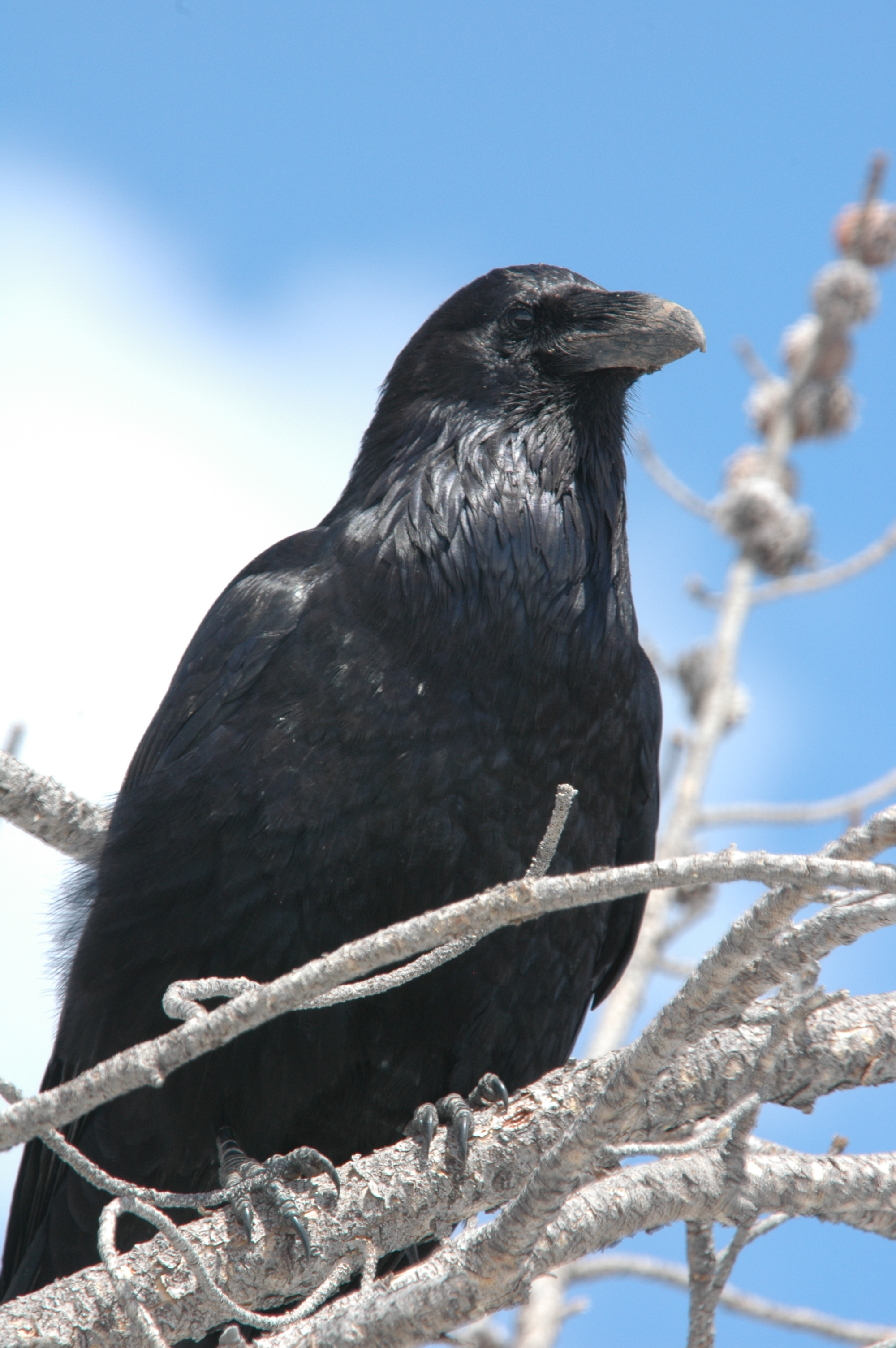
Together with ravens and vultures, condors were senselessly shot on sight by trigger-happy ranchers mistaking the huge birds for predators—an ignorance that continues to this day. Moreover, those scavengers, along with eagles, hawks and other raptors, perished from eating poisoned meat intended for wolves, coyotes, bears and cougars.

Incidental poisoning is an ongoing threat plaguing condors right up to this day. Like so many other egg-laying species, their population suffered another major setback from the widespread use of DDT during the mid-20th Century. That toxic chemical was finally banned, but the great birds continued to perish. By the time it was determined they were also dying from lead-poisoning as the result of scavenging the carcasses of animals killed with lead-based bullets and buckshot, the condor population was down to an all-time low of only 22 individuals.Thanks to concerted efforts, their numbers have increased nowadays and lead-based ammunition has been banned from the condor’s most critical habitat. But the 400 surviving birds are still threatened by the illegal use of lead shot and bullets, in addition to other anthropogenic pressures, like power lines and wind turbans.

California condors have a life span of up to 60 years (longer than most human carnivores, prior to the discovery of statin drugs). And though they may appear ungainly on land, once a condor has worked his or her way up to a proper elevation, they can glide for miles without ever flapping a wing and sometimes attain speeds of 55 miles per hour, at elevations of 15,000 feet.

More proof that hunters aren’t really environmentalists: condors are still shot as pests or for target practice, and many “sportsmen” continue to oppose a nationwide-ban on lead-based ammo.


Where Your Sympathies Lie

Some people are animal people and some are people people, while others claim to love everyone equally. The fact is, whether consciously or not, at some point we all have to make a choice as to where our sympathies really lie.

It seems that all but the most saintly of us has a limited quantity of compassion. If it’s too focused, a lot of individuals can get left out, but spread too thin it’s not much good to anyone.

Animal advocates are often some of the most caring people around, yet  at times it appears as if they don’t have a whole lot of compassion for the people who abuse animals. Though nearly Christ-like in many ways, most animal rights supporters actually have a limited empathy allotment, so they tend to save theirs for the victims—not the perpetrators—of cruelty.

Although biologically there’s no real difference between us all (except that new studies have shown hunters suffer from DMGD, that emotionally crippling Diminutive Male Genitalia Disorder), the simple fact is that people are different from one another in the amount of empathy, guilt or remorse they are capable of experiencing.

When animal rights advocates look at their own culpabilities, they take responsibility and work to change their actions. This is something you cannot expect from willful animal exploiters. Those who knowingly mistreat can’t be made to feel shame for anything; they’ve built up a wall of rationalization eight feet thick. Nothing gets in. They can’t or won’t be changed, though they may profess a profound transformation to their parole board.

Such was surely the case with Ted Bundy, before he ultimately confessed to the brutal murders of thirty young women (many of whom he decapitated and—like a typical sport hunter—kept their heads as trophies to help him relive the kills).

When the day of Ted Bundy’s execution finally came, people in Florida were weighing in on all sides of the issue. On one extreme were folks chanting and carrying signs like, “Thank God it’s FRY-day,” “Bye-Bye Bundy, and more power to you” and “Hey Ted, don’t forget to file an appeal in Hell” expressing their displeasure with the serial killer’s horrendous acts. At the other end of the spectrum was a virtual fan club of Ted Bundy devotees and groupies, one of whom had married him surreptitiously during his sentencing hearing.

Most people’s reactions were somewhere in between the two, depending on their sympathies. As always, mine are with the victims.

Wildlife photography Copyright Jim Robertson
Exposing the Big Game's avatarExposing the Big Game

The heavily-funded Rocky Mountain Elk Foundation is fond of spreading the hype that today’s wolves are Johnny-come-latelies and thus should keep their paws off of theose prized trophy “game” species. But unlike sport hunters, wolf packs play an efficient and necessary part in nature’s narrative—a role that has served both predator and prey for eons.

Like rightful kings returning from exile, wolves are far from new to the Yellowstone ecosystem. Their 71-year absence was the result of a heartless bounty set by the real newcomers to the fine-tuned system of checks and balances that has regulated itself since life began.

New to the scene are cowboys on four-wheelers with their monoculture crop of cows and ubiquitous barbed-wire fences. New are pack trains of hunters resentful of any competition from lowly canines, yet eager to take trophies of wolf pelts, leaving the unpalatable meat to rot. And new is the notion that humankind can…

View original post 160 more words

Stopping the Blitzkrieg

Juvenile gorillas dismantle snares set by bushmeat poachers in Rwanda’s Volcanoes National Park; a wolverine destroys a trapline somewhere in the Arctic; a cow breaks free and temporarily escapes a terrible death at a slaughterhouse; Gustave, a giant crocodile, has been killing people and eluding his would-be captors since 1998.

It’s tempting to imagine these cases as precursors to a long-overdue animal uprising; there’s a war going on and the animals are beginning to fight back. Could this be the start of a new resistance movement, the likes of which the world has not seen since the Nazis occupied much of Europe?

Make no mistake, there is a war going on—humans are in the role of the Nazis, while animals are the unarmed freedom fighters. To quote a character in a novel by Isaac Bashevis Singer, “Human beings see oppression vividly when they’re the victims. Otherwise they victimize blindly and without a thought.” Despite their remarkable resourcefulness, non-human animals are still centuries behind the rampant human aggressors, whose power seems to grow as fast as their population.

Homo sapiens have had the upper hand ever since they were recognizable as a species. But it took hundreds of thousands of years of chewing the fat (literally and figuratively) around the bonfire, watching each other pound rocks into sharper and sharper weapons, before their technological advances and self-aggrandizing religions set them apart from our fellow earthlings (at least in their own minds).

Non-human animals reside in the here and now, blessed with just enough intelligence to live in relative harmony with nature. They aren’t cursed with the oversized brain and overwhelming ego that has led Homo sapiens to the notion that they’re entitled to exploit or exterminate all other species as they see fit.

The story of the proactive juvenile gorillas is heartening, but sadly their accomplishment came two days after a member of their clan died in one of the hundreds of snares set for antelope. Whether humans act out of greed or desperation, the end result is always the same for the animals killed, and Mother Nature herself suffers a blow every time another strand of biodiversity is severed.

Fortunately, more and more selfless people worldwide are siding with the animals and joining the resistance: a pioneering family of conservationists breaks ties with a powerful trophy elk-hunting group in response to its anti-wolf rhetoric; Sea Shepherd supporters fight to save sharks, whales and seals the world over; trackers and primatologists make daily rounds to dismantle poachers’ snares, in alliance with our peaceful primate cousins.

History has shown that if good people work together, even a blitzkrieg can be stopped in its tracks.

Text and Wildlife Photography Copyright Jim Robertson