Essential Species Quiz

Here is a short multiple-choice quiz to test your knowledge of our fellow animals. 

Instructions: Choose the species that best fit the descriptions below. 

Note: Although some may share a few of the characteristics, they must meet all the criteria listed in order to qualify as a correct answer. 

1. Which two species fit the following description? 

  • Highly social
  • Live in established communities
  • Master planners and builders of complex, interconnected dwellings
  • Have a language
  • Can readily learn and invent words
  • Greet one another by kissing 

A. Humans

B. Prairie Dogs

C. Dolphins

D. Penguins 

Answer:  A. and B

2. Which two species fit the following description? 

  • Practice communal care of the youngsters on their block
  • Beneficial to others who share their turf
  • Essential to the health of their environment
  • Without them an ecosystem unravels
  • Have been reduced to a tiny portion of their original population
  • Vegetarian 

A. Humans

B. Prairie Dogs

C. Bison

D. Hyenas 

Answer:  B. and C. 

3. Which two species fit the following description?

  • Out of control pest
  • Multiplying at a phenomenal pace
  • Physically crowding all other life forms off the face of the earth
  • Characterized by a swellheaded sense of superiority
  • Convinced they are of far greater significance than any other being
  • Nonessential in nature’s scheme 

A. Humans

B. Prairie Dogs

C. Cockroaches

D. Sewer Rats 

Answer:  Sorry, trick question; the only species fitting the criteria is A. 

If this seems a harsh assessment of the human race or a tad bit misanthropic, remember, we’re talking about the species that single-handedly and with malice aforethought blasted, burned and poisoned the passenger pigeon (at one time the most numerous bird on the entire planet) to extinction and has nearly wiped out the blue whale (by far the largest animal the world has ever known). Add to those crowning achievements the near-total riddance of the world’s prairie dogs, thereby putting the squeeze on practically all their grassland comrades, and you can start to see where this sort of disrelish might be coming from. 

When the dust settles on man’s reign of terror, he will be best remembered as an egomaniacal mutant carnivorous ape who squandered nature’s gifts and goose-stepped on towards mass extinction, in spite of warnings from historians and scientists and pleas from the caring few…

                                   ____________________

The preceding was an excert from the book, Exposing the Big Game.

Text and Photography Copyright Jim Robertson

An Historic Year for Montana

1996 was a historic year for the state of Montana; it was the year wolves were re-introduced to the greater Yellowstone ecosystem. But the return of the big bad wolf struck terror into the hearts of little red-state, redneck riding hoods, who habitually hate what they fear and traditionally eradicate what they hate. Wolf-haters panic at the thought of natural predators competing for their trophy “game” animals and loath anything that might threaten their exploitive way of life. If these folks (led by heavily-funded pro-hunting groups like the Rocky Mountain Elk Foundation) have their way, 2012 will trump 1996, making history for a very different reason—it could be the year wolves were once again hunted and trapped to extinction in the state.

Bigotry against wolves has thrived across the country since colonial times and these misjudged canids have long been the object of unwarranted phobias. In 1884, the year Montana initiated its first wolf bounty 5450 were killed in that state alone. That figure gives you some idea of how far from being truly “recovered” wolves in Montana really are. But that state’s wildlife policy makers don’t seem to know or care just how backwards and brutal they appear to the rest of the world. As the respected Canadian naturalist and author, R D Lawrence, put it:

“Killing for sport, for fur, or to increase a hunter’s success by slaughtering predators is totally abhorrent to me. I deem such behavior to be barbaric, a symptom of the social sickness that causes our species to make war against itself at regular intervals with weapons whose killing capacities have increased horrendously since man first made use of the club—weapons that today are continuing to be ‘improved’.”

Just today, an esteemed pioneering family of naturalists, the Muries, notified the Rocky Mountain Elk Foundation that their extreme anti-wolf rhetoric (including their role in Montana’s new three wolf per hunter/trapper “bag” limit) must end or they will lose support from the Murie family. Adolph Murie was an early wolf advovate and author of The Wolves of Mount McKinley and his brother Olas J. Murie, along with Aldo Leopold, was one of the first proponents of biodiversity and wildlife preservation and was a staunch defender of predators and their crucial role in ecosystems.

Olaus Murie’s son, Donald Murie, told the RMEF that their “all-out war against wolves” is an “anathema to the entire Murie family. We must regretfully demand that unless you have a major change in policy regarding wolves that you cancel the Olaus Murie Award. The Murie name must never be associated with the unscientific and inhumane practices you are advancing.”

But a spokesman for the RMEF MFers responded predictably by saying:  “What we’re going to do is honor the family’s request. But we’re not going to change our position.” In other words, the Rocky Mountain Elk Foundation is going to continue to push for the unscientific and inhumane policy of all-out wolf eradication.

Portions of this post were excerpted from Exposing the Big Game: Living Targets of a Dying Sport.

Wildlife Photography Copyright Jim Robertson

http://www.earth-books.net/books/exposing-the-big-game

This is in answer to Montana’s Fish Wildlife and Parks commissioners and to the spokesman for the Rocky Mountain Elk Foundation who wrote in today’s Missoulian that he thought wolves were impacting “their” elk too much and needed to be controlled through trapping and increased “bag” limits…

Exposing the Big Game's avatarExposing the Big Game

I have the utmost respect for ungulates, yet they sometimes tend to get lazy when what they seek is within easy reach, right there in front of them. That statement (not the “utmost respect” part—the “lazy” part) could also apply to hunters who don’t hesitate to shoot half-tame elk, deer or bison right outside of park boundaries.

In one of their most telling remarks, Montana hunters have complained that wolves make elk “too hard to hunt.” Ever the lackeys, state game departments use that for an excuse to promote wolf hunting, instead of sticking up for wolves by pointing out that they are just doing their job of preventing elk from over-grazing.

The fact is, wolves keep browser and grazer populations healthy precisely by keeping them on the move, making sure they don’t get too complacent. As with human beings, inertia can set in from staying in one place, causing…

View original post 50 more words

Montana Wolf Trappers Will Cause Pain and Suffering

A wolf is a highly intelligent and social sentient being. The amount of torture that trapped wolves are subjected to is immeasurable. Yet, despite massive public input in defense of wolves, the Montana state Fish, Wildlife and Parks Department (FWP) just added them to their long list of species that can be “lawfully” targeted by trappers. Ignoring record-breaking outcry, the FWP Commissioners have approved their wildlife agency’s extreme “bag limit” of two wolves tortured to death per trapper, in addition to the ones they’re already allowed to hunt. What this means is that each individual “sportsman” can legally kill THREE wolves – two by trapping and one by shooting.

Anyone who has seen the harrowing ordeal suffered by an animal caught in a leg-hold trap would be appalled and outraged that trapping is still legal in states like Montana. But trappers have no qualms about the cruelty they inflict. Just ask the vice president of the Montana Trappers Association:

“We trappers do cause pain and suffering to animals and apologize to no one.” Guys like this must have an over-inflated sense of entitlement to publically blurt out something this shallow, narcissistic and utterly absent of regret.

Not to suggest they’re psychopaths or anything, but grandiosity and the lack of remorse, guilt or empathy are all key traits of psychopathy…

If society were ever to practice pre-emptive incarceration based on a given person’s potential to do harm to others, trappers would be the first to go.

For more info on the approved wolf hunting/trapping proposal, see: http://helenair.com/news/local/govt-and-politics/fwp-allows-trapping-of-wolves/article_fd2d21f2-ccb1-11e1-a3ce-001a4bcf887a.html

If you’re not happy about this, MONTANA’S GOVERNOR BRIAN SCHWEITZER would love to hear about it. He can be reached at: 406-444-3111 – or via Email:  governor@mt.gov

Photos Copyright Jim Robertson

One Man’s Evolution

One of the most common lines of defense from people resistant to going vegan is: “But I was brought up that way—I was raised in a family of meat-eaters.” Well, so was I. My parents are big-time meat-eaters and they’ve got all the standard American health issues to prove it.

In college during the 1970s, I still proudly flew the flag of flesh-eating. I chose to join the “carnivores” camp cooking group on a quarter-long nature photography field course in the backcountry of Yosemite, rather than the ahead-of-their-time, health-conscious group of California falafel-eaters. I was fairly fascinated with the field of physical anthropology and could identify most of our earliest hominid ancestors by their Latin names. I even studied primitive buckskin tanning and stone tool making during an “aboriginal life skills” course in eastern Oregon.

But the allure of anthropology waned during the ensuing years after I moved to a remote wilderness cabin in the heart of the North Cascades. Living out where the resident nonhuman animals were my closest neighbors made untenable the notion of humankind as the center of the universe, or even the most interesting species to study on this planet. I discovered a new understanding of our fellow beings as unique individuals (as opposed to mere things to be objectified in paintings on cave walls), and I soon came to accept that meat was the product of their suffering.

It was ultimately my involvement in wildlife issues, such as the group efforts to oppose whaling and ban bear-baiting, hound-hunting and trapping in Washington State that led me to examine the cruelty inherent in the meat industry. I’d seen first-hand the look of fear on the face of a bear who’s being pursued by crazed hounds and technologically dependent human hunters, heard the cries of shock and agony when an animal first feels the steel jaws of a trap lock onto his leg and witnessed the look of despair in the weary eyes of a helpless captive who had been stuck in a trap for days and nights on end. I could tell that suffering is every bit as intense for the animals as it is for humans.

Almost overnight, I became what you might call an ethical vegetarian, or vegan. When I say “almost overnight,” it was actually a matter of several months of soul-searching, but it must have seemed like overnight to the rest of my family who knew me as quite a turkey addict at Thanksgiving.

When I allowed myself to hear the message of compassion for farmed animals, I didn’t hate the messengers or think of them as “party-poopers” or “food Nazis.” Instead, I was finally ready and willing to listen to how easily human beings can get by without eating meat.

That was 14 years ago; my only regret is that I waited so long.

Wildlife Photography Copyright Jim Robertson
Pawns in Their Big Game

Like a lot of people these days, I’m currently reading parts of several books at the same time. One of the books I’ve been whittling away at is Anne Rule’s autobiographical, The Stranger Beside Me, about the years she spent struggling to accept that her friend, Ted Bundy, was actually an avid serial killer. Much of it is almost unreadable, as she spends an inordinate amount of time doubting her suspicions, long after the reader is convinced of Bundy’s guilt.

For anyone wondering what this has to do with hunting, I’ll get to the point. If you’ve been following this blog, you’ve no doubt picked up on the established similarities between the way sport hunters and serial killers think…and behave. Finally, by the end of the book, Rule is willing to accept the fact that someone she thought so highly of is really as low as they come. In the book’s last chapter, she does a good job of describing the self-centered perspective of a psychopathic serial killer:

“As an antisocial personality, he could feel no guilt. He had only taken what he wanted, what he needed to feel whole. He was incapable of understanding that one cannot fulfill his own desires at the expense of others.”

Like serial killing, sport hunting is all about fulfilling one’s desires at the expense of others. It’s interesting how much Rule’s quote above mirrors the last lines in the chapter, “Inside the Hunter’s Mind,” of my book, Exposing the Big Game: Living Targets of a Dying Sport.

“The reason the sportsman hunts is ridiculously simple: because he wants to. It makes him feel good about himself.  No one really matters but him anyhow. And for some, there’s nothing quite as stimulating as the thrill of the kill itself. In the mind of the sport hunter, animals are nothing more than pawns in their big game.”

Back to the Bucket Brigade

Last night western Washington State experienced a major thunderstorm. Power was knocked out in several areas and at least one house “blew up” after taking  a direct hit from a lightning bolt. Both residents of the house, a 57 year old man and his dog, were sent sailing across the room. As is so often the case, the dog saved his companion’s life by warning him to get out of the house before smoke inhalation did them in.

Thunderstorms are common this time of year in arid, eastern Washington where summer temperatures are usually at least 20 degrees higher. But on the cool, damp, coastal side of the Cascade Mountains a summer lightning storm is almost unheard of. As usual, the media downplayed the event as not such a rarity, “it’s something that happens once in a while.” Like President Bush’s comforting statement after 911, the central message is, don’t panic—just “go shopping.” Above all, don’t let something like a major oil spill in the fragile Gulf of Mexico or record-breaking storms wrought by a changing climate effect the stock market. We’ve got to keep this locomotive of progress barreling down the tracks like there’s no tomorrow.

While the term “global warming” may not sound that menacing, the ongoing increase in the Earth’s overall annual temperature is responsible for a shift in weather patterns, leading to widespread historic events which are growing more intense by the day. Meanwhile, despite what those fracking sons of bitches running the oil industry try to tell us, the impending adversities resulting from reaching peak oil production are not something we can wish away.

Vast areas of drought-stricken forests are ready to burn and though immense fires rage more frequently every summer, the only thing keeping millions of other acres from burning off is a fire suppression action plan that calls for first strike helicopters and converted B-52 bombers to drop chemical fire retardant on every spark they can get to.  But it won’t be long before there just isn’t enough oil to keep up with that kind of aerial assault.

The looming question is who’s going to be left to shovel the last bits of the coal into the engine of this speeding locomotive when everyone is busy on the bucket brigade, trying to put out the latest catastrophic wildfire by hand?

Wildlife Photography Copyright Jim Robertson
If Compassion is a Crime, Captain Paul Watson is Guilty as Sin

If caring for our fellow beings is a crime, Captain Watson is surely a criminal. 

If altruism is against the law, then he’s guilty as charged. 

If selflessness is an offense, Paul Watson is public enemy number one. 

If the urge to right a wrong is unacceptable, then tens of thousands of kindhearted people should be incarcerated alongside the Captain. 

If having the capacity for compassion is considered criminal in Costa Rica, the wrong people are making the laws. 

If outrage over injustice is a threat to a government, then Archbishop Romero wasn’t a saint, he was a terrorist. 

But if catching sharks by the thousands, hacking off their fins and dropping them back into the ocean to slowly bleed to death is acceptable behavior, there’s something wrong with the system… 


Arresting Captain Paul Watson, who has dedicated his entire life to defending the life of our oceans against illegal and destructive acts, calls into question the very notion of justice in today’s world. We need people like Watson to shine the light on the real criminals of the world and expose their crimes against the thousands of voiceless victims of an over-consumptive society.


The following is an urgent message from Captain Paul Watson………….

I need your help! I have been under arrest and held in Germany for two months, and there is just one month to go before my impending extradition request may be granted to Costa Rica. A Visual Petition (now through July 20th) and Day of Action on July 20th is being planned to help aid in my release. This is the second day of action that has been planned since my arrest on May 13th. 

If extradited, I could be held in a Costa Rican prison for up to one year before being granted trial. During that time, the $25,000 bounty on my head by the Shark Fin Mafia may be carried out! This is a serious situation and my safety cannot be guaranteed, no matter the assurances I receive from the government of Costa Rica. Second to drugs, the shark fin industry generates the most money on the black market! The poachers who are claiming these bogus charges would love to stop Sea Shepherd and they have millions to lose in illicit profits, but the price our oceans and our future will pay if sharks are driven to extinction will be much greater.

This case is politically motivated, and the German Minister has the power to have me immediately released. Your help is needed to fight the extradition proceedings and secure my release! I urge you to write to the German officials in power and reiterate what InterPol already has — this case is politically motivated and should be dismissed.

Speak out! Write to German officials, join our Visual Petition (and contest), and participate in the Day of Action.

http://www.seashepherd.org/news-and-media/2012/07/09/sos-save-our-skipper-call-to-action-1404

The Day the Human Race Went Vegan

When we last left our intrepid Earth people, nearly seven billion of them had trifled with the idea of returning to a lifestyle of hunting—with disastrous results. Then, whether out of desperation or evolution, they decided to embrace a vision for a truly sustainable future that didn’t involve killing animals for their dinner. En masse, they laid down their weapons and vowed to live a less destructive life.

As vegans, Homo sapiens now live more peacefully with one another, like their strictly plant-eating primate cousins, the bonobos. Had early humans studied the behavior of the more familiar, omnivorous species of chimpanzee, Pan troglodytes, they could have learned a valuable lesson about the societal dangers of primates becoming predatory and saved themselves and others a lot of grief.

Pan troglodytes spend ninety percent of their time living hand to mouth, eating plants in peaceful cooperation with one another. But every so often, one of them gets a wild hair and instigates a violent hunting foray which often results in an attack on those they see as “lesser” creatures, usually monkeys. If the hunt is successful and a monkey is killed, the notion of sharing goes out the window. Like a housecat with its prey, the killer turns aggressively possessive and mayhem ensues. With loud hoots and hollers, the otherwise egalitarian chimpanzee life turns ugly, as they now have something to fight over.

The long history of Homo sapiens’ decent into carnivorousness played out the same way as their troglodyte cousins’, eventually becoming magnified to the seven billionth power.

But human beings have turned their backs on hunting and meat-eating and now live in gentle harmony with the other creatures of the Earth. Feelings of greed, selfishness and lust for power have begun to fade, as there is no longer a bone of contention—literally or figuratively. 
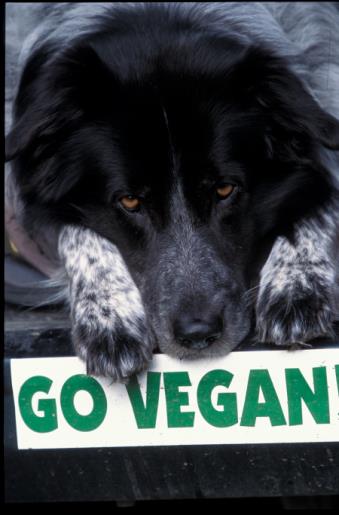
Now there’s hope for lasting harmony among the people of the planet and nature breathes a sigh of relief.

The Day Seven Billion People Decided to Hunt Their Own Dinner

It’s dawn, July 12th, 2012, the day that nearly all 7 billion of the Earth’s human inhabitants decide to start killing wild animals for their dinner. (To be exact, the human population is actually 7,025,629,572, according to the current population clock…but who’s counting?)

All at once the teeming, unnaturally overcrowded human population leaves the congested towns and cities—fully armed—to take to the fields and forests in search of the last vestiges of wildlife out there. For many, the only animals besides pets they’ve ever seen are the ones that come sautéed, grilled, fried or fricasseed, but hunter propagandists have convinced them that they’ll be better environmentalists if they join the war on wildlife. Some are surprised at how easy thier devolution back to the savagery of hunting is for them.

It doesn’t matter if an animal is considered big “game” or “vermin,” protected or prosperous, not a single non-human is safe from Homo sapiens’ new-found devotion to their old ways. The first to get hunted to extinction are the critically endangered species, like the white-tailed prairie dog, the black-footed ferret and the California condor in the U.S., the Panda in China or the Okapi in Africa…

By noon, only a fraction of the seven billion have made their own kills, and the per-person success rate is already dropping. Instead of each new hunter killing their own wild animal, people start teaming up and sharing their kills, yet there still just isn’t enough wildlife left to go around. Naturally, they begin to turn their weapons on one another…

The authors of those trendy new pro-hunting books that extoll the virtues of killing wild animals for dinner—finally seeing the error in their ways—try in vain to call off the seven billion new super-predators, telling them, “We didn’t mean for all of you to start hunting, just a select, entitled few!”

(Upwards of 60 billion factory-farmed animals are killed across the globe annually, including 10 billion in the US alone, to appease hedonistic human carnivores. How far could anyone expect the Earth’s few remaining wildlife populations to go in feeding each and every obdurate meat-eating human?)

By the end of the day, the bloodlust is satiated, but the Earth is virtually a lifeless wasteland; every animal species has been hunted practically to extinction. Only now do the masses look around for a fresh, new answer. They’re ready to listen to a vision for a truly sustainable future that doesn’t involve killing animals for their dinner.

A vaguely familiar message comes from the few people who did not take part in the days’ killing spree. Their two-word slogan may not have sounded appealing to the masses before, but now people are willing to take the path of peace—to lay down their weapons and live a less destructive life.

Ultimately, this story has a happy ending: The Day the Human Race Went Vegan