The only safe wolf is an endangered one…
2

The only safe wolf is an endangered one…
One more feeble rationalization out the window…
Seeing the photo of a young Trump troll holding a severed elephant trunk makes me so enraged I could tear it out of his hands and beat him to a bloody pulp with it. There, I said it. Make no mistake, photos of sick, gloating psychos inspire as much murderous rage in me as they do in any other good person who cares for animals and who knows that the elephant was a far more worthy soul than the grinning, scum-bag sport hunter.
Does this bring me “down to his level?” No, that’s an overused cliché that I should have avoided in my last post, because it put some readers on the defensive and made them miss my whole point (which was simply: even in our talk of retribution, we should strive to sound more humane than those who enjoy killing). Would I enjoy flogging someone to death with the trunk of an elephant (justified as it might well be)? If so, it may be time for some serious introspection; time to ask myself, “Have I crossed the line and temporarily lost my sanity?”
The tag line for my book and blog is “Forget hunters’ feeble rationalizations and trust your gut feelings; making sport of killing is not healthy human behavior.” The word “sport,” which hunters make no bones about using, suggests taking pleasure in the act of something—in the case of hunting that means offing a living being. Regardless of how you justify it, deriving pleasure from killing is not healthy behavior. No matter how tempting it is to go on the warpath on their behalf, the animals need us to stay sane. Any lethal action we take will be perceived as another sign that we “put animals above humans” (guilty as charged?) and justify further oppression of the animals. Thankfully, nobody here has been driven to cross that Rubicon yet.
I included only photos of live animals throughout my book, in part help people identify with the subjects, but also to avoid making the reader see red, drop the book, and go out and commit some act of homicide that could set back any progress made for the animals and inspire a fully armed retaliation against them. All laws are on the side of the exploiters, and they have all the weapons (well, at least most of them).
My advice to folks who find themselves at the end of their rope: whenever you feel you’ve viewed one too many snuff shots of evil, smug little men and women with their trophies, file that rage away for a minute and take some time to regain your composure. Maybe pet your cat or dog, gaze out the window at the sunset or appreciate a photo of a live, free-roaming animal. But if you keep staring at a computer screen full of morbid, infuriating images of animal murderers, it might make you sink to their level…of sanity, anyway.
The fight for the animals is a war of attrition; a war of hearts and minds. Everything we do or say can have a bearing in the case against animal cruelty.
No matter how enjoyable the thought of beating a hunter or trapper with their victim’s severed body part might seem be, for the sake of the animals we must try to hold on to our sanity.

Text and Wildlife Photography ©Jim Robertson
Front line update on Washington’s wolves
Suzanne Asha Stone | Posted on 29 August 2012 |
Good things can happen when people just sit down and talk things out. This week, up to four wolves from Washington State’s Wedge wolf pack were slated to be killed by the state for allegedly preying on livestock. But after my meetings with state officials, I am happy to report that the state agreed to reassess the situation. Even before our meeting, they had already pulled traps and are withdrawing the sharpshooters today.
The state had decided to kill wolves based on assumptions that they were the cause of recent livestock injuries in the area. But I have been assessing wolf livestock kills for more than a decade and the physical evidence just didn’t add up. These injuries looked more like those commonly sustained by cattle grazing on national forest lands. I double checked my assessment with some outside experts and they agreed. So yesterday I took my case straight to the State Director of the Washington Department of Fish and Wildlife.
Along with other groups, I met with Director Phil Anderson and his staff and went over our assessment of the evidence. In contrast to many state wildlife officials in the region, he was very respectful and genuinely interested in what we had to say. And he acknowledged that our concerns were valid. We met with the governor’s office as well and they agreed a reassessment was in order.
I walked out of these meetings hopeful that our concerns were heard, but the entire episode reminded me of how collaborative and productive wildlife management can be when everyone respectfully listens to everyone else and lets sound science rule the day. The Washington Department of Fish and Wildlife and the Governor’s office both deserve appreciation for being willing to listen to the concerns of others and acknowledge the need for further assessment. And a big thank you to our members and supporters who weighed in with state officials, asking them to take a step back, review the science again and spare these wolves. We heard from the governor’s office that they received over 1200 calls from wolf supporters just on Friday alone.
Washington State is a critical player in the ongoing saga of wolf recovery in the Northern Rockies, but lots of work remains. Yesterday’s developments, and the people who made it happen, gave me hope that we are on the right track.
Suzanne Asha Stone is the Northern Rockies Representative for Defenders of Wildlife.

Dane County Judge, Peter C. Anderson, has decided to delay his decision on an injunction to stop Wisconsin’s impending wolf slaughter/dog fighting season until Friday. While the DNR, hounders, and other anti-wolf elements attempt to defend the legalization of dog fighting the judge is taking more time to research the issue. This is good because it shows that George Meyer and the DNR’s argument that animal cruelty toward wildlife is protected is not a “slam-dunk.” Let’s hope that the judge at minimum puts and end to the legalized dog fighting that Rep. Scott Suder (R-ALEC), George Meyer, and the bear hounders consider to be a protected “tradition.”
If you’ve read my book you already know I’ve had more than my share of first-hand experiences with the gruesome evils of trapping—enough to make me want to take my phazer off “stun” and instantly vaporize the next trapper I see out of existence. Surely the vacuous lunatics who participate in that pastime aren’t worthy of this wonderful world. As a compassionate society we must stop them from causing further torment.
But there are many otherwise good people—understandably enraged by the demonic actions of hunters and trappers—who take it a step too far. They say they want animal abusers to endure as much terrible agony as their victims. Not only do these foul thoughts bring us down to their level, they perpetuate the cycle of violence we should be striving to end. I wouldn’t wish the kind of suffering I’ve witnessed trapped animals going through on anyone, deserving or otherwise.
Of course, I don’t expect folks to shed a tear if a hunter or trapper dies in the act of harming others. That is, as they say, just “nature’s way.” Maybe they were bucking for a Darwin Award and finally earned one.
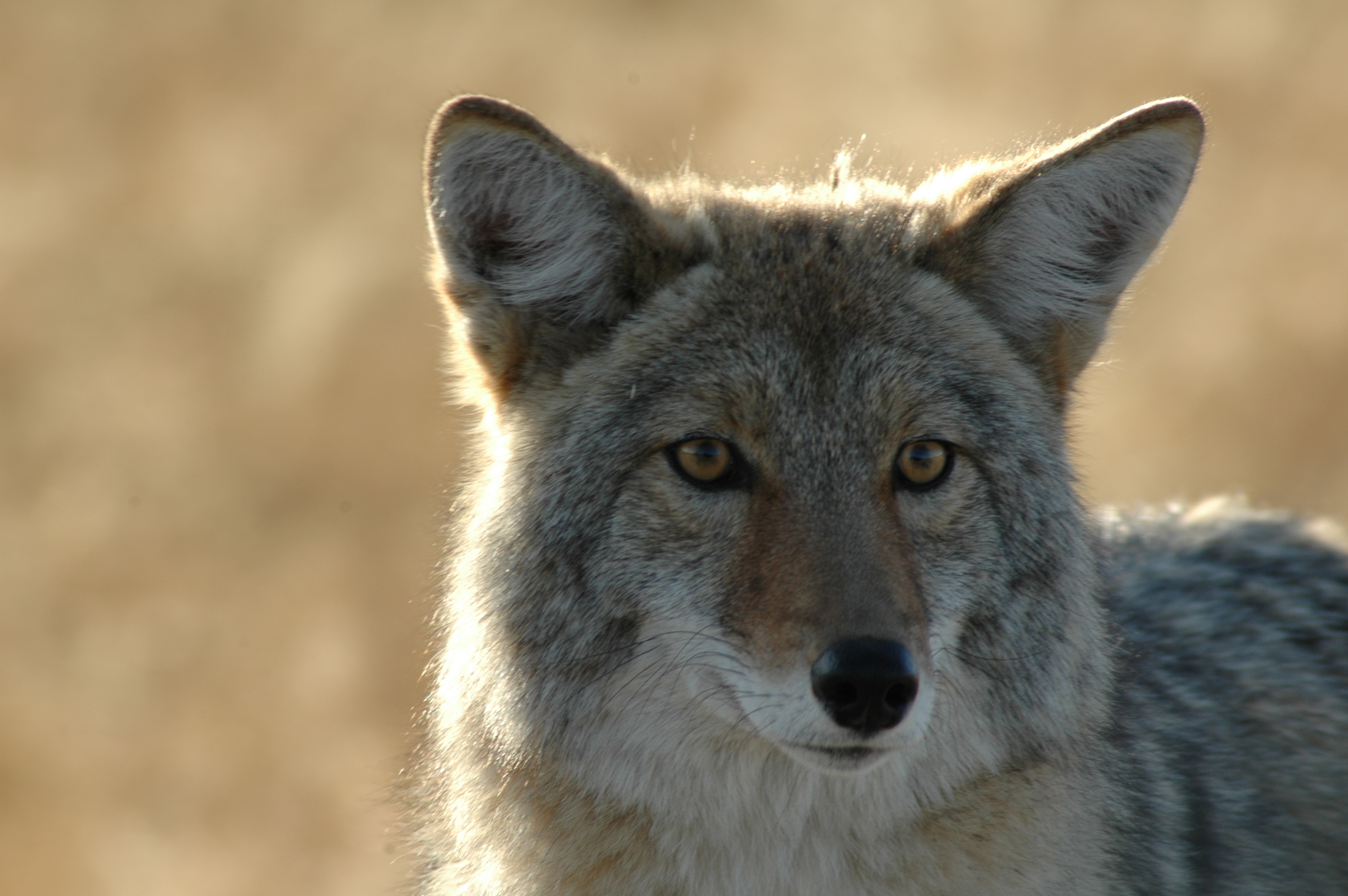
Still, if you can’t think of one good reason not to wish some awful un-pleasantry on a hunter or trapper, consider this: is a sheep rancher justified in wanting to see a coyote suffer as much as the lamb she preyed on? It’s the same mentality, the same sort of rationalization used to validate cruelly trapping, shooting or poisoning coyotes.
“An eye for an eye” is an outdated holdover from a time when fornicators were turned into pillars of salt and gods were so malevolent as to drown every animal on Earth (except the lucky couples on the Ark, as the story goes) just to punish the human species. As Mahatma Gandhi saw it, “An eye for an eye makes everyone blind.”

Text and Wildlife Photography ©Jim Robertson
(The following excerpt from the chapter, “War on Coyotes an Exercise in Futility and Cruelty,” in the book, Exposing the Big Game: Living Targets of a Dying Sport, parallels points I raised about wolves being incriminated in yesterday’s post—just substitute wolves for coyotes and sheepman for cattle rancher)…
In removing weak or diseased animals from a given gene pool, coyotes, as well as wolves and cougars, secure healthy traits for future generations. Furthermore, although introduced livestock (their wariness bred out of them through the domestication process) are far more vulnerable, it’s been documented that predators like coyotes would prefer to stick to their usual prey—yet they are ever the scapegoats.
As Jack Olsen, author of Slaughter the Animals, Poison the Earth, put it:
“By simple dint of pounding over and over on the same points, the sheep industry has succeeded in characterizing all predators as deadly killers that would rather dine on lamb than anything else that lives on the range. In the sheepman’s demonology of the coyote, every fallen sheep is brought down by coyotes. If Canis latrans comes across a dead sheep and plays his natural role as carrion-eater, the rancher shows teeth marks as proof of murder. If a sheep falls dead and the coyotes ignore the carcass, the sheepman charges an even more heinous crime: killing for pleasure. No matter what the predator does, a diabolical explanation is provided, and grandiose overstatement becomes the rule. Two lambs dying at birth are transformed into twenty lambs killed by coyotes.”
Ordinarily a writer of true crime books, such as Son, a Psychopath and his Victims and I, the Creation of a Serial Killer (about a murderous trucker whose violence continuum began with a long history of cruelty to animals, including coyotes), Olson did not have to stray far from that genre in addressing the mentality of the kind of nutcase who would victimize coyotes.
Wildlife Photography Copyright Jim Robertson
The fate of a Washington wolf pack hangs in the balance
Late Friday, seven pro-wolf groups have sent a letter asking Governor Chris Gregoire and other state officials to end efforts to kill up to four “Wedge” wolf pack members, even as a team from Washington State Department of Fish and Wildlife (WDFW) heavies are on-site continuing their lethal wolf “management” efforts. The WDFW thugs have spent the past week in Northeast Washington, attempting to “remove” (lethally, of course) wolves from the besieged pack.
The good news is they’ve had no luck killing any wolves during the past week. However, biologists reported finding the decomposed body of a young wolf within the Wedge pack’s range in northern Stevens County. A WDFW wildlife veterinarian was unable to determine that wolf’s cause of death since the carcass was too badly decomposed.
Although lacking hard evidence of any wrongdoing against cattle by wolves, wildlife “managers” earlier this month “lethally removed” one female from the Wedge pack and shared wolf pack location information with the outspoken wolf-haters from the Diamond M Ranch. (I for one have a strong suspicion as to how the Stevens County wolf might have died.)
The letter to Governor Gregoire and other Washington state officials sent by the Western Environmental Law Center and signed by pro-wolf groups, such as The Humane Society of the United States and Conservation Northwest, charged that Washington Fish and Wildlife Department officers didn’t find conclusive evidence that wolves were responsible for attacks on cattle and are jumping to a lethal option too hastily.
Two of the three non-agency experts who peer-reviewed the field investigations were unconvinced the purported cattle attacks were the work of wolves, said Suzanne Stone of the Defenders of Wildlife.
“The reports and especially the photos indicate injuries uncharacteristic of wolves,” she said.
The following Incident Report, #WA – 12 – 007485, by a WDFW agent should give you an idea just how inconclusive the “evidence” of some of these alleged wolf “attacks” really is:
“On 08/02/12 at approximately 1430 Hrs. Officer Parker and I were on a routine patrol on the Churchill Mine road. We approached the cattle pens and observed Bill McIrvin and three other ranch hands. I could see that Bill and his ranch hands were busy with corralling and dealing with large calves in the holding area. I contacted Bill in an effort to introduce Officer Parker. Bill told us one of his calves had bite marks on it and wanted me to see them. Bill also had a bleached out bone that had been eaten/chewed on. Bill stated it was from one of his calves. I observed it. It had been chewed on one end of the bone. I could not determine exactly what had chewed on it or cause of death.
“Bill then moved a cow and calf into the corral for closer inspection. I could see that the calf seemed normal and healthy. I did see on the back right leg, middle of leg, a laceration, approximately 2” wide. I could see no other apparent wounds. The calf was cornered and handled by 4 men to where it was put on its side for me to look at the wound and possible bite4 marks. Once, the calf was down, Bill pointed out the obvious laceration (photo taken). It was approximately 2 to 3” long. No maggots and still a fresh opening through the hair/hide. Bill then pointed out a bite mark next to the laceration. Using my fingers and feeling through the hair, I could not see or confirm a bit mark was there. Bill then grabbed underneath and inside the back right leg. Bill wanted me to grab and feel in this area for another bite mark. I reached in with my fingers and began felling in the same spot as well. I used my fingers feeling through the hair and touching the hide and felt no bite marks. I observed no obvious bite marks or trauma in any areas inside the back rear legs. Bill then pointed out an area he believed the calf had been bitten on the forward chest area. I used my fingers and felt through the hair and hide and felt no bite marks. I observed no obvious signs of trauma in the forward chest area as well.
“I spoke with Bill regarding compensation. I asked Bill if he would reconsider accepting compensation for his calves. Bill stated he was not interested in compensation this year.
“…I explained to Sheriff Allen [with Stevens County Sheriff’s Office] that I had looked at the calf and did not believe it was a wolf encounter… based on no apparent bite marks, no trauma, one laceration, I could not determine what had caused the laceration.”
When in doubt, blame it on the wolf…

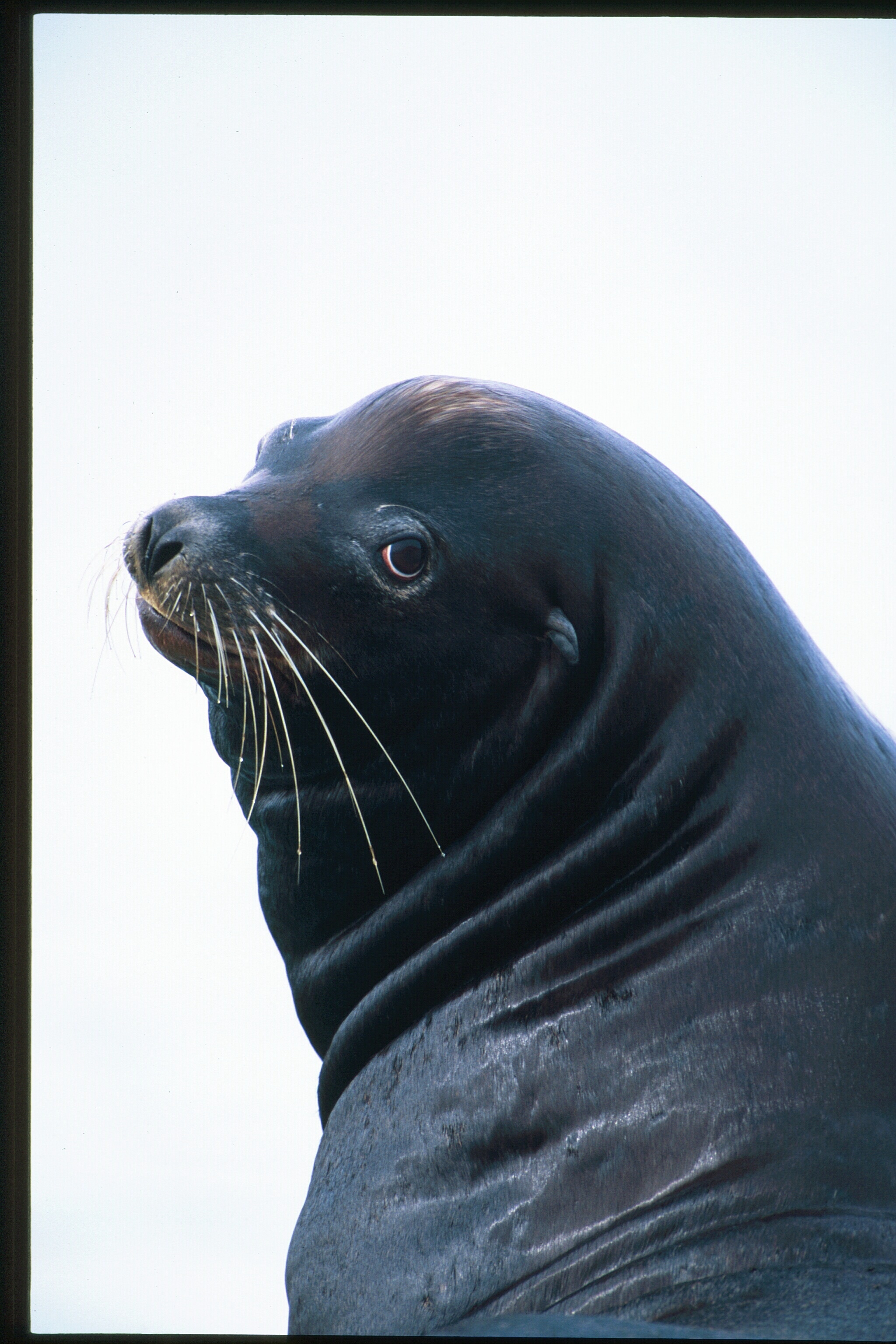
Cattle ranchers in northeast Washington call for the renewed extermination of wolves, a species extinct from the area until recently thanks to shallow minds and destructive policies. Meanwhile, commercial fishermen take every opportunity to shoot protected seals and sea lions they view as competition for the fish their nets drag in by the thousands. And news that the Arctic sea ice has retreated to an all-time historic low, due to climate change wrought by the burning of fossil fuels, factory farming and a host of other human-induced hazards, only emboldens oil companies to drill offshore there and tempts industrialists from U.S., Canada, Beijing and beyond to use the fragile polar waters as a new shipping route.
It appears that Paul Ryan and Ayn Rand aren’t the only ones who think selfishness is a virtue.
Loath to share with other species what they see as their entitlements, animal exploiters think nothing of calling for the annihilation of long-besieged predators like wolves. Washington state rancher, Bill McIrvin told the Capital Press he is hoping for a total deletion of the Wedge Pack: “If we can get this pack removed, hopefully we’ll have long enough that people in Washington can wake up and see what’s going to happen to our game and our livelihood.”
The attitude, adopted by ‘wise use’ resource extractors across the board, goes something like, “Our ancestors massacred the wolves for our benefit, now the ‘game’ and the land are ours to do with as we see fit.” It’s the same self-centered stance taken by fishermen against marine mammals. Never mind that those intelligent Earthlings were mercilessly slaughtered during the nineteenth and twentieth centuries, today’s ocean exploiters see them as nothing more than rivals for ‘their’ fish. Meanwhile oilmen disregard all other animal life, and the very climate on which we all depend, in the single-minded veneration of the almighty dollar.
Yet, a dollar in and of itself is just a neutral marker of means. Money, like a gun, depends on human intent to unleash its devastating power.
No, I’m afraid to say, Mr. Ryan, selfishness is not a virtue—it’s the real the root of all evil.
Text and Wildlife Photography ©Jim Robertson
I was going to lay off Paul Ryan for a while, until I read his statement in an interview with a Pennsylvania news station: “I stand by my pro-life record in Congress. It’s something I’m proud of.” I just find it anomalous that a diehard bowhunter claims to be “pro-life.” Either he’s lying about championing life, or he doesn’t understand that humans aren’t the only animals imbued with it.
Since his congressional record leaves no doubt about his militantly “pro-life,” right-wing, anti-abortion stance (he opposes the procedure even in cases of rape or incest), it must be that he considers only human life worthy of the L-word. Apparently all others don’t measure up to the status of having life, in his opinion. It may come as a shock to someone so used to depersonalizing and objectifying certain beings while pursuing their favorite lethal hobby, but whether human or non-human, all life is life.
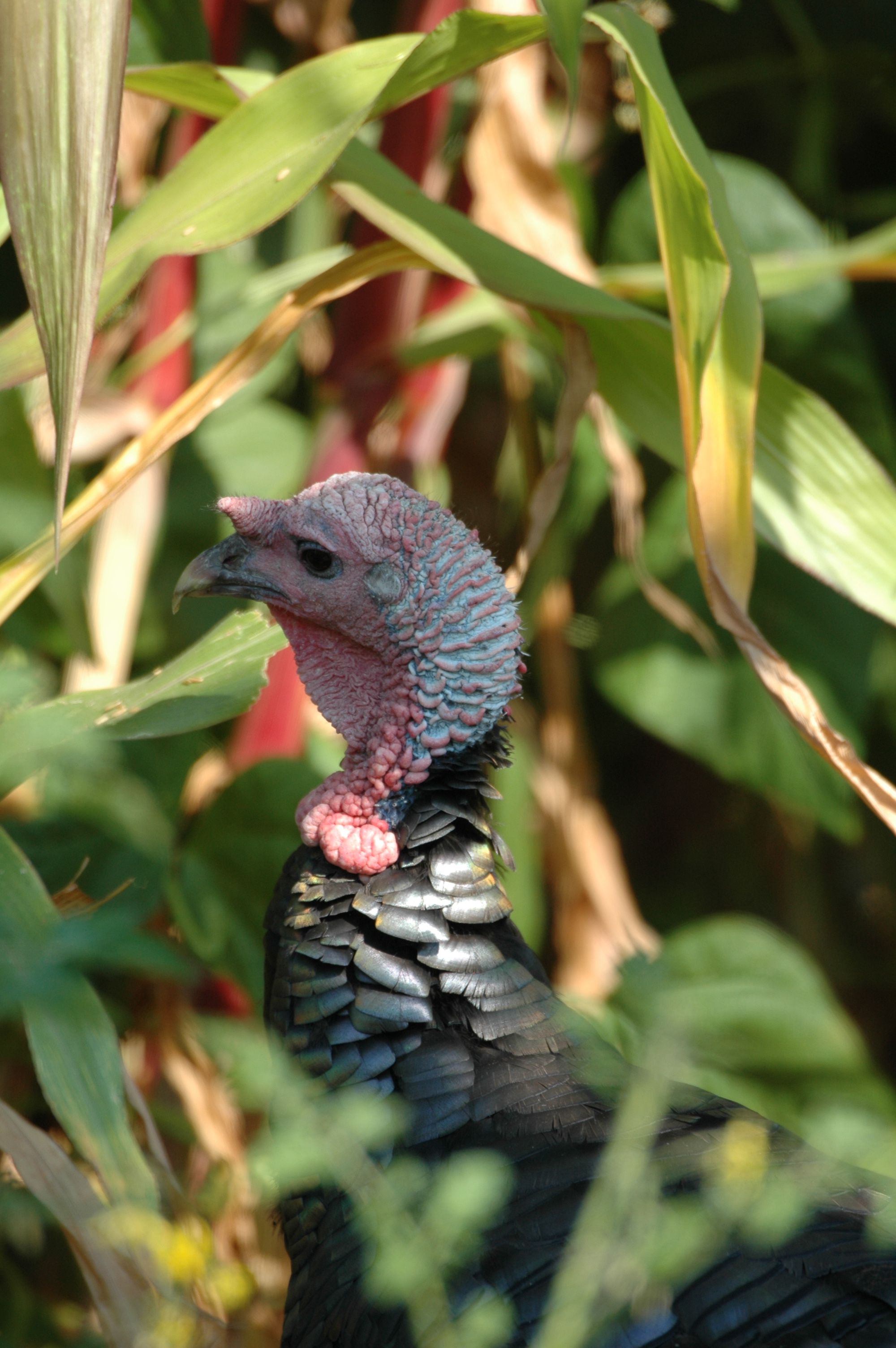
When I think of the term “pro-life,” I think of pro-wildlife (and therefore, anti-hunting); pro-animal life (humans being animals, they’re included here); pro-animate life; pro-the-living. But I fail to see how a human ovum fertilized through an act of incest or violence rates higher than a fully aware, fully functioning adult deer, elk or turkey.
Text and Wildlife Photography ©Jim Robertson
 Exposing the Big Game