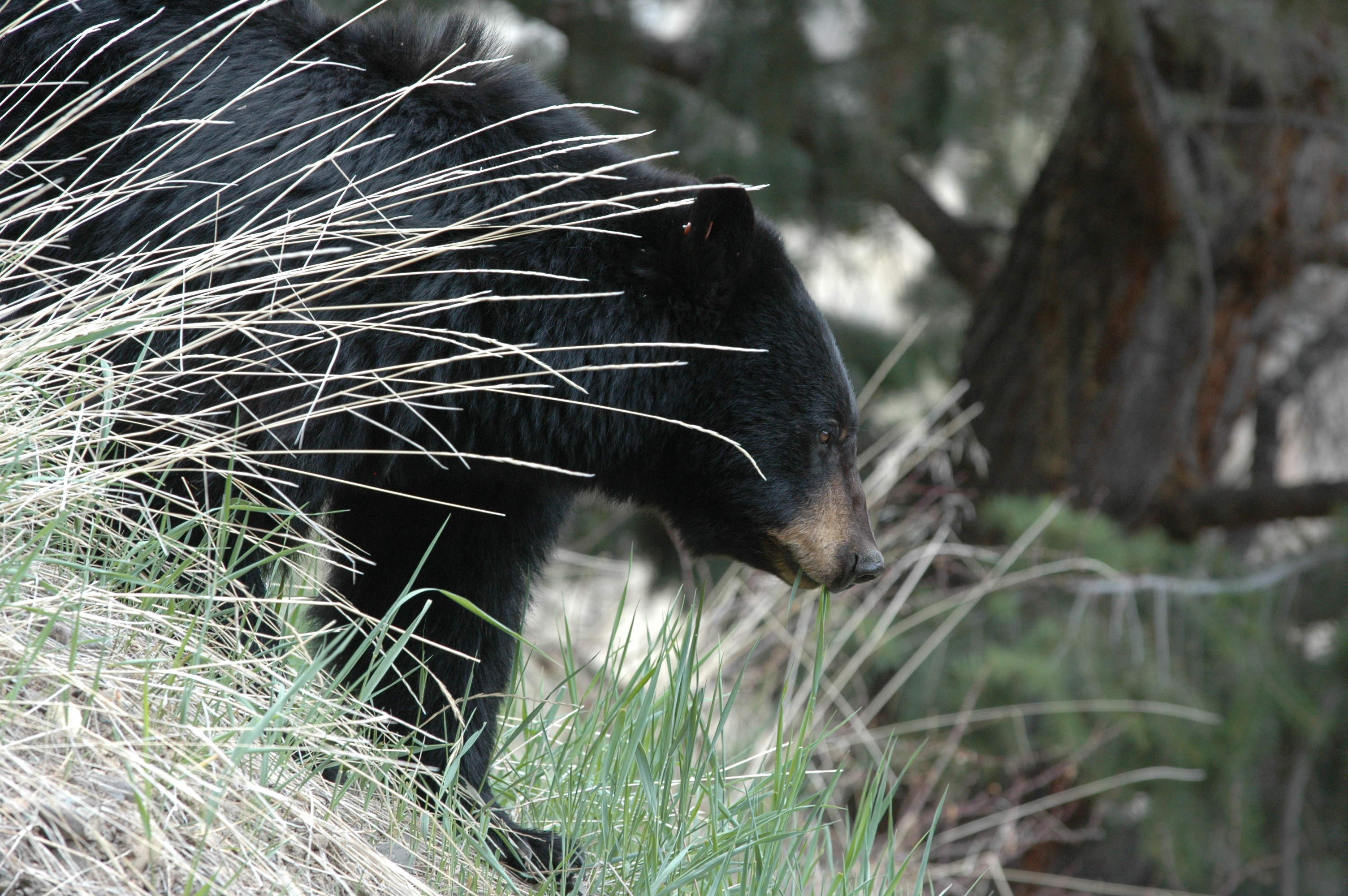
Romney Taps Diehard Bow Hunter for Running Mate!

 
A bowhunter could soon be the U.S. Vice President!!!  Spread the word–Mitt Romney’s choice for running mate is an avid, diehard trophy deer hunter!!

“Diehard” is more than a euphemism, in this case it has a double meaning. Unfortunately it’s the deer who literally die hard, thanks to Ryan’s chosen hobby.

According to the blaze.com, ‘He’s an avid bow hunter who emails from the brush as he waits for deer.’ Number 10 of the US News list of “10 Things You Didn’t Know about Paul Ryan (and, I would add, never hoped to find out) is: #10. Ryan’s hobbies include hunting and fishing. He is a bowhunter and belongs to his hometown’s archery association, the Janesville Bowmen.

“I butcher my own deer, grind the meat, stuff it in casings and then smoke it,” Ryan told Politico.

Here’s Paul Ryan’s Voting Record on the Environment:

  • Voted NO on protecting free-roaming horses and burros. (Jul 2009)
  • Voted NO on environmental education grants for outdoor experiences. (Sep 2008)
  • Voted NO on $9.7B for Amtrak improvements and operation thru 2013. (Jun 2008)
  • Voted NO on increasing AMTRAK funding by adding $214M to $900M. (Jun 2006)
  • Voted NO on barring website promoting Yucca Mountain nuclear waste dump. (May 2006)
  • Voted YES on deauthorizing “critical habitat” for endangered species. (Sep 2005)
  • Voted YES on speeding up approval of forest thinning projects. (Nov 2003)
  • Rated 10% by the LCV, indicating anti-environment votes. (Dec 2003)
  • Inter-state compact for Great Lakes water resources. (Jul 2008)
  • Make tax deduction permanent for conservation easements. (Mar 2009)
  • Rated 13% by HSLF, indicating an anti-animal welfare voting record. (Jan 2012)

And here’s Paul Ryan’s “hobby:”

One Lucky Pup?

On Wednesday, a friend…wait a second, I’d better look up the definition of “friend”…

1. a person attached to another by feelings of affection or personal regard.

2. a person who is on good terms with another; a person who is not hostile: Who goes there? Friend or foe?

…ok, in that case, a person who I am on good terms with and who is not hostile lent me a book about a woman who raised a coyote pup. It turns out the pup was given to her by a suitor who works for the “wildlife services” killing coyotes. The minute I read how the pup was (unlawfully?) acquired, I decided to return the book to the lender, while wondered why he lent me this tome of such infuriating rot in the first place.

This was not a heartwarming story of a selfless wildlife rescue. Instead, Mike, the wildlife “services” assassin, had shot a pair of coyotes, then went on with his normal routine of locating the den and inserting a poisonous cartridge to gas the pups to death. But this time he decided to spare one of the pups, probably thinking he’d score some points with his new girlfriend by making a gift of the poor young animal (who had just seen his family killed by his captor).

The one piece of worthwhile information to be found in The Daily Coyote was this bit of insight into the barren mind of a coyote killer:

“Mike killed coyotes through a number of means–snares; foothold traps; from the ground with a rifle; and with a shotgun out of a small, low-flying airplane. I asked him what it felt like to make eye contact with a coyote and then raise his gun and fire, watch it fall, see it die. He…said he didn’t feel, didn’t think about it; he blocked that part out…felt nothing.”

Although no real champion of wilderness or wildlife, the author could not overlook the fact that “there is a war between humans and predators…most ranchers and hunters would prefer there be less or none of the wild predators, coyotes and mountain lions and wolves. People feel entitled to take the land, the resources and the wilderness as their own without giving up anything to the land they are running on…and so man becomes the ultimate predator with a singular goal…”

Wildlife Photos Copyright Jim Robertson

If I Were a Hunter

I’m proud to say I’m not a former hunter. I never had to kill an elk or a bear or a swan or a goose to know how bad I would feel about it afterwards. My “problem” might be too much empathy; I could readily imagine the sense of self-loathing that should come with destroying such beautiful and noble beings.

When in my youth I had to put down a wounded buck deer I’d hit with my truck, I found myself apologizing to him even as I made the cut that put would him out of his misery. I knew I’d never want to go through that in the name of sport.

The only time I hunted for food was during a brief live-like-an-Indian phase. I had enrolled in an “Aboriginal Life Skills” course— the same one that the author of “Clan of the Cave Bear” later took to learn how Cro-Magnon and Neanderthal man may have lived. I carved a bow out of a young juniper tree and with this mighty weapon, I shot a harmless chipmunk. The arrow didn’t kill the poor soul outright, but knocked him to the ground, wounded and trembling.

As I dealt the creature it’s death blow with a club, I felt no ancient, sacred pact with nature; no mystic bond with the great chipmonk spirit; no connection with the circle of life. I felt only an overpowering urge to end the suffering I had caused this individual.

One of this blog’s regular readers posted the following quote to the comments section of “Honor Thy Father and Mother, Except When They Misbehave.” I don’t know who made this statement, but I can relate to it. If I were a hunter, this is just the kind of conclusion I could see myself coming to:


“I hunted for 30 years. For various reasons, mostly because my father did, and my grandfather did. Yes, we ate what we killed, but I never felt I was hunting TO eat, after all, I had food whether I killed anything or not.

I never felt I was hunting for “wildlife management”. I never picked up my rifle and said “Well, I am off to do my duty for wildlife management by killing an animal”.

I never did hunt for “trophies”. Whatever one describes that as.

I didn’t even consider my “milenias old roots”, though I occasionally did use one of my grandfather’s rifles, now 100 years old.

I guess I hunted just because I did. At first, killing was thrilling, then anti-climactic, then distasteful. Then you begin to wonder why you are doing it.

After pursuing elk for 7 years in the Bob Marshall Wilderness, I got an easy shot at a 6 point bull and passed. If he could elude me for that long, what business did I have to kill him and hang his head where people who had never experienced his world could look at him…..not in his magnificence, but in an artificially posed mount, supported by premolded styrofoam. Would I have gained anything from the experience? Who would gain? Who would be better off had I ended the animal’s life?

I began to look at hunting differently. It certainly isn’t needed by anyone or anything…….most animals are not hunted at all, and do just fine. Hunters continually harp on deer overpopulation…..but deer make up less than 2% of what they kill. And there are now alternatives to hunting deer.

In November 1989, I was shot by a deer hunter, while on my own property. The irresponsible hunter left me for dead, and my twelve year old son loaded me in a truck and drove me 40 miles to a hospital. That didn’t dampen my enthusiasm, though, and is not the reason I quit, but it did give me a solid taste of what the animals endure.

I guess I just started to understand that the animal I was looking at through a scope was not just a target, but a living thing. A thing that suffered when shot, a thing that I had no right to kill, though I had the privilege to do so, by virtue of paying another person a fee for a license. Think about that. The animal is minding his own business when you go into a store, pay a fee and walk out with a license to kill the animal, what a deal.

I shot the last animal that will ever fall to my gun in November 1992. I hunted until January, 1997.

In five years, I discovered I could love the outdoors, and it’s experiences, which I still dearly enjoy, without killing. The guns stay at home when I take to the field now, though I keep the rust off them by frequent trips to the range to break clay targets or make little groups of holes in paper, and I have turned more to shooting competition for satisfaction and achievement.

Is hunting worse than factory farms? No. Does that make hunting right? No.

Am I responsible for the death of animals, even though I am a vegetarian, don’t use leather or fur? Sure. One only need observe the bugs on my truck grill to see that. But I have decided to minimize my impact on animals and work to help them, rather than kill them.

I have a lot of making up to do.”
New Review of Exposing the Big Game

Here’s a new Book Reveiw by Barbara Julian of Animal Literature:
Exposing the Big Game with spectacular photography and horrifying narrative,

Exposing the Big Game, by Jim Robertson, Earth Books, 2012
This book should come with a warning: you will be exposed to some horrific information and heart-breaking tales of the War on Wildlife. Viewer discretion is advised. Government discretion is also advised: politicians not only allow but encourage wildlife hunting for various “management” reasons in many jurisdictions, and humanity should have come up with a better way by now. As for those who kill for fun
Robertson is one angry author-photographer, and we soon see why. In North America it began about 12,000 years ago (with the migration of the first murderous humans): the escalating eradication of wild species. This book jolts us with contrasts, i.e. between the wondrous photos of animals and the hideous word-pictures of the cruelties visited on coyotes, wolves, bears, bison and victims of leg-hold traps. Some of us cannot even read it, it is too graphic. Yet the photos inspire, and re-ignite activist desire to lobby — yet again — for wildlife and an end to hunting whether for business, pleasure, or wildlife “management.”
Best of all the book educates us on the ways of our wild compatriots — their parenting, their emotions and lifestyles, and their clever survival adaptations (they are just like us human apes …!) Ultimately perhaps only that felt sense of the evolutionary, neurological and behavioural connectedness of life forms on this planet will take us beyond argumentation to a place where casual animal killing becomes universally recognized as inherently repugnant.
In an e-book era this one should be acquired in printed book form. So much is lost online, where in cyberspace we are overwhelmed by constant extreme stimuli both positive and negative. Were we not so jaded by all that this might have been a landmark book along the lines of Rachel Carson’s, Thoroeau’s, Farley Mowat’s and others who woke up a somnolent public. Can books still do that? (or in a post-literate age does everything have to be film and youtube?)

Posted by

1 comment:

  1. Our newspapers, part of the corporate destruction of our planet, have failed us by putting out “Outdoors” pages by wildlife killers normalizing killing for pleasure and trophy as “Conservation”. Killing is not conservation – in fact it is anti-conservation. Hunters and trappers and hounders are destroying habitat enmasse. Beavers create the most valuable habitat in the world, freshwater wetlands. They are the architects of survival for half of the rare and endangered species on earth – yet the coalition of farmers and “hunters” and trappers have destroyed beavers anywhere and everywhere to stock trout and serve the fur trim market of the nouveau riche in China and Russia. Our wildlife is being extinguished worldwide and we are in very real crisis to save even half of the world’s species. Read this book and get POLITICAL. The hunters, ranchers, and farmers who want to kill our wildlife to facilitate killing 55 billion farm animals are VERY POLITICAL and the legislators will give them whatever they want for re-election. Organize state by state to REPLACE KILLING LICENSE FUNDING of state agencies with GENERAL PUBLIC FUNDING. Otherwise they are just the killing brokerages they have always been.
    First educate yourself, and then take your outrage into political organizing to push our wildlife watching taxes (10-40 times the revenue of wildlife killers) to representative POWER! Act now so we can save something.

Honor Thy Father and Mother, Except When They Misbehave‏

Those of us who grew up watching “All in the Family” knew that the patriarch, Archie Bunker, wasn’t always right (to say the least). Yet, often the first reaction I hear from people when they learn that Exposing the Big Game is an anti-hunting book is an indignant, “But my father was a hunter!”

Well, so? Look at all the other outdated activities or attitudes we’ve turned our backs on—slavery, racism, sexism all went out of fashion without anyone arguing, “But my father was a racist, sexist, slave owner!”

What’s so sacred about hunting that makes it any harder to kiss goodbye than any of our parent’s other wrong-headed behaviors? Maybe it’s that nearly everyone you meet is as blind to their anthropocentric prejudice of speciesism as Archie Bunker was to his isms. Most people seem unwilling or unable to share their compassion with the non-human animals of this world.

Our parents deserve to be honored for teaching us the golden rule: “Do unto others as you would have them do unto you.” Kids are generally told that this directive applies to everyone, from their parents and teachers to their siblings and friends—not just to members of their in-group. And a lot of parents wouldn’t hesitate to invoke the golden rule to stop a child hurting the family pet.

Yet for many people, the bias of speciesism is so entrenched that they can’t seem to recognize a wild animal as a deserving other. But biases and isms are not written in stone. If humanity keeps evolving along a compassion continuum, we will inevitably apply the same rules of consideration to all creatures who have the ability to think and feel. Perhaps it’s time to update and clarify the golden rule to read: “Do unto other sentient beings as they would have you do unto them.”

The golden rule is an age-old edict rooted in the qualities of empathy and compassion. The former asks that we put ourselves in someone else’s “shoes” while the latter compels us to modify any actions that would harm or aggravate them. Naturally if we live by a golden rule that includes all of the animal kingdom, we would never keep anyone captive, trap, poison or snare them or use them as living targets in a bloody, imbalanced game.

Text and Wildlife Photos Copyright Jim Robertson

Bears Not the Most Dangerous

Bears are powerful animals who deserve respect and warrant a dose of caution, but their reputation as a menace is far out of proportion with reality. One or two people may be killed by bears in a given year, but over that same time period 50 will die from bee stings, 70 will be fatally struck by lightning and 300 will meet their maker due to hunting accidents. A person has about as good a chance of spontaneously combusting as being killed by a bear.

Meanwhile, tens of thousands of bears are killed by people each year, and no one is keeping track of how many are wounded, only to crawl off and die slowly without hospital care to pamper them back to health. 30,000 black bears are slain during legal hunting seasons in the US alone. Possibly another 30,000 fall prey each year to ethically impotent poachers seeking gall bladders to sell on the Chinese black market. Victims lost to that vile trade are eviscerated and left to rot, since bear meat is not considered a desirable taste treat. To make it palatable, backwoods chefs traditionally douse the flesh and offal with salt and grind the whole mess into sausage.

Why then, is it legal to kill bears when we have long since concocted a myriad of ways to turn high protein plant foods (such as soy, seitan or tempeh) into a perfectly scrumptious, spicy sausage, sans intestines? Clearly, the hunting of bears is nothing but a warped distraction motivated by a lecherous desire to make trophies of their heads and hides. But, dangerous and terrifying as they must seem to trophy hunters out to prove their manhood from behind the security blanket of a loaded weapon, they aren’t the “most dangerous game,” as the serial killer, Zodiac (an avid hunter who grew bored with “lesser” prey and progressed to hunting humans) divulged.

_________________________________________

The preceding was an excerpt of the chapter, “Bears Show More Restraint than Ursaphobic Elmers” from the book, Exposing the Big Game: Living Targets of a Dying Sport

Text and Wildlife Photography Copyright Jim Robertson

Nature Takes Care of Its Own

This letter is in answer to two articles about local wildlife….

Dear Editor,

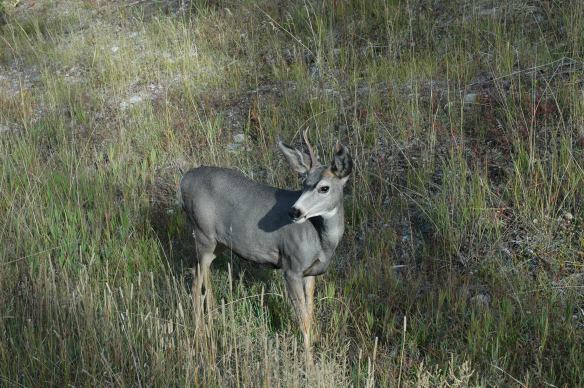
On July 27th the Daily Astorian reported that residents were split over whether they liked having deer around or not (“Bambi or Bother“). Some were concerned there were too many. But then on July 30th the paper ran another article, “Cougar Spotted in Astoria.” It seems that nature is taking care of its own.

All too often people are quick to see a population of wildlife as a “problem.” But as we’re seeing here, there’s nothing to worry about—just stay out of the way and let nature do its thing. After all, nature has been regulating itself far longer than all the self-appointed “game” managers put together. And the cougar is only there for the deer, she’s not interested in you or your pet (although it is always a good idea to keep your dog or cat indoors at night). 

If there’s any species whose population needs to be reined-in, it’s we humans. I would never suggest lethal measures for anyone, human or non-human, but there is such a thing as birth control, people. 

Jim Robertson

August Not all Fun in the Sun for Everyone

Natalie Babbitt, author of Tuck Everlasting,wrote: “The first week of August hangs at the very top of summer, the top of the live-long year, like the highest seat of a Ferris wheel when it pauses in its turning. The weeks that come before are only a climb from balmy spring, and those that follow a drop to the chill of autumn, but the first week of August is motionless and hot.”

Well, motionless perhaps, unless you’re a Washington State black bear trying to find food for the coming winter, while at the same time keeping your eyes peeled for bloodthirsty hunters.

That’s right, although it’s berry season for the bears, it’s “bear season” for hunters—as of August 1st—here in the Evergreen State. Now any Elmer who wants to can kill not one, but two bears each through November 15th! Any bear who values his or her hide will have no real peace until the snow flies and they’re safely tucked away in their hibernation den. Until then, they must assume there could be a camouflage-clad coward, with a high powered rifle or compound bow aimed at them, perched in every tree they pass under.

Each year 30,000 black bears are killed by hunters in the U.S. alone. Each one of them was a more remarkable, more worthy being than the cretins who would kill them for sport. If bears had Facebook pages, I’d add them all to my “Friends” list. To those who hunt bears: The enemies of my friends are my enemies. Since Facebook doesn’t have an “Enemies” list, the least I can do is unfriend you whenever you expose yourself as a hunter.

Wildlife Photography Copyright Jim Robertson

Do the Animals a Favor: Don’t Breed

Growing up in the 1960s (back when the human population was less than half of what it is today), we were allowed to talk freely about the problem of overpopulation without being labeled a misanthropist, or worse. Even Mary Tyler Moore covered the issue in an episode of her classic comedy show (before she was written off as a liberal animal lover).

But something happened over the years to effectively quell the voice of concern for the planet. I don’t know quite when it started, but I do remember when the prime minister of Japan (already an utterly overpopulated country at the time) urged his people to produce more offspring because they weren’t turning out enough ‘human resources’ to satisfy their industrialists’ and economists’ visions of unrestrained growth. What do our world leaders think we are, chattel? (Never mind, don’t answer that.)

Thankfully, some people are starting to talk about the subject again. Dave Foreman, founder of Earth First, recently wrote a book on overpopulation called Manswarm and the Killing of Wildlife. Meanwhile, comedian and author of a new feminist book, Caitlin Moran, known as the British Tina Fey (I assume because she does a great cockney Sarah Palin), wrote the following philosophical lines in a chapter called “Why You Shouldn’t Have Children:”

“JESUS! CORK UP YOUR NETHERS! IMMUNIZE YOURSELF AGAINST SPERM! Because it’s not simply that a baby puts a whole person-ful of problems into the world. It takes a useful person out of the world as well. Minimum. Often two. When you have young children, you are useless to the forces of revolution and righteousness for years. Before I had my kids I may have mooched about a lot but I was politically informed, signing petitions, and recycling everything down to watch batteries. It was compost heap here, dinner from scratch there, public transport everywhere. … I was smugly, bustingly, low-level good.

Six weeks into being poleaxed by a newborn colicky baby, however, and I would have happily shot the world’s last panda in the face if it made the baby cry for 60 seconds less. The cloth diapers … were dumped for disposables; we lived on ready meals. Nothing got recycled … Union dues and widow’s mites were cancelled — we needed the money for the disposables and the ready meals. …

Let’s face it, most women will continue to have babies, the planet isn’t going to run out of new people, so it’s of no real use to the world for you to have a child. Quite the opposite, in fact. That shouldn’t stop you having one if you want one, of course…But it’s also worth remembering it’s not of vital use to you as a woman, either. … I don’t think there’s a single lesson that motherhood has to offer that couldn’t be learned elsewhere. …

Every woman who chooses — joyfully, thoughtfully, calmly, of her own free will and desire — not to have a child does womankind a massive favor in the long term. We need more women who are allowed to prove their worth as people, rather than being assessed merely for their potential to create new people.”

_______________

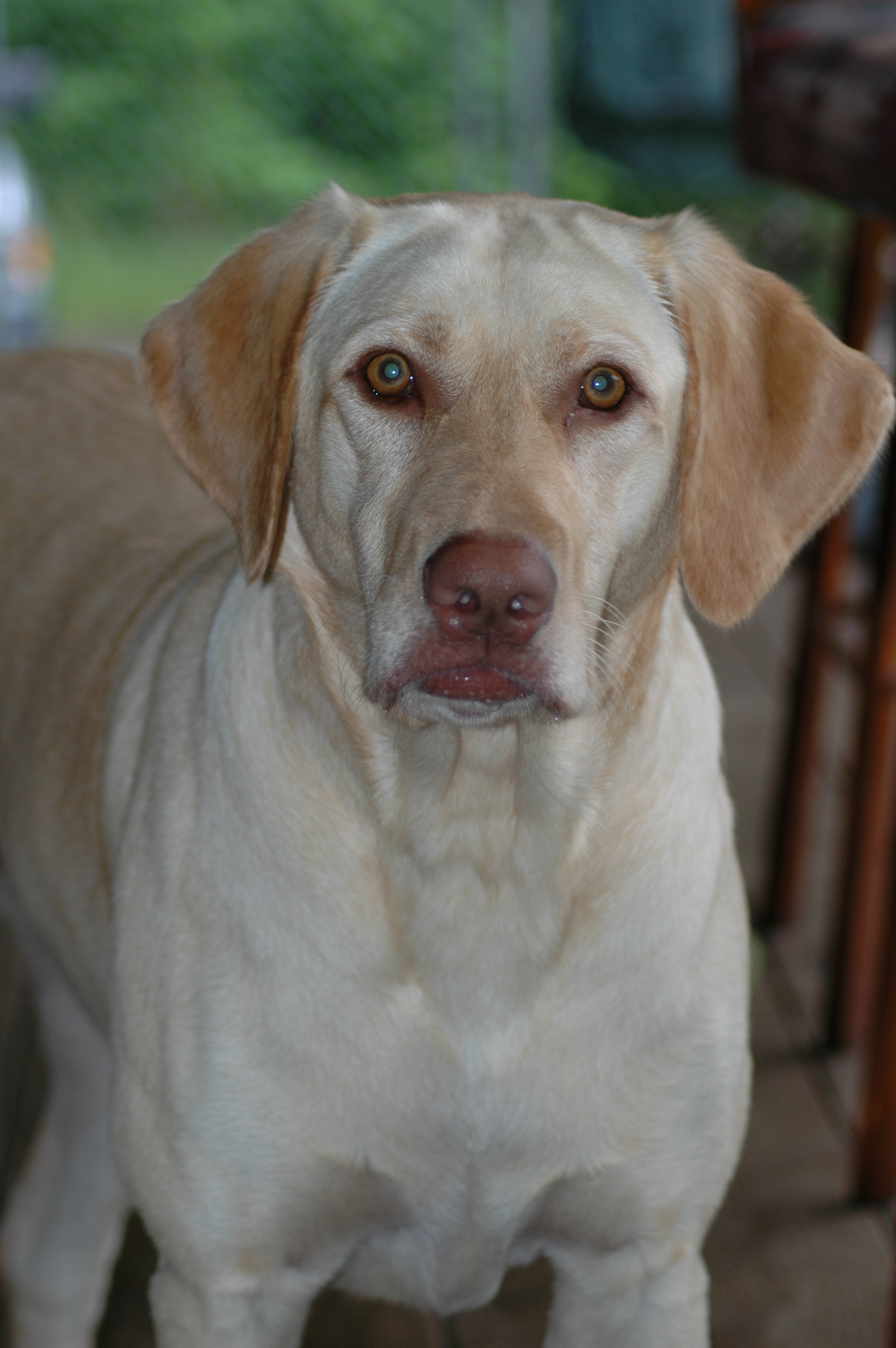
Not only does having children often relegate concepts like recycling, cloth diapers or a thriving world of diverse wildlife to the back burner, but the family pet so often gets ignored as well. In a story all too common, our adopted dog Honey was one of those animals surrendered by a young couple who, as new parents, no longer had any time for her…

Honey