Stop Bear Snaring and Wolf Trapping Adjacent to Denali

copyrighted-wolf-argument-settled
Please Tell the Board of Game to Vote “Yes” to Stop Bear Snaring and “Yes” to Create a No-Trapping Buffer Zone Adjacent to Denali!

Dear Wildlife Supporter,

The Alaska Board of Game will meet in Wasilla from February 8 – 15, 2013 to vote on proposals governing wildlife management regulations for the Central and Southwest regions of Alaska.

The BOG has many, many proposals to consider at this meeting – there are many worthy proposals to support and even more that need to be opposed. However, AWA is focusing on two crucial issues: bear snaring (Proposal 105) and protecting Denali’s wolves (Proposal 86).

You may review all of the proposals online via the link below and make additional comments on as many as you choose.

E-mail comments on the proposals are due to info@akwildlife.org by 5:00 pm on Friday, February 1, 2013, and we will deliver them to the Board of Game prior to the start of the meeting. (The BOG does not accept comments via e-mail.)

Comments should specifically state “support” or “oppose” and the proposal number(s) on which you are commenting.

Comments also may be faxed or mailed so they are received by the Board of Game before February 7.

Comments:

ATTN: Board of Game Comments
Alaska Department of Fish and Game
Boards Support Section
P.O. Box 115526
Juneau, AK 99811-5526

Fax comments to:
(907) 465-6094

The current BOG proposal book is available in pdf format online at: http://www.adfg.alaska.gov/index.cfm?adfg=gameboard.meetinginfo. Proposal numbers 45 through 126 (pages 62 – 198) are scheduled to be considered at this meeting.

We are asking you to please comment in support of the following two proposals:

Proposal 105 (page 158), submitted by AWA, would ban grizzly and black bear snaring in the Southwest and Central regions.

* Scientists overwhelmingly agree that bear snaring is indiscriminate, cruel and not biologically sustainable.

* Bear snaring is an extremely controversial method of killing animals. The BOG tarnishes Alaska’s image for residents and non-residents alike by insisting on continuing its war on predators. Bear snaring has never been allowed in Alaska since statehood until the BOG approved an experimental program in 2008.

* Because bear snaring is indiscriminate, females with dependent cubs and cubs themselves are at risk. Bears have one of the lowest reproductive rates and it is for this reason modern scientific management principles discourage the harvest of females.

* Enforcement will be a nightmare for the Alaska State Troopers, who are already stretched thin.

* There are the dangers to other consumptive users, hikers and their pets who may come upon a situation where one bear is caught while its siblings or mother remain free in the area, creating the very real possibility of severe injuries or fatalities.The baited traps also create food-conditioned bears, and animals which learn to associate food with humans are a danger to our communities.

* Bear snaring is archaic, cruel and should be banned.

* Living bears have a very high value as a tourism draw and a source of revenue. They are almost always cited as one of the “big three” species visitors come to Alaska to see.

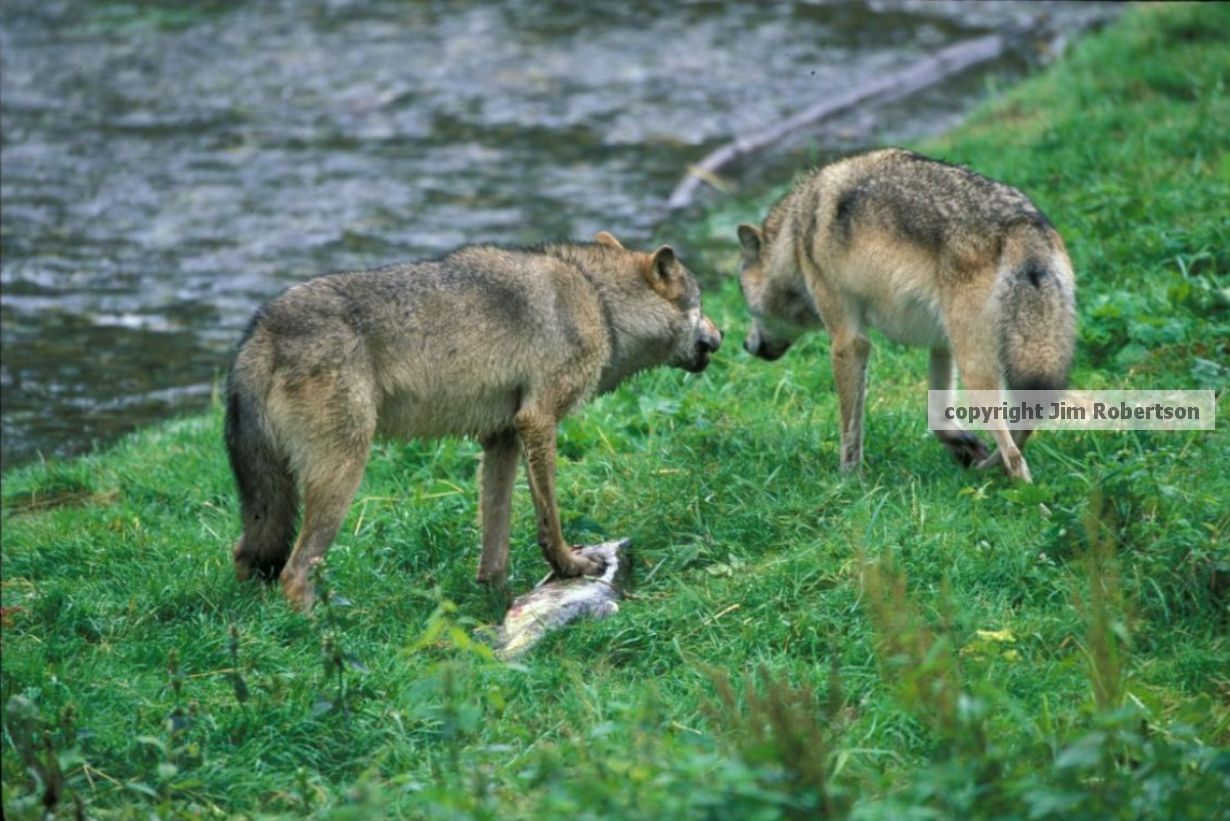
Proposal 86 (page 126) would re-establish a no-trapping buffer zone adjacent to Denali National Park. This proposal would provide crucial protection for wolves that wander across the Park boundary onto state land in search of prey or mates, where they are targeted by several recreational trappers.

* Wolf populations (and therefore viewing opportunities) have declined significantly in the Park due in part to trapping along the east and south Park boundary. The most recent official survey (Spring 2012) found a total of only 70 wolves in nine packs in the six million acre park – one of the lowest populations in decades.

* Several hundred thousand visitors annually travel to Denali to view wolves and other wildlife. Two or three recreational trappers targeting wolves habituated to the sight and smell of humans should not be allowed to negate visitors’ viewing opportunities (nor the millions of dollars they spend in the state).

* The loss of only one wolf to these trappers can result in a huge impact on viewing opportunities in the Park. Last spring the alpha female of the Grant Creek pack was trapped and killed just outside the Park boundary. The pack produced no pups last year, and subsequently dispersed. For years the Grant Creek pack had offered hundreds of thousands of Park visitors the best, most frequent opportunities to view wild wolves.

[Note: a six year moratorium on submitting proposals to re-establish a Denali buffer zone was enacted by the BOG in 2010. A request to the BOG in January to rescind its moratorium was met with a quick, unanimous refusal to even consider the matter. It is not known how the BOG will deal with Proposal 86 at the February meeting.]

Please take the time to speak out on behalf of Alaska’s wildlife. Our bears and wolves need your support.

As ever, thank you for your support and for your commitment to Alaska’s wildlife.

Best regards,
Tina M. Brown
President
Alaska Wildlife Alliance

PS: We will of course let you know the outcome of these and other proposals after the conclusion of the BOG meeting.

Alaska Wildlife Alliance
P.O. Box 202022
Anchorage, AK 99520
info@akwildlife.org
http://www.akwildlife.org

The speciscide continues…

Nabeki's avatarHowling For Justice

gray wolf flickr commons usfws

January 29, 2013

The greatness of a nation and its moral progress can be judged by the way its animals are treated. I hold that the more helpless a creature the more entitled it is to protection by man from the cruelty of humankind.
— Mahatma Ghandi

We have doomed the wolf not for what it is but for what we deliberately and mistakenly perceive it to be: the mythologized epitome of a savage, ruthless killer — which is, in reality, not more than the reflected image of ourselves. We have made it the scapewolf for our own sins.
— Farley Mowat, from the preface of the 1993 edition of his book, Never Cry Wolf

Montana is a big and beautiful state in the Northern Rocky Mountains of the United States. But… during the past two years this big and beautiful state has allowed a small number of its citizens…

View original post 851 more words

Starting to Look Like Speciescide

It’s been another bad week for wolves in the Rocky Mountain States…

MFWP reports: On January 25th the Montana State wildlife officials canceled the Jan. 29 conference call to reconsider a recent court-challenged decision to close the wolf hunting and trapping seasons in two areas north of Yellowstone National Park. The areas were closed by the Montana Fish, Wildlife & Parks Commission on Dec. 10, in response to concern about the harvest of wolves with collars that supply scientific information to YNP researchers. The seasons, however, were reopened by the district court in Livingston in response to a lawsuit brought by several sporting groups and a state representative from Park County.

FWP officials said today that the best course of action is to fully follow the judge’s Jan. 18 order that prohibits FWP from enforcing the wolf hunting and trapping closure.


“The judge clearly stated that FWP would have to return to the court to apply for an order to dissolve the injunction and have proof that requisite public notice was given. We have simply run out of time,” said Ron Aasheim, FWP’s spokesman in Helena. Aasheim noted that wolf hunting and trapping season is set to end in 34 days, on Feb. 28, and that obtaining a hearing and court action prior to the end of the wolf hunting season would be unlikely.

Meanwhile, The Jackson Hole News and Guide ran an article stating:

Predator zone eliminates wolves

By Mike Koshmrl, Jackson Hole, Wyoming

Date: January 25, 2013

Wyoming officials wanted wolves removed from much of the state, and their hands-off management method has worked as designed.

Wolves can be killed in a “predator zone,” which covers 85 percent of the state, by almost any method, at any time, in any number and without a license. The anything-goes rules have had the desired effect: Wyoming Game and Fish Department harvest reports show that 31 of the canines have been killed in the predator zone since October. That’s more than the 20 to 30 animals department biologists estimated roamed the zone last year.

“It appears the predator zone is reducing wolf numbers there significantly,” said Mark Bruscino, Game and Fish’s large carnivore supervisor. “That’s what the management strategy was designed to do.”

Wyoming’s latest wolf management plan regulates wolf hunting in a trophy game area that encompasses about 15 percent of northwest Wyoming, including most of Jackson Hole. A portion of the trophy game area south of Highway 22 and Wilson is a flexible zone that rotates between being a free-fire zone and regulated hunting area.

Duane Smith, the wild species program director for the Biodiversity Conservation Alliance, said the state’s management plan outside the trophy hunt area is “essentially an eradication program.”

“If you cut off the ability of a species to disperse, you essentially fence them in,” Smith said.

The alliance has filed one of three lawsuits against the U.S. Fish and Wildlife Service to try to re-establish protections for wolves in Wyoming.

But Bruscino defended the predator zone approach.

“Minnesota, Idaho and Montana also have incredibly liberal hunting provisions in some areas,” he said. “They aren’t that dissimilar from the predator area.”

And in Colorado, the group Wild Earth Guardians asks:

Sharpshooters, but not Wolves, in Rocky Mountain National Park?

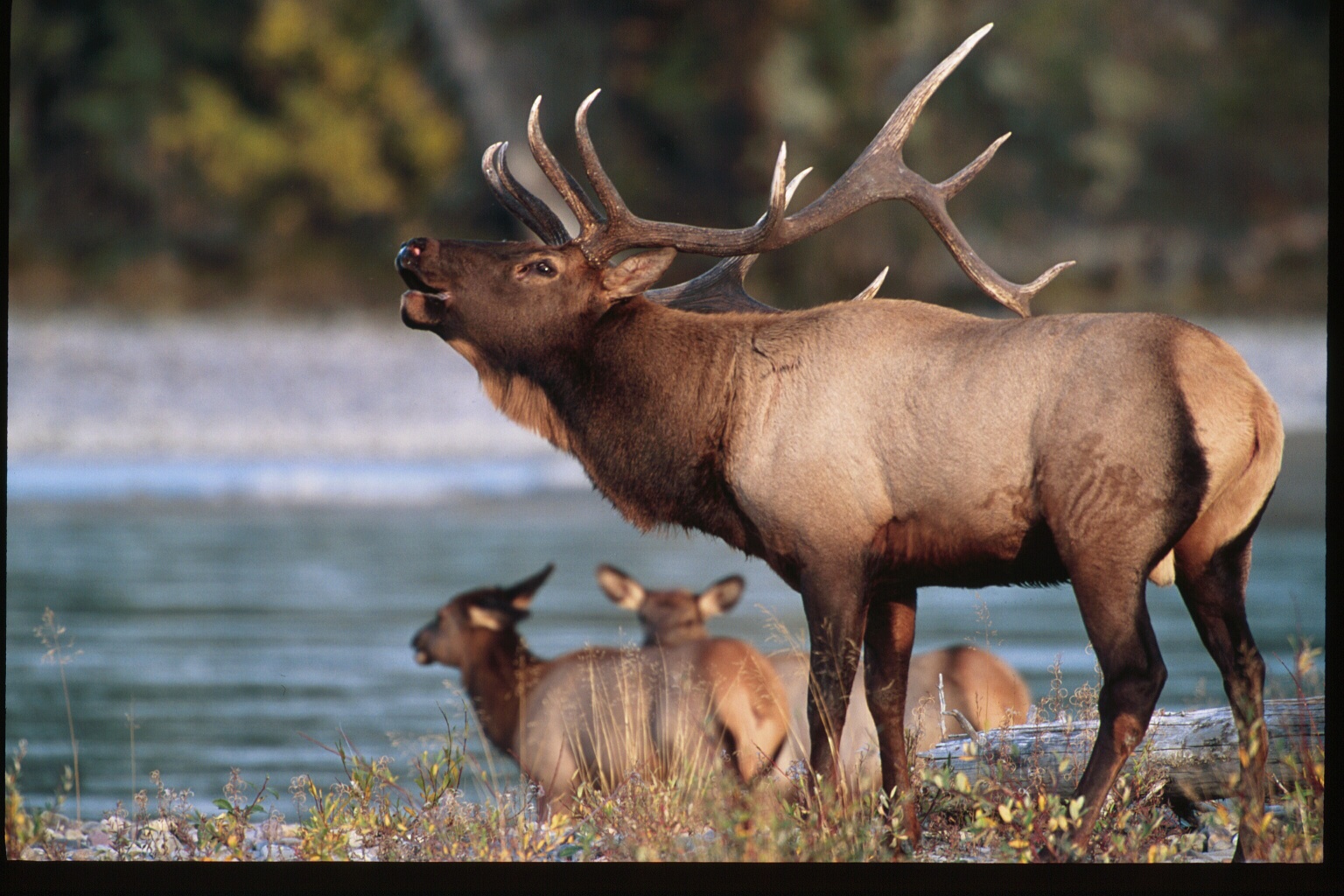
WildEarth Guardians was frustrated but not yet defeated in early January when, in a stunning blow, the 10th Circuit Court of Appeals ruled that it wasn’t feasible for Rocky Mountain National Park to consider a wild wolf restoration, in spite of the Park being overrun by elk. The court concluded that it made more sense for hunters rather than wolves to kill elk in a national park. We believe allowing hunting in a national park sets a dangerous policy precedent. More importantly, wolves would have done what hunters cannot: keep sedentary elk constantly on the move preventing overbrowsing and protecting fragile streamsides and aspen groves. Wolves easily detect and remove diseased and sick prey animals. Guardians is committed to having wolves roam free in Colorado.

Add it all up and it’s seriously starting to look like a policy of speciescide for wolves…

Wildlife Photography ©Jim Robertson, 2013. All Rights Reserved

Wildlife Photography ©Jim Robertson, 2013. All Rights Reserved


A Sick Repugnance

Washington’s “waterfowl” (duck and goose) season is finally over—and not a moment too soon. As I mentioned in yesterday’s post, the Elmers were out in force on the last day of the season, declaring all-out war-on-all-things-avian for the last time…until the next fall.

But the war is over for now and, as if right on cue, the geese are pairing up for their breeding season. Hunting them this time of year is especially cruel, considering that geese mate for life.

Farley Mowat writes here of the wrongheadedness of hunting intelligent animals such as geese:

the dawn was pierced by the sonorous cries of seemingly endless flocks of geese that cam drifting, wraithlike, overhead. They were flying low that day. Snow Geese, startling white of breast, with jet-black wingtips, beat past while flocks of piebald wavies kept station at their flanks. An immense V of Canadas came close behind. As the rush of air through their great pinions sounded in our ears, we jumped up and fired. The sound of the shots seemed puny, and was lost at once in the immensity of wind and wings.

One goose fell, appearing gigantic in the tenuous light as it spiralled sharply down. It struck the water a hundred yards from shore and I saw that it had only been winged. It swam off into the growing storm, its neck outstreched, calling…calling…calling after the fast-disappearing flock.

Driving home to Saskatoon that night I felt a sick repugnance for what we had done…

DSC_0014 (3)

Sunday Go-a-Huntin’ Day

Living near prime wildlife habitat means that at any given moment you might get to see Vs of migratory ducks or cackling Canada geese flying right overhead. If you’re lucky, trumpeter swans might be among the waterfowl feeding and calling in the nearby estuary. And wood ducks or hooded mergansers might pay your inland pond a visit while searching for a quiet place to nest.
The down side of living near a natural wonderland? Being awakened Sunday morning at first light by the repeated volley of shotgun blasts, as though all-out war has been declared on all things avian (as is currently happening this morning). The Elmers out there (no doubt dressed in the latest expensive camo-pattern—a fashion statement apparently meant to impress the other Elmers out there) must be reveling in the fact that the dense morning fog allows them to “sneak” (in their loud outboard motor boats) up close enough to the flocks so that a large number of birds will end up dead, winged or otherwise wounded when they stand up and spray lead.

Duck hunting is the ultimate betrayal. It happens well into the winter, long after about other any hunting season is over, when the birds are congregated in flocks on their wintering grounds. And it happens often on lands supposedly set aside as wildlife “refuges.” Pro-kill groups like Ducks Unlimited (DU—an acronym, or perhaps an abbreviation for “duh”) insist that they have the animals’ best interests in mind. But when it comes right down to it, all they really want to preserve land for is to have a playground for killing (just listen to them scream if you try to propose a refuge closed to hunting).

Interestingly, they always seem to choose Sunday as their special day for bird killing. It’s no secret that most American hunters count themselves as good Christians. In choosing to hunt in lieu of church this time of year, they must feel closest to their gods in the killing fields.

How is this any different than a follower of Santeria sacrificing chickens? Both practices are equally bloody and violent. And the practice of Sunday go-a-duck-huntin’ probably claims more victims.
DSC_0098

Well Ted, We’re STILL Waiting…

In 2002, the website Right Wing Watch reported that at the NRA’s national convention, Ted Nugent called President Obama a criminal and denounced his “vile, evil, America-hating administration” which is “wiping its ass with the Constitution.”

It seems to me it’s time for die-hard bowhunting fanatic, Ted Nugent, to live up to (so to speak) a promise he made back in April when Nugent swore that: “If Barack Obama becomes the President in November again, I will either be dead or in jail by this time next year.” If Nugent’s a man of his word, he’s got only around two more months to either die or go to jail.

Well, Ted, we’re STILL waiting…

68439_10151399495155861_1116657731_n

Nabeki's avatarHowling For Justice

Thank you Brooks, George Wuerthner, Marc Bekoff and Bob Landis for this powerful video. May it shine a bright light on the darkness that has descended on America’s wolves.

====

british columbia wolf_environment news service

===

Video: YouTube Brooks Fahy

Photo: Wolf Environment News Service

Posted in: Wolf Wars

Tags: Predator Defense, Brooks Fahy, George Wuerthner, Marc Bekoff, Bob Landis,  wolves under siege, wolf persecution, stop the hunts

View original post

One Park Does Not a Recovered Species Make

Ignorance must be such sweet bliss for anyone who visits Yellowstone National Park and thinks the wildlife they see there represents fully recovered populations of some of North America’s most endangered species. Sorry to say, one park does not a recovered species make. For all its size, spectacularity and relative biodiversity, Yellowstone is little more than an island in an anthropogenic wasteland to much of its megafauna.

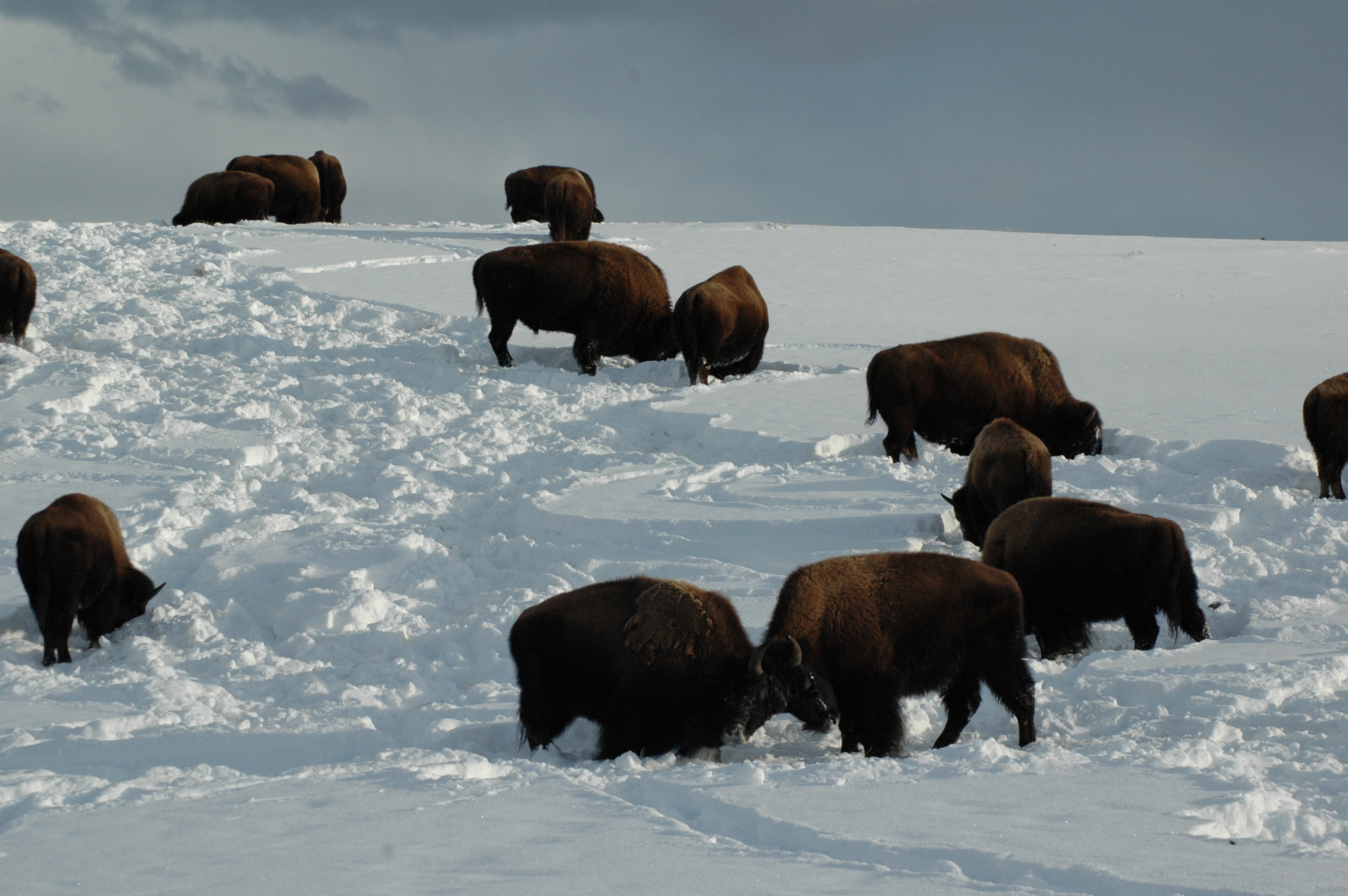
If ranchers and hunters had their way, wolves and grizzlies would be restricted to the confines of the park. Ranchers already have such a death-grip on Montana’s wildlife that bison are essentially marooned and forced to stay within park borders, battling snow drifts no matter how harsh the winter, despite an instinctual urge to migrate out of the high country during heavy snow winters.

Though Yellowstone is synonymous with the shaggy bovines, bison would prefer to spend their winters much further downriver, on lands now usurped and fenced-in by cowboys to fatten-up their cattle before shipping them off to slaughter.

Yellowstone’s high plateaus are on average well over 5,000 feet in elevation and can hardly be considered prime habitat for the wild grazers. Much of the park actually sits within the caldera of one the world’s largest active volcanoes. Any sizable eruption could release enough toxic gasses to kill off all of Yellowstone’s bison—the last genetically pure strain of the species now left on the continent.

People driving through cattle country on their way to Yellowstone often have no idea just how sterile the open plains they’re seeing really are. Gone are the vast bison herds that once blackened them for miles on end—killed off by hide-hunters, market meat-hunters or by “sportsmen” shooting them from trains just for a bit of fun. Gone are the wolves and plains grizzlies adapted to that arid habitat. And nearly gone are the prairie dogs as well as the ferrets, kit fox, plovers, burrowing owls and a host of others who depended on them for food or shelter.

Part of the reason I wrote Exposing the Big Game: Living Targets of a Dying Sport was to remind people about the wild species who once called so much of this continent home. No one’s going be able to claim ignorance on my watch; if I can’t go through life blissfully then neither can anyone else.

The following is an excerpt from one of the book’s two chapters on bison:

Selfless and protective, bison develop lasting bonds in and outside the family, not only between cows, calves and siblings but also between unrelated individuals who grew up, traveled and learned about life together. Juveniles help mothers look after the youngsters and will gladly lend a horn to keep potential predators away from the calves. I have witnessed cooperation among bison families often in the years I’ve spent observing and photographing them. I’ve also seen them put themselves in harm’s way to defend elk from hungry wolves, and even mourn over the bones of their dead.

But in a ruthless act of rabid backstabbing, 1600 bison—who had never known confinement or any reason to fear people—were slain to appease Montana ranchers during the winter of 2008. More than half of Yellowstone’s bison were killed in what was the highest body count since the nineteenth century. 1438 were needlessly and heartlessly shipped in cattle trucks to slaughterhouses (those nightmarish death camps where so many forcibly domesticated cattle meet their ends), while 166 were blasted, as they stood grazing, by sport and tribal hunters. Two winters prior, 947 bison were sent to slaughter and 50 were shot by hunters.

Instead of making amends for the historic mistreatment of these sociable, benevolent souls, twenty-first-century Montanans are still laying waste to them. Spurred on by industry-driven greed for grazing land (veiled under the guise of concern about brucellosis, a disease with a negligible risk of transmission that has never actually been passed from wild bison to cattle), the state of Montana sued to seize control of bison ranging outside Yellowstone. Now their department of livestock has implemented a lethal policy and the US National Park Service is facilitating it. Since the dawn of the new millennium, nearly 4000 Yellowstone bison have been put to death.

Text and Wildlife Photography ©Jim Robertson, 2012. All Rights Reserved

Text and Wildlife Photography ©Jim Robertson, 2012. All Rights Reserved


“Game” Laws Are a Slap in the Face to the Majority

After posting “Crippling Animals Should Weigh on One’s Conscience” yesterday, I remembered that I actually do know someone who said he swore off bowhunting after his arrow went clear through a deer, which ran off somewhere far away to die. He was an avid “modern rifle” hunter and Forest Service employee I worked with in Montana.

He certainly wasn’t going to go so far as to quit hunting completely—every time we saw a deer his eyes would glaze over; he was clearly daydreaming about hunting season. I didn’t get the idea he felt all that bad about the deer he mortally wounded—he just thought it was a “waste of meat” to shoot an animal with a weapon that’s not up to the task of outright killing.

Unfortunately, bowhunting is growing in popularity. Because local governments and town councils don’t want people getting shot by stray bullets in parks or other semi-urban areas where “game” animals thrive—yet they don’t want to upset hunters by outlawing hunting—they all-too-often allow bowhunting, just to pacify the bloodthirsty, who in turn are fond of portraying themselves as selfless do-gooders out to save the animals from overpopulation. (Funny that you never hear them mention immunocontraception, or the fact that hunting unnaturally increases ungulate populations.)

A case in point of a city council deciding to allow bowhunting is found in the article I mentioned yesterday with a headline that reads, “Shotguns and bow hunting will be allowed in Ecola reserve.”

Here are a few highlights from that article:

CANNON BEACH — Hunters using either bows and arrows or shotguns with slugs will be allowed to hunt in the Ecola Creek Forest Reserve for the next five years.

Although hunting had been allowed temporarily for bow hunters only during the deer and elk season last fall, the Cannon Beach City Council agreed 4-1 Tuesday night to extend the hunting period five years. The council also decided to allow hunters who use shotguns with slugs as well.
 
The proposed area set aside for hunting in the reserve took up half of the reserve’s acreage… (One city council member) said she supported a public survey taken by a professional survey company that indicated most of the respondents opposed hunting in the reserve. In addition, (Councilmember) Cadwallader said, hunting didn’t meet the definition of the “passive recreation” promised during the campaign to seek voter support for the ballot measure. Using “a firearm on a wild creature in the reserve does not seem to be passive to me,” Cadwallader said.

Herman Bierderbeck, district wildlife biologist for the Oregon Department of Fish and Wildlife, told the council that shotgun slugs had an effective range of 80 yards for killing an elk or a deer. The slugs travel about 150 yards, he said.

Although the council had closed the hearing several weeks ago and didn’t accept public testimony Tuesday night, Cannon Beach resident Ed Johnson told the council he was “very upset” at the decision. He suggested the council submit a referendum to voters.

“I feel like I’ve been slapped in the face,” Johnson said. “You not only included bow hunting, you went further and allowed shotguns.”

“The bottom of my heart aches,” he said. “Guns are not the answer.”

Text and Wildlife Photography ©Jim Robertson, 2012. All Rights Reserved

Text and Wildlife Photography ©Jim Robertson, 2012. All Rights Reserved