Stop the badger slaughter and save British wildlife

SIGN THIS PETITION
Stop the badger slaughter and save British wildlife

Why this is important

In England, badgers are facing a scary predicament. Thousands of them have been sentenced to death.

The UK government believe that reducing their numbers will help stop the spread of a disease called bovine tuberculosis (TB). But they’re wrong.

Last year, a coalition of scientists told the government the badger cull would be ineffective at stopping the spread of this disease. In fact, they even think it’s likely to make things worse:

“As scientists with expertise in managing wildlife and wildlife diseases, we believe the complexities of tuberculosis transmission mean licensed culling risks increasing cattle TB rather than reducing it.”

Celebrities as far reaching as Queen guitarist Brian May, David Attenborough, Ricky Gervais, and Chris Packham have expressed their disgust at what seems to be the government’s way of appeasing farmers.

The public is finally realising that the government’s policy of killing off these badgers is mindless and likely driven by money. But they’re still going ahead with it. We need to make them see that what they’re doing is wrong.

Badgers have called Britain home for over 250,000 years. They’re shy but social animals who live in big families and are fastidiously clean. They are also a long-standing and beautiful part of British wildlife.

The government needs to know that we don’t accept the needless killing of these creatures.

So far in the UK we have an e-petition with over 250,000 signatures. But the government refuses to listen. David Cameron is staying silent.

So we need some help. This has got to go global. We need people all over the world to voice their protest and maybe, just maybe, we can get through to them.

Bovine TB is a terrible disease, but killing off healthy badgers isn’t the answer. The Wildlife Trusts knows that vaccination of the badger population is the solution. It will saves thousands of innocent lives. Our neighbouring country, Wales, is already vaccinating badgers to great effect

But we need the government to listen to us. Help them hear our cries!

Agreement limits relocation of wild wolves

copyrighted Hayden wolf walking

PHOENIX — Federal officials have agreed not to try to capture and relocate wolves entering Arizona from Mexico.

In a deal approved Monday in federal court, the U.S. Fish and Wildlife Service will consider wolves found wandering outside the current reintroduction boundary areas to be wild. The agency is, in essence, revoking the permission it gave itself to capture and relocate the animals.

Michael Robinson of the Tucson-based Center for Biological Diversity said the settlement is a crucial step in helping reintroduce the wolf population to its natural habitats in Arizona.

Robinson said the issue arose two years ago when Mexico began reintroducing wolves into its northern regions, a few dozen miles south of the area where Arizona and New Mexico meet.

What happened, he said, is the U.S. Fish and Wildlife Service, on its own, then gave itself a permit — without public notice — to capture any wolf that might cross the border and cause problems with livestock.

The agency already has the power to capture and relocate those wolves being reintroduced into Arizona and New Mexico in an effort to keep them from preying on cattle. That is because the whole reintroduction program is being conducted under rules that specifically consider the wolves in the program to be a “nonessential population.’’

But Robinson said there is no reason to unilaterally decide wolves that wander into Arizona on their own should be treated in a similar fashion.

More to the point, he said it’s illegal. Robinson said the rules that govern the domestic reintroduction program, including relocation, do not apply to wolves that were not placed by the United States government but instead wandered into this country on their own.

“These wolves, under the law, are fully protected’’ as an endangered species,’’ Robinson said. “And you can’t simply sacrifice them under the law for special interests, in this case, the livestock industry.’’

Robinson said it is impossible to determine whether any of the wolves released by the Mexican government have, in fact, made their way into the United States.

In essence, the lawsuit settlement recognizes the rules require that if a wolf is found outside the reintroduction area — or other areas where the animals have been welcome — it is required to presume the animal is “of wild origin with full endangered status.’’ And that can be overcome only with other evidence the wolf is of domestic origin and reintroduced, like a radio collar or identification mark.

Robinson said the settlement may actually help wolf reintroduction in this country.

He said the latest report shows there are 75 wolves in the program, including 37 in Arizona. But that includes only three breeding pairs.

Robinson said inbreeding results in smaller litter sizes. He said wolves released in Mexico that manage to make their way across the border could help diversify the population.

The current wolf reintroduction area includes the Apache and Gila national forests as well as lands where the owners have said they are welcoming the animals. Robinson said that includes the Fort Apache Reservation as well as property owned in New Mexico by media mogul Ted Turner.

Man Mauled by Grizzly in Alaska was Hunting Guide

Unfortunately these type of stories always seem to end with one or more animals dead…

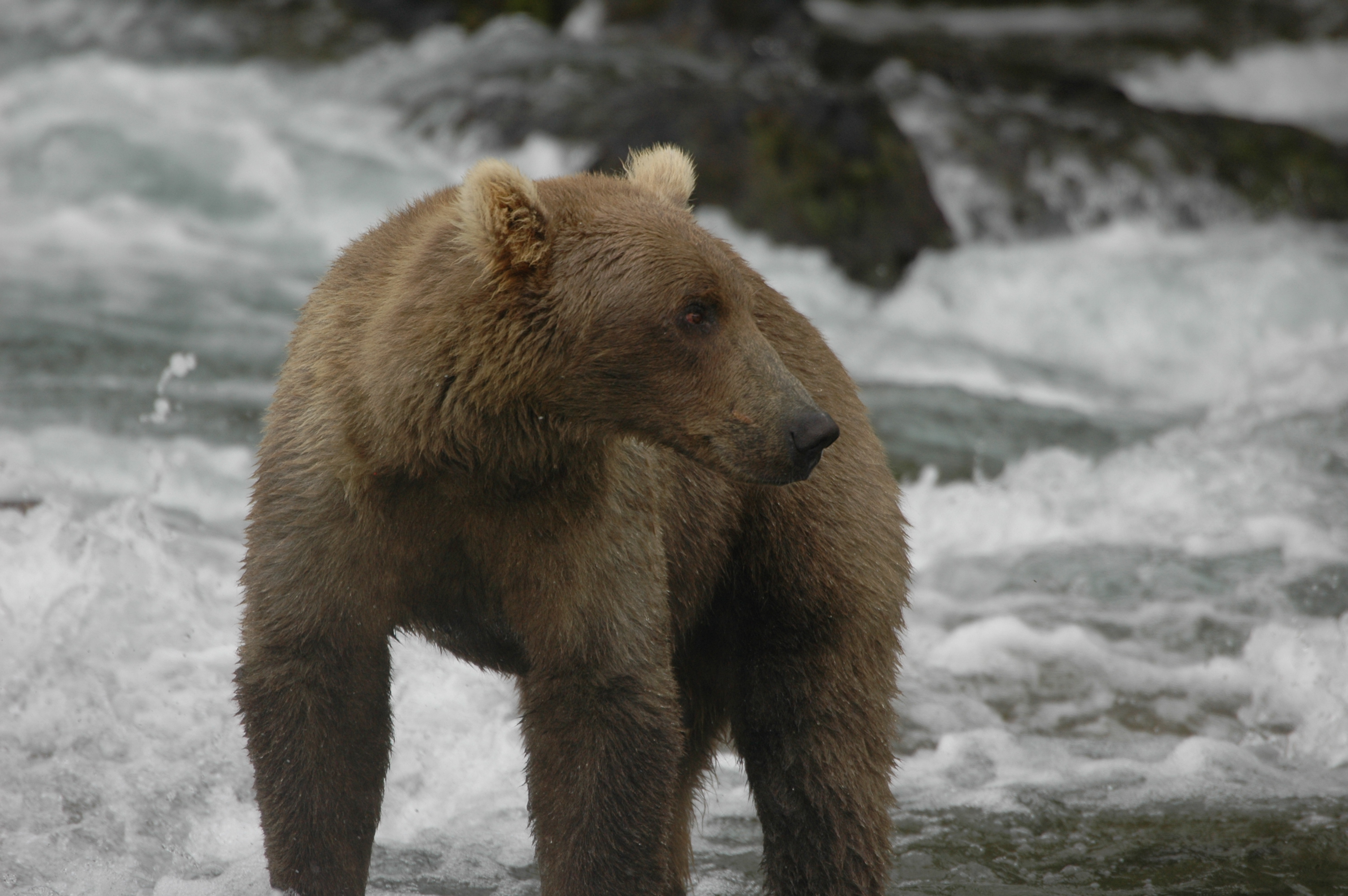
Photo Copyright Jim Robertson

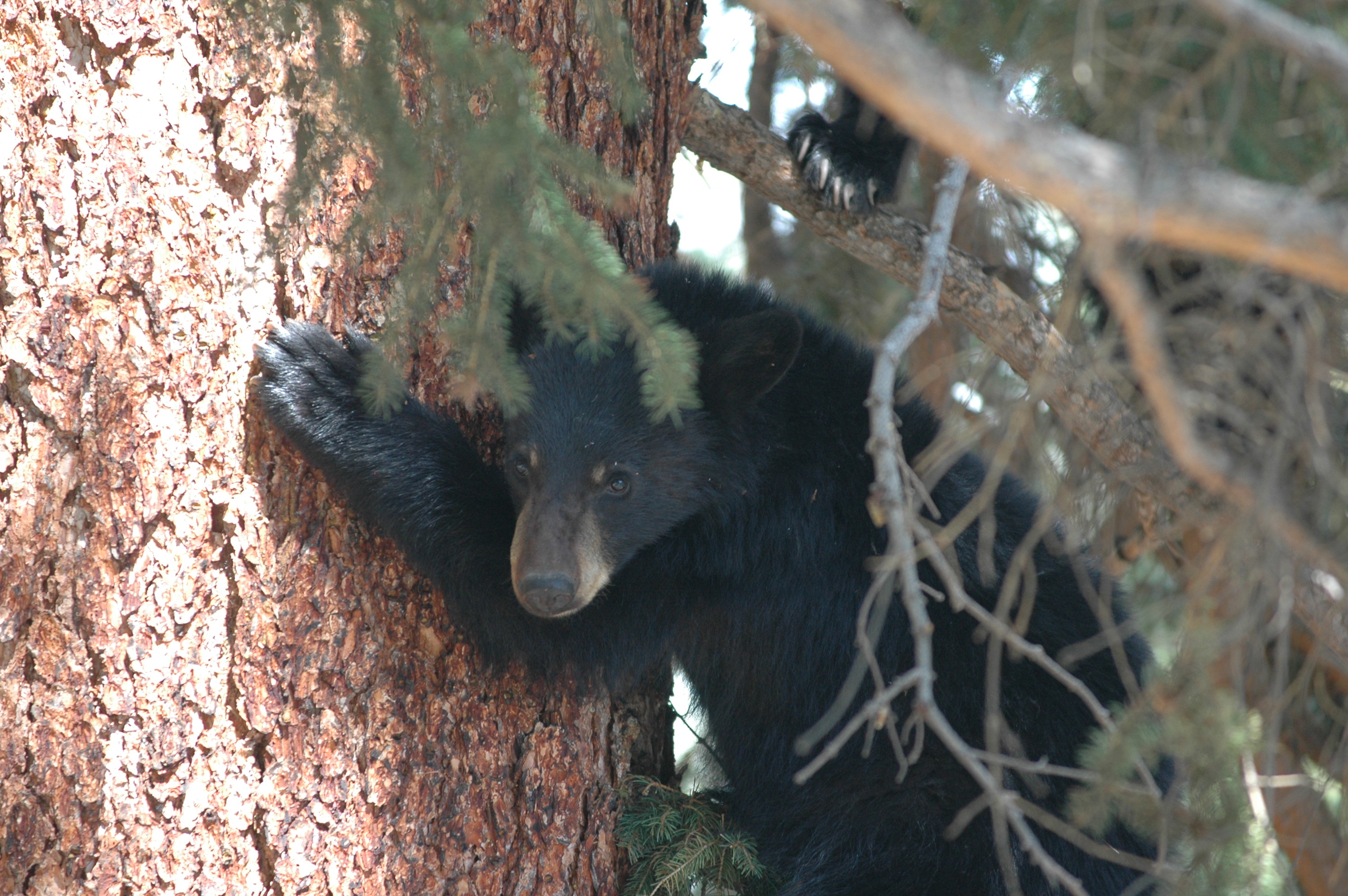
Photo Copyright Jim Robertson

Man mauled by grizzly in Alaska recounts attack

ANCHORAGE, Alaska (AP) — A man who recently was mauled by a grizzly bear near northern Alaska’s remote Brooks Range said he recognized the animal that left him with broken teeth and a deep gash in his arm from his guide trips.

Jim Tuttle said he and the hunters he guided often spotted the bear, nicknamed Buddy. But the animal was never aggressive toward them until two weeks ago, when Tuttle was walking along a creek and saw it charging.

Tuttle said 16 years of guiding in the area had dulled him to the risks of working in bear country. When the incident occurred earlier this month, he was walking to a caribou carcass by himself, armed only with a pair of trekking poles.

“I am partly to blame. I got complacent, and I paid for it,” he told the Anchorage Daily News (http://bit.ly/19VFd8D ). “I guess I should have had a gun in my hand, safety off, ready to shoot.”

He said the attack northwest of Anaktuvuk Pass lasted less than 15 seconds. When it was over, Tuttle was spitting out broken teeth and needed a tourniquet on his left arm. One of his cheekbones was cracked.

Because of dense fog, Tuttle had to wait 36 hours for a National Guard helicopter to reach him. Following surgery and dozens of stitches, he is recovering at his Anchorage home.

Tuttle suffered nerve damage to the face and wounds to his groin and knee have temporarily hobbled him. A cast on his left wrist has fixed his forearm in place so it can grow back muscle.

Tuttle, 52, said he feels lucky to be alive.

He had flown into the hunting camp in early August, where he planned to stay for two weeks. The camp was 15 miles from the base camp run by his outfitter, Arctic North Guides.

Chris Carrigee, who stayed in Tuttle’s camp with his son before the mauling, said grizzlies were commonly in the area and would eat meat scraps that hunters left behind.

Carigee had taken photographs of his son and Tuttle in front of Buddy with their coffee and oatmeal. He said he didn’t feel there was any danger.

On Aug. 14, after Carrigee and his son left, Tuttle was working with new hunters. The group killed a caribou that morning. They carried some of the meat back to camp and ate lunch before Tuttle returned to the carcass.

He heard the bear coming from behind him. He swung his hiking poles in the animal’s face, but the bear knocked him over and bit him on the arm and hand before walking away.

“I thought maybe I’d get lucky, and she’d leave. No, she turned right back around, and then really chewed and got into where she could bite my face,” Tuttle said. “I said to myself, ‘You’re dead.’

After the bear left, Tuttle made a tourniquet from rope in his backpack, and waited 10 minutes to make sure the bear didn’t return, before limping back to camp.

The hunters called to request a rescue, but the camp was fogged in.

The owner of Tuttle’s outfitting company flew in the following morning during a break in weather with a retired paramedic and medical supplies. But they left Tuttle, believing they couldn’t fly him all the way to a hospital.

At 3 a.m. the following morning, the National Guard helicopter came.

The bear was killed by one of the hunters in Tuttle’s group. Harry Reynolds III, a retired biologist who worked for the Alaska Department of Fish and Game for more than 30 years, said it’s hard to say what made the bear attack. “They’re wild animals,” he said.

———

Information from: Anchorage (Alaska) Daily News, http://www.adn.com

Associated Press

Sleeping teen is bitten by wolf near Lake Winnibigoshish

This must have been in the same part of Minnesota that I posted about two days ago, where people have been regularly feeding wolves. Too bad, because people were starting to appreciate seeing wolves there. But wolves best be deathly afraid of humans at all times, if they know what’s good for them. The DNR doesn’t have to send in UN inspectors before going on the offensive against wolves.

There’s no mention in this article about why the wolf bit someone, but my guess is he was attracted by the smell of whatever food the humans had cooked that night or had in the tent with them. Who knows, maybe the kid had a peperoni stick by his head and the wolf was startled when he stirred his sleep. (People should know not to bring food in a tent with them.) I remember a camping trip where my brother in law had brought food in the tent and woke up to find that a mouse had chewed it, right by his head.

Anyway, the wolf (rest his soul) obviously wasn’t really trying to hurt or kill anyone, or he wouldn’t have been deterred when a 16 year old boy kicked at him.

http://www.startribune.com/local/221254011.html                                                                                                                                                                                                                                                                                                                                                                                                                                                                                                                                     JOSEPHINE MARCOTTY    Star Tribune August 26, 2013

A solitary wolf bit a 16-year-old-old boy sleeping outside his tent near Lake Winnibigoshish on Sunday, the first documented wolf attack in Minnesota history.

The unidentified boy, who is reportedly from Solway, Minn., stood up and kicked at the wolf, which then ran away, according to state wildlife officials.

The teenager, who was staying at a campground in the Chippewa National Forest, was driven to a hospital near Bemidji, where he was treated for a gash on the back of his head and canine punctures on either side of his face.

A 75-pound adult male wolf that matched the description provided by the boy and others at the campground was trapped and killed Monday morning by federal wildlife officials.

The wolf’s body was taken to the University of Minnesota veterinary school, where it is being tested for rabies and dissected. Investigators will collect DNA in an effort to match it to saliva samples on the victim.

“This is a rare occurrence,” said Tom Provost, enforcement manager for the Department of Natural Resources. He said there have been no other recorded cases in Minnesota of a wild wolf attacking a human, though it has occurred elsewhere in the United States and Canada, and more frequently in India.

The wolf that was killed Monday had a deformed jaw. The top and bottom were out of alignment, and it was missing a canine tooth, Provost said, meaning the animal likely had learned to survive by hanging around campgrounds.

In order to hunt successfully, wolves must be able to exert tremendous force on their prey, Provost said. An adult wolf is capable of biting with a force of 1,000 to 1,500 pounds of pressure per square inch, a strength that makes it possible to chomp through a moose femur in six to eight bites. A German shepherd has a biting pressure of 750 pounds per square inch.

“It was trapped in an area where it was likely habituated to humans and had the ability to grab easy food,” he said. “That’s not normal behavior.”

In fact, other campers reported that the wolf was behaving in an entirely unwolf-like way. Normally, wolves stay away from humans and are rarely alone. Pat Tetrault, 28, was one of several people who saw the wolf in the campground Friday and early Saturday. His wife saw it by their truck. In the early morning, while the family of four and their dog were fast asleep, it bit through the wall of their tent.

“It was by where my son was sleeping,” Tetrault said. “He said he felt it go under the tent, and then lift it up. He thought it was pretty cool. Took him awhile to go back to sleep.”

About ten minutes later Tetrault said he heard shouting from the direction of where the teenager was bitten.

Provost said that the teenager was lying outside his tent when “unbeknownst to him a large canine approached him from the rear.” He woke up when the wolf bit his head, and it was a “struggle to free himself from its jaws,” Provost said. The boy confronted the wolf, but it fled only when he launched a kick at it.

Friends and members of his family provided rudimentary first aid, and then drove him to the hospital.

Wildlife officials evacuated the campground and set up a perimeter. One officer saw it on the road and took a shot at it, but missed. On Monday morning federal wildlife officials found the wolf caught in a leg-hold trap that had been set around the campground over the weekend, and shot it.

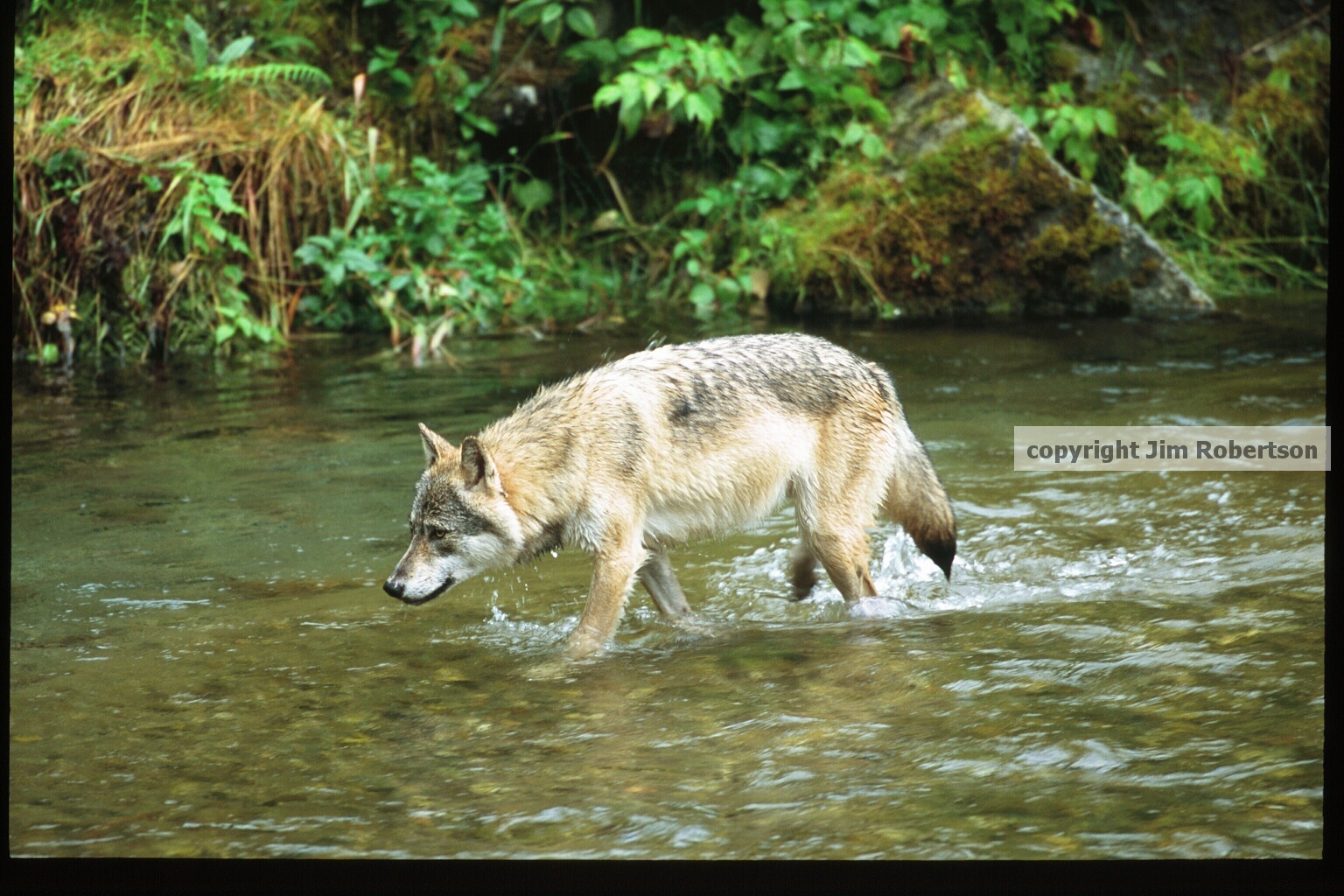
copyrighted wolf in river


Habituated wolf shot near Jardine, MT

The Billings Gazette

A young collared female gray wolf was shot by a Jardine-area resident on Saturday after the wolf had recently come in close proximity to a number of homes, killed a cat as well as several chickens, according to Montana Fish, Wildlife and Parks.

“It had shown up at a number of properties since April,” said Andrea Jones, FWP information officer.

Over the last few months the wolf displayed unusually bold behavior as attempts were made by FWP and residents to haze the animal. It was shot while eating a chicken. There will be no charges filed, Jones said, since the wolf was becoming increasingly more bold.

“It has not shown normal wolf behavior when confronted,” Jones said.

Until this spring, the wolf lived primarily in the northeast corner of Yellowstone National Park as a member of the Lamar Canyon pack. Young wolves often disperse to start their own packs. After leaving the pack it moved into the Jardine area. Jardine is located northeast of Gardiner and just north of the park boundary.

FWP investigated the wolf mortality in consultation with USDA-Wildlife Services. An FWP veterinarian will examine the wolf’s general condition but a necropsy is not planned at this time, Jones said.

Wolf shootings to protect livestock as well as wolf hunting are divisive issues that have prompted death threats in the past to those involved. Consequently, FWP was not releasing the name of the individual who shot the wolf.

Two other members of the Lamar Pack were shot last fall during Wyoming’s hunting season, one of which was the pack’s alpha female. All together, hunters in surrounding states shot 12 wolves last year that spent part of their time inside Yellowstone’s boundaries. Six of the 12 were collared wolves that park staff use to study wolf movements and interactions.

copyrighted wolf in water

Maine’s bear hunting practices back in the crosshairs

Wildlife Photography ©Jim Robertson, 2013. All Rights Reserved

Wildlife Photography ©Jim Robertson, 2013. All Rights Reserved

Almost 10 years after failing to abolish baiting and other methods, animal-welfare activists want to revisit the debate: Are these cruel or are they viable wildlife management tools?

By  Deirdre Fleming dfleming@mainetoday.com Staff Writer

Bear hunters in Maine again find themselves in the sights of animal-welfare advocates who contend that some of their practices are inhumane.

Less than 10 years after Maine residents voted down a divisive referendum effort to abolish the use of bear hunting with bait, dogs and traps, the debate has re-emerged.

As hunters prepare for the first day of bear season Monday, sportsmen, politicians and animal-rights advocates are gearing up for a renewal of the referendum battle that spiked passions on both sides in 2004.

Bear-baiting involves placing food in the same location repeatedly for about a month before the season opens in hopes a bear will get in the habit of visiting the site regularly. Hunters also use dogs wearing radio collars to force a bear up a tree and keep it there until the hunter tracks it down electronically. Traps such as wire foothold snares are also used to hunt bears.

Supporters of banning the practices say they are cruel and give hunters an unfair advantage.

Opponents argue that the practices are vital to keeping the state’s bear population in check. If they are banned, the population will explode, and conflicts between bears and people will become commonplace, even in developed areas, they say.

Maine has one of the largest black bear populations in the lower 48 states, according to the Department of Inland Fisheries and Wildlife, and is the only state to allow all three controversial practices.

A coalition led by the Maine chapter of the Humane Society of the United States, called Mainers For Fair Bear Hunting, is behind the ballot initiative. It aims to collect as many as 80,000 signatures next month to get a referendum question on the 2014 ballot. The Secretary of State’s Office is still drafting language on the referendum question.

In 2004, voters rejected the referendum question seeking a ban on the three hunting practices by a margin of 53 percent to 47 percent. Each side spent more than $1 million on the campaign.

Those backing a ban on the practices said last week they think they’ll win this time.

“This is a last resort (after trying several times without success in the Legislature). But with the additional 10 years of experience, we’re confident we can win on the ballot,” said Katie Hansberry, director of the Maine chapter of the Humane Society.

Maine hunters expected the issue to resurface, and that it would involve another expensive ballot fight.

“I think we knew they’d be back,” said David Trahan, director of the Sportsman’s Alliance of Maine. “(The Humane Society is) a nationwide group. And (it) raises a lot of money.”

MAINE A FOCAL POINT

Proponents say the three controversial bear-hunting methods give hunters an unfair advantage and that trapping or shooting a bear over bait is inherently cruel.

Maine is a focal point in the debate over bear-hunting practices because it is the only state where all three are allowed.

Robert Fisk, director of the Maine Friends of Animals, which led the 2004 effort to ban the hunting practices, said the public is more familiar with the issues today, and that gives ban supporters an advantage.

“I believe we have an excellent chance of winning this time. The opposition’s alarmist strategies and scare tactics that were prevalent in 2004 can be exposed this time around. People are much more aware of animal protection issues than they were 10 years ago,” Fisk said.

Proponents say they have data and experiences from other states where the Humane Society successfully banned the use of these bear hunting methods, and that much of the Maine public was educated on the issue in 2004.

More: http://www.onlinesentinel.com/news/maines-bear-hunting-practices-back-in-the-crosshairs_2013-08-25.html


Human Infestation Down One

http://www.theglobeandmail.com/news/world/body-of-australian-man-recovered-from-crocodile-infested-river/article13948311/

Body of Australian man recovered from crocodile-infested river

DARWIN, Australia — The Associated Press

Published Monday, Aug. 26

Police have recovered the body of a man who attempted to swim across a crocodile-infested river in the Australian Outback as well as the carcass of a crocodile that was shot by authorities, officials said Monday.

Sean Cole, 26, was snatched by a crocodile and dragged under the water Saturday as he and a friend were swimming in the Mary River during a birthday party.

[How dare they call this river “crocodile-infested”! Crocs have lived there for 50 million years; humans didn’t reach Australia and begin their infestation until 50 thousand years ago.]

Northern Territory wildlife ranger Tom Nichols said Cole’s body and that of a 4.7-metre-long crocodile floated to the river surface early Monday. The crocodile was one of four that rangers shot in the hours after the attack.

“We believe that croc was responsible,” Nichols said, though he noted that further tests to match the bite marks on Cole’s body would be conducted.

[How many non-humans have to die when one exalted Homo sapien foolishly decides to challenge a dangerous river, probably in a drunken bet. And what if the bite-marks don’t match? Will rangers kill 400 more ancient crocodiles before they find the culprit?]

The river is infested with crocodiles, and officials said that ascroc locals the men would have known that.

“They just did something silly,” Nichols said.

Crocodile expert Grahame Webb, a Darwin zoologist, said he would not give a swimmer an even chance of crossing the 80-metre-wide river.

“Someone swimming in an area with crocs like that … crocs are going to zero in on them almost every time,” Webb said.

Mary River Wilderness Retreat manager Erin Bayard said the resort has several signs prohibiting swimming. Guests are advised not to go within five metres of the water’s edge because of the risk of large crocodiles lunging from the river to drag people in.

[Typical–a human dies doing something silly and at least three innocent crocodiles are killed for it.]

Ignorant Okies to Hold Big Buck Killing Contest Hunt

The Okla. Wildlife Management Association (OWMA) is sponsoring a
statewide Big Buck Contest during the Okla. deer hunting seasons.
To be eligible the deer must be legally harvested in Okla. between
the first of Oct. (the opening of archery season) and Jan. 15th (the end
of archery season).
Gross antler score will be used to determine the winners. For the
contest
the gross score is defined as the net typical or net nontypical score plus
deductions. In case there is a tie, the net score will be used as the tie
breaker.
The contest will have three categories: gun (rifle, muzzleloader, pistol)
from a low-fenced or unfenced areas; archery (recurve, longbow, compound,
crossbow) from a low-fenced or unfenced area; and gun or archery from
a high-fenced area (defined as a fence at least 7 feet high enclosing or
constructed with the intent to enclose the area).
The winner of each category will win a $500 cash prize and a free
shoulder
mount of the winning antlers. All the contestants will be eligible for a
prize
drawing valued at $250.
Only white-tailed deer are eligible. This contest is open to all hunters
in Okla. This includes both residents and non-residents. The entry fee
is $25. The deadline to enter is September 30th and each hunter is limited
to two entries. Winners will be announced at the Backwoods Show in Okla.
City this coming spring.
To enter antlers in the contest, the hunter must submit a complete and
signed affadavit contest form, a copy of PDF of both sides of the complete
antler score sheet that is signed by the scorer, plus three photos
depicting
various views of the head and antlers.
To be eligible for the contest, the affidavit, antler score sheet and
photos
must be submitted by Feb. 15th.

1151026_167119133473568_1369992890_n

In northern Minn., a campaign against feeding wolves

http://minnesota.publicradio.org/display/web/2013/08/22/environment/campaign-against-feeding-wolves?

by Dan Kraker, Minnesota Public Radio

BRIMSON, Minn. — “Don’t feed the wildlife!” is a message frequently trumpeted at campgrounds around Minnesota. It’s usually meant to warn people not to feed deer or bears.

But this summer wildlife managers are expanding that message to wolves.

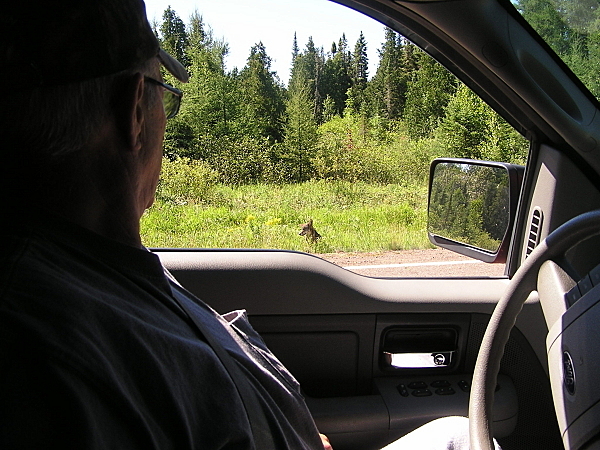
In at least two locations in northeast Minnesota, people are feeding wolf pups — easy meals that could have very negative consequences.

At Hugo’s, the bar and general store that Gary Hepola runs with his wife in the tiny town of Brimson, about 40 miles north of Duluth, it doesn’t take long to see a wolf pup.

“You’ll notice they have no fear here,” said Hepola as he pulled his pickup out of the parking lot. “They’ll come right up to that window.”

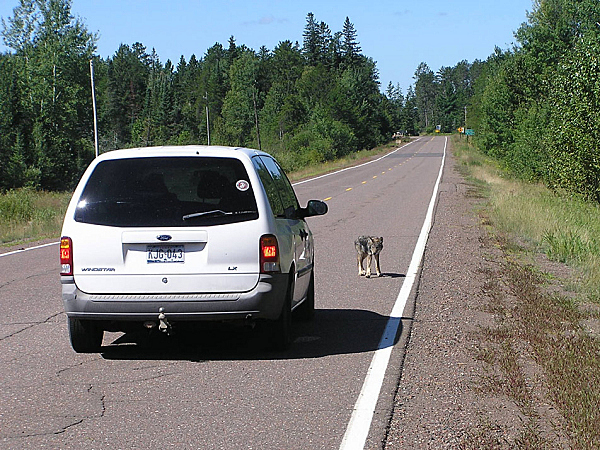
Sure enough, the young wolf, with pointy ears and splotches of gray, white and tan fur, ambles right up to Hepola’s open window. “What are you doing? Get off the road!”

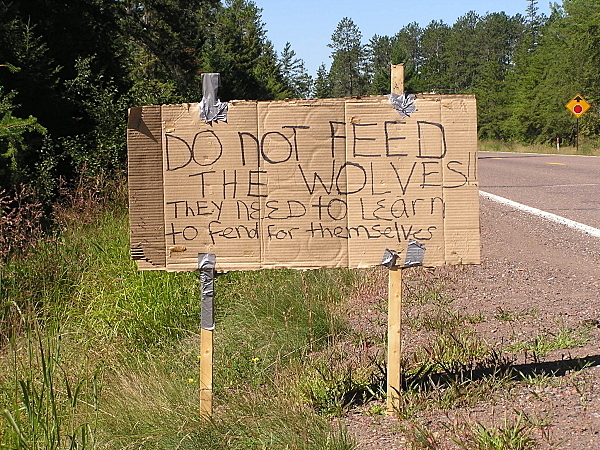
Hepola said the wolves have grown steadily bolder over the past six weeks or so. He has seen people place piles of food on the side of the road to lure the wolves in close to snap pictures.

“I’ve chewed a few people out [and] said, ‘Don’t be feeding the wolves,'” he said. “People don’t realize they’re going to become adults. They’re cute now — not so cute when they’re big.”

Hepola fears that some of the pups might not even make it to adulthood. One of eight was killed by a car last week.

That number could grow, said Nancy Hansen, assistant area wildlife manager in Two Harbors for the Department of Natural Resources.

“They are at a very busy intersection,” Hansen said. “It’s going to get busier, with hunting season coming up, so I’m concerned.”

Hansen said the wolf pups are using a stretch of forest near the intersection of two county highways as a rendezvous site. The adults in the pack leave the pups to hunt and return with food.

Wildlife experts say people sometimes see wolf pups alone, perhaps think they look thin, and assume they have been abandoned and need food. Hansen said the DNR is trying to educate the public otherwise.

“Basically, we really need people to police themselves,” she said. “As neat as it is to see these animals, this is not a normal situation, and anything they’re doing to get their picture taken with a wolf pup or feed a wolf pup, it’s not good for the pups.”

Hansen said officials cannot relocate the pups, because they would either die away from the pack or just return to the rendezvous point.

“If we can’t turn it around, we’ll probably have to capture the pups, they’ll either have to be moved to a facility, or destroyed,” she said.

Hansen said she has never seen a situation like the “Hugo’s wolves” as she refers to them. She said news of the wolves has spread like wildfire on Facebook, and more and more people are flocking to see them.

Jess Edberg, the information services director at the International Wolf Center in Ely, is dealing with a similar situation on the Echo Trail near the Boundary Waters Canoe Area.

“The wolf pups were walking across the road, sitting on the road, watching vehicles go by, and somebody did see there was fresh food put out there the other day,” she said.

Edberg said every year or two she hears of emboldened wolves not fleeing from passing cars. In those situations, she said, it’s not enough to simply not feed them. She said even a passive observer can encourage wolves to frequent an area.

“We want to make sure that wildlife have a healthy fear avoidance of humans, so honking your horn or yelling, not encouraging the animal to be there is going to be helpful for the survival of that animal,” Edberg said.

At Hugo’s Bar in Brimson, owner Jody Hepola said the wolves have become something of a tourist attraction.

“The store’s been busy,” she said. “Lots of people come in to comment and get a snack while they’re out looking for the wolves, and lots of phone calls, asking, ‘Are they’re really wolves up there? What time of day, where can we see them?”

But Hepola said she would gladly give up the increased business. She wants the wolves to learn to fend for themselves.