GRAPHIC: Family horrified after Pit Bull shot with arrows
10

Despite news that wolves are starting to spread out to other states, after their re-introduction to the Tri-state area of the Northern Rockies, wolves are still extinct in most of their former range in the continental U.S. Yet, it seems there’s no shortage of deer; in fact ungulate populations have been booming since the near continent-wide extermination of wolves and other predators that left the lower 48 in ecological turmoil.
Take Oklahoma for example. According to their “local OKC weekend hunting news”:
Oklahoma’s gun season opens Saturday. The rut is expected to be going strong across the state in the coming days. State wildlife biologists in Okla. expect the peak of the rut in most areas of the state to happen sometime before Saturday’s opening.
Barring any major weather events that keeps hunters at home, Saturday will be the biggest deer hunting day of the year. More deer are taken on the opening day of gun season than on any other. The rut, the mating season of deer, is triggered primarily by moon phases. However, the rutting activity that hunters see has more to do with the weather.
The first time Oklahoma hunters checked in 100,000 deer for all seasons combined was 13 years ago. Since then, there have been only three years that Oklahoma’s deer harvest has not exceeded 100,000.
Wildlife biologists estimate deer hunters take about 10 percent
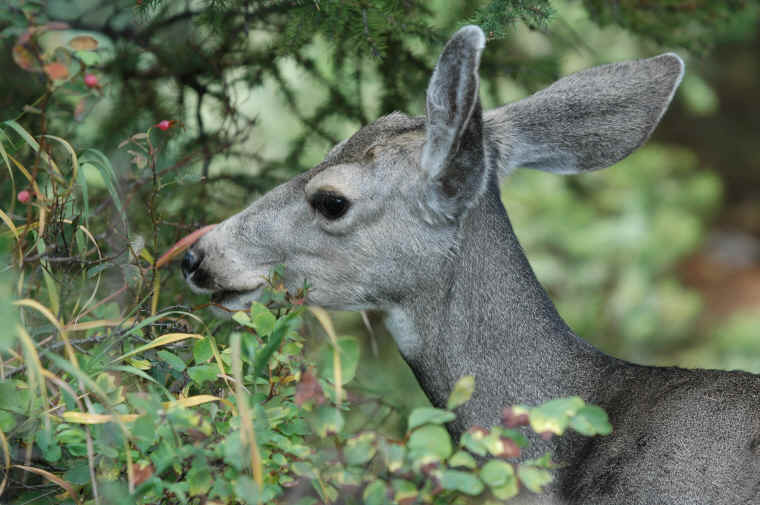
Photo by Jim Robertson
of the deer population during hunting seasons. This gives Oklahoma an estimated deer population about one million.
Approximately one million deer in a state as small as Oklahoma. And exactly ZERO wolves. 100,000 deer killed during hunting season, and it’s not even a dent in the deer population. Natural processes have been ousted and ignored–hunters there would freak if they if they saw a wolf. I can just hear their screams of, “Those wolves are going to eat all our game…” It’s the same story that’s going on across the country. Hunters don’t want healthy deer or elk populations, they want a surplus to justify their “harvests.”
Missoula Independent
News/Opinion November 14, 2013
Pack Pride by Marybeth Holleman
The U.S. Fish and Wildlife Service’s decision to delist gray wolves nationwide is flawed because it’s based on the total number of wolves, a statistical approach that, according to wolf biologist Gordon Haber, is “ecological nonsense.”
Haber spent over 43 years observing Alaska’s wild wolves, mostly in Denali National Park, before dying in a plane crash while tracking wolves. To locate wolves, he snowshoed, skied and flew in winter; he backpacked and hiked in summer. He endured temperatures 50 below zero, blizzards, thunderstorms, mosquitoes, and the risk of grizzly and moose attacks. Few modern biologists have such unassailable experiential authority.
Haber’s take-home message was this: You can’t manage wolves by the numbers. You can’t count the number of wolves in an area and decide whether it’s a “healthy” population, because what really counts is the family group, or pack, as some still call it.
“Wolves are perhaps the most social of all nonhuman vertebrates,” wrote Haber. “A ‘pack’ of wolves is not a snarling aggregation of fighting beasts, each bent on 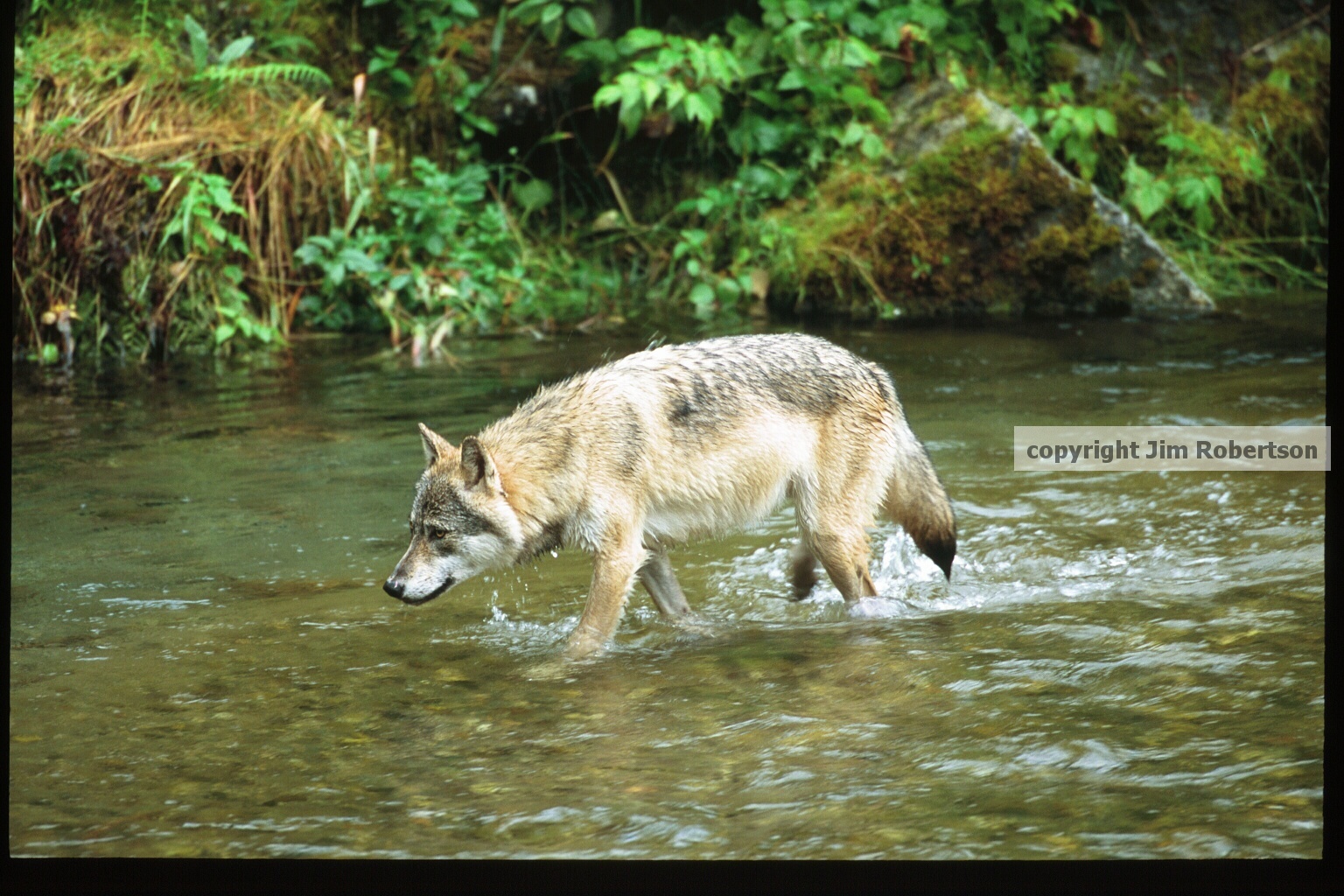 fending only for itself, but a highly organized, well-disciplined group of related individuals or family units, all working together in a remarkably amiable, efficient manner.”
Haber devoted his career to studying intact family groups, especially the Toklat wolves of Alaska. First made famous by Adolph Murie’s 1944 The Wolves of Mount McKinley, the Toklats rank with Jane Goodall’s chimpanzees as the two longest-studied mammal social groups in the wild.
Wolves go to great lengths to stay with family; when important members are lost, families can disintegrate and remaining individuals often die. Haber knew this firsthand after an alpha female wolf, who, after her mate was killed in a botched government darting study, died of starvation, alone. Relocated wolves travel hundreds of miles to return home. And the first wolf seen in California in 90 years, OR7, has never stopped moving: He’s searching for a mate, for family.
Left unexploited (that is, not killed) by humans, wolves develop societies that are astonishingly complex and beautifully tuned to their precise environment. Once, Haber observed the Toklat wolves moving their den because heavy winter snow had decimated the moose population; a week before pupping, the wolves shifted to another den closer to caribou. He also recorded unique hunting methods, among them moose hunting by the Savage River family that he called “storm-and-circle.”
Family groups develop unique and highly cooperative pup-rearing and hunting techniques that amount to cultural traditions, though these take generations to mature and can be lost forever if the family disintegrates. After the entire Savage River family was shot illegally in the winter of 1982-’83, Haber never saw the storm-and-circle technique again.
A healthy wolf population is more than x number of wolves inhabiting y square miles of territory. The notion that we can “harvest” a fixed percentage of a wolf population corresponding to natural mortality rates and still maintain a viable population misses the point. According to Haber, it’s not how many wolves you kill, it’s which wolves you kill.
Natural losses typically take younger wolves, whereas hunting and trapping take the older and more experienced wolves. These older wolves are essential because they know the territory, prey movements, hunting techniques, denning sites, pup rearing—and because they are the breeders. Haber observed this many times: Whenever an alpha wolf was shot or trapped, it set off a cascade of events that left most of the family dead and the rest scattered, rag-tag orphans.
It happened again in April 2012. A trapper dumped his horse’s carcass along the Denali National Park boundary, surrounded it with snares, and killed the pregnant alpha female of the most-viewed wolf group in Denali. With her death, the family group had no pups, and it disintegrated, shrinking from 15 to three wolves. That summer, for hundreds of thousands of park visitors, wolf-viewing success dropped by 70 percent.
This is not unique to Alaska. In 2009, Yellowstone National Park’s Cottonwood group disappeared after losing four wolves to hunting, including both alphas. In 2013, the park’s Lamar Canyon family group splintered when the alpha female—nicknamed “rock star”was shot.
So it’s never about numbers. It’s about family. A wolf is a wolf when it’s part of an intact, unexploited family group. Wolves are no longer endangered when these groups have permanent protection, and when we manage according to this essential functional unit. If we leave wolves alone, we’ll be the ones to benefit.
The government has extended the comment period for delisting gray wolves from Endangered Species Act protection to Dec. 17, 2013. Go to regulations.gov and click on Gray wolf: Docket N. (FWS-HQ-ES-2013-0073).
________________________________________
Marybeth Holleman is a contributor to Writers on the Range, a service of High Country News (hcn.org). With Gordon Haber, she is the author of Among Wolves: Gordon Haber’s Insights into Alaska’s Most Misunderstood Animal. She also runs the blog Art and Nature (artandnatureand.blogspot.com) and lives in Anchorage, Alaska.
by Betsey Cohen
A Missoula man is heartbroken and angry after a day of cross-country skiing with his malamute dogs near Lolo Pass turned into his worst nightmare Sunday afternoon.
Layne Spence was skiing with his three dogs on a quiet logging road in Lee Creek when, according to Spence, a rifle shot echoed through the air.
Then, Spence saw his 2-year-old brown and white dog, “Little Dave,” fall down with a shot to a leg.
About 15 yards away from him and his dogs, Spence saw a man in camouflage holding an assault weapon.
“I started screaming ‘Stop, stop,’ and the man kept shooting,” said Spence, 48, and who is often seen walking his dogs around Missoula’s river front. “And he kept shooting.”
“My dog is lying there, dead and I shouted ‘What are you doing?’ and the guy said, ‘I thought it was a wolf.’ ”
After the man allegedly shot Spence’s dog six times, he took off without another word, leaving Spence to deal with the tragedy of his dead dog.
Spence abandoned his skiing gear to carry Little Dave out, and to get his other two malamutes, Frank and Rex, to the safety of his truck.
When he got back to Missoula, Spence filed a report with the Missoula County Sheriff’s Department.
“This doesn’t have to happen,” said an obviously distraught Spence. “Not every big dog is a wolf. These are pets, they all had their collars and lights on, they were all with me the entire time.
“People need to know what a wolf looks like before they start shooting,” he said. “And I was standing right there.
“What if I had a child on a sled, what would have happened if a bullet ricocheted?”
“There are other people who use the woods besides hunters this time of year.”
The incident remains under investigation by the Missoula Sheriff’s Department.
Anyone who has information about the shooting is asked to call Crimestoppers at721-4444.

For many Mississippi hunters, the start of deer season is possibly the most anticipated day of the year. But when youth season opens, it is often an event that produces memories that last a lifetime.
Last weekend’s youth season opener didn’t exactly start as planned for Hays Heidel of Yazoo City. Heidel said he and his daughter, Payton Heidel, 5, had practiced together before the season to get her comfortably shooting reduced recoil ammunition in her 7-08 rifle. But when the big day came, she wasn’t very cooperative.
“She said she didn’t want to get up because she would be grouchy,” Heidel said.
Heidel let her sleep, but as he was having a cup of coffee and looking over a lake on his property, he saw a doe in the distance. Heidel woke his daughter again, but this time, she was ready.
Sneaking within shooting range, Heidel got his daughter set up for a solid shot and with the crosshairs on the doe, Heidel gave her the OK.
“As soon as I clicked off the safety she shot the deer. POW!,” Heidel said. “She about scared me to death.”
The practice paid off and the two were soon following a blood trail. “When she saw the deer she threw her hands up and hugged my leg,” Heidel said. “To see that little girl’s smile — she was tickled to death to see that deer.”
The following afternoon, Payton Heidel made a repeat performance and harvested a 9-point. Heidel thinks he has a hunter for life and added, “I wouldn’t have it any other way.”
Glen Lewis, 6, of Brookhaven, also had success. Lewis had also been practicing shooting with his father, Keith Lewis, and when the time came he knew what to do.
Lewis said his son dropped his first doe with a 115-yard shot and the excitement went into overdrive. “Oh my word,” Lewis said. “I think he called every family member we know.”
Lewis said since then, his son has asked to go hunting every afternoon. “He’s got deer fever now,” Lewis said. “He’s hooked, definitely.”
According to Lann Wilf, Deer Program Leader for the Mississippi Department of Wildlife, Fisheries and Parks, most areas of the state experienced a good level of success.
“Countless does were taken, lots of first deer and several bucks,” Wilf said. “Some places knocked it out of the park.”
As productive as the past week has been, Wilf said the coming gun season could be one of the best in years.
http://www.usatoday.com/story/news/world/2013/11/15/china-one-child-policy/3570593/
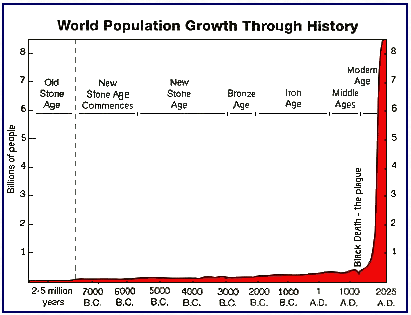
BEIJING — China made its first major change to its “one-child policy” in nearly 30 years to grapple with a massive shift in its population toward the elderly, who cannot work and need support, say experts.
Introduced by the Communist Party in 1979, the policy was meant to help the impoverished country feed its people. China credits the policy with keeping family expenses down so parents could more easily raise their standards of living.
But China demographer He Yafu says that the policy threatens to harm stability because the segment of the Chinese population that is elderly is growing at a faster rate than previous years….
[This sounds a lot like the story of the Little Old Lady Who Swallowed a Fly]
By Dr. Michael W. Fox November 2013
The fear and hatred of wolves goes back in our European history for centuries. Such lupophobia is manifested still today in such purportedly advanced civilizations as the United States of America, a mental pathology which is certainly not shared by indigenous native American Indians.
Any rational person visiting these Sportsmen Against Wolves Facebook and other internet sites will see beyond their passionate, self-righteous rhetoric, which at deeper levels reveals their own insecurities and fears of extinction of a ‘way of life’ that they are enjoining across wolf-inhabiting states to justify and protect.

 Images Copyright Jim Robertson, Animals in the Wild
The fear and hatred of wolves goes back in our European history for centuries. Such lupophobia is manifested still today in such purportedly advanced civilizations as the United States of America, a mental pathology which is certainly not shared by indigenous native American Indians. The internet pages being put out today by “Sportsmen Against Wolves” are especially instructive, combining graphic photographs of slaughtered wolves with supportive comments by hunters who see wolf protectors and wildlife conservationists as representing the kind of society that they abhor: A society of tree-hugging Bambi-lovers who are challenging their right to shoot wolves and any wild animal who crosses their paths that may threaten them; provide them with a meal; offer them a challenge of manhood as a ‘worthy adversary’ to test their survivalist skills to track and kill to win a trophy head or pelt to sport on their walls or to decorate their homes or adorn their women.
Supportive letters from wolf hunting advocates on these internet pages also disclose a degree of ignorance about the balance of nature, wolf-deer and prey-predator relationships. They amount to endorsing the self-affirming mythology of wolf hunters that exterminating competing hunters such as the wolf is their right, scientifically/biologically justified, so they can have an abundance of prey all for themselves. The notion of co-existence, as being promoted by organizations such as Project Coyote, is anathema to this community which lives in close association with the last of the wild and which most American citizens are calling for better protection.
Any rational person visiting these Sportsmen Against Wolves Facebook and other internet sites will see beyond their passionate, self-righteous rhetoric, which at deeper levels reveals their own insecurities and fears of extinction of a ‘way of life’ that they are enjoining across wolf-inhabiting states to justify and protect.
Their critics may see them as evidence of the devolution of Homo sapiens, of a regression to the hunter-stage of our ancestral past. The anarchistic individualism and anachronistic pioneer spirit are barely concealed under the camouflage of their costly hunting attire and high-tech scopes and other killing gear. But to be charitable and offer a paw or frond of hope and recovery fro this American sub-culture, if they were to connect their fate with the fate of the wolf and every tree in the forest and frog in the swamp, they might, as Henry David Thoreau advised over a century ago that in wildness is the preservation of the world.
That does not mean the preservation their way of life and of lupophobia but of their evolution as an effective, non-governmental community of wildlife monitors and conservators. Many deer hunters, for instance, like traditional Native American Indians, have discovered the wisdom of biophilia, seeing themselves and wolves and other predators as essential components of healthy ecosystems. This is especially germane considering that across much of the U.S. the white tailed deer population has risen over the past century from some 300,000 to an estimated 30 million. With such an ecological perspective they can begin to articulate a hunting ethic, acknowledge the vital importance of wolves and other predators in helping prevent deer overpopulation and loss of biodiversity, and become a ‘boots on the ground’ force and voice for conservation, habitat preservation and restoration in concert with wolves.
But so long as lupophobia persists, wolves and other essential predators will continue to be killed by some hunters as well as by cattle and sheep ranchers whose subsidized grazing rights on public lands should come with a caveat prohibiting lethal methods of predator control. Putting the wolf on the protective federal Endangered Species list to prohibit sport hunting and trapping of these highly intelligent and social species is a limited deterrent against their illegal killing by lupophobes when there is virtually no effective local enforcement and informant network.
The many thousands of applicants for licenses to kill wolves now that it is legal in most wolf-inhabited states is surely indicative of a significant degree of lupophobia with many others seeing the wolf as a trophy animal, a mere object to be ‘sustainably harvested’ for personal gratification. Both of these attitudes are part of the ‘moral pluralism’ of America’s culture which makes a mockery of democratic process revealing minority rule and the power of vested interests when the majority of the populace want full protection for the wolf. Without a unified sensibility, like those deer hunters who also abhor the killing of wolves as sporting trophies along with the majority of non-hunters, the disunited states will surely continue to fall short of becoming a truly civilized society.
________________________________________________
The author of the best selling book The Soul of the Wolf, Michael W. Fox has done research on wolves and other wild canids.

[That’s funny, I didn’t know there were any 2,000′ cliffs in Doty.]
http://blogs.seattletimes.com/today/2013/11/hunters-drive-off-lewis-county-cliff-woman-dies/
by Nick Provenza
DOTY, Lewis County (AP) — The Pacific County sheriff’s office says a couple who were hunting drove their truck off a logging road and it fell about 2,000 feet down a cliff into a ravine.
Deputy Pat Matlock says the woman driving died at the scene Tuesday and a man in the passenger’s seat suffered critical injuries and was flown to Harborview Medical Center in Seattle.
The Chronicle reports another couple hunting with the pair had to drive to a location with cell phone reception to call for help.
The accident occurred on Weyerhaeuser land near the western edge of Lewis County, so Pacific deputies responded along with the Washington State Patrol and Raymond Fire Department.
By Michael Aubry ,Ottawa Sun
First posted: Saturday, November 16, 2013

Wildlife Photography ©Jim Robertson
A viciously amputated finger.
A bullet-sized hole to the shoulder.
These potentially fatal accidents are just some of the examples that have already plagued this year’s deer-hunting season.
A peaceful romp through the woods can easily prove deadly — and punctuated by shrill cries for help — after just a moment of inattention.
“It’s important to have proper respect for a firearm, it’s a lethal force and a dangerous weapon,” said Steven Aubry, district enforcement supervisor with the Ministry of Natural Resources.
“Any incident can be deadly. Hunting should be a safe and enjoyable pastime.”
Ontario Provincial Police are probing six accidental shootings in southern and eastern Ontario this year so far.
A 75-year-old man shot himself while hunting in North Glengarry Township Thursday.
Later that same day, a 23-year-old was shot in a hunting accident in North Grenville.
Earlier last week, a 59-year-old man was shot in an accident just outside Smiths Falls. But they likely won’t be the last.
There have been an average of 10 serious hunting incidents every year for the past 20 years, including last year when 22-year-old Andrew Winnicki was killed in a freak accident bird hunting in Osgoode.
Aubry said these rare slip-ups are almost always linked to the four cardinal rules of hunting — and those who break them.
Every hunter should assume their gun is loaded at all times.
That means maintaining control of their muzzle, keeping their finger off the trigger until they’re ready to shoot, and never point at something they don’t intend to kill.
“Hunters have to understand that when you point a loaded firearm at something, you’re prepared to destroy it, so gun control is so important,” he said
More: http://www.ottawasun.com/2013/11/16/deer-hunting-season-comes-with-self-inflicted-hazards
 Exposing the Big Game