A Hastings-led howl against protecting wolves

http://blog.seattlepi.com/seattlepolitics/2013/11/15/a-hastings-led-howl-against-protecting-wolves/

Friday, November 15, 2013 by: Joel Connelly

Seventy-five members of Congress are demanding that the Obama administration end all protection of the gray wolf as “endangered” or “threatened” under the federal Endangered Species Act, in an effort organized by Rep. Doc Hastings, R-Washington.

The U.S. Fish and Wildlife Service has already de-listed wolves in the Northern Rocky Mountains — leading to big, officially encouraged wolf kills, particularly in Idaho — and in the Great Lakes States.

Wolves have moved south from protected lands on the U.S.-Canada border to repopulate the Washington Cascades.  e Teanaway wolf pack in the Cascade Mountains. (Photo courtesy of Conservation Northwest).

The gray wolf has moved south from protected lands on the U.S.-Canada border to repopulate the Washington Cascades, including the Teanaway Valley. (Photo courtesy of Conservation Northwest).

In Washington, wolves are still under federal protection in the Cascades, but not in the Kettle Range and Selkirk Mountains of Northeast Washington. There, they receive state protection, which is under attack by conservative state legislators.

The lawmakers’ letter uses age-old arguments for removing protection so that wolves can be killed.

“Since wolves were first provided protection under the ESA, uncontrolled and unmanaged growth of wolf populations has resulted in devastating impacts on hunting and ranching and tragic damages to historically strong and healthy herds of moose, elk, bighorn sheep and mule deer,” they wrote in the letter to Dan Ashe, director of the U.S. Fish & Wildlife Service.

Mitch Friedman, executive director of Conservation Northwest, a Washington-based group that has championed wolf recovery, scoffed at the letter’s assertions.

“It’s surprising Little Red Riding Hood isn’t mentioned,” said Friedman.

“The letter acknowledges that ‘federal policy must be based on best available science,’ then goes on to make the false and hyperbolic claim about ‘devastating impacts’ on fishing and ranching,” Friedman added. “Throughout wolf territory, game populations are generally at or above levels desired by state managers.

“These Tea Party legislators have so proven Congress that they’ve resorted to attempting policy by press release.  Their letter is off enough on matters of law, science and facts.”

Rep. Doc Hastings, R-Wash.: Bipartisan legislation to expand the Alpine Lakes Wilderness and protect the Middle Fork-Snoqualmie River, in eastern King County, can't get the time of day in his committee..

Rep. Doc Hastings, R-Wash.: He is lead on a letter, signed by 75 members of Congress, demanding an end to all federal protection of wolves under the Endangered Species Act.

Hastings is chairman of the House Natural Resources Committee.  Rep. Cathy McMorris-Rodgers, R-Wash., who also signed the letter, is a member of the House Republican Leadership.

The gray wolf has returned to Washington’s mountains in recent year.  A killing spree by three Okanogan County residents — who were caught and prosecuted under federal law — nearly destroyed one pack that had established itself in the upper Methow Valley of the North Cascades.

Other packs have located in the upper Teanaway Valley, in the Cascades north of Cle Elum, as well as in northeast Washington.  A majority of the state’s wolf population has the misfortune to live in congressional districts represented by Hastings and McMorris Rodgers.

The letter asking for de-listing of wolves is signed by a who’s-who of Tea Party members in Congress, including such luminaries as Rep. Michele Bachmann, R-Minnesota, Sen. Mike Lee, R-Utah, Rep. Steve Stockman, R-Texas and Rep. Raul Labrador, R-Idaho.

A pair of conservative House Democrats, Reps. Collin Peterson of Minnesota and Jim Matheson of Utah, signed the letter.

The letter also opposes a proposal to list the rare Mexican wolf, found in the Southwest, as a subspecies under the Endangered Species Act. Such a listing would have a “Severe impact on private landowners, including ranchers” in Arizona and New Mexico, the lawmakers claim.

“We believe that state governments are fully qualified to responsibly manage wolf populations and are better able to meet the needs of local communities and wildlife populations,” said the letter.

Friedman argued the reverse, saying that Hastings and his allies are grandstanding and doing nothing to encourage cooperation between local communities and conservation groups.

“Real ranchers and communities — including in Eastern Washington — are stepping up to work with groups like ours on practices that allow wolves and livestock to share the land,” he said.

“There are ways that Doc Hastings and Cathy McMorris Rodgers could help, but I’m still waiting for their call.”

Tell the U.S. Senate that You Oppose Ranching Industry Bill: Western Wildlands are Not a Feedlot

From Wildearth Guardians

It’s another giveaway by the Congressional cowboy caucus to welfare ranchers.

The Senate Committee on Energy and Natural Resources is considering a bill that would exempt the ranching industry from numerous environmental laws and further elevate the cattle industry on western public lands above wildlife and water.

Tell Committee Chair Senator Ron Wyden of Oregon that ranching industry shouldn’t be given special treatment. And if your Senator is on the committee, tell her/him as well that you oppose giveaways to the livestock industry.

The so-called “Grazing Improvement Act” eliminates environmental review for grazing permits under the National Environmental Policy Act. The Act would also double the period of grazing permits from ten to twenty years! Both would further entrench grazing on public lands—imperiling hundreds of species including sage grouse, native trout and wolves.

At a time when our public wild lands in the west are critical for providing water and wildlife habitat and ensuring resilience to climate change we cannot afford more give-aways to the cattle industry.

Energy and Natural Resources Committee members need to hear from you.

Call Senator Wyden at (202) 224-5244 in Washington, DC, or (503) 326-7525 in Portland Oregon, and then sign on to our email letter today!

http://www.wildearthguardians.org/site/PageServer#.Uogsa77Tly0

Former USFWS Whistleblower Says Wolves Illegally Introduced

Just FYI, so you know this is out there…

Non Native Wolves Illegally
Introduced, Says Whistleblower
Former USFWS Official Speaks of Malfeasance, Misappropriated Funds, and Transplanting Wrong Subspecies to Yellowstone

11/04/13

BY QUINCY ORHAI

Half a century after the last native Northern Rocky Mountain Timber Wolf, Canis lupus irremotus, was said to be hunted to extinction locally by public and private efforts, the U.S. Fish & Wildlife Service, in 1995, under then Director Mollie Beattie, presided over the introduction of the Canadian Gray Wolf, Canis lupus occidentalis, into the Northern Rocky Mountain eco-system.

According to whistleblower Jim Beers (former USFWS Chief of National Wildlife Refuge Operations), after Congress denied funding for his agency to carry out the Northern Rockies Wolf Recovery Project, the agency acted illegally as it brought the Canadian wolves into the Yellowstone ecosystem.

Speaking in Bozeman in May 2010, at the Gran Tree Inn, before Congress on wolf recovery issues in 1998 and 1999, and in October 2013 to the Montana Pioneer, Beers insisted that, after Congress denied USFWS funding for wolf recovery, the agency illegally expropriated Pitman-Robertson funds (federal excise taxes required by law to be distributed to the states as reimburse-ments), helping themselves to tens of millions of dollars.

When contacted by the Montana Pioneer for this article, Beers further stated, “The General Accoun-ting Office verified that at least $45 to $60 million was taken, diverted, by USFWS from P-R funds.”

Beers went on to say that the Pittman-Robertson excise taxes, by law, could only be used by State wildlife agencies for their wildlife restoration projects. “These funds were then used primarily…to pay bonuses to top USFWS managers that had no right to such funds [and] to trap wolves in Canada, import them, and release them into Yellowstone National Park.”

Beers, a 32-year veteran USFWS biologist, whose job included overseeing the Pitman-Robertson funds, alleges that the agency misapprori-ated monies for the trapping and transportation of Canadian wolves into the U.S. To conceal its misuse of the funds spent on the project, the true number of wolves imported, and the subspecies brought in, USFWS intentionally did not file mandatory paperwork, according to Beers, that would have established a paper trail. Or, he speculates, somehow that paperwork mysteriously disappeared.

Beers also alleges USFWS failed to file an appropriate and accurate Environmental Impact Statement. In recent comments to the Montana Pioneer, he elaborated, saying, “The EIS was and remains a document of lies, misinformation and woefully incomplete coverage of the matter.”

In print and in public speaking engagements, Beers has claimed the Wolf Recovery Project deliberately dismissed established wolf science and research, including known wolf depredation impacts on livestock and wildlife, and ignored the dangers parasites and diseases carried by wolves present to wildlife, livestock, pets, and humans.

The Canadian Gray Wolf, introduced into Yellowstone Park by USFWS 18 years ago, is widely described in scientific literature as thirty to fifty percent larger than the said-to-be extinct local native timber wolf. The initial 14 and subsequent transplanted wolves were captured in Canada, although wolves that were more genetically similar were available from surplus populations in Minnesota, as reveal-ed by the Smithsonian Institution, in a scholarly work titled: Physiological Basis for Establishing a Northern Rocky Mountain DPS [Distinct Population Segment Area].

The importation of Canadian Gray Wolves was criticized at the time by American biologists who believed the larger wolves would kill more elk, a position many now say has proved correct, and that the introduction of a non-native sub-species was of questionable legality when the smaller-sized native populations were beginning to recover naturally, on their own, positions similar to those advanced by the Farm Bureau’s of Idaho, Wyoming and Montana.

Although the official position of the government is that native wolves were locally extinct, according to Dr. Ralph Maughan, professor emeritus of political science at Idaho State University, with specialties in natural resource politics and public opinion, USFWS reported 48 native wild wolves in Montana in 1994, the year before the controversial introduction of the Canadian Gray Wolf into Yellowstone National Park—mostly timber wolves traveling down from Canada.

On his website, The Wildlife News, Maughan writes: “It’s reasonable to assume that without reintroduction, wolves would have naturally reestablished themselves in most of Montana [under the protection of the Endangered Species Act], but migration would have been slow with a lot of wolves up north before they made it to Yellowstone and Wyoming. Because these wolves were fully ‘endangered,’ rules governing them would have been a lot more strict than with those finally reintroduced in 1995.”

However, the larger and more aggressive central and northern Alberta, Canada wolves USFWS introduced here eliminated any survival chance of native wolves [as a result of competition or elimination], as USFWS knowingly violated the Endangered Species Act, according to Maughnan.
It was and is common scientific knowledge that the native male wolf (Canis lupus irremotus) of the Northern Rockies averaged 90 to 95 pounds at maturity. The wolf USFWS brought in as a replace-ment was a noticeably larger wolf (Canis lupus occidentalis) from north-central Alberta, with mature males topping 140 pounds, and some specimens weighing up to 175 pounds.

According to the Smithsonian study, the native wolf, which local residents claimed existed in small pockets in wilderness areas in the 1990s, generally roamed an area of about 100 square miles, hunting alone or in small groups of 4 or 5 at most. The non-native Canadian gray wolves USFWS introduced to the region typically hunted 300 or more square miles back in their home range, with packs often numbering 20 or more.

Under the direction of Mollie Beattie, USFWS developed the Environmental Impact Statement for the reintroduction of wolves. That EIS made a number of assumptions about bringing wolves back to Yellowstone and the Northern Rockies. Almost none of those assumptions has proven to be correct, according to Toby Bridges of the Montana Chapter of Sportsmen for Fish and Wildlife. Writing in 2010, on the group’s website, Bridges says: “Instead of getting just the 150 wolves Montanans agreed to back in the mid 1990s, the state is now home to likely 1,000 to 1,200 wolves… This year a minimum of 43,500 elk will be eaten alive or killed and left behind by wolves in the Northern Rockies…”

Bridges also states that “The U.S. Fish and Wildlife Service manipulated science, and replaced the native wolf of this region with a totally non-native…larger…and more aggressive wolf, and has consistently underestimated wolf numbers by half or one third of actual numbers.”

According to USFWS, “As of December 31, 2012, the most recent minimum wolf population size determined for Montana was 625 wolves in 147 packs, 37 of which were confirmed breeding pairs.”

Those numbers are inaccurate, says Bridges, because for the annual wolf count USFWS typically ignores wolf sightings by anyone except agency biologists, who are understaffed. Also, wolves typically are active in timbered areas where they are impossible to count from the air, says Bridges. Thus, the deceptive wording of the report: “minimum wolf population size determined.”

Norm Colbert, a veteran wildlife tracker who lives near Nye, Mont., in the area of the Rosebud wolf pack, told the Pioneer in February 2012 that at least several wolves comprised the nearby local pack, based on his repeated sightings of tracks and wolf related activity, while the official count listed the Rosebud pack as having consisted of only two wolves, a discrepancy, accoridng to Colbert’s estimates, that may fall 300 percent short of the actual number of wolves in the pack.
According to Bridges, writing on LoboWatch, in an article titled Voodoo Math Still Haunts Montana Wolf Control: “Other well respected wolf biologists have claimed that ‘real wolf biology’ and ‘real wolf reproductive rates,’ and allowing for natural and man induced mortality, puts the current wolf population somewhere much closer to the 2,000 mark. The sportsmen of this state, based on the degree of damage done to elk and other big game populations, say it’s even higher—perhaps as many as 3,000 wolves.”

One thing is clear to local ranchers losing livestock, and to local big game guides losing elk-hunting clients—the northern Yellowstone elk herd has declined by 80 percent from the 19,000 elk of 1995 (according to a Feb. 2013 aerial survey by the Montana Department of Fish, Wildlife and Parks and the National Park Service), that 1995 number of elk having been part of the justification for bringing wolves to Yellowstone in the first place.

What was not made clear at the time of the Canadian Wolf introduction, according to wolf critic Bridges, writing on Lobo Watch, was that “The reality of living with wolves is that wolves are extremely non-discriminating predators, killing just about anything that gets in front of them—the young, the healthy, the pregnant and the prime…the sick and weak.”
Bridges charges that “agenda driven biologists” within wildlife agencies avoid acknowledging that each “average” wolf accounts for the loss of some 25, or so, big game animals (or head of livestock) annually, just for sustenance, that each “average” wolf also kills just about as much game, known as “surplus killing,” without eating the kill, and that wolves are the primary carrier of the Echinococcus granulosus tapeworm, a parasite that infects game, pets, and humans with Hydatid cysts “that in turn makes these living things sick and weak.”

In the recent documentary film Crying Wolf, Exposing the Wolf Reintroduction to Yellowstone National Park, David Allen, President of the Rocky Mountain Elk Foundation, takes the issue a step further, stating, “The Northern Yellowstone elk herd was the showcase herd in the world…I believe that the reintroduction of wolves is, in many ways, an assault on the sportsmen and hunting culture. The North American model of wildlife conservation is built around the sportsman, since the days of Teddy Roosevelt. We have the most bountiful, successful wildlife resources in the world.”

With Crying Wolf, filmmaker Jeffrey King depicts the introduction of non-native Canadian gray wolves into the Northern Rockies ecosystem as destroying the livelihood of back-country residents by deva-stating free range ranching. According to the ranchers interviewed in the documentary, it is fast becoming uneconomical to raise livestock in areas where wolf packs range, and big game hunting and guiding opportunities and occupations are quickly disappearing from the rural Northern Rockies.

Veteran wolf biologist, John Gunson, formerly with the Alberta Fish and Wildlife Division, and also featured in Crying Wolf, echoed the concerns of sportsmen regarding elk hunting, saying, pointedly, “Really, there isn’t any room for harvest by man if you have a healthy wolf population.”

Regarding the introduction of wolves to the Northern Rockies, Ed Bangs, former Northern Rockies Wolf Recovery Coordinator for the U.S. Fish and Wildlife Service, is quoted as saying the following on the Montana Fish, Wildlife and Parks website, separating wolf science from wolf ideology: “Wolves and wolf management have nothing to do with wolves. I think the folks who didn’t like them still don’t like them, and the folks who did like them still do. Wolves are mainly a symbolic issue that relates to core human values…I think the only reason wolf reintroduction finally happened was that people with different values moved to Montana and diluted the strong agricultural influence. Plus, the economy changed from straight agriculture and natural resource consumption to areas such as tourism.”

Melissa Bachman Poses With Dead Lion in SA

US hunter criticised over picture with dead lion in South Africa

Petition calls for TV presenter Melissa Bachman to be barred from returning to South Africa after participating in legal hunt

theguardian.com,              Friday 15 November 2013

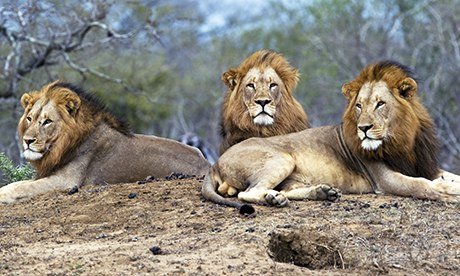
South African lions

South African lions. Photograph: Kim Sullivan/SplashdownDirect/Rex Features

An American TV presenter has been condemned for tweeting a picture of herself standing over a dead lion and boasting that she hunted it on safari in South Africa.

More than 3,500 people signed an online petition calling for the self-declared “hardcore hunter” Melissa Bachman to be banned from returning to South Africa.

The Minnesota-based celebrity posted a photo of herself smiling next to the body of an adult lion after a hunt at the Maroi conservancy in the northern Limpopo province. The caption read: “An incredible day hunting in South Africa! Stalked inside 60 yards on this beautiful male lion … what a hunt!”

The style is a familiar one for Bachman, who has previously been photographed with what appears to be the carcass of a bear. She is no stranger controversy, having been removed as a contestant on the National Geographic show Ultimate Survival Alaska last year after more than 13,000 people signed a petition criticising the inclusion of the “heartless trophy hunter”.

Her lion tweet has provoked another angry backlash. One Twitter user, Gaye Davis, asked: “If it was beautiful why kill it?” Tim Flack, a South African, commented: “People like @MelissaBachman hunting lion in SA is everything that’s wrong with our hunting industry.”

A petition on Change.org urges the South African government to bar Bachman from the country. It says: “Melissa Bachman has made a career out of hunting wildlife for pure sport. She is an absolute contradiction to the culture of conservation, this country prides itself on. Her latest Facebook post features her with a lion she has just executed and murdered in our country.”

Supporters of hunting in South Africa argue that it raises funds from wealthy tourists which are then ploughed back into conservation efforts.

Lourens Mostert, game farm manager at the Maroi conservancy, confirmed that a lion was killed and said the hunt was legal. “If it isn’t right to hunt these lions, why does out government legally give us permission?” he told the Times newspaper. “This is not the only lion that has been hunted in South Africa this year.”

The barrage of criticism prompted Bachman to make her Twitter account private. Her personal bio reads: “I’ve been an avid hunter my entire life & now I’ve turned my passion into a career as a TV producer, host and writer. I’m a hardcore hunter doing what I love!”

Hunter Does a Commendable Thing: Chooses Death

By now you’ve probably heard about the hunter from Indiana who ended up permanently paralyzed and on a ventilator after falling from a tree. While it’s always good news to know there’s one less armed animal-killer out there trying to gun-down the innocent, this is a case of an injured hunter—rendered essentially harmless to anyone but himself and his caregivers—choosing to do the right thing.

The miracles of modern medicine include morphine and other drugs that can spare a person from the unbearable pain which often accompanies such an injury. Yet, just as not every illness can be cured, there is a limit to how much spinal damage can be reversed. At times, the most humane resolution is to allow a suffering individual to peacefully pass, or even gently hasten the passing.

Despite the national obsession with health care these days, people rarely hear a word about the choices available to patients, or the fact that one can always refuse life-prolonging treatment (as long as they’re still able to communicate, or have previously expressed your wishes in writing). Kudos to the family of the hunter who must have known his wishes well enough to ask to bring him out of it and allow him to tell the staff at the hospital that he was definitely not interested in marking time in a rehab facility, hooked up to a ventilator.

For all its marvels, modern medicine is in a big way responsible for the rapidly worsening human overpopulation crisis. I don’t know if his decision was based in part on selflessness, but if more people were to choose no to be when by all intents and purposes they really aren’t alive anymore, the human population might start to level off and eventually not be quite such a burden on the planet.

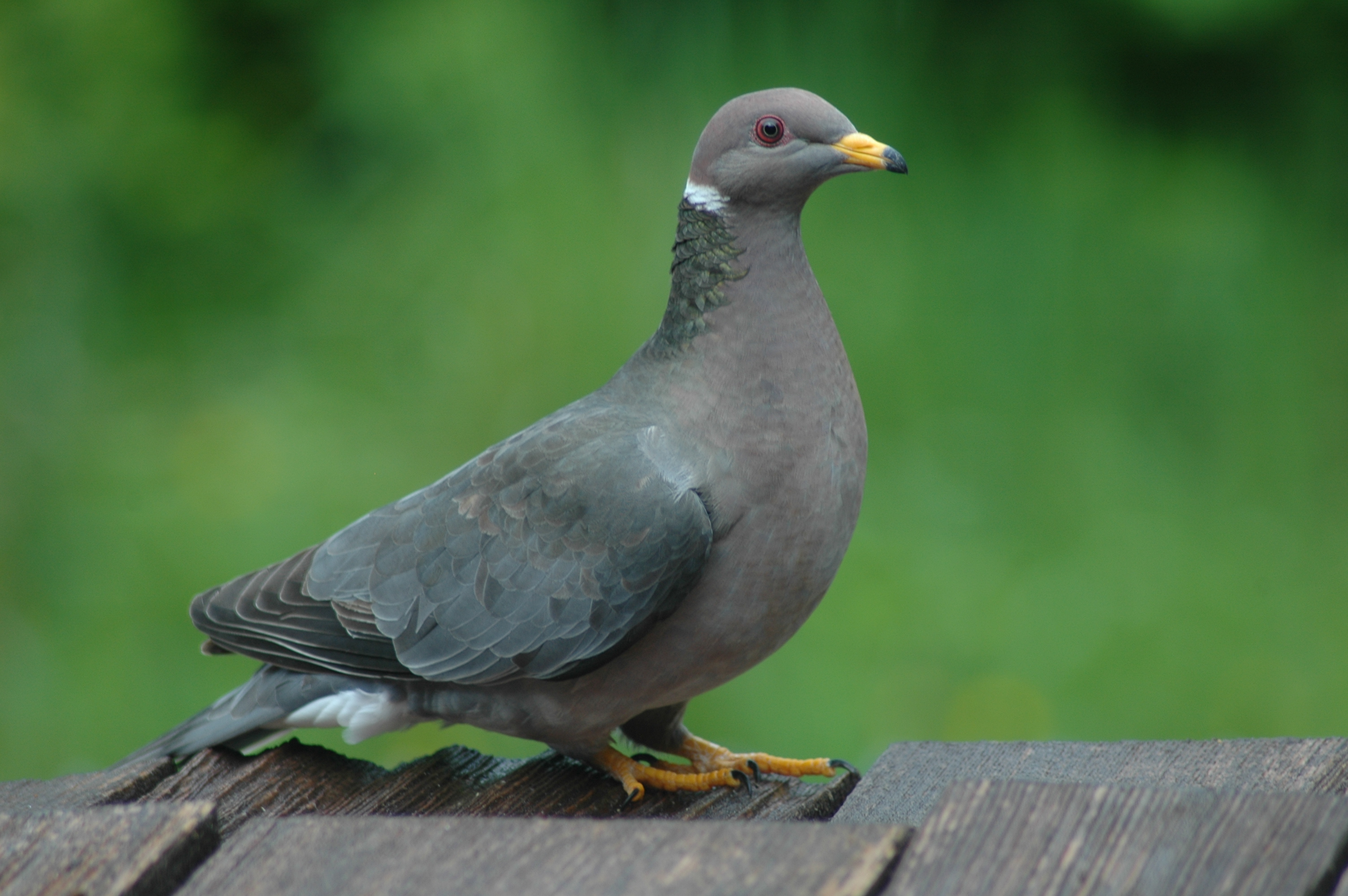
I had an unwelcome opportunity to end the suffering of a mortally wounded band-tailed pigeon (a wild, forest-dwelling bird, native to the Western North America) who showed up at my birdfeeder with her lower bill shot completely off (probably by a dumbass neighbor kid who liked to shoot at everything that moved with his 22). The pigeon was unable to ever feed herself again, so I’m not sure if she returned to this familiar territory to somehow assuage her nagging hunger, or if she was hoping I could do something to help.

Like the paralyzed hunter whose only hope of living was via a feeding tube, there was no way this poor pigeon had any real chance of long term survival without some kind of major heroics. Since medical science has yet to invent a bionic bill for lowly birds, all I could do was shoot the poor thing to instantly put an end to her misery.

Band-tailed pigeon photo©Jim Robertson

Band-tailed pigeon photo©Jim Robertson

Column: Michigan’s wolf hunt will do more harm than good

 The Jackson Citizen Patriot on November 12, 2013
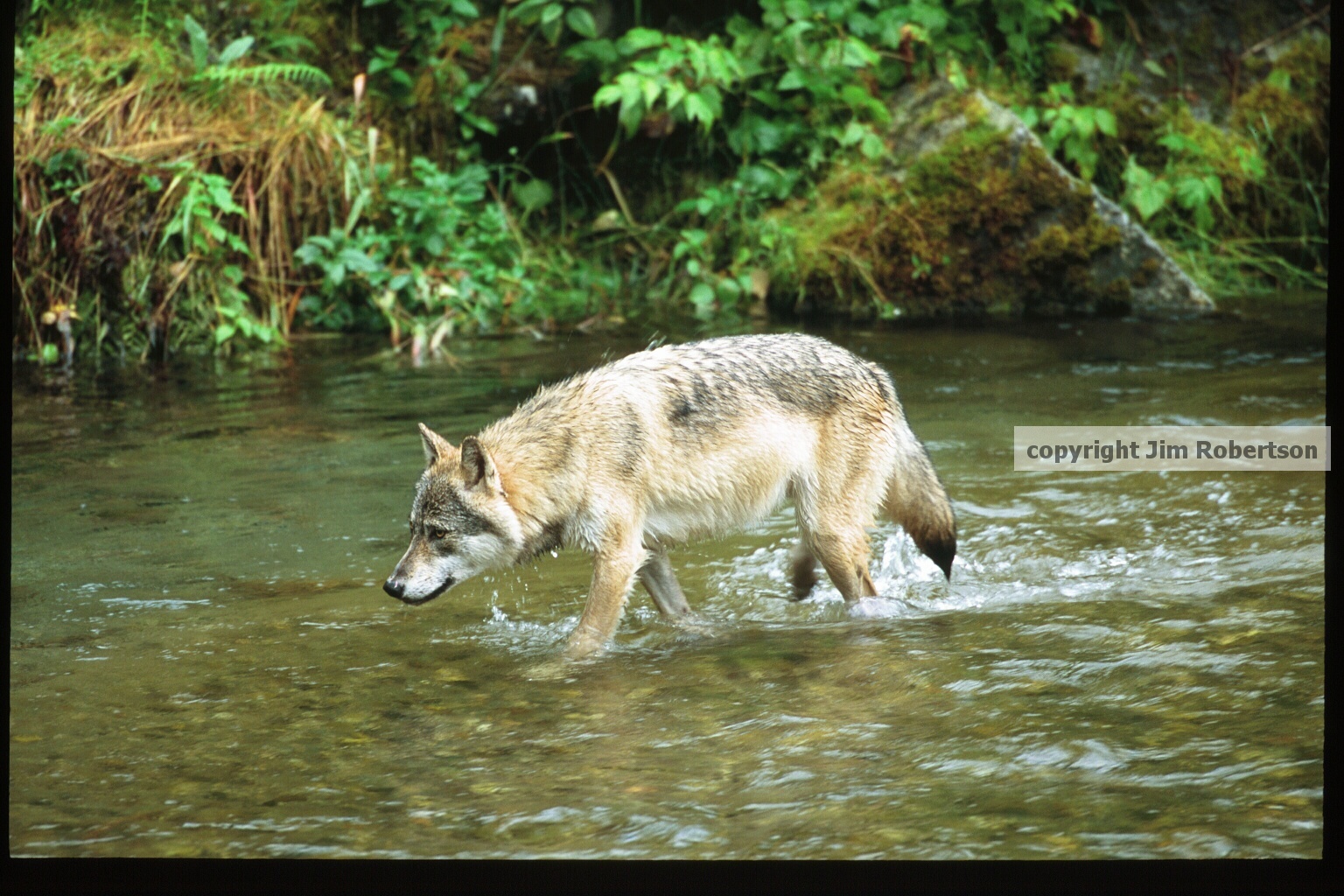
copyrighted wolf in water
By Mark Muhich

Michigan’s first ever wolf hunt begins Nov. 15.

This wolf hunt is anti-scientific, anti-democratic and has little to do with hunting.  Legislative skull-doggery by Upper Peninsula State Senator Tom Casperson voided the constitutional right of Michiganders to petition their government.

Casperson  shifted the listing of “game species”, animals hunted in our state, to a politically appointed committee.  The Natural Resources Committee cannot be reviewed by the voting public, so the 250,000 citizens who signed the ballot initiative calling for a vote on the wolf hunt, were disenfranchised, told to keep quiet, and take a hike.

While hiking in Michigan there is one thing you need not fear; a wolf attack. There has never been in Michigan’s history an attack by wolves on humans. Of course Capserson’s fairy tales tell of children being cornered by wolf packs at school. Casperson has made numerous bogus claims on the floor of the State Senate in Lansing, though admittedly,  he is not sworn to tell the truth while speaking.

Worse, professional Department of Natural Resource biologists now confess to falsifying testimony to the State Senate.  The Legislature resolved that wolves should be de-listed from the endangered species act, and then included wolves on the schedule of game species in Michigan.

If the DNR had enforced its own regulations requiring farmers to bury within 24 hours the carcasses of  dead animals then many of the wolf attacks on cattle could have been avoided in the first place.

Cattlemen have every right to kill wolves that are attacking their herds. That is the law and always has been. The DNR pays farmers and ranchers for the loss of their livestock killed by wolves.

The upcoming wolf hunt is not designed to manage wolves in the wild; but it could make wolf attacks worse.  Wolves are pack animals, they depend on an intricate social network to survive. If an alpha wolf is slaughtered the pack disintegrates, turning the survivors into rogues.

Only one biologist sits on the NRC, which listed the wolves as “game species”, and hers was the sole committee vote against the wolf hunt.

Other respected northern Michigan scientists have argued against the wolf hunt. With the deer population holding steady in the U.P., and wolf populations slightly declining, an ecological balance in the forests of northern Michigan is served by the apex predator, wolves.

Many sportsmen also oppose the new wolf hunt.

Hunting ethics written by Teddy Roosevelt, the North American Wildlife Conservation Model, warned against “frivolous hunts” like Michigan’s wolf hunt.

Michigan’s wolf hunt ignores the science of wildlife management. Michigan wolves do not need “management,” they are management.

Sen. Casperson has snatched the constitutional right of citizens to petition their government. The DNR has failed to enforce its own rules. Michigan’s wolf hunt will do more harm than good, leaving Michigan’s forests weaker.  Put the wolf hunt to a vote of the people next year.

— Mark Muhich lives in Summit Township and is the conservation chairman of the Central Michigan Group Sierra Club.

Saving the Deer of Invermere

Canadian Blog

by Barry Kent MacKay,
Senior Program Associate

Born Free USA’s Canadian Representative

<http://www.bornfreeusa.org/weblog_canada.php?p=3936&more=1&gt;

Saving the Deer of Invermere

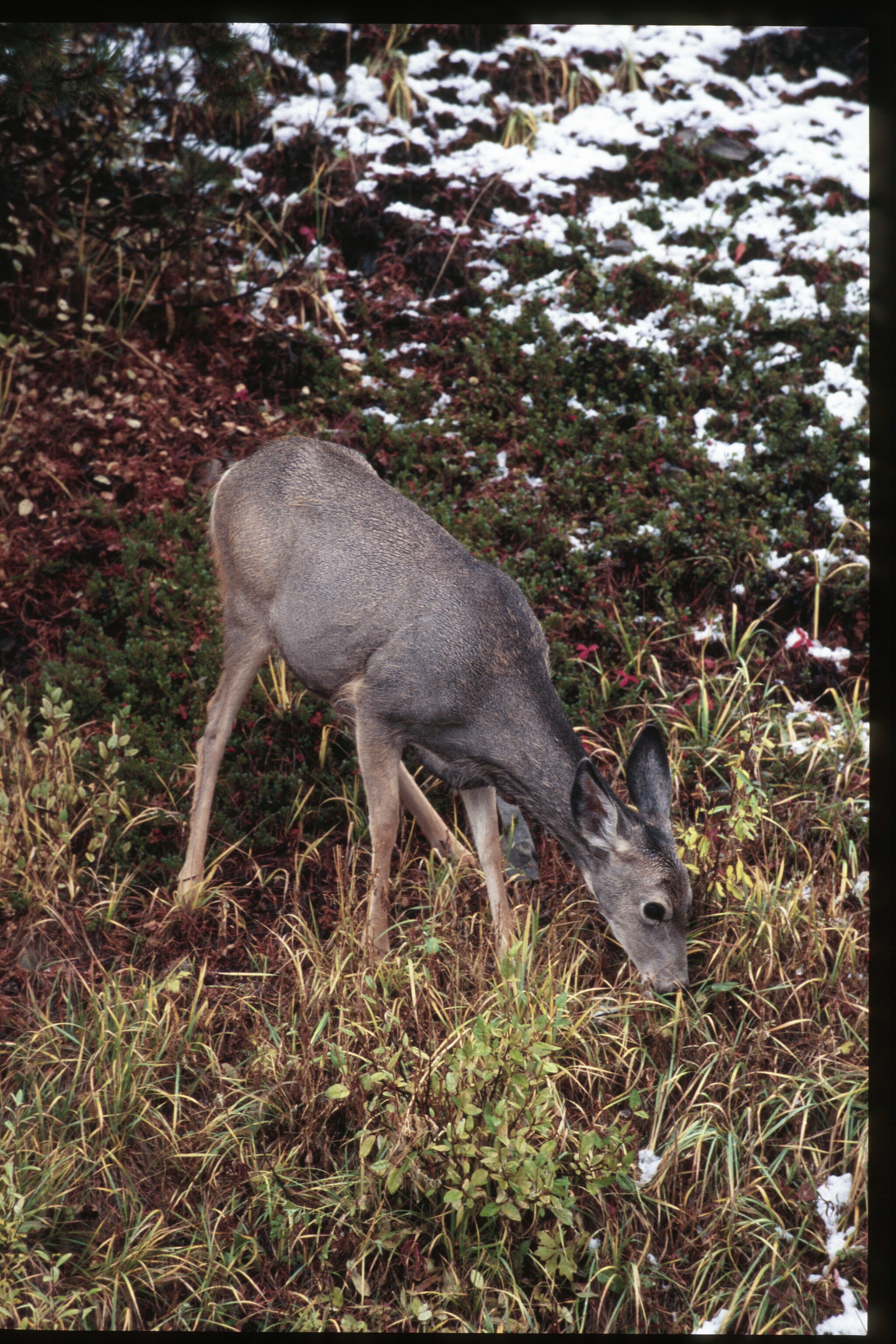
Photo Co Jim Robertson

Photo Co Jim Robertson

Part 1: There’s No Paradise on Earth, but…

Published 11/13/13

When I drove into Invermere, population near 4,000, in the Columbia River
Valley of the interior of British Columbia, I was both enchanted and
worried. Animals totally fascinate me (and that includes human animals, as
I’ll discuss in a future blog) and I greatly enjoy seeing them, drawing and
painting them (I am a wildlife artist, too), photographing them, interacting
with them, and being in their presence. It’s just the way I am; not everyone
is like that. We’re all different. Diversity itself is as natural as a
beaver’s dam, a robin’s song, or the wide-eyed, innocent expression of a
baby screech-owl.

But, of course, the beaver’s dam may flood a roadway; the robin’s song may
awaken an exhausted shift-worker; and there could be a trace of blood and
fur or feathers on the beak of the baby owl. I get that.

Still, what I saw in Invermere was a community that I could envy, where a
dusky grouse strode boldly up to us, where a pileated woodpecker met us near
the door of a home we visited, and where mule deer wandered on lawns, in
parks, and on sidewalks, even crossing roads.

We tend to think that wild animals “should” be afraid of us-should flee-and
deer usually do, unless left alone. These deer were different (although not
unlike mule deer I’ve seen in California). Indeed, I met my first mule deer
when I was six years of age. She walked up to me at Mount Wilson Observatory
near Los Angeles, reached down, and chomped off the top half of the banana I
was eating. Was I terrified? Nope. I ate the second half. But that’s me. I
have touched a wild beluga whale, have had chickadees alight on my shoulder,
and have had foxes, who have never met a human, trot up to give me a sniff.
Animals fear us, but not necessarily instinctively; we give them ample
reason.

I was in Invermere with my Toronto-based colleague, Liz White, to help
support a “no” vote in a referendum that asked Invermere’s residents if the
town’s deer should be baited to enter a large, square frame, where they
would be trapped until men arrived to collapse the trap around them, holding
the panicked, struggling animals down. Then, a metal bolt would be driven
into their brains, sometimes after many botched tries-ultimately rendering
them unconscious so that they could be bled from the back of a truck into a
pail, until dead. (That’s not how the ballet was worded; it just asked if
the deer should be culled.) Doing that would, citizens were told, prevent
the things about deer that concerned them.

We tried to expose the truth, which is hard to do with a population that’s
unaware of wildlife population dynamics, with both real and imagined
concerns about the deer. With our colleagues, local citizens banded together
as the Invermere Deer Protection Society (IDPS). We methodically canvased
every part of town (about 1,000 houses), speaking to approximately 300
people about why culling does not work. It seemed that the majority of
people supported us. But, when the vote was held on November 2, only 26%
agreed with us and voted “no.”

Do we stop there? No. As I will explain in a future blog, the canvasing
reinforced formal studies in why people act illogically. Based on figures
from the cull in Cranbrook (see
<http://www.bornfreeusa.org/weblog_canada.php?p=3833&more=1&gt; here and
<http://www.bornfreeusa.org/weblog_canada.php?p=3487&more=1&gt; here), it’ll
cost the good folks of Invermere more than $600 per deer removed, with, as I
suspect they will discover, no significant improvement.

Luckily, the referendum is not binding. So, we have something to build on: a
means to show a less costly and more effective suite of options. The night
of the poll, we were already planning for the work ahead-and, by the next
morning, we had already met with IDPS members to strategize.

Also see: http://www.timescolonist.com/news/local/oak-bay-oks-plan-to-kill-25-deer-animals-regarded-as-a-nuisance-1.695869

In Defense Of Animals Offers $1,500 Reward In Grizzly Bear Killing

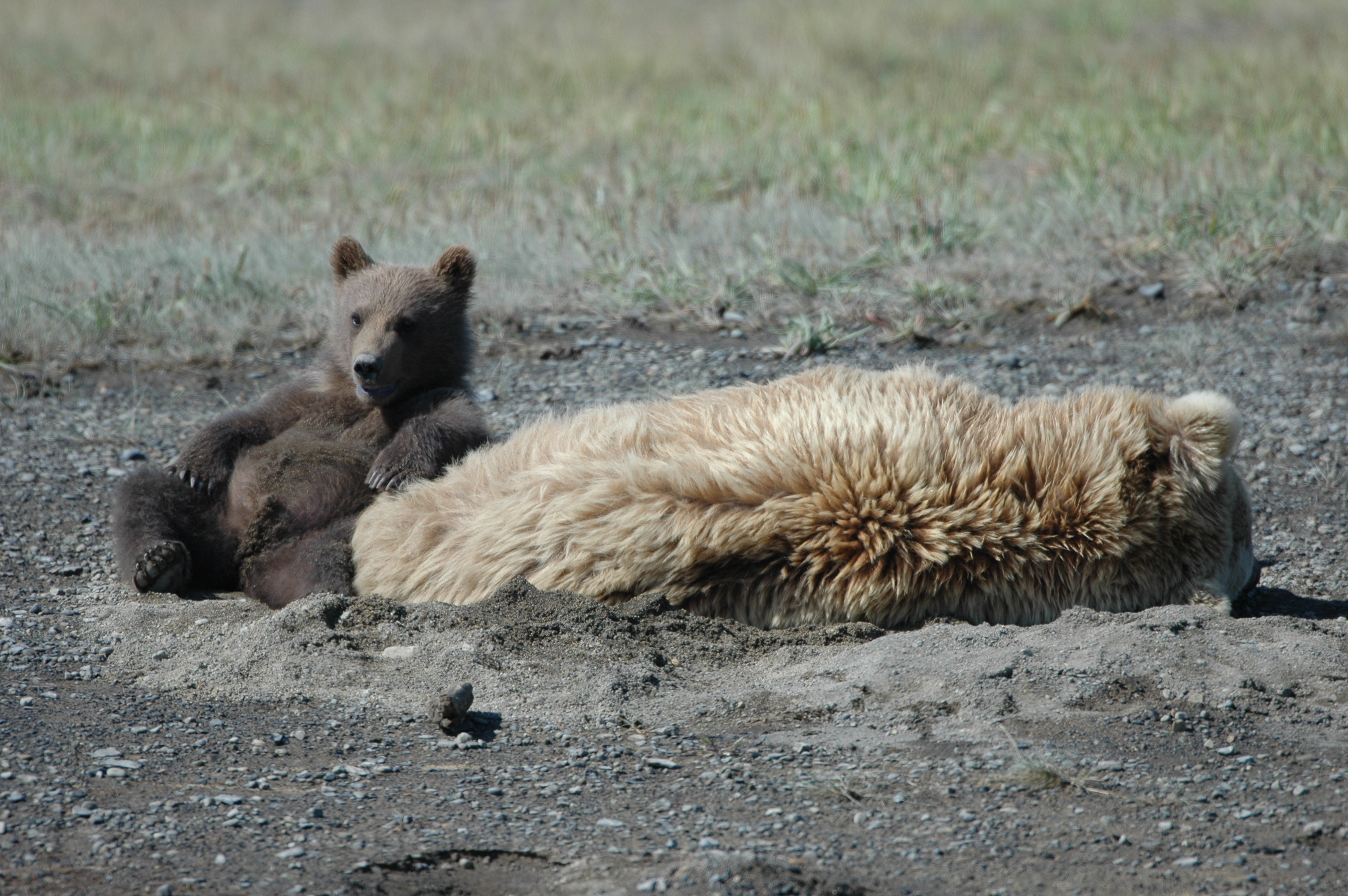
Photo of bears in the wild co Jim Robertson

Photo of bears in the wild co Jim Robertson

FOR IMMEDIATE RELEASE

Contact: Anja Heister, anja@idausa.org, 406-544-5727

In Defense Of Animals Offers $1,500 Reward In Grizzly Bear Killing

Momma grizzly bear with three young cubs shot and killed; cubs doomed to a life of captivity

Ovando, Mont. (November 14, 2013) In Defense of Animals (IDA), an international animal rights and protection organization, has offered a reward of $1500 for information leading to the arrest and conviction of the person who callously killed a grizzly bear mother of three cubs, leaving them orphaned.

The mother grizzly bear was found Sunday, November 3, killed by a single gunshot wound, approximately three and a half miles northeast of the rural community of Ovando. While one cub escaped, officials with Montana’s Fish, Wildlife and Parks (FWP) caught two of the mother’s female cubs, who are currently being held at the state-owned Wildlife Rehabilitation Center in Helena, Mont.

Adding insult to injury, Chris Servheen, Grizzly Bear Recovery Coordinator with the US Fish and Wildlife Service (USFWS), has decided to send the two bear cubs to lifelong imprisonment at the Bronx Zoo in New York.

“If they haven’t been causing problems with people, these cubs should be released back into the wild,” said renowned biologist and bear specialist, Dr. Lynn Rogers with the Wildlife Research Institute in Ely, Minn.

“In 2005, two grizzly bear cubs were sent to the Washington Park Zoo in Michigan City, Indiana, after their mother had been killed by FWP,” said IDA’s Director of the Wild and Free-Habitats Campaign and Montana resident, Anja Heister. She added, “the cubs can now be seen relentlessly walking in circles in their small enclosure. These cubs have lost everything, their mother, their freedom and dignity, and their health. Demoted to objects of entertainment, they have been suffering from captive psychosis, abnormal behavior indicative of significant mental suffering.”

“Whoever killed this grizzly bear has to be held accountable for robbing an entire family of grizzlies of their lives – causing the death of a grizzly mother, and sending two innocent cubs into life-long captivity, while likely causing great trauma to the cub who escaped,” said Heister.

Anyone with information on this incident is encouraged to call 1-800-TIP-MONT ( 1-800-847-6668 ). Callers can remain anonymous.

###

In Defense of Animals is an international animal protection organization located in San Rafael, Calif. dedicated to protecting animals’ rights, welfare, and habitat through education, outreach, and our hands-on rescue facilities in India, Africa, and rural Mississippi.

IN DEFENSE OF ANIMALS – 3010 KERNER BLVD. – SAN RAFAEL, CA 94901 – 415-448-0048

Idaho Wolf Kill Numbers

Associated Press, January 11, 2007: “Idaho’s governor [Butch Otter] said Tuesday he will support public hunts to kill all but 100 of the state’s gray wolves after the federal government strips them of protection under the Endangered Species Act…. ‘I’m prepared to bid for that first ticket to shoot a wolf myself,’ Otter said earlier Thursday during a rally of about 300 hunters…copyrighted wolf in waterThe hunters, many wearing camouflage clothing and blaze-orange caps, applauded wildly during his comments.”

Since 2009, 887 Idaho wolves have been killed by licensed hunters, with many hundreds more killed in official “control” operations.  It is estimated that there were fewer than 500 wolves remaining in the state by August, 2013. The 2013-2014 Idaho wolf season began August 30 and will continue in most of 13 state zones until the end of June 2014. The current 2013-2014 wolf season will constitute a mop-up operation by the state’s ferocious anti-wolf mob.

The Idaho political apparatus, controlled absolutely by the hunting and agricultural lobbies, is a vigorous proponent of trap-torture for Idaho wildlife. It has thus encouraged, trained and deployed an army of trappers, both amateur and professional, to prolong the suffering of Idaho wolves since 2011.

Idaho wolf trapping season opened November 15, 2013, and will continue across nine game zones until March 31, 2014.  Thus, Idaho wolves continue to be subjected to the terror and cruelty of steel foothold traps and choking snares. Many of these animals, including the youngest of pups, are routinely forced to await their violent death for up to 72 hours while suffering terror, pain, hunger and dehydration.

Zone 1–Idaho Panhandle Zone:  (12) Idaho wolves gunned with rifles or hand guns.  One animal shot with a handgun was a tiny black pup so young that it had no teeth visible.  A bow hunter in this zone also arrowed a gray puppy, a particularly painful way for a canine to die.  Two others wolves were killed on private property in August before the season officially began. Licensed wolf kill is legal year round in the Panhandle zone as long as the carnage takes place on private property.  These two pre-season wolves were seen together and shot at the same time.  Their bodies were retrieved days later, indicating that they were able to run while wounded and therefore suffered for an unknown number of hours or days before dying.

Note: One of our three selected wolf packs for adoption, the Bumblebee Pack, resides in Zone 1. Adoption bracelets are available [link]. Your donations will help sustain our website so that volunteers can monitor and report activities by state, federal and private interests bent on reducing wolves to a genetically unsustainable population. Adoption bracelets are available.

Zone 2–Palouse-Hells Canyon Zone: (1)  wolf  arrowed. This was a gray animal listed as a pup.

Zone 3–Lolo Zone:  (1) Idaho wolf gunned.

Note:  One of our three packs selected for adoption is the Kelly Creek Pack, which undoubtedly lives a perilous existence in the Lolo “hot” zone. Lolo wolves have been among the hardest hit in the great Idaho wolf purge. Government agents in helicopters gunned-down some of the wolves killed in this zone during 2011-2012. Adoption bracelets for survivors are available. Adoption bracelets for survivors are available.

Zone 4–Dworshak-Elk City Zone:   (3)  wolves gunned, one wolf arrowed.  One of the wolves, listed as a puppy, was blasted with a hand gun.  The arrowed animal was listed as a yearling.

Zone 5–Selway Zone:   (3)  wolves gunned.  Two of the three were listed as pups.

Zone 6–Middle Fork Zone:   (3) wolves gunned.   Two of the three were listed as pups.

Zone 7–Salmon Zone:   (2)   gunned.  One animal was listed as a pup, the other a yearling.

Zone 8–McCall-Weiser Zone:  (3)  wolves gunned.  One animal was listed as a young of year pup.

Zone 9–Sawtooth Zone:   (1)  wolf arrowed.

Zone 10–Southern Mountain Zone:  (5) wolves gunned. Three of these animals  were listed as yearlings.  Another was listed as a  pup terminated by a hand gun.

Note:  One of our three packs up for adoption is the Red Warrior Pack, located in the Sawtooth Mountains within this zone. Adoption bracelets are available. Adoption bracelets are available.

Zone 11–Beaverhead Zone:   (0)  wolves gunned.

Zone 12—Island Park Zone:  (3)  wolves gunned.

Zone 13—Southern Idaho Zone:  (0) wolves gunned.

Of the 38 wolves obliterated during this time period, 15  (39%) were listed as puppies or yearlings.

– See more at: http://adoptawolfpack.org/summary-of-2013-2014-big-game-mortality-reports/#sthash.xjOOXuKF.dpuf