“EXPOSED: USDA’s Secret War on Wildlife”

http://www.predatordefense.org/exposed/

In our newest film you’ll see three former federal agents and a Congressman blow the whistle on the USDA’s barbaric and wasteful Wildlife Services program and expose the government’s secret war on wildlife.

Dec. 1, 2013 – An agency within the USDA called Wildlife Services—a misnamed entity if there ever was one—has been having their way for almost a century, killing over 100,000 native predators and millions of birds each year, as well as maiming, poisoning, and brutalizing countless pets. They have also seriously harmed more than a few humans. And they apparently think they are going to continue getting away with it.

But in our new documentary, EXPOSED: USDA’s Secret War on Wildlife, whistle-blowers go on the record showing Wildlife Services for what it really is—an unaccountable, out-of-control, wildlife killing machine that acts at the bidding of corporate agriculture and the hunting lobby, all with taxpayer dollars.

Our call for reforming this rogue agency is getting serious attention. A teaser of EXPOSED was just featured on CNN Headline News and is slated for an upcoming special segment. We’re also working to get a CBS “60 Minutes” exposé.

In January 2014 we’ll kick off a nationwide film screening tour. Whistleblower Rex Shaddox will attend some of our screenings, including one planned for members of Congress at the Capital building in D.C. We hope to have other speakers tour with us if we can raise enough funds.

Watch EXPOSED online and donate here: http://www.predatordefense.org/exposed/

http://www.youtube.com/watch?feature=player_embedded&v=qSV8pRLkdKI

Coyote photo Copyright Jim Robertson

Coyote photo Copyright Jim Robertson

Living in the Anthropocene

“As we continue to eat animals even knowing that a vegetarian diet is healthier, and knowing that factory farming is the greatest contributor to water pollution and climate change, and knowing the pain and suffering inflicted on other sentient beings who want to live, I believe history will judge us harshly.”

helenofmarlowe's avatarHelen of Marlowe's Blog

We’ve all heard the oft-quoted aphorism that if you don’t vote, you don’t have the right to complain.

I’ve never subscribed to that stance.

But there is a parallel philosophy that is harder to dismiss.

If we decry the hunger of 1 million people on this planet, and the trashing of the oceans and the destruction of the rain forests, the extinction of species and the wasting of water – and yet we choose to participate in the causes, do we have the right to decry? Or must we say, Well, I sort of care, a little bit, but not much – not enough to give up some of the pleasures I’m accustomed to.

I have this on my mind because a friend sent me a link to a November 10 New York Times article,

Learning How to Die in the Anthropocene, by Roy Scranton.
A brief excerpt:

The…

View original post 524 more words

Drone Hunting Anyone?

Here’s two articles that must go together…

Drones: A New Tool For Hunting The Wild Pigs Terrorizing America

Snip> “…an outfit called Louisiana Hog Control that hunts pigs at night using a remote controlled plane outfitted with an infrared camera. Hunters on the ground, informed by the bright white blobs of porcine body heat illuminated on their video feeds, can then sneak up on the clever and twitchy critters and dispatch them to hog heaven. On a successful hunt the body count of wild hogs can reach into the dozens. By the looks of the pics and video posted by Louisiana Hog Control on its Facebook page, the pig-shooting weapon of choice is the AR-15 and its variants.”

Read more: http://www.forbes.com/sites/christopherhelman/2013/12/03/drones-a-new-tool-for-hunting-the-wild-pigs-terrorizing-america/

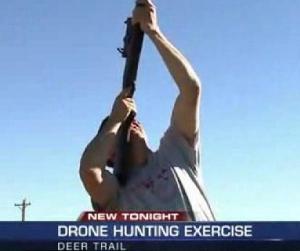
And in answer that?: Colorado man offering drone hunting lessons in Deer Trail

“The issue of whether Deer Trail should sell licenses to hunt drones first went beforeColorado-man-offering-drone-hunting-lessons-in-Deer-Trail the town board in August. It specifically lays out limitations like restricting shooting to daylight hours and only allowing the shooting of unmanned aerial vehicles flying lower than 1,000 feet over private property.”

Read more:  http://www.upi.com/Odd_News/Blog/2013/12/02/Colorado-man-offering-drone-hunting-lessons-in-Deer-Trail/8261385993846/#ixzz2mRXgWuyQ


Traps method of choice in WI wolf hunt

http://www.leadertelegram.com/news/daily_updates/article_fc4bbdbc-5c3d-11e3-963d-001a4bcf887a.html

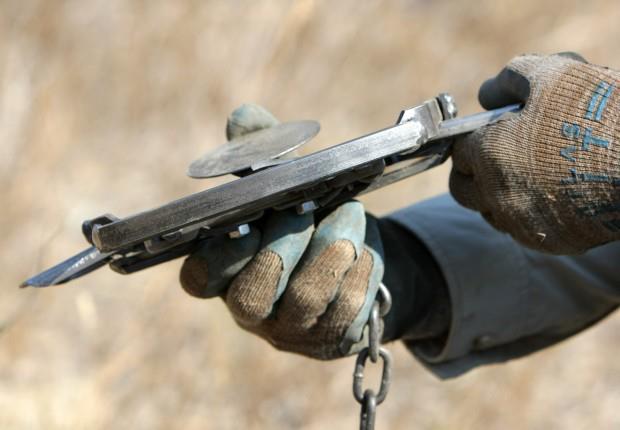
MADISON (AP) — Traps have apparently become wolf hunters’ weapon of choice in Wisconsin.

New state Department of Natural Resources data shows hunters used traps to capture 174 of the 216 wolves taken between the wolf season’s Oct. 15 opener and Nov. 30. Hunters shot 41 wolves with a gun and killed one wolf with a bow.

Monday marked the first day of the season hunters could use dogs to chase down wolves. DNR large carnivore specialist Dave MacFarland said no hunters using dogs had registered any wolves as of Monday afternoon.

All but one of the state’s six wolf hunting zones have closed after hunters reached their kill limits in the areas. Hunters were 37 animals shy of their kill limit in the last open zone as of Tuesday morning.

538458_532697610088640_841278349_n

Dogs Enter Wisconsin Wolf Hunt Monday

http://wuwm.com/post/dogs-enter-wisconsin-wolf-hunt-monday

by Susan Bence

Wisconsin’s second wolf hunt reaches a turning point December 2. Licensed hunters can now use up to six dogs to help track wolves. Wisconsin is the only state to allow the practice. Some celebrate the rules and others take to court.

Lucas Withrow started hunting with his dad years ago. Hunting with dogs runs deep in their family tradition. Today, Withrow raises and trains more than a dozen dogs on his property in Brodhead.

“I have a kennel of 15 hounds. Three or four dogs that I use on coyotes, and that’s all I run them on and the rest are pretty much a mix of bear and coon hounds. “

Hunting bear is Withrow’s passion.

Eight years ago, he joined the Wisconsin Bear Hunters Association and now represents the group on the DNR’s wolf advisory committee. Withrow says dogs will serve a valuable function in helping manage the state’s wolf population.

“The function would be to make sure that we use and utilize all opportunities to harvest the quotas that we are responsible for harvesting to help keep the population stable and healthy,” and Withrow adds, “it’s something else that we can enjoy with our dogs.”

Withrow rebuts criticism that the practice subjects dogs to potential violent injury or death.

“From my perspective, I would tell you a dog introduced into the woods with the intention of chasing of wolf, that’s part of the responsibility of assuming the hunt. When you assume the responsibility for pursuing the wolf, you assume the responsibility for what can happen.”

“Allowing dogs to get torn up by wolves for the enjoyment of their owners, seeking to pursue wolves in this fashion, violates animal cruelty law,” Jodi Habush Sinykin says.

She is a Milwaukee attorney and represents a collection of humane societies, conservation groups and what she calls, “mainstream hunters.” She successfully took the issue to court. Sinykin argued that the DNR failed to write rules to protect hounds used in hunting wolves.

At least during Wisconsin’s inaugural wolf hunt in 2012 – a judge issued an injunction against the use of dogs. The lawsuit now rests in the hands of the state court of appeals. Sinykin has been awaiting a decision for weeks.

“Without intervention from the Court of Appeals starting December 2, dogs will be used by their owners with the known risks of what transpires when dogs who are unleashed and unprotected and at significant distances from their handlers encroach on wolf territory,” explains Sinykin. “And as we know from 25 years of depredation payments is that dogs are maimed and killed by wolves.”

For those years, hunting wolves was illegal in Wisconsin because their numbers were scarce. During that time, if a wolf killed a dog, the state reimbursed the owner.

Now that wolves have shifted to ‘hunt and trap status’, the state will not compensate hunters, if their hounds are killed during the chase.

We may not find out how many dogs are killed during the hunt. The DNR wants hunters to report dog casualties, but they are not required to do so.

The season will end on February 28 or when hunters take the state quota of 251.

copyrighted wolf in river

Anti-wolf hunt group hopes to dispel evil fairy tale portrayal

Wolf Hunt Michigan.JPG
                    This file photo provided by the U.S. Fish and Wildlife shows a gray wolf.

Tim Skubick: Is the big bad wolf for real? Anti-wolf hunt group hopes to dispel evil fairy tale portrayal

By Tim Skubick | Politics Columnist for MLive.com
on December 03, 2013

If those who want to stop the next wolf hunt in Michigan fail, Walt Disney may be to blame.

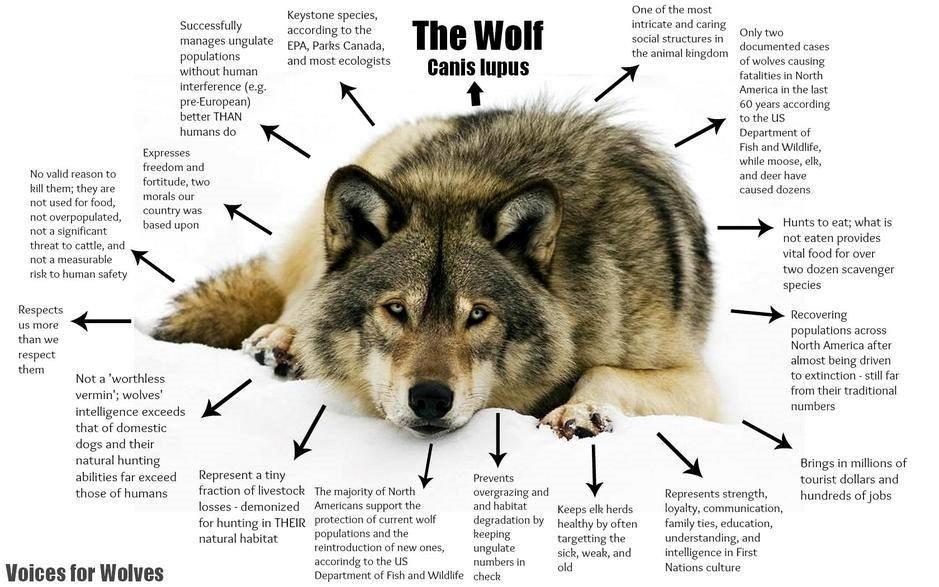
One of the leaders of the Protect the Wolves coalition concedes the public’s view of wolves is based on “a lot of misinformation.”

Maybe it started at a tender young age with the reading of the classic, “The Three Little Pigs,” featuring none other than the “Big Bad Wolf.” Talk about a sinister label.

Jill Fritz in her pitch to protect the BBW does use that reference because she claims it’s wrong.

She argues the attitude that “wolves are snarling and stalking people and being very aggressive,” is not accurate. “That’s not consistent” she counters, because they are “shy animals and elusive.”

Hence the need for an image re-do. “There does need to be a lot of public education leading up to the election about wolf behavior,” she asserts.

So can we expect to see the three little pigs in an ad welcoming Mr. Wolf into their brick house via the front door and not the chimney?

The movement probably won’t go there but as they gather petition signatures to place the issue before you, they will have to find a message to soften the image.

It’s not that Michigan voters are unsympathetic to animals. They voted overwhelmingly to stop the killing of doves, but you don’t need to be Mort Neff (anybody remember him?) to realize the difference between a tiny dove and a mean-looking wolf.

The petition drive, of course, resulted when state lawmakers voted to render a previous petition drive null and void, even thought the pro-wolf lobby was this close to blocking a wolf hunting season.

Ms. Fritz contends many citizens were offended by the end-run by legislators, which is providing fuel for the petition drive fires.

“They are upset,” she explains while refusing to disclose how many signatures they have in hand.

Yet here comes another effort to mute this petition drive. The Citizens for Professional Wild Life Management are set to launch their own counter-petition drive to allow the state to control hunting seasons. So it’s possible voters will face dueling ballot questions next year, one to protect the wolves and another to render that amendment useless.

Then perhaps we can identify who is really afraid of the big bad wolf.

Watch “Off the Record with Tim Skubick” online anytime at video.wkar.org

Denali wolves need a buffer from Hunting and Trapping

Compass: Denali wolves need a buffer of state land

By MARYBETH HOLLEMAN December 2, 2013

The recent news that wolf sightings by visitors to Denali National Park this past summer were the lowest on record is disheartening but not surprising. This is precisely what many scientists warned would happen in 2010, when the Alaska Board of Game eliminated the small no-take wolf buffer on state lands east of the national park.

And it is precisely what Gordon Haber, whose research on Denali’s wolves spanned 43 years, concluded: hunting and trapping of park wolves on these state lands often kills the alphas of the family group,1453351_1488724231352782_186999841_n thus causing the entire group to fragment and disintegrate–resulting in fewer park wolves, and fewer park visitors seeing wolves.

Along with Yellowstone National Park, Denali had been known as one of the best places in the world to view wild wolves, but no longer. Over 400,000 visitors come to Denali each summer–many of them Alaskans–contributing over $140 million to our state’s economy. Many cite their desire to see wolves as a primary reason for visiting the park. As Denali superintendent Don Striker says, seeing wolves in the wild is an “amazing, oftentimes transformative experience” for park visitors.

But when park wolves range across the park’s eastern boundary following the winter migration of prey, they’re killed by hunters and trappers. The three most-often-seen wolf family groups in Denali have been decimated by losses here, and visitor viewing success has consequently suffered.

Recognizing the economic value of wolf viewing in Denali, from 2000-2010 the state closed some of these lands to wolf take. But, as Haber warned, this small buffer wasn’t sufficient; in some winters, as many as nineteen park wolves were killed east of the buffer – 15 percent of the total park wolf population.

This prompted many organizations, including the Park Service, to propose at the 2010 meeting of the Alaska Board of Game–just a few months after Haber’s untimely death in a research flight crash–that the inadequate buffer be expanded. Instead, the Board eliminated the buffer and passed a moratorium on considering the issue again until 2016. Many predicted this would accelerate the already precipitous decline in park wolf numbers and viewing success–and it has.

Today, the numbers of wolves within the six-million-acre national park and preserve has declined from 143 in fall 2007 to just 55 in spring 2013 – a drop of more than half in six years. And, since the state removed the buffer in 2010, wolf-viewing success for the park’s 400,000 annual visitors has plummeted: from 44 percent in 2010 to just 4 percent in 2013. This downward spiral in wildlife viewing success may be unprecedented in the history of the entire national park system.

As Gordon Haber concluded, it’s not how many wolves killed, it’s which wolves are killed. In 2012, the last breeding Grant Creek female, from the park’s most-viewed family group, was trapped in the former buffer. The death of this one wolf left the survivors with no pups that spring, whereupon they abandoned their den site and fragmented, shrinking from fifteen to three wolves. Rather than visitors witnessing the fifteen-member family group attending new pups at the den site, they saw nearly none. Viewing success dropped by 50 percent that summer alone–all from the loss of one wolf.

Last week, in a letter to U.S. Secretary of Interior Jewell and Gov. Parnell, a coalition of Alaska citizens and organizations proposed a “win-win” solution: that the state transfer a permanent no-take wildlife buffer conservation easement east of the national park, in exchange for the federal government transferring a like-valued easement, or purchase value, to the State of Alaska.

This would fix the problem. It would allow Alaskans and visitors a better chance of seeing wild wolves, and would sustain and grow Denali’s valuable wildlife viewing economy for generations of Alaskans to come. Let’s hope the Governor and Interior Secretary can get together and solve this issue once and for all.

_______________

Alaska writer Marybeth Holleman is co-author with the late Gordon Haber of “Among Wolves: Gordon Haber’s insights into Alaska’s most misunderstood animal.”

Read more here: http://www.adn.com/2013/12/02/3207873/compass-denali-wolves-need-a-buffer.html#storylink=cpy

Lawsuit Filed Today on Behalf of Chimpanzee Seeking Legal Personhood

http://www.nonhumanrightsproject.org/2013/12/02/lawsuit-filed-today-on-behalf-of-chimpanzee-seeking-legal-personhood/

Posted by on Monday, December 2, 2013

TOM_18_13-web

This morning at 10.00 E.T., the Nonhuman Rights Project filed suit in Fulton County Court in the state of New York on behalf of Tommy, a chimpanzee, who is being held captive in a cage in a shed at a used trailer lot in Gloversville.

This is the first of three suits we are filing this week. The second will be filed on Tuesday in Niagara Falls on behalf of Kiko, a chimpanzee who is deaf and living in a private home. And the third will be filed on Thursday on behalf of Hercules and Leo, who are owned by a research center and are being used in locomotion experiments at Stony Brook University on Long Island.

The lawsuits ask the judge to grant the chimpanzees the right to bodily liberty and to order that they be moved to a sanctuary that’s part of the North American Primate Sanctuary Alliance (NAPSA), where they can live out their days with others of their kind in an environment as close to the wild as is possible in North America.

Full Story: http://www.nonhumanrightsproject.org/2013/12/02/lawsuit-filed-today-on-behalf-of-chimpanzee-seeking-legal-personhood/