BREAKING: USDA Inspector General to Audit Wildlife Services

http://switchboard.nrdc.org/blogs/awetzler/breaking_usda_inspector_genera.html#.Up_WZK6fC54.twitter

Andrew Wetzler
December 4, 2013

Responding to Congressional requests and well over a hundred thousand letters from the public, the Department of Agriculture’s Inspector General confirmed today that it plans to conduct an audit of the USDA’s controversial Wildlife Services predator control program. Every year, at a cost of tens of millions of taxpayer dollars, Wildlife Services uses traps, poisons and guns to kill over 100,000 native carnivores such as bears, wolves, coyotes, and mountain lions. The audit, which is planned for 2014, will examine the following topics:

determine whether wildlife damage management activities were justified and effective;
assess the controls over cooperative agreements;
assess Wildlife Services’ information system for reliability and integrity; and
follow-up on the implementation of prior audit recommendations, such as the accountability over hazardous materials and equipment.

This audit is a much-needed development, one that will hopefully shed light on the long-documented problems with Wildlife Services’ behavior. The first two items listed above are particularly noteworthy.

First, as NRDC documented in our report, Fuzzy Math, much of Wildlife Services’ activities are justified by flawed cost-benefit reports that are inconsistent with economic analysis guidelines used by most federal agencies and omit the economic values to society of native wildlife. Having the USDA’s Inspector General take a careful and independent look at the program’s self-justifications is therefore crucial to making smart decisions about how the federal government spends its limited resources.

Second, Wildlife Services’ “cooperator” agreements (arrangements through which local governments and private associations cover about half of the agency’s expenses) can’t help but distort Wildlife Services’ behavior. Indeed, it creates a vicious circle all around: local governments and private ranchers have little incentive to try nonlethal methods of predator control when they can buy federal lethal control at a fifty-percent discount; as for Wildlife Services’, its budget and staffing quickly becomes captive to securing cooperator agreements. Thus, an agency which should be serving the public interest gets transformed into a private pest control business, operating on the public dole and often unnecessarily killing native, ecologically valuable, wildlife. An audit that takes a fresh look at these arrangements could provide an important check on the distorting effects of cooperator agreements.

As the Inspector General’s audit moves forward, NRDC and our allies – including the Humane Society of the United States, which has led the call for an audit by the Inspector General’s office – looks forward to providing all the information we can to the USDA.
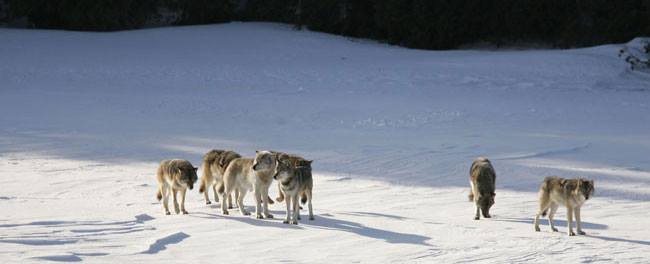
1467435_604185116284575_37873442_n

Missing Idaho hiker found dead after government shutdown hinders search

Here’s the real story regarding the fairy tale, “Liberals’ Wolves Murder Two Women.”  No wolf attack mentioned–No surprise there.

Jo Elliott-Blakeslee, 63, was found in Craters of the Moon National Monument and Preserve about a mile from where searchers found her hiking partner, Amy Linkert, in September. The pair went missing on Sept. 24.

By      / NEW YORK DAILY NEWS

Thursday, October 24, 2013

http://www.nydailynews.com/news/national/idaho-hiker-found-dead-gov-shutdown-hurt-search-article-1.1495407#ixzz2mchZizYU

A missing hiker turned up dead in a national park on Tuesday after the government shutdown forced many rescuers to postpone their search for her.

The body of Jo Elliott-Blakeslee, 63, was found in Craters of the Moon National Monument and Preserve in central Idaho just a mile from where the body of her hiking partner, Amy Linkert, 69, was discovered late last month, park rangers said.

RELATED: GOVERNMENT SHUTDOWN HINDERS HUNT FOR MISSING HIKER

The pair was reported missing Sept. 24, but the federal government shutdown, which went into effect Oct. 1, hindered the search. Unpaid yet undeterred, ten park service rangers continued to look for Elliott-Blakeslee on foot without access to government resources, such as search helicopters, dogs or planes, reported ABC News.

RELATED: SHUTDOWN ENDS: FEDERAL EMPLOYEES RETURN TO WORK, NATIONAL PARKS AND MONUMENTS REOPEN AFTER 16 DAYS

Elliott-Blakeslee’s body was finally located in the lava fields northwest of the Tree Molds Trail during a helicopter search. Authorities are awaiting autopsy results to determine the cause of her death. It is believed that Linkert died of exposure, and she showed signs of dehydration.

Read more: http://www.nydailynews.com/news/national/idaho-hiker-found-dead-gov-shutdown-hurt-search-article-1.1495407#ixzz2mcdnyaE2

Stop Government Plans to Vaccinate & Slaughter Wild Buffalo!

There are several action alerts from Buffalo Field Campaign here:

http://org.salsalabs.com/o/2426/t/0/blastContent.jsp?email_blast_KEY=1288358

TAKE ACTION to Stop Government Plans to Vaccinate & Slaughter Wild Buffalo!
  A bull bison roars to be heard among the herd.  Photo by Kim Kaiser.  Click image for larger view.
No buffalo have been killed by hunters since our last Update. Temperatures have dropped into the negatives, snow has fallen, Hebgen Lake is now frozen, and the few wild buffalo that are in Montana are keeping themselves safe from hunters for now. As we promised last week, we have some very important Take Action items for you on two major threats to wild buffalo. Visit the links below to take action and to learn more. BFC has also just produced a new video from our footage of the recent Interagency Bison Management Plan meetings. See and hear for yourself what the agencies are saying. Please do what you can to share our alerts and video widely!
1.  Montana Department of Livestock Plans to Capture, Vaccinate & Slaughter Wild Buffalo

Urge Congress to Stop the DOL’s Plans by Cutting Off Funding for the Interagency Bison Management Plan

Contact Montana Governor Steve Bullock to Stop the Department of Livestock Before they Start!

2.  Yellowstone National Park Enlists Tribes to Slaughter Wild Buffalo Urge the National Park Service to Rescind Buffalo Slaughter Contracts and to Pull Yellowstone Out of the IBMP
Thank you so much for taking the time to raise your voice for America’s last wild buffalo!  Please spread the word to save these herds!
Wild is the Way ~ Roam Free!
* NEW BFC Video:  DOL Reveals Intent to Capture Wild Buffalo in the Hebgen Basin
The last wild buffalo populations are currently estimated at fewer than 4,600 individual animals, living in and around Yellowstone National Park. Wild bison are ecologically extinct throughout their native range in North America.

2013-2014
Total Buffalo Killed: 54
Government Capture:
Buffalo Released from Capture:
Government Slaughter:
Held for Government Experiment:
Died In Government Trap:
Miscarriage in Government Trap:
State Hunt: 3
Treaty Hunts: 51
Unknown Hunts:
Quarantine:
Shot by Agents:
Highway Mortality:
Cause of Death Unknown:

Total Killed in Previous Years
2012-2013: 261
2011-2012: 33
2010-2011: 227
2009-2010: 7
2008-2009: 22
2007-2008: 1,631
Total Killed Since 2000: 4,310

*includes lethal government action, trap-related fatalities, quarantine/experiments, hunts, and highway deaths

“Liberal’s Wolves ‘murder’ 2 women hikers”

Take cover–here comes a wolf-poodle hybrid!

I’m not going to vouch for this source (as you can see by the title and the attitude throughout the article, “badassberry” is pretty much a wacko), but here’s the word from the white-sheet-over-the-face ant-wolf fanatics. Interestingly, he uses the word “murdered” in the title, even though hunters reject when we use it for what they do to non-humans. Italics are added to denote examples of extremist anti-wolf hyperbole …

http://polymontana.com/liberals-wolves-murder-2-women-hikers/

Liberal’s Wolves murder 2 women hikers

December 2, 2013

by Dr. Ed Berry, aka badassberry

Let’s cut the politically correct crap. But for the mentally defective, wolf-loving liberals, these 2 women would still be alive. Against the objections of common sense conservatives, the environmentalist-controlled US Department of Fish and Wildlife forced non-indigenous Canadian Wolves on several states in America.

These wolves have decimated Montana’s elk herds, killed cattle on ranch lands, killed hunting dogs, and now they have killed 2 women who were hiking in Idaho’s Craters of the Moon National Monument.

Now, to protect the liberal agenda for America, government agents are hiding evidence that might clarify the horrific event.

Wolf populations, now far larger than the so-called federally required minimums, have inundated the states of Montana, Idaho, Oregon, and Washington. The feds are still adding wolf populations in Arizona, New Mexico, California, Colorado, Utah, and Texas. Wolves mate with other dog species. Dangerous wolf-hybrids have been sighted in Illinois, Missouri, North Dakota, South Dakota, Ohio, and Pennsylvania.

I recommend the feds put wolves in Golden Gate Park in San Francisco. This is the dominant area of the Sierra Club and other eco groups who are behind the federal placement of the large Canadian wolves in America. Some day, a pack of wolves will devour a Sierra Club hiking group, armed with bear spray useless against wolves.

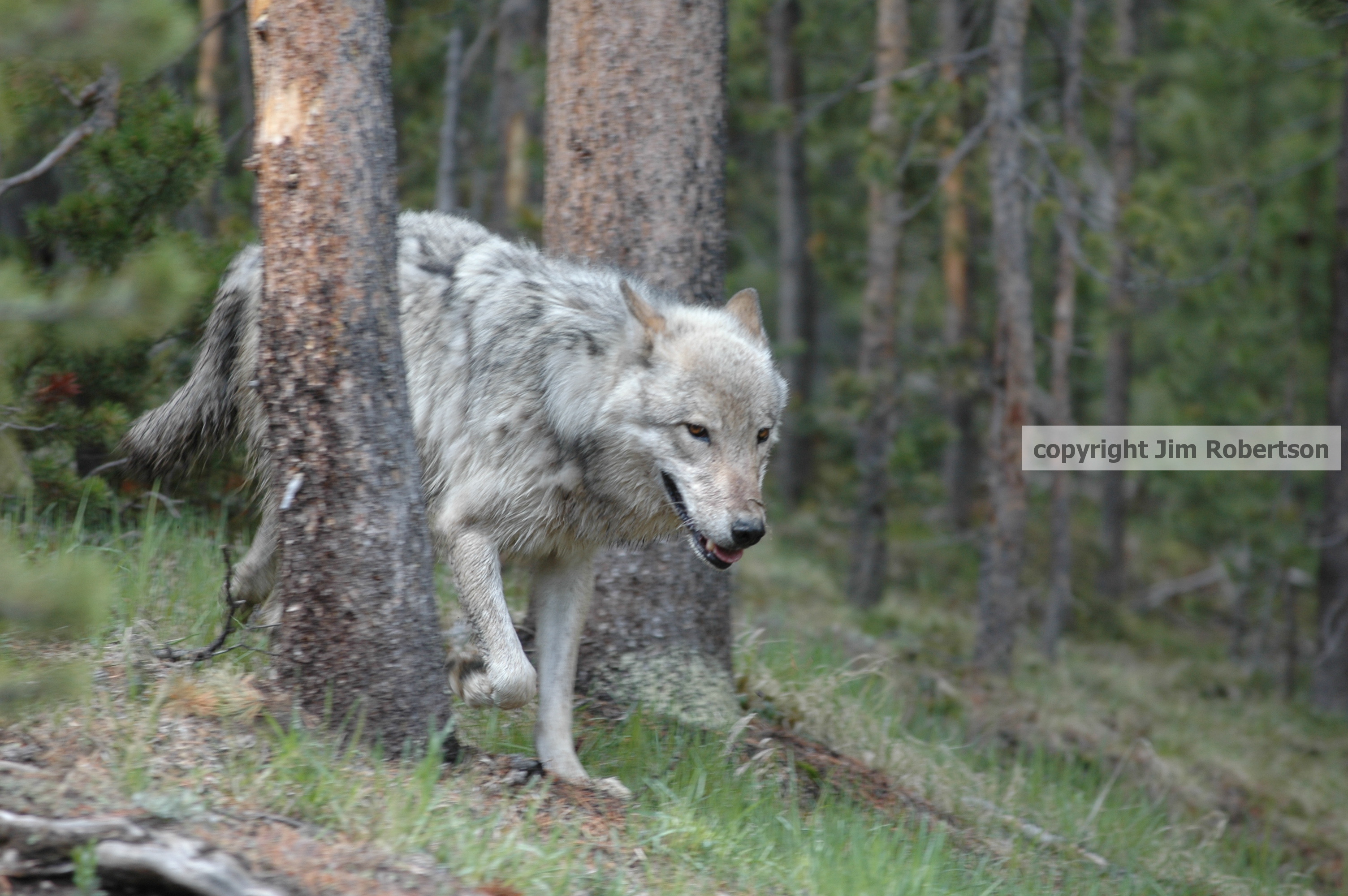
copyrighted Hayden wolf in lodgepoles

BLM Puts Owyhee Bighorns at Risk !

Sheep photo copyright Jim Robertson

Sheep photo copyright Jim Robertson

A recent Bureau of Land Management (BLM) proposal in the Owyhee Field Office of Idaho puts bighorn sheep at a high risk of disease transmission from domestic sheep grazing. Domestic sheep easily pass pneumonia to wild bighorn, devastating whole herds of the native ungulates through slow and painful death. Despite having spent untold thousands of taxpayer dollars to find a workable solution to keep the sheep herds apart, the BLM’s recent proposal to renew 15 livestock permits in the Jump Creek, Succor Creek, and Cow Creek watersheds of western Idaho simply ignores the science and rationalizes high levels of risk by claiming the risk is even higher elsewhere.

Western Watersheds Project’s members and supporters likely recall the Payette National Forest decision that eliminated sheep grazing on nearly 70,000 acres over three-years between 2010 and 2013. The most rewarding outcome of that decision came earlier this year, when the first bighorn ewe was spotted on one of the now-closed allotments for the first time in many decades!

On the Payette, the Forest Service limited the maximum risk of contact to just 4 percent, eliminating any possibility of allowing grazing that had a greater threat to bighorn. The BLM’s Owyhee decisions permit an annual risk of contact of over 21% on the Poison Creek Allotment! In addition, the risk increases to an astounding 45% if bighorn sheep ever reach population goals set by the Oregon and Idaho wildlife management agencies. Instead of basing the plan on conservation, BLM simply cited to other areas where it allows an even higher level of risk of contact (on the Three Fingers and Board Corrals allotments in Oregon where the risk of contact is 30% and 100%, respectively, see map).

The BLM fails to meet the objectives of the Owyhee RMP that requires protection and enhancement of bighorn populations and habitat and the reduction of the potential for disease transmission between wild and domestic sheep. The BLM should designate areas where the risk of contact threatens the viability of bighorn sheep populations as unsuitable for domestic sheep and goat grazing. Because bighorn sheep are mobile and routinely foray into new areas, this risk analysis must be conducted whenever bighorn sheep are detected in new areas outside of the previous risk analysis areas to determine the suitability of domestic sheep grazing.

WWP provided a protest of the proposed decision last week and we’re prepared to take this to court if we have to. BLM can’t just pick a number and accept the potential for domestic sheep to extirpate bighorn.

Although the protest period is over, you are welcome to contact Idaho BLM Acting State Director Tim Murphy at tmurphy@blm.gov or give him a call at (208) 373-4001 .

If domestic sheep can’t coexist with bighorn, permittees are welcomed to retire their allotments under the 2012 Consolidated Appropriations Act that mandates permanent closure upon relinquishment. Interested permittees should contact wwp@westernwatersheds.org for more information.

Judge Throws Out Indiana Ban on Deer Hunting Preserves

http://www.outdoorhub.com/news/judge-throws-indiana-ban-deer-hunting-preserves/

October 7, 2013

A judge in Indiana has ruled that the state's DNR overstepped its authority in 2005 when it banned deer hunting preserves.A judge in Indiana has ruled that the state’s DNR overstepped its authority in 2005 when it banned deer hunting preserves.
The decision of an Indiana judge may soon allow hunters in the Hoosier state to hunt at fenced deer preserves. According to the Indianapolis Star, Harrison County Circuit Court Judge Evans ruled that the state Department of Natural Resources (DNR) went beyond its authority in 2005 when it banned the operations. The judge reasoned that since deer at these facilities are privately owned, they cannot be regulated by the DNR. The issue is a controversial one in Indiana and many other states, but plaintiff Rodney Bruce says it is a major victory after years of legal battles.

“There were only four (high-fence preserves) active in the state until yesterday,” Bruce said earlier this week. “With this ruling, others can open now.”

Bruce, who owns the 116-acre Whitetail Bluff in Harrison County, has already sunk over $100,000 into legal fees since 2005. His hopes are that the DNR will evaluate the judge’s ruling and not file for appeal. Supporting him is the National Federation of Independent Business, which advocated for a high-fence hunting bill earlier this year.

The issue of preserve hunting has split opinions among hunters. While many sportsmen see high-fence facilities as an opportunity for quality hunts, others are concerned that these operations could spread illnesses such as chronic wasting disease (CWD). Opponents of hunting preserves say that these facilities often move animals between states, which could put Indiana’s native herds at risk. Other hunters believe that hunting within a preserve brings up certain ethical issues.

Preserve owners counter these points, saying that their facilities are large enough to constitute fair chase and security measures prevent captive deer from escaping. Currently more than 380 licensed game breeders operate inside the state, producing roughly 6,000 deer per year.

A DNR spokesperson has said that the department is disappointed in the decision and the agency will be reviewing its options.

Image courtesy U.S. Fish and Wildlife Service

Al Gore is a vegan now — and we think we know why

As greenhouse gases go, methane that escapes into the atmosphere without being burned is 21 times more potent per pound than CO2.

Raising livestock contributes to climate change and environmental degradation in other ways as well: it takes far more grain and land to produce a calorie of food for humans by feeding grains to animals than directly to people. That means more destruction of grasslands and forests for farming, more tractors burning fuel, and more pesticides seeping into the groundwater.

Montana Rewriting the rules on wolf hunting, trapping…Again

Rewriting the rules on wolf hunting, trapping

13 hours ago • By Mike Ferguson

Through Dec. 20, Montanans can weigh in on proposed rule changes that will give landowners more latitude in killing a wolf that threatens their livestock or their pet — and doing so without a hunting license.

By video conference Tuesday evening, the Montana1453351_1488724231352782_186999841_n Department of Fish, Wildlife and Parks took comments and answered questions on the proposed changes from three sites — Billings, Helena and Great Falls.

The department is charged with writing the rules to implement Senate Bill 200, which was passed during the most recent legislative session. The new law allows landowners to kill a wolf if it’s a “potential threat” to human safety, livestock or dogs. Current law requires the wolf be in the act of attacking, threatening or killing livestock before the wolf can be killed.

The landowner or his/her agent must notify the department when a taking occurs and must preserve the carcass of the wolf.

In addition, the law lowers the cost of a nonresident wolf license from $350 to $50. Montana residents pay $19.

Quentin Kujala, the department’s wildlife bureau coordinator, said the rulemaking process to implement SB 200 has trimmed language and eliminated redundancies in existing rules. Under the new law, the same process will continue to apply when a landowner kills a wolf that’s threatening livestock, people or pets, he said. That rule requires the U.S. Department of Agriculture’s Wildlife Services to investigate the taking, and that the taking be reported to Fish, Wildlife and Parks.

The state’s wolf population has been on the rise in recent years. Montana’s most recent wolf count released last spring showed 147 verified packs consisting of 625 wolves. Thirty-seven of the packs had confirmed breeding pairs.

Two Helena residents who attended the video conference said they have concerns with the proposed rules.

Jonathan Matthews said bite marks on livestock don’t necessarily equate to predation and said “scientific precision” is being removed under the new rules.

“I like the fact … that we are not regarding wolves as vermin that should be shot almost without consideration,” he said. Wolves are wildlife, he noted, “and should be treated with respect like other wildlife.”

Sarah Sadowski said she doesn’t support “folks taking measures into their own hands.” She said she’d rather landowners be required to obtain a permit and to contact the department “before making a kill.”

To read the proposed revisions, visit fwp.mt.gov/news/publicNotices/armRules/pn_0143.html.

Send comments to: Fish, Wildlife and Parks Wildlife Division, P.O. Box 200701, Helena MT 59620-0701. Or email comments to fwpwld@mt.gov.

Read more: http://billingsgazette.com/news/local/rewriting-the-rules-on-wolf-hunting-trapping/article_1a17f2d7-94a5-517d-8d4a-145b698afdd5.html#ixzz2mWmE3POu