Stop Cruel Animal Traps in America by 2020!

525140_440817092654544_311118433_nhttps://www.causes.com/actions/1752223-stop-cruel-animal-traps-in-america-by-2020?conversion_request_id=2381843&ctag=09d44ab239cd00064c53385eb9814ef8af&ctoken=MLEjxS0ImRVakE02ScHkiK6eM07ignxPMzzi7vJUKqnWFjfXcN2DtRJEPzOCVXh84X8iuDGxXGYYhuoTR8oWdA%3D%3D&recruiter_id=46771178&uid=55991894&utm_campaign=activity_invitation_mailer%2Factivity_invitation&utm_medium=email&utm_source=causes

Sign the Petition to Jim Lane, Director of New Mexico Game & Fish Department, Fish and wildlife managers nationwide.

We ask that you and other Game & Fish Directors across America put a stop to the cruel, inhumane practice of animal trapping. We’re asking you to take a leadership role in this and let your fellow wildlife managers be aware:

1. Stop your own trapping Mr. Lane, you’re practicing animal cruelty. Your personal cessation of this activity will set an example for others to follow. You are unfit to manage wildlife so long as you torture animals.

2. We ask that you stop supporting the practice of trapping in the State Legislature of New Mexico when called to testify, and that your peers cease similar activity in their states.

3. Begin to phase out new trapping licenses. This practice will end.

4. Eliminate issuance of trapping licenses completely by 2015 in New Mexico. Ask your peers to follow your lead.

Signed,

Bold Visions Conservation

 https://www.causes.com/actions/1752223-stop-cruel-animal-traps-in-america-by-2020?conversion_request_id=2381843&ctag=09d44ab239cd00064c53385eb9814ef8af&ctoken=MLEjxS0ImRVakE02ScHkiK6eM07ignxPMzzi7vJUKqnWFjfXcN2DtRJEPzOCVXh84X8iuDGxXGYYhuoTR8oWdA%3D%3D&recruiter_id=46771178&uid=55991894&utm_campaign=activity_invitation_mailer%2Factivity_invitation&utm_medium=email&utm_source=causes

As you read this, hundreds of animals have their foot, shattered and mangled in a foothold trap, or are slowly choking to death in conibear traps.

Thousands of animals are suffering unthinkable pain and anguish, EVERY DAY. They’re frightened beyond hope, and in horrible pain. Their savior will show up in a day or two or three, to murder them, and finally end their anguish.The people whose job it is to manage wildlife for ALL PEOPLE use their position purely to help that very small population of trappers: it’s time they heard from the rest of us!

Please Sign the petition and visit the Bold Visions Conservation website:http://boldvisions.businesscatalyst.com/bold-visions-conservation—trapping.html

We need YOU and 250,000 other concerned people across the planet to take on this issue with us: wild creatures belong to the earth, not to the few deranged individuals that think animals are for killing, and for killing alone.

IT’S TIME TO QUIT LETTING THE BARBARIANS BE IN CHARGE!

Bold Visions Conservation is YOUR representative. We will fight these departments on your behalf, and we’ll fight with every resource available. We will start with the New Mexico Game and Fish Department, and use what we learn to work with groups across America to stop barbaric trapping, once and for all!

http://boldvisions.businesscatalyst.com/bold-visions-conservation—trapping.html


Cormorant hunt in South Carolina Must Be Stopped

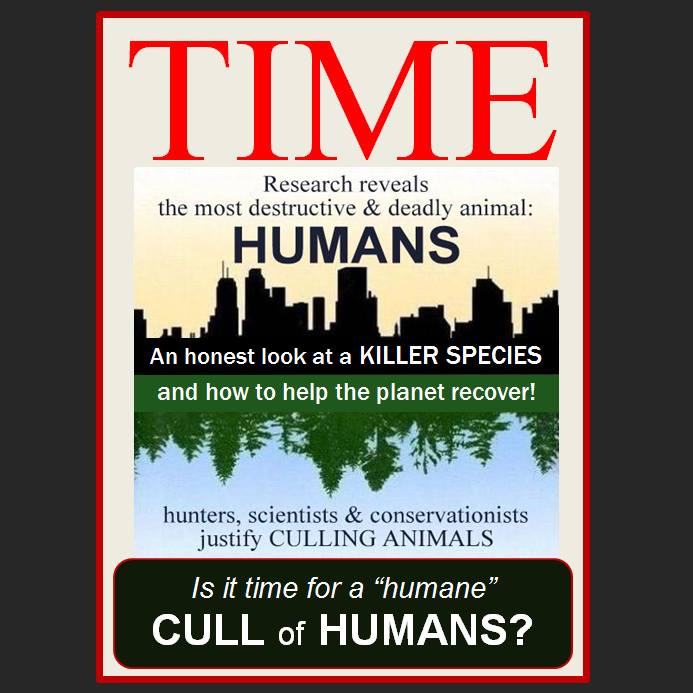
[This cormorant cull is just the kind of thing that the infamous Time Magazine piece on the resurgence of hunting was meant to prepare us for. As with so many articles from the mainstream media, this one saves the real story for the end (where they know many readers won’t see it).

Here, then, are the last lines first:  …The cormorant population went into serious decline with the use of the now-banned DDT. The increase of birds on the lakes means the population is re-establishing itself.

“We should be celebrating that, it seems to me,” he said. The removal “is a sad thing.”

http://www.postandcourier.com/article/20140125/PC16/140129561/cormorant-hunt-in-marion-moultrie-lakes-rouses-controversy

Cormorant hunt in Marion-Moultrie lakes rouses controversy
by Bo Petersen

Saturday, January 25, 2014

Cormorants aren’t a favorite bird for very many people. They are snaky necked, ravenous fish eaters that can kill a tree with their acidic feces if they roost there thickly enough.

Cormorant facts

The double-crested cormorant

One of 38 species worldwide, one of 6 in the U.S.

Found in waterways from Alaska to Florida.

Long-lived waterbird, nests in colonies that can be as large as a few thousand.

An estimated 2 million in North America. Population increased rapidly 1970s-1990, slowed in the 1990s.

States permitted to conduct cormorant depredation removals include Alabama, Arkansas, Florida, Georgia, Kentucky, Louisiana, Minnesota, Mississippi, North Carolina, Oklahoma, South Carolina, Tennessee, and Texas.

Sources: U.S. Fish and Wildlife Service, U.S. Department of Agriculture.

And this time of year they descend on the Marion-Moultrie lakes by the “thousands and thousands and thousands,” according to one fishing guide, ready to feast on the shad and herring runs that provide food for the lakes’ trophy game fish.

That’s why anglers and state legislators have been pushing for a cormorant removal hunt scheduled to start Feb. 2 on the lakes. Avian conservationists oppose it. As a migratory bird, the cormorant, craw and all, is a protected species, meaning federal regulations restrict harassment or taking of the birds.

“These are native birds. They have always been here. Someone now perceives that to be a problem,” said Norman Brunswig, Audubon South Carolina state director. The S.C. Department of Natural Resources has no credible scientific evidence that the onslaught of winter migrating birds does any substantive damage to the fishery, he said. “To kill a bird without a really, really good reason to do it is kind of barbaric.”

‘Look at the flocks’

DNR is holding the removal “event” after years of angling groups seeking it, and after a proviso was tacked onto the 2013-2014 budget directing the agency “through the use of existing funds” to manage public participation in “cormorant control activities.”

Truman Lyon, the South Carolina Guides Association representative for Berkeley County, makes no bones about it.

“We definitely need to have this hunt,” he said. “Look at the roosts. Look at the banks. Look at the flocks and flocks of (cormorants) on the lakes. There are many, many more than there ever were. There’s nothing to kill them,” he said.

Studies have shown that the birds eat a tremendous amount of fish. But that’s alongside other birds and, of course, the fish themselves.

How much the feasting might be depleting the game fish isn’t clear. The lakes – relatively shallow, stagnant and heavily fished – have long been a problematic fishery to manage. Previous declines in game fish species have been blamed on factors such as overfishing, aquatic cover removal and drought, as well as competition for food. The recent cold snap killed bait fish.

Striped bass, or stripers, were the trophy fish that turned the lakes into what has been touted as a $300 million-per-year tourism destination. In the early 2000s the striper numbers went into a precipitous decline, but aggressive stocking and tighter catch restrictions, among other measures, brought them back.

“There’s loads of stripers,” Lyon said, but crappie and bream numbers are not where they should be, he said, and catfish have depleted to the point where DNR is now imposing a limit of 20 fish per day per person in the boat.

Cormorants increasing

How many cormorants there actually are around the lakes isn’t clear, although observers generally agree there are a lot, and they are increasing.

The removal hunt was given a depredation permit “to protect public resources” by the U.S. Fish and Wildlife Service, the federal agency in charge of managing protected species. The permit doesn’t require population numbers to be reported, just the harvest, said Tom McKenzie, Southeast region media relations chief.

Santee Cooper, the quasi-state utility that manages the lakes, officially is staying hands-off.

DNR manages the fish and game for Lake Marion and Lake Moultrie, said Santee Cooper spokeswoman Nicole Aiello; it is the agency’s role to make decisions such as this one.

DNR staff have concerns about the “event.” Staff will fly over the lakes before and afterward to do counts of cormorants, along with other protected bird species such as bald eagles, anhingas and wood storks. That data will be reviewed to decide – among other things – whether to hold the hunt again.

800 hunters qualified

“We’re not concerned about the future of the migrating cormorant population, because it has grown so much,” said Derrell Shipes, DNR Wildlife Statewide Projects, Research and Survey chief. The birds are now so numerous they routinely are caught in the lakes’ fish passage, he said.

More than 800 people have qualified to hunt the birds, making the “public removal” so labor-intensive that the agency doesn’t have the staff to enforce bag limits. The hunters each have taken part in a training session that includes warnings not to mistakenly shoot other similar-looking, protected species such as anhingas and wood ducks or face arrest.

The scheduled two-month “event” can be stopped at any time by DNR, Shipes said.

“All of us should pay attention to what we’re doing,” he said. “When we have the harvest information, we’ll step back, look at the problems and issues and go from there.”

Brunswig isn’t buying it. DNR wouldn’t hold this hunt if it wasn’t being pressured to, he said. The cormorant population went into serious decline with the use of the now-banned DDT. The increase of birds on the lakes means the population is re-establishing itself.

“We should be celebrating that, it seems to me,” he said. The removal “is a sad thing.”

1459861_559462450790007_563882710_n

If wolves could manage humans it might look like this:

DRAFT Management Plan for Humans (Homo sapiens) in British Columbia

By Ken S. Lupus et al., B.C. Ministry of Wild Wolves

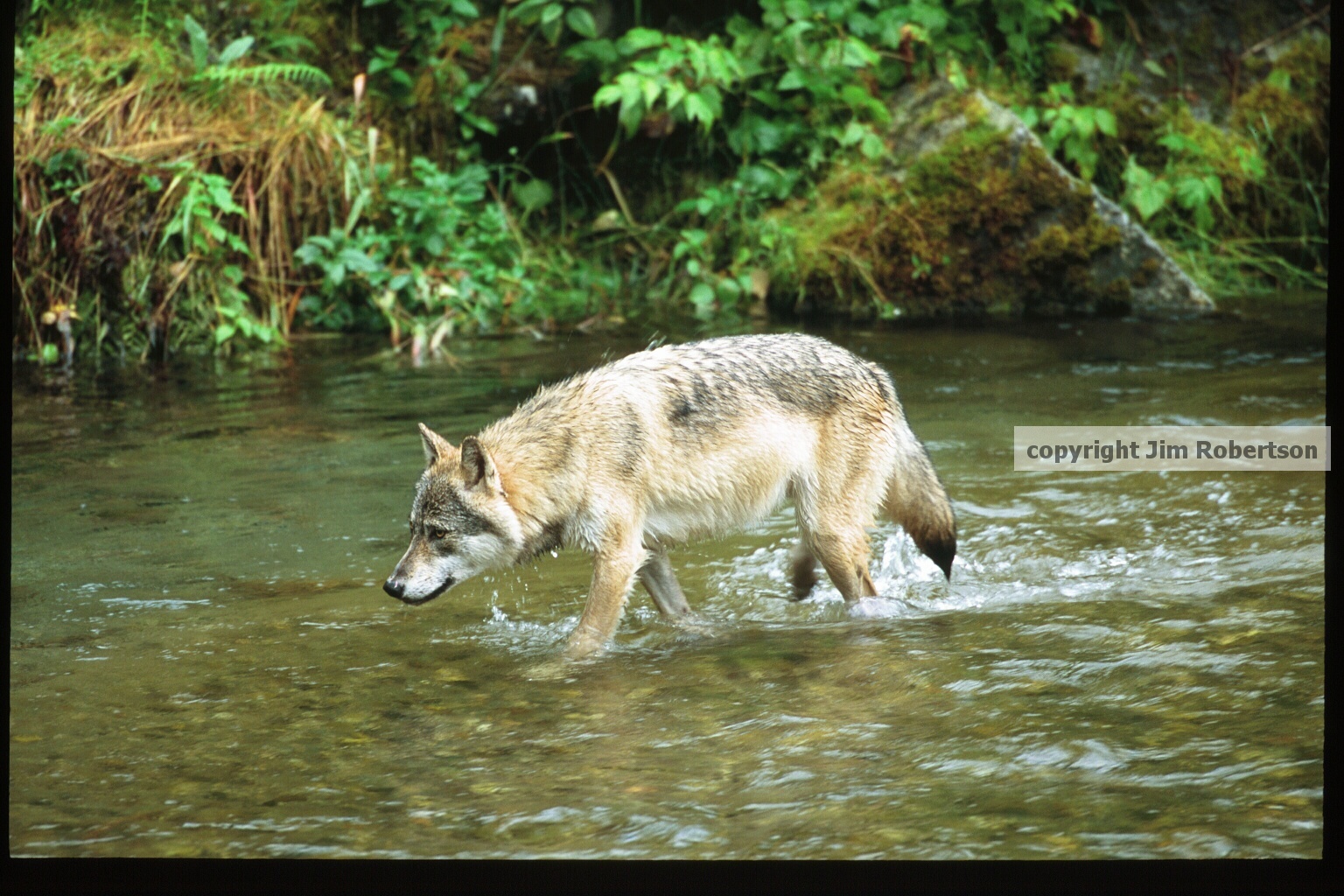
(EXECUTIVE SUMMARY)copyrighted wolf in water

We model the structure of our plan after the B.C. government’s “Draft Management Plan For The Grey Wolf In British Columbia.” Although our plans are fundamentally different in how we decide to treat one another, we similarly assert that this document is premised on the best available scientific information. (Note: we consulted with Raincoast biologists and
large carnivore experts Drs. Chris Darimont and Paul Paquet).

Notably, however, our management plan for humans draws upon an additional and important dimension that shapes policy in advanced civilizations: commonly held ethical values.

As the province did, we begin with some straightforward conservation context. Based on their rapidly increasing numbers and range, humans have been categorized as not at risk by the Lupine Committee of Categorizing Other Animals We Have Never Harmed. We note, however, on the other hand-
and despite thousands of management plans by humans -global biodiversity is severely threatened as a result of human activities.

According to information shared by human sources, Homo sapiens play a very important role in maintaining so-called “game” populations, raising livestock among us wolves in formerly wild landscapes, and saving animals like caribou from rapid extinction due to resource extraction activities. On the other hand, some hunters, livestock groups and government-industrial complexes behind these ostensibly noble acts also comprise a significant threat to wolf safety and welfare. Accordingly, our plan must strike a balance to manage humans for conservation while minimizing conflicts with wolves.

We likewise adopt the same four management objectives stated by our simian colleagues, though with modified details. Topping this list is to ensure a self-sustaining population of humans throughout the species’ range. We suppose that we will have to accept this inevitability. We suspect, however, that this spells trouble for us. If human behaviour remains unaltered – and caribou continue to dwindle and ranchers continue to believe that some god created landscapes with only their cows in mind – we expect a future of increasing conflicts.

Our plan’s second objective is to provide for non-consumptive use of humans. Why not? No harm in setting up some eco-tourism by us wolves to partake in some human-watching. We need not look further than Yellowstone National Park, and Algonquin Park to know that humans can make a mint with sustainable wolf-based eco-tourism.

Unlike the province’s anachronistic seat-of-the pants wolf management plan, however, which was designed by more wanton predators, we have no plans for so-called “consumptive” use of humans. Although humans would be easy pickings, we are just not known to do this. And really, why would anyone kill something for any other reason than to eat?

For sport or for trophy? No thanks. Surely no advanced society would ever condone or endorse that sort of behaviour. Nor
would any real hunter. That just leaves a bad taste in our mouths (and to put how awful that is in perspective, we often eat poop).

Perhaps the most important part of our “Draft Management Plan For Humans In British Columbia” is to minimize the threat to wolf safety caused by humans. Whereas wolves pose a very limited threat to humans, the opposite is certainly not true. For instance, the B.C. government says that approximately 1,200 of us wolves were killed deliberately in 2010 by hunters and trappers for sport, trophy or profit.

While human “wildlife managers” are quick to point out that we wolves can replenish our numbers, even amidst such persecution, our concern is the suffering imposed on us. Imagine the pain when the hot metal of bullets shreds our viscera (or worse, our limbs) or the agony inflicted when one of
us is tormented by a leg-hold trap. Clearly, any management plan should address suffering among highly sentient animals.

Unfortunately, our plan to minimize threats to wolf safety has no details. Given all the technological advantages humans have acquired to use against wolves like high-powered rifles, helicopters, deadly poisons, traps, snares and explosive devices, predator calls to lure us and more, they simply have
the upper hand.

Finally, and again mirroring the B.C. government’s wolf management plan, our fourth objective is to control specific populations of humans where their activities are likely preventing the recovery of a species at risk (e.g.,
endangered populations of caribou). Whereas humans have hatched some vicious scapegoating campaigns and lethal plans for us as last ditch efforts to save caribou from logging or oil and gas extraction, we have yet to find successful methods to control these industries. We therefore appeal to our human friends within B.C. for help.

To conclude, we turn to history to muse about the future. It has taken decades to expunge, in part, the nonsense about wolves portrayed in human generated fairy tales (and not just children’s stories, but also adult constructs such as the perversely and ironically named “North American Model of Wildlife Conservation”). How many more decades will it take to do the same in provincial management plans for wolves?

This article was co-authored with Raincoast Conservation Foundation science director Dr. Chris Darimont and Raincoast senior scientist Dr. Paul Paquet.

Cougars on the prowl, not increase, officials say

[This is from my old stomping grounds, the Methow Valley, where I lived for over 20 years and saw 4 out of the 5 cougars I’ve seen so far in my relatively short life (geologically speaking).]

Cougars on the prowl, not increase, officials say

By Ann McCreary

The recent series of cougar attacks on domestic animals may have people wondering if there are more cougars than usual in the Methow Valley. Not so, says a wildlife researcher who has studied cougars here for more than a decade.

While there may be an unusual concentration of cougar incidents in recent weeks, the big cats are simply doing what comes naturally and taking advantage of opportunities for an easy meal courtesy of humans, according to Rich Beausoleil, cougar and bear specialist for the Washington Department of Fish and Wildlife (WDFW).

Wildlife officials killed another cougar last Friday (Jan. 10) — the fourth in five weeks — after the cat killed a sheep at a home off East Chewuch Road near Winthrop.

“The numbers of sightings has been really high this year,” said Cal Treser, wildlife officer for the WDFW. “Last week I had nine cougar calls.”

“Every now and then we’ll see a cycle like this where [incidents] are all clumped together,” said Beausoleil. “We’re never going to put it all together and explain why these things happen. We know January is the month where all this increases. I don’t want people to jump to this notion that the cougar population is up.”

Beausoleil has 11 years of research to back his statement about cougar populations.  Last year he published a scientific paper that found the cougar population controls itself naturally, because they are extremely territorial animals.

Researchers found that adult cougars, especially males, have a natural drive to establish and defend territory, and will kill any other cougar that enters it. This creates a stable density in cougar populations that researchers found applies to cougars everywhere.

The recent problems associated with cougars killing sheep, goats, chickens and dogs are predictable, and will continue unless people take steps to protect their animals, Beausoleil said.

“The chickens running around the enclosure — that’s just bon bons on the landscape. You might as well have an ‘Eat at Joe’s’ sign,” Beausoleil said.

“It’s all about prevention,” he said. “The word I like to get out is you need to look around your property and say, how do I prevent a problem from happening before it happens? Don’t go and blame those ‘nuisance animals.’ Stop and say, ‘Why did this happen?’”


‘Game of calories’

For large carnivores, survival “is a game of calories,” Beausoleil said. Taking down a deer is hard and dangerous work and cougars are often injured in the process. “It’s a tough life out there and when you see something like a goat that just sits there and looks at you … you take it while you’ve got it,” he said.

Putting animals inside a barn or in a secure enclosure at night is a key step in preventing problems, Beausoleil said. “Goats are the No. 1 at-risk animal, sheep are second, third are chickens,” he said.

“This is the Methow Valley,” said Beausoleil. “Your backyard turns into wilderness. You need to be a part of that landscape and take the steps to live harmoniously with the critters that are around.”

Skip Smith lost two goats in recent weeks to a cougar that entered a livestock enclosure at his ranch on Highway 20 outside Winthrop. The 74-pound female cougar that killed the goats was tracked and shot last week.

After the second attack, Smith said he created a more secure pen to hold his sheep and goats at night. He increased the height of the fence to 8 feet and added three strands of electric wire around the top.

“The electric fence might help. If they jump up and touch that, it’s pretty hot,” Smith said.

Suggestions on ways to live with wildlife are available on the WDFW website, the Mountain Lion Foundation website, and the Western Wildlife Outreach website, Beausoleil said.

“These precautions cost money, and I know it can be a burden on people. I guess it comes down to values and the value you put on the natural world,” he said. “Cougars are the personification of wilderness and an unbelievable carnivore.”

Killing cougars that attack domestic animals “is a temporary solution,” said Beausoleil. His research shows that when a cougar dies or is removed from his territory, other cougars will move in until one establishes it as its own.

“The gun is just a Band-aid. As soon as one territory opens there is another cougar right behind it,” Beausoleil said.


‘Needless kill’

Killing cougars that attack livestock that aren’t adequately protected “gets frustrating to me because … it’s a needless kill and such an easy thing to prevent,” Beausoleil said.

January and July — “the worst days of winter and worst days of summer” — are predictable periods of problems with carnivores, Beausoleil said. This winter of low snow may have an added dimension, because deer are more widely scattered, rather than confined to more traditional winter ranges, and cougars may be more widely dispersed as a result.

The cougar that attacked the sheep last week was a 130-pound male in good health. “He hadn’t missed a meal.” Treser said.

“The cougar was living on the edge of the Methow Wildlife Area with plenty of mule deer for food. There’s no reason he should have taken a sheep. Maybe [he did] because the kill was easy as the sheep were confined in a corral,” Treser said.

Trackers with dogs were brought in and followed the cougar for five hours, until he was treed near the Methow River and shot.

“He was a beautiful cat,” Treser said.

Once a cougar has attacked livestock or pets in winter, the policy is to kill it because the cougar is likely to repeat the attacks. In other seasons, Treser said, he will often capture a cougar following an attack on livestock and relocate it. But in winter, snow and weather make it too difficult to relocate cougars to remote areas, he said.

The relocating doesn’t always work, Treser said. Late last summer a cougar killed a goat near Buzzard Lake, on the Okanogan side of Loup Loup Pass. Treser captured the cat, placed an ear tag on it, and released it above Ross Lake on the east side of the North Cascades.

“Eighteen days later he came back and killed a goat in the same pasture,” Treser said.

Cougars that turn to livestock and pets as prey are often unhealthy or injured, Treser said. “As they’re taking down large animals they break teeth, injure their feet, break claws off. It gets more difficult to take down a deer,” so they look for easier prey, he said.

The four cougars killed this year because of predation on domestic animals have all been healthy, Treser said.

For more on cougars in the Methow this winter, see Another cougar attack adds to high number of incidents,  Cougar sightings, encounters continue to add up in the valley,  Coming to terms with cougars, and Human, pet encounters with cougars increase each winter.

snrsslion

Philippine Cockfighters, Gamefowl Breeders Warned About Bird Flu

http://www.visayandailystar.com/2014/January/25/topstory7.htm

Gamefowl breeders warned vs. bird flu
BY CARLA GOMEZ

Provincial Veterinarian Renante Decena yesterday advised gamefowl breeders and cockfighting aficionados to take extra precautions against bird flu contamination that would gravely affect the province’s multi-billion industry.

Those engaged in the gamefowl industry should avoid bird flu positive areas, such as China, he said, pointing out that Avian influenza, commonly called bird flu, is a highly infectious viral disease of birds.

Gamefowl breeders and cockfighting aficionados and members of their families who travel to bird flu positive areas, should not visit their fighting cock farms immediately upon their return to the country, he said.

They should stay away from their gamefowls for about three days, he said, to prevent the transmission of any virus they may have picked up in their travels.

Bird flu virus particles may be transferred through clothing, shoes and other belongings, Decena warned.

He also said visitors should also be kept at a distance from game fowls as a precaution.

The gamefowl population in Negros Occidental is valued at about P4 billion while materials such as feeds for their upkeep are estimated at P2 billion, he added.

Negros Occidental annually exports about 200,000 fighting cocks and if valued at an average of only P5,000 each would be P1 billion in sales, he said.

That is on top of the fighting cocks used for cockfights in Negros, he added.

Decena said his office is also keeping a close watch on areas that migratory birds visit in Negros Occidental, such as San Enrique and Himamaylan, for possible contamination of the local poultry industry.

He added that they conduct serum sampling every six months as a precaution.*CPG

Photo ©Jim Robertson

Photo ©Jim Robertson

Please Don’t Let Pedophiles Run the PTA

Things have been the way they are for so long that most people just accept them. But when you stop and think about it, having hunters be in charge of the wildlife departments is like appointing pedophiles to run the PTA. We must never lose sight of the fact that hunters have ulterior motives for our precious wildlife.

When hunters say they “care” about animals, well, they mean it in a lustful, self-serving sort of way. And when they use words like “love” and “respect,” they sound about as sincere as a spousal abuser, rapist or pedophile referring to the objects of their obsession.

Hunters have no business “managing” wildlife. They can’t seem to understand that the objects of their obsession are sentient beings with needs, wants and life experiences of their own. And every time game departments disrespect Mother Nature by calling for another “management action,” they are renouncing her healing ability and cheating her out of one more chance to restore her time-tested balance.

Text and Wildlife Photography ©Jim Robertson, 2014.

Text and Wildlife Photography ©Jim Robertson, 2014.

Patricia Randolph’s Madravenspeak: Watching bears is much more profitable than killing them

dvoight09's avatarWisconsin Wildlife Ethic-Vote Our Wildlife

Raven

MADRAVENSPEAK

Stanford University study:  Watching bears is Exponentially more profitable than killing them


“We found that the bear viewing is generating 12 times more in visitor spending than is bear hunting, and over 11 times more in direct revenue for the B.C. province,”  researcher, Martha Honey, Centre for Responsible Tourism, Stanford University, Washington D.C. (http://bearmatters.com/bear-watching-more-profitable-than-bear-hunting-says-study/ )


The Centre for Responsible Tourism is calling on the B.C. government to revise its hunting policies considering findings that viewing bears is exponentially more profitable than killing them:  “ A comparison of the number of jobs generated by each industry also points to the need for a policy change. Researchers found companies involved in bear viewing employed 510 people in 2012, while 11 people worked for guide outfitters in the same year.”

 “It seemed to us quite clear that the government is spending more to sort of manage and oversee hunting than it is earning from…

View original post 877 more words

Trap Free Montana Public Lands!

Beckie Elgin, Freelance Writer's avatarWolves and Writing

While we love wolves and other wildlife, many of us feel stymied by our inability to protect them. Soon we will have an opportunity to do our part to greatly limit trapping in the beautiful state of Montana.

trap_free_montana_public_lands

Trap Free Montana Public Lands (TFMPL) is spearheading a citizen driven ballot initiative to end recreational trapping on public lands. This is a new movement, and one that must move quickly. 25,000 qualified signatures from across the state are needed by June so this initiative can appear on the ballot in November of this year.

What can you do? If you live in Montana it’s easy. Once the final approval process is complete, you can help gather signatures. But don’t worry, everyone can participate. Go to TFMPL’s excellent website. There you will see exactly how to get involved. If nothing else, send a few bucks to support this worthy endeavor.

The…

View original post 123 more words