Corey Knowlton? Yup, I Hate Him Too

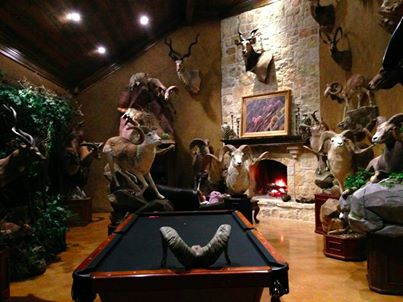
Corey Knowlton is the hunter who won the right to kill an endangered rhino in the Safari Club auction. This is part of trophy room (Big Horn Sheep section – Knowlton claims that he has hunted “over 120 species on every continent” – obviously many animals per species)…

1613918_577895065613412_412557772_n

…and this is what Grumpy Cat has to say about him:

1017393_10202261526713538_1876940690_n

What Goes Up…

To all those of breeding age who are considering starting a family or adding yet another human child to this already dangerously over-crowded world, I politely urge you, with all due respect, to please think again. If not for the fragile planet’s sake or for the sake of every other struggling life form headed for mass extinction, then for the child’s sake, your sake and for sanity’s sake. Go ahead and adopt, whether human or non-human, but please don’t add to every environmental woe known to—and caused by—man by falling prey to the ill-advised notion that propagating is our duty or prerogative.

The world as we know it is headed for collapse. Do you really want your precious offspring to witness the unraveling of all of Earth’s systems or suffer the reckoning that’s soon to befall those unfortunate enough to be here when humankind’s self-serving environmental crimes come back on them? Can’t you see that the sheer weight of the human race is crushing everything and everyone else?

As a good friend, a young woman wise beyond her years, put it, those who consider reproducing to be a positive prospect for the twenty-first century “must be closing their eyes, plugging up their ears, and singing ‘Lalalala!’ very loudly.”

What goes up must come down, people; and for the past couple of hundred years or so, the human population has been accelerating skyward—breaking all sound barriers in a headlong quest to defy gravity, burst out of the Earth’s atmosphere and sail on to oblivion—taking all of creation with it.

graph

To Save Threatened Owl, Another Species Is Shot

[Typical FWS reaction to any species situation (always the result of human actions)–KILL, kill, kill!]

In desperation to save the rare northern spotted owl, biologists are doing something that goes against their core — shooting another owl that’s rapidly taking over spotted owl territory across the northwest.

“If we don’t do it, what we’re essentially doing, in my view, is dooming the spotted owl to extinction,” says Lowell Diller, senior biologist for Green Diamond, a timber company.

The decision to shoot the more aggressive barred owls has been wrenching for biologists and the federal government. But one of the biologists says the consequence of not stepping in would be so dire that it justifies what he calls this Sophie’s Choice.

hide captionThis barred owl was removed in October from California’s Hoopa Valley reservation. The barred owl is a species that threatens spotted owl recovery.

       Courtesy of Lowell V. Diller

This barred owl was removed in October from California's Hoopa Valley reservation. The barred owl is a species that threatens spotted owl recovery.

This barred owl was removed in October from California’s Hoopa Valley reservation. The barred owl is a species that threatens spotted owl recovery.

Courtesy of Lowell V. Diller

A few decades ago, the plight of the spotted owl sparked an epic struggle between environmentalists and the timber industry. In 1990, the federal government put the spotted owl on the endangered species list, giving it a “threatened” designation. Protecting the bird, and the old growth forests where they nest, accelerated the decline of the logging industry in the northwest.

At the time, small numbers of the bigger barred owls, which are native to the east, had already made their way across the continent and into historic spotted owl turf. Now, they are outcompeting spotted owls — disrupting their nesting and eating their food.

During the 1990s, a few barred owls showed up in an area of forest along Redwood Creek that was prime spotted owl territory. Barred owls, which reproduce much faster than spotted owls, now claim nearly all this territory. No spotted owls have nested in this stretch of forest in recent years.

“It’s very upsetting and there’s nothing that’s going to stop this expansion of barred owls from continuing,” says Diller, who has studied spotted owls for 25 years. The only feasible solution, Diller says, forces him to go against his nature.

“I Hate It Every Time I Go Out And Do It”

In the forest along Redwood Creek, Diller plays a recording of a barred owl, and soon a pair of real barred owls starts hooting. Barred owls are aggressively territorial — the birds are trying to intimidate what they think is another owl intruding on their turf.

The female buzzes past. Then she perches in plain view, a tactic meant to ward off interlopers that puts the birds in shooting range.

“I think you can appreciate, standing here, how easy it would be — and when I say easy, I mean technically easy or simple — to lethally remove that bird,” Diller says.

Diller’s a hunter, but he was taught never to kill a bird of prey or anything you didn’t plan to eat. At first, someone else did the shooting. But, he says, this felt hypocritical, so he started doing it himself.

Diller recalls the first time he took a shot. “I was so nervous about what I was doing, and emotional, that I had to steady myself against a tree.”

Over the past five years, Diller has killed more than 70 barred owls with a shotgun. Each time, he says, it felt “totally wrong.”

“I hate it every time I go out and do it,” he says.

Removing barred owls without killing them is not feasible, he says. He calculates it takes more than 40 hours to catch a live barred owl — compared to about two hours to shoot and collect one. Finding new homes for the barred owl would also be time-consuming and traumatic for the birds.

hide captionGuns, dogs and owl-calling decoys are used in efforts to remove barred owls. The dogs are valuable in recovering fallen owls, especially at night.

       Courtesy of Lowell V. Diller

Guns, dogs and owl-calling decoys are used in efforts to remove barred owls. The dogs are valuable in recovering fallen owls, especially at night.

Guns, dogs and owl-calling decoys are used in efforts to remove barred owls. The dogs are valuable in recovering fallen owls, especially at night.

Courtesy of Lowell V. Diller

Shoot To Save, Or Leave It To Nature?

Barred owls are not rare. Still, shooting them has presented such a quandary to the U.S. Fish and Wildlife Service that it has taken more than seven years come to this solution.

Although the agency made an exception for Diller, it’s illegal to shoot barred owls, under the Migratory Bird Treaty Act.

On the other hand, the Fish and Wildlife Service can’t ignore the invasion because it’s legally required to help rare species under the Endangered Species Act. The agency even hired an ethicist, Clark University’s Bill Lynn, to help wildlife experts resolve the dilemma.

“People recognized there’s a crisis for the spotted owl, that barred owls are part of the cause of that crisis and, so, they reluctantly, essentially justified the experimental removal of barred owls,” Lynn says.

The Fish and Wildlife Service is starting a four-year experiment to kill up to 3,600 barred owls in the northwest.

The birds will be removed from four different forests, two in Northern California, one in Oregon and one in Washington. Some birds will be captured but not killed.

The federal government says if spotted owls come back after barred owls are removed, it may decide to kill barred owls over a broader area.

An advocacy group, Friends of Animals, is suing to stop the experiment.

The group doesn’t believe the government can make a moral argument for shooting an animal, even if it would benefit another animal.

“To go in and say we’re going to kill thousands and thousands of barred owls, literally forever, I don’t see that as being a solution. At some point you have to allow these species to either figure out a way to coexist or for nature to run its course,” says Michael Harris, legal director of Friends of Animals.

hide captionLowell Diller holds a fledgling spotted owl that he banded at a site where barred owls had been removed. “This owlet would almost certainly not be alive today without active intervention,” he says.

       Courtesy of Lowell V. Diller

Lowell Diller holds a fledgling spotted owl that he banded at a site where barred owls had been removed. "This owlet would almost certainly not be alive today without active intervention," he says.

Lowell Diller holds a fledgling spotted owl that he banded at a site where barred owls had been removed. “This owlet would almost certainly not be alive today without active intervention,” he says.

Courtesy of Lowell V. Diller

But Diller argues this is an “absurd thing to say” after all the ways humans have altered nature. People cut down most of the forests that used to host barred owls. They made lots of changes to the Great Plains, which he believes helped the barred owl move across the continent.

So, he says, people should at least try to save the spotted owl. And nearly everywhere he shot barred owls, he says, spotted owls came back — and had owlets too.

The Reward

Along the Mad River, Diller scrambles through a young redwood forest to track down a pair of spotted owls. He feeds them mice so he can see the bands on their legs. The polka dot markings tells him the owl settled here in 2009, after he shot barred owls nearby.

For Diller, seeing rare spotted owls thrive in this forest is success worth the agony of shooting barred owls.

“Probably what makes spotted owls so special is the fact that as you just witnessed, they fly right up to you,” Diller says. “You get to interact with them. It’s almost impossible as a biologist not to fall in love with these birds — they’re just the neatest animal.”

Diller hopes the public also will see the value in saving this beautiful creature.

With 9 wolves now dead, Fish and Game meeting provides outlet for supporters, detractors

http://www.idahostatesman.com/2014/01/16/2976203/with-9-wolves-now-dead-fish-and.html#storylink=cpy

by Rocky Barker
Stabe Hedges of Boise spoke quietly before a crowd of 150 people and the Idaho Fish and Game Commission on Wednesday.

But he spoke for hunters across Idaho who no longer find it relatively easy to find elk in the place where they have hunted since their youth.

“I know what we used to have here and I know what was lost,” Hedges said.

As Hedges looked around the room, most of the people were there to protest Fish and Game’s elk management plan authorizing the agency to hire a hunter-trapper to eliminate two packs of six wolves in the Frank Church-River of No Return Wilderness. John Robison, public land director of the Idaho Conservation League, asked the people filling the Washington Group Center auditorium for a show of hands for people angry about the killing.

The majority raised their hands.

“Its upsetting to me that so many people support an animal that has decimated the state,” Hedges said.

Despite the great differences in opinions, hunters and animal lovers passionately expressed their feelings about wolves and elk but also listened to each other. The hearing was a far cry from the angry confrontations that have marked past hearings on wolves in Idaho and perhaps reflected the shift since the animal was removed from federal protection and opened to hunting.

“Restoration must include predator harvest on a consistent basis as research indicates that wolf populations can withstand human-caused mortality of 30 to 50 percent without experiencing declines in abundance,” said Grant Simonds, executive director of the Idaho Outfitters and Guides Association.

Boise resident Pam Marcum told the commission to “please have some grit to cancel the wolf eradication.”

And Jen Pierce, a geology professor at Boise State University, read a statement from 15 scientists, including professors at the University of Idaho and Idaho State University, protesting the killing.

“We feel your decision to hire a professional hunter to exterminate two wolf packs in the Frank Church Wilderness does not demonstrate informed management, both economically and ecologically, and contradicts the mission statement of the Idaho Fish and Game,” Pierce said. “Sending in the hunter-trapper prior to the IDFG state elk management meeting on January 16th is also perplexing.”

So far the agency’s hunter-trapper has killed nine wolves in the wilderness area, said Jon Rachael, Fish and Game’s big game manager.

Read more here: http://www.idahostatesman.com/2014/01/16/2976203/with-9-wolves-now-dead-fish-and.html#storylink=cpy

Bird flu cloud looms over Chinese New Year celebrations

Live chickens at the Baixing Sanniao Wholesale Market in Guangzhou’s Baiyun district, Dec. 20, 2013. (Photo/CNS)

As millions of Chinese prepare to return to their hometowns for Spring Festival, the challenges of containing the latest H7N9 bird flu epidemic have come sharply into focus.

Health authorities are deeply concerned by the resurgent epidemic, with about twenty new cases reported in the first two weeks of 2014, mostly in the eastern costal regions. About 150 cases of H7N9 bird flu have been confirmed in China since the first case in March last year.

Li Lanjuan of the Chinese Academy of Engineering said the virus is more active in winter and spring, and that high density transportation in coaches, trains and aircraft could create favorable circumstances for the epidemic to spread.

Li is China’s leading researcher on bird flu and a member of the H7N9 prevention and control group. She warns that the virus might be spread by migrants returning to their, mainly rural, homes from developed eastern regions.

During the world’s biggest annual human migration in the 40 days around Spring Festival, about 3.62 billion trips will be made this year, according to Tuesday’s National Development and Reform Commission press release.

This year, the highlight of Spring Festival, Chinese Lunar New Year, falls on Jan. 31, which Chinese people traditionally celebrate as a family.

“We are worried about the risk brought by massive numbers of people gathering together in confined spaces,” said Dr Liang Weifeng of the medical college at Zhejiang University.

In Zhejiang, new H7N9 cases have been reported for six consecutive days. As of Tuesday, the eastern province had reported a total of 11, including some fatalities. Zhejiang was also the site of China’s first confirmed human-to-human transmission last November, when a man was infected while caring for his father-in-law.

More alarming still, Guizhou province in the remote southwest of the country confirmed its first H7N9 fatality on Saturday, that of a migrant worker who returned home from Zhejiang on Jan. 4.

Results of research by a Chinese team published in the Lancet, have established that the variation of an amino acid on the H7 gene has made the H7N9 strain more infectious to mammals.

“On the PB2 gene, we have found another variation in a key amino acid. One more variation of a specified amino acid, and human-to-human transmission will become much more likely,” said Liang, indicating his extremely high concern over the possibility.

The team recently identified a new partial variation in the virus, demonstrating its capacity to adapt to its environment.

“It has increased the risk of human-to-human transmission and brought more difficulty in treatment,” Liang added.

“In spite of this, there is no reason to panic. We can confirm that the H7N9 flu virus has not shown scaled variation and human-to-human transmission,” said Gao Hainyu, a member of the team drafting a thesis on the new results.

Another problem facing health authorities is that Spring Festival is also the peak season for poultry sales and consumption.

The Chinese have a long tradition of eating fresh food especially at important feasts and family reunions. Chinese people, especially those in eastern regions, like to buy live chicken and duck and slaughter them at home to serve fresh. Despite a government ban, live poultry markets are reemerging in some regions.

At an open-air market in Zhejiang, Cai, a local senior citizen, and his wife pick several live birds in preparation for cooking the city’s speciality, Hangzhou Roast Duck for the new year. “Dishes of chicken and duck are a must on New Year’s Eve. We can hardly change tradition,” said Cai.

“There is no problem after cooking, and the duck and chicken sold here have been quarantined,” said Zhu Linying, a housewife at Xianlinyuan market in Hangzhou.

Zhejiang and other provinces are cranking up H7N9 control with more inspections and tougher quarantine measures wherever live birds are sold.

Poultry are easily infected by H7N9, and the risk cannot be contained simply by closing live poultry markets, said Li Lanjuan.

“Some deaths were caused by delays in seeking medical advice, as the virus quickly attacks the lungs,” said Li, alerting people to mind their health during the holiday and go to hospital if they have fever or a cough.

Spain animal rights groups call for ban on hunting with dogs

2010-06-22-coyotes

http://www.globalpost.com/dispatch/news/afp/140116/spain-animal-rights-groups-call-ban-hunting-dogs

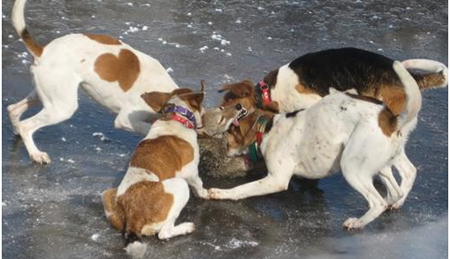
Animal rights groups on Thursday urged Spain to ban the use of dogs in hunting, which they said leads to the abandonment of roughly 50,000 greyhounds each year when they become too slow to hunt with.

Greyhounds, known as “galgos”, are used in Spain for hunting, but when the end of the November-February hunting season comes around their owners often decide they have no further need for them.

Campaigners say many are just abandoned and often starve to death or die in car accidents.

In some cases hunters dispose of their greyhounds by hanging them from trees or throwing them down wells, or they torture poorly performing dogs by breaking their legs or burning them.

“For them they are not pets, they are tools just like a wrench is to a plumber, they have no affection for the greyhounds,” Beatriz Marlasca, the president of BaasGalgo, an association dedicated to the rescue of abandoned greyhounds, told a news conference.

“We either stop this from above or else it will never end. We must eliminate the root of the problem starting by banning hunting with dogs,” she added at the news conference attended by three other animal rights groups.

Marlasca’s group alone finds homes for around 200 abandoned greyhounds a year in Spain, Belgium and the Netherlands.

“A ban on hunting with dogs, as already exists in other European nations, would be a measure that would avoid much suffering to all these animals,” said Silvia Barquero, the vice president of Pacma, a small animal rights party.

on the Upcoming Coyote Conest Kill in Crane OR

From Predator Defense.org:

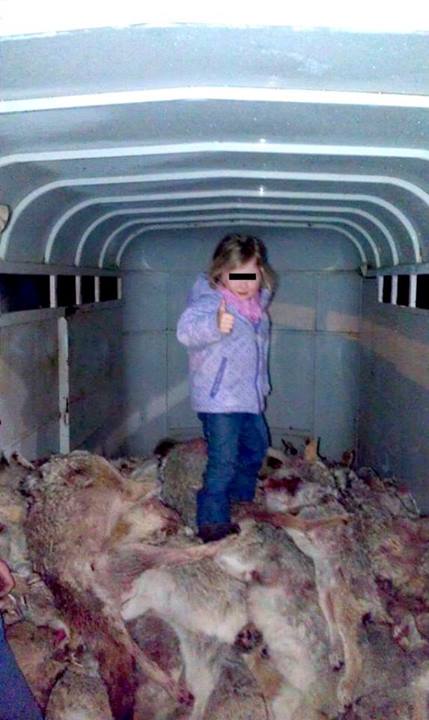
We’re always working to stop atrocities like the one pictured below. To that end we alerted the U.S. Forest Service and Bureau of Land Management to a coyote-killing contest in Crane, Oregon this coming weekend, Jan. 17-19, that was expected to take place on both private and public lands. We let them know that the event was happening, and that we believed that the organizers, JMK Coyote Hunt, did not have the special use permit required for hunting on public land. JMK refused to get a permit, so their killing spree is now restricted to private land. We decry contests like this. Rewarding killing for the “fun” of it teaches children cruelty and brutality. It also increases predation on livestock and exacerbates conflicts between wildlife, ranchers and farmers. Please support our work to stop wildlife atrocities by donating today at https://donatenow.networkforgood.org/1443481.

1530473_712789468755204_235715082_n

Park Service Not Budging on Rock Creek Park Deer Culling Debate

By: Jonathan Wilson
January 15, 2014

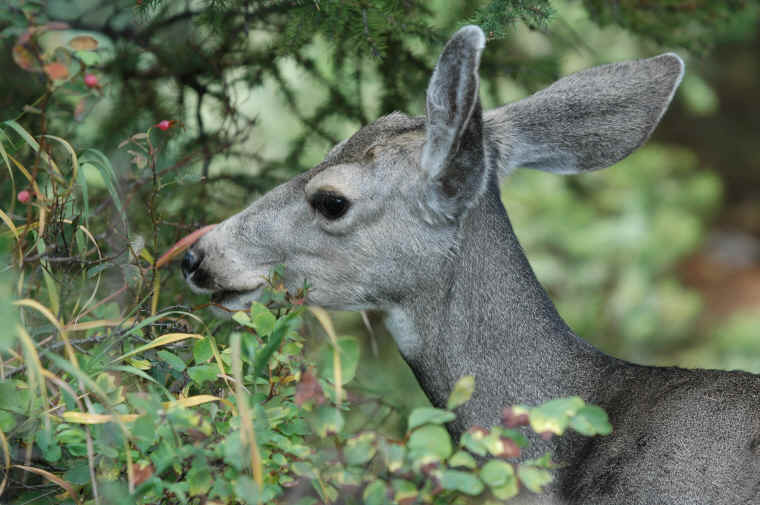
For the second year in a row, the National Park Service is using the practice of bringing in sharpshooters to kill deer in Rock Creek Park in an effort to thin the local herd and allow park vegetation a chance to regrow.

The lethal method of controlling the deer population continues to draw strong criticism from some local residents and from groups such as the Humane Society, but the Park Service isn’t budging.

Stephanie Boyles-Griffin, the Humane Society’s senior director of Wildlife Response, says everyone can agree that not managing the deer in Rock Creek park would be a disaster for the deer and local citizens who enjoy the park. But, she says, there are better ways to do it than what the Park Service has proposed.

“We put men on the moon — we can manage animals like deer living in Rock Creek without having to kill them,” she says.

Boyles-Griffin says that long before the Park Service got final approval for its management plan, it solicited public opinion and got more than that from her group. The Humane Society advocated for immunocontraception as a way to thin the herd — and even offered to pay more than half the cost — an offer that still stands.

“It just seems a little outrageous that they wouldn’t take a route that might take a little longer, but would let everyone achieve their management goals, but would make everyone happy and more importantly would be something NPS could be proud of instead of something they have to be ashamed of,” she says.

Jenny Anzelmo-Sarles of the National Park Service says her agency has a responsibility to manage the entire park. And she says getting deer down from more than 70 per square mile to 15 to 20 per square mile needs to happen fast.

“We’re in a crisis right now — and we need to quickly and effectively bring the population down to allow forest regenerate and to allow other plant life to flourish in Rock Creek Park,” she argues.

Anzelmo-Sarles says NPS has rejected immunocontraception thus far because no method that can be remotely injected has been proven effective over a multi-year period without leaving chemical residue or changing behavior in deer.

BE SURE TO POST COMMENTS

http://wamu.org/news/14/01/15/park_service_not_budging_on_rock_creek_park_deer_culling_debate

Photo by Jim Robertson

Photo by Jim Robertson

Activists Protest Killing Wolves to Boost Elk Numbers

http://magicvalley.com/lifestyles/recreation/activists-protest-killing-wolves-to-boost-elk-numbers/article_8c3c5232-7e77-11e3-b7f0-0019bb2963f4.html

By BRIAN SMITH

BOISE • Have some “grit” and stop “exterminating” Idaho’s wolves.

That was Pam Marcum’s message to Idaho Fish and Game commissioners Wednesday night.

Marcum’s charge was echoed by numerous other biologists, wildlife advocates and enthusiasts, many of whom questioned the science and ethics behind Fish and Game’s predator management plan.

Many locals complained that the commission was solely focused on boosting elk populations and keeping hunters happy instead of balancing the state’s wildlife. Some said wolves can have a positive impact on the ecosystem, despite hunters’ claims to the contrary.

“Use peer-reviewed science, not political science,” Marcum said.

Several hunters spoke in support of state wolf control. Stabe Hedges said it was upsetting to see so many people supporting an animal that harms Idaho’s economy. He advocated for increased wolf hunting opportunities.

“I personally would like to see the numbers of wolves reduced by 40 or 50 percent,” Hedges said. “I would like to see some of the elk numbers rebound. I hiked 32 miles this year before I saw a single elk, and that’s a vast difference from years gone by.”

The public comment hearing preceded today’s annual commission meeting, which was open to the public.

The commission is set to hear a legislative update and presentations from Fish and Game staff on wildlife such as elk, turkeys, chinook salmon and deer today. Later in the day, it will hear a budget preview and a report on a wildlife collision reduction project.

At 9:35 a.m., the commission is to consider approving its new elk management plan. The plan, last updated in 1999, is a guide for season-to-season management of the state’s many herds.

The plan also addresses changes in elk habitat, how growing elk populations damage crops, and how to more aggressively target predators such as bears, mountain lions and wolves.

Idaho Conservation Leauge’s John Robison said his organization is “deeply concerned” about the elk management plan and its impacts on wolves.

Robison asked for a show of hands from the audience to see who was angered by a recent pack killing at state expense in the Frank Church-River of No Return Wilderness. Most people in the packed room raised their hands.

“We believe that this unprecedented public outcry about this decision should force the commission to stop and reassess its approach on wolves, wilderness and predators,” he said.

The commission also should reduce its wolf-trapping program, said Ken Cole, a National Environmental Policty Act coordinator with the Western Watersheds Project. It should require trappers to check their snares more often, he said.

“These animals should not be out there suffering for more than 72 hours,” he said.

Not so — the areas where wolf trapping is allowed should be expanded in southern Idaho, said Pat Carney, president of the Idaho Trappers Association.

“Instead of the state having to pay trappers to go in and trap these other wolves, it would be better if locals could go in and do it instead of having tax dollars pay for it,” Carney said.

The decision to kill wolves in wilderness areas doesn’t make sense “economically and ecologically,” said Jennifer Pierce, an associate professor of geosciences at Boise State University.

“As scientists who have worked in the Frank Church area for decades, the eradication of large predators from this ecosystem is potentially detrimental to all parts of the ecosystem,” she said. “Was there a science-based rationale for killing wolves in wilderness? If so, what was it?”

copyrighted wolf in river