“A Wolf Called Storm”

Nabeki's avatarHowling For Justice

I love this documentary, it originally aired under the name “Cold Warriors”.  Jeff Turner does an amazing job filming the  Delta Pack in Canada’s Wood Buffalo National Park. Storm is the huge alpha male, an amazing leader, along with his mate Susie. These wolves are buffalo hunters. Watching the pack in action, how well-coordinated and cooperative they are, is truly inspiring. It’s also a pleasure to see wolf pups well cared for by their family, not under the threat of brutal hunts. There’s nothing more exciting than seeing wild wolves in their natural habitat.

A warning for the squeamish, there are predation scenes throughout the documentary.  Predation is a natural part of life, benefiting both predator and prey. As apex predators, it’s the wolves’ job to cull the buffalo herds, keeping them strong.  Only the interference of man upsets that delicate balance.

cold-warriors-alpha-male

===

Posted in: gray wolf, biodiversity,  bison

Video: Courtesy…

View original post 24 more words

Number of the Day: 400 (West African lions total population)

The Paw Report / Serpent Club's avatarThe Paw Report

“Now that this massive survey effort has been concluded, we finally know where lions remain and where we need to invest our efforts to save them. This was a vital first step, but the real work of saving them is only just beginning. Even the protected areas that retain lions are understaffed and underequipped. We intend to assist lion range countries in improving management effectiveness of the areas containing lions by helping them to increase the numbers, expertise, and operating budgets of enforcement personnel in protected areas with lions.” — Philipp Henschel, Lion Program Survey Coordinator, Panthera.

A survey studying the population of West African lions in protected areas of Africa delivers some shocking news: the population of West African lions is only about 400 animals. The findings of the six year survey were published in the open-access paper, “The Lion in West Africa Is Critically Endangered.”

As…

View original post 151 more words

New Book Announcement – “Dog Food Logic”

The Science Dog's avatarThe Science Dog

Dog Food Logic: Making smart decisions for your dog in an age of too many choices” is now available from Dogwise Publishing and Amazon. Click on the image for ordering information.  Below are several recent reviews.

dog-food-logic-cover-final                   dog-food-logic-cover-final

ORDER AT DOGWISE                                  ORDER AT AMAZON

♥♥♥♥♥♥♥♥♥♥♥♥♥♥

REVIEWS OF “DOG FOOD LOGIC”

♥♥♥♥♥♥♥♥♥♥♥♥♥♥

Reviewer: Dr. Brennen McKenzie, MA, VMD;  President, Evidence-Based Veterinary Medicine Association,
Author of SkeptVet Blog

Dog Food Logic is an indispensable book for any pet owner who wants to make thoughtful, informed decisions about what to feed his or her canine companions. The dog food industry is a bewildering, ever-changing landscape of companies and brands, and dog owners are inundated with marketing masquerading as science, with rigid advice from self-declared experts, and with fads every bit as intense and short-lived as those in the human weight loss business. Dog Food Logic cuts through the…

View original post 1,513 more words

Why the states have wolf management wrong

http://www.examiner.com/article/why-the-states-have-wolf-management-wrong

January 6, 2014
Cathy Taibbi|
copyrighted wolf in riverIn this Powell Tribune post, Wolf hunt ends with 24 taken, written by Gib Mathers, the big, glaring error in state wolf management is revealed.

The states, eager for revenue (gotten through the selling of hunting and trapping licenses), have gotten basic principles of wolf ‘management’ all wrong.

With wolves, ‘management’ is not as simple as removing individual bucks from a breeding population of deer – Wolves live in FAMILIES. Everything they do revolves around the well-being of their families – Including teaching their pups (who stay ‘children’, to be taught and protected, for three years), just as we teach our own children.

Wolves pass down learned information (for instance, to stay away from livestock) to their family, to their impressionable pups, in essence passing down a unique ‘culture’ of conduct and survival tools specific to each pack.

That includes respect for Man and his livestock.

Break the chain of knowledge by decimating family continuity, and you actually create problems where there hadn’t been any before.

Through hunting and trapping seasons, we rob wolves of their hard-won, hard-learned family-knowledge of how to co-exist with us.

Wolves LEARN. We don’t have to kill them. In truth, documented livestock depredation by wolves is exceedingly rare – Way behind other, routine, causes of livestock mortality such as weather and poor husbandry, for instance. Ranchers are compensated monetarily for even suspected kills by wolves, so ranchers are by no means financially harmed if a rare instance of a wolf killing livestock actually does occur.

The other lame argument is that wolves are jeopardizing herds of game (which human hunters wish to kill for fun.) Wolves will not eliminate all the game, either. If man has created enough challenges for wilderness systems that herd numbers actually do decline too much (as opposed to herd behavior changing to become more elusive targets), then the correct answer is to reduce the number of permits granted to sport hunters, for a season or two, or even three – Not to kill vital native species who have no choice but to hunt to live.

The best way to revitalize and rejuvenate a herd is to allow it to be under the management of their natural, original custodians – The wild predators, like wolves, who do not target the big, healthy and showy, with the biggest racks or heaviest pelt, in an effort to show off trophies and shore-up their fragile egos.

Wolves just want to eat. They catch what they can – the weak, the young, the old, the lame, the sick, the scrawny.

Leaving the biggest, healthiest, prettiest and best to spawn the next healthy, vital, resilient, magnificent generation.

And the carcasses they nibble on for the next few days or weeks, also feed a mind-boggling array of other creatures, from crows to beetles to foxes, and fertilize the forests and keep steams clean and fresh, and salmon populations thriving, and . . .Well, you can see how everything in nature travels in lock-step with everything else.

Human hunters don’t give much of anything back to the forest – A steaming gut-pile, perhaps. But humans do take. We take and take and leave the forest impoverished for our presence, unlike wolves, who enrich the wilderness and increase biological diversity – And beauty.

Even if wolves did pose a legitimate occasional threat, we don’t need to resort to the kind of wholesale slaughter we’re now indulging in (which is the main justification for these severe hunts – hunts which don’t afford wolves even the most basic humane considerations granted to species such as deer), including the hunting and massacre of innocent puppies still in the den, pregnant mothers, and utterly harmless (to humans and human endeavors) wolves; animals who are completely innocent and way out in the wilderness – even in protected wild lands and national parks and refuges, where wildlife is supposed to be able to exist without human interference.

Why send a lynch mob out into a national refuge to exterminate a naturally-occurring wild carnivore who, by all rights, needs to be there, fulfilling his age-old role?

Wolves are smart – We can teach them, using non-lethal means, to respect and avoid us, and our livestock.

But that doesn’t mean we will never SEE them. Just because you see a wolf doesn’t mean you, or your livestock, are even on her mind. She travels. She patrols. He explores. He hunts. He warns off rival wolves and coyotes – He has other things on his mind than harming you or your stuff.

Things like, making sure the kids are safe, or that ‘Auntie’, left in charge of the babies, is due a break.

You see, again, it’s all about family.

Wolf pups and pack members also need the option to safely disperse – Just like your son gets to date girls, move out, learn to manage his own household and find someone to fall in love with and raise his own family with – and your cousin, who finds a good job in another city, can now vacate your spare bedroom (where he’s been staying until he can get back on his feet) and move out, giving you back your space.

You all stay in touch with everyone through email and voice mail. (In the case of wolves, through scent marking and howling.) But if no one could ever move out of the family home, the family itself would wither,

Wolves need enough room and prey, enough of their own estate, to establish their own households, where they and their children can thrive, without bumping elbows with other wolves.

Is it all a ‘numbers game’? Well, think about it this way: Your third child deserves to live, grow and some day move out and find her own digs, not get shot because you’re at your family quota of two adults and 2 children.

Right?

For all these things, wolves need safe corridors bridging their family homes with other lands, other safe, wild habitats, and other wolf neighborhoods, in which to travel, to explore, test their mettle in their own territories, and find that special, genetically-unrelated someone to go through life with in a loving, mutually-supportive marriage.

That, by the way, is not a romanticized, anthropomorphic statement.

Wolves mate for life. They bond with each other, they are affectionate with each other, they protect each other and cooperate with each other. They LOVE each other, just as we love our own spouses. parents, and children.

They show altruism and tenderness, protectiveness and cooperation, just like human families.

They grieve – For weeks – when a pack member is lost.

In many ways, wolf families put human families to shame.

Is that why the very existence of wolves is seen as so threatening by some people?

‘Manage’ (shoot/trap) wolves ‘by the numbers’ and you cause disintegration of their most important social support systems, leaving grieving relatives and dependent babies behind; we (often intentionally) widow wolf parents and leave them to try to keep their families alive without help – As for single moms everywhere, it is very hard trying to raise your kids without both parents around.

That’s when many resort to less-than-ideal methods, out of desperation to survive and feed the family.

That’s when confused and frightened orphans, ill-equipped to survive without the protection and guidance of their wiser elders, can turn into the equivalent of street-gangs or vandals.

They need their families – Just as human children do – to become proper citizens.

Ethical wildlife management isn’t just ‘by the numbers’. It can’t be. Would you would want your own family arbitrarily ‘thinned’ (lethally) by an outside party, based on nothing but a heartless quota system?

With all their unique qualities, wolves can not be treated like other ‘game’ animals. Top-tier predators, whose numbers are naturally regulated by the availability and vigor of their prey, don’t need redundant management by humans. Wolves, in fact, should NOT be game animals, at all. They are not pests; They are not vermin or infestations.

They are essential and precious keystone/apex species who belong in, evolved with, and invigorate our living wilderness landscape just by being a part of it.

Wolves are, in truth, the original, supreme game and ecosystem managers of the wilderness

State wildlife management should not be about running a feedlot for the benefit of hunters, or ensuring safe and secure cattle-grazing on public lands for privately-owned livestock.

National parks and public lands are to be intact, unmarred oasis’s of authentic wilderness, lovingly protected and guarded against meddling or exploitation, for perpetuity.

Wolves and other species keeping a toehold in their rightful places in suitable areas need to be granted the right to BE and exist, as nature intended. Having shaped our herds, our biodiversity, the forests, plains and deserts, rivers and tundras, in the first place, for millenia, it should be obvious that wolves don’t just belong – They are needed.

Humans are not owners of the planet – We are fellow citizens in a tapestry of interdependent and interconnected Nations, all working in harmony to keep our precious Earth vital and alive.

But humans seem to be on a giant ego-trip, and we’re tipping the balance of everything out of whack, to where the very survival of our planet might be at stake.

It’s time for wildlife officials, and wildlife management science, to rise to the demands of integrated, holistic ecosystem management, (not ‘game ranch management’, not public lands ranching, not pandering to special interests), using our increased understanding of the emotional and psychological needs of the beings we’ve decided to preside over, to guide us – to create fully biologically diverse, functional and dynamic ecosystems that are allowed to thrive without human meddling.

One final thought: Nature does not NEED us. In fact, we all might benefit from adopting a ‘hands-off’ management style for our wild and open places. Case in point: The wolves and ecosystems that have rebounded – breathtakingly – after the old Chernobyl nuclear disaster. Here, in that abandoned kingdom, wolves, herds, even endangered species, coexist in a humbling harmony and splendor, with no people attempting to micro-manage things.

Take this message to heart – Nature can function just fine without us. All we have to do is leave her alone, and ALLOW.

ACTION ALERT: Coyote Killing Contest ~ Jan. 18-19 Crane, OR


“A society that condones unlimited killing of wildlife for fun and prizes is morally bankrupt.”  ~ Dave Parsons, Project Coyote Science Advisory Board

Please join Project Coyote to take immediate action to stop a brutal coyote killing contest scheduled for January 18-19th in Crane, Oregon.  There is no place for a wildlife killing contest in our civilized society.
Contest participants, in teams of two, with no geographical restrictions will slaughter coyotes for thrills and compete for cheap prizes (including cash). Awards will be given for the most coyotes killed, the largest coyote, and other categories including a calcutta. This is not hunting but a gratuitous massacre that is legal in Oregon and across the country. Children under the age of 16 are encouraged to participate with free entry on Saturday.
Specific details:
What: Eighth Annual Coyote Killing Contest Where: Crane, Oregon                          When: Saturday, January 17th through Sunday January 19th, 2014

JMK_2014

Pl. share this image from the recent Salmon, ID coyote/wolf “derby” (95,360 views & 1,749 shares to date) & help spread the messageCoyote Wolf Holiday Killing Contest Salmon Idaho_copyright Project Coyote

“The non-specific, indiscriminate killing methods used in this commercial and unrestricted coyote killing contest are not about hunting or sound land management. These contests are about personal profit, animal cruelty…It is time to outlaw this highly destructive activity.” ~ Ray Powell, New Mexico Land Commissioner

Talking Points (please personalize your letter and if you recreate in Oregon please mention this):
1.  Wildlife killing contests are ethically indefensible events allowing participants to kill wildlife to win prizes. They are biologically and ecologically reckless, not only harming individual animals, but also altering predator-prey dynamics, disrupting the social dynamics of predatory species, and increasing threats to public safety, all for fun and prizes. They have no beneficial management purpose but, rather, promote gratuitous violence against wildlife. They demean the immense ecological and economic value of predators in an ecosystem while teaching children to hate and trivialize the lives of predators.
2.  Killing contests have nothing in common with fair chase, ethical hunting. Technology, baiting, and “calling” place wildlife at an even greater and unfair disadvantage. Killing predators, or any wild animal, as part of a ‘contest’ is ethically indefensible and ecologically reckless.    3.  Bloodsport contests are conducted for profit, entertainment, prizes and, simply, for the “fun” of killing. No evidence exists showing that predator killing contests control problem animals or serve any beneficial management function. Coyote populations that are not exploited (that is hunted, trapped, or controlled by other means), form stable “extended family” social structures that naturally limit overall coyote populations through defense of territory and the suppression of breeding by subordinate female members of the family group.
4. The importance of coyotes and other predators in maintaining order, stability, and productivity in ecosystems has been well documented in peer-reviewed scientific literature. Coyotes provide myriad ecosystem services that benefit humans including their control of smaller predators, rodents, and jack rabbits, which compete with domestic livestock for available forage.    5.  Wildlife killing contests perpetuate a culture of violence and send the message to children that life has little value and that an entire species of animals is disposable.   6.  Wildlife killing contests put non-target animals, companion animals, and people at risk. Domestic dogs are sometimes mistaken for coyotes and wolves.

Immediately contact the following to voice your firm but polite protest:

Oregon Department of Fish and Wildlife
4034 Fairview Industrial Drive SE
Salem, OR 97302
(503) 947-6000
odfw.comments@state.or.us

Oregon Governor John Kitzhaber
900 Court Street NE, 160, Salem, OR 97301
(503) 378-3111

Harney County Chamber of Commerce
Chelsea Harrison, Executive Director
484 North Broadway, Burns, OR 97720
(541) 573-2636
director@harneycounty.com

Please post polite comments on the Facebook pages of Travel Oregon and the Eastern Oregon Visitors Association:

Travel Oregon/Oregon Tourism Commission
Judiaann Woo, Director, Global Communications
1(800) 547-7842
info@traveloregon.com
https://www.facebook.com/TravelOregon

Eastern Oregon Visitors Association
Phone: 1 (800) 332-1843
eova@eoni.com
https://www.facebook.com/VisitEasternOregon

Rewrite of species-protection law seen in move to take wolves off the U.S. list

http://www.minnpost.com/earth-journal/2014/01/rewrite-species-protection-law-seen-move-take-wolves-us-list

By Ron Meador | 01/07/14

It is difficult to think of a species whose conservation has inspired disputes more bitter and ceaseless than those that swirl around the gray wolf.

From the journal “Conservation Letters” comes a compelling academic critique of the U.S. Fish and Wildlife Service‘s evolving enforcement of the Endangered Species Act, through some key rewriting of policy that might appeal to satirists like George Orwell or Joseph Heller.

The paper, published last week in the journal’s “Policy Perspectives” section, is focused largely on the service’s announcement that it will remove gray wolves from federal protection throughout the lower 48 states, following earlier “de-listings” in Minnesota, Wisconsin and Michigan, Wyoming and Idaho (as well as states of the northern Rocky Mountains and a scattering of others with few if any wolves).

But the authors — including Sherry Enzler of the University of Minnesota and John Vucetich of Michigan Technological University, who directs the wolf-moose population study on Isle Royale — argue that the service’s reasoning in support of its decision on gray wolves changes its application of the landmark wildlife law in two ways that effectively repeal it:

  • First, by redefining the Endangered Species Act’s notion of natural range from the territory a species historically inhabited to the territory it currently occupies.
  • Second, by deciding that human activity — especially intolerant activity — in portions of a species’ range can justify reclassification of those areas under the ESA as habitat no longer suitable for threatened animals and plants.

Or, as Orwell might have it, a creature’s natural habitat is natural no longer once the creature is driven out. For his part, Heller might see it as another Catch-22: The ESA exists to protect plants and animals from eradication by humans, except in those areas where humans prefer to eradicate them.

Clear phrasing in the law

Perhaps the ESA’s most important single passage is its clear, plain-language definition of an endangered species as one “in danger of extinction throughout all or a significant portion of its range” (emphasis added).

That wording may seem obvious today, but as the law moved toward passage in 1973 it was a significant and deliberate broadening from earlier species-protection laws, especially on what the paper’s authors call the “SPR phrase” italicized above.

Drawing on statements from U.S. Sen. John Tunney, the California Democrat who was a key author of the ESA and the legislation’s floor manager in the Senate, the paper notes his explanation that “a species might be considered endangered or threatened and require protection in most states even though it may securely inhabit others.”

This, too, seems commonsensical and until recently, the paper says, the Fish And Wildlife Service considered a species’ range to be both its current and historic territory — even, at times, resisting pressures to narrow its focus to current territory only.

But now the FWS seeks to redefine the gray wolf’s range as the territory it currently inhabits, and to declare the rest of its former territory as “unsuitable habitat” because people will no longer tolerate wolves there.

How wolves got on list

To understand the significance of this shift, consider that if the newer definition had been in use when wolves were initially listed for ESA protection in 1978 — just five years after Congress passed the law with barely a dissenting vote — they might not have qualified.

At that point, wolves were known to inhabit only two small territories in the lower 48 states — one in the Boundary Waters Canoe Area Wilderness and adjacent Superior National Forest, the other on Isle Royale.

These remnant populations totalling a few hundred wolves, though tiny, appeared to be stable and possibly growing slightly because of wilderness protections. And at that point, of course, Isle Royale had been in their “historic range” for less than three decades.

Today, the paper asserts, federal protections have restored wolves to about 15 percent of their historic U.S. range outside Alaska. Whether an 85 percent loss qualifies as a “significant portion” of that range is, I suppose, a matter of opinion. In the opinion of the paper’s authors,

Although prescribing a precise value to the SPR phrase is challenging, acknowledging egregious violations is not. Today, wolves occupy approximately 15% of their historic range within the conterminous United States. To conclude that this condition satisfies the requirement represented by the SPR phrases sets an extremely low bar for species recovery.

As for redefining “range,”

Interpreting range to mean “current range” is functionally identical to striking the SPR phrase  from the ESA’s definition of endangerment and narrowing the definition to being “in danger of extinction [everywhere].”

Effect on other species

It is difficult to think of a species whose conservation has inspired disputes more bitter and ceaseless than those that swirl around the gray wolf, with the possible exception of the grizzly bear in portions of the American West.

But the FWS reasoning under challenge in this paper could just have easily been applied in the past — or, more important, applied in the future — to the detriment of such recovered species as bald eagles, whooping cranes and peregrine falcons, not to mention the Kirtland’s warbler, the southern sea otter, the Virginia big-eared bat and the black-footed ferret.

And it is thinking of those species, along with some 2,000 others still listed, that makes one wonder what coherent philosophy or policy of conservation can justify a redefinition of “suitable habitat” to exclude places made inhospitable by human activity.

Indeed, as the authors point out,

In most cases, species are listed as endangered because current range has been reduced by human actions. The ESA is intended to mitigate such reductions in range, not merely describe them.

As such, a sensible interpretation of range in the SPR phrase is historic range that is currently suitable or can be made suitable by removing or sufficiently mitigating threats to the species.

One always wants to hope that sound science underlies federal policy decisions in these matters. Indeed, we appear to be entering an era of changing climate in which habitats are likely to be remade by forces well beyond the science of mitigation and the capabilities of wildlife managers, regardless of the level of empowerment they may choose to find within the ESA or settled case law.

But with regard to gray wolves, climate is not the critical issue. Human persecution is. And here, too, the authors challenge FWS’s fulfillment of their obligations under the ESA, in a section headed “The science of intolerance” (citations omitted):

A central tenet of the proposed delisting rule is: “the primary determinant of the long-term conservation of  gray wolves will likely be human attitudes toward this predator.”

Although bound by the ESA to base its listing and delisting decisions on the best available science, the FWS does not refer to any of the scientific literature on human attitudes toward wolves to justify its determination….

The proposed rule also asserts that delisting wolves at this time is critical for maintaining wolf recovery because “keeping wolf populations within the limits of human tolerance” requires humans be allowed to hunt entrap wolves. The best available science does not support this contention.

Indeed, a recent review found no evidence for the claim that the rates of poaching changed with higher quotas of legal harvest, and the recent longitudinal analysis found attitudes toward wolves were more negative during a period of legal lethal control than when the wolves were listed under the ESA … .

Ultimately, there is no empirical support for the notion that continued listing would result in a backlash against wolves.


Stop Second Coyote Hunting Contest – Dillon, Montana

Stop Second Coyote Hunting Contest – Dillon, Montana Action Alert from All-Creatures.org

FROM

Ann Frances January 2014

ACTION

Help STOP Coyote Hunting Contest, Dillon, Montana, on January 10, 11 and 12, 2014…“Dog Days of Winter Coyote Derby”

coyote derby slaughter

And/or better yet, make direct contact:

Rocky Mountain Supply, Dillon Montana https://www.facebook.com/rmsdillon    Montana Outdoor Radio Show https://www.facebook.com/montanaoutdoor    Montana Tourism https://www.facebook.com/visitmontana

INFORMATION / TALKING POINTS

Coyote Hunting Contest, Dillon, Montana, on January 10, 11 and 12, 2014. “Dog Days of Winter Coyote Derby”.

It is hosted by Rocky Mountain Supply who sells “Everything for the farmer, rancher, and traveler”. It is also being supported and advertised by The Montana Outdoor Radio Show, that also has a webpage with paragraph length articles by several writers, including by “Angela Montana”, who seems to take a special relish in the job of writing blurbs on killing coyotes, wolves and all other wildlife.

This is the 2nd Coyote Hunting Contest in Dillon, Montana. The first one was in February 2013. As described by Angela Montana, the contest was started by Tyler Linse, a college student working at Rocky Mountain Supply. “We thought it would be a fun way to spend a winter weekend and help manage the coyotes in the area”, said Linse. Ten coyotes were killed in the contest.

Dillon, Montana is in Southwest Montana. It is just 65 miles from Salmon, Idaho, who held a Wolf and Coyote Killing Contest on December 28 and 29, 2013. Both Salmon Idaho and Dillon Montana are surrounded by national forests including Yellowstone National Park. Salmon Idaho has a population of 3000, and Dillon, Montana, 4000. Of note, Great Harvest Bread Company has its headquarters in Dillon, Montana.

From an article on dogfighting in Montana [Spectating at dogfights: Still legal thanks to…rodeo?]: “Most people know by now that killing coyotes doesn’t “manage” their numbers, proving that these folks have some catching-up to do…or that it really IS all about bloodlust.”

Of note: Great Harvest Bread Company has its headquarters in Dillon, Montana thought they are not associated with this contest.

Thousands of Prairie Dogs in Danger of Being Poisoned

Photo Copyright Jim Robertson

Photo Copyright Jim Robertson

http://www.care2.com/causes/thousands-of-prairie-dogs-in-danger-of-being-poisoned.html

by Alicia Graef
January 7, 2014

Animal advocates and conservationists are fighting to stop the U.S. Forest Service (USFS) from poisoning thousands of black-tailed prairie dogs who live on the Thunder Basin National Grassland in eastern Wyoming.

The prairie dog management plan was put in place years ago, setting aside 85,000 acres where prairie dogs would be protected from poisons and shooting, but complaints from ranchers have led the USFS to propose going backwards and amend the plan to allow prairie dogs to be poisoned within a quarter of a mile of private or state land.

The management strategy was originally intended to promote ecological diversity and ensure prairie dogs and other species had a safe space to live, but the new plan would in effect take away 22,000 acres of this protected land and end up killing an estimated 16,000 prairie dogs, according to a joint press release from the organizations opposing the agency’s proposal, including the Humane Society of the United States, the Biodiversity Conservation Alliance, Defenders of Wildlife and WildEarth Guardians.

Unfortunately, prairie dog numbers have already been reduced by habitat loss and disease and because they are often seen as pests who need to be destroyed. According to the Biodiversity Conservation Alliance, these prairie dogs now only exist on an estimated two percent of their former range.

Living in colonies known as “towns,” prairie dogs are considered a keystone species who are vital to the health of prairie ecosystems. Their disappearance will affect numerous other species who rely on them as a food source and as habitat developers for species who take advantage of abandoned burrows, including burrowing owls, raptors, swift foxes and badgers, among others. According to the Prairie Dog Coalition, as many as 140 species are believed to be affected by the role of the black-tailed prairie dog in North America.

Prairie dog advocates are opposing the proposal, not only because prairie dogs are important, but because adding more poison to the government’s wildlife management toolbox is dangerous and unacceptable. Using poison is a sickeningly cruel method for dealing with wild animals that results in a horrific death and has no place on our public lands. The use of poison also poses a threat to other non-target species as it moves through the food chain.

“These dangerous poisons shouldn’t be used anywhere, much less in one of our last best grasslands,” said Taylor Jones, endangered species advocate for WildEarth Guardians.

Killing prairie dogs and using poison will also impact the recovery plan for black-footed ferrets, who have been brought back from the brink of extinction through captive breeding programs. Thunder Basin National Grassland is believed to be one of the best places available for releasing more of them, and many believe one of the easiest ways to ensure the success of the recovery program is to work on prairie dog conservation efforts simultaneously.

The organizations fighting this proposal are calling on the USFS to adopt non-lethal management strategies that include building vegetative barriers to deter prairie dogs from expanding onto neighboring lands, relocating prairie dog colonies from boundary areas to protected areas away from private lands when necessary and offering incentives to private landowners to coexist with prairie dogs.

TAKE ACTION!

Please sign and share the petition supporting non-lethal alternatives to manage prairie dog colonies and send an email directly.

Read more: http://www.care2.com/causes/thousands-of-prairie-dogs-in-danger-of-being-poisoned.html#ixzz2pwHjboBx

Seven Wolves Killed In Idaho’s Frank Church Wilderness by Government Hired Trapper

If wolves can’t live in a such a large and inaccessible wilderness area, then where?

http://networkedblogs.com/SEGKp

By Ken Cole On January 8, 2014

Plaintiffs in the case against the wolf killing plan for the Frank Church-River of No Return Wilderness in Idaho have learned that at least 7 wolves have been killed by the Idaho Department of Fish and Game hired trapper as of January 2nd. It is possible that more have been killed but communication with the trapper is conducted only when the trapper calls out using a satellite phone which is kept turned off most of the time.

From the court filing:

Plaintiffs learned from counsel for defendant Virgil Moore that, as of January 2, 2014, IDFG’s hired hunter-trapper had killed seven wolves within the targeted wolf packs, six by trapping and one by hunting, and that more wolves may have been killed as of today. Defendant Moore’s counsel further advised that IDFG’s only means of communication with the hunter-trapper is a satellite telephone in the hunter-trapper’s possession, and that, to preserve the phone’s batteries, the hunter-trapper turns on the phone only when he places a call.

In response, the plaintiffs have filed a second motion for a Temporary Restraining Order (TRO) with an expedited briefing schedule.

acrobat pdfRead Second Motion for TRO

Plaintiffs, represented by Tim Preso of Earthjustice, include Ralph Maughan and three conservation groups—Defenders of Wildlife, Western Watersheds Project, Wilderness Watch, and Center for Biological Diversity. The case, which was filed yesterday, challenges US Forest Service’s approval of the Idaho Department of Fish and Game’s plan to exterminate two wolf packs in the Frank Church-River of No Return Wilderness on the grounds that it violates several laws, management plans, and policies which are meant to protect wilderness characteristics, wildlife, and natural processes within wilderness.

528624c939a88_preview-620

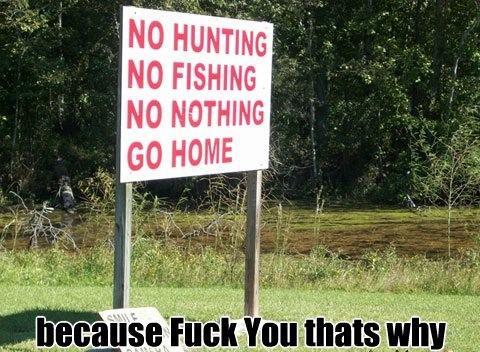
No Hunting! Because Fuck You That’s Why!

nohuntsign

This blog site is a haven for wildlife and animal advocates, a wildlife refuge of sorts, that’s posted “No Hunting,” as any true sanctuary should be. Just as a refuge is patrolled to keep hunters and poachers from harassing the wildlife, this blog site is monitored to keep hunters from disturbing other people’s quiet enjoyment of the natural world.

It is not a message board or a chat room for those wanting to argue the supposed merits of animal exploitation or to defend the act of hunting or trapping in any way, shape or form. There are plenty of other sites available for that sort of thing.

Hunters and trappers: For your sake, I urge you not to bother wasting your time posting your opinions in the comments section. This blog is moderated, and pro-hunting statements will not be tolerated or approved. Consider this fair warning—if you’re a hunter, sorry but your comments are going straight to the trash can. This is not a public forum for animal exploiters to discuss the pros and cons of hunting.

We’ve heard all the rationalizations for killing wildlife so many times before; there’s no point in wasting everyone’s time with more of that old, tired hunter PR drivel. Any attempt to justify the murder of our fellow animals will hereby be jettisoned into cyberspace…

Text and Wildlife Photography ©Jim Robertson

Text and Wildlife Photography ©Jim Robertson


That statement appears on the “About” page of this blog for all to see. Yet every so often I still get comments from hunters desperately wanting to rationalize their murderous deeds. I received two over the past two days, including one from a Danish hunter who stated, “I take pride in my education and my gear, in which I have invested a lot of money, and I enjoy the thrill of the hunt. But that does not make me a serial killer! I am a friendly young man, with so many other hobbies…”

Sorry to say, but a lot of serial killers would come across as “friendly young” men. Though he may not technically be a serial killer by standard definition, anyone who lumps the “thrill” of the hunt in with his other “hobbies” certainly shares some of the characteristics, like rationalization, justification, depersonalization, compartmentalization, as well as a sense of entitlement, lack of remorse, guilt or empathy, with the average serial killer.

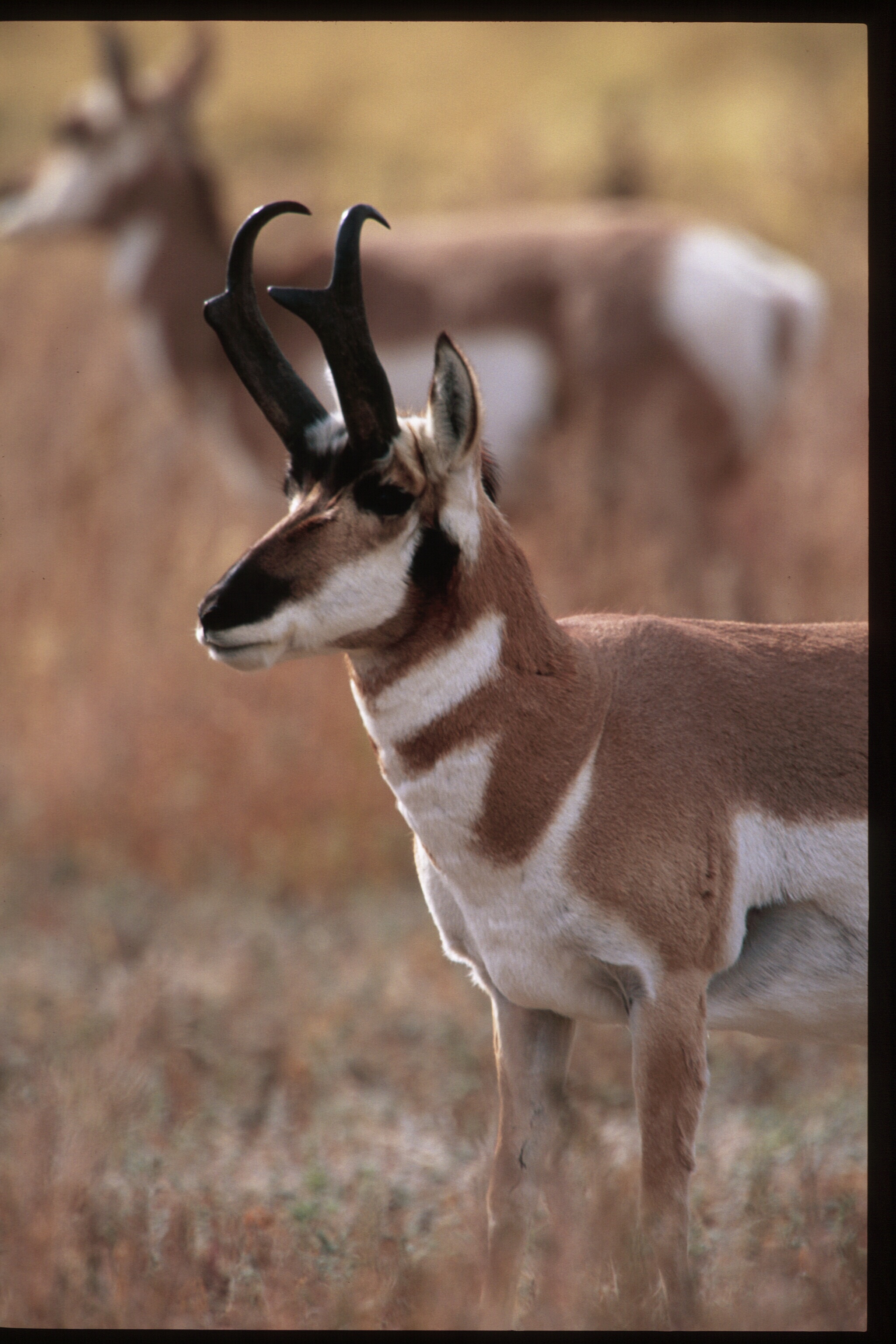
The other pro-hunting comment came from none other than Laramie’s city councilman Erik Molvar, the Wild Earth Guardians’ new in-house hunter-on-staff, described on their website as “an avid fan of the outdoors, and enjoys hiking, flyfishing, skiing, antelope hunting, and renovating historic homes.” He doesn’t sound like someone who needs to feed his family on pronghorn flesh any more than any other suburban Wyomingite (who number in the 100s of thousands). Erik wrote at great length in defense of himself and about the relative morality of killing and eating a pronghorn vs. a loaf of bread. Yet he didn’t tell us anything we haven’t heard before time and again from other hunters. Once again, this is an anti-hunting blog site, with a longstanding policy of not approving comments from hunters and I see no reason to start now. We’ve heard them all before—ad nauseam.

Mr. Molvar, as your comment is directed to Marc, the author of the article “Sheep in Wolves’ Clothing,” please send it to him at his website: http://foranimals.org/ (If you no longer have the text, I can retrieve it for you from my trash can.)

I appreciate your concern for wolves and Wild Earth Guardian’s hard work to stop wolf hunting. I love wolves the same as any advocate. But I also care about pronghorn, elk and prairie dogs just as much. If we wait until wolf hunting is ended before acknowledging the rights of any other species, hunting will only become more embedded, like a festering thorn in need of surgical removal.