Action Alert: Comment On USFWS Wolf Delisting Proposal Today…Deadline @ 11:59 PM Tonight!!

Nabeki's avatarHowling For Justice

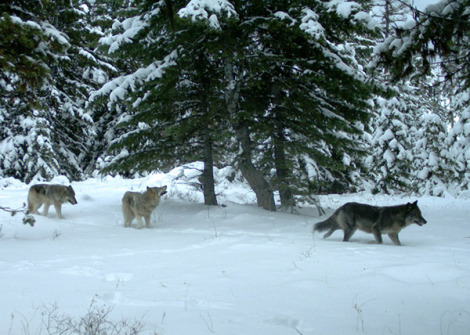
Remote camera pictures of the Minam wolf pack in Eagle Cap Wilderness of Wallowa County. Photos taken Dec. 14, 2012. Photo courtesy of ODFW

Minam Wolf Pack in Eagle Cap Wilderness, Wallowwa County, Orgeon

UPDATE:March 27, 2014

Today is the last day to comment.!! The deadline is 11:59 PM ET. Please speak for the wolves. This rule, would stop wolf recovery in its tracks, it must be revoked! Your voices could make all the difference!

PLEASE COMMENT!!!

http://www.regulations.gov/#!docketDetail;D=FWS-HQ-ES-2013-0073

===

Photo: Minam Wolf Pack ODFW

Posted in: Wolf Wars

Tags: USFWS, national wolf delisting rule proposal, Sally Jewell, Secretary of the Interior, Dan Ashe, wolf persecution,  please comment, deadline March 27

View original post

Galveston Bay Oil Spill: What We Birders Can Do

The March 22 spill of 168,000 gallons of highly toxic bunker fuel into Galveston Bay can be expected to take a huge toll on migrating, nesting, and still-wintering birds. If you want to donate money to help, Houston Audubon seems to be the go-to organization right now. But whether or not you can make a financial contribution, if you spend time on the Texas coast this spring, you can make a vitally important difference in what happens next, by submitting the sightings of every oiled bird you see into eBird. Enter the species, numbers, time, and place as always, and for each bird click “Add Details,” then click “Oiled Birds.” Provide photos whenever possible.

Even though eBird can be the perfect repository for this wealth of data, how can entering bird sightings actually help this horrible situation?

After the Exxon Valdez spill in 1989, volunteers and professionals descended upon Alaska in huge numbers. Some volunteers may have gotten in the way here and there, but with all those eyes and cameras bearing witness to the devastation, there was no way that Exxon could hide the environmental damage and the toll on wildlife. The final tally for oiled birds was between 100,000 and 250,000 oiled seabirds and at least 247 Bald Eagles. Thanks to the huge public outcry, the issue of single-hulled tankers was kept alive, and a great deal of pressure was put on Congress to enact legislation to strengthen protections for our vital waterways.

After the BP spill in 2010, I was disillusioned to see how dramatically things had changed. Only a handful of volunteers and very few professionals went to the Gulf. Marge Gibson, past president of the International Wildlife Rehabilitation Council and the woman who led the team recovering oiled Bald Eagles after the Exxon Valdez spill, was turned away from helping—literally prohibited from providing her valuable expertise—as were countless other specialists experienced in retrieving oiled pelicans and other birds along the Florida and California coasts. BP, the US Fish and Wildlife Service, conservation organizations, and the media gave out phone numbers for people to call if they wanted to help, and those of us who called were told we’d be notified if our services were necessary, but I know of no one who was ever called back. Qualified people with years of expertise in helping animals after oil spills waited for phone calls or email that never came. Marge Gibson waited for months with her bags packed.

Marge writes:

What changed between the Exxon and BP spills was that the companies learned from what they considered Exxon’s P.R. mistakes.  They learned that preventing access to the area and trying to minimize photographic evidence was the way to go.  If the public doesn’t see it, it does not exist.  Exxon has been judged severely for the Valdez accident, but in fact, after the spill they did their honest best, enlisting top scientists worldwide that were not just suits—they wore survival gear because they were physically on site—in ships and on the ground.  I was there. I worked with them.

That spill was an open book not only for the public, but for the scientists that worked on it.  B.P. decided that was not good because scientists document their work and put the data and their findings in the literature where it is available forever. The scientists who were allowed to produce studies in the aftermath of the BP spill had to sign away their rights to publish any of them for at least 5 years.

Yes, Exxon made mistakes. But it wasn’t Exxon who declared that oil companies could use single hulls again. Exxon allowed every aspect of the spill and the cleanup to be an open book. We could have learned how to reduce the potential for future spills, but all that seems to have been learned is how to do more effective cover-ups to minimize liability as much as humanly possible.

From the standpoint of wildlife conservation, the specific critical change between the 1989 Exxon spill and the 2010 BP spill is in the protocol for counting oiled animals—the only means of assessing damage to wildlife. After the Exxon spill, EVERY oiled animal that was seen was counted. Even though a quarter million oiled birds were documented, this number is considered by most authorities to be a gross underestimate, considering the huge area involved and how many birds, tiny and large, washed away undetected in the vast ocean.

With the BP spill, the new policy was to count only those oiled birds that were physically collected—picked up dead or alive. Minimizing the toll further, only a handful of people were authorized to retrieve these animals. Unauthorized people who found an oiled animal of any species were supposed to call a number and give directions to the animal, but were not allowed to not touch it or remove it under threat of heavy fines and jail.

Even authorized people were prohibited from capturing any bird still capable of flight. And “flight” was defined to include even the most pathetic fluttering. This Black-crowned Night-Heron that I photographed at the edge of Cat Island in Barataria Bay after the BP spill is not included in the official count of oiled birds.
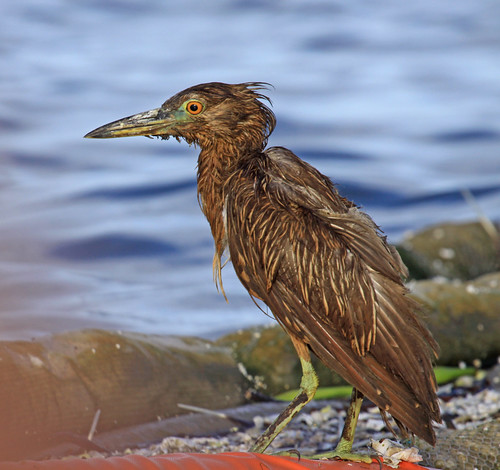
Oiled Heron

Our boat spooked it and it fluttered a few feet into the water and then struggled to shore. Our boat captain told us that because none of us were authorized to collect oiled animals, he would lose his license if we did anything to try to save it. He also said that he was prohibited from calling in people who were authorized to retrieve oiled birds because it was still “flying.” I wish I were making this up.

The timing, during nesting season, made the situation even worse. In the weeks following the explosion, birders and other experts clearly observed that 50 to 80 percent of the 10,000 breeding birds on Raccoon Island were oiled. Yet not one of those birds is included in the official count of oiled wildlife. Thanks to another bizarre rule change, people who’d been permitted to take photos and videos of nesting birds on the island before the spill were shooed away, and even those people authorized to collect wildlife were prohibited from approaching the island, ostensibly to ensure nesting success of unoiled birds. Just the oiled adult birds on Raccoon Island would have doubled the final count of oiled birds, yet not one of them, nor any of their oiled eggs and chicks, nor a single oiled bird on other nesting colonies, is included in the official total.

I rejoined ABA in the aftermath of the BP spill because ABA sponsored and provided a forum for Drew Wheelan, the only birder consistently and steadily out in the field throughout the aftermath. Drew tirelessly and against a great many forces documented everything he saw about the disaster. I spent a few weeks down there in July and August, and saw for myself that everything Drew had written about was true. As far as I’m concerned, ABA proved itself a true conservation organization by using our strength—birding expertise—to document the effects of the spill on birds.

Drew Wheelan

Some people speculate that rehabilitating oiled birds is not worth the cost and effort, when that money and energy could be going to support projects with the potential to help far greater numbers of birds. Even though I strongly believe that rehabilitating oiled birds is worth it, I agree that the subject is debatable. But the timing of the debate always seems to come right on the heels of these disasters, and following the BP spill, that debate played right into BP’s hands. Even some normally conscientious conservationists criticized the effort of retrieving these birds, presumably not realizing why retrieving these birds was so very important.

Regardless of the value of wildlife rehab, under current rules, the only oiled wildlife included in official numbers are ones that have been retrieved, dead or alive. This matters. It’s these official numbers that are used to assess damages against responsible parties. Thanks to the changes in protocol, barely 7,000 birds are in the official total of oiled wildlife after the BP spill. Just 7,000, compared to the quarter million in the official total after the Exxon Valdez spill. The National Wildlife Federation has a webpage directly comparing the two spills, but they present only the official numbers with no mention whatsoever that the method of counting changed so dramatically between the two events.

This is why it’s crucial that we birders document EVERY oiled bird. eBird is the way to do this. It will take a lot of work for scientists to identify and take out double counted birds and tease out the meaning and validity of the numbers, but only with a robust body of data can we establish with any accuracy at all the magnitude of damage from this spill.

For updates on the Galveston Bay oil spill and what you can do to help, please see Houston Audubon’s website.

To sign a petition to encourage access for rehabbers and accurate reporting of oiled birds, go here.


Feds Move to Strip Endangered Species Protections From Yellowstone Grizzlies in 2014

March 27, 2014 by Louisa Willcox,

LIVINGSTON, Mt.— The U.S. Fish and Wildlife Service announced plans on Wednesday to strip Endangered Species Act protections from Yellowstone’s iconic grizzly bears later this year. The agency will release a proposed rule removing federal protections for the bears by the end of this year, and following a public-comment period will make a final decision, said Chris Servheen, grizzly bear recovery coordinator for the Service. The move, announced at a meeting of grizzly bear managers in Jackson, Wyo., responds to a major push by Idaho, Montana and Wyoming to take over management of bears and enact sport hunts, much as they have with wolves.

“The science is clear — it’s simply way too soon to pull the plug on grizzly bear recovery,” said Louisa Willcox, a longtime advocate for grizzly bears and Northern Rockies representative of the Center for Biological Diversity. “With the lowest reproductive rate of any North American mammal, vanishing food sources and increased human-caused mortality, Yellowstone’s bears can’t withstand hunts led by states that are openly hostile to our few remaining large carnivores.”

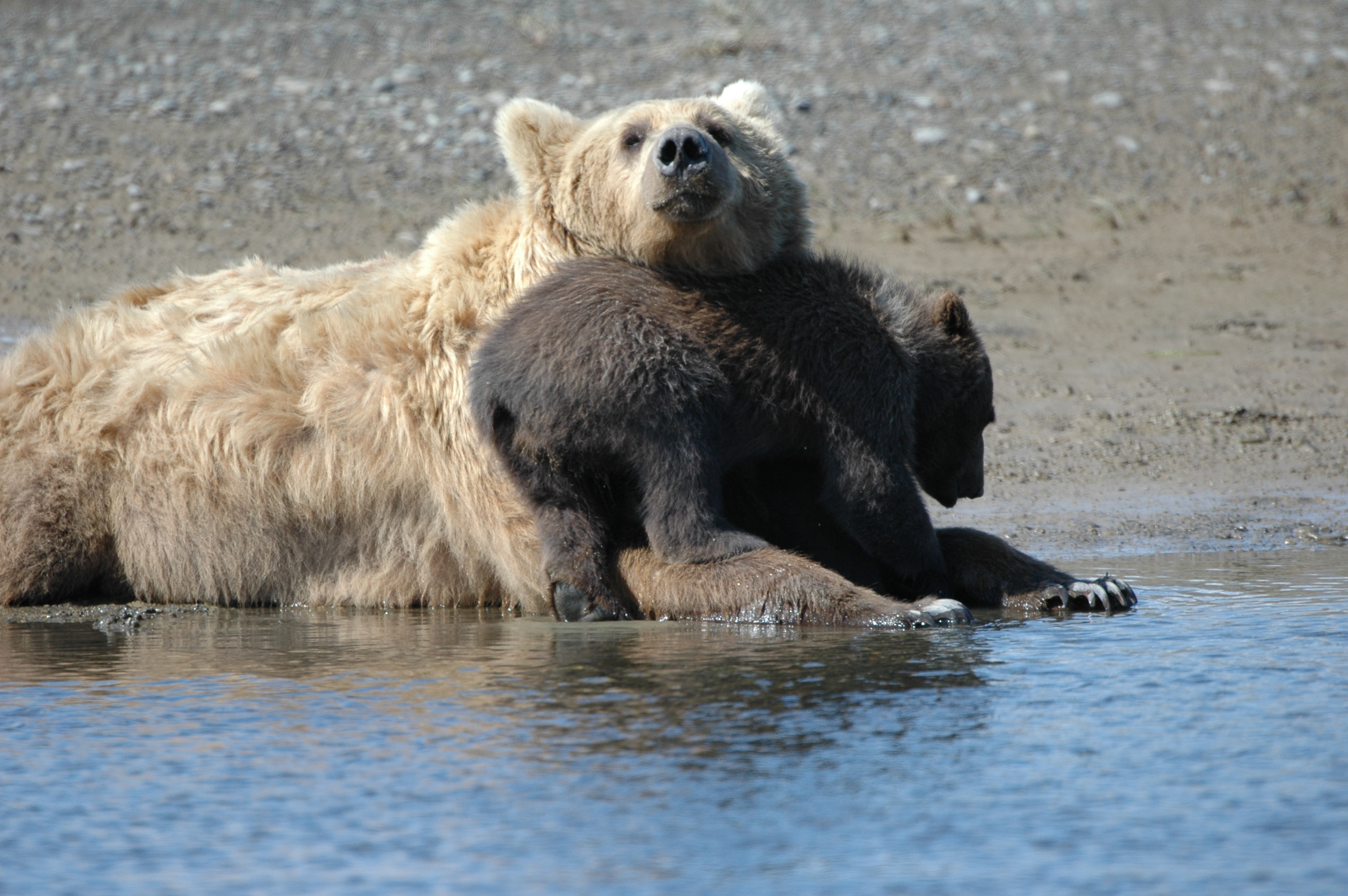
Photo Copyright Jim Robertson

Photo Copyright Jim Robertson

The proposal comes at a time when key grizzly bear food sources in the heart of the Yellowstone ecosystem have been collapsing and grizzly mortality rates have been increasing. The dramatic decline of whitebark pine and Yellowstone cutthroat trout has prompted bears to eat more meat, such as big game gut piles and livestock, resulting in increases rates of conflict with humans and grizzly bear mortality. Drought and climate change will exacerbate these problems.

A 2009 interagency report recommended more than 70 ways to reduce conflicts, including requiring hunters to carry bear pepper spray, which is proven to be much more effective than a gun in repelling a charging bear. Other recommendations included improved grazing practices, rapid removal of hunted big game from the field and increased law enforcement.

“Unfortunately the government did not incorporate these recommendations in their policies and practices,” said Willcox. “Instead of delisting grizzlies, the government should take these practical steps to reduce conflicts and the high levels of grizzly bear mortality since 2007. It’s clear that current efforts to educate the public on how to avoid conflicts are not working.”

Yellowstone’s bears have long been isolated from other bear populations, forcing the government to keep them on permanent life support by trucking bears in to avoid inbreeding. This highlights the fact that, as a result of excessive killing and habitat destruction, grizzly bears occupy only about 1 percent of their former range in the lower 48 states. And in five of the seven remaining grizzly bear recovery zones, bears have either been exterminated or are perilously close to extinction.

“Without the protection of the Endangered Species Act, grizzly bears would not likely have survived in Yellowstone,” said Willcox, “and with the unraveling of their ecosystem, there’s no doubt they still need the federal safety net in the years to come.”

A new federal study suggests the grizzly population may have been declining by an average of 4 percent per year since 2008. A second independent analysis found that the agency’s population estimate for bears may be based on flawed assumptions that inflated total population numbers.

“The feds are bending to political pressure from the states rather than providing grizzly bears the additional breathing room they need to compensate for climate change and the loss of key foods,” said Willcox. “Now is not the time for the feds to walk away from Yellowstone grizzly bears and leave their fate up to three states that want to hunt them instead of save them from extinction.”

Grizzly bears are especially important as a measure of the health of the lands where they live. Where grizzly bears are healthy, so are an array of other species, from bighorn sheep to raptors.

The Center for Biological Diversity is a national, nonprofit conservation organization with more than 675,000 members and online activists dedicated to the protection of endangered species and wild places.

http://www.biologicaldiversity.org/news/press_releases/2014/grizzly-bear-03-27-2014.html

Montana black bear hunting season opens April 15

http://www.ktvq.com/news/montana-black-bear-hunting-season-opens-april-15/

HELENA – Montana’s spring black bear hunting season opens April 15.

Hunters can buy black bear hunting licenses online at Montana Fish, Wildlife and Parks license providers, or print a paper license application and mail it in to FWP. Licenses issued through the mail may take two weeks to process.

Spring black bear hunters should purchase their license by April 14. Black bear hunting licenses purchased after April 14 may not be used until 24 hours after purchase. Black bear hunters are limited to one black bear license a year.

All black bear hunters must successfully complete FWP’s bear identification test before purchasing a black bear license. Take the bear identification test online at the agency’s website.

Complete the training and test, and then present the printed on-line certificate to purchase a license. The training and test can also be obtained on paper, with a mail-in answer card, at FWP regional offices.

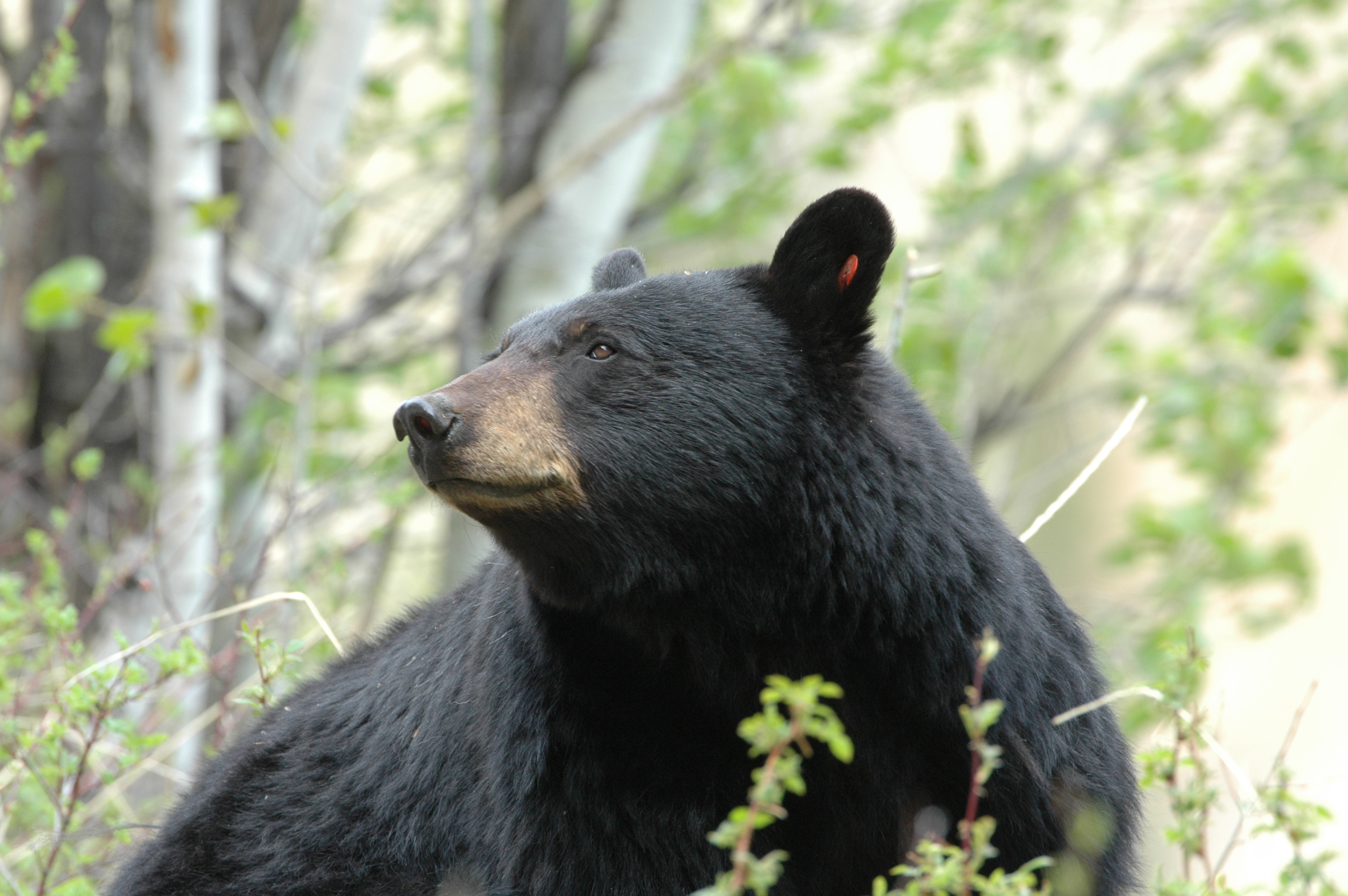
Photo Copyright Jim Robertson

Photo Copyright Jim Robertson

If Wolves Are Protected in France, Why Are They Being Hunted?

copyrighted Hayden wolf walking

http://www.care2.com/causes/if-wolves-are-protected-in-france-why-are-they-being-hunted.html

by Judy Molland
March 27, 2014

The Big Bad Wolf stock figure of so many children’s fairy tales, has surfaced again.

This time it’s in France, where there has been an outcry from animal rights groups since wolf hunts have resumed due to increased attacks by the animals after their “European comeback.”

Wolves were originally hunted to extinction by farmers in France back in the 1930s, but in 1992 a mating pair crossed the border from Italy. It is now estimated that there are around 300 individuals in 25 packs across France.

For many people, this is good news, but the Daily Telegraph reports that hunters, “wolf lieutenants,” and local farmers have grouped together to carry out a cull on the animals after sheep farmers complained of incessant attacks on their flocks.

This is in spite of the fact that the wolf is a protected species under the Berne convention and European law, meaning that it can no longer be hunted or poisoned.

So how can these hunts be legal?

It turns out that there are exceptions to this rule.

Culls can take place when all other attempts at protecting local livestock have failed. Under a government wolf plan, some 24 individuals can be “removed” in this way per year.

As it happens, the attacks have been happening just 25 miles inland from the top tourist spot of Nice on the French Riviera, and just 15 miles from Grasse, known as France’s perfume capital, which might explain the push for a cull. The hills in this region of the Var, called Caussols, have lost around 100 sheep to the grey wolf.

Conservation groups are understandably furious at the decision to re-intoduce wolf-hunting.

“To return to wolf hunts as if we were in the Middle Ages is scandalous. That the local authorities are organising them is even worse,” said Jean-François Darmstaedter, president of Ferus, who threatened to challenge their legality in the European courts.

“We call them ‘political killings’ as their only aim is to allow farmers to let off steam but they will solve nothing. Blindly shooting wolves will have no effect other than to exacerbate the problem. If you kill the alpha male, you can split up a pack, which will cause far more damage.”

And in fact, public opinion today is very much on the wolf’s side. A recent poll, commissioned by a pro-wolf group, found that 80 percent of French people wanted wolves to be protected from farmers, rather than sheep from wolves.

Neverthless, the wolf is once again under attack.

Of course, the track record in the U.S. is equally awful, especially in the state of Idaho, where state lawmakers just approved a bill that sets aside $400,000 to exterminate 500 wolves. Adding insult to injury, the bill takes management away from the state wildlife agency and places it in the hands of a “wolf depredation control board” that will consist solely of members appointed and overseen by Governor Butch Otter. This is the man who in 2007 said he wanted to be the first to kill an Idaho wolf after federal protections were taken away.

This is exactly the kind of ugly attitude that animal activists feared when Congress in 2011 stripped Endangered Species Act protections from wolves in the northern Rockies, where some 1,600 wolves have been killed since protections were lifted.

So what happened? The United States worked for 40 years to return wolves to the American landscape after they had been driven to the brink of extinction in the lower 48 states.

The Endangered Species Act allowed wolves to begin recovery, at least in a few places like the northern Rocky Mountains and Great Lakes states. After reintroductions in Yellowstone National Park and parts of Idaho, wolves came back.

Now this has all changed, as politicians in Congress have stripped federal protections from wolves and passed those protections over to the states.

Some states in the U.S. are pursuing wolves in much the same way that the French government in France is pursuing wolves in the oh-so-chic area near the French Riviera.

France and the U.S. have much in common after all, and that’s definitely not good news for wolves.

Read more: http://www.care2.com/causes/if-wolves-are-protected-in-france-why-are-they-being-hunted.html#ixzz2xBUyjqrn

Colorado Hunter In Cross Hairs After Online Bullying By Anti-Hunting Activists

[I don’t encourage people to visit these sites and “bully” the poor trophy hunters, but if the animal-killers don’t want to receive a lot of angry comments from animal advocates then they shouldn’t post photos of themselves smugly posing with their victims. That’s why child molesters don’t pose with their victims. This article doesn’t make the connection; the only victim they see is the one with the rifle.]

http://denver.cbslocal.com/2014/03/27/colorado-hunter-in-cross-hairs-after-online-bullying-by-anti-hunting-activists/

March 27, 2014
DENVER (CBS4)- A picture of a hunter posing on Facebook with her kill, a mountain lion, has put her in the cross hairs of groups that oppose hunting. She claims she’s being harassed online by animal activists- some have threatened her life.

“My first hunting experience was when I was three years old,” said Charisa Argys.

Argys lives in Buena Vista and grew up with a love of hunting after being introduced to the sport by her father.

“It’s always been quality time for us. It’s always been a time when we got to get away,” said Argys.

In February 2013 she hunted and shot a 175-pound male mountain lion. She posted pictures of her kill on the internet.

“I am very proud of what I had accomplished that day,” said Argys.

One year later that picture would result in online threats.

“My picture had been placed on an animal rights activist page,” said Argys.

That picture quickly made the rounds in cyberspace as anti-hunting organizations picked it up and re-posted it, along with hundreds of comments, some of them hurtful.

“They were calling me horrible names. They were saying they wanted to kill me, they wanted to see me dead, they called me fat, they called me ugly, they called me the B-word, they called me the C-word,” said Argys. “There really wasn’t anything they weren’t willing to call me and to say.”

One comment reads, “The only answer is to take out these psychopaths. Problem solved — animals saved.”

Another comment calls for “an eye for an eye.”

And another, “You are a disgrace to those of us who respect life, human and animal. I’d love to hunt YOU and hand YOUR head on my living room wall.”

“You know it was definitely cyberbullying. These were not just threats but I would say they were terroristic threats,” said Argys.

Argys’ shooting and killing the mountain lion is legal in Colorado.

“Absolutely it’s legal. It’s part of wildlife management,” said Colorado Parks and Wildlife spokesman Mike Porras. “You may not like hunting, we understand that. But there’s a right way and a wrong way to express your opinions.”

Porras said Argys is not the first female hunter to be the target of attacks on the internet.

“I mean there are Facebook pages harassing women that have posed with their harvest,” said Porras.

Argys said she did not expect that type of reaction when she posted her picture on the internet, “I had no idea that this type of behavior was going on.”

Argys said Silva Wadhwa, a former reporter with CNBC based in Germany, claims to have started the firestorm.

In a Facebook message to Argys, Wadhwa wrote that she doesn’t agree with trophy killing. She went on to state, “But I do not and will not ever condone or encourage insults, threats or death wishes.”

Argys said the internet comments continue but she vows not to be intimidated, “If I don’t stand up for myself and I don’t take a position on what I feel passionate about how can I expect my children to stand up if it happens to them?”

She also plans to keep hunting.cougar cub

“It was an extreme hunt and it was well worth it,” said Argys.

According to the Colorado Parks and Wildlife, Argys hunted her mountain lion in an area where there is an effort to reduce the number of wild cats.

Duck Dynasty Dillweed Wants to Go Duck Hunting With Obama

Go ahead and read about it if you want…

http://www.huffingtonpost.com/2014/03/25/willie-robertson-barack-obama_n_5028500.html

I can’t stand to reading about these Duck Dynasty dweebs any more than I can stand seeing the likes of Ted Nugent; or hearing Sarah Palin’s words of wisdom.

Better yet, why not re-read one of these EtBG classics:

https://exposingthebiggame.wordpress.com/2014/01/05/duck-dynastys-evil-is-spreading/

https://exposingthebiggame.wordpress.com/2014/01/12/dont-miss-the-premier-episode-of-black-sheep-robertson-revenge-of-the-ducks/

All I can say is, Obama better not take him up on it.

528240_503935963047593_1168066449_n

Idaho Intent on Killing Wolves in the Wilderness

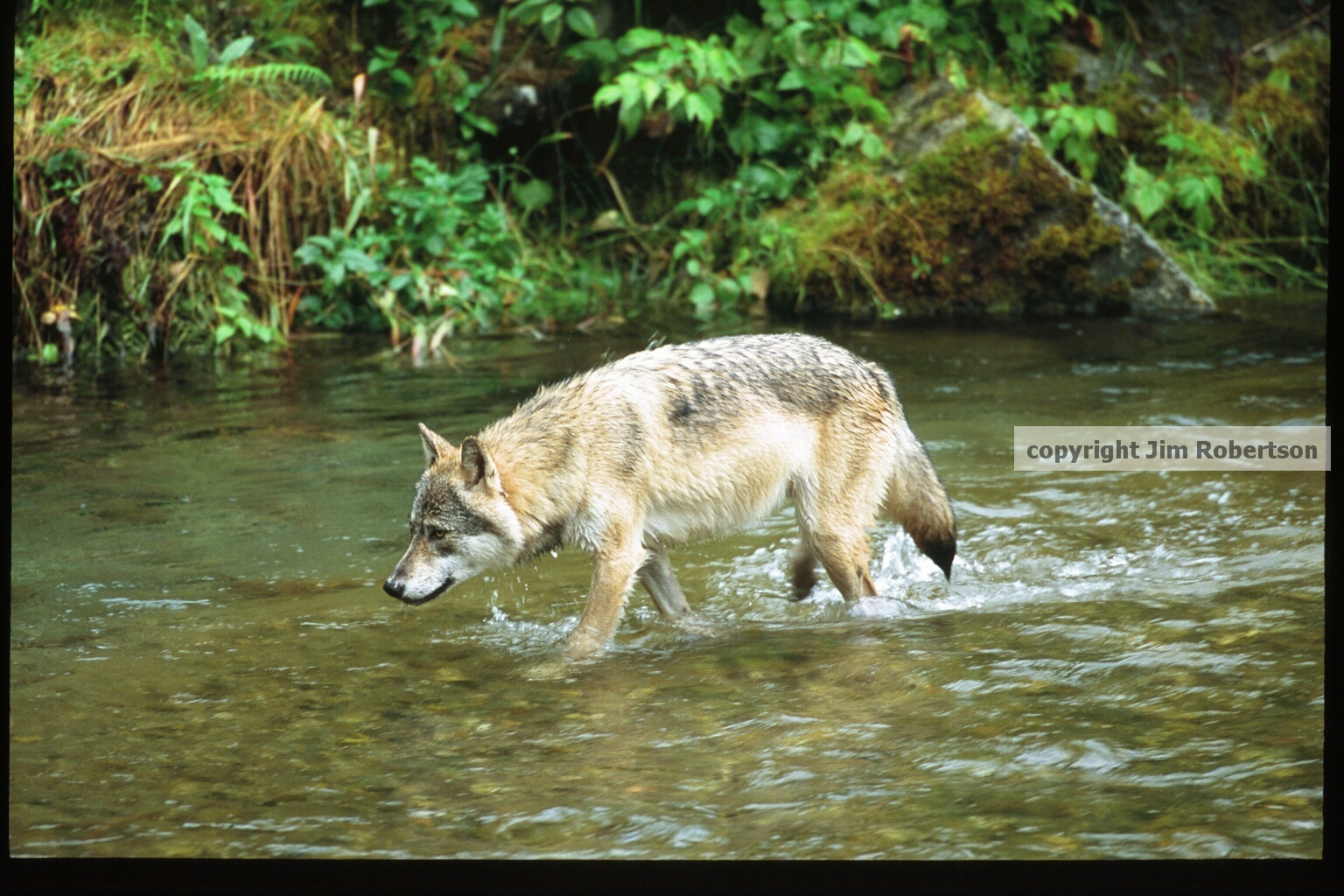
copyrighted wolf in water

By Ken Cole On February 12, 2014
The Wildlife News

New plan aims to reduce population by 60% to please elk hunters

POCATELLO, Idaho – In an effort to inflate elk populations for commercial outfitters and hunters, the Idaho Department of Fish and Game (IDFG) hopes to kill 60 percent of the wolves in the Middle Fork area of central Idaho’s Frank Church River of No Return Wilderness, according to a predator management plan for the area released this week.

IDFG’s plan calls for an intensive program of wolf killing in the largest forested wilderness area in the lower-48 states through several successive years of professional hunting and trapping efforts designed to boost the local elk population beyond the level that can be sustained through natural predator-prey interactions. It comes just weeks after a hunter-trapper hired by the state wildlife agency killed nine wolves in an effort to exterminate two wolf packs in the Middle Fork area. State officials terminated the program in the midst of an emergency court proceeding to halt the program.

Earthjustice is in court to stop the professional extermination of wolves in central Idaho’s Frank Church-River of No Return Wilderness. Last month, Earthjustice filed an emergency motion asking the Ninth Circuit Court of Appeals to preserve the wolves and their vital contribution to the wilderness character of the . Rather than presenting its legal defense to Earthjustice’s argument, IDFG temporarily halted the program until the end of June 2014. Earthjustice will be filing its opening brief later this week in the Ninth Circuit proceeding. Earthjustice is representing long-time Idaho wilderness advocate Ralph Maughan, along with Defenders of Wildlife, Western Watersheds Project, Wilderness Watch, and Center for Biological Diversity in the case.

Statement from attorney Tim Preso of the Northern Rockies office of Earthjustice.
“The state of Idaho has made clear that it intends to double down on its plan to transform the Middle Fork area of the Frank Church River of No Return Wilderness from a naturally regulated wilderness to an elk farm benefiting commercial outfitters and recreational hunters. The only thing that is not clear is whether the U.S. Forest Service will step up to defend the wilderness character of this landscape on behalf of all the American people or instead will, as it has done to date, let Idaho effectively run the area to advance its own narrow interest in elk production. For our part, we intend to do everything we can to obtain a federal court ruling that will require the Forest Service to protect this special place and its wildlife.”

Statement from Idaho resident and long-time conservationist Ralph Maughan:
“By implication our lawsuit aims to protect the entire nationwide Wilderness Preservation System from similar efforts to transform the wild into a bland farm for a few kinds of common animals.”
Statement from Idaho resident and Defenders of Wildlife representative Suzanne Stone:
“It’s clear that IDFG isn’t interested in sustainable wolf recovery. Instead, they’re focused on doing anything they can to kill as many wolves as possible in the state. That’s not responsible state wildlife management any way you look at it. Idaho committed to responsibly managing wolves when federal protections were removed just a few short years ago. Actions like this just further demonstrate that they’re failing to uphold their end of the agreement.”

Statement from Ken Cole of Western Watersheds Project:
“For the idea of wilderness to have any meaning at all, wildlife must be allowed to self-regulate, to seek its own balance, to be wild. Instead, the Idaho Department of Fish and Game insists on heavy handed management of wolves in the Frank Church-River of No Return Wilderness to benefit a tiny minority of the people who use and enjoy the area. The nation’s premier wilderness is not just a recreation area of rocks and ice, it is a thriving ecosystem that should be treated as the treasure it is.”

Statement from George Nickas, executive director of Wilderness Watch:
“The State of Idaho has shown once again it is incapable of being a responsible partner in wilderness administration. It’s high time the Forest Service exert its authority and obligation to protect the public’s interest in Wilderness and wildlife protection.”

“This outrageous plan to slaughter wolves in the lower 48’s largest wilderness in an ill-conceived attempt to increase elk numbers is only the latest example of just how backwards wildlife management has become in Idaho. Already more than 900 wolves have been killed in Idaho during state-sanctioned hunting and trapping seasons. And this unnecessary slaughter will continue unless the courts step in and stop the senseless killing.”

http://www.wildernesswatch.org/newsroom/guardian/Targets_Wolves.html

Bring Out Your Dead

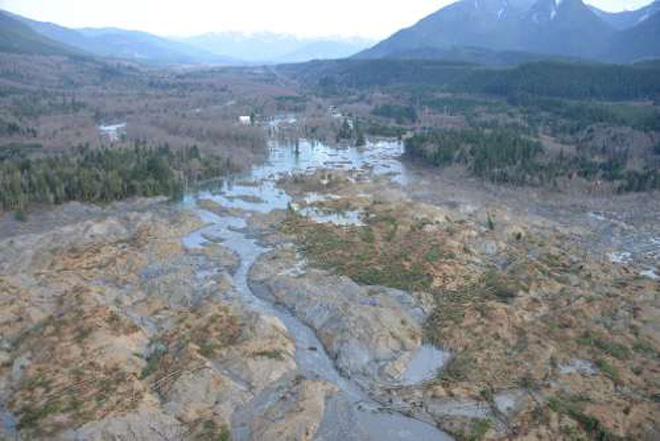
There’s a point reached in every search and rescue effort when you realize that you’re no longer searching for survivors, you’re looking for bodies. The Malaysian jet searchers surely reached it long ago, while the rescuers in the tragic Oso mudslide are still grappling with it. Today they began using cadaver-sniffing dogs, which must have been an ominous sign for those on the scene. I know as long as there’s still the slightest chance of finding someone alive they must keep searching. The thought of anyone floating the Pacific or trapped for days in the dark is enough to spur people on beyond the usual bounds of reasonability.

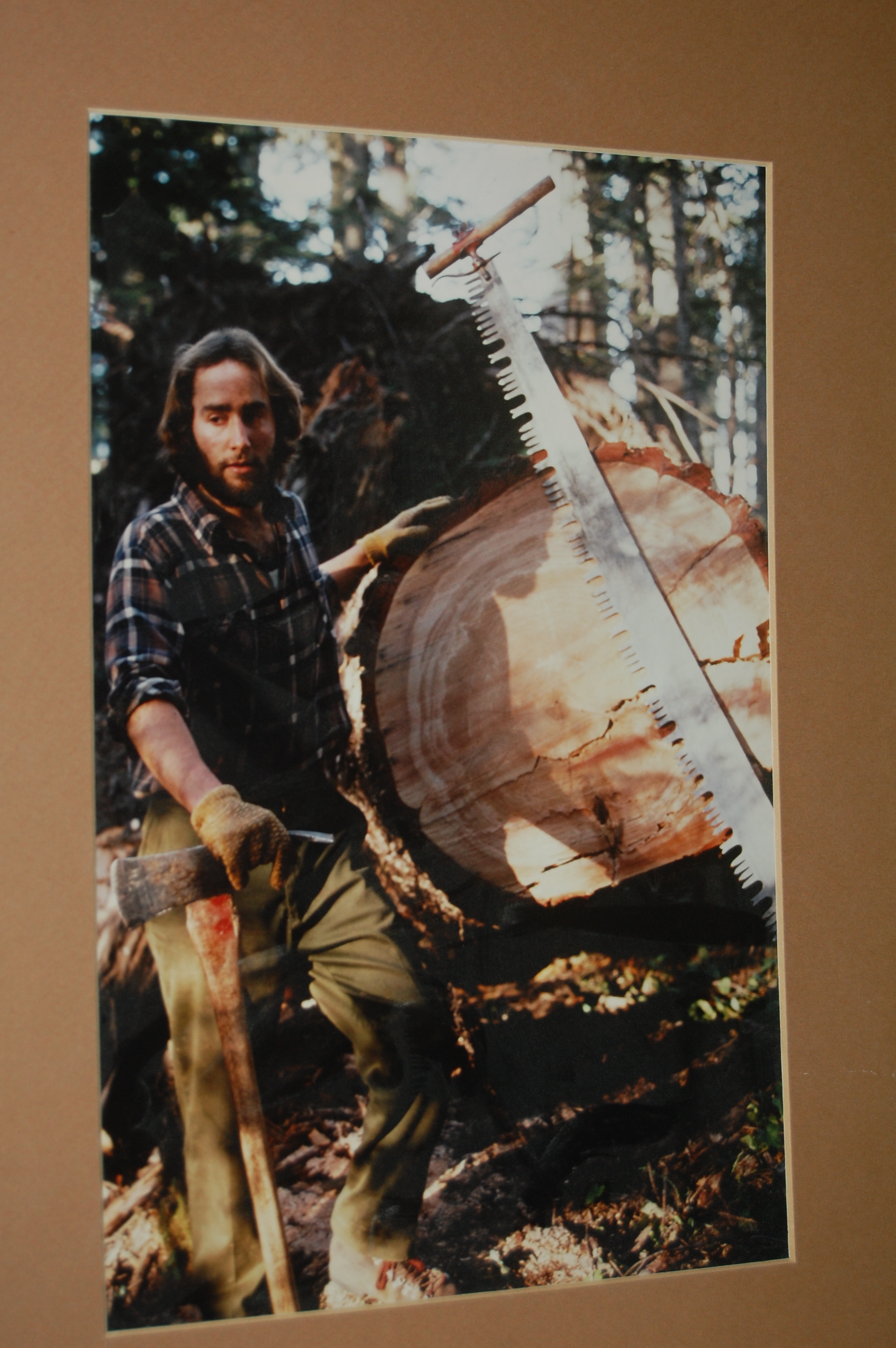
I grappled, and then reached the point of realization on day four of a search for a missing trail worker, ironically also in that same area. I was working on a trail crew on the Darrington district for the U.S. Forest Service where I not only experienced the anguish of not being able to find someone, but also frustration with a disorganized search party, led by an overly bureaucratic Forest Service and local sheriff’s department.

It was my first day out with this particular trail crew. I hadn’t yet had the chance to

Text and Photograph©Jim Robertson, 2014.

Text and Photograph©Jim Robertson, 2014.

meet the victim we would soon frantically be looking for. Her name was Jill; I remember because we yelled it over and over the first night we searched for her. She was only 18 and not very skilled in outdoor survival.

Our assignment that day had been to split into two groups and teach the wilderness rangers about clearing trails while they told us what they knew about wilderness ethics. The group I was in hiked up the Suiattle River in the Glacier Peak Wilderness area, sawing out blown down trees with a cross cut saw as we went. The other group, that included Jill, was to hike up the Sulfur Mountain trail to the snowline, cutting out blow-downs as they went.

That group was led by a gung ho wilderness ranger who was more interested in a race to the top of the mountain for a view than with staying together. They skipped past the logs across the trail and hastily made for the mountaintop. When Jill had to rest, exhausted, she told them, “You guys go on without me,” and they did just that.

The climb up to the view took a couple of hours and Jill probably got hungry or tired of waiting. Deciding to head down to camp, she must have accidentally taken an animal trail that led down toward a steep ravine—or at least that’s what we surmised later. She wasn’t there when her group returned down from their single-minded climb and she never made it back to camp. My group was about to have dinner when they burst into camp and asked if we’d seen Jill. We abandoned our meals and started up the switchbacks yelling her name but heard no reply.

Long story short, we searched for four days, over the same ground, all the while staying well clear of the steep ravine—as per the search leaders’ orders. At the morning meeting on the third day I told the sheriff I had been with a couple of volunteers and their bloodhound called in from Canada the day before. The dog had tried to drag us toward the steep mountainside that led to the ravine above Sulfur Creek, so we should be searching there. Since I was a nobody, the sheriff ignored me and ordered yet another search of the same territory, down the gentler slope to the Suiattle River, that we had covered several times already.

By the fourth day, the wilderness ranger who had abandoned Jill in the first place announced, “I really have the feeling we’re going to find her today.” No matter how I tried to share in his enthusiasm, I couldn’t help but think to myself, “We’re looking for a body now.” Anyone injured out there would have a hard time surviving so many cold nights without help. It was only then that climbers with ropes and gear were called in to check the ravine. Soon we heard the radio call to return to basecamp and abandon the search.

We weren’t told if Jill was alive or dead, just that we should stay in basecamp for “debriefing.” After several hours of waiting, we finally saw a helicopter heading our way, dangling a body bag. Those who knew her burst into tears. The morbid sight was a bit easier for me to take; by then I had known for a while that we were on a body recovery mission. During the debriefing we were told that she died instantly from the fall; I just have to trust that that was true. At least she was found; the news from Oso tells us, “Grim reality: some slide victims may not be found.”

Jill’s father later tried to sue those responsible, but learned that you can’t sue the federal government. In typical Forest Service fashion, the wilderness ranger who left Jill alone on the mountainside was not fired, but promoted to conceal any wrongdoing on his part.

140326_usgs_slide_07