Do you support I-169, which is the initiative that would ban trapping on public lands?
please go here and vote Yes: http://helenair.com/news/opinion/do-you-support-i–which-is-the-initiative-that/poll_acefc7c4-b5f5-11e3-adc6-001a4bcf887a.html
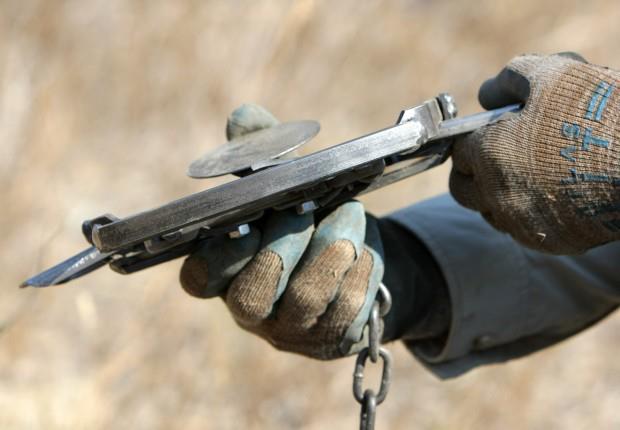

Do you support I-169, which is the initiative that would ban trapping on public lands?
please go here and vote Yes: http://helenair.com/news/opinion/do-you-support-i–which-is-the-initiative-that/poll_acefc7c4-b5f5-11e3-adc6-001a4bcf887a.html
Nebraska Governor Stands Up For Sportsmen, Veto’s Hunting Ban
Columbus, OH –(Ammoland.com)- Today, Nebraska Governor Dave Heineman vetoed a bill that would have banned Mountain lion hunting in Nebraska.
The measure, LB 671, sought to remove the authority of the state’s wildlife management professionals in favor of legislative ban on mountain lion hunting.
In his veto message, Governor Heineman stated “Nebraskans expect responsible wildlife management. LB 671 eliminates an important tool used to accomplish it. The Nebraska Game and Parks Commission should retain the ability to determine those management actions which are necessary to protect both the health and safety of our citizens and the wildlife in our state. Removing the agency’s authority to manage mountain lions through hunting at this time is poor public policy.”
The bill will now be returned to the legislature where they would need 30 yes votes to override the Governor’s veto.
“Our system of wildlife management is designed to remove political influence and allow wildlife management professionals to do their jobs,” said Nick Pinizzotto, USSA’s president and CEO.
“We’re extremely proud of Governor Heineman for standing up to protect sportsmen. This action speaks volumes about his view of hunting and scientific wildlife management. Nebraska sportsmen should call Governor Heineman today and thank him for this stance.”
On Monday, March 24, the Nebraska legislature passed the bill that removes the authority of the Nebraska Game and Parks Commission to manage the state’s growing mountain lion population. The effort to ban Mountain lion hunting is being driven by Senator Ernie Chambers. Senator Chambers has vowed to oppose every proposal of the state’s Game and Parks Commission until the mountain lion season is banned.
Nebraska added Mountain lions to the state’s list of game animals in 2012 when Governor Heineman signed LB 928 into law. In 2013, the Nebraska Game and Parks Commission took a measured approach designed to maintain, or slightly reduce—the population of mountain lions in the state.

By ANDREW C. REVKIN
March 27, 2014
It’s crow-killing time in upstate New York this weekend, and in many places around the country this spring. My friend Suzie Gilbert, a bird rehabilitator and writer (read “Flyaway”), has written a blog post criticizing this form of recreation. [Update, March 28 | She’s added a followup piece that has valuable new elements.]
Here’s an excerpt from Gilbert’s post with a link to the rest, followed by the reaction I was able to elicit via Facebook from the Rip Van Winkle Rod & Gun Club, which has organized the weekend “Crow Down” in Palenville, N.Y.:
I am not anti-hunting. I won’t pick a fight with hunters, as long as they eat what they shoot and don’t use lead ammunition. However, I will pick a fight with the Rip Van Winkle Rod and Gun Club in Palenville, New York, which is sponsoring their fourth annual “Crow Down” March 29-30, 2014.
The “Crow Down” is a “hunting contest” where both adults and children slaughter as many crows as they possibly can in two days. Why do they do this? Look at the Maryland-based website Crow Busters, although I warn you you’ll need a strong stomach for the photographs. Here is a direct (and unedited) quote:
“… keep in mind the main reason why experienced crow hunters got into the sport in the first place, Fun. Plain old fashioned Fun.”
Some people think it’s just plain fun to kill enormous numbers of animals and pile up their bodies, and when there’s no “bag limit” it’s legal to do so….
Outlawing these contests is within the purview of state government, not the Department of Environmental Conservation. New York Senators Jack Martins (R-Mineola) and Tony Avella (D-Queens) have co-sponsored a bill (#S.4074) which would make it unlawful for “any person to organize, conduct, promote or participate in any contest or competition where the objective of such contest or competition is to take the greatest number of wildlife.” I urge everyone concerned about the concept of mass slaughter in this day and age – especially when it’s being taught to children – to contact them and express support for this bill, which would protect not only crows, but all the unfairly maligned species that have been targeted for hundreds of years. Groups across the country, including Project Coyote in California, are fighting similar battles.
The plan has critics.
Kierán Suckling, executive director of the Center for Biological Diversity, said there are better ways to protect the fish, such as removing the dams. “The birds are fundamentally not being killed to save the salmon,” he said. “They are being killed to keep the dams in place that are endangering the salmon.”
CLARKSTON, Wash. (AP) – The Army Corps of Engineers this spring
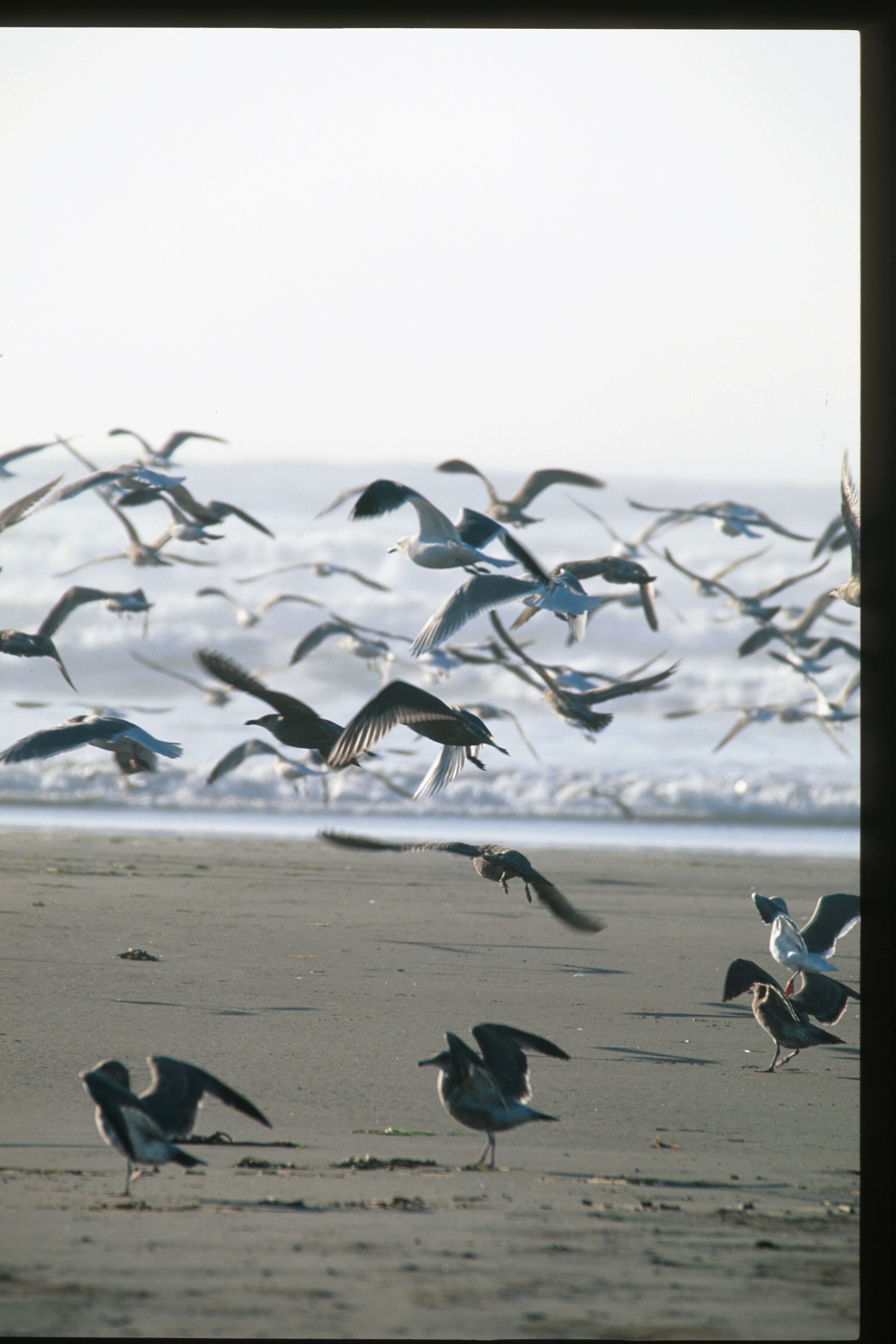
Photo Copyright Jim Robertson
The agency unveiled a plan Thursday that will allow as many as 1,200 California gulls, 650 ring-billed gulls and 150 double-crested cormorants to be killed. The birds gather at the dams and feast on the migrating salmon and steelhead which bunch up there.
The Lewiston Tribune said the action will occur at McNary Dam on the Columbia River and Ice Harbor, Lower Monumental, Little Goose and Lower Granite dams on the Snake River.
The corps said birds are typically the single largest cause of juvenile salmon and steelhead mortality. A 2009 study estimated that between 4 percent and 21 percent of smolts passing through the dams were eaten by birds.
The corps has long used non-lethal methods to scare away birds.
The plan has critics.
Kierán Suckling, executive director of the Center for Biological Diversity, said there are better ways to protect the fish, such as removing the dams.
“The birds are fundamentally not being killed to save the salmon,” he said. “They are being killed to keep the dams in place that are endangering the salmon.”
Bruce Henrickson of the Army Corps in Walla Walla said the agency has been encouraged by the National Marine Fisheries Service to consider killing problem birds. He said hazing with water cannons, fire crackers and wires strung above the river that disrupt flight paths will continue to be used.
The corps contracts with the federal Wildlife Services Agency to implement the non-lethal hazing practices. The same agency will use shotguns to kill what Henrickson called problem birds or small groups of birds.
“They observe specific individual or small group behaviors, and if those birds don’t retreat from non-lethal hazing, then lethal take is considered as an option,” he said.
None of the bird species targeted for removal at the dams is listed under the Endangered Species Act but they are protected by the Migratory Bird Treaty Act. An environmental assessment found that 2,500 California gulls, 3,400 ring-billed gulls and 705 cormorants could be killed in Washington without affecting their distribution, abundance or population trends.
https://secure.humanesociety.org/site/Advocacy?cmd=display&page=UserAction&id=6478
Kentucky: Don’t Let Abusers Cover Up Cruelty!
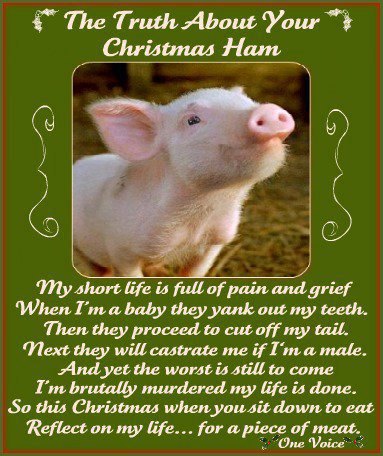
Just a few weeks ago, The Humane Society of the United States exposed horrific cruelty at a major Kentucky pig factory; including pigs locked into cages so small they couldn’t turn around and mother pigs being fed the remains of their diseased piglets. But instead of cleaning up their act, the state’s big meat producers are now trying to silence whistleblowers. The industry and its backers in the legislature are trying to sneak through an “ag-gag” law aimed at criminalizing anyone who exposes food safety violations or animal abuse on factory farms. Even worse, they have attached this poisonous provision to a formerly pro-animal bill.
TAKE ACTION
Please call your legislators right away and ask them to oppose this undemocratic effort. Look up your legislator’s phone number here. You can simply say: “I am outraged that an ag-gag provision was sneakily attached to HB222. I urge you to stop the ag-gag provision, which would threaten animals and consumer safety.”
After making your phone call (please do not skip that crucial step!), personalize and submit the letter in the form below to automatically send a follow-up message to your legislators and Gov. Steve Beshear.
27/03/2014
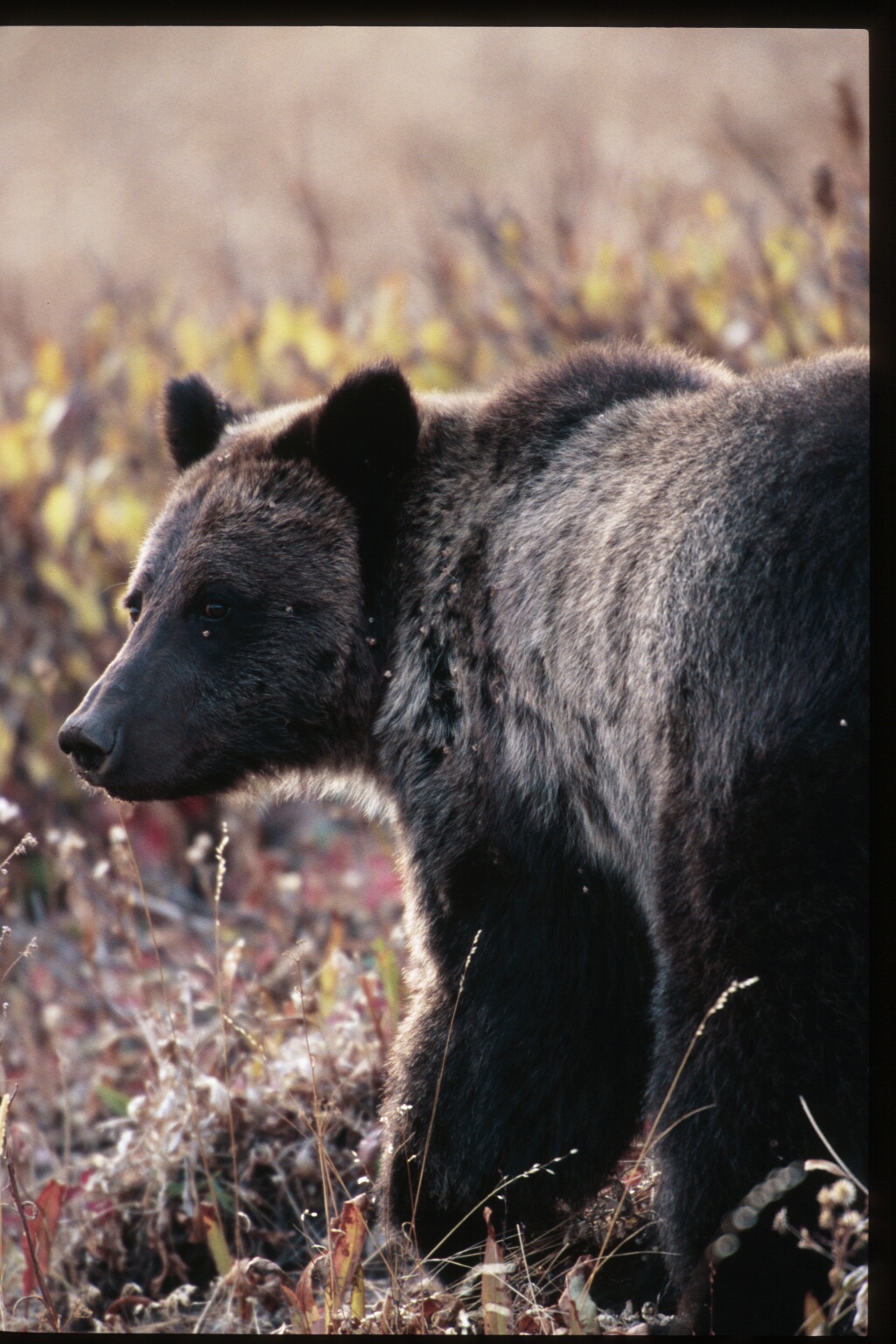
Photo Copyright Jim Robertson
March 2014: As British Columbia prepares for its annual spring grizzly bear hunting season, researchers are protesting that the hunting quotas put in place by the province are too high.
The British Columbia Government has cited that some sub-populations of bears have recovered, and therefore has opened up areas that have been closed to hunting, increasing the grizzly bear kill quota from 1,700 to 1,800. This is based on estimations by the Government of a population of around 13,000 to 14,000 grizzlies.
However, biologist at the Raincoast Conservation Foundation and the University of Victoria Paul Paquet argues that the data that has informed these estimates is inaccurate, as the methods used to collect it are outdated. Bear numbers are calculated by various techniques such as aerial surveys and traps that snag hairs of passing bears. “In many cases [the population estimate] will be based on assumptions that are maybe 10 years old,” explains Paquet, “None of this is easy, obviously. But we need to take account of the uncertainties.” Due to the way in which the data is collected, Paquet believes that the bear population could be as low as 8,000, or higher than 15,000.
Based on their findings the British Columbia Government has set a ‘maximum allowable mortality rate’ of 6 per cent of the grizzly population per year. However this mortality rate, put forward researchers, doesn’t take into account deaths by unnatural causes, such as road accidents and hunting, meaning that more bears die than the 6 per cent quoted by the Government, leading to ‘overkills’. In order to reduce the risk of overkills to a safe level, the researchers conclude that there needs to be an 81 per cent reduction of the target. “Because these are long-lived, slow-reproducing populations, they don’t necessarily recover from overkill,” Paquet explains.
Paquet along with Kyle Artelle – a conservation ecologist at Simon Fraser University in Burnaby, Canada – co-authored a letter sent to Science last week. A total of four leading scientific researchers, including Artelle and Paquet, have signed a letter questioning the province’s estimates and expanded killing zones. The concerned researchers also spoke to the journal Nature in an attempt to open the quota to debate and raise awareness of the issue.
Although the grizzly bear is listed as ‘threatened’ under the Endangered Species Act in the United States, it is not listed under Canada’s Species at Risk Act, and is not protected by the Canadian Government. British Columbia boasts a quarter of the population of all North American grizzlies, however the bear’s habitat in certain areas may be under threat. The province does have protected areas, including the Khutzeymateen Grizzly Bear Sanctuary, but this area is under pressure from firms exploring the possibility of implementing a pipeline here. In the Purcell Mountains, there are plans to build a giant ski resort near the Jumbo Pass, which would threaten the north-south migration of the grizzlies.
Read our Field guide to grizzlies here, which has details on their habitat, threats, diet, and where to see them in the wild.
“Here’s the promotional video for the national event Speak for Wolves: Yellowstone 2014, which is set to take place on June 28-29 at Arch Park in Gardiner, MT.
Hope you can make it!!”
===
Video: Courtesy Speak For Wolves
Posted in: gray wolf, biodiversity, activism
Tags: Speak For Wolves, Yellowstone 2014, Brett Haverstick, Arch Park, Gardiner Montana
‘It was the first time he had ever seen a mountain lion.’ [Too bad he couldn’t just enjoy the experience, instead of ruining it for all others and ending the life of the cat.]
http://www.foxnews.com/politics/2014/03/27/nebraska-first-mountain-lion-hunt-could-also-be-last/
By Robert Gearty
Published March 27, 2014

William “Paul” Hotz shot this 102-pound mountain lion days after Nebraska’s first sanctioned hunt of the animals began. (Courtesy: William “Paul” Hotz)
A grammar school teacher who killed a Nebraska mountain lion in the state’s first cougar hunt could also be the state’s last hunter to bag one of the trophy cats.
William “Paul” Hotz, 33, may earn that distinction if a bill halting future hunts becomes law.
He was one of three Nebraskans to kill a mountain lion after state issued permits to hunt the big cats for the first time this winter. The bill to end the hunt was passed this week by the Nebraska State Senate.
Gov. Dave Heineman has until the weekend to sign the bill into law or veto it. His spokeswoman, Jen Rae Wang, told FoxNews.com the governor is reviewing the bill and has not yet made a decision.
Mountain lions are native to Nebraska but disappeared in the late 1800s after settlers hunted them in massive numbers. The first confirmed sighting in the state in more than 100 years took place in 1991. Over the next two decades, their numbers increased, particularly in the northwestern part of the state.
The state Legislature passed a law to hold a cougar hunting season in 2012 with the aim of keeping their numbers in check in Nebraska’s rugged Pine Ridge region. The Nebraska Game and Parks Commission believes the region is home to about two dozen mountain lions.
The commission said hunters could kill four mountain lions in Pine Ridge but that if a female cougar was killed before the quota was filled, the season would end.
Hunters shot two male cats in January. One of the hunters paid $13,000 to obtain a cougar hunting license at an auction. The other hunter won his permit in a lottery.
Hotz was also a lottery winner along with 99 other hunters who were allowed to hunt cougars from Feb. 15 to March 31.
He and a friend started hunting on Feb. 26. They immediately got lucky when they spotted a big cat on a hillside near the South Dakota border.
“We had a good amount of snow two days earlier and that helped,” he said.
It was the first time he had ever seen a mountain lion. “You can spend days in the pines searching and calling and never see a cougar,” he said.
Hotz shot the cougar in the neck from a distance of about 250 yards with his 25.06 Remington rifle.
He described the hunt as a “once in a lifetime experience.”
The female mountain lion he shot had been tagged as a cub in Wyoming. The cat was five years old and weighed 102 pounds.
Because it was a female, Hotz’ kill ended the state’s hunt.
If the cougar hunt halt becomes law, Hotz would go down as the last Nebraskan to kill a mountain lion.
Hotz said he is not so sure he approves of the bill.
“I think honestly having a season is a better way to manage them than not,” he said.
The effort to end Nebraska’s mountain lion hunt was led by Omaha State Sen. Ernie Chambers, a long-time hunting opponent. Chambers said the relatively small size of the mountain lion population in Pine Ridge didn’t warrant a state-regulated hunt.
“I think it goes more to extermination than to appropriation of wildlife management,” he told FoxNews.com.
His legislation still permits killing a mountain lion to protect humans or livestock.
At a State Senate hearing on the Chambers bill in January, opponents included representatives from the Nebraska Sportsmen’s Foundation and other hunting groups.
Stacy Swinney, a Dawes County Commissioner, told senators she opposed the bill because Nebraska has a “serious mountain lion problem.”
“We now have a growing, reproducing number of one of nature’s most fearless, dangerous predators, and they walk through our homesteads at will day or night,” she said.

Two lionesses are seen at the Copenhagen Zoo on March 26, not long after four other lions were put to death.
PHOTOGRAPH BY JENS DRESLING, POLFOTO/AP
Published March 27, 2014
The four lions killed by the Copenhagen Zoo this week, as well as the healthy young giraffe named Marius put to death in February, didn’t have to die.
A global uproar has followed the deaths of two African lions and their two ten-month-old cubs. Their lives ended because the zoo wants to introduce a new male to the remaining females to bear more lions.
The same outcry was heard when a healthy young giraffe named Marius, who had the wrong genes for the facility’s breeding program, was killed with a bolt to his head—so as not to contaminate his body with poisons. The giraffe was publicly dissected and then fed to the zoo’s carnivores, including lions.
None of the deaths were euthanasia, which is a mercy killing when an animal is suffering or lingering near death and must be “put down,” as zoos always refer to such situations.
Rather, it was “zoothanasia,” or killing done by zoo workers because an animal is no longer needed for one reason or another and is deemed to be a disposable object rather than a sentient being. (Related: “Opinion: Killing of Marius the Giraffe Exposes Myths About Zoos.”)
The “Marius Effect”
Many people around the world were outraged by Marius’s death. I call this the “Marius Effect.”
Many of them had never previously voiced their opinion about the common killings of what are disparagingly called “surplus animals” by zoos, or had spoken out about other animal issues. (See “National Zoo Deaths: ‘Circle of Life’ or Animal Care Concerns?“)
While some workers at the zoo and elsewhere said the giraffe had to be killed because he didn’t fit into the zoo’s breeding program, and therefore couldn’t be used as a breeding machine (like dogs at a puppy mill), countless others disagreed. An online petition asking the zoo to hold off on the killing until another home was found received tens of thousands of signatures.
Marius was killed despite the fact that another facility had offered him a home in which he could live out his life in peace and safety.
Many others and I figured that the negative attention that the late Marius brought to the Copenhagen Zoo would serve as a catalyst to change the breeding policies of zoos in Europe. We thought those responsible for killing him would reassess what they did and question their killing ways—even if such killings were required by existing regulations put forth by the European Association of Zoos and Aquaria (EAZA). (Read more about zoos and saving rare species in National Geographic magazine.)
We couldn’t have been more wrong. Now, with the deaths of the four lions, the Copenhagen Zoo wants to become a lion mill, I would argue, and still seems to think killing healthy animals is perfectly okay.
All of the newborn lions whose kin died to make way for them will spend their lives in captivity, and some will undoubtedly be “zoothanized” in the future because they, too, will be classified as disposable “surplus” animals without the right genes to pass on to future captive lions.
The zoo also argued that the new male lion brought to the zoo would kill the youngsters and the captive group, and thus the group wouldn’t resemble a wild pride of lions, as if it previously had.
Of course, there is nothing natural about the cage in which they are kept. While some might call it an enclosure or pretty it up by calling it “lion habitat,” it is still a cage in which future lions will be mercilessly crammed, from cradle to grave.
“Perversely Justified”
I see heinous acts like killing Marius and the four lions as a perfect subject for study for researchers in the field of anthrozoology, the scientific study of human-animal relationships.
These easily avoidable deaths, perversely justified “in the name of conservation,” are horrible lessons for youngsters. They run counter to global programs in humane education and compassionate conservation, in which the life of every individual animal is valued—and not just because they can serve us in any number of ways, such as by making more of themselves for future captive breeding. (See “Is Breeding Pandas in Captivity Worth It?“)
Zoos need to change their ways and respect the caged animals for whom they are responsible as long as an individual is healthy.
Surely, people who choose to go to the Copenhagen Zoo can find other ways to spend their time and money.
Marc Bekoff is professor emeritus of ecology and evolutionary biology at the University of Colorado, Boulder. He has published numerous scientific and popular essays and 25 books, including Ignoring Nature No More: The Case for Compassionate Conservation and Why Dogs Hump and Bees Get Depressed: The Fascinating Science of Animal Intelligence, Emotions, Friendship, and Conservation.

 Exposing the Big Game