It’s Official: Wolves Are Protected In California!

Nabeki's avatarHowling For Justice

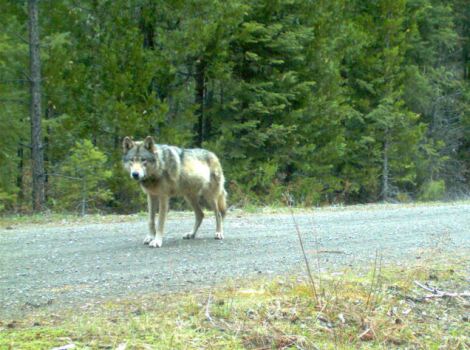
OR7

OR7  – dual citizen of California and Oregon (:

October 9, 2014

Even though, officially, there are no known gray wolves in California, the state extended endangered species protection to canis lupus today. This is critically important, since the USFWS plans to rubber stamp a national wolf delisting plan, removing all federal protections for wolves in the lower 48. Without state protections, wolves across the country will face tremendous risk.

Gray wolves are subjected to persecution in Montana,Idaho, Wisconsin, Minnesota, Michigan, even Washington and Oregon, where they remain listed. Wyoming wolves, until recently, could be shot on sight in 80% of the state. Last week, US District Judge Amy Berman Jackson,  placed Wyoming wolves  back on the Endangered Species List. Her ruling was the result of a lawsuit challenging the state’s faulty “wolf management” plan, specifically the predator zone, where wolves could…

View original post 475 more words

ALERT ~ COMMENTS ON CONTEST HUNTS DUE OCTOBER 16th ~ SPEAK OUT NOW!

logohome
http://www.projectcoyote.org/

In response to an application submitted by Idaho for Wildlife to host a Predator Hunt Derby on public land, the BLM is accepting public comments on an Environmental Assessment (EA) through October 16th.

Idaho for Wildlife is seeking to repeat their highly controversial killing contest targeting wolves, coyotes, bobcats, foxes and other predators  — offering prizes to those who kill the most and largest animals —   in a multi-year “predator derby” scheduled for the next five winters (with the next one scheduled for January 2-4, 2015).

The EA comment period comes following a scoping period that resulted in approximately 56,500 public comments of which a mere 10 were in support of the permit being issued. Thank you for making your voices heard during the scoping process! Your input is needed again!

Express your support for Alternative B- the “No Action Alternative” – which would deny Idaho for Wildlife’s request for a special recreation permit that would allow contestants to kill predators on over 3 million acres of public lands in Idaho for the next five years. This event would be damaging to the affected ecosystem, harmful to ecologically vital species, incompatible with scientific principles of wildlife management, and offensive to the concept of fair chase.

Please don’t miss this opportunity to voice your opposition (you do not have to be an Idaho resident to comment as this is federal BLM land- YOUR land!). 
You can read the EA here.

Please act now! Comments are due no later than October 16th and can be emailed to:

Liz Townley
Outdoor Recreation Planner
BLM Idaho Field Office
1206 S. Challis Street
Salmon, Idaho 83467
blm_id_predatorhuntderby@blm.gov

Please cc Project Coyote as we are tracking letters sent (info@projectcoyote.org) & remember to include your full contact info. in your signature block to ensure your comments are included in the official record.

Please include in your subject line Re: Predator Hunt Derby EA- Support for Alt. B

Talking Points:

Express your support for Alternative B – the “No Action Alternative” (please use your own words).

1.  Killing contests have nothing in common with fair chase, ethical hunting. Technology, baiting, and “calling” place wildlife at an even greater and unfair disadvantage. Hunting in winter, when species can be easily tracked in snow and when most animals are working hard to survive contravenes the notion of fair chase. Killing predators, or any wild animal, as part of a ‘contest’ or ‘derby’ is ethically indefensible and ecologically reckless.

2.  Bloodsport contests are conducted for profit, entertainment, prizes and, simply, for the “fun” of killing. No evidence exists showing that predator killing contests control problem animals or serve any beneficial management function. Coyote populations that are not exploited (that is hunted, trapped, or controlled by other means), form stable “extended family” social structures that naturally limit overall coyote populations through defense of territory and the suppression of breeding by subordinate female members of the family group.

3. The importance of wolves, coyotes and other predators in maintaining order, stability, and productivity in ecosystems has been well documented in peer- reviewed scientific literature. Coyotes provide myriad ecosystem services that benefit humans including their control of rodents and rabbits, which compete with domestic livestock for available forage. As apex predators wolves increase biodiversity and ecological integrity.

4.  With fewer than 700 wolves in Idaho and poaching a common problem, allowing a killing contest of a species just off the endangered species list is reckless, indefensible and counter to sound science.

5. Economically, a live wolf is worth far more than a dead one. Wolf watching has brought in millions of dollars into Idaho and tourism is a major economic revenue source. Furthermore, issuing the permit is likely to affect tourism in Idaho as those who value wildlife decide not to visit due to the state’s draconian predator management policies.

6.  Wildlife killing contests perpetuate a culture of violence and send the message to children that life has little value and that an entire species of animals is disposable.

7.  Wildlife killing contests put non-target animals, companion animals, and people at risk. Domestic dogs are sometimes mistaken for coyotes and wolves.

Cowspiracy: The Sustainability Secret

10401438_268406586684204_5581115448172125682_n

Directors: Kip Andersen, Keegan Kuhn
Starring: Michael Pollan, Dr. Richard Oppenlander, Dr. Will Tuttle, Howard Lyman, Will Potter

COWSPIRACY: The Sustainability Secret is a groundbreaking feature-length environmental documentary following an intrepid filmmaker as he uncovers the most destructive industry facing the planet today – and investigates why the world’s leading environmental organizations are too afraid to talk about it. As eye-opening as Blackfish and as inspiring as An Inconvenient Truth, this shocking yet humorous documentary reveals the absolutely devastating environmental impact large-scale factory farming has on our planet.
Hosting a screening or wanting to know more? Access the promoter resources here!

10/8 – Austin, TX – tugg.com/events/11087
10/9 – Murrieta, CA – tugg.com/events/11016
10/9 – Eugene, OR – bit.ly/CowTugg
10/11 – San Francisco – bit.ly/10D0As2
10/12 – San Francisco – bit.ly/10D0As2
10/12 – Johannesburg, South Africa – on.fb.me/XYHMCa
10/13 – London, UK – bit.ly/1qlJ6p1
10/13 – Yonkers, NY – tugg.com/events/11062
10/14 – Berlin, Germany – bit.ly/1tRFVeP
10/14 – Arlington, TX – tugg.com/events/11144
10/14 – Columbia, SC – tugg.com/events/11165
10/15 – Drayton, Queensland, Australia – on.fb.me/1v9PPaf
10/15 – Spokane, WA – tugg.com/events/11080
10/15 – Erie, PA – bit.ly/CowTugg
10/15 – Orange, CA – tugg.com/events/11304
10/16 – Rotterdam, Netherlands – bit.ly/1nWh1up
10/16 – Atlanta, GA – *sold out*
10/16 – Metairie, LA – tugg.com/events/11259
10/16 – Hendersonville, TN – tugg.com/events/11053
10/16 – Minneapolis, MN – *sold out*
10/16 – Westminster, CO – tugg.com/events/11234
10/16 – Sausalito, CA – tugg.com/events/11241
10/16 – Pasadena, CA – tugg.com/events/11325
10/16 – Fargo, ND – tugg.com/events/11180
10/18 – Amsterdam, Netherlands (Haarlem)- bit.ly/1uikhOp
10/20 – Dallas, TX – tugg.com/events/11374
10/20 – North Fort Myers, FL – bit.ly/CowTugg
10/20 – Royal Palm Beach, FL – tugg.com/events/11289
10/21 – Berkeley, CA – tugg.com/events/11309
10/21 – Orange Beach, AL – tugg.com/events/11176
10/22 – Salt Lake City, UT – tugg.com/events/11204
10/22 – Shererville, IN – tugg.com/events/11157
10/22 – Hamilton, NJ – tugg.com/events/11308
10/23 – Greensboro, NC – tugg.com/events/11296
10/23 – Deltona, FL – tugg.com/events/11353
10/23 – Lake Buena Vista, FL – tugg.com/events/11347
10/23 – Rockville Centre, NY – *free* –tugg.com/events/11123
10/23 – Spokane, WA – tugg.com/events/11124
10/23 – Millbury, MA – tugg.com/events/11379
10/23 – Middletown, DE – tugg.com/events/11102
10/23 – Ithaca, NY – tugg.com/events/11373
10/27 – Carlsbad, CA – bit.ly/1txaz9m
10/28 – Santa Ana, CA – tugg.com/events/11356
10/28 – Bethesda, MD – tugg.com/events/11422
10/28 – Royal Oak, MI – tugg.com/events/11163
10/28 – Pensacola, FL – tugg.com/events/11178
10/28 – Ann Arbor, MI – tugg.com/events/11143
10/29 – Medford, OR – tugg.com/events/11378
10/29 – West Covina, CA – tugg.com/events/11251
10/30 – San Antonio, TX – .tugg.com/events/11360
10/30 – Boulder, CO – tugg.com/events/11187
11/1 – Charleston, SC – tugg.com/events/11455
11/5 – Medford, OR – tugg.com/events/11378
11/5 – Seattle, WA – tugg.com/events/11319
11/5 – Tacoma, WA – tugg.com/events/11415
11/6 – San Francisco – cowspiracysf.brownpapertickets.com/
11/6 – Sioux Falls, SD – tugg.com/events/11008
11/6 – Santa Cruz, CA – tugg.com/events/11340
11/6 – Santa Rosa, CA – tugg.com/events/11192
11/6 – West Covina, CA – tugg.com/events/11251
11/6 – Alexandria, VA – tugg.com/events/11363
11/6 – Davie, FL – tugg.com/events/11451
11/8 – Dorset, UK – bit.ly/1srdNR4
11/10 – Irvine, CA – tugg.com/events/11274
11/11 – Lanesboro, MA – tugg.com/events/11376
11/13 – Athens, GA – tugg.com/events/11441
11/13 – Jacksonville, FL – tugg.com/events/11527
11/19 – Des Peres, MO – tugg.com/events/11354
11/19 – Las Vegas – tugg.com/events/11365
11/20 – Kailua Kona, HI – tugg.com/events/11183
12/4 – Bainbridge Island, WA – tugg.com/events/11300

If you organized a screening and it’s not listed here, let us know and we’ll add it to the calendar.

If you’d like to see Cowspiracy in a theater near you, it’s easy (and free) to make it happen: tugg.com/titles/cowspiracy.

To purchase a license to host your own screening (anywhere in the world), visit http://cowspiracy.bigcartel.com/product/community-screening-with-admission.

Of Wolves and Men…….

Nabeki's avatarHowling For Justice

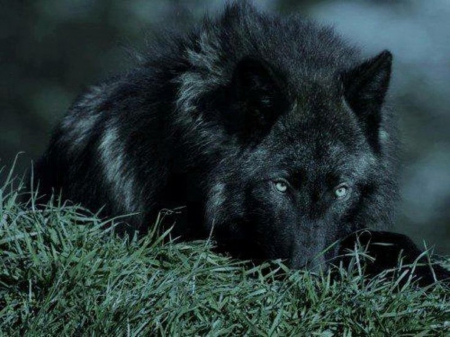
black wolf nexus wallpaper

October 7, 2014

This was one of my first posts. It traces the origins of wolf hatred and persecution. Wolves have suffered greatly at the hands of man.

===

September 29, 2009

Nature Magazine examines reasons behind wolf hatred and the systematic campaign to remove them from the lower forty-eight. It merits repeating that for thousands of years Native Americans were able to live with wolves and bears, while settlers saw them as a threat. Even the famed naturalist James Audubon partook in torturing wolves, which was particularly shocking to learn.

As noted in Michael Robinson’s “Predatory Bureaucracy: The Extermination of Wolves and the Transformation of the West”, the federal government became the wolf killing arm for the livestock industry.

By understanding the roots of wolf prejudice it’s clear to see why wolves have been demonized in American culture. The wolf has paid dearly for these attitudes. Even though…

View original post 1,591 more words

Patricia Randolph’s Madravenspeak: Wolf biologists recommend suspension of Wisconsin wolf hunt

dvoight09's avatarWisconsin Wildlife Ethic-Vote Our Wildlife

wolf pups 2

“The range of possible (wolf) mortality rates (may be) as high as 35–55 percent, or 7–27 percent higher than reported by the state.” — wolf biologists’ letter to U.S. Fish and Wildlife Service

When nature organized this country, 2 million wolves graced the United States. Now state agencies man-handle nature as a game preserve for the 6 percent who kill. Less than 5,000 (0.025 percent of 2 million) wolves survive, under assault, about half of them in Minnesota. Red wolves are near extinction.

Wolves were the first endangered key predator species to be delisted legislatively, for a political agenda, not for scientific recovery. It was a gross violation of the Endangered Species Act. Sen. Jon Tester of Montana, a rancher, wanted wolves for his constituency to kill, and the Democrats wanted to keep his seat and the Senate — so the ESA was violated, as were the wolves and our…

View original post 863 more words

As wolves return, so do tensions with ranchers

As wolves return, so do tensions with ranchers

Wolves are making a comeback in Eastern Washington’s timbered mountains and dry-grass lowlands, with their population growing 38 percent in the last six years. The price of success, though, includes growing conflicts with ranchers.

Seattle Times environment reporter

When the cougar trackers finally figured out it wasn’t a big cat that was wiping out Dave Dashiell’s livestock, the wolves already were on their way to killing or wounding 33 sheep.

By then even dogs, traps and specialists armed with lights, paintball guns and rubber bullets couldn’t keep the wolves and livestock apart.

“There were days when I walked down a drainage and when I came back two hours later there was a dead lamb where I walked,” Dashiell’s tearful wife, Julie, told a state wildlife panel last weekend.

And by the time a government aerial hunter aboard a helicopter unintentionally shot and killed a breeding female wolf amid the cedar, grand fir and thick underbrush of Dashiell’s Stevens County grazing land, the outrage had reached almost everyone.

Less than a decade after the state’s first wolf pack in 70 years returned to Eastern Washington’s timbered mountains and dry-grass lowlands, tempers have returned to a boil. But with the state’s wolf packs now numbering 15 and wolf populations growing 38 percent in six years, these conflicts, in some ways, are the price of success.

For the last six weeks, it seems, no side has been happy. Ranchers are furious that the state backed off in September without killing more of northeast Washington’s Huckleberry wolf pack. Conservationists are furious that the lone wolf killed after conflicts with livestock was the one government officials implied they would not target.

Tens of thousand of emails flooded the state, most opposed to killing wolves at all. One county adopted a resolution proclaiming its citizens free to kill the predators themselves. Another county declared a state of emergency.

Trappers just this weekend started trying to catch or dart a wolf so habituated to people she’s aggravating rural residents and playing with nearby sheep dogs. A legislator told wildlife officials that ranchers were getting death threats. One reported his cows being shot.

The tensions highlight a reality that wolf experts have known Washington would face eventually: The chief barrier to the return of healthy populations of Canis lupus is rarely habitat or disease, but maintaining a healthy degree of social tolerance.

“Yes, wolves are recovering, and their population is increasing and naturally dispersing,” said Nate Pamplin, who oversees the wolf program for the Washington Department of Fish and Wildlife (WDFW). “We’ll do everything we can to minimize conflicts. But it will be necessary at times for the department to lethally remove wolves.”

Yet with a wildlife issue that touches hearts and pocketbooks, and salts festering wounds left by decades of land-use battles, details matter.

While wolf recovery enjoys overwhelming support in Washington, how well recovery will proceed in coming years depends in part on how all sides navigate these budding skirmishes.

Because nobody thinks they are going away.

Trouble on the rise

Aside from the Methow Valley cattle rancher who killed a wolf and tried to mail its pelt to Canada in a bloody FedEx box in 2008, Washington wolf recovery had, for the most part, been relatively smooth. Until two years ago.

In 2012, wildlife officials killed seven wolves in northeast Washington after several were caught killing cattle owned by a rancher very public about his disdain for wolves.

After a quiet grazing season in 2013, the conflicts blew in like a tornado again this summer.

When some of the sheep Dave and Julie Dashiell turned out on their private allotment on Hancock Timber land in June went missing, they attributed it at first to the cost of doing business. When more died, they thought they had a hungry cougar, but experts determined the culprit was canine.

Then the Dashiells’ losses mounted through August, and state teams sent to haze the wolves weren’t effective. The state contracted with a federal government hunter to shoot up to four younger wolves. But the terrain is so thick, dense and steep, and the helicopter had only a brief window to work, so the hunter killed a single wolf, which turned out to be the pack’s breeding female.

“It was less than ideal for us to learn that,” Pamplin said. But the state pointed to studies suggesting packs in Alaska often stay together even when a different female assumes mating duties.

With Labor Day coming and grouse season starting up, state officials decided hunting or trapping had to end.

The Dashiells moved their sheep to new rangeland, which proved difficult to find, and discovered several hundred sheep were missing. The losses may have nothing to do with wolves, but for many the link was clear.

“My husband and I came from nothing,” a clearly shaken Julie Dashiell said last weekend. “We came from nothing to watch it all go down the drain in a matter of minutes. Our losses probably total over $100,000.”

While the move and the lone wolf-kill appeared to halt livestock deaths for the moment, Eastern Washington ranchers were livid the state didn’t keep reducing the pack.

“If we’re going to have livestock and wolves on the environment, something is going to die,” Stevens County Commissioner Wes McCart told the commission that oversees WDFW. “And right now it seems like that’s a one-way street.”

Len McIrvin, who lost two cows on different rangeland and was the cattleman who lost the livestock in 2012, was more blunt: “Our ancestors knew what had to happen — you get poison and you kill the wolves,” he said.

McIrvin said he’s been harassed by wolf lovers. A Ferry County sheriff’s deputy confirmed last week that a cow was shot on McIrvin’s land. But he pointed out that the cow was butchered, which made it more likely an act of someone stealing meat rather than a political protest.

As the tensions deepened during the last two months, environmentalists held a conference call with the governor, and the Dashiells’ summer conflict quickly become the center of a major dispute that has simmered since 2012:

When, precisely, should the state start killing wolves? How much did this rancher — and should others — do proactively to avoid potential conflict? And who decides, before the wolf-killing starts, whether or not ranchers’ efforts have been enough?

Wildlife officials maintain these issues are largely settled, with some steps outlined in the state’s wolf recovery plan.

And the Dashiells certainly had taken steps to avoid wolf-livestock conflicts. They helpfully put off grazing until late June, after deer and moose have given birth, which offers wolves an alternate source of food. Dashiell and his wife ran sheep using guard dogs, which can deter predators.

And he moved quickly when necessary to remove carcasses of dead livestock so they wouldn’t attract more wolves.

Dashiell, however, didn’t enter into a cooperative agreement with the state to take proactive measures, such as using range riders, which the department would help pay for.

Before wolves are killed, “we need a referee in real time that people trust who could judge whether a rancher has shown due diligence,” said Mitch Friedman of Conservation Northwest.

Calls to Dashiell’s cellphone were returned by Jamie Henneman, a spokeswoman for Stevens County’s local ranching group. Henneman said ranchers already are doing everything they could possibly do.

“The rancher is running a private business,” she said. “He needs to have the latitude to run his business any way he thinks is best.”

Finding what works

While the state’s wolf population still hovers in the low 50s, a dozen of the 15 packs are located in northeast Washington, with conflicts mostly stemming from just two — the Huckleberry and Profanity packs.

So some ranchers there are trying to be pragmatic.

For the last several years, John and Melva Dawson and their son Jeff, outside Colville, have used money from outside groups to hire their daughter to work as a professional range rider.

“The wolves are here to stay — haven’t got a choice about that,” said John Dawson. “We can’t just go out like a wild man and start shooting them all. So I’m trying to do whatever I can to just stay in business.”

His daughter puts in up to 12 hours a day for five months, circling the cattle, preventing contact by wolves. And when a wolf with a radio collar is near, she tracks the animal on her laptop and goes out with her four-wheeler to drive it away.

“Sometimes they just circle around and get out of sight,” Dawson said. “But we’re putting the message to them that they don’t want to eat here.”

The Dawsons haven’t lost a cow to a wolf in years, and if they did, some environmentalists say they would react without suspicion.

“If a pack started eating Dawson’s cattle, I’d say, kill those buggers,” Friedman, the environmentalist, said. “We know sometimes wolves have to go. The debate occurs when ranchers are being less than diligent or when pro-wolf people suspect anti-wolf people are manipulating them.”

No one believes range riders are the solution to every wolf conflict. The terrain in Eastern Washington is often too rough and brushy. And managing sheep can be more complex than running cattle.

But state officials said they know this corner of the state hasn’t seen its last conflict. State officials are hosting a meeting in Colville on Tuesday to talk with ranchers and others about wolves — and to encourage more people to consider precautionary steps.

“I remain very concerned about this pack coming into the next grazing season,” Pamplin, with WDFW, said of Huckleberry. “We’re going to work very hard with this rancher and others to figure out what preventive measures can be deployed. Are there other things that can be considered?”

But if conflicts resurface, some wolves again may have to go, he said, “but not at a level that hinders recovery in Washington.”

Craig Welch: 206-464-2093 or cwelch@seattletimes.com.
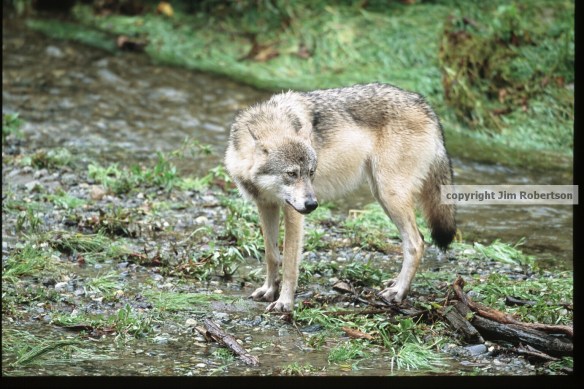
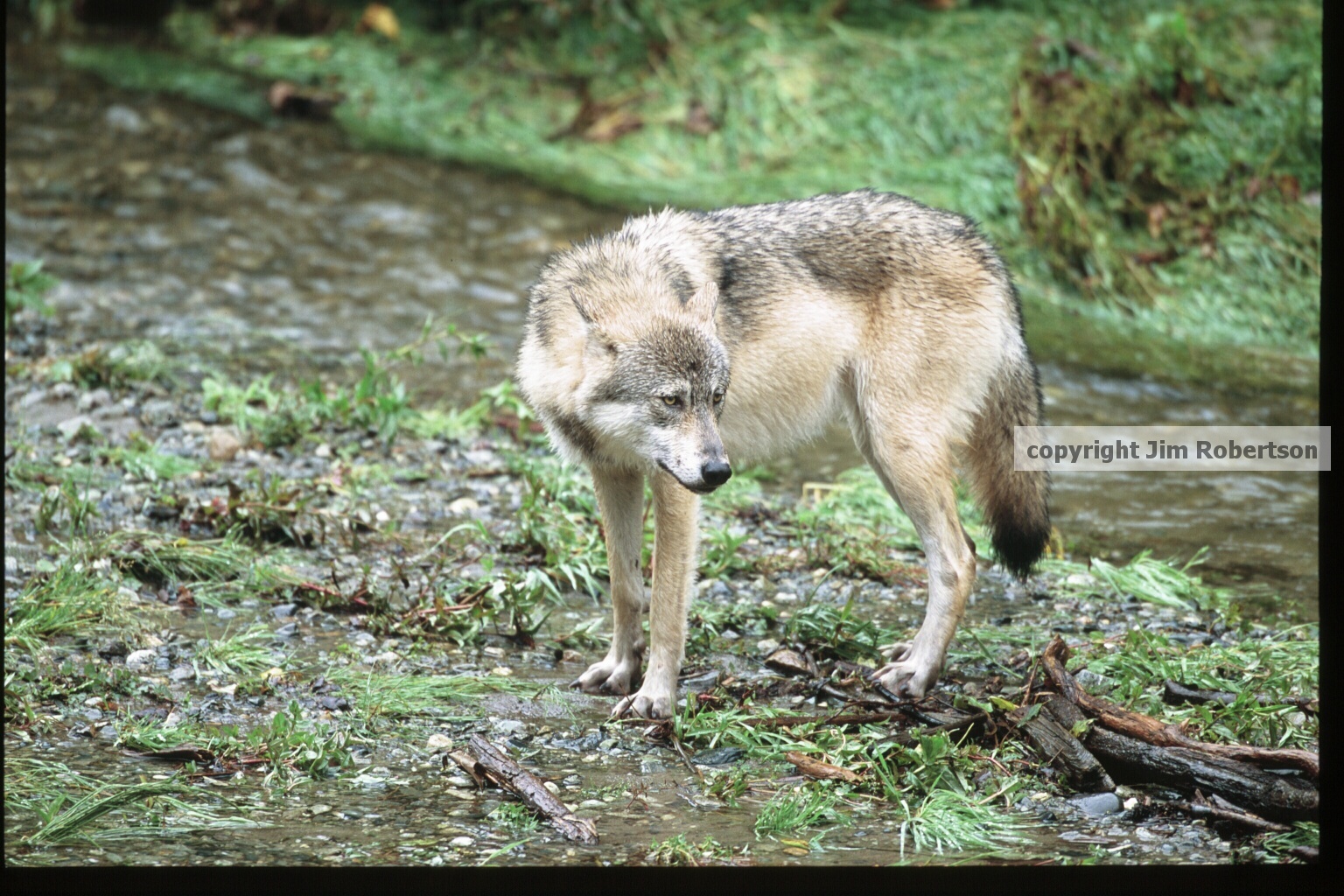
copyrighted wolf in river

A Cure for Climate Change: Muscle Over Motor

067

[Why hasn’t this caught on, in the age of carbon footprint awareness?]

http://www.mrmoneymustache.com/2011/12/05/muscle-over-motor/

It’s definitely late fall here in Colorado, and the trees have dumped most of their leaves onto the ground. In my neighborhood, this invariably triggers a flurry of lawn contractor activity. A pickup truck pulling a long trailer full of equipment pulls up, a fleet of young guys gets out and each picks up a leafblower, then for the next hour they blow leaves and gasoline fumes back and forth at each other while the surrounding square mile of city becomes a toxic and ear-splitting war zone. Eventually they manage to get a portion of the leaves into plastic bags in their trailer and they motor off.
Just a few days ago, there was yet another snowstorm here, dropping four inches of luxurious fluffy powder onto the newly blown lawns. I was enjoying a quick bike riding errand through the stuff when I encountered another one of my fellow Longmontians clearing the light powder from his short sidewalk with a SNOWBLOWER! Like 99% of the snowfalls in this region, this was a quantity of snow that could have been easily swept aside with a shovel, or a broom, or even a tiny little bird feather.. but my man was out there doing his duty with a gas-powered appliance. The stench leaking from the crude 2-stroke engine left a stain in the air that could be smelled from 500 feet away.
Earlier in the week, when the temperature was in the 60s, other neighbors were using gas-powered lawnmowers to slowly mow their lawns while simultaneously sucking up and chopping the autumn leaves into the lawnmower’s bag, which they then threw out with their weekly trash.
All of these events led my brilliant engineer’s brain to come up with a few new Inventions:
Imagine a leafblower so advanced that it harnesses the power of your abdomen and biceps, while sucking away your stored fat reserves. Yet it operates nearly silently and costs under 15 bucks. With just a simple wooden handle and a few ounces of sturdy bent plastic or metal prongs, it could be lightweight and quite wide, and be able to clear thousands of square feet of densely-packed leaves per hour, leaving you feeling refreshed and healthier and more connected with Nature every time you use it.
Imagine a snowblower so supreme that it works a complementary set of muscles to the leafblower above: your shoulders and your lower back, as well as the hamstrings and portions of the gluteus. It also operates with silky silence, and it ALSO gets 100% of its power from the ultimate renewable resource – your beer belly. You would assume this would cost hundreds of thousands of dollars, right? Wrong! This too is under fifteen bucks.
My next invention is an advanced motorcycle that weighs less than thirty pounds and costs less than three hundred dollars. Yet it has a range of over a hundred miles per day, and you never have to find a power outlet to plug it in, because its power source is – you guessed it – the cellulite stored in your ass which gets converted into muscles in your legs and calves as a side effect of the transportation!!
I know I am blowing your mind with these inventions, but I actually have working prototypes right in my garden shed and garage.
I also have a lawnmower with a spinning reel of sharp metal blades that gets its power from me pushing on the handle, and even a boat (which I am demonstrating for you in the picture below), that is 11 feet long, and able to navigate everything from tranquil lakes to roaring ocean surf waves to car-sized river rapids.. but which deflates to fit in a bike trailer, weighs less than 25 pounds, costs less than $100, and is also powered entirely by muscles.
Yee Haw! Motorboats be damned.
I think you might be noticing a pattern here. And the pattern is of course Muscle over Motor. It’s more than just an article. It’s a Founding Principle of Mustachianism, because when you embrace it, it adds great fun to your life even while it simultaneously strips away the fat from your physique and your budget. It’s one of the most powerful little three-word sentences you can embrace.
Because of the power of Muscle over Motor, you should be deeply suspicious of anything with a motor. A motor represents a shortcut to getting something done. That sounds good on the surface, but you must consider what you are shortcutting.
A motorboat will get you across the lake quickly, but wait a minute, you like being on the lake – so why not use your muscles to actually earn your trip across it. It takes longer – that is a good thing. You will enjoy the beers on the deck afterwards much more when you really deserve them.
A Hummer will get you up the logging road and across the rocky meadows. But dude, you’re sitting in a glorified Lazy-Boy recliner and pushing on a pedal. What kind of wussy way of climbing a mountain is that? Leave the motor vehicles where the pavement ends and put on your hiking boots like a Real Man or Woman (or a pair of old flip-flops if you want to be even more badass like a local ultrahiker friend of mine). If you want speed and the ability to cross dozens of miles of terrain per day (as well as catching much more air on the descents), try a mountain bike instead of an SUV.
A Harley with its quiet stock mufflers replaced with illegal straight pipes will get you through some beautiful rocky canyon roads and allow you to ruin the outdoor dining of thousands of people in the hopping downtown Chicago restaurant districts. But a nice lightweight road bike will get you up the same roads and let you hear the birds at the same time, and your resulting muscular physique and healthy glow will get a lot more positive attention in downtown Chicago than the overpriced motorcycle and standard-issue black leather “Independent-minded Renegade Harley® Rider” Halloween costume ever will.
If you need to carry a few bags of cement over to a neighbor’s house, try a wheelbarrow or dolly instead of a pickup truck. If you need to get up to a different level of a building, give me a break, you don’t need an elevator or escalator… find the stairs! You work on the 63rd floor? I envy you!
In the gym, the machines with displays are to be mocked, because there is already a much more effective yet simpler tool that helps you exercise, namely the chunks of metal with handles on them in the free weights section.. or better yet, in your own garage or basement or living room or friend’s house. Even if you’re missing some of your younger physical abilities or you are in a wheelchair, you can still use what you’ve still got to kick as much ass as possible!
The thing about this philosophy is that it keeps you very busy, which means it keeps you out of trouble. If you are following Muscle over Motor, your leisure time is packed with active high-effort outdoor activities which you love. And because of this, you don’t even have time to take up expensive hobbies like waterskiing behind a powerboat, or jacking up your Jeep so it has higher ground clearance so you can drive it around the trails at Moab, or riding ATVs around to shoot at animals. These are surely fun activities as well, but we all have a finite amount of time and money. So which activities do we choose: the expensive ones where you sit on your butt and twist a throttle? Or the low-cost ones that also make us healthy and develop our physical skills?
This isn’t a perfect rule, because there are exceptions. Motors are still useful when we’re trying to get some serious work done. I’m not suggesting that the world’s excavator operators climb down out of their cabins and pick up garden shovels, or that carpenters sell their table saws and start cutting 16-foot trim boards with a handsaw. Taxi drivers may or may not want to switch to rickshaws, and accountants should definitely not give up their computers.
But when applied to most of your life, this whole idea of powering your own damned recreational activities (including lawn care) is a great one. It’s another form of Insourcing, but it applies to everyone, not just homeowners with chores.  If you find yourself tempted to use a motor when a muscle will do just as well, you should imagine me hovering behind you and reminding you of the slogan every time you reach for a gas-powered lifestyle accessory. More: http://www.mrmoneymustache.com/2011/12/05/muscle-over-motor/
[Again, why hasn’t this caught on, in the age of carbon footprint awareness?]

U.S. Gun Owners Outnumbered Hunters by 5 to 1 in 2011

Featured Image -- 6302

http://cnsnews.com/news/article/us-gun-owners-outnumbered-hunters-5-1-2011#.VDGi428wqkc.facebook

February 4, 2013 – 3:05 PM

(CNSNews.com) — In 2011, gun owners in the United States outnumbered hunters by 5 to 1.

There were 13.7 million hunters in the United States over age 16 — 12.7 million of whom used rifles, shotguns or handguns for hunting, according to the U.S. Fish and Wildlife Service.

That means hunters constituted only 15.9 to 18.1 percent of the estimated 70-80 million gun owners in the U.S. in 2011 — the latest year for which statistics are available.

In a Dec. 28 national report, USF&W said 13.7 million individuals over age 16 self-identified as hunters, and that 12.7 million used guns (shotguns, rifles or handguns) while hunting.

Another 2.9 million hunters used antique muzzleloaders to hunt, but according to USF&W, there is overlap between this figure and other figures due to self-reporting.

Around 4.5 million hunted with bows and arrows.

The National Rifle Association (NRA), meanwhile, estimates there were between 70 and 80 million American gun owners as of January 2011.

Those 70-80 million gun owners had in their possession almost 300 million firearms, about 100 million of which were handguns.

A spokesperson for the NRA told CNSNews.com that gun-owner estimates are conservative because they may not take into account those who inherit firearms from family members or other instances when gun owners wouldn’t be reflected in data sets.

According to a Gallup poll from October 2011, 47 percent of all Americans reported ownership of a gun in their home or on their property. Gallup estimated that 34 percent of Americans age 18 and over personally own a gun.

The Dec. 28 report, titled “2011 National Survey of Fishing, Hunting and Wildlife-Associated Recreation” compiled statistics on fishing and hunting trends in the United States for 2011. The Survey is released every five years.

The government also found that hunters age 16 and over spent more than $3 billion on firearms in 2011 and spent $1.3 billion on ammunition. Approximately 52 percent of all hunters went target shooting in 2011 and 22 percent went to shooting ranges.

U.S. Fish and Wildlife Service is part of the U.S. Department of the Interior.

Stop the killing of 900 Bison in Yellowstone Natl Park!!

Photo Copyright Jim Robertson

Photo Copyright Jim Robertson

Bison are incredible animals who once roamed the Great Plains in astounding numbers.  According to the United States Fish and Wildlife Service, Bison populations were estimated to be 30 million – 60 million in the 1500s. Today, those numbers are a fraction of their former glory – only 20,000 – 25,000 remain in small herds across the US.  The Yellowstone National Park Respresentives have recommended 900 park bison be removed this winter through hunting and ship-to-slaughter methods.  A better solution would be to relocate these animals to other herds…there is NO reason to kill them.  Join us in making our voice heard for the Bison who shouldn’t have to perish!

http://www.fws.gov/bisonrange/timeline.htm

http://www.bozemandailychronicle.com/news/yellowstone_national_park/article_9945d9b2-19b8-11e4-8ae3-0019bb2963f4.html

Tell Minnesota Vikings: Don’t Kill Birds

 [Sponsored by the National Audubon Society]‏

The Minnesota Vikings should focus on swatting down passes — NOT BIRDS!

Their new stadium could kill thousands of migratory birds unless the stadium’s builders take immediate action to incorporate bird safe measures.

At issue is the type of glass being used in the largely-glass exterior of the massive new stadium. Current plans call for a type of glass that birds are less likely to see, which will invite deadly collisions.

Over 50,000 people have joined with Audubon to pressure the Vikings to do the right thing. Join them and urge the Vikings and the Minnesota Sports Facilities Authority (MSFA) to use safer glass.

The cost of using bird friendly glass is less than one tenth of one percent of the overall cost of the new billion dollar stadium. The site of the stadium is less than a mile from the Mississippi River, along which tens of millions of birds fly between their breeding and wintering grounds every year.

Unless the Vikings and the MSFA reverse course, the new stadium could become a serious threat to America’s birds.

Please act today to urge the stadium’s builders to make the right choice — use safer glass!

Change Glass, Save Birds

The Minnesota Vikings’ new stadium could kill thousands of migratory birds unless the stadium’s builders take immediate action to incorporate bird safe measures.

Please act today to urge the stadium’s builders to make the right choice—use safer glass! Send an email to the Minnesota Vikings and the Minnesota Sports Facilities Authority urging them to take a leadership position in building a stadium that is great for both football and birds. You can send the sample letter below, or edit the letter with your own words for even greater impact.

NOTE: Your name and address will automatically be added to the bottom of the letter.

Help us reach our new goal of 100,000 letters!

Please act today to urge the stadium’s builders to make the right choice — use safer glass!