
===
Video: Courtesy YouTube MereRana
Posted in: gray wolf, biodiversity
Tags: Sweet Innocents, Miriam Stockley, wolf pups, the beauty of wolves

===
Video: Courtesy YouTube MereRana
Posted in: gray wolf, biodiversity
Tags: Sweet Innocents, Miriam Stockley, wolf pups, the beauty of wolves
Vote in Poll on lower right column here:“A group of wildlife conservationists asked Cape Cod National Seashore officials to ban hunting for meat-eating predators such as coyotes and foxes on the 44,000-acre park. Do you support the ban or the hunters?”…Conservationists call on park leaders to prohibit coyote and fox hunting
By Mary Ann Bragg
mbragg@capecodonline.com
Posted Dec. 12, 2014
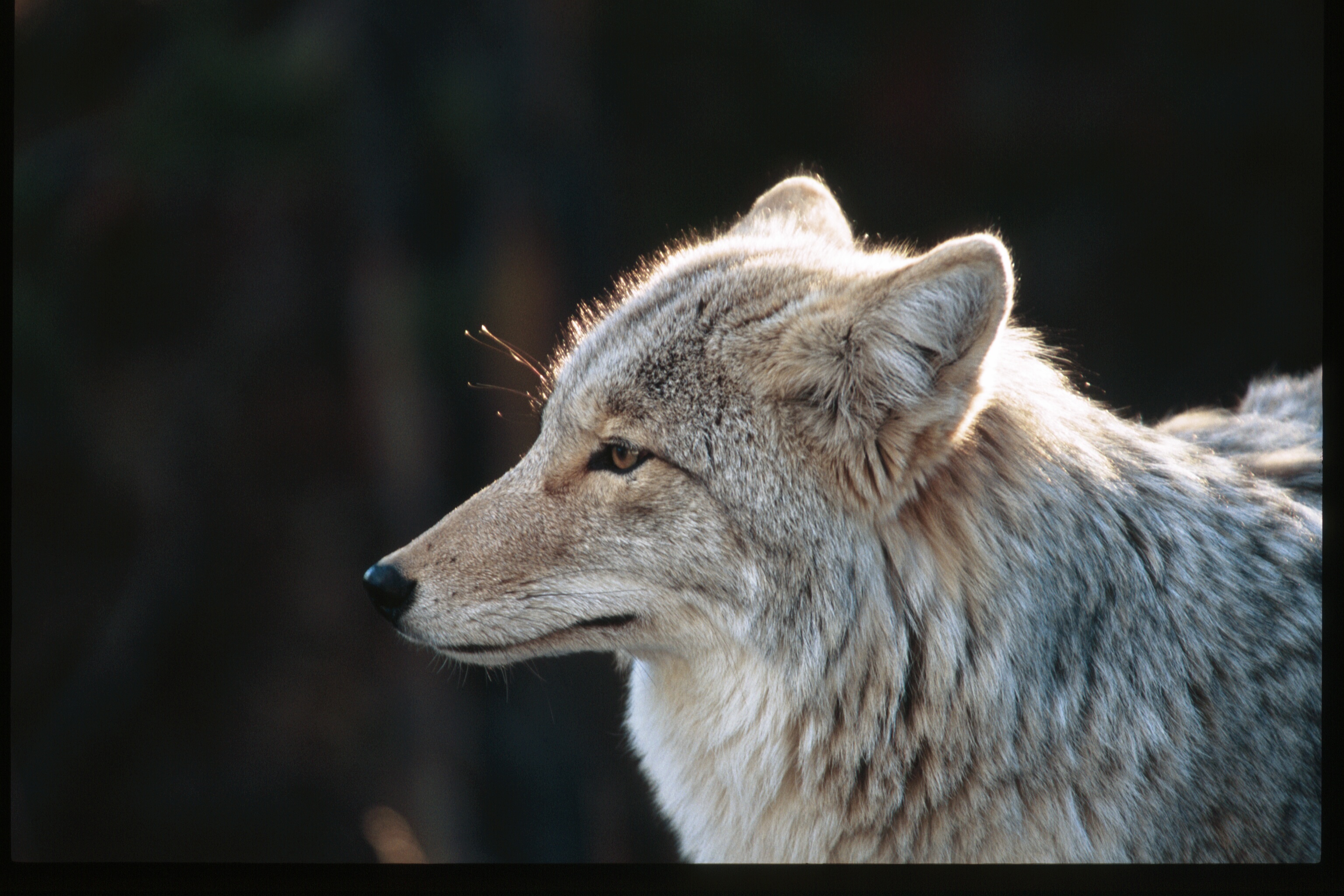
SOUTH WELLFLEET – A request from wildlife conservationists to ban coyote and fox hunting in the Cape Cod National Seashore will be considered by the agency’s managers in the next few weeks.
Predator Defense, a conservation group in Oregon, joined with backers, including about 30 people on Cape Cod, to ask Seashore officials in a letter Tuesday to ban the hunting of meat-eating predators within the Seashore’s 44,000 acres. The Seashore boundaries include public and private lands across the Cape’s six easternmost towns.
Meat-eating predators found in the Seashore would include Eastern coyote, red fox, river otter and fisher, and in the future, could include gray fox, bobcat and black bear, according to the Predator Defense letter.
The Seashore follows state hunting regulations except for banning all hunting from March 1 through Aug. 31 and allowing a spring turkey hunt, according to Seashore Chief of Natural Resource Management Jason Taylor. The Seashore also operates under a 2007 final environmental impact statement hunting program that manages traditional hunting practices with National Environmental Policy Act standards, such as minimizing the effect on wildlife populations and ecosystems.
“The EIS was fully vetted over multiple years, so I’m not sure why we’re talking about this now,” Taylor said Thursday. Taylor said he and Seashore Superintendent George Price would likely meet to discuss the letter within the next few weeks and craft a response. He said he supported the idea in the letter that predator species are important to maintain a balance within the ecosystem, but that the Seashore is experiencing an imbalance with too many animals because of humans feeding them or leaving trash behind.
In response, Brooks Fahy of Predator Defense and wildlife conservationist Louise Kane, of Eastham, said Thursday that the Seashore had no data to back up a claim of imbalance with coyotes.
“We’d like to meet with them,” Kane said.
For 2014, state regulations allowed coyote hunting Jan. 1 through March 8, and then from Oct. 18 through the end of the year. In 2014, red and gray fox hunting was allowed Jan. 1 through Feb. 28, and then from Nov. 1 through the end of the year. There are no daily or season hunting limits for coyotes or foxes, state records show.
The state’s trapping season in 2014 for coyote and fox was Nov. 1 through Nov. 30, and the trapping season for river otter is Nov. 1 through Dec. 15. The trapping season for fisher was Nov. 1 through Nov. 22.
Statewide, there are an estimated 10,000 coyotes, and they and fox are considered abundant throughout the state including on Cape Cod, according to state Division of Fisheries and Wildlife Chief of Information and Education Marion Larson. There is not a state estimate on the number of foxes, Larson said.
On Cape Cod, there are an estimated 200 to 250 coyotes at the end of the winter, before new pups are born, according to coyote researcher Jonathan Way of Barnstable. The coyotes in Massachusetts, called Eastern coyotes, are a hybrid of a coyote and a wolf, according to Way, and he refers to them as “coywolves.” Way was one of the backers of the Predator Defense letter.
The Seashore does not maintain population studies or harvest records on coyotes or other animals hunted under state regulations, Taylor said. “What we see is basically what we observe as we do the other work on the park,” he said.
State records show 24 coyotes and two red foxes were killed in the 2013-2014 season in Barnstable County. Larson said all hunters and trappers are required to report their harvests.
Way, though, said about 100 coyotes are killed each year on Cape Cod.
Coyotes have a natural ability to regulate their population size, and typically would have a pack of three or four adult animals and a territory of about 6 to 10 square miles, Way said. Killing through hunting disrupts the packs and territories and can lead to problems such as more pups being born and more predation of domestic animals, Way said.
“The national park is the ultimate place to have a setting where you can actually study them,” he said. “The population gets stable and they can actually act like a coyote.”
The concerns noted in the Predator Defense letter include that killing “top” predators such as coyotes can cause an overabundance of smaller predators. Hunting does not reduce predation, and killing coyotes for sport rather than to eat is unethical, according to the letter. Heavily hunted animals also show signs of higher stress, the letter stated.
— Follow Mary Ann Bragg on Twitter:@maryannbraggCCT.
—Wildlife Photography ©Jim Robertson
—Wildlife Photography ©Jim Robertson
http://www.whdh.com/story/27579597/man-shot-by-hunter-while-walking-in-hyannis-woods
HYANNIS, Mass. (WHDH) – A hunter accused of shooting a jogger twice appeared in court Tuesday while police searched for the weapon and the victim recovered at home.
Sean Houle, 47, was arrested and will face a number of charges including careless and negligent use of a weapon causing injury. He also faces other charges including unlawful possession of a primer and unlawful possession of firearm for another gun he was said to be carrying at the time.
Barnstable police said Houle accidentally shot the jogger while he was hunting for deer.
The victim, Jon Way, was hit twice with pellets from Houle’s black powder shotgun, but was recovering. The first shot hit him in the hand.
“I somehow just dove behind a small tree, but didn’t exactly figure out where it came from because it happened so quick. Once the second shot came it went right into my back. That’s when I was realized it was being shot at me, and I started yelling,” Way said.
In court Houle said he had fired at group of deer, but then he heard someone yelling to stop so he ran up to see what had happened.
“Maybe he thought I was a deer, but you don’t shoot at a deer if you can’t identify it,” Way said.
Prosecutors said police still had not found the shotgun Houle was using and said his son may have left the scene with the gun.
It was already dark outside when the shooting occurred around 5 p.m. Monday.
Prosecutors said Houle didn’t have the proper hunting license and has a history of hunting violations and multiple assault and battery cases dating back to the 1990s.
He entered a not guilty plea and was ordered held on $4,000 bail.
HYANNIS – One of Barnstable High School’s Athletic Hall of Famers will have more than just a tale of his Red Raider glory days to tell his grandchildren one day.
Dr. Jonathan G. “Jon” Way of Osterville, a 1993 Barnstable High graduate and former three-sport all-star and two-sport captain and one of the Red Raiders’ all-time greatest long-distance runners, survived two blasts from a hunter’s shotgun Monday afternoon near Mary Dunn Pond. The hunter, Sean Houle, 47, of Marstons Mills, allegedly mistook Way for a deer and was subsequently arrested and arraigned on multiple charges yesterday in Barnstable District Court.
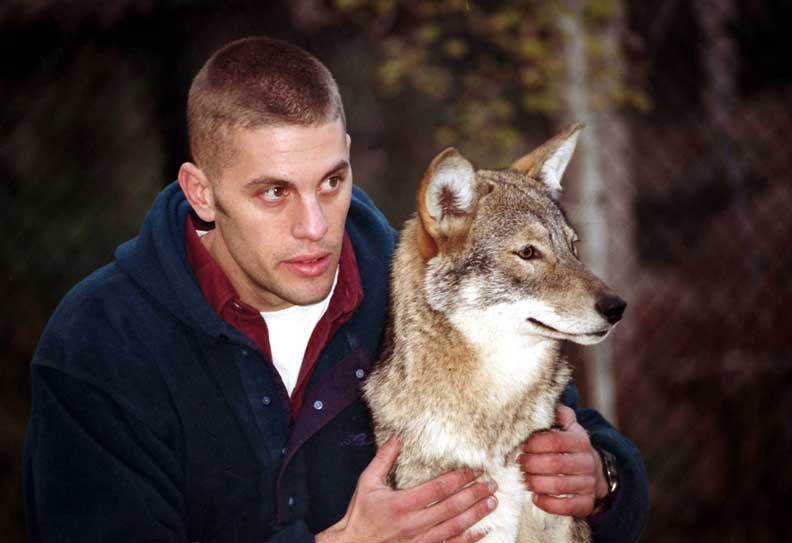
Ironically, it’s usually Dr. Way who is busy helping injured animals or pursuing his extensive, career-long research on eastern coyotes.
Dr. Way, a research scientist at Clark University in Worcester who has authored two books and has degrees from UMass-Amherst, the University of Connecticut and Boston College, was a Division 1 Collegiate cross country runner for the Minutemen while an undergraduate at UMass. His brother Jeff and sister Nicole Way also starred for the Red Raiders and ran cross country and track at UMass. He is currently seeking a publisher for his third book on his eastern coyote research.
“I’m happy to be alive, indeed,” Dr. Way said. “It was great to get a good night sleep after the past 30-hour ordeal.”
Dr. Way was enshrined in the Barnstable High School Athletic Hall of Fame in 2012. He set the Barnstable High cross country record at Hathaway’s Pond in 1992 (15:39) and set the course record at Falmouth High School the same year (15:43). He was a three-time Old Colony League all-star in cross country, four-time Cape Cod Times All-Cape & Islands First Team runner, twice was named a Boston Herald All-Scholastic and in his senior year was also named a Boston Globe All-Scholastic. His high school cross country records – set 20 years ago – still stand.
He was a two-time All-Conference runner at UMass in the Atlantic 10 Conference (1995 and 1996) and named twice to the Atlantic 10 All-Academic Team.
Dr. Way is currently at Clark working on a long-term study he developed on eastern coyotes (or coywolves as he calls them) that inhabit eastern Massachusetts. His two books, Suburban Howls – an account of his research findings and experiences studying eastern coyotes in Massachusetts – and My Yellowstone Experience, runs an organization called Eastern Coyote Research that helps supports his long-term ecological and behavioral study of coywolves in Massachusetts. He also works part time with the Yellowstone Ecological Research Center examining the effects of mortality on coyote population demographics, and frequently travels to the Yellowstone area to watch wolves and bears and other wildlife.
Just three weeks ago, Dr. Way was a guest speaker at Wild Care Cape Cod’s 2nd Annual Birds, Beds and Breakfast Weekend benefit in Provincetown. Each year, the benefit helps raise funds and awareness for the care of wildlife in distress. Wild Care of Cape Cod is a 501(c)(3) non-profit corporation located in Eastham.
Dr. Way said that he reached out to state legislators earlier this year because there are state agencies who have been blocking him in his attempts to continue his research on eastern coyotes.
Perhaps now they might listen.
Sean Walsh is the sports editor for Cape Cod Broadcasting Media. His email is seanwalsh@ccb-media.com or you can follow him on Twitter @coachwalshccbm
Wildlife Photography ©Jim Robertson
Avian flu detected at two more farms in B.C. as outbreak continues to spread
Birds at two more farms in southwestern British Columbia have tested positive for avian influenza, the Canadian Food Inspection Agency said Wednesday — underscoring the difficulty facing officials attempting to contain the virus.The outbreak began last week, when turkeys and chickens at two farms in the Fraser Valley tested positive for the H5N2 strain of the disease.
The virus has now been detected at eight locations on seven farms, leaving 155,000 birds either dead or set to be euthanized. The outbreak has prompted surveillance and control measures affecting half of the province, as well as a growing list of trade restrictions on B.C. or Canadian poultry.
Dr. Harpreet Kochhar, Canada’s chief veterinary officer, said the new infections did not come as a surprise and he suggested more could turn up in the coming days. Indeed, another farm was also being investigated as suspicious, he said.
“The identification of additional farms is not unexpected, given that avian influenza is highly contagious,” Kochhar said during a conference call with reporters.
“Our efforts are directed to controlling the avian influenza virus from spreading. In spite of those measures, there is a possibility that this could show up at other farms. This is something that is attributed to the highly virulent, highly pathogenic nature of the avian influenza virus.”
The affected farms are clustered within several kilometres of each other in Abbotsford and Chilliwack.
In each case, the farms were immediately placed under quarantine and plans were made to destroy any birds that had not already been killed by the virus.
Earlier this week, the Canadian Food Inspection Agency announced a control zone covering the southern half of B.C., where restrictions have been placed on the movement of poultry. Those restrictions are more strict in the area immediately around the affected farms.
It’s not yet clear what caused the outbreak, though two farms where the virus was detected had received chickens from a previously infected facility.
Officials are looking into the possibility that migrating wild birds introduced the virus into the region, though Kochhar said there’s nothing conclusive yet. He said there was no evidence the virus had been circulating among migrating birds and a wild bird monitoring program hadn’t found any unusual increases in animal deaths.
Avian influenza poses little danger to people as long as poultry meat is handled and cooked properly.
It can, however, put the poultry industry at risk.
Previous outbreaks in B.C. and elsewhere in Canada similarly led to the destruction of tens of thousands of birds. The most serious, a 2004 outbreak in the Fraser Valley, prompted federal officials to order the slaughter of about 17 million birds.
Since last week, eight countries have placed restrictions on poultry and poultry products. Singapore was added to that list on Wednesday, joining the United States, Mexico, South Africa, Japan, Taiwan, Hong Kong and South Korea.
Some of those restrictions, such as those put in place by Japan, apply to poultry from all of Canada.
Kochhar said he hoped to convince authorities in other countries to limit any trade restrictions to the region affected by the outbreak.
“We have sent our information to them in terms of our primary control zone, which is southern British Columbia, and have requested them to revisit their restrictions on poultry and poultry products from the rest of Canada,” he said.
Consumers are unlikely to notice the outbreak at the grocery store.
The marketing group the B.C. Turkey Farmers has said about 25,000 turkeys meant for the provincial Christmas market have been lost — a relatively small proportion of the 3.3 million kilograms of turkey typically produced for the holiday season.
Likewise, the number of chickens destroyed due to the outbreak pales in comparison with the 160 million kilograms of chicken produced in B.C. each year.
………
Meanwhile, bird Fluis rampant on B.C. chicken/turkey “farms” (read: concentration camp). Is there a scapegoat connection or is it just a coincidence?
http://www.dailyastorian.com/Local_News/20141212/geese-numbers-may-trigger-plan-revision
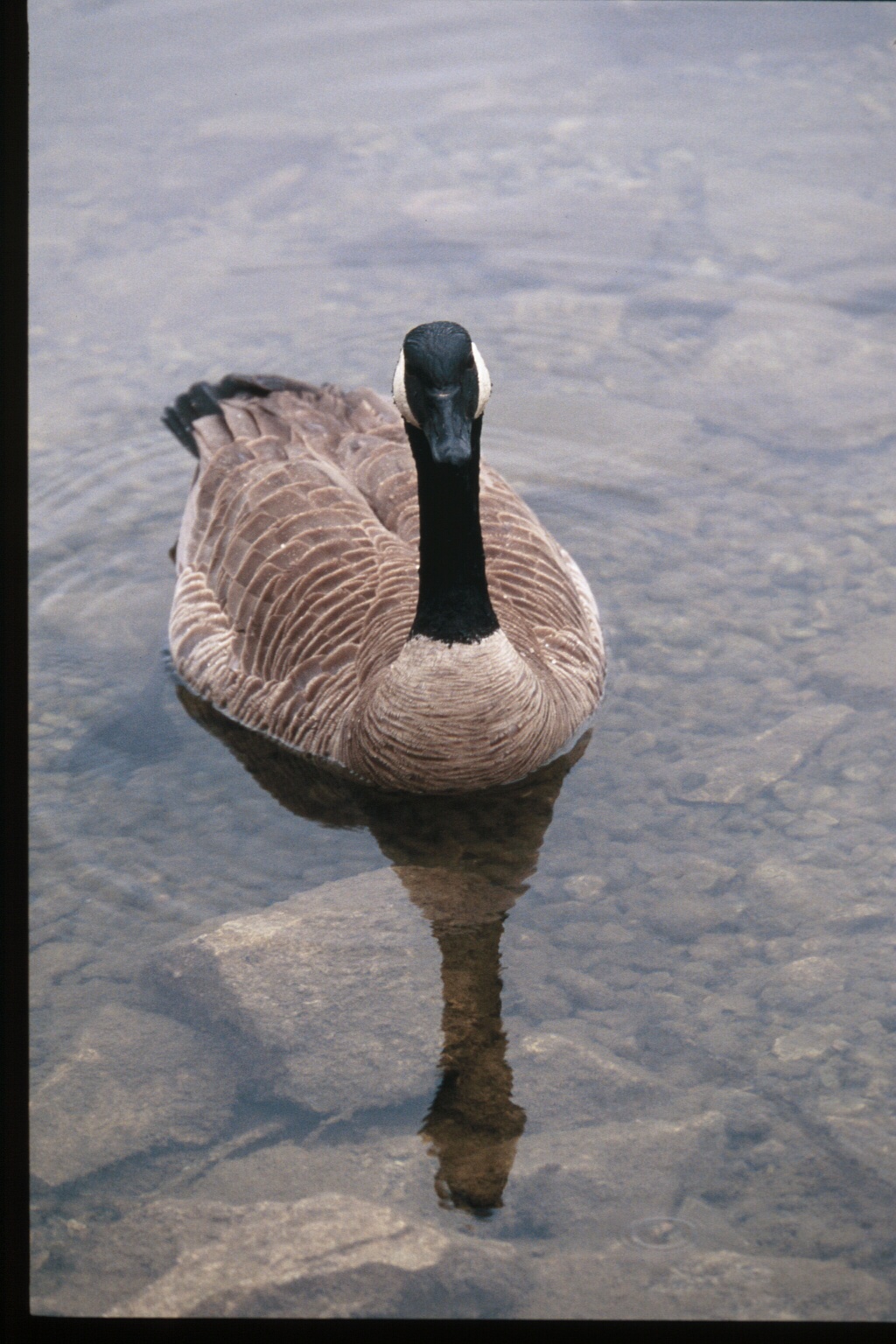
The U.S. Fish and Wildlife Service 2014 report estimates 281,300 cacklers spend the winter in the two states, where they cause considerable agricultural damage, especially to grain and grass seed fields. The 2013 estimate was 312,200. Year-to-year population fluctuations are common; the wildlife service has set a population goal of 250,000 geese.
Crop damage from geese has been a concern for decades. Farmers argue they are essentially feeding the birds and absorbing damage for the sake of maintaining the population for hunters or nature lovers elsewhere. But the latest report hopefully will open the door to discussions of a longer hunting season or more opportunities to haze geese out of fields, said Roger Beyer, executive director of the Oregon Seed Council.
However, the situation is complicated by migratory bird treaties and compacts involving Native American tribes, the U.S., Canada and the states of Oregon, Washington, Alaska and California, Beyer said. “It’s a long slow process,” he said.
The Oregon Farm Bureau’s wildlife committee will be discussing geese — and wolves and Greater sage-grouse — at the bureau’s annual convention next week in Salishan. Wildlife officials have been invited to discuss the population report.
A 1997 report by the Oregon Department of Agriculture estimated annual crop and livestock damage by wildlife at $147 million, with more than $100 million attributed to deer and elk. Damage from geese was estimated at $14.9 million.
The Many Myths From Hunters
by Barbara J. Bonsignore
Once again, it is hunting season, time for the myths that abound regarding this blood sport.
Hunters claim that they kill the weak and starving animals, thus helping the population. In actuality, hunters want the biggest and the best, those with a huge rack for the mantle trophy. Diseased animals don’t provide much optimal meat and, of course, isn’t that what hunting is all about? Nature’s own system of balance allows the debilitated, old animals to die out in favor of “survival of the fittest.” But when hunters are killing the dominant, healthy animals, the best genes are removed from the herd’s gene pool – as are the most experienced individuals – which leaves the population weak.Here are four more hunting myths:
∎ Hunting prevents the overpopulation of animals.
Actually, hunting creates an overabundance of animals of a certain species. Nature abhors a vacuum. For example, when a given amount of deer are removed from the herd by hunting, females will have more and bigger litters to fill up the gap.
∎ Hunted animals don’t suffer.
Wild animals are terrorized by the chase and agonized by the kill. Their families, herds and flocks are disrupted. It is estimated that for every animal a hunter kills and claims, at least two wounded but unrecovered animals die slowly and painfully from blood loss, infection or starvation. Those who don’t die can suffer permanent injury. During hunting season, wild animals are more likely to get hit by a vehicle as they flee into the road when hunters walk through their territory.
∎ Hunters pay the majority of the tab for conservation.
In reality, wildlife management and conservation programs receive up to 90 percent of their funds from general tax reserves, more than 90 percent of which are paid by non-hunters. Since less than 5 percent of the U.S. population hunts, this contribution is negligible. Every year, thousands of public acres are bulldozed, burned, replanted and otherwise manipulated to kill off non-target species (including natural predators) and attract game species. Animals are also bred or captured to stock hunting and fishing areas.
∎ Hunters help feed the homeless by donating meat from their kills.
A recent interesting study by Michael Gregor at Nutritionfacts.org showed that in game meat tested, 80 percent had lead bullet fragments in the samples. Nobody, including the homeless, needs more fat and cholesterol, found in meat, in their diet. More fruits, vegetables and protein from plant sources should be consumed daily.
What can you do to stop hunting? Oppose any legislation, national or local, that establishes higher quotas of animals to be hunted, lengthens hunting seasons, allows new species to be hunted. Speak out against any bills that open more wildlife refuges to hunting. Refuges should protect, not allow animals to be killed. If you own a substantial parcel of land, post it against hunting and trapping.
It is encouraging that every year fewer people hunt in the United States. The state Fish and Game Department’s income has decreased considerably, which is why the agency is constantly reaching out to get women, youth and the handicapped to purchase hunting licenses.
Hunting today is unnecessary and is more detrimental to animals and the environment than beneficial. Enjoy wildlife by “hunting” with a camera.
Who better to introduce The Many Myths From Hunters: http://www.concordmonitor.com/home/3186598-95/hunting-hunters-species-hunted than two of the most infamous and dubious hunting proponents: Ted Nugent and Sarah Palin (pictured here smirking in a joint holiday greeting card). 
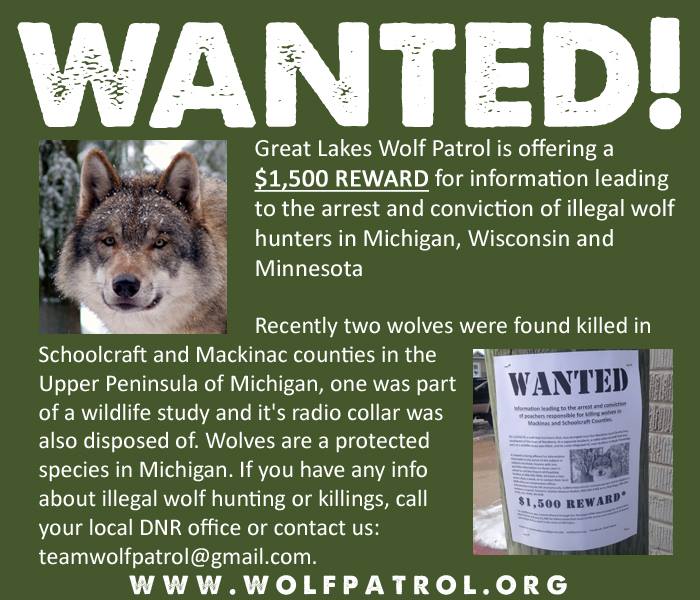
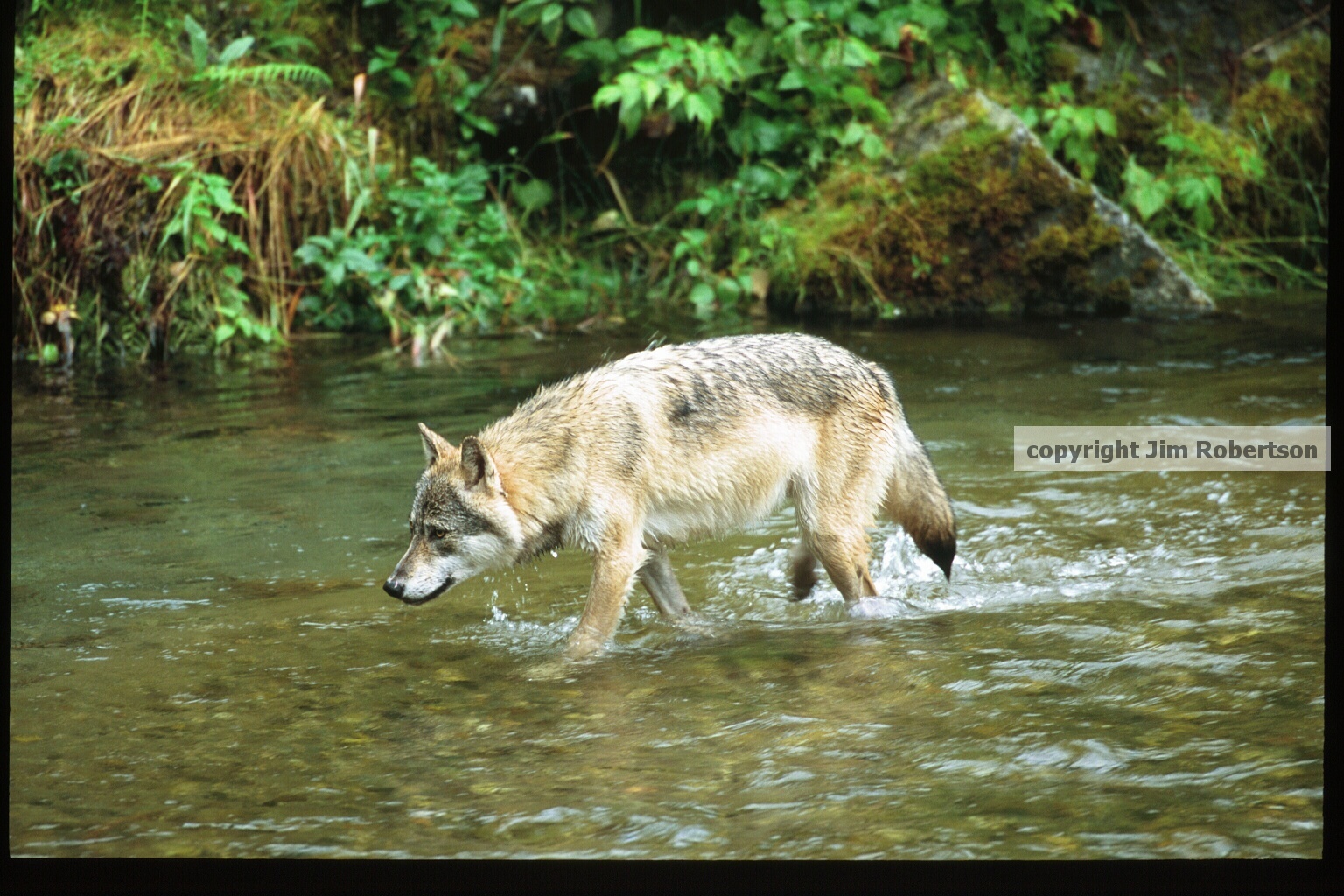
Just recently this question arose once again when the Canadian Journal of Zoology (CJZ) published a research article by Dave Hervieux, Mark Hebblewhite, Dave Stepnisky, Michelle Bacon and Stan Boutin titled “Managing wolves (Canis lupus) to recover threatened woodland caribou (Rangifer tarandus caribou) in Alberta” that presented the outcome of an “experiment” in mass killing in which 890 Canadian wolves suffered and died using aerial gunning, trapping and poisoning with strychnine. The strychnine also killed other animals who were not part of the study. Minimum “collateral damage” that was deemed acceptable by the researchers and the CJZ included 91 ravens, 36 coyotes, 31 foxes, 8 marten, 6 lynx, 4 weasels and 4 fisher. (For more on how wolves are highly stressed when hunted please see “Wolves: Hunting Affects Stress, Reproduction and Sociality.”)
Part of the methods section of this paper reads as follows (references can be found in the link above):
Wolf packs were located from a helicopter and one or more wolves per pack were captured using net-gunning techniques and fit with a VHF radio collar. Using a helicopter, we then subsequently attempted to lethally remove all remaining members of each pack through aerial-shooting throughout the winter (sensu Courchamp et al. 2003; Hayes et al. 2003), with the radio-collared wolves removed at the end of winter. Wolf captures were conducted according to Alberta Wildlife Animal Care Committee class protocol No. 009 (Alberta Sustainable Resource Development 2005)
Furthermore,
We also established toxicant bait stations, using strychnine, to augment aerial shooting and to target wolves that could not be found or removed using aerial-shooting. Strychnine is permitted for use in Alberta for the purpose of predator control (authorized by Government of Canada Pest Management Regulatory Agency following specific provisions outlined in Alberta Fish and Wildlife Division’s ‘Standards’.
It’s important also to note that this mass killing did not work — not that it would even be remotely justified if it did. As stated in the abstract of the research paper, “Although the wolf population reduction program appeared to stabilize the Little Smoky population, it did not lead to population increase.”
When I told some colleagues and friends about this study they were incredulous and aghast. Cloaked in a lab coat and under the guise of conservation biology, this egregious study raises serious questions about oversight and approval of lethal research involving wild animals. It is hard to imagine any other scientific investigation of a wild mammal being organized around the principle of mass killing. The inhumane methods used to experimentally “euthanize” the wolves are of the type used years ago and widely abandoned as unethical because of their inhumaneness. And, of course, the wolves were not euthanized, which suggests they were killed to end interminable pain and suffering.
The approach demonstrated in this paper reflects exactly why animal care committees were created to provide oversight on research methods and to avoid research being conducted and published that clearly fails to meet even minimum ethical standards. This research and publication represents the systematic moral failure of the Alberta government, participating universities, the Canadian Journal of Zoology, and individual scientists who carried out the study.
Of course, the main question at hand is, “How did this study ever get approved and conducted?” This question must be aired and discussed openly and widely. One colleague asked me, “How can these researchers sleep at night?” Frankly, I have no idea. I also pondered why a study like this can be approved, conducted and published in a peer-reviewed journal, yet people get furious, as they should, when a dog is shot, trapped or poisoned.
I was sickened when I learned about this so-called study, and remain incredulous that it was conducted. Simply put, this reprehensible study sets an unethical, inhumane and horrific precedent that must be universally opposed.
This essay was written with Dr. Paul Paquet who works with the Raincoast Conservation Foundation.
Follow Marc Bekoff on Twitter: www.twitter.com/Marc Bekoff
December 11, 2014
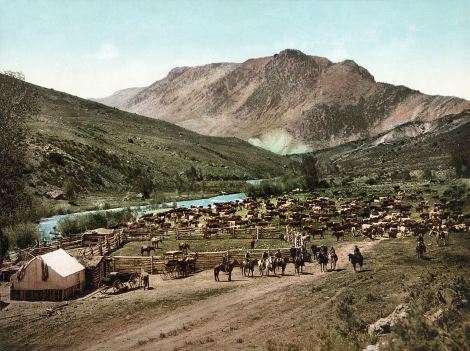
“The thing that bothers me the most is the recklessness and greed of the local ranchers, who run too many cattle back here, choking with waste the creek that runs through my property. There’s certain times of day that the cowboys like to send them turds down the river. Them f**kers piss me off. if you gotta mess up the ecology of the world in order to raise a bunch of cows, well eat somethin else. I’m not a fan of the cowboys.”
– Merle Haggard, Rolling Stone, 10/1/09

“An un-named stream BLM refers to as Pine Creek has been blown out by livestock in the Lost River Range. 10/2/07”..Western Watersheds
===
Photo: Courtesy Wikimedia Commons
Video: YouTube Western Watersheds
Posted in: Public Land Degradation by Livestock
Tags: cattle, wolves or livestock, public land degradation
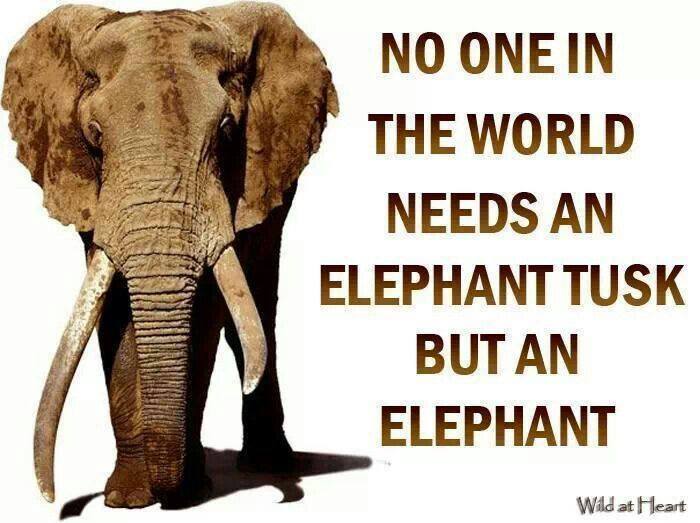
As the ivory poaching crisis heightens and the number of elephants in the wild declines, the problem is in need of serious attention. As a result, elephants are the subject of an Oscar-winning director’s new short film — and of “The Daily Show” with Jon Stewart. Kathryn Bigelow, director of “The Hurt Locker” and “Zero Dark Thirty,” sat down with Stewart and former national security advisor Juan Zarate, to discuss her new short film on elephant poaching, “Last Days.”
The film comes at a time when elephant poaching is escalating at extreme rates. Over the course of just two years, 100,000 elephants were killed for their tusks — that’s one individual every 15 minutes. And much of the profits from these sales, as Bigelow notes, go directly to terrorist groups.
“There is the sort of terrorism you can do something about, by not buying these little trinkets, by not supporting this trade,” Bigelow told Stewart. “You can actually stop their revenue source.”
See the entire trailer for “Last Days” here
 Exposing the Big Game