The Sixth Great Extinction Is Underway—and We’re to Blame
3

The human species is surely impressed with itself. Even the name they chose to classify themselves—Homo sapiens (Latin for “wise man”)—suggests it. Undoubtedly, there must have been some thought involved in the process of mushrooming from a simple tree-dwelling leaf eater in one small corner of the planet, to becoming the scariest big game hunter to rule the Earth.
UGH
(Carrying a torch)
“I’ll use this fire stick to chase that group of peacefully grazing, gregarious gazelles toward that cliff over there, and you guys try to spear as many as you can”
THAG
(Carrying a spear)
“Good thinking, Ugh.”
Scenes like this played themselves out over and over as the species spread out and burgeoned to 7.2 billion. Now the technology of the killingest of creatures has advanced to the point that a single hunter, dressed in camouflage and drenched in another animal’s urine to con his victim as much as possible, can bring down the mightiest moose or tallest giraffe with the slightest squeeze of a trigger.
And still the species grows exponentially and continues to claim every last habitat.
It was impressive when man built the first rocket and took a walk on the moon. However, the rockets they build to blow their enemies sky-high (while irradiating the land and sea) more clearly typify the species’ overall achievements to date. But lately it seems that nuclear annihilation won’t get to see its day; anthropogenic climate change and a man-made extinction spasm are now higher on the agenda.
Perhaps the human, the only creature capable of destroying the Earth, should have been named Homo horribilus mactabilis (Latin for “horrible, dreadful, fearful; deadly, lethal man”).
What would really be impressive is if people were to drop their steak knives (and other weapons of mass destruction) en masse and make peace with this amazing planet and all of its inhabitants. The potential is there, but do they still have the will to learn?

Why Do Right-Wing Adherents Engage in More Animal Exploitation and Meat Consumption?
Submitted on Jan 26, 2015 (Original item from 2014)
Even though a number of studies have established a link between right-wing ideology and meat-eating, there is a dearth of literature addressing why those with right-wing beliefs are more likely to consume animals. Recognizing the gap, this study of Dutch and Belgian adults begins to address the question of why, and finds that people with right-wing beliefs tend to staunchly oppose any movement that threatens traditions, or perceived human superiority. Though it is only an initial foray into right-wing psychology and its tendency towards animal exploitation, the authors establish a strong link between the two and encourage further inquiry.
Abstract:
When it comes to right-wing ideology, past research has identified two “dispositional dimensions” that are the primary lenses through which adherents see the world: Right Wing Authoritarianism (RWA), defined by a strong belief in cultural traditions, submission to authority, and aggression towards disobedience; and Social Dominance Orientation (SDO), a desire for your group to be dominant, and belief that there is a fundamental inequality among social groups. At the beginning of their paper, the authors note that “Few studies have investigated relations between social-ideological orientations and exploitative attitudes and behaviors toward animals. […] Yet existing evidence reveals positive associations between right-wing ideologies such as RWA and SDO, and attitudes toward the exploitation of animals as objects for human benefit.” Even though it is established that having a right-wing orientation means that a person is more likely to self-identify as a meat eater and consume meat in their daily life, there is little evidence as to why this is the case. In this study, researchers hypothesized that the link between meat-eating and right-wing beliefs is caused primarily by “a sense of threat from increasingly popular non-exploitive ideologies toward animals (i.e., veg(etari)anism),” as well as “human supremacy beliefs.”
Conducting two separate surveys with Dutch and Belgian adults respectively, researchers established the link, finding that “those higher (vs. lower) in RWA or SDO demonstrate greater acceptance of animal exploitation and greater animal consumption.” However, more importantly, they were able to “reveal that right-wing ideologies predict animal exploitation and consumption through two psychological processes: the perceived threat that animal-rights ideologies pose to the dominant carnist ideology, and the belief in human superiority over animals.” Even when researchers replicated their first study with a second group, sampling a greater proportion of non-meat eaters, and controlling for the possibility that meat-eaters simply like the taste of meat, researchers still found that the basis of meat-eating for right-wing respondents was ideological in nature. Again, they found that for right-wingers, meat-eating behavior was “clearly ideological in nature, referencing power, might, and greater ‘rights’ over animals, plus an active push-back against movements advocating for the under-powered (i.e., non-human animals).”
Through this study, the authors hope to inspire further inquiry and note that their work indicates that it is “increasingly clear” that right-wing thought has “much broader implications” for the propagation of meat-eating. Given the strength of ideological beliefs, it might be wise for animal advocates to undertake further research into how their messages target and impact right-wing adherents. Furthermore, if right-wing ideology is such a strong predictor of a steadfast belief in the rightness of consuming animals, it may be more effective to target meat-eaters who do not disagree with veganism/vegetarianism on such fundamental, visceral grounds.
Original Abstract:
Despite the well-documented implications of right-wing ideological dispositions for human intergroup relations, surprisingly little is understood about the implications for human–animal relations. We investigate why right-wing ideologies – social dominance orientation (SDO) and right-wing authoritarianism (RWA) – positively predict attitudes toward animal exploitation and meat consumption. Two survey studies conducted in heterogeneous community samples (Study 1, N=260; Study 2, N=489) demonstrated that right-wing ideologies predict greater acceptance of animal exploitation and more meat consumption through two explaining mechanisms: (a) perceived threat from non-exploitive ideologies to the dominant carnist ideology (for both SDO and RWA) and (b) belief in human superiority over animals (for SDO). These findings hold after controlling for hedonistic pleasure from eating meat. Right- wing adherents do not simply consume more animals because they enjoy the taste of meat, but because doing so supports dominance ideologies and resistance to cultural change. Psychological parallels between human intergroup relations and human–animal relations are considered.
http://www.sciencedirect.com/science/article/pii/S0191886914…
http://www.capitalpress.com/Washington/20150129/bird-flu-strikes-game-bird-farm-in-washington
by Don Jenkins
Capital Press

<!–
–>
A 5,000-bird game flock in Okanogan County has been infected with highly pathogenic bird flu, according to the Washington State Department of Agriculture.
It’s the largest avian influenza outbreak to date in Washington, where three non-commercial flocks in other parts of the state had previously been infected, apparently by migrating birds. Wild birds and a captive falcon that died after eating wild duck also tested positive for bird flu.
“There’s no real way to predict where it might crop up,” WSDA spokesman Hector Casto said.
The owner of the flock in Riverside, near Omak, reported this past weekend to the WSDA that about 40 pheasants and 12 turkeys had died.
The Washington State University laboratory in Puyallup confirmed the birds had been sicked by highly pathogenic bird flu, as opposed to a less contagious and less lethal low pathogenic strain.
Samples have been sent to a U.S. Department of Agriculture in Ames, Iowa, to pinpoint the strain. So far, three different highly pathogenic bird flu strains have been found in Washington since mid-December.
Castro said the flock has been quarantined and will be destroyed. WSDA plans to establish a larger quarantine zone around the game farm to restrict the movement of birds and poultry products. The WSDA has not released the name of the flock’s owners.
Castro said the flock tested negative for bird flu in November, but that was before bird flu first appeared in the region. Bird flu was confirmed Dec. 1 in a British Columbia, Canada, poultry farm near the Washington border. Between Dec. 1-19, 11 B.C. commercial poultry operations and an 85-bird backyard flock fell victim to the virus.
Highly pathogenic bird flu was confirmed last week in a 145,000-bird Foster Farms turkey farm in Stanislaus County, Calif., the first U.S. commercial operation to be infected.
Backyard flocks also have been infected in Oregon and Idaho.
The Oregon Department of Agriculture on Wednesday lifted a quarantine in place since mid-December around the premises where a backyard flock in Winston in Douglas County was infected in mid-December.
WSDA last week lifted a quarantine in Benton and Franklin counties around where two backyard flocks were exposed to the virus in early January.
A quarantine remains in place where a non-commercial flock in Clallam County was infected.
WSDA and USDA officials have take samples from birds at 32 places inside the quarantine zone, and all tested negative for bird flu, Castro said.
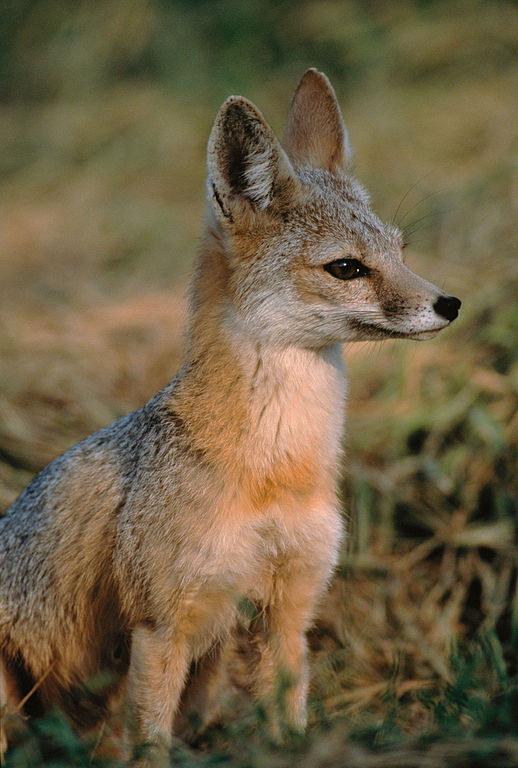
Drought and development are decimating the San Joaquin kit fox. But the imperiled, pint-size predator has found a surprising sanctuary: Bakersfield, the honky-tonk California oil patch famous for being the hometown of Buck Owens and Merle Haggard.
This fast-growing city’s irrigated golf links, school campuses, and roadside greenways are providing an unlikely urban redoubt for the cat-size foxes—one that may save the species from extinction.
Read more here.
Here’s a photo to go along with this earlier post https://exposingthebiggame.wordpress.com/2015/01/28/three-4-year-olds-and-a-99-y-o-woman-reported-killing-deer-in-2013/


Scene from, Wyoming Tourism Video
The State of Wyoming uses images of wild horses to promote itself as a place where the untamed and wild spirit of the American West still lives. Yet wild horses in Wyoming are hanging on by a thread, with just 2,500 left in the entire state.
The BLM Wyoming Resource Advisory Council (RAC) is meeting in Laramie, Wyoming on February 2-4, 2015, This citizen advisory board has within its jurisdiction all of Wyoming’s 16 wild horse Herd Management Areas. AWHPC is submitting comments, asking for the RAC’s support for humane reform of the BLM wild horse program and fairer treatment for Wyoming’s last remaining mustangs.
Sign Petition here: http://act.wildhorsepreservation.org/p/dia/action3/common/public/?action_KEY=19230
http://www.oregonlive.com/environment/index.ssf/2015/01/wolf_delisting_oregon.html
By The Oregonian
Email the author | Follow on Twitter
on January 27, 2015
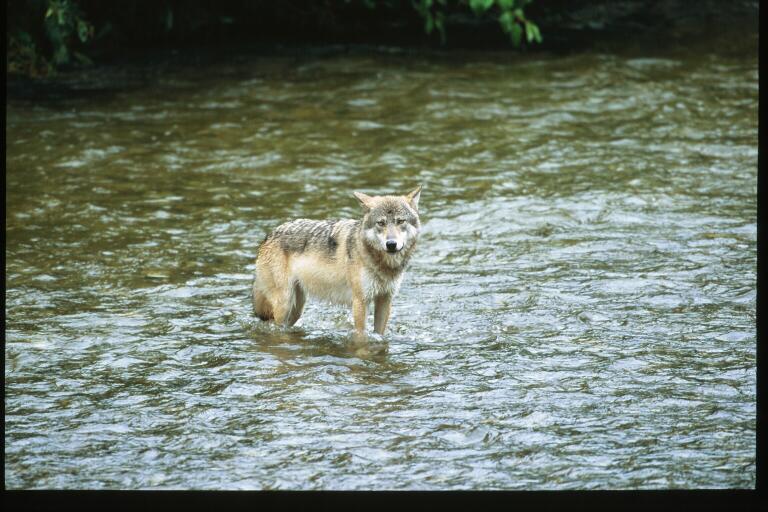
Protections for Oregon’s gray wolves could be rolled back after wildlife biologists counted more than four breeding pairs in eastern Oregon for the third straight year.
Under the state’s wolf plan, the Oregon Fish and Wildlife Commission can consider removing the eastern packs from the state’s endangered species list once that population bar is met.
Numbers from the annual wolf count released Tuesday afternoon indicate seven breeding pairs of wolves made it through 2014 – six of them in the eastern management area bounded by highways 97, 20, and 39.
Protections for wolves west of that boundary, including Oregon’s famed OR-7, are unaffected by the latest population figures.
The news came as no surprise to wildlife officials, who have said for months they expect to decide this year whether eastern Oregon wolves should continue to receive endangered species protections.
Of Oregon’s nine known wolf packs, only the Imnaha pack lacks a breeding pair. The Umatilla River pack still needs to be surveyed.
Conservationists and cattle ranchers hailed Tuesday’s news as proof that the state’s wolves are recovering, but their opinions diverged from there.
Rob Klavins, wolf advocate for Oregon Wild, argued that wolf numbers are still too low to consider delisting.
“We’re still a ways away from meaningful, long-term, sustainable recovery,” Klavins said.
Todd Nash of the Oregon Cattlemen’s Association said from his perspective, wolves in Oregon never should have been protected in the first place.
“There’s nothing delicate about their population,” he said. “I’m all for delisting them.”
Fish and wildlife commissioners who will decide Oregon wolves’ fate have offered no hints at their opinions on the matter, but state wolf coordinator Russ Morgan said both scientific data and public opinion will influence the commission’s eventual vote.
Before a vote can happen, Morgan said, wildlife biologists must complete a “status review” detailing how wolves are faring in Oregon. They will present their findings to the commission in April, along with a recommendation on whether wolves should remain listed.
“We have to do first things first, and the first thing here is to evaluate our data,” Morgan said.
In addition to triggering a review of Oregon wolves’ protected status, the increased number of breeding pairs triggers a new step in the wolf plan, giving ranchers more leeway to shoot wolves found mingling with their cattle.
Before the new population threshold was met, ranchers could only take wolves caught in the act of injuring or killing livestock. Now they can take wolves caught chasing livestock under some circumstances. Ranchers on private land also no longer need a permit to use beanbags, rubber bullets or other “non-lethal injurious harassment,” on wolves.
Nash, of the cattlemen’s association, said he’s happy the new rules give ranchers more options, but he doesn’t expect it to prevent many predations.
“Wolves kill at night,” he said. “There’s not much chance of catching them in the act at 2 a.m. in a remote area.”
The next step in assessing wolves’ recovering in Oregon will come in March, when fish and wildlife officials release their best estimate of the number of wolves in the state. They expect a significant increase from last year’s count of 64 known wolves.
Wildlife Photography ©Jim Robertson


 Exposing the Big Game