Compassion Fatigue a Growing Concern for Animal Shelter Workers
Reply

w/poll: At what age do you think kids are old enough to hunt deer and turkeys?
January 28, 2015 9:29 am | Updated: 10:37 am, Wed Jan 28, 2015.
When the Pennsylvania Board of Game Commissioners on Tuesday proposed setting 7 as the minimum age for kids to get tags for hunting deer and turkeys, some people asked the obvious question:
“How many kids that young are actually killing deer and turkeys?”
We wondered the same thing.
The state’s mentored youth hunting program since 2006 has allowed kids of any age under the age of 12 – the minimum age for buying a hunting license – to hunt certain game, while under direct supervision of a licensed adult.
In most cases, we’re talking about parents or grandparents.
The board of Game Commissioners on Tuesday voted to tweak the program so that kids of any age under 12 still can hunt turkey and deer, but the state will only issue tags to kids age 7 and older.
If kids under 7 want to shoot turkeys or deer, their mentors have to transfer their own tags to the kids.
Many hunters and hunting organizations, such as the Pennsylvania Federation of Sportsmen’s Clubs, want the program to remain as is, with no minimum age placed on the program.
They call such limits “barriers” to hunting.
For example, they said, what if a parent has more than one kid under 7 who wants to go buck hunting?
In Pennsylvania, the parent can only have one buck tag, so only one kid would be able to shoot a buck.
While those who oppose any minimum age have been getting all the media attention, the commissioners said they’ve heard from plenty of hunters who agree with their proposal.
They said some even sent them comments stating they believe no kids under 12 should be allowed to hunt deer.
For those of you out there, like us, who have been wondering how many kids under the age of 7 have been out hunting deer and turkeys, here’s a table showing, by age of the hunters, the number of those animals reported to the Game Commission during the 2013-14 hunting season.
The numbers reported here don’t indicate the number of kids – or adults – of a particular age who were out hunting.
The list only shows how many animals were reported as being shot by hunters of a particular age.
Given historical data, more animals likely were shot, because Pennsylvania hunters are notorious for not reporting their kills to the Game Commission.
(By the way, even though we’re focused on kids, it’s interesting to note there was one buck last season reportedly shot by a 99-year-old woman.)
A coalition of animal rights groups is pushing to downgrade federal protections for the gray wolf, hoping to compromise with opponents who want to remove protections altogether.

The groups are asking the U.S. Fish and Wildlife Service to list the gray wolf as threatened rather than endangered.
Wolves are currently endangered in Wisconsin and Michigan, thanks to a court ruling in late December that put the wolf back under federal protection.
But some members of Congress are pushing to change that status through legislation.
Now the Humane Society of the United States and twenty other wildlife protection groups are advocating for what they call a compromise plan to give the wolf the less-restrictive designation of ‘threatened.’
Humane Society President Wayne Pacelle says it could give managers and property owners more flexibility, even allowing lethal control in some cases.
“We feel that this petition provides a way forward that gives something meaningful to both sides. More active management of problem wolves, but maintaining federal protections.”
Wolves are on the endangered species list in most of the lower 48, except for parts of the Northern Rockies.
A federal court ruling in December re-listed wolves as endangered in Wisconsin and Michigan, and threatened in Minnesota.
The ruling put a stop to wolf hunts in all three states.

LANSING, MI — The debate over Michigan wolves — and whether the state should be able to proceed with future hunts or lethal removal — rages on in the wake of a recent federal decision that returned the Great Lakes population to endangered status.
U.S. Rep. Dan Benishek, a Republican whose district includes the entire Upper Peninsula, is working with colleagues from Wisconsin, Minnesota and Wyoming on bipartisan legislation that would reportedly remove federal protections that now block local wolf management in Michigan and other states.
“The language we are looking at would be narrow and would address the recent court decision,” Benishek said in a statement provided to MLive. “It would not seek to change the Endangered Species Act, but would be designed to meet the need in our region for responsible stewardship of the wolf population. We are finalizing the details now and are hoping sometime in the next few weeks.”
State Sen. Tom Casperson, R-Escanaba, on Tuesday introduced a resolution that, if adopted, would offer support for the pending federal legislation and encourage the U.S. Fish and Wildlife Service and Michigan Department of Natural Resources to appeal the federal court ruling.
Jill Fritz, state director of the Humane Society of the United States and the Keep Michigan Wolves Protected coalition, said it would be difficult to comment on the pending federal legislation because she has not seen the language, but she noted her group “would oppose any action to strip federal protections from Great Lakes Wolves.”
HSUS and other animal protection groups this week submitted a petition asking the USFWS to “downlist” all gray wolves in the contiguous United States by reclassifying them as a threatened species — rather than an endangered one.
The proposal, if adopted, would allow USFWS to work with state and local wildlife authorities to kill or remove nuisance wolves attacking livestock, which has been an issue for farmers in Michigan and other states.
“If wolves are downlisted to threatened status across the board, then if there are concerns about depredation on livestock and they want to use lethal controls, they can do so,” said Fritz.
“What it would not allow is that wolves return to management under the states, which did not work. The states, particularly Minnesota and Wisconsin, started off with these aggressive killing and population reduction programs that really threatened to stop recovery of wolves in its tracks.”
Wolves in Michigan and other Great Lakes states were removed from the federal endangered species list in 2012, but U.S. District Judge Beryl Howell ruled last month that the removal was “arbitrary and capricious” and violated federal law.
Federal endangered status trumps Michigan laws that had allowed the for lethal removal of problem wolves and a pending law reauthorizing the Natural Resource Commission to name new game species and establish hunting seasons.
Michigan’s Upper Peninsula is home to slightly more than 600 wolves, up from just six in the 1970s. Hunting advocates argue the population warrants stronger management to reduce conflicts with livestock and comfort levels around humans.
As MLive reported earlier this month, there were 35 wolf attacks on livestock or dogs in Michigan last year, up from 20 in 2013 but lower than the 41 in 2012.
Twenty-two wolves were killed in late 2013 during Michigan’s first-ever wolf hunt. There was no hunt last year, when voters rejected two separate wolf hunting laws, but a newer version is set to take effect in April.
I haven’t had a chance to look into this yet, but this line, from an article entitled, “Finding Balance in the Wolf Wars” in the Huffington Post caught my eye: “Our plan respects the purpose and intent of the Endangered Species Act but gives a nod to the folks who want more active control options for wolves, especially ranchers,”
The wolf is in no way “recovered” in the lower 48; they should never have been downgraded from endangered. In 1885 5,500 wolves were killed in Montana alone. Now there’s less than 5,000 in the entire country…

Does anyone have any insights on this they want to share?
http://www.humanesociety.org/news/press_releases/2015/01/esa-threatened-gray-wolves-012715.html
January 27, 2015
Proposal presents a reasonable alternative to congressional delisting and a path to national recovery
Animal protection and conservation organizations petitioned the U.S. Fish and Wildlife Service to reclassify gray wolves under the Endangered Species Act as threatened throughout the contiguous United States, with the exception of the Mexican gray wolf which remains listed as endangered. If adopted, the proposal would continue federal oversight and funding of wolf recovery efforts and encourage development of a national recovery plan for the species, but would also give the Fish and Wildlife Service regulatory flexibility to permit state and local wildlife managers to address specific wolf conflicts.
Gray wolves are currently protected as endangered throughout their range in the lower 48 states, except in Minnesota where they are listed as threatened and in Montana, Idaho and eastern Oregon and Washington where they have no Endangered Species Act protections. Some members of Congress are advocating for legislation to remove all protections for wolves under federal law by delisting the animal under the Endangered Species Act. The petition proposes an alternative path to finalizing wolf recovery based on the best available science, rather than politics and fear, and would help to find a balanced middle ground on a controversial issue that has been battled out in the courts and in states with diverse views among stakeholders on wolf conservation.
Wayne Pacelle, president and CEO of The Humane Society of the United States, said: “Several states have badly failed in their management of wolves, and their brand of reckless trapping, trophy hunting, and even hound hunting just has not been supported by the courts or by the American people. We do, however, understand the fears that some ranchers have about wolves, and we believe that maintaining federal protections while allowing more active management of human-wolf conflicts achieves the right balance for all key stakeholders and is consistent with the law.”
Wolf populations are still recovering from decades of persecution—government sponsored bounty programs resulted in mass extermination of wolves at the beginning of the last century, and the species was nearly eliminated from the landscape of the lower 48 states. Wolf number have increased substantially where the Endangered Species Act has been implemented, but recovery is still not complete, as the species only occupies as little as 5 percent of its historic range, and human-caused mortality continues to constitute the majority of documented wolf deaths.
Kierán Suckling, executive director of the Center for Biological Diversity, said: “A Congressional end run around science and the Endangered Species Act will create more controversy and put wolves and the law itself in jeopardy. The better path is to downlist wolves to threatened, replace the failed piecemeal efforts of the past with a new science-based national recovery strategy,and bring communities together to determine how wolves will be returned to and managed in places where they once lived, like the Adirondacks, southern Rocky Mountains, Cascades and Sierra Nevada.”
The U.S. Fish and Wildlife Service’s piecemeal efforts to delist gray wolves in the northern Rockies and western Great Lakes have been roundly criticized by scientists and repeatedly rejected by multiple federal courts. In addition to denouncing the Service’s fragmented approach to wolf recovery, courts have recognized that several states have recklessly attempted to quickly and dramatically reduce wolf numbers through unnecessary and cruel hunting and trapping programs. The public does not support recreational and commercial killing of wolves, as evidenced by the recent decision by Michigan voters in the November 2014 election to reject sport hunting of wolves. Wolves are inedible, and only killed for their heads or fur.
Adam M. Roberts, CEO of Born Free USA, said: “Complex conservation problems require sophisticated solutions. The history of wolf protection in America is riddled with vitriolic conflict and shortsightedness and it is time for a coordinated, forward-thinking approach that removes the most barbaric treatment of this iconic species and focuses on the long-term viability of wolf populations throughout the country.”
The threatened listing proposed by the petition would promote continued recovery of the species at a national level so that it is not left perpetually at the doorstep of extinction. A threatened listing would also permit the Fish and Wildlife Service some regulatory flexibility to work with state and local wildlife managers to appropriately address wolf conflicts, including depredation of livestock.
Groups filing the petition include national organizations and those based in wolf range states:
Born Free USA
Center for Biological Diversity
Detroit Audubon
Detroit Zoological Society
The Fund for Animals
Friends of Animals and Their Environment
Friends of the Wisconsin Wolf
Help Our Wolves Live
Howling for Wolves
The Humane Society of the United States
Justice for Wolves
Midwest Environmental Advocates
Minnesota Humane Society
Minnesota Voters for Animal Protection
National Wolfwatcher Coalition
Northwoods Alliance
Predator Defense
Sault Sainte Marie Tribe of Chippewa Indians
Wildlife Public Trust and Coexistence
Wildwoods (Minnesota)
Wisconsin Federated Humane Societies
Wolves of Douglas County Wisconsin
Also on: http://www.huffingtonpost.com/wayne-pacelle/finding-balance-in-the-wo_b_6558340.html

I’m sure you remember Washington State wolf-poacher, Bill White of Twisp. I knew him all too well, having spent a third of my life outside the same small town. Like most serial killers, he’d seem like a nice guy if you saw him chatting it up with passers-by from his booth at the farmer’s market, selling his popular “all natural” “grass-fed” beef to unsuspecting buyers of all political stripes.
Little did they know they were supporting a soon-to-be infamous serial-poacher who defied “game” laws galore while hound-hunting bears and cougars and ultimately baiting the state’s first known wolf pack, the “Lookouts,” luring them to their deaths at his 100 acre ranch on the side of Lookout Mountain.
Not only did he and his son kill most of the Lookouts before the pack was even officially recognized, the poaching ring also flouted international trade laws by trying to send a bloody wolf hide over the border into Canada. Ironically, that crime was to be their undoing.
As it turns out, if they had waited for the government to declare them legal, those exact same crimes would have been perfectly acceptable—with the applicable authorizations. Hunters in Montana can now get permits to do just what the Whites tried to do illegally, murder wolves and ship their hides to Canada.
The message being sent here is: murder isn’t a crime as long as you get permission. Kill a wolf in cold blood, skin it and send its hide to a dealer across the border? No problem, just get a permit. (Washingtonians or Oregonians, be sure to say it was chasing your cows, or looking crossways at dog or baby first.) There’s a permit for everything…you just have to learn to jump through the right hoops.
Another case of permits making killing all better: the shooting of sea lions—an all too common practice that has driven the Steller (or Northern) sea lion to the brink of extinction. That endangered species’ population has been reduced by 80% from what they were before the thrill-killing heyday. The Marine Mammal Protection Act, passed in the early 1970s, may have slowed the killing, but exploiters could always get permits to do away with the competition. For the longest time all a commercial fisherman would have to do was claim sea lions ate “their fish” and they were granted a permit to fire at will.

Text and Wildlife Photography ©Jim Robertson. All Rights Reserved
Apparently, snuffing out a beautiful, sentient, social being is not considered a crime, but failure to get the right permits is another thing altogether. Want to dredge the bottom of the ocean for every last little bit of sea life, entangling and starving out sea lions, seals, whales and dolphins in the process? Kill off the entire planet in the name of resource extraction? No problem—just be sure you have a permit first.
Remember, even budding serial killers must obtain the proper permit.
The current issue of New Mexico Stockman, the official publication of the New Mexico Cattle Growers’ Association, shows the close connection between hunting and public lands ranching. In an article titled “Hunting – Another Arm of Agriculture,” the executive director of the New Mexico Council of Outfitters and Guides describes the New Mexico Game and Fish Department’s E-plus and A-plus programs allowing ranchers to profit from elk and pronghorn (“antelope”) hunting, respectively. “While it’s not widely spoken of,” the article says, “for many in production agriculture, hunting revenues can mean the difference between staying on the land or moving to town.” The article cautions ranchers that this state giveaway technically only applies to the privately owned portion of a ranch, but, they acknowledge, “sometimes landowners agree to hunting arrangements that violate state and federal regulations.”
While hunting and ranching organizations are well aware of need to support each other, conservation organizations remain blissfully ignorant of the connection between the two. Some conservationists hope to “reform” game department by seeking out areas where there are minor disagreements between the livestock industry and their hunting comrades in arms. Others appeal to “ethical hunters” to oppose “unsportsmanlike” coyote hunting contests.
What sort of ethic promotes killing wild animals for pleasure? This is not a rhetorical question, as it has a clear answer. Conservationists who look to Aldo Leopold’s “land ethic” for guidance should be aware that Leopold literally wrote the book on Game Management. As a long-time hunter and government bureaucrat, Leopold defined wildlife as a resource to be managed for human use. Like his bosses at the U.S. Forest Service who managed forests for the benefit of the logging industry, Leopold sought to make hunting sustainable, i.e. to assure that future generations would be able to enjoy killing animals.
We should heed the final words of advice in the New Mexico Stockman article: “It’s time we realize hunting is really just an extension of the agricultural industry and vice versa.”
Wildlife Photography ©Jim Robertson
[This situation mirrors the removal of wolves from the ESA list. The attitude is, “It’s all here for humans, all other predators need not apply. Go away and find your own resources.”]…
http://alaskafisheries.noaa.gov/newsreleases/2013/easternssl102313.htm
NOAA removes the eastern Steller sea lion from the Endangered Species Act list
After public input and careful scientific review, NOAA Fisheries has found that the
Wildlife Photography ©Jim Robertson. All Rights Reserved
eastern distinct population segment of Steller sea lions has recovered and can be removed from the list of threatened species under the Endangered Species Act. This is the first species NOAA has delisted due to recovery since the eastern North Pacific gray whale was taken off the list of threatened and endangered species in 1994.
“We’re delighted to see the recovery of the eastern population of Steller sea lions,” said Jim Balsiger, Administrator of NOAA Fisheries’ Alaska Region. “We’ll be working with the states and other partners to monitor this population to ensure its continued health.”
NOAA has concluded delisting is warranted because the species has met the recovery criteria outlined in its 2008 recovery plan and no longer meets the definition of a threatened or endangered species under the act. A threatened species is one that is likely to become endangered within the foreseeable future throughout all or a significant portion of its range. An endangered species is one that is in danger of extinction throughout all or a significant portion of its range.
The best available scientific information indicates the eastern Steller sea lion has increased from an estimated 18,040 animals in 1979 to an estimated 70,174 in 2010, the most recent year for which data are available. Eastern Steller sea lions will continue to be protected under provisions of the Marine Mammal Protection Act.
Steller sea lions were first listed as a threatened species under the ESA in 1990. In 1997, NOAA scientists recognized two distinct population segments of Steller sea lions: a western and an eastern segment. The eastern segment includes Steller sea lions from Cape Suckling, Alaska, south to California’s Channel Islands. The western population segment remains classified as endangered. NOAA is not proposing any changes to the status of the western Steller sea lion.
On June 29, 2010, NOAA Fisheries provided notice that it was initiating a status review of the eastern Steller sea lion and requested public comment. During the comment period, NOAA Fisheries received two petitions to delist the eastern Steller sea lion: one from the states of Washington and Oregon; and one from the State of Alaska.
On April 18, 2012, NOAA released a draft status review, which underwent independent peer review and proposed to remove eastern sea lions from the list of endangered and threatened wildlife. NOAA requested, received, and considered 1,144 public comments during the 60-day comment period.
With the delisting, federal agencies proposing actions that may affect the eastern Steller sea lions are no longer required to consult with NOAA Fisheries under section 7 of the ESA. However, NOAA Fisheries will continue to monitor the effects of proposed projects on the eastern population to ensure existing measures under the MMPA provide protection necessary to maintain recovered status.
NOAA Fisheries is proceeding carefully to ensure the eastern population segment remains strong. Working with affected states and other partners, NOAA has developed a post-delisting monitoring plan for this population. As a precautionary measure, the plan will be in effect for 10 years–twice the five year time requirement under the ESA. If implemented as intended, this plan takes the important steps necessary to maintain the recovered status of the eastern Steller sea lion.
The delisting of the eastern Steller sea lion will take effect 30 days after publication of the final rule in the Federal Register.
NOAA’s mission is to understand and predict changes in the Earth’s environment, from the depths of the ocean to the surface of the sun, and to conserve and manage our coastal and marine resources. Join us on Facebook, Twitter and our other social media channels at http://www.noaa.gov/socialmedia.
To learn more about NOAA Fisheries in Alaska, visit alaskafisheries.noaa.gov or www.afsc.noaa.gov.
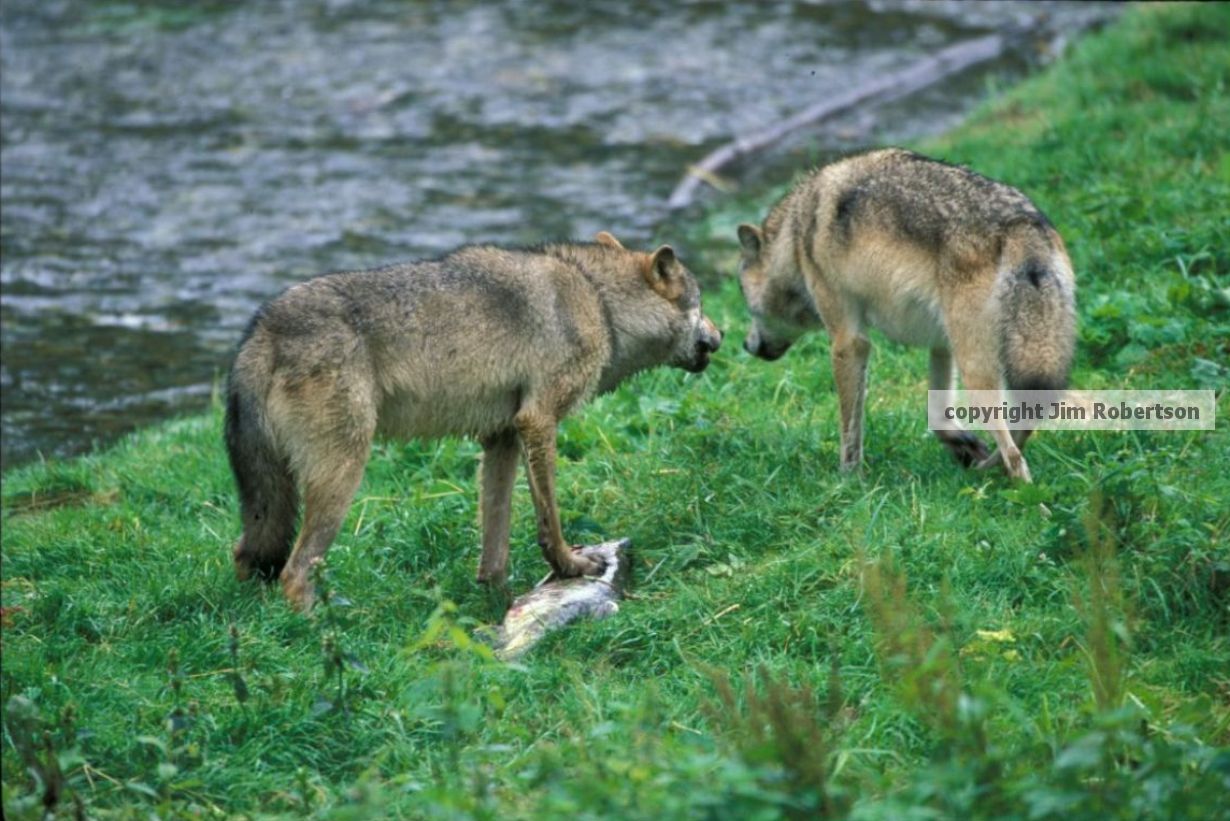
Critics of the helicopter hunt say endangered caribou herds are in decline because of habitat loss, not wolf predation, and that shooting wolves in a pack can traumatize the rest of the family group.
The British Columbia government is back in the air shooting wolves nearly 30 years after it abandoned a controversial aerial hunt that triggered rallies in several U.S. cities and saw activists parachuting into the wilderness in an attempt to stop the kill.
The government is refusing to divulge how many animals it has shot during the first week of the helicopter hunt, but its plan to protect endangered caribou by eliminating nearly 200 wolves in the South Selkirks and South Peace regions is once again threatening to stir protests from activists, including Paul Watson.
Mr. Watson, perhaps the world’s most famous wildlife campaigner, said B.C.’s justification for the hunt is no more acceptable now than it was in the 1980s, when he first drew international attention to it.
“There are a lot of activists in British Columbia. I’m going to talk to them about reviving Friends of the Wolf,” Mr. Watson, head of the Sea Shepherd Conservation Society, said on Tuesday in an interview from Paris.
Mr. Watson founded Friends of the Wolf in 1984 to campaign against the hunt, which stopped in 1985, only to be revived briefly in 1987. Over four years, about 1,000 wolves were killed to reduce predation of moose, caribou and mountain sheep.
“Maybe we’ll have to make a big deal of it, like we did in 1984, ’85,” Mr. Watson said.
“I think it’s a complete disgrace,” he said of the hunt. “There’s no scientific evidence behind this. Wolves and their prey are very important and essential part of the ecosystem and we are constantly disrupting it.”
Ian McAllister, a wildlife photographer and head of Pacific Wild, said opposition to the wolf hunt is growing rapidly.
“I can say that in 20 years of wildlife work, I’ve never seen a reaction like what we are seeing right now. We’ve had one-and-a-half million people go through our website, we got something like 40,000 signatures [on a petition] urging government to reconsider this,” he said. “All our phone lines were jammed with people calling. They are just outraged about this.”
Mr. McAllister has spent years photographing wolf packs at close quarters. He said wolves are highly social, and shooting even one in a pack can traumatize the rest of the family group.
“To start killing and wounding numerous ones, day after day, it’s horrendous. It’s one of the most inhumane things humans could commit in the natural world. It’s unthinkable,” he said.
Sadie Parr of Wolf Awareness Inc., a B.C.-based non-profit foundation dedicated to public education, said the endangered caribou herds are in decline because of habitat loss, not wolf predation.
“This certainly is a conservation dilemma,” she said of the declining caribou herds. “It’s a very complicated problem. But we have to recognize we are in this situation because of us [humans], not because of anything wolves have done.”
Ms. Parr said she has been bombarded with requests for information since the hunt was announced last week.
“People are really, really upset, and rightfully so. This is barbaric and the world is paying attention,” she said.
The B.C. Ministry of Lands did not have a spokesperson available on Tuesday, but e-mailed a statement from Stan Boutin of the University of Alberta, who conducted an independent review of the wolf management plan.
“I support the B.C. government decision to use wolf control in an attempt to recover the herds,” he wrote. “Wolf control appears to be part of a broader recovery plan that also includes important measures to protect and recover habitat.”
But Green MLA Andrew Weaver said the government cannot verify its claim that wolves are the leading cause of caribou mortality.
“I am supportive of science-based initiatives that promote conservation but in this particular case, I cannot find the ‘evidence’ the government is apparently relying on,” he wrote in a letter to Lands Minister Steve Thomson.



 Exposing the Big Game
