

I  WOLVES
Video: Courtesy YouTube
Posted in: biodiversity, gray wolf/canis lupus
Tags: wolfy valentine, wolf recovery, wolves are beautiful

WOLVES
Video: Courtesy YouTube
Posted in: biodiversity, gray wolf/canis lupus
Tags: wolfy valentine, wolf recovery, wolves are beautiful
From In Defense of Animals USA:
Hunting is a violent and cowardly form of outdoor “entertainment” that kills hundreds of millions of animals every year, many of whom are wounded and die a slow and painful death.
Hunters cause injuries, pain and suffering to defenseless animals, destroy their families and habitat, and leave terrified and dependent baby animals behind to starve to death. Because state wildlife agencies are primarily funded by hunting, trapping and fishing licenses, today’s wildlife management actively promotes the killing of wild animals, and joined by a powerful hunting lobby even sells wildlife trophy hunts to those who enjoy killing them.
Quick kills are rare, and many animals suffer prolonged, painful deaths when hunters severely injure but fail to kill them. Bow hunting exacerbates the problem, evidenced by dozens of scientific studies that have shown that bow hunting yields more than a 50 percent wounding and crippling rate. Some hunting groups promote shooting animals in the face or in the gut, which is a horrifically painful way to die.
Several states (AZ, ID, MT, OR, UT, WY) allow a spring bear hunt during the months when bears emerge from hibernation. These bears are not only still lethargic, which makes them easy targets for hunters, but many of the females are either pregnant or lactating. Mother bears are often shot while out and about foraging, while hiding their cubs in trees or leaving them in their dens. When mother bears are killed, their nursing cubs have little to no chance of survival as they will either starve or be killed by predators.
The stress that hunting inflicts on animals —the noise, the fear, and the constant chase—severely restricts their ability to eat adequately and store the fat and energy they need to survive the winter. Hunting also disrupts migration and hibernation, and the campfires, recreational vehicles and trash adversely affect both wildlife and the environment. For animals like wolves, who mate for life and have close-knit family units, hunting can destroy entire communities.
Hunting is not Sport
Hunting is often called a “sport,” to disguise a cruel, needless killing spree as a socially acceptable activity. However, the concept of sport involves competition between two consenting parties, adherence to rules and fairness ensured by an intervening referee, and achieving highest scores but not death as the goal of the sporting events. In hunting, the animal is forced to “participate” in a live-or-die situation that always leads to the death of the animal, whereas the hunter leaves, his/her life never remotely at stake.
Please read more:
http://www.idausa.org/campaigns/wild-free2/habitats-campaign/anti-hunting/
ஜ▬▬▬▬▬▬ஜ۩۞۩ஜ▬▬▬▬▬▬ஜ
They like living just like you. They feel horror just like you! They understand the meaning of cruelty! Give a voice to those who can’t speak for themselves. Help us! Join us! Share us! We animal lovers have the power – BE THE VOICE for these animals! If you agree that animals feel, suffer, love and the truth about their abuse should be exposed, please “like” our page. Thank you! https://www.facebook.com/pages/Animal-Cruelty-Exposed/363725540304160
HOW AND WHERE TO REPORT ANIMAL CRUELTY: https://www.facebook.com/390065024448379/photos/a.392092904245591.1073741848.390065024448379/392106330910915/?type=3&theater
ஜ▬▬▬▬▬▬ஜ۩۞۩ஜ▬▬▬▬▬▬ஜ See More


Happy Valentine’s Day !!!
!!!
Two bills have been introduced in the U.S. House this week to strip federal Endangered Species Act protections from wolves in several states. Rep. John Kline, R-Minn., introduced HF 843 that would prohibit the U.S. Fish and Wildlife Service from listing wolves under the Endangered Species Act in Minnesota,… Duluth, 55802Duluth Minnesota 424 W. First St. 55802
Two bills have been introduced in the U.S. House this week to strip federal Endangered Species Act protections from wolves in several states.
Rep. John Kline, R-Minn., introduced HF 843 that would prohibit the U.S. Fish and Wildlife Service from listing wolves under the Endangered Species Act in Minnesota, Wisconsin and Michigan.
Meanwhile, Rep. Reid Ribble, R-Wis., introduced HF 884, broader legislation that would restore wolves to their earlier unprotected status under a U.S. Fish and Wildlife Service rule from 2012 in not just the Great Lakes states but also Wyoming.
Reps. Collin Peterson, D-Minn., and Sean Duffy, R-Wis., are among several co-sponsors on both bills.
Kline, who manages a fifth-generation family farm in southeastern Minnesota, where few if any wolves exist, said individual states should be able to manage the big predators without federal interference.
A summary of Kline’s bill says that “the overpopulation of gray wolves in the Western Great Lakes region contributes to the decline of livestock, pets and other animals in the wild.”
“Wolf attacks are a concern for farmers and livestock producers in Minnesota, Wisconsin, and Michigan, where the overpopulation of gray wolves is directly linked to the decline of livestock and other animals,’’ Kline said in a statement Thursday. “This bipartisan legislation will remove the gray wolf from the federal endangered species list and return management to the states, providing greater flexibility and giving states exclusive jurisdiction over the wolves within their own borders.”
The proposed legislation is in response to a federal judge’s ruling in December that wolves in the Great Lakes states be immediately placed back under full protection of the Endangered Species Act, under the government’s original 1978 ruling to protect the animals which had been hunted, trapped and harassed to near-extinction at the time.
The judge ruled the U.S. Fish and Wildlife Service’s 2012 rule delisting wolves in the Great Lakes region, handing wolf management back to states and tribes, was improper. The federal agency has not yet decided whether to appeal the judge’s order. But the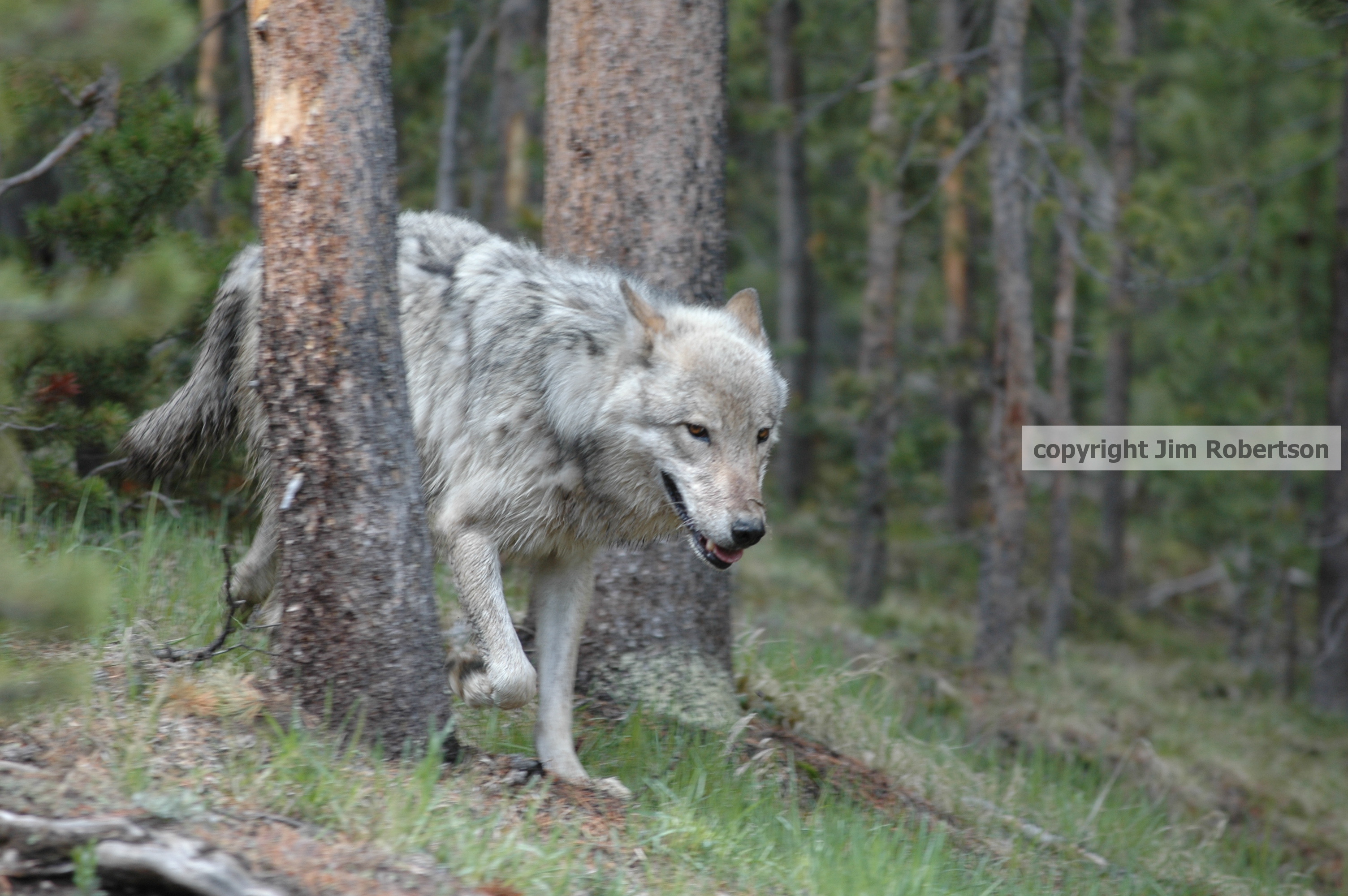 legislation introduced this week, if passed and signed into law by the president, would take precedent over the judge’s ruling.
The legislation is supported by groups such as the Minnesota Farm Bureau and Minnesota Farmers Union.
Wolf supporters, however, say wolves are in integral part of thriving ecosystems and that the legislation is an overreaction by politicians and wolf opponents who continue to wrongly cast the animals as storybook demons.
“This legislation is an end-around a series of federal court rulings that have determined that state and federal agencies have acted improperly” in managing wolves in recent years, said Wayne Pacelle, president and CEO of the Humane Society of the United States, in a statement Thursday. “This bill is just the latest act of political bomb-throwing and gamesmanship, and lawmakers who want balance on the wolf issue should reject it.”
In January the Humane Society and 21 animal protection and conservation organizations petitioned the Fish and Wildlife Service to list grey wolves as officially “threatened’’ across most of the U.S. That would continue federal oversight but enable some wolves to be trapped and killed by federally-approved trappers if the animals cause problems near pets or livestock.
 <img src=”https://cdn0.vox-cdn.com/thumbor/Ca26x5MHTLo2p1qjoTm4yQTyZsA=/151×0:826×450/234×156/cdn0.vox-cdn.com/uploads/chorus_image/image/45679664/garbagepatch.0.0.0.jpg” alt=””/>
What happens to all our plastic bottles and lids and containers after we toss them out?
Every single ocean now has a massive swirling plastic garbage patch
The vast majority of plastic trash ends up in landfills, just sitting there and taking thousands of years to degrade. A smaller fraction gets recycled (about 9 percent in the United States).
But there’s another big chunk that finds its way into the oceans, either from people chucking litter into waterways or from storm-water runoff carrying plastic debris to the coasts. And scientists have long worried that all this plastic could have adverse effects on marine life.
Now we can finally quantify this problem: A new study in Science calculates that between 5 and 13 million metric tons of plastic waste made it into the ocean in 2010 alone. What’s more, the authors estimate this amount could more than quadruple by 2025 without better waste management.
/cdn0.vox-cdn.com/uploads/chorus_asset/file/3404256/5999165366_ee15cbe1b2_b.0.jpg) <img alt=” ” src=”https://cdn3.vox-cdn.com/thumbor/1seNwvLej6aEj0XYoTKa3JeAW6A=/cdn0.vox-cdn.com/uploads/chorus_asset/file/3404256/5999165366_ee15cbe1b2_b.0.jpg”>
<img alt=” ” src=”https://cdn3.vox-cdn.com/thumbor/1seNwvLej6aEj0XYoTKa3JeAW6A=/cdn0.vox-cdn.com/uploads/chorus_asset/file/3404256/5999165366_ee15cbe1b2_b.0.jpg”>
Plastic debris in the Mediterranean Sea. (Alan Bachellier/Flickr)
And here’s another surprise twist: We still don’t know where most of that ocean plastic actually ends up. A separate study last year in the Proceedings of the National Academy of Sciences identified massive swirling garbage patches in each of the world’s oceans that contain up to 35,000 tons of plastic.
Yet those patches accounted for less than 1 percent of the plastic thought to be in the oceans — and no one quite knows where the other 99 percent went. One possibility is that marine creatures are eating the rest of the plastic and it’s somehow entering the food chain. But that’s still unclear.
<img alt=”(Jambeck et al 2015)” src=”https://cdn2.vox-cdn.com/thumbor/T7batZ39JcmjoMJjRh7XCoZMzcw=/cdn0.vox-cdn.com/uploads/chorus_asset/file/3403590/Screen_Shot_2015-02-12_at_10.18.31_AM.0.png”>
The new Science study, led by Jenna R. Jambeck of the University of Georgia, was the first since the 1970s to try to quantify how much of our plastic waste on land ends up in the ocean each year.
The authors looked at plastic production rates, data on waste management and disposal in 193 different coastal countries. Putting this all together, they estimated that the world threw out 275 million metric tons of plastic waste in 2010 (much of it from plastic packaging).
They then estimated that between 4.7 and 12.7 million metric tons made its way to sea — with a best estimate of 8 million tons. That’s enough to cover the world’s entire coastline.
China was the biggest contributor by far, accounting for roughly one-quarter of the marine debris produced each year. (Note that these figures only include plastic waste on land that makes its way to sea. It doesn’t include things like plastic waste from fishing vessels, which makes up an unknown fraction.)
What’s more, the researchers find, the amount of plastic waste could quadruple (or worse) by 2025 unless better waste-management techniques are adopted — like recycling or a reduction in packaging materials used.

Concentrations of plastic debris in surface waters of the global ocean. Colored circles indicate mass concentrations (legend on top right). (Cozar et al, 2014.)
So where does this ocean plastic go?
Many people have heard of the Great Pacific garbage patch — a massive patch of trash that’s accumulated in a swirling subtropical gyre in northern Pacific Ocean. Ocean currents carry trash from far and wide into this vortex.
And it turns out that there are at least five of these floating garbage patches around the world. That’s according to a separate 2014 study in The Proceedings of the National Academy of Sciences, led by Andres Cózar of the Universidad de Cadiz based on the results of a 2010 circumnavigation cruise.
These garbage patches aren’t visible from up high — or even from a passing boat — since most of the plastic is bobbing just beneath the surface, and most of the particles are smaller than 1 centimeter in diameter. Over time, the plastic bits get broken down into ever smaller pieces as they get battered by waves and degraded by the sun.
Even so, these gyres have a lot of garbage, collectively holding some 7,000 to 35,000 tons of plastic in all. The patch in the North Pacific was by far the biggest — containing about one-third of all the floating plastic found. (Much of the plastic debris from eastern China, for instance, collects here.)
And yet, what was most surprising to researchers was that these plastic garbage patches weren’t even bigger. There should be millions of tons of plastic in the oceans. But these subtropical gyres only contained up to 35,000 tons. In particular, there seemed to be much less plastic smaller than 1 millimeter in diameter than expected. So where did the rest go?

In the PNAS paper, the authors offer a couple of possible explanations for why they didn’t find nearly as much floating plastic as they expected. The most troubling is that fish and other organisms are eating all the plastic:
One possibility is that plankton and fish are eating the plastic
1) Maybe the plastic is washing back ashore. The problem with this hypothesis is that most of the “missing” plastic is less than 1 millimeter in diameter. It’s unclear why only smaller bits would have washed up ashore.
2) Perhaps the plastic somehow breaks down into really, really tiny, undetectable pieces. This is possible, although the authors note that “there is no reason to assume that the rate of solar-induced fragmentation increased since the 1980s.”
3) Maybe small organisms are growing on some of the plastic bits, causing them to get heavier and sink deeper into the ocean. This is also possible, although other studies have found that when these plastic pieces sink, the organisms on them typically die and the plastic bobs back up to the surface.
4) Plankton and fish are eating the plastic. This one’s a more plausible hypothesis. After all, the tiny plastic bits that seem to have vanished are small enough to be eaten by zooplankton, who are known to munch on plastic. The authors also argue that mesopelagic fish beneath the surface may be eating a lot of plastic too — and, perhaps, pooping it out down to the ocean bottom. This needs further testing though.
Assuming fish are eating all that plastic and it’s entering the food chain, it’s still unclear how dangerous that is. Obviously some marine organisms, like seabirds, can get digestive problems (and can die) if they eat large pieces of plastic. But what about very tiny pieces? There’s some evidence that toxic chemicals can cling to plastic in the ocean and accumulate — but there’s still scant research on how much harm this might actually do as it passes through the food chain.
5) Plastic is accumulating in the ice caps. Meanwhile, a separate 2014 study in Earth’s Future suggested that a great deal of microplastic is accumulating in the polar ice caps. As sea ice forms and expands, the argument goes, it essentially “scavenges” the plastic from the seawater. This, too, might be part of the story.
More: http://www.vox.com/2015/2/12/8028267/plastic-garbage-patch-oceans

February 12, 2015
Here we go again. The wolf hating trifecta of politicians, ranchers and hunters, are attempting to undermine the courts once again, by scheming to pass a bill through Congress that would overturn the Great Lakes and Wyoming wolf relisting. These people are relentless in their hatred of wolves.
“Several members of Congress are preparing legislation to take gray wolves in Minnesota, Wisconsin, Michigan and Wyoming off the endangered list in an attempt to undo court decisions that have blocked the states from allowing wolf hunting and trapping for sport and predator control.
U.S. Rep. Reid Ribble, R-Wis., is leading the effort, his office confirmed Tuesday. Co-sponsors include U.S. Reps. Collin Peterson, D-Minn., Dan Benishek, R-Mich., and Cynthia Lummis, R-Wyo.”…..AP
They’re unhappy with the court ruling that relisted Great Lakes wolves recently. This behavior mimics the egregious action taken against wolves in Montana…
View original post 2,691 more words
Tuesday, 06 January 2015 09:33
Written by
Dahr Jamail By Dahr Jamail,
Excerpts from a Truthout report found here: http://www.truth-out.org/news/item/28372-as-climate-disruption-advances-26-percent-of-mammals-face-extinction
Two recently released studies brought bad news for those living near coastlines around the world. One published in the peer-reviewed Nature Climate Change, the other in the Proceedings of the National Academy of Sciences, the studies showed that existing computer models might have severely underestimated the risk to the Greenland ice sheet from warming global temperatures.
Bear in mind that if Greenland’s entire ice sheet melts, 20 feet would be added to global sea levels. …..
Warming temperatures in the Arctic are causing shifts in the gene pool of animals: Scientists are reporting an increasing likelihood of “grolar bears,” which are a cross between grizzly and polar bears. According to scientists, this would bring deleterious consequences, given that “genetic incompatibilities in hybrids will erase traits crucial to the long-term survival of both parent species.” They warn that if that happens, “then we can expect a great reduction in those populations, and possibly extinctions.” …
tropical deforestation, caused by both ACD and logging, could cause “significant and widespread” shifts in rainfall distribution and temperatures, which will affect agriculture far and wide.
Pine bark beetle infestations, which are exploding across vast swaths of North America, are now happening as far south as Tucson, Arizona, where pine trees are now dropping like flies.
California’s ongoing drought is having profound impacts on wildlife: Animals like squirrels, deer and bear are fleeing their homes and even risking their lives to search for food sources that have been dramatically diminished.
Another recent study showed that ACD-related habitat loss is now a threat to 314 more species of birds, whose numbers are already in decline. …
As storms continue to intensify, the Philippines’ climate chief warned recently that his country lacks the systems necessary to cope with the worsening impacts of ACD. The Philippines was recently hammered by yet another massive typhoon.
In Australia, Sydney and its surrounding region can expect an increasing number of hot days, shifting rainfall patterns and more extreme fire danger as a result of ACD, according to recently published high-resolution modeling of the future climate there.
A recently published study revealed that deadly cholera outbreaks are almost certain to increase in the more vulnerable regions of the world due to ACD, since severe heat waves and more frequent and intense flooding are on the rise.
Lastly in this section, another recent study showed that the Amazonian peatlands store approximately 10 times the amount of carbon as do undisturbed rainforests in adjacent areas, which makes them all the more critical in efforts to mitigate ACD. The areas in question are already mostly unprotected, and the deforestation there would result in “massive carbon emissions,” according to the report.
deadly heat waves in Europe are now 10 times more likely than they were just a decade ago. This is troubling news, given that during the summer of 2003 when temperatures soared to over 100 degrees throughout Western Europe, more than 35,000 people were killed – and that was the most intense heat the continent had seen in over 500 years.
As the planet goes, so goes Europe. A recent study by three independent teams of climate scientists has tied that continent’s record-breaking heat of 2014 directly to ACD. The report also showed that record-breaking years are now 35 to 80 times more likely, again thanks to ACD.
Indeed, recently released research shows that extremes of both hot and cold temperatures across the planet are increasing faster than previously believed… the Arctic is continuing to warm faster than the rest of the planet, as annual average temperatures there have continued to heat up twice as fast as the rest of the globe.
Two recent studies revealed that millions of abandoned oil and gas wells spanning the United States are likely releasing a “significant quantity” of methane into the atmosphere, which is not being included in total Environmental Protection Agency emission counts.
Lastly and perhaps most distressing in this section, new modeling revealed how warming ocean waters could well already be triggering massive methane leaks off the Pacific Northwest Coast, where 4 million tons of the potent greenhouse gas have already been released since 1970. …
…and Nature magazine has sounded the alarm that a staggering 41 percent of all amphibians on the planet now face extinction, and 26 percent of mammals and 13 percent of birds face the same threat. …
 Always known about the infamous Ted Nugent, but by reputation only? Never had the displeasure of seeing him in action? Here’s your chance.
This is a 4 minute compilation of Nugent and his cronies killing 100 animals on different continents, with bullets and arrows, and machine guns from a helicopter, in the blood-orgy that is their way of life.
More victims of Super Bowl-centered exploitation…
Jan. 4, 2014
By JACK CLOHERTY and PIERRE THOMAS
Sixteen teenagers ranging in age from 13 to 17 were recovered by law enforcement in a crackdown on child trafficking surrounding the Super Bowl last weekend. The FBI said the teens included high school students and young people reported missing by their families.
“It is the most significant operation we’ve had around a big event,” Michael Osborne of the FBI’s Violent Crimes Against Children Unit told ABC News. “This is the most recoveries we’ve had at one time.”
Officials said the vast majority of the rescued teens were girls.
Osborne said he calls taking the young people off the street “recoveries,” because the children are not charged. In child exploitation cases like this, law enforcement officials said operations are designed to remove the young victims from a life of exploitation and abuse.
“These recoveries…
View original post 527 more words
| Wed 2/11/15 6:15 PM | |


 Exposing the Big Game


