WA legislation proposes relocating wolves

http://www.spokesman.com/outdoors/stories/2015/feb/05/kretz-legislation-proposes-relocating-wolves/

THURSDAY, FEB. 5, 2015, MIDNIGHT

Kretz legislation proposes relocating wolves

Washington’s best wolf habitat is in the southern Cascade Mountains, where vast federal lands support more than 20,000 elk in the state’s two largest herds.

State biologists expect wolves to discover this prime territory and thrive there by 2022, after gradually dispersing south along the Cascade range.

But seven years is too long a wait for state Rep. Joel Kretz, R-Wauconda, whose Northeast Washington legislative district is currently home to 11 of the state’s 14 wolf packs, as well as cattle ranchers and sheep herders.

He’s again sponsoring what he calls a “share the love” bill that would require the Department of Fish and Wildlife to try relocating wolves to other parts of Washington.

“Most of the support in the state for wolves … comes from areas where there are no wolves,” said Kretz, who last year sponsored a bill to capture Eastern Washington wolves and transplant them to the districts of West Side legislators opposed to any controls on the predators.

But the current bill, HB 1224, isn’t a jab at Western Washington, Kretz said. Instead, it’s intended to speed up wolves’ colonization of the state, which would hasten the removal of federal and state protections for wolves and allow for more active management.

The legislation is among several wolf-related bills scheduled for hearings today in the House Committee on Agriculture and Natural Resources.

Relocating wolves would face steep political hurdles, but some livestock producers and environmental groups think the idea has merit.

The Washington Cattlemen’s Association wants ranchers to have more options for dealing with wolves that attack livestock, said Jack Field, the association’s executive vice president. That won’t happen until wolf populations recover to the point that federal protections are lifted throughout the state, and relocating wolves would make that happen faster, he said.

According to Washington’s wolf recovery plan, wolves will remain a protected species until at least 15 breeding pairs are documented across the state for three years. The pairs must be geographically dispersed so there are breeding pairs in Eastern Washington, north-central Washington and a zone that includes the south Cascades and Western Washington.

Environmental groups also support faster colonization.

“The South Cascades has the best wolf habitat in the state because of the prey base,” said Mitch Friedman, Conservation Northwest’s executive director. In addition to the Yakima elk herd, with about 10,000 animals, the area contains the St. Helens herd, which is infected with a bacterial hoof disease.

“The state is hiring gunners to mercy-kill some of those elk. Wolves would do a better job,” Friedman said.

But the southern Cascades and the Olympic Peninsula, which also has good wolf habitat, are rural and conservative, much like Northeast Washington. Politically, it would be difficult to get the support to relocate wolves, Friedman said.

“There’s a big difference between wolves coming there on their own paws versus in a state pickup truck,” he said.

That’s one of the state Department of Fish and Wildlife’s concerns, said Dave Ware, the agency’s policy lead on wolves. In the Northern Rockies, anti-wolf advocates have never forgotten the federal government transplanted Canadian wolves into Yellowstone and Central Idaho.

“There’s that stigma that you brought them here, versus them moving in naturally,” Ware said.

The endeavor also would be costly and time consuming, he added. State biologists figure they would need to trap and transplant about 30 wolves – preferably in packs – to end up with several breeding pairs that would stick around in their new location.

Such an action would require thorough state and federal environmental analysis, which would take two to three years to complete. A wolf relocation pilot project, as outlined in Kretz’s bill, would cost about $1 million, according to state estimates.

In a few years, wolves will be establishing packs in the South Cascades on their own, Ware predicted. Wolf tracks have been documented northwest of Yakima, in the foothills of the Cascades, where credible sightings of multiple wolves also have occurred. Last spring, a photo of a wolf was taken in Klickitat County.

“They are bounding around. They’re looking,” Ware said. “It’s just a matter of time before a male and female find each other and decide to start a pack.”

But Kretz said livestock producers in Northeast Washington need faster action to protect their animals from wolf attacks. He and Rep. Shelly Short, R-Addy, also are sponsoring or co-sponsoring several other wolf bills.

Also on the agenda for today’s hearing are bills that would order the Fish and Wildlife Department to manage wolf problems with “lethal means” under certain circumstances and give the Fish and Wildlife Commission more leeway in changing a state endangered species classification.

Sen. Brian Dansel, R-Republic, is sponsoring a companion bill in the Senate, allowing state endangered species to be declassified by region. If adopted, it would allow the state to manage wolves differently in the eastern one-third of Washington than in other parts of the state.

“We’re putting out a number of ideas,” Short said. “We’re saying we just need some relief.”

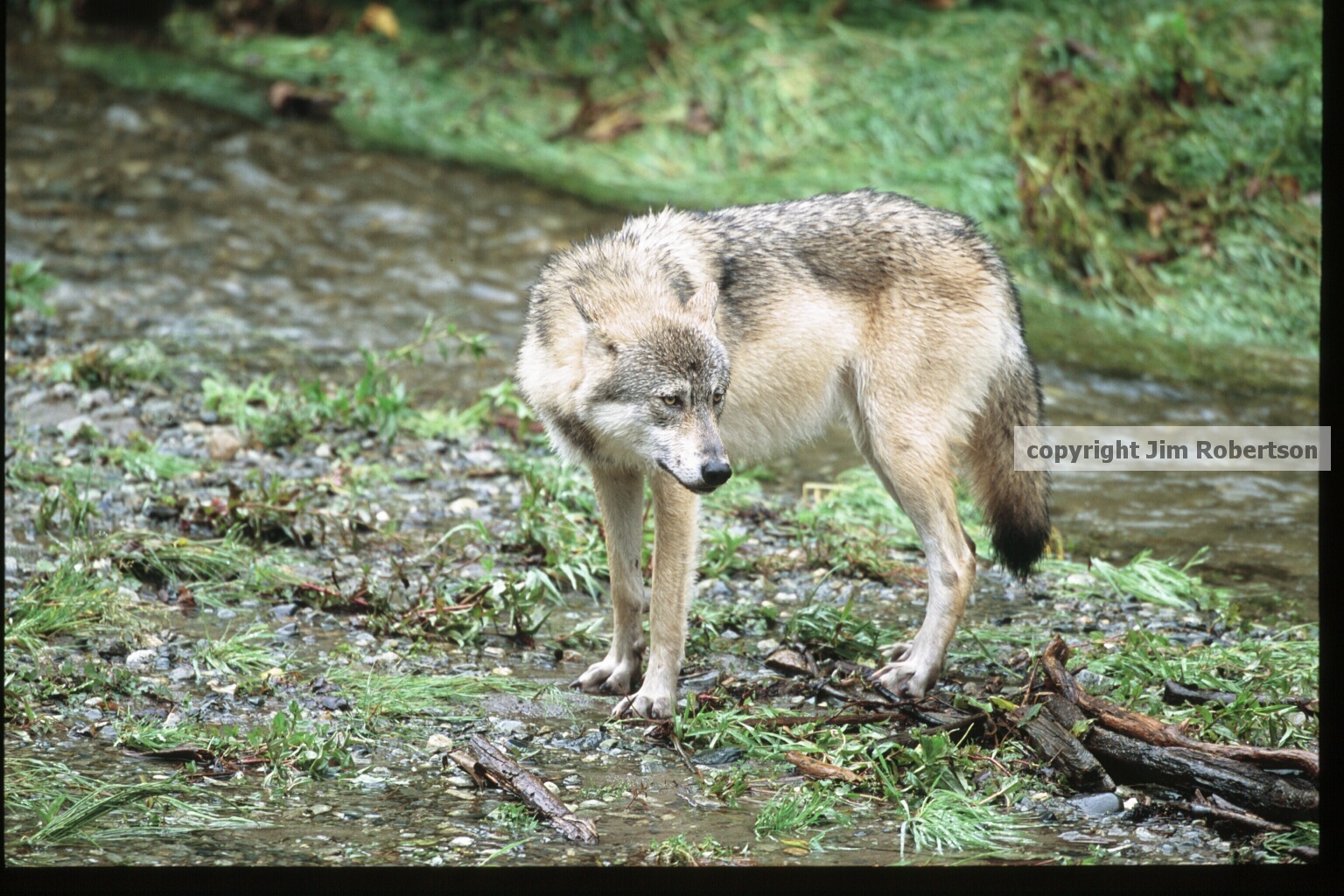
copyrighted wolf in river

Matthew McConaughey’s Canned Hunt Operation

http://theirturn.net/2015/02/04/TMZ-McConaughey-hunt

February 4, 2015 by

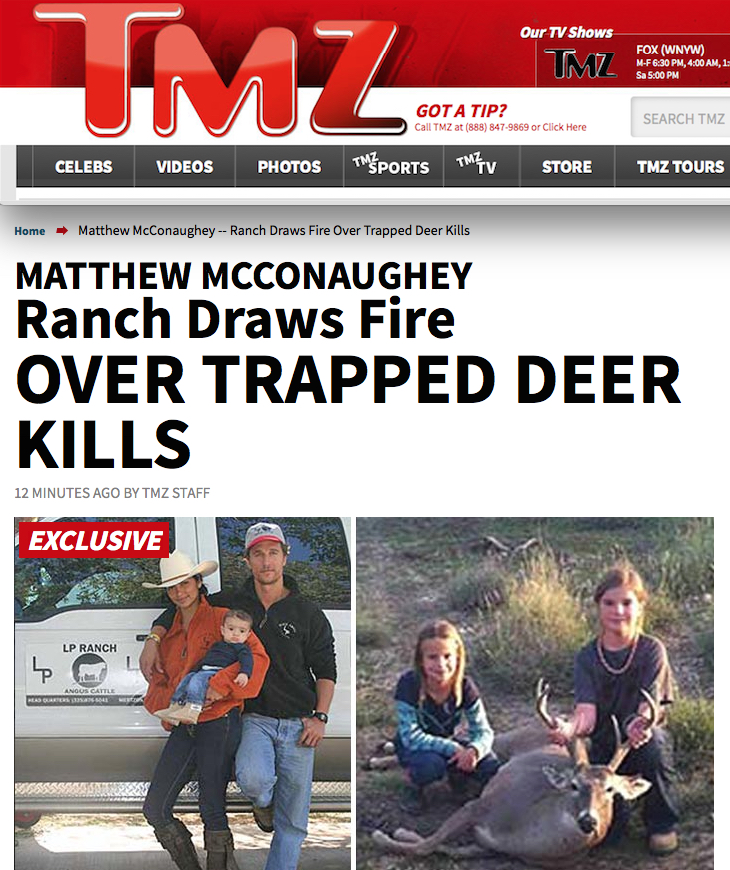
After TheirTurn’s story about Matthew McConaughey’s hunting business went viral, TMZ, the celebrity gossip website with millions of subscribers, published a story about peoples’ outrage: “Matthew McConaughey Ranch Draws Fire Over Trapped Deer Kills.”

McConaughey_TMZ_hunting

TMZ spoke to McConaughey’s nephew Madison, who runs the ranch:

“We reached out to Matt’s rep … so far no word back. But the actor’s nephew, Madison McConaughey — the ranch cattle manager — tells TMZ they’ve had death threats from people who don’t understand the nature of what they do. He says, ‘People are disgusted with us but we’re disgusted with them.’ Madison adds, people who come there do so for the ‘hunting experience’ and he says ‘We’re proud of what we do.’

The TMZ story has been updated with a video interview with Madison McConaughey.

In canned hunts, animals are confined to a fenced in area with no way to escape from the recreational killers and their weapons.

Your Turn

Contact Mr. McConaughey through his TwitterFacebook and Google Plus pages to let him know what you think about his canned hunt enterprise.

Contact McConaughey’s publicist Nicole Perez-Krueger at PMK*BNC at 310.854.4800 or info@pmkbnc.com.

Boycott his movies until he eliminates canned hunts.

Are Humans Going Extinct?

Monday, 01 December 2014 09:45
Written by 
Dahr Jamail By Dahr Jamail, Truthout | Interview

Some scientists, Guy McPherson included, fear that climate disruption is so serious, with so many self-reinforcing feedback loops already in play, that humans are in the process of causing our own extinction.

August, September and October were each the hottest months ever recorded, respectively. Including this year, which is on track to become the hottest year ever recorded, 13 of the hottest years on record have all occurred in the last 16 years.

To see more stories like this, visit “Planet or Profit?”

Coal will likely overtake oil as the dominant energy source by 2017, and without a major shift away from coal, average global temperatures could rise by 6 degrees Celsius by 2050, leading to devastating climate change.

“Across two decades and thousands of pages of reports, the world’s most authoritative voice on climate science has consistently understated the rate and intensity of climate change and the danger those impacts represent.”

This is dramatically worse than even the most dire predictions from the Intergovernmental Panel on Climate Change (IPCC), which predicts at least a 5-degree Celsius increase by 2100 as its worst-case scenario, if business continues as usual with no major mitigation efforts.

Yet things continue growing worse faster than even the IPCC can keep up with.

Scientific American has said of the IPCC: “Across two decades and thousands of pages of reports, the world’s most authoritative voice on climate science has consistently understated the rate and intensity of climate change and the danger those impacts represent.”

And there is nothing to indicate, in the political or corporate world, that there will be anything like a major shift in policy aimed at dramatically mitigating runaway anthropogenic climate disruption (ACD).

Guy McPherson is a professor emeritus of natural resources, and ecology and evolutionary biology, with the University of Arizona, who has been studying ACD for nearly 30 years.

Near-term human extinction could eventually result from losing the Arctic sea ice, which is one of the 40 self-reinforcing feedback loops of ACD.

His blog Nature Bats Last has developed a large readership that continues to grow, and for six years McPherson has been traveling around the world giving lectures about a topic that, even for the initiated, is both shocking and controversial: the possibility of near-term human extinction due to runaway ACD.

As McPherson has told Truthout: “We’ve never been here as a species, and the implications are truly dire and profound for our species and the rest of the living planet.” He told Truthout that he believes that near-term human extinction could eventually result from losing the Arctic sea ice, which is one of the 40 self-reinforcing feedback loops of ACD. “A world without Arctic ice will be completely new to humans,” he said.

At the time of our interview less than one year ago, McPherson had identified 24 self-reinforcing positive feedback loops. Today that number has grown to 40.

A self-reinforcing feedback loop can also be thought of as a vicious circle, in that it accelerates the impacts of ACD. An example would be methane releases in the Arctic. Massive amounts of methane are currently locked in the permafrost, which is now melting rapidly. As the permafrost melts, methane, a greenhouse gas 100 times more potent than carbon dioxide on a short timescale, is released into the atmosphere, warming it, which in turn causes more permafrost to melt, and so on.

In the near term, earth’s climate will change 10 times faster than during any other moment in the last 65 million years.

While McPherson’s perspective might sound way-out and like the stuff of science fiction, similar things have happened on this planet in the past. Fifty-five million years ago, a 5-degree Celsius rise in average global temperatures seems to have occurred in just 13 years, according to a study published in the October 2013 issue of the Proceedings of the National Academy of Sciences. A report in the August 2013 issue of Science revealed that in the near term, earth’s climate will change 10 times faster than during any other moment in the last 65 million years.

Prior to that, the Permian mass extinction that occurred 250 million years ago, also known as “The Great Dying,” was triggered by a massive lava flow in an area of Siberia that led to an increase in global temperatures of 6 degrees Celsius. That, in turn, caused the melting of frozen methane deposits under the seas. Released into the atmosphere, those gases caused temperatures to skyrocket further. All of this occurred over a period of approximately 80,000 years. The change in climate is thought to be the key to what caused the extinction of most species on the planet. In that extinction episode, it is estimated that 95 percent of all species were wiped out.

Today’s current scientific and observable evidence strongly suggests we are in the midst of the same process – only this time it is anthropogenic, and happening exponentially faster than the Permian mass extinction did.

We are likely to begin seeing periods of an ice-free Arctic by as soon as this coming summer, or the summer of 2016 at the latest.

Once the summer ice begins melting, methane releases will worsen dramatically.

Our current extinction event is already greatly exceeding the speed, and might eventually even exceed the intensity, of the Permian mass extinction event.

We are currently in the midst of what most scientists consider the sixth mass extinction in planetary history, with between 150 and 200 species going extinct daily – a pace 1,000 times greater than the “natural” or “background” extinction rate. Our current extinction event is already greatly exceeding the speed, and might eventually even exceed the intensity, of the Permian mass extinction event. The difference is that ours is human caused, isn’t going to take 80,000 years, has so far lasted just a few centuries and is now gaining speed in a nonlinear fashion.

Is it possible that, on top of the vast quantities of carbon dioxide from fossil fuels that continue to enter the atmosphere in record amounts yearly, an increased release of methane could signal the beginning of the sort of process that led to the Great Dying? Some scientists, McPherson included, fear that the situation is already so serious and so many self-reinforcing feedback loops are already in play that we are in the process of causing our own extinction. Worse yet, some are convinced that it could happen far more quickly than generally believed possible – even in the course of just the next few decades.

Truthout caught up with McPherson at the Earth at Risk conference in San Francisco recently to ask him about his prediction of human extinction, and what that means for our lives today.

Dahr Jamail: What are some of the current signs and reports you’re seeing that are disconcerting, and really give you pause?

Guy McPherson: I’ve been traveling, so I’m out of date for the last 10 days. But starting with the snowstorm in Buffalo, New York, that was the biggest snowstorm ever recorded in Buffalo, at 6 feet 4 inches in 24 hours. It’s the largest one ever recorded in the United States.

Australia, meanwhile, is on fire. I just came back from New Zealand, and spring had just turned there because it’s the Southern Hemisphere. The whole time I was there people were commenting on how hot it was, and “how far into summer we already are,” and it was early to mid-spring when I was there.

So there’s all kinds of observational evidence.

“It’s hard for me to imagine we make it into the 2030s as a species.”

We triggered another self-reinforcing feedback loop, number 40, just about two weeks ago; then just a week ago there was a [scientific] paper that came out indicating that for every 1-degree temperature rise, there is 7 percent more lightning strikes. So that contributes to a previously existing self-reinforcing feedback loop, that of fires, especially in the Northern Hemisphere, and especially in the boreal forests. So, as it gets warmer and drier, there are more and bigger fires, and that kicks more carbon into the atmosphere, which of course contributes to ongoing, accelerating climate disruption.

So lightning is yet another piece of that. As there is more moisture in the atmosphere and more heat going into the atmosphere and warming the planet, we have more lightning. The whole atmosphere becomes more dynamic. So, those are things that come to mind.

From your analysis, how long do you think humanity has before extinction occurs?

That’s such a hard question, and we are such a clever species. It’s clear that abrupt climate change is underway. Methane has gone exponential in the atmosphere. Paul Beckwith, climate scientist at University of Ottawa, indicates we could experience a 6-degree Celsius temperature rise in the span of a decade. He thinks we’ll survive that. I can’t imagine how that could be. He’s a laser physicist and engineer, so I think he doesn’t understand biology and requisite habitat that we need to survive.

So it’s difficult for me to imagine a scenario where we’ll survive even a 4-degree Celsius [above pre-industrial baseline] temperature rise, and we’ll be there in the very near future, like by 2030, plus or minus. So it’s hard for me to imagine we make it into the 2030s as a species.

But when I deliver public presentations I try not to focus on any particular date; I just try to remind people that they are mortal. That birth is lethal, and that we don’t have long on this planet even if we live to be 100, so we might want to pursue what we love, instead of pursuing the next dollar.

A more micro-look from that question – what do you see happening in the US, if Beckwith and other scientists who are predicting that rapid a rise of temperatures in such a short time frame are correct?

The interior of continents heats at least twice as fast as the global average. So a 6-degree Celsius rise in the global average means at least 12 degrees Celsius in the interior of continents – that means no question there is no habitat for humans in the interior. So you would have to be in a maritime environment.

“It’s difficult for me to imagine a situation in which plants, even land plants survive, because they can’t get up and move.”

I think even before we get to 6 degrees Celsius above baseline, we lose all habitats. We lose all or nearly all the phytoplankton in the oceans, which are in serious decline already as the result of an increasingly acidified ocean environment. It’s difficult for me to imagine a situation in which plants, even land plants survive, because they can’t get up and move. So without plants there is no habitat.

At a 6-degree Celsius temperature rise in the span of decades, there’s no way for evolution by natural selection to keep up with that. Already, climate change – which at this point has been pretty slow and what we would call linear change – already climate change is outpacing evolution by natural selection by at least a factor of 10,000, so I don’t see any way the planet is going to keep up.

More:

http://www.truth-out.org/news/item/27714-are-humans-going-extinct

Also read:  The Methane Monster Roars

http://www.globalresearch.ca/the-methane-monster-roars/5426116

1795497_611414028914288_1804650880_n


The Arctic Methane Monster Exhales: Third Tundra Crater Found

robertscribbler's avatarrobertscribbler

Yamal Hole

(One of three massive holes found in Siberia. The prominent theory for the holes’ formation is a catastrophic destabilization of sub-surface methane under thawing tundra. Image source: The Moscow Times.)

Add salt, sand, and thawing methane pockets buried beneath scores of feet of warming permafrost together and what do you get? Massive explosions that rip 200-300 foot deep and 13-98 foot wide holes in the Siberian earth.

The name for the place where this strange event first happened, in Russian, is Yamal, which roughly translates to mean ‘the end of the Earth.’ Now, three holes of similar structure have appeared over a 700 mile wide expanse of Siberian tundra. The most likely culprit? Catastrophic destabilization of Arctic methane stores due to human-caused warming.

A Tale of Dragon’s Breath: How the Yamal Event Likely Unfolded

About 10,000 years ago, as the great glaciers of the last ice age gave…

View original post 994 more words

Patricia Randolph’s Madravenspeak: Can we save the animals — and ourselves?

dvoight09's avatarWisconsin Wildlife Ethic-Vote Our Wildlife

Red Wolf_54cbab74964f5.preview-300

“Habitat loss and degradation, and exploitation through hunting and fishing (intentionally for food or sport, or accidentally, for example as bycatch) are the primary causes of decline.” ~ World Wildlife Fund report

Wildlife populations across the world have plummeted 52 percent in the past four decades, due to human impacts, the World Wildlife Fund reports. And hunting is a huge factor, according to WWF: “When habitat loss and degradation is compounded by the added pressure of wildlife hunting, the impact on species can be devastating.”

Some 90 percent of the fish have disappeared from of the seas due to human activity, including overfishing. Scientists, ever cautious in predictions, say that by 2048 there will be no more saltwater fish. Freshwater species have declined 76 percent overall. Those are the findings of a 2006 study led by Boris Worm, Ph.D., of Dalhousie University in Halifax, Nova Scotia.

The World Wildlife Fund’s…

View original post 870 more words

Hell Yeah We’re Howling Mad….

Nabeki's avatarHowling For Justice

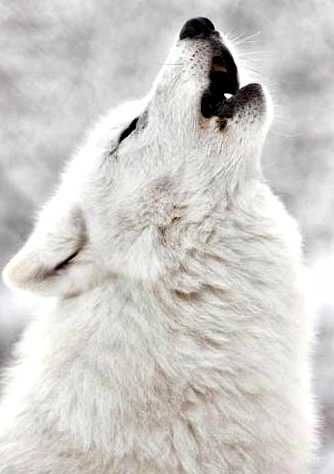
Wolf Howling Tumblr

Of course wolf lovers are howling mad. We’re sick of seeing wolves demonized, especially in a Super Bowl ad, viewed by millions of people all over the world, including impressionable children,  just to sell brewskies.

Bud needs to apologize. Wolves are dying right now in MontanaandIdaho wolf hunts. Nearly 800 wolves have been slaughtered in hunts since September 2014, poaching has also taken its toll.

Just recentlyEcho, the young female wolf who traveled to the Grand Canyon from the Northern Rockies kill zone, was probably killedby a “coyote hunter”. She was the first wolf  to set a paw in the Canyon since the 1940’s and now she’s gone, a huge blow to wolf recovery.

Wolves don’t need bad Budweiser press, they need protection!

Keep signing thepetition people, let Budweiser know how you feel! This Bud is not for you!

 ===

Budweiser lost puppy ad…

View original post 294 more words

Essential Species Quiz

Here is a short multiple-choice quiz to test your knowledge of our fellow animals.

Instructions: Choose the species that best fit the descriptions below.

Note: Although some may share a few of the characteristics, they must meet all the criteria listed in order to qualify as a correct answer.

1. Which two species fit the following description?

  • Highly social
  • Live in established communities
  • Master planners and builders of complex, interconnected dwellings
  • Have a language
  • Can readily learn and invent words
  • Greet one another by kissing

A. Humans

B. Prairie Dogs

C. Dolphins

D. Penguins

Answer:  A. and B

2. Which two species fit the following description?

  • Practice communal care of the youngsters on their block
  • Beneficial to others who share their turf
  • Essential to the health of their environment
  • Without them an ecosystem unravels
  • Have been reduced to a tiny portion of their original population
  • Vegetarian

A. Humans

B. Prairie Dogs

C. Bison

D. Hyenas

Answer:  B. and C.

3. Which two species fit the following description?

  • Out of control pest
  • Multiplying at a phenomenal pace
  • Physically crowding all other life forms off the face of the earth
  • Characterized by a swellheaded sense of superiority
  • Convinced they are of far greater significance than any other being
  • Nonessential in nature’s scheme

A. Humans

B. Prairie Dogs

C. Cockroaches

D. Sewer Rats

Answer:  Sorry, trick question; the only species fitting the criteria is A.

If this seems a harsh assessment of the human race or a tad bit misanthropic, remember, we’re talking about the species that single-handedly and with malice aforethought blasted, burned and poisoned the passenger pigeon (at one time the most numerous bird on the entire planet) to extinction and has nearly wiped out the blue whale (by far the largest animal the world has ever known). Add to those crowning achievements the near-total riddance of the world’s prairie dogs, thereby putting the squeeze on practically all their grassland comrades, and you can start to see where this sort of disrelish might be coming from.

When the dust settles on man’s reign of terror, he will be best remembered as an egomaniacal mutant carnivorous ape who squandered nature’s gifts and goose-stepped on towards mass extinction, in spite of warnings from historians and scientists and pleas from the caring few…

____________________

The preceding was an excert from the book, Exposing the Big Game.

This Bud’s Not For Me

Poll at bottom of page….

http://www.utsandiego.com/news/2015/feb/02/budweiser-puppy-ad-wolf-conservation/

A Super Bowl ad has some people howling mad.

No, not Nationwide’s commercial about a boy who died , though way to bring down the mood, Nationwide.

It’s Budweiser’s “Lost Dog” spot, which featured an adorable puppy, majestic Clydesdale horses and a big, bad wolf.

Budweiser 2015 Super Bowl Commercial ‘Lost Dog’

To summarize, dogs and horses good, wolves bad. (Sharks? Thanks to Katy Perry, that’s another story.)

No, the wolf lobby didn’t like it.

Viewers see horses come to the pup’s rescue as he’s being threatened by a menacing wolf who bares its teeth and snarls at the poor, frightened little guy. But then the pup returns home, joy ensues and all is right with the world, allowing us all to sit back and enjoy a cold one. (As if we weren’t doing that already.)

For puppy lovers and horse lovers and beer lovers, the ad was a touchdown.

But to wolf aficionados everywhere the ad unfairly demonized the endangered gray wolf population and was an affront to the species.

Witness this headline form onEarth, the magazine of the Natural Resources Defense Council.

“The King of Fears? Budweiser’s ‘lost puppy’ Super Bowl commercial has us howling on behalf of wolves.”

The people at the Center for Biological Diversity said the ad “drums up anti-wolf sentiment to try and capitalize on our culture’s outsized fear of wolf attacks.”

The organization launched a petition it called a “reality check” asking the beer maker to pull the spot. It has nearly 20,000 signatures.

photo

Here’s what the petition says: “1.2 million dogs are euthanized in shelters in the United States each year while another 1.2 million dogs are hit and killed by cars on America’s roads. By comparison, wolves are a virtually non-existent threat to our furry canine friends, only in very rare instances attacking dogs if they feel threatened or perceive them as competitors. The real threat to both dogs and wolves, as these numbers show and as Budweiser’s cynical attempt to boost sales indicates, is people.”

Here’s how it ends: “Purposefully demonizing an animal that is part of America’s natural heritage is no way to sell beer.”

There’s some growling going on about the issue on the The Wolf Conservation Facebook page.

Many of the commenters agree that the ad should no longer run but then there was this: ” For god sake this is stupid… It shows a wolf growling once and you do this? You people are unbelievable…”

What do you think? Weigh in below.

Should Budweiser pull its ad because of the wolf?

  • Yes. Wolves should be protected and not demonized.
  • No. What’s next? Do we ban Little Red Riding Hood?

See results

Half of the members of the US Senate don’t believe humans cause climate change

1795497_611414028914288_1804650880_n

The votes are in, and … half of the members of the US Senate don’t believe humans cause climate change.

This is a national embarrassment. Differences of opinion are one thing, but it’s far more troubling when half of the members of our most distinguished legislative body simply ignore facts supported by overwhelming scientific consensus.

Let’s take the Senate to school. Sign the climate science petition — when we get 50,000 signatures, Avaaz will run a poll quizzing schoolchildren on climate, then launch ads in the biggest papers showing that the US Senate is failing science class compared to middle schoolers. Sign now:

https://secure.avaaz.org/en/schooling_the_senate_on_climate_science_re/?bVYyJab&v=52978

Things are bad in Washington. The first real legislation the new Senate passed this year? To build the climate-wrecking Keystone XL pipeline. The new chair of the Senate’s environmental committee is James Inhofe, the Senate’s climate denier-in-chief who quotes the Bible to claim humans can’t change the planet. But the climate science report from the National Academies of Science — commissioned by Congress itself — says the exact opposite!

The report’s #1 finding was that “Climate change is occurring, is very likely caused primarily by human activities, and poses significant risks to humans and the environment.” Going against this is like asking mathematicians for a number line, then saying that 1 is smaller than zero.

Deep down, most of the Senators who voted against scientific fact must know they’re full of it. The American people do — a new report just found that a majority want Congress to do more on climate. And our best shot at changing the game is to publicly embarrass them.  Sign on now, and help teach Congress a lesson that even 8th graders know:

https://secure.avaaz.org/en/schooling_the_senate_on_climate_science_re/?bVYyJab&v=52978

Human-caused climate change is no joke. That so many of our supposed leaders are so out of step with basic science, settled years ago, means that the people are going to have to lead on this one. That’s a role the Avaaz community knows how to fill — we did it in New York in September with the People’s Climate March, and we can do it again now.

With hope,

Terra, David, John, Nataliya, Fatima, Ricken, and the Avaaz team

SOURCES
National Academy of Sciences “Climate Choices” Report summary
http://dels.nas.edu/Report/America-Climate-Choices-2011/12781

So Much Senate Climate Change Trolling (Think Progress)
http://thinkprogress.org/climate/2015/01/21/3614028/so-much-senate-climate-change-trolling/

US Senate refuses to accept humanity’s role in global climate change, again (The Guardian)
http://www.theguardian.com/environment/2015/jan/22/us-senate-man-climate-change-global-warming-hoax

Most Americans support government action on climate change (NY Times)
http://www.nytimes.com/2015/01/31/us/politics/most-americans-support-government-action-on-climate-change-poll-finds.html

Happy Prairie Dog Day!

      Keystone Prairie Dogs

Celebrate Prairie Dog Day

February 2nd has been nationally recognized as Groundhog Day since 1841, but in recent years, wildlife organizations officially added Prairie Dog Day to the date as a way to inform and educate the public on how important they are to the prairie ecosystem.

Urgent Call to Action

A Colorado mall developer takes lethal path with plans to kill approximately 5000 prairie dogs to construct a supermall in Castle Rock.  Protestors hope to force Alberta Development LLC to delay their extermination plans until June 1, to give conservationists time to find and prepare land where the prairie dogs can be safely moved, while the females will remain underground with their babies.  If the developer proceeds with the current timeframe, it will cause thousands of prairie dogs that aren’t trapped and killed to be fatally entombed.  READ FULL STORY HERE.

Federal Prairie Dog Conservation Report Remains Grim

WildEarth Guardians released their seventh annual Report from the Burrow to coincide with Prairie Dog Day and the grades given to federal and state agencies on the success of managing prairie dog populations remain poor.  The report reveals that “while a few states and federal agencies are improving their prairie dog conservation efforts—the generally deplorable status quo, where these intelligent, ecologically important animals are treated as pests and widely poisoned, gassed and shot—remains largely unchanged.”  Grades range from a B shared by the National Park Service and the state of Arizona to an F given to the Environmental Protection Agency.  SEE THE REPORT HERE.

Goodbye to PrairieDogPress

Since October 2012, PrairieDogPress has been the marketing arm of Keystone Prairie Dogs with footnotes to the KPD website linked at the bottom of each article published at the online news site Allvoices/Pulsepoint.  However, due to changes in that company’s platform to sponsored content only, freelance contractors will no longer be able to publish on the site, though their pages will remain as copyrighted property of AV.  Therefore, since the Examiner column KPD utilizes for wildlife and prairie dog content prohibits such promotion, KPD launched its own political and social commentary Facebook platform designed to broaden exposure.  The new page is called “Keystone Prairie Dogs Sunnyside Left” and we invite everyone to stop by, check it out and give us a “like”. IT CAN BE ACCESSED HERE.

Also, Keystone Prairie Dog website recently added two new pages: Newsroom and Memes.  CHECK THEM OUT HERE.

Thanks for your support of America’s meerkats and have a great spring everyone!