Why killing wolves will make no difference to caribou recovery

1453351_1488724231352782_186999841_n

Just like British Columbia, wolves in ‪#‎Alberta‬ are also in the firing line as the scapegoat for dwindling caribou populations.

Please sign/share this petition http://bit.ly/1Hndkqh
via Raincoast Conservation Foundation for Alberta wolves

Please sign/share this petition http://chn.ge/1y7up1m
via Pacific Wild for BCwolves

The full story of the caribou situation and why killing wolves will make no difference to caribou recovery: http://bit.ly/1Ln71CL

‪#‎saveBCwolves

A World that Never Was

730_306907729449712_225651386_n

Revisionist history may seem like harmless, feel good child’s play, but the threat it poses (to all other animals at least) is that without hearing the real story, people will never learn from the past.

It’s tempting to want to believe that all that has gone wrong with the human race is the result of being led astray by our technology, and if we could just get back to our caveman roots, everything would be happy and harmonious like it surely was back then. But contrary to contemporary popular belief, that’s a world that never was.

Even the earliest human hunters drove countless species to extinction and exhausted their carrying capacities time and again, ever since plant-eating primates first climbed down from the trees and decided to take up big-game hunting.10418292_778659628825562_4081410081902108848_n

The notion of the peaceful savage has long since been disproven, but people want to cling to it rather than accept the truth about human nature. Just look at the dead-animal adornments any warrior or tribal chief wore, and it’s easy to see the roots of trophy hunting.

The thought that any spear-wielding species who took advantage of fire to herd animals toward a cliff or into a box canyon had an innate sense of ecological fairness goes against all that made us human—envy, lust, greed, gluttony, a lack of empathy and an over-blown ego are the kinds of things that ultimately define a hunter, whether the motive for their behavior is sport or subsistence.

Richard Wrangham and Dale Peterson summed up the chapter, “Paradise Imagined,” of their book, Demonic Males: Apes and the Origins of Human Violence, thusly, “There is no such thing as paradise, not in the South Seas, not in southern Greece, not anywhere. There never has been. To find a better world we must look not to a romanticized and dishonest dream forever receding into the primitive past, but to a future that rests on a proper understanding of ourselves.”

Humans have achieved an awful lot of success as a species over the years, but judging by our planet-crushing prowess, we may have finally breached our collective britches.

1173835_594069293967592_2141908188_n

Tuesday Is Soylent Green Day Again

Last night I watched the timeless 1973 movie, Soylent Green, again and was again impressed (unfavorably) by how much the futuristic world that it depicted mirrored the world we’re headed for now. The temperature of the overcrowded New York of the future was a constant 90 degrees; the oceans were dying (presumably from overfishing and pollution, they hadn’t heard of acidification at the time); and the world was running out of food..

Spoiler Alert:

Set in 2022, the film opens with a slide show of earlier eras, back when the Earth was covered with forests and open fields, and there were only a few scattered settlements of people who travelled in horse-drawn wagons.

As the images pass quickly by, we see the first automobiles (tail pipes spewing toxic climate-changing carbon gases), followed by a massive blacktop parking lot jam packed with Model Ts. The pictures begin to flash almost more rapidly than we can focus, but we catch glimpses of factories with smokestacks billowing and crowds of people barely able to

move without trampling one another. (Come to think of it, what we are witnessing looks a lot like the inside of an average modern-day poultry barn, where chickens and turkeys are forced to live out their lives in intense confinement.)

The first scene of action takes place in a cramped little New York City apartment, the dwelling of the film’s two main characters, Thorn, a semi-corrupt detective, and his elderly room-mate and research partner, Sol, who is constantly going on about the good old days—a world that Thorn can’t possibly envision or relate to.

They are among the lucky few; most people sleep on the stairways or in the hallways or anywhere they can find shelter from the oppressive heat caused by an out of control greenhouse effect. We overhear a program on their worn out old TV which is an interview with the governor of New York, touting a new food product called “Soylent Green,” ostensibly made from the ocean’s plankton. (Everyone in that day and age knows that the land is used up, but they’re told the oceans can still provide for them).

Food in this depressing, human-ravaged world comes in the form of color-coded wafers, distributed under strict government supervision. Hordes of people stand in line for their ration of Soylent yellow or blue made from soy, or other high protein plants grown behind the fortress-walls of heavily guarded farms.

Signs remind the throng that “Tuesday is Soylent Green day.”

The multitudes are exceptionally unruly on Tuesday. Brimming with anticipation, they can’t wait to obtain a ration of the special new product. When the food distributors run out of soylent green, people start rioting and things get out of hand. “Scoops” (garbage trucks fitted with backhoe-like buckets on the front) are called in to scrape up the angry masses and haul them off…

By the end of the film, Thorn learns that the oceans are dead and the actual ingredients of Soylent Green are something a bit harder to stomach than plankton. In the final scene, a mortally-wounded Thorn is carried away on a stretcher as he desperately tries to tell bewildered onlookers, “Soylent Green is People!” “They’re making our food out of people. Next thing, they’ll be breeding us like cattle for food!”

Could it ever happen? Could the human race ever stoop so low? If the scenario seems too hard to swallow­, consider this: the conditions animals are forced to endure on today’s factory farms would have seemed unimaginable to people living a hundred years ago.

Another New Contest Hunt?

First the bad news–New Coyote Derby in announced in Montana

MT contest hunt

Then the terrific News! Bill to Ban Coyote Killing Contests in New Mexico Passes First Hurdle Today!

Today SB 253, a bill sponsored by New Mexico Senator Mark Moores and Representative Jeff Steinborn to ban coyote killing contests passed out of committee with a vote of 6-3.

This contest-hunt ban effort is work that WildEarth Guardians is doing with coalition partners Animal Protection Voters, @Southwest Environmental Center, and others who are committed to improving treatment of wildlife in New Mexico through changes in state legislation.

Sportsmen, Environmentalists Clash Over Predator Hunting

http://kjzz.org/content/98282/sportsmen-environmentalists-clash-over-predator-hunting

By  Stina Sieg

February 05, 2015

This week, a convention of predator hunters is gathering in Tucson. The group, called Predator Masters, hunts such animals as coyotes and raccoon and has drawn national criticism for what critics say amount to killing contests. The group disputes that term and says it isn’t planning an organized hunt during the convention. Still, controversy surrounding the sport remains.

It’s hard to tell the difference between an actual coyote’s howl and the plaintive yell longtime hunter Rich Higgins can make with one of his many breath-powered calling devices.

“I truly believe that humans are hard-wired, genetically, as hunter gatherers,” he said, after showing off a few of the cries. “So we’re just being true to our nature.”

Higgins is the president of Arizona Predator Callers, one of the many organizations in the state that legally hunts predators like coyotes on public land. He said it isn’t so much about killing, as it about everything else involved with the sport he loves.

“Everything from building your own calls and your own howlers, learning the behavior of that animal, so you can exploit its vulnerabilities,” he said. “All of this is fascinating to us.”

And that’s the real point, he added, of what some people call “killing contests.” That’s when a group like his tries to kill as many coyotes as they can in a certain period of time. The reality is that most hunters don’t even bag a coyote, Higgins said. It’s more about hanging out with people who also enjoy the thrill of the hunt.

“It’s an incredible experience,” he said. “And becomes addicting.”

That doesn’t exactly comfort predator hunting opponents, who say it’s a waste to kill animals without using them for food or fur. Sandy Bahr is the president of the Sierra Club’s Grand Canyon Chapter. Her organization is not against all hunting, she said, but with some predator hunters, “there is this attitude, which is pretty disrespectful of the animals, that ‘we’ll just go out and kill as many as possible.’”

Even if you take away the emotional side of this, Bahr said there could be real consequences from this kind of hunting. If the coyote population dips, there could be a large spike, followed by a crash, of prey species that coyotes usually keep in check. On the other hand, coyotes could actually increase in number.

The more they feel threatened, “the more they’ll have larger litters,” she said. “They’ll breed earlier, they actually respond by doing more to build the population.”

But the Arizona Game and Fish Department sees it differently, including Jim Paxon, special assistant to the director.

“Under no circumstances and in geographic area, have hunters made a dent in the coyote population,” he said.

He said there are an estimated 25,000 to 40,000 coyotes in the state. Game and Fish attempted to regulate hunting contests about 15 years ago, without success. But Paxon said the department doesn’t take an official stance now. Instead, it enforces current rules. Those allow people with valid hunting licenses to kill as many coyotes as they want.

“So, it’s recognized that coyote hunting is a legitimate activity for hunters and sportsmen,” Paxon said.

But that doesn’t mean it’s always easy, even for a seasoned predator hunter like Rich Higgins.

“I always have a tinge of regret. Always, always, always,” Higgins said. “And sometimes, when it becomes a little bit strong, I will pick up my camera only.”

In his heart, Higgins said, he is a hunter. And that’s regardless of whether he’s hunting coyotes with a lens — or a rifle.

10885301_1568094566769883_1971170912125979956_n

Taxpayers Fund Mass Killing of Wolves in British Columbia

http://panampost.com/rebeca-morla/2015/02/04/taxpayers-fund-mass-killing-of-wolves-in-british-columbia/

As many as 184 wolves must be shot in British Columbia, Canada, in order to save the caribou, according to a statement from the provincial government. The Ministry of Forests, Lands and Natural Resource Operations announced plans on January 15 to address what they consider the threat of wolf predation in the areas of the South Selkirk Mountains and the South Peace, along the border of US states Washington and Idaho.

The caribou, one of Canada’s most recognized national symbols, “is at high risk of local extinction,” according to the ministry’s statement.

The government claims the South Selkirk caribou population declined from 46 in 2009 to just 18 as of March 2014, adding that “evidence points to wolves being the leading cause of mortality.”

The ministry further cites a joint-research project between officials from British Colombia, Washington and Idaho states, First Nations, the US Forest Service, and the US Fish and Wildlife Service, which found wolves killed two of the remaining caribou in the past 10 months.

Authorities also claim that in the area of South Pearce, inhabited by four caribou herds, at least 37 percent of all “adult [caribou] mortalities have been documented as wolf predation.”

In order to “remove” the wolves from these areas, the government will deploy “trained sharpshooters” to shoot the animals from a helicopter. The operation will cost overcopyrighted wolf in water US$500,000.

This latest wolf cull follows the killing of more than 1,000 wolves in the forests of Alberta, between 2005 and 2012, in an attempt to protect 100 caribou living there.

However, while the wolf hunt in Alberta stabilized caribou numbers in the region, it did not result in a population increase, according to a study published in November 2014 in the Canadian Journal of Zoology

The War on Wolves

Ian McAllister, conservation director for Pacific Wild, believes the government’s focus on wolves ignores the real issue concerning the caribou’s habitat.

“While the government is not moving forward to protect adequate amounts of habitat to save the caribou, they’re instead using wolves as a scapegoat and planning just a horrific level of aerial killing in the coming months,” McAllister said. “This is truly a war on wolves in British Columbia.”

McAllister, who started an online petition against the cull, told local newspaper the Province that the fundamental threat to caribou is human encroachment and the destruction of their natural environment.

“Killing every single wolf in this province will not save those caribou. But they’re killing wolves anyway. The wolves are being used as scapegoats.”

Moreover, McAllister argues that the government’s wolf cull violates the guidelines set forth by the Canadian Council on Animal Care regarding wild animal euthanasia.

According to the guidelines, the only “acceptable methods” for animal euthanasia produce “death with minimal pain and distress when used on conscious or sedated animals.”

“There’s no way they can kill that many wolves without missing shots and injuring animals,” McAllister told the Province. “You will have wounded wolves returning to ripped-apart family units … their suffering will be extreme.”

“Foolish and Inhumane”

David Shellenberger, a self-described advocate of international liberty and animal welfare, told the PanAm Post that the mass killing of wolves in British Columbia is typical of the government’s treatment of wolves and other predators.

“States almost always serve themselves and their cronies,” said Shellenberger. “When it comes to wolves, this means doing the bidding of the hunting and livestock industries. Governments also fear monger regarding wolves, exploiting ignorance and prejudice.”

Shellenberger further explained that wolves benefit prey species, including caribou, and argued that they are “essential to the general ecological health of habitats.”

“The decline of caribou,” he states, “is the result of government’s mismanagement of land; it is not the fault of wolves. Killing wolves is foolish and inhumane. Wolves are not only ecologically essential, but also intrinsically and economically valuable.”

There are more efficient ways to preserve caribou herds, says Shellenberger, without sacrificing other species. “The long-range answer for the health of the caribou population is better stewardship of land, ideally through the government giving ownership to conservation organizations or creating a trust structure.”

“An immediate possible answer,” he added, “is the farming of caribou.”

Edited by Guillermo Jimenez.

Industrial logging invasion of the Tongass imminent! ‏

From Audubon.org

One of America’s most precious and endangered habitats is under siege — again.

Contrary to its own policies, the Obama Administration is rushing through a massive old-growth timber sell-off in the Tongass National Forest in Alaska — the largest sale of its kind in decades. This industrial level logging could put many vulnerable bird species at risk.

Audubon has joined with other conservation groups in federal court to stop this malicious sell-off of America’s globally important coastal temperate rainforest.

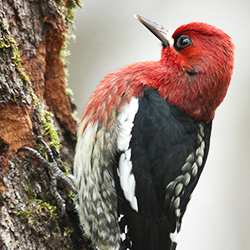
The ancient coastal woodlands of the Tongass are home to many bird species that depend on old-growth forests for their survival. Native species include nearly a third of the world’s Red-breasted Sapsucker population and at least 20% of the global population of pacific-slope flycatchers. Marbled Murrelets — listed under the Endangered Species Act in Washington, Oregon and California — are old-growth-dependent birds that rely on Tongass old growth to support healthy populations.

Perhaps most at-risk from the so-called Big Thorne timber sale is the Queen Charlotte Goshawk, an old-growth dependent raptor. Only 300 to 700 breeding pairs of these birds survive in the wild. The proposed timber sale would degrade goshawk habitat, perhaps past the point of no return.

The Big Thorne timber sale would put 120 million board feet of old-growth trees literally on the chopping block. What’s worse, this is only the first of four massive logging incursions proposed by the US Forest Service.

Four years ago, the Obama Administration said it was bringing to an end the era of massive and destructive logging in the Tongass. This latest sale, sadly, is a giant step in the wrong direction.

APA_2013_28905_229464_RogerBaker_Redbreasted_Sapsucker_K