Yesterday we came across a river otter who crossed the road about 30 yards in front of us and disappeared into our pond. No cars were around so he needn’t have been in a hurry, but still he was very business-like, loping purposefully from one waterway to the next. He didn’t stop and give us any extra time to appreciate his company, and clearly—though we meant him no harm and regarded him with respect—he didn’t seem to appreciate ours.
Similarly, on today’s walk along a road through the neighboring wetlands, a large flock of ducks took flight, putting as much distance between us and them as possible, as quickly as possible.
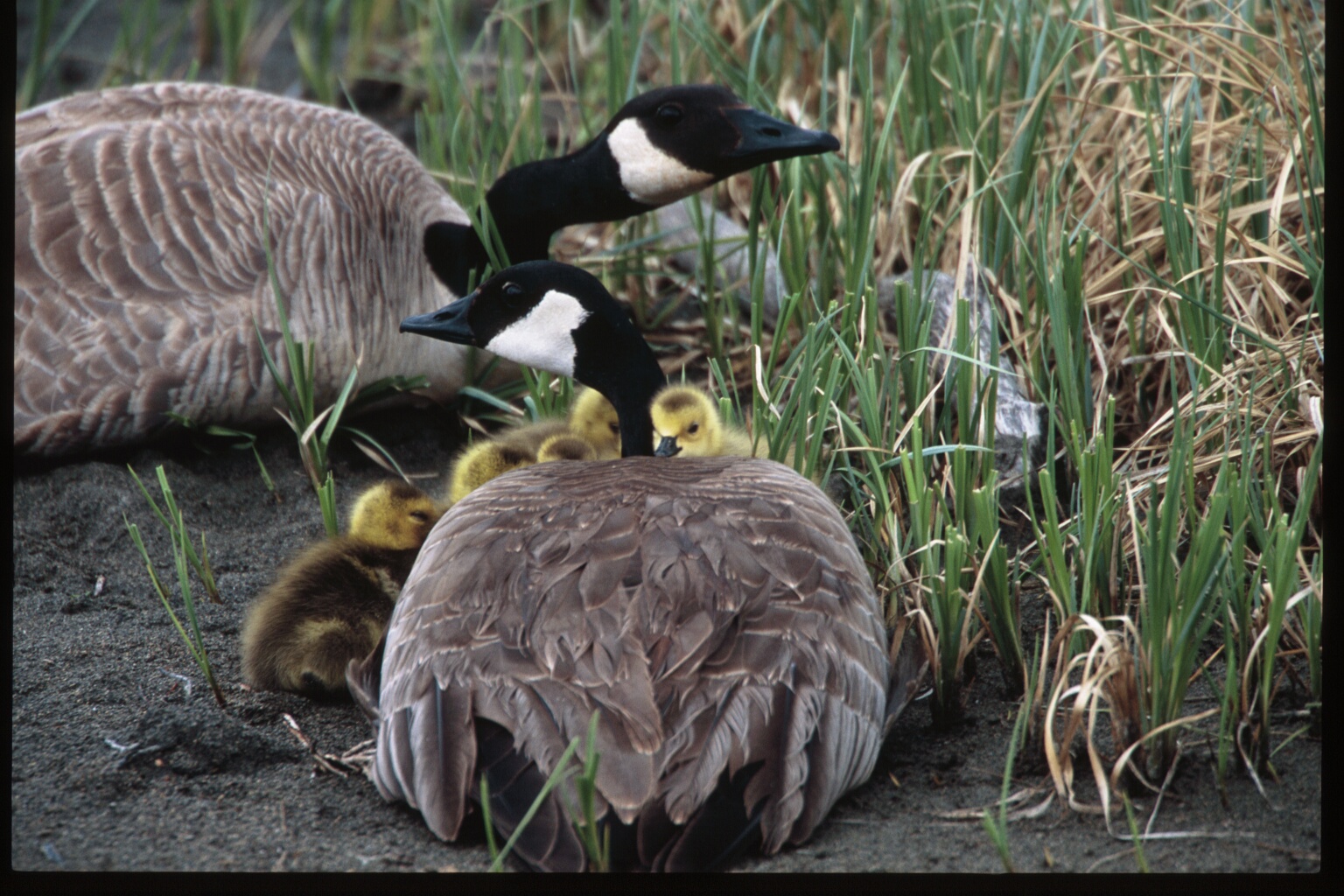
Meanwhile, several pairs of Canada geese kept a wary eye on us as they
honked their warning calls and ambled reluctantly behind the cover of some cattails and tall grass. We spoke reassuringly to them, explaining that we didn’t intend to hurt them, but our mere presence was disruptive. Unfortunately wildlife tends to judge all people based on human nature in general.
Although fewer folks nowadays are out to kill everything they see, destructive behavior has been a hallmark of human nature since the genus Homo first set foot on the face of the Earth. Other traits representative of the species seem to be an over-bearing sense of entitlement (as in “it’s all here for us”) and a narcissistic arrogance that empowers them to see themselves as supreme among all other beings, whom they objectify as resources put here for them by some anthropomorphic deity for their benefit to exploit as they see fit.
It’s always disappointing that the wild animals assume the worst because of your association, no matter how distant, with the average gun-toting Elmer, when all you want to do is be friends.
Researchers have recently released a paper that details 15 of the most critically endangered species on Earth – organisms that not only are facing what looks to be inevitable extinctions, but are barely receiving any aid to stop it. Now conservationists are calling for the money and expertise that would be needed to help these creatures – ranging from seabirds to tropical gophers – survive.
A study recently published in the journal Current Biologydetails how a whopping 841 endangered species can still be saved from extinction if countries and organizations commit an estimated net value of $1.3 billion dollars annually towards their safety. However, for 15 of the species highlighted in the report, their chance of conservation success is dropping by the minute.
“Conservation opportunity evaluations like ours show the urgency of implementing management actions before it is too late,” Dalia A. Conde, the lead author of the study and Assistant Professor at the Max-Planck Odense Center at the University of Southern Denmark, explained in a recent statement. “However, it is imperative to rationally determine actions for species that we found to have the lowest chances of successful habitat and zoo conservation actions.”
So just what are these 15 species in trouble? Nearly half the list includes amphibians, and that’s something that shouldn’t be too surprising given that this class of creatures is battling a war on two fronts. (Scroll to read on…)
(Photo : Ivan Sazima) The Brazilian frog Physalaemus soaresi is one of the most critically endangered species in the world, as the great majority of its natural habitat has been converted into eucalyptus plantations.
As things stand, a deadly fungus (Batrachochytrium dendrobatidis) continues to spread and wipe out frog species from the face of the Earth in places like Brazil and Spain. A variant of it (Batrachochytrium salamandrivorans) has even started to affect salamanders around the globe.
Meanwhile, the habitats that these creatures rely on are shrinking and changing in the wake of climate change and human influence. Salamanders are even shrinking, as they increasingly struggle to live in suddenly dry and warming climes.
Six of the 15 species listed also happen to be birds. This, too, is partially a consequence of climate change, where churning air currents and shrinking habitats are leaving migratory species with smaller rest stops and fewer food supplies. Even species who do not travel far are left to compete with invaders, pollution, and, most commonly, deforestation. The Tahiti monarch (Pomarea nigra), for instance, is estimated to total less than 50 in the wild, as livestock pastures are expanding at the cost of forest habitat. (Scroll to read on…)
(Photo : Vincent Legendre) The Amsterdam albatross – one of the most critically endangered birds in the world – boasts a population that hovers somewhere around 130 birds with only 25 known breeding pairs.
Most interestingly, three mammal species are threatened, consisting of the Mount Lefo brush-furred mouse (Lophuromys eisentrauti) in Cameroon, the Chiapan climbing rat (Tylomys bullaris) in Mexico, and the tropical pocket gopher (Geomys tropicalis) along the Mexican and Central American coast.
Shrinking habitats are threatening all three, but the reasons vary from urbanization, to human conflict, to costly habitat protection. Some can’t even be reintroduced into the wild through a captive breeding system, as the expertise to raise them is too rare or costly in undeveloped worlds.
That’s why an international effort world be worth it, according to the study. The researchers determined that the total cost to conserve the 841 animal species in their natural habitats was calculated to be more than $1 billion (USD) per year. The estimated annual cost for complementary management in zoos was $160 million.
“Although the cost seems high, safeguarding these species is essential if we want to reduce the extinction rate by 2020,” added Hugh Possingham from The University of Queensland. “When compared to global government spending on other sectors – e.g., US defense spending, which is more than 500 times greater -, an investment in protecting high biodiversity value sites is minor.”
And most encouragingly of all, the researchers found that if these species get the funding they need, 39 percent of them could potentially be pulled out of their endangered status, given their high number of conservation opportunities.
That’s not the case for the most threatened 15, but even for those the researchers argue that taking “an integrated approach” could save them...
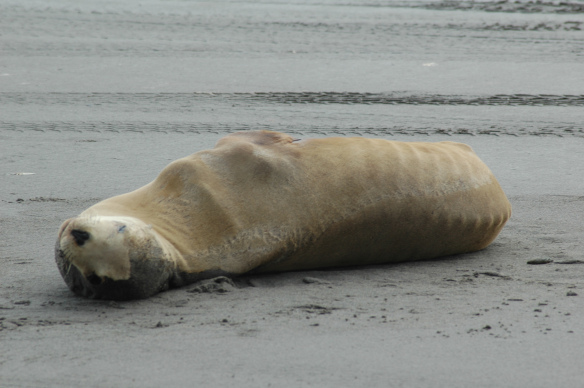
Warmer waters off the coast of California are likely driving away sea lions’ prey such as squid, anchovies, and sardines, said Justin Viezbicke, stranding services coordinator for the National Oceanic and Atmospheric Administration (NOAA). As a result, mother sea lions are having to go further from birthing grounds — usually around the Channel Islands — to forage for food, meaning that pups probably don’t get enough nutrients from their mothers when they return. The pups then wean off their mothers earlier and are underweight when they leave the island, likely to find food of their own.
“They’re leaving with a low tank of gas and there’s really not much out there to help them out,” said Viezbicke. “They’re jumping into … a challenging environment and then they’re ending up washing ashore on the mainland, starving.”
Organizations like NOAA and other animal rescue programs have been taking in pups and feeding them — but that’s only a stopgap measure.
“This is something that’s naturally occurring out there, so there’s really not much we can do other than watch and learn from the situation,” Viezbicke said. “We can’t really prevent or stop it, unfortunately.”
Left to their own devices, these stranded sea lion pups probably wouldn’t make it. (No judgement if you need a tissue here. I’ll wait.)
As sad as it sounds, starvation events and mass mortality events (in which vast numbers of animals die), are becoming more and more common in this wacky, warming world. Thanks to a number of large-scale, systemic alterations (lookin’ at you, El Niño and warming ocean temps), the world’s ecosystems hang in a delicate balance.
Meet the Cassin auklet — a pudgy, fist-sized seabird with crescent-shaped eye markings and pale blue feet. They’re pretty dang cute. And thousands of them are washing up dead along the West Coast — all the way from Northern California to British Columbia.
“My volunteers alone … have found 7,000 carcasses [over the last four months],” said Julia Parrish, executive director of the Coastal Observation and Seabird Survey Team (COASST) at the University of Washington. “It’s a scary big number.”
Like the sea lions, auklets are literally dying for a meal. The birds primarily feed on zooplankton or krill. However, in the last year, a mass of warm water — very scientifically named “the blob” — drove the usual Pacific krill into deeper waters and brought in a host of zooplankton that the auklets don’t eat, reported Audubon Magazine.
When a high number of birds wash ashore dead, the events are called “wrecks.” Generally speaking, smaller wrecks are fairly normal, Parrish explained. If there’s a storm out at sea, it’s not unusual for seabirds caught in its path to die, whether from starvation or storm conditions, and later wash up on beaches. That’s just how it goes.
But this time, something is different. “This is the biggest wreck we’ve ever seen in the 16 years we’ve been doing this work,” Parrish said. “I think it’s probably the largest wreck we’ve seen on West Coast … That makes me sit up and take notice.”
This winter’s wreck could be especially bad if enough of the dead auklets turn out to be adults, because an entire reproductive group may have been wiped out. They won’t know for sure until the birds return to their breeding grounds. Until then, it’s a lot of waiting and counting dead birds.
D. Derickson/COASST
So is this climate change at play? Scientists are hesitant to say.
Dee Boersma, a conservation scientist and founder of the Penguin Sentinels Project at UW, compares the vulnerability of seabirds to weather and climate to the vulnerability of a human crossing a busy street: You could get hit by a truck, but it doesn’t happen every time. And just as it’s hard to predict exactly how likely you are to survive a street-crossing as a human, the same goes for storms and their effects on Magellanic penguins, she said.
In 2014, Boersma and other penguin researchers published a study in PLOS ONE which found that climate change was directly responsible for the deaths of more than 200 Magellanic penguin chicks from 1983 to 2010 in Punta Tombo, Argentina. There, climate change is increasing the intensity and frequency of storms, while lowering the reproductive success of Magellanic penguins, the study reported.
During the 27-year-long study, young penguins perished at a high rate due to a combination of starvation and overexposure during exceptionally rainy and hot seasons. The chicks’ feather coats keep them cozy when they are dry, but that changes when they get wet: The fluffy down isn’t waterproof, like adult penguin feathers. So if a penguin chick gets caught in the rain during a storm, it’s like a human “being stuck outside and naked in a wet sleeping bag … the penguins basically die of hypothermia like you or I would,” said Boersma.
Plus, a lack of food leaves the chicks unprepared to cool themselves down when things heat up, since they rely on the food their parents bring them for all of their water. Without adequate hydration, the chicks can’t depend on evaporation to keep cool and become vulnerable to heat stress.
It’s a lethal combination: Over the course of the study, an average of 65 percent of the Punta Tombo chicks died every year, with about 40 percent dying of starvation.
Chicks that died of hypothermia after a rainstorm.Dee Boersma / University of Washington
So what was that about climate change again? Mass animal die-offs and starvation epidemics are shocking no matter what, even to hardened scientists. Climate change is just exacerbating these kinds of things.
“The fact is that we have populations responding to warming events, whether the warming is temporary or inexorable,” said Parrish, the researcher studying the dying auks.
The world’s ecosystems are hanging on as best they can, but small things can throw them out of balance. It’s unfair to compare the temperatures that a wild ecosystem can withstand to the temperatures humans can, because we have tools and technology on our side. “Wildlife needs habitat,” Parrish said. “In today’s crowded world, habitat only exists in certain places — places that we protect. And when the climate warms, those places change.”
“[Even one degree] is a huge deal,” Parrish points out. To understand and support conservation efforts, humans need to “think like a fish, a clam, or an oyster, and not like a person.”
My BFF/right-hand-chocolatier Maresa and I have been talking about making vegan deviled eggs for years. This Thanksgiving we finally got around to it and I think the results are going to change your life forever.
Truthfully, the recipe is more Maresa’s than mine. We both started out tinkering around with a pile of ingredients, a food processor, and some scribbled ideas late in the kitchen one night, but I could feel that she was in hardcore recipe development-mode—her mind was whirring with modifications, improvements, tricks. I went home, and when I showed up at work the next day Reesey excitedly brought out a perfect platter of the little guys. Jacob and I pretty much died, and so did everyone at the friends-Thanksgiving we all went to the next day. Vegans immediately started jumping up and down with excitement, and non-vegans were initially puzzled but quickly entranced by their cleaner, lighter…
The U.S. Army Corps of Engineers has scaled back its plan to kill thousands of federally protected migratory birds to keep them from eating endangered juvenile salmon and steelhead at the mouth of the Columbia River.
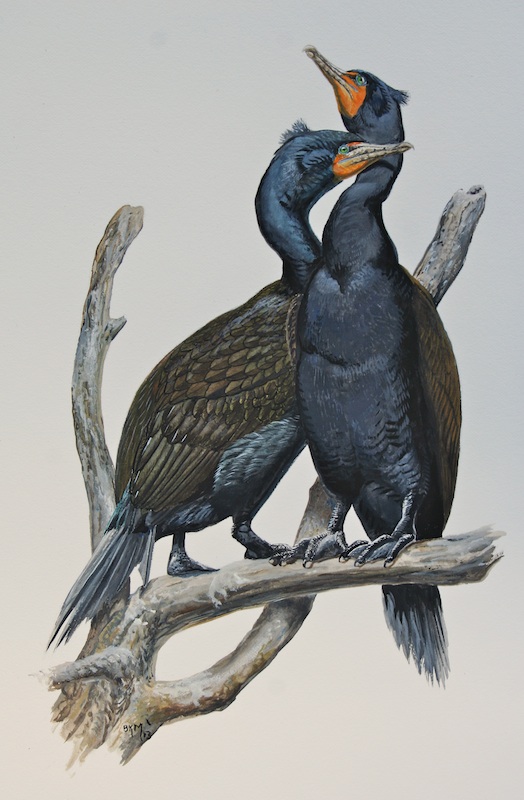
On Friday, the corps released a final environmental impact statement detailing plans to use lethal measures to shrink the East Sand Island colony of double-crested cormorants, a long-necked black sea bird.
The revised version of a preliminary plan released last summer calls for shooting nearly 11,000 birds by the end of 2018 and pouring oil over 26,000 nests to prevent eggs from hatching. The corps’ goal is to reduce the colony by 57 percent, to about 5,600 breeding pairs.
The corps estimates that since 1989, the cormorant colony on East Sand Island has exploded from 100 nesting pairs to 13,000. During that time, the birds have eaten about 11 million smolts yearly, or nearly 7 percent of juvenile steelhead that pass by East Sand Island on their way to the ocean.
Plans to kill the birds were drawn up in response to a NOAA Fisheries biological opinion that recommended the corps trim the cormorant colony in order to protect endangered fish.
The changes to the plan come in response to more than 152,000 public comments on the original plan, nearly all of which expressed opposition to the killing.
Environmentalists on Friday said they aren’t satisfied, arguing the new plan still resorts to “wanton slaughter” without considering other ways to protect endangered fish.
Bob Sallinger, conservation director with the Audubon Society of Portland, argued the corps is blaming cormorants “when the primary causes for salmon declines are the dams, habitat loss and hatchery fish.” Before resorting to killing, he said, the corps should consider modifying dams to improve fish passage, improving habitat along the Columbia River, and forcing the birds off the island by reducing their habitat.
“We’re talking about killing 15 percent of the population west of the Rocky Mountains,” Sallinger said. “That level of lethal control is absolutely horrific.”
But Blaine Parker with the Columbia River Inter-Tribal Fish Commission said he was disappointed that the corps didn’t stick to the original plan. He questioned whether the revised option would make a great enough dent in the number of juvenile fish eaten by cormorants each year.
“There’s been a lot of work done to get fish passage projects at the dams,” he said. “To have all that work done, and then have those fish run into yet another obstacle once they reach saltwater, is a tremendous loss.”
The corps is still at least a couple of months away from going through with the culling. First, it must publish its plan in the federal registry and wait 30 days before issuing a record of decision. Then, it must obtain permits from U.S. Fish and Wildlife Service and hire workers to do the job.
The workers would shoot cormorants on land and in flight. The plan also calls for flooding a portion of the island to reduce nesting land for surviving birds, combined with hazing to discourage them from staying on the island.
If all goes according to plan, corps spokeswoman Diana Fredlund said, culling could begin soon after the cormorants return to East Sand Island this spring from their winter habitat in the southern United States.
Fredlund couldn’t offer further details about what a culling would entail, but said, “it’s done humanely and under all the proper veterinary approvals.”
Sallinger said if the plan receives final approval group is “prepared to use all tools at our disposal” to fight it, including a lawsuit.
FILE – In this Monday, March 7, 2011, file photo, park guests watch as a killer whale flips out of the water at SeaWorld Orlando’s Shamu Stadium in Orlando, Fla. (AP Photo/Phelan M. Ebenhack, File)
ORLANDO, Fla. (AP) — SeaWorld is starting an advertising campaign in the wake of declining revenue and attendance that followed the release of a highly critical documentary.
The campaign that began Monday focuses on the marine-life theme park’s efforts at caring for animals in captivity and in the wild.
SeaWorld Entertainment Inc. has faced declining revenue and attendance since the release of the 2013 documentary “Blackfish.” The documentary examined what led a killer whale to drown a trainer in 2010 at SeaWorld’s Orlando park.
Last year, SeaWorld’s revenue declined 3 percent from the previous year. Its chief executive resigned, and the company announced plans to build larger environments for its marine mammals.
SeaWorld said last week that Joel Manby will become its new president and CEO.
New research is first to identify which reserves must not be burned to keep global temperature rise under 2C, including over 90% of US and Australian coal and almost all Canadian tar sands
If the welfare of elephants were truly its only concern, the Ringling Brothers and Barnum & Bailey Circus would stop using them in performances now, and put them on a train to sunny Florida, where they could enjoy a comfortable retirement. Instead, as The Associated Press reported Thursday, its 13 wrinkly troupers will be touring the country, doing lumbering tricks in costume for paying customers, until 2018. Then they will be sent to the company’s park near Polk City, Fla., and perform no more.
Continue reading the main story
Related in Opinion
Elephants are big business for Feld Entertainment, Ringling’s parent company, and they have been for a long, long time. So it’s hardly a small thing that the circus has announced it is ending its elephant acts. Though Ringling has always had other trained animals, like horses, dogs, tigers and lions — and, notoriously, in the 1980s, goats made to resemble unicorns — Asian elephants are central to its image and marketing. Many a New Yorker remembers the elephant marches through the Midtown Tunnel to Madison Square Garden.
But big-animal circus acts belong to a different age. Circuses have long since abandoned human freak shows and brutish displays of animals as beasts to gawk at. Many cities and counties have passed ordinances forbidding some elephant shows, because of the use of chains and prods called bullhooks to control the animals. Years of pressure from animal-rights advocates surely influenced Ringling’s decision. And competitors — notably Cirque du Soleil — have shown that it is possible to dazzle audiences with entirely human feats of grace and skill.
The news from Ringling summons two powerful images: Dumbo’s mother, trapped in a circus car, cradling her child to the song “Baby Mine,” in one of the most heartbreaking of all movie scenes, and, more recently, a viral video of two adult elephants rushing to the aid of a fallen baby elephant at a zoo in Zurich. The touching video showed indelibly what scientists well know — that elephants are highly intelligent, social creatures that demonstrate powerful family bonds and nurturing skills.
Questions of cruelty aside, a concern for simple dignity and compassion leads to the conclusion that these magnificent creatures deserve better than being dolled up and sent on the road to do stunts for shrieking children.
In a world full of cruelty toward species not our own, we’ll take good news where we can. There is every reason to welcome the promise of retirement for the elephants, although it would be better if they did not have to wait so long. The Times reports that the company thinks it’s impractical to move the elephants to its 200-acre park sooner. But that seems a little convenient — a chance for a few more seasons of hucksterism that would have made P. T. Barnum proud: Come see the elephants now — before they leave the ring forever!

 of your association, no matter how distant, with the average gun-toting Elmer, when all you want to do is be friends.