Alaskan Wolves and Grizzlies Fishing for Salmon Side By Side!

Nabeki's avatarHowling For Justice

This is such a great video, Alaskan wolves and coastal brown bears fishing for salmon together in relative harmony.  Wonderful footage!

===

Coastal wolf_White Wolf Pack Courtesy Brad JosephCoastal wolf – Courtesy Brad Joseph

===

Video: YouTube Courtesy Brad Joseph

Photo: White Wolf Pack/Courtesy Brad Joseph

Posted in: Coastal gray wolves, Brown Bears,  Biodiversity

Tags: Coastal wolves, Coastal brown bears, Alaska, salmon fishing, biodiversity, Brad Joseph

View original post

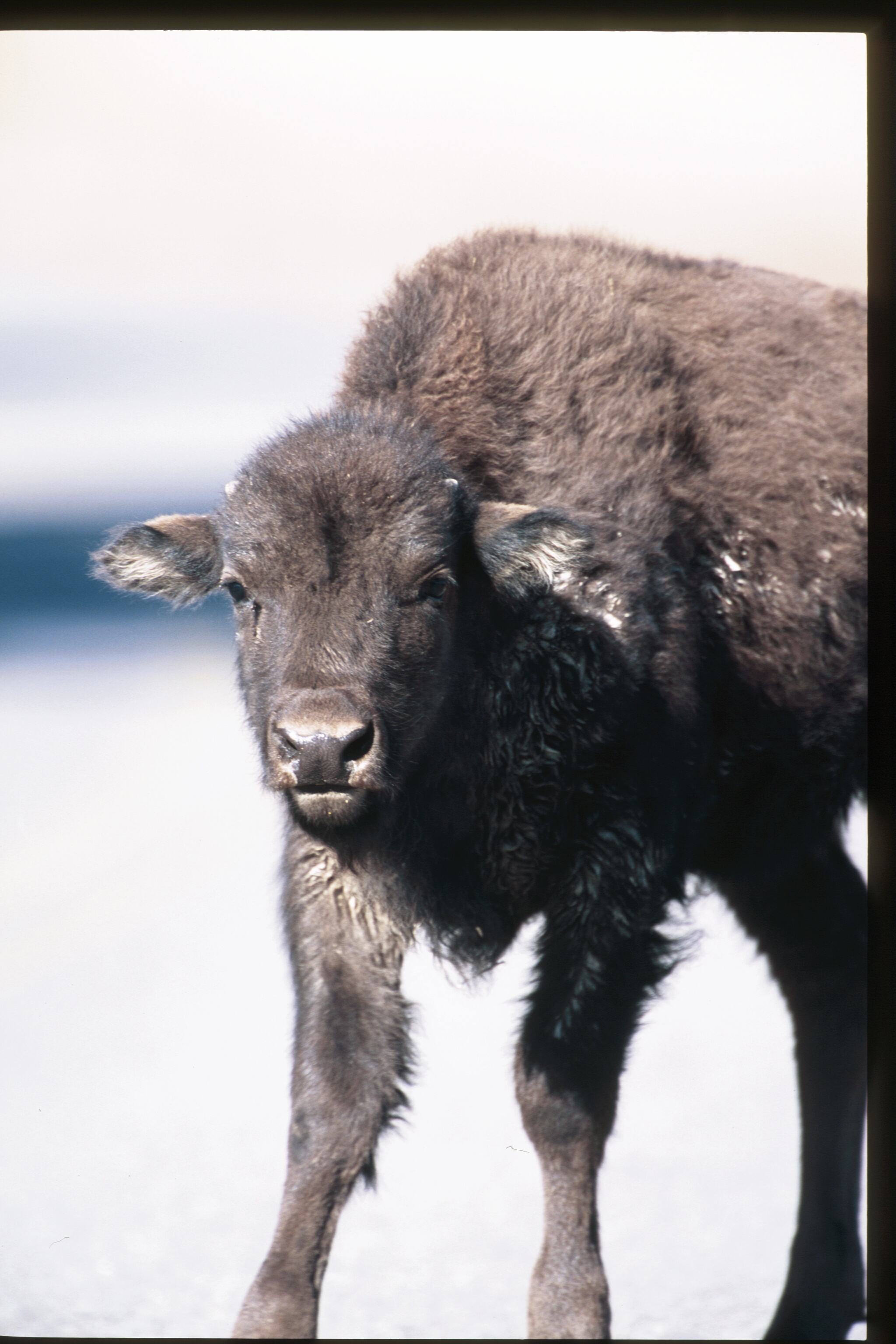
Tell Montana Governor Bullock to Protect Bison – Veto HB 194

FROM

Buffalo Field Campaign (BFC)
March 2015

[NOTE from All-Creatures.org: The confinment, harassment and slaughter of bison is because cattle ranchers do not want wild animals “competing for food” with their cows. GO VEGAN and you will help save bison!]

bison and cattle

ACTION

HB 194 is another attempt by special interests to block the resoration of wild bison in Montana. This act must not become law.

Contact Montana Governor Steve Bullock and let him know you stand for recovering America’s wild buffalo. If you live out of state, let him know why you visit Montana and what is important to you. Tell him to veto HB 194.

Sign an online petition here.

And/or better yet,make direct contact:

Governor Steve Bullock
Office of the Governor
Montana State Capitol
P.O. Box 200801
Helena, MT 59620-0801
phones (855) 318-1330 or (406) 444-3111
fax (406) 444-5529
governor@mt.gov

INFORMATION / TALKING POINTS

  • HB 194 is an act requiring a forage (range) analysis before wild buffalo (or bison) are released, transplanted, or migrate naturally, onto land in Montana.
  • HB 194 is another unfunded mandate required to be performed before transplanting or reintroducing buffalo as a wildlife species in Montana.
  • HB 194 provides no funding for a required forage analysis by a range scientist from MSU-Ag or US NRCS.
  • HB 194 uses agricultural theories based on livestock grazing principles rather than professional ecological analysis by wildlife and wildlands professionals.
Photo by  Jim Robertson

Photo by Jim Robertson

Save Dogs from the evil of Traps

11069999_796532557082212_7990787700535584970_n


ACTION ALERT: Do you have a story about a dog caught in a trap or snare even if it was not your dog? Many animals, including dogs, are unintentionally brutally killed or injured in snares. Contact Governor Dayton, share your story, ask him to eliminate wildlife snaring.

Gov. Dayton phone #: 651-201-3400, toll-free: 800-657-3717
Gov. Dayton contact form: http://bit.ly/1EDwQgh

Please share your story with us. It may be used to pass legislation. Email: info@howlingforwolves.org

_______________________________

Bill in Legislature tries to save dogs from accidental trappings

 by: DOUG SMITH , Star Tribune

  • March 18, 2015 – 10:27 AM

Dogs continue to be trap victims, and a controversial bill in the Legislature aims to change that

Rosie Nordby knew something was wrong when she stepped outside her rural Pequot Lakes home Nov. 29 to retrieve the family’s three dogs, and Lily, a chocolate Lab with a two-week-old litter of eight puppies, was missing.

“It was like she just disappeared,” Nordby recalled this week.

She and her husband, Daren, and three kids searched, called neighbors and then authorities, fearing their hunting dog had been stolen. That night, the family hand-fed Lily’s puppies to keep them alive.

Rosie Nordby found Lily the next day, dead in a body-gripping trap set in a ditch about 750 feet from her family’s house.

“I was heartbroken,” she said. “I’m glad it was me who found her and not my kids. It was traumatic.”

Lily was one of at least 34 dogs caught accidentally in traps in Minnesota last year and among five that were killed. Since 2012, the Department of Natural Resources says 75 dogs have been caught in traps and snares, and 17 died. A group pushing for trapping restrictions claims at least 25 dogs have been killed during that time.

The issue, which gained attention in 2012 when the Legislature tightened some trapping restrictions in response to dog deaths, is again being scrutinized. A bill was introduced this session that further stiffens trapping regulations to reduce or eliminate accidental dog deaths.

Gov. Mark Dayton’s administration has testified in support of the measure.

Supporters say the changes made three years ago haven’t stopped the accidental trapping of dogs.

“We need to do something so our pets don’t get killed anymore,” said Sen. John Hoffman, DFL-Champlin, author of the bill.

Hoffman’s bill would require body-gripping traps to be either completely submerged in water or have enclosures with smaller openings and larger recesses, or be placed at least 5 feet above ground. These methods would greatly reduce the chances of a dog being accidentally trapped, he said.

The Minnesota Trappers Association and the Minnesota Forest Zone Trappers Association both oppose the measure, saying the proposals would greatly limit the effectiveness of trappers.

“Trappers want this issue to go away more than anyone,” Gary Leistico, an attorney representing the Minnesota Trappers Association, testified Tuesday at a Senate hearing in St. Paul. “We’ll continue to work with everyone, but this bill … does much more than what it’s claimed to do. It would not allow meaningful trapping in Minnesota.”

The Minnesota Forest Zone Trappers Association also opposes the bill, as does Michael Tucker, who runs a wildlife removal service and is a member of the National Wildlife Control Operators Association. Tucker told legislators the bill would severely limit the ability of businesses like his to remove problem animals.

Trappers reduce predators of ground-nesting game birds, such as raccoons, skunks, mink, fox and coyotes, the groups say.

And a section in Hoffman’s bill requiring body-gripping traps used near water to be fully submerged would greatly reduce the taking of beavers, who cause damage to culverts and roads around the northern half the state, opponents say.


“You’re taking away the most effective way to trap beaver,” said Randy Goldenman of Zimmerman, who traps beaver for Sherburne County. “I catch up to 200 a year.”

Hoffman says his bill isn’t meant to be anti-trapping and wouldn’t inhibit trapping. “It will just make it safer for dogs and our pets,” he said.

The issue is an emotional one and drew impassioned testimony. Among those testifying in support was a handler for a search-and-rescue dog, the executive director of a Cloquet animal shelter that took in a dog injured in a trap and several hunters.

Loren Waalkens of Lake City, whose beagle, Frisbee, was caught in a body-grip trap in 2011, pleaded with senators to tighten regulations. Though he saved his dog with mouth-to-mouth resuscitation, he said Frisbee now has breathing problems related to the incident.

And Waalkens said when he hunts rabbits he’s constantly concerned his dogs will encounter another trap. “It’s taken the joy of hunting from me,” he said. “Please do something about this.”

Kurt Boerner, an upland bird hunter from Wayzata, said his English setter had a close encounter with a trap, and since then he’s been on a quest to tighten trapping laws. He’s quit hunting when trapping season begins and told outstate friends not to come to Minnesota to hunt during trapping season.

“The problem isn’t trappers, it’s the regulations,” he testified.

Tim McCauley of Fridley is a board member of Dog Lovers 4 Safe Trapping MN, which has pushed for tighter trapping laws, too. He no longer hunts public lands in Minnesota during the trapping season, either, for fear of losing a dog.

“I won’t take the risk,” he said in an interview. “It would ruin my life if I lost my dog.”

Restrictions passed in 2012 require trappers to use a 7-inch overhang when using baited body-gripping traps on public lands. The overhang is intended to prevent dogs from sticking their heads in the trap to reach the bait.

Trapping proponents say the restriction is working. But the DNR reports that since 2012, 15 dogs have been trapped in boxes with overhangs.

Rosie Nordby’s dog was caught in a body-grip trap recessed in a box. The trap was recessed 6 inches, meaning it wasn’t legal. Two of the five dog deaths in 2014 were in illegally set traps.

Some, including DNR officials, say even if the recess had been a legal 7 inches, it probably wouldn’t have saved Lily because of the trap’s location. Meanwhile, the trapper was cited.

“The fine was a whopping $100,” Nordby said.

Wolf harvest down slightly from last year

http://www.greatfallstribune.com/story/outdoors/hunting/2015/03/17/wolf-harvest-slightly-last-year/24928657/

Montana hunters and trappers killed 207 wolves during the 2014-15 season, which came to a close Sunday.

That was 23 fewer wolves than the 230 killed in the 2013-14 season.

Montana Fish, Wildlife and Parks wasn’t surprised by those numbers. That’s well within normal season-to-season hunting fluctuations, said John Vore, game management bureau chief with FWP.

A number of factors could contribute to that decrease.

copyrighted wolf in river“We suspect the wolf population is down a little bit,” Vore said.

The weather was also very different between the two seasons, said Ron Aasheim, FWP spokesman.

Wolf hunters also may not have been as motivated after a few seasons of wolf hunting, he said. Hunters who were really interested and committed to getting a wolf when wolf hunting first became legal may have already harvested a wolf last year or the year before and may not have worked as hard this year.

FWP issued 20,383 wolf licenses this season, compared to 24,479 last season.

Along the Rocky Mountain Front, hunters took 11 wolves and trappers took eight. Last year, 12 wolves were taken in Region 4.

No wolves were killed this year in the Highwoods or Little Belts, said Ty Smucker, wolf management specialist in Region 4.

FWP is preparing is wolf population report. That should be out in the next couple weeks, Aasheim said.

A history of wolf hunts in Montana

2009: During Montana’s first regulated wolf hunt, hunters harvested 72 wolves during the fall hunting season. As hunters approached the overall harvest quota of 75 wolves, FWP closed the hunt about two weeks before the season was scheduled to end.

2010: The hunting season was blocked by a federal court ruling in August 2010 that returned wolves to the federal endangered species list. In April 2011, the U.S. Congress enacted a new federal law delisting wolves in Montana and Idaho, and in portions of Washington, Oregon and Utah.

2011-12: The wolf hunting season ended with a total harvest of 166 wolves, 75 percent of the overall quota of 220 wolves. The season was initially set to end Dec. 31, but was extended to Feb. 15.

2012-13: This was the first time wolf trapping was allowed in the state. There was no statewide quota. Hunters took 128 wolves and trappers took 97 wolves for a total of 225.

2013-14: Montana’s wolf hunting season was extended and the bag limit was increased to five wolves. Hunters killed 143 wolves and trappers took 87 wolves, for a total of 230 wolves.

2014-15: Hunters killed a 130 wolves and trappers killed another 77 for a total of 207 animals.

Climate Change Is Burning a Wolf Pack’s Last Bridge to Survival

copyrighted Hayden wolf walking

http://www.takepart.com/article/2015/03/12/there-are-9-wolves-left-island-and-climate-change-burning-bridge-their-survival

March 16, 2015

For the gray wolves of Michigan’s Isle Royale National Park, climate change has turned their island home from a refuge of solitude into untenable isolation. From a population of 50 at its height, the number of wolves has dropped to fewer than nine on the 206-square-mile enclave today.

Soon the island population could go extinct, thanks to a warming world.

Isle Royale rises out of the northwest corner of Lake Superior, about 11 miles from Canada’s coastline. For its size, the island is thick with forest and teems with wildlife, especially moose.

Wolves were first spotted on Isle Royale in 1948; they were likely attracted by the moose. But how did either species get out there in the first place?

By way of ice bridges from the mainland to the island, said wildlife ecologist Rolf Peterson of Michigan Technological University. But continued burning of fossil fuels has warmed winter temperatures in the region. Ice formation on Lake Superior has decreased, and ice bridges are becoming increasingly rare.

“In the ’60s, an ice bridge would form about four out of every five years; now, it’s more like one out of every 10 years,” Peterson said.

But during a February cold spell that nearly paved the Great Lakes in ice, two wolves made the trek from their home range in Minnesota’s Grand Portage Indian Reservation to Isle Royale. The pair were a young male and a female with a radio collar that allowed researchers to monitor their travels.

Experts hoped that romance would blossom between the locals and the tourists during their five-day stay. But they saw no signs of mating before the pair crossed back to the mainland.

Peterson knows firsthand how critical ice bridges are to the survival of the Isle Royale wolves. In 1997, he observed how one male wolf that made the crossing affected the genetic health of the island pack. “He revitalized the wolf population,” Peterson said, “but now, 15 years later, all of the wolves on the island are descendants of his.” Generations of inbreeding have left the wolves susceptible to disease, heart abnormalities, and low sperm counts in males.

From an average of 25 individuals over the past several decades, only nine wolves were spotted in 2014. Peterson will not be releasing this winter’s head count until the end of the month, but he admitted that, to his dismay, the number was fewer than nine.

“There’s no scientific doubt,” Peterson said. “The problem is genetic isolation, and if something isn’t done soon, the existing population will cease to exist.”

Nearly free of predators, the moose on the island have nearly doubled in number, from 500 in 2007 to more than 1,000 in 2014. That’s bad news for their favorite forage, the island’s balsam fir trees.

“Moose are at extremely high-density levels on the island, and when they’re not kept in check, they can decimate the forest vegetation and their own food supply,” Peterson said. Without wolves to thin the population, moose eat as much vegetation as they can. Once that supply is gone, they starve.

It’s a cycle Peterson recognizes from reports on moose populations prior to the 1948 wolf crossing.

After watching wolf numbers decline over the past decade, officials at the National Park Service announced last spring that they would look into introducing outside wolves to the island as a way to increase genetic diversity. But the agency has not yet reached a final determination.

“This issue is bigger than only wolf genetics,” Isle Royale superintendent Phyllis Green said in a statement. “We are charged with a larger stewardship picture that considers all factors.”

But Peterson, who has been advocating for a wolf introduction program similar to the program at Yellowstone National Park, doesn’t think there’s time to go through the usual decision-making process, particularly an environmental analysis that could take years to complete.

“The headlines are going to read, ‘They’ve studied the wolves to their death,’ ” he said.

Scalding Live Chickens Is an Accepted Brutal Business Model

DSC_0146

Nicholas Kristof’s New York Times “To Kill a Chicken” is a must read

Post published by Marc Bekoff Ph.D. on Mar 18, 2015 in Animal Emotions

Media is extremely important in spreading all sorts of news to a broad, and often unknowing public. Recently, an investigative essay by Michael Moss in the New York Times told the story of the ways in which nonhuman animals (animals) called “food animals” are brutalized at a Nebraska research facility, all in the name of profit (please see “‘Food Animals'” Brutalized at Federally Funded “‘Meat Lab'” for details).  What I found interesting about Mr. Moss’s essay is that it generated bipartisan support in the U. S. Congress to stop the torture of these “research animals.” As a researcher I was astounded that it took an essay in the New York Times, not scientific essays about animal sentience nor popular reports about these essays, to motivate politicians to get involved in protecting these animals. We don’t need more science, we need more action that can easily and solidly be based on what we already know about how these animals deeply suffer.

Another essay in the New York Times by Nicholas Kristof called “To Kill a Chicken (link is external)” also caught my eye. It begins: “IF you torture a single chicken and are caught, you’re likely to be arrested. If you scald thousands of chickens alive, you’re an industrialist who will be lauded for your acumen. That’s my conclusion after reviewing video footage taken by an undercover investigator for Mercy for Animals (link is external), an animal rights group. The investigator said he worked for two months in a North Carolina poultry slaughterhouse and routinely saw chickens have their legs or wings broken, sometimes repeatedly — or, worse, be scalded to death.”

Mr. Kristof’s essay is not for the weak at heart so here are a few tidbits.

What’s striking about the undercover video, which Mercy for Animals plans to release on its website this weekend, is the speed of the assembly line, leading workers to fall behind in ways that inflict agony on the chickens. It’s a process that maximizes productivity and profits, and also pain.

Workers grab the birds and shove their legs upside down into metal shackles on a conveyor belt. The chickens are then carried upside down to an electrified bath that is meant to knock them unconscious. The conveyor belt then carries them — at a pace of more than two chickens per second — to a circular saw that cuts open their necks so that they bleed to death before they are scalded in hot water and their feathers plucked.

The Agriculture Department calculates that about 700,000 chickens a year in the United States are “not slaughtered correctly” — often a euphemism for being scalded to death.

The company that operates the slaughterhouse, Wayne Farms, said it had reviewed the video and found no evidence of abuse. A spokesman, Frank Singleton, said that the company uses “industry-standard methods of humane slaughter.”

Think about that. If a naughty boy pulls feathers out of a single chicken, he’s punished. But scald hundreds of thousands of chickens alive each year? That’s a business model.

Supposedly “dumb” animals don’t suffer less than “smarter” animals

Mr. Kristof also writes, “I raised chickens as a farmboy. They’re not as smart as pigs or as loyal as dogs, but they make great moms, can count (link is external) and have distinct personalities. They are not widgets.” I just want to point out, as have many others, that there is no relationship between intelligence and loyalty and suffering. Supposedly “dumber” animals do not suffer less than “smarter” animals (please see “Do ‘Smarter’ Dogs Really Suffer More than ‘Dumber’ Mice?” and “Are Pigs as Smart as Dogs and Does It Really Matter?“). Cross-species comparisons are fraught with error and each individual’s pain is her or his own pain.

I also like to ask the generic questions, “Would you do it to your dog?” or “Would you allow a dog to be treated like other mammals or food animals who are brutally tortured on the way to our mouth?” When I ask these questions some people are incredulous and ask me why I do so. For one, they point out the inconsistency with which we treat other animals and these questions have always yielded very valuable discussions and the emotional lives of the sentient beings with whom we interact in a wide variety of venues.

Pardon our obliviousness to the pain and suffering of other animals

Who (not what) we eat is on the minds of many people and the conclusion of a another essay in the New York Times by Nicholas Kristof called “Can We See Our Hypocrisy to Animals? (link is external)” is a good way to end this essay. Mr. Kristof writes, “May our descendants, when, in the future, they reflect uncomprehendingly on our abuse of hens and orcas, appreciate that we are good and decent people moving in the right direction, and show some compassion for our obliviousness.”

I’m thrilled to see these essays appearing in the New York Times and hope they really serve to make a change in how food animals are treated. I leave it to you to decide whether to read them, but be assured that when you eat chicken and other “food animals” you’re eating pain.Of course, the bottom line is that billions of food animals suffer the most enduring and deep pain as they’re brutalized to become meals, and we must stop this heinous treatment right now. We don’t need to wait for “the science” nor for politicians to get involved. Everyone can do this right now — today — simply by choosing other meal plans.

Marc Bekoff’s latest books are Jasper’s story: Saving moon bears (with Jill Robinson), Ignoring nature no more: The case for compassionate conservation, Why dogs hump and bees get depressed, and Rewilding our hearts: Building pathways of compassion and coexistence. The Jane effect: Celebrating Jane Goodall (edited with Dale Peterson) has recently been published. (marcbekoff.com; @MarcBekoff)

Shell lost control of an Arctic offshore drilling rig


Ted Danson with Oceana via Change.org

Oil giant Shell’s efforts to drill in the Arctic Ocean have been plagued by mistakes and near disasters. The company even lost control of an offshore drilling rig – allowing it to run aground in Alaska. You saw the destruction that the BP Deepwater Horizon oil spill caused to the Gulf in 2010. Imagine that same devastation brought to the Arctic – one of the most unique and important places left on earth. 

Now, after years of failing to find safe ways to drill in the Arctic, Shell is asking the federal government to extend its leases by five years.

I’m calling on the Bureau of Safety and Environmental Enforcement (BSEE) to deny Shell’s request for five more years to explore for offshore oil drilling in the Arctic. Please click here to join me.

I remember walking down the beach in Santa Monica over twenty years ago with my young daughters. At the time I was starring on the show “Cheers,” and during our walk we came to a sign that read: “Water polluted, no swimming.” I didn’t know how to explain to them that we allowed pollution into our oceans and beaches – and I don’t want any parent to have to explain to their children how Shell destroyed the Arctic.

Shell is the only company still actively pushing to drill in the U.S. Arctic Ocean, as other companies have walked away from the unpredictable Arctic environment or put plans on hold. Chevron recently pulled its plans to drill in the Canadian Beaufort Sea after finding the process too risky and expensive. If BSEE denies Shell’s request, the company will suffer a major blow to its dangerous efforts.

The oil industry does not have proven means to contain or clean a spill in the Arctic Ocean. A single accident could lead to serious environmental degradation, threatening iconic marine wildlife and impacting the region’s coastal communities. If Shell is given five more years, the Arctic’s polar bears, ice seals, belugas and many other inhabitants will be pushed further into harm’s way.

We have an incredible opportunity to protect the Arctic from offshore drilling. In the mid-1980s, I helped lead a successful campaign to stop Occidental Petroleum from drilling 60 oil wells in the waters beside Santa Monica. Now, along with Oceana, I desperately need your support to protect the Arctic.

Please sign our petition calling on BSEE to deny Shell’s request for five more years to drill for oil in the U.S. Arctic Ocean.

Thank you,

Ted Danson with Oceana

Death at a Zoo

 http://www.earthisland.org/journal/index.php/elist/eListRead/death_at_a_zoo

‘Zoothanasia’ is a common practice in Europe and also occurs in the US. Some wildlife advocates say it’s unnecessary

The killing of a young giraffe at the Copenhagen Zoo in February 2014 shook the world, causing protests from animal advocates and the public alike. “Marius,” an 18 month-old giraffe that had been born at the Copenhagen Zoo, was healthy and likely would have lived a long life. The animal was put down (and then fed to lions at the zoo), because officials at the zoo concluded it was unsuitable for breeding. A month later, the same zoo euthanized four lions, again on the grounds of genetic purity and breeding.

Giraffes at Copenhagen ZooPhoto by Michael ButtonGiraffes at the Copenhagen Zoo. Zoo animals are typically killed for two reasons: to control the population and manage “surplus animals,” or to maintain genetic strength and diversity within a captive breeding program.

Zoo administrators ended up receiving death threats, and the killings sparked a media feeding frenzy. The serial deaths ushered in a newfound awareness of a not-so-new practice and raised some overlooked questions: Is “zoothanasia,” as the practice has been called, really necessary? And how common is it?

Zoo animals are typically killed for two reasons: to control the population and manage “surplus animals,” or to maintain genetic strength and diversity within a captive breeding program. While many animal rights activists and some conservation biologists are against the use of euthanasia among zoo animals, organizations such as the European Association of Zoos and Aquaria and the Pan African Association of Zoos and Aquaria defend the practice. “As an organization, we believe that culling has a valid scientific basis and must remain one of the tools open to our members, provided that it is carried out humanely,” says David Williams-Mitchell, a spokesperson for EAZA.

Marc Bekoff, a professor of ecology and evolutionary biology at University of Colorado-Boulder and the person credited with coining the term “zoothanasia,” disagrees. He says that killing captive animals is the opposite of conservation. “There simply is no reason to kill any animals, members of endangered species or not, in zoos unless she/he is mortally ill or injured,” says Bekoff, who is author of the book Rewilding Our Hearts: Building Pathways of Compassion and Coexistence.

Sometimes, zoo animals are killed because there’s just too many of them in their cages and enclosures. These “surplus animals” are the result of animals that have been allowed to breed without a zoo considering how it might care for them in the future. These surplus animals then suffer due to lack of resources, money and care. According to a study from the Captive Animals’ Protection Society, at least 7,500 animals (and as many as 200,000 animals) are considered surplus at any one time. For some zoos, killing an animal is easier (and cheaper) than continuing to care for it, or even transferring it to some kind of a sanctuary. “They’ll tell you they do it for lack of money and space, for example,” Bekoff says.

Some animals are deemed ‘surplus’ because they are poor candidates for breeding. While zoos are mostly in the business of entertaining their visitors and educating them about wildlife, many are home to captive breeding programs and are under pressure to conserve the best of species to ensure they do not go extinct. Williams-Mitchell argues that, from EAZA’s perspective, there is an obligation to consider the future of a species over the future of just one animal. Williams-Mitchell said EAZA believes that “culling as a tool should be available to any zoo that is serious about maintaining a healthy population of a species,” though he was careful to caution that killing “is only one of the options.”

It’s important to note that US zoos practice euthanasia far more sparingly than zoos in the EU.

Accredited zoos in the US aren’t supposed to use euthanasia for routine population control, and typically only kill animals for medical purposes or to relieve suffering — for example, to aid ailing animals and those with deformities and terminal illnesses. In rare cases, animals are killed when the zoo cannot maintain its quality of life at an acceptable standard.

>US zoos primarily utilize contraception instead of euthanasia to manage animal populations. But veterinary birth control comes with its own risks. According to Williams-Mitchell, “Evidence from the United States shows that widespread use of contraception can and has led to catastrophic population collapse in some species, requiring severe remedial measures including the import of animals from elsewhere.”

Peter Dickinson, creator of an zoo professionals’ blog called ZooNews Digest, says the issue is complicated. Zoothanasia is a tool that can be used alongside other successful (and available) methods to help control breeding and population. And sometimes, he argues, it’s the lesser of two evils. “Within the Good Zoo/Bad Zoo way of looking at things….what is better, putting an animal to sleep or packing it off to slum facility?” he says. “Bad zoos take one of two actions. They rear the animal (hand rear) until it is just past the “cutsey” stage and then cull it. Or pack it off to some other slum facility.”

At the very least, the uproar over last year’s euthanasia is raising public awareness about this practice and sparking calls for change at European zoos. In Bekoff’s opinion, zoothanasia is accepted because in the past it was preformed routinely without the public’s knowledge. Also, few people would argue with killing in the name of “conservation.” Now, he says, that’s changing. “It’s often done behind closed doors, but more and more people today can no longer be fooled.”

Jacalyn Beales
Jacalyn Beales is a writer and animal welfare advocate in Toronto, Canada. She is also the founder of PACH (People Against Canned Hunting). You can follow PACH here.

Breeding Ourselves To Extinction

1451324_650954518277931_1616731734_n

Breeding Ourselves To Extinction

November 19, 2014

Overpopulation Fuels Climate Change

Breeding Ourselves To Extinction

by DADY CHERY & GILBERT MERCIER

The United Nations has held countless major meetings on climate change, at great consumption of fuel, that have amounted to nothing but reports and promises of more talk. After many of these alarming reports, the G20 leaders, in November 2014, decided to throw several billions of dollars at the problem. Despite climate-change denial becoming incorrect, as long as a discussion of overpopulation, in the context of climate-change mitigation, remains a taboo, we may be sure that nothing will be achieved. If we are serious about reducing our carbon footprint, we must rethink the flawed capitalist concept of unending economic growth and consider reducing the number of human feet in the world. Overpopulation must be discussed in the context of climate change. A major impediment to this discussion has been the assumption that Africa and Asia would be the main targets for depopulation, with eugenics intent towards “black and brown babies.” In reality, there are too many human babies of all kinds: especially in industrialized countries with high rates of consumption.

A Time Bomb on a Short Fuse

Earth’s current human population is 7.27 billion and it is increasing at a rate of more than one per second: so fast that this will make you dizzy. By the middle of any given day, for example, there are about 205,000 thousand births, compared to 84,000 thousand deaths. Superficially, Asia and Africa are the most populous continents in the world, with the 10 most populated countries being China, India, the United States, Indonesia, Brazil, Pakistan, Nigeria, Bangladesh, Russia and Japan. On the other hand, if we consider the human impact on greenhouse-gas emissions, the most heavily industrialized countries contribute more per capita to the burden of overpopulation on climate change. Specifically, in 2012, China, the United States, and the European Union alone contributed about 56 percent of the world’s carbon dioxide (CO2) emissions from fuels: 29 percent from China, 16 percent from the US, and 11 percent from the EU. India and Russia were a distant fourth and fifth, at respectively, six and five percent. The rest of the entire world only contributed 33 percent of the total carbon emission! This includes all of Africa, South and Central America, Australia, and all the less industrialized countries of Asia.

According to Paul and Ann Ehrlich, who sounded the alarm about overpopulation several decades ago and have analyzed it for many years, “our species’ negative impact on our own life-support systems can be approximated by the equation: I = P x A x T.” In this equation, I, the impact of a population is equal to its size (P),  multiplied by the per-capita consumption (A), and finally also multiplied by the energy use (T) for the technologies to drive that consumption. By this analysis, the US is by far the most overpopulated country on the planet. The rapid growth in consumption by China and India, and the global aspiration to follow the US’ footsteps are terrifying and should have dire consequences within 25 years.

The Catastrophic Scenario of Eating Oil

The human population should have crashed from famine in the 1970s but was rescued by modern science. In particular, Norman Borlaug’s green revolution allowed our consumption of food to rely more and more on fossil fuels than on solar energy. We have come to depend on industrial fertilizers that require vast amounts of oil for their production, plus a heavily mechanized agricultural industry that also consumes large quantities of hydrocarbons. Indeed, for many years, the patterns of food, fertilizer, and oil prices over time have been superimposable. Today we can say with confidence, for example, that it takes three quarters of a gallon of oil to produce a pound of beef. Consequently, the idea of cheap oil has become regarded as a guarantee of affordable food. There are three problems with this notion: for one, oil is a finite resource; secondly, in a vicious cycle, cheap and abundant oil will, at best, postpone the inevitable human population crash to a much higher population; and finally, all the oil will eventually wind up in the atmosphere as CO2.

According to a November 2014 report from the International Energy Agency (IEA) that projects the state of the planet and its energy resources to 2040, humans will not have to face a shortage of energy. The IEA projects, that by 2040, the world will consume greenhouse-contributing energy like oil, gas and coal, compared with so-called green energy like wind, solar, and nuclear, in a 1:1 ratio. A world-wide expansion of fracking is expected to keep carbon energy cheap and plentiful. This fact plus a projected two-billion-people increase on Earth mean that energy consumption would increase by 37 percent by 2040. This rate of growth and consumption implies a rapid increase of greenhouse-gas emissions, which in turn translates into a 3.6-degree Celsius global warming by the year 2100. This, according to the IEA report, is a “catastrophic scenario.”

Breeding Ourselves to Extinction

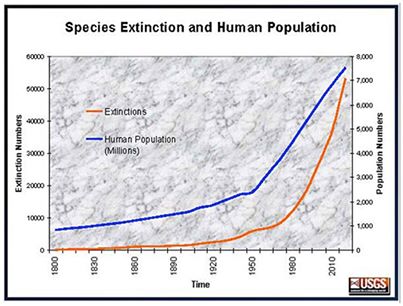
About 20 years ago, when the human population was 5.7 billion, our species was already consuming 40 percent of the Earth’s primary productivity. In other words, 40 percent of the total solar energy converted to organic matter was being consumed by a single species. We are quickly approaching a tipping point in the planet’s sixth mass-extinction event, attributable to human folly. The planet simply cannot accommodate another human doubling. Whether or not there is sufficient hydrocarbon to permit such a doubling, it will be prevented by the ravages of climate-change events, such as floods, hurricanes and droughts due to global warming, by famines due to the disappearance of key members of our ecology like the bats and honeybees, and by infectious diseases, like Ebola, from human infringement on the habitats of other animals. Our runaway overpopulation, overconsumption, and our obsession with economic growth are carving a sure path to collective suicide.

Procreation is still viewed as a being blessing and accomplishment, although this is an obsolete notion from an era when many hands were needed on a farm, and life expectancy was short, especially for women (many of whom died in childbirth) and young children. In an overpopulated world, parenthood is an act of self indulgence: the ultimate act of selfishness against the society at large and even toward the children themselves, who are being delivered to a world in crisis. So far, the only country that has seriously tried to control its population has been China. For the 35 years from 1979 to 2014, China’s unpopular one-child policy helped to avert a population growth of more than 400 million. More recently, China’s capitalist ambitions to grow a domestic market for its goods have led it to relax this policy to allow two children per couple if either parent is an only child.

Population control policy is needed globally and can be achieved without coercion. In most industrialized countries, parenthood currently comes with substantial tax breaks and an assortment of benefits. This must end. Instead, parenthood should be heavily taxed in proportion to the number of children, and adults without children should be those to receive tax breaks. The notion that children are a burden to the community at large — and not a blessing — must become part of the discourse. Ultimately, this should become incorporated in the culture to such a degree that the sight of a mother or father with three or four children will become obscene. To have any future as a species, our population needs to drop, as does our consumption. We must challenge capitalism and adopt a degrowth model. If we are to make any progress on mitigation of climate change, we must urgently address the problem of overpopulation.

Remembering Limpy: The Life and Death of Wolf 253

Nabeki's avatarHowling For Justice

Limpy

Limpy – Wolf 253/Steve Justad

March 16, 2015

On March 28, 2008, almost seven years ago, a cherished Druid Peak pack wolf,  nick-named Limpy, was shot dead outside Daniel,Wyoming.  It happened on the day wolves, in the Northern Rockies, lost their ESA protections for the first time by the then Bush Administration. 

“He died for nothing”  said Lake City resident Marlene Foard.  A senseless death for a beloved wolf.

RIP Limpy – we remember and miss you!

Here is Limpy’s story told  by the Trib.com.

 ===

The life and death of wolf 253

Posted: Sunday, April 13, 2008 12:00 am  Trib.com

FRANZ CAMENZIND

A wolf died the other day in Wyoming. Along with three others, it was shot and killed on the first day that wolves in most of the state lost the protection of the Endangered Species Act. These were legal kills made by people simply because…

View original post 963 more words