Endangered Perspective: The Alarming Case of the Atlantic Puffin

http://www.alternativesjournal.ca/community/blogs/wild-side/endangered-perspective-alarming-case-atlantic-puffin

Puffins by Brian Gratwicke via Flickr

Puffins by Brian Gratwicke \ CC BY 2.0 via Flickr

There’s perhaps no seabird more iconic to the Maritimes than the Atlantic puffin, a bird as modest and beautiful as the region itself.

At first glance this seabird resembles the penguins of Antarctica, with a black back and white underbelly, but what sets the Atlantic puffin apart is the spectacular colouration of its bill and face, which blossom with sharps reds, yellows and blues during mating season. When the season ends, however, this rainbow beak sheds much of its bulk and becomes a dull, uniform grey. This transformation is so dramatic it was originally thought the Atlantic puffin was two separate species.

The Atlantic puffin is a poor flier, beating its wings 300-400 times a minute just to stay airborne. They’re even prone to crash landings. But what they lack in flight, they make up for at sea. The puffin spends the majority of its life in water, either floating on the waves or diving to extreme depths in pursuit of its fishy food. Its wings are used as powerful flippers and it can snatch several dozen fish with each dive.

The exploitation of these adorable mariners began in the 1600s and took the usual forms.

The exploitation of these adorable mariners began in the 1600s and took the usual forms. We hunted them for their meat, fat and feathers; we destroyed their breeding groups and robbed their burrows of eggs; we introduced invasive pests like feral cats and rats to their remote island colonies; we even caught scores of them with our fishing gear, first by accident and later on purpose.

It’s nearly impossible to tell how abundant puffins used to be on the east coast, but they certainly numbered in the millions. 365,000 breeding pairs is the best modern estimate I could find, encompassing colonies from northern Maine to the Canadian Arctic. Approximately 60 per cent of those 365,000 pairs are found on three islands in Witless Bay, Newfoundland, about half an hour south of St. John’s.

There are smaller colonies dotting the east coast, ranging from the 10,000 puffins nesting on Machias Seal Island in New Brunswick to the few hundred living across the entire province of Nova Scotia, mainly on Cape Breton and on Pearl Island in Lunenburg County.

We don’t hunt them anymore. We don’t touch their eggs or fish irresponsibly in their waters, but there’s still something very insidious taking place in the aforementioned island reserves, something which is claiming the lives of thousands of puffin babies and putting the species at risk.

They’re starving to death.

The stomachs of recently deceased babies were filled with gravel and dirt, a sure sign of starvation.

This phenomena was first observed in the 1960s in Norway, with its coastal islands home to one of the largest colonies of Atlantic puffin in the world. Fewer and fewer babies were surviving each year, culminating in a 99.9 per cent mortality rate by 1977. The stomachs of recently deceased babies were filled with gravel and dirt, a sure sign of starvation.

This tragedy was linked to the collapse of fish stocks, namely herring, due to overfishing in the region. Similar drops in survival rates were observed in the 1980s in Witless Bay following the collapse of capelin stocks. Now with climate change warming the oceans and remaining fish stocks migrating to cooler waters, puffin parents are left with no fish small enough to feed their children.

Only in the last couple years, starvation has been observed among puffins in both Maine and New Brunswick, a terrifying testament to the state of our coast.

For the sake of this seabird, Atlantic Canada must do its part to encourage sustainable fishing practices and to combat climate change. Either that or, heaven forbid, we stop using the Atlantic puffin in our tourism ads.

Captive Killer Whales Die Much Younger than Wild Orcas

Captive Killer Whales Die Much Younger than Wild Orcas
By Marc Bekoff Ph.D. on April 29, 2015 in Animal Emotions
A new study shows captive killer whales don’t live as long as wild relatives. The researchers show that “62 to 81 percent of wild female killer whales live at least 15 years. In contrast, only 27 percent of the now-dead females in the captive study survived that long. Roughly half of the still-living captive female whales are at least 15 years old.”

Never Mind, I Fuckin’ Hate ’em*

…Despite anything I might have said in yesterday’s post, In Defense of Our Misanthropy, some people deserve nothing less than full on hatred!

(*Title by my wife.)

http://news360.com/article/290268031/#

Moose stabbed to death in Alaska park; suspects in custody

ANCHORAGE, Alaska   • Three men are in custody in Alaska’s largest city after a young moose was stabbed to death at a popular local park.

Anchorage police say 25-year-old Johnathan Candelario, 28-year-old James Galloway and 33-year-old Nick Johnston are under arrest in connection with the death of the yearling moose Tuesday night near a bike trail in Russian Jack Springs Park.

The men were arrested on charges of animal cruelty, wanton waste of big game and tampering with evidence. It’s unclear if they have attorneys.

Police say several witnesses called shortly before 7:30 p.m. reporting that the three men were jumping on the animal, kicking it and stabbing it with a large knife.

Police officers quickly located the three suspects nearby. The animal was found dead.

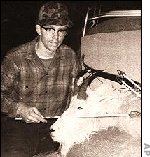
6-4Hansens-trophy-goat Alaskan serial killer, Robert Hansen

Be Careful What You Pray For…

…it just might happen (if you’re praying for a pandemic, that is).

Anytime now, we’re likely to hear that the current strain of bird flu mutated and crossed the species barrier to infect homo sapiens. But don’t worry, it’ll still be “safe to eat” (though you’d think it would lose it’s appeal).

TIMELINE-Tracing the bird flu outbreak in U.S. poultry flocks

(Reuters) – Two highly pathogenic strains of avian influenza (HPAI) have been found in 14 U.S. states since December, prompting partial to total bans on imports of U.S. poultry and egg products to other countries that were valued at more than $6 billion last year.

The H5N2 strain has been reported in Arkansas, Idaho, Iowa, Kansas, Kentucky, Minnesota, Missouri, Montana, North Dakota, Oregon, South Dakota, Washington and Wisconsin. It has also been identified on farms in Ontario, Canada. The H5N8 strain has been identified in California and also in Idaho, according to the U.S. Department of Agriculture (USDA).

Following is a timeline of the spread of the viruses, according to the USDA’s Animal and Plant Health Inspection Service (APHIS), and responses by the industry and trade partners.302023_10150378903781188_1851399709_n

Dec. 19, 2014 – Highly pathogenic H5N8 avian influenza strain confirmed in a backyard mixed poultry flock of 130 birds in Douglas county, Oregon.

Dec. 20 – South Korea, one of the top importers of U.S. poultry, halts imports of poultry and poultry products from the United States, a market valued at $113 million in 2014, in response to the HPAI finding.

Jan. 3, 2015 – The first case of the highly pathogenic H5N2 avian influenza strain confirmed in a backyard mixed poultry flock of 140 birds in Benton county, Washington. The virus is believed to have been spread by wild birds migrating along the Pacific flyway which runs along the U.S. West Coast.

Jan. 6 – Mexico, the largest market for U.S. poultry valued at $1.2 billion in 2014, bans imports from states with confirmed cases.

Jan. 7 – No. 2 U.S. poultry importer Canada, which bought $589 million in poultry and products last year, bans imports from affected areas. The ban is later widened to include all or parts of 13 states. Ottawa imposed the ban despite several cases of bird flu within its own borders.

Jan. 8 – Imports of U.S. poultry, poultry products and eggs banned by China, a $315 million market in 2014.

Jan. 23 – The first commercial flock hit by H5N8 in Stanislaus county, California. The farm had 134,400 turkeys.

Feb. 12 – Veterinary officials confirm H5N8 in the first commercial chicken flock. The Kings county, California, flock had 112,900 birds.

March 4 – The first instance of HPAI along the Mississippi flyway, which runs from the Gulf of Mexico to the northern Midwest along the Mississippi River valley, is confirmed in a commercial flock of 26,310 turkeys in Pope county in Minnesota, the country’s top turkey producing state.

April 7 – The H5N2 strain strikes a 310,000-bird commercial turkey flock in Meeker county, Minnesota, bringing the total number of birds in infected flocks above 1 million.

April 13 – H5N2 is confirmed in the first commercial chicken operation in a 200,000-bird flock of egg-laying hens in Jefferson county, Wisconsin.

April 20 – The biggest outbreak so far as H5N2 is confirmed in 3.8 million egg-laying hens in Osceola county, Iowa. The finding in the country’s top egg producing state prompts Mexico to expand its import ban to include live birds and eggs from Iowa.

April 20 – Wisconsin declares a state of emergency and authorizes the state’s National Guard to help contain the virus.

April 22 – The USDA reports a year-over-year surge in frozen chicken stocks as the bird flu outbreak slows exports.

April 23 – Minnesota declares a state of emergency. State officials say they are offering prescriptions for the antiviral drug Tamiflu to people who have been in contact with infected flocks.

April 26 – The National Guard is called on to deliver water for use in efforts to contain the virus’ spread in Minnesota.

April 27 – Iowa’s Department of Agriculture and the USDA say initial tests have found probable bird flu outbreaks at five commercial poultry sites in Iowa containing more than 6 million birds. One site was confirmed as positive for HPAI a day later. If the other four are confirmed, the country’s outbreak would reach more than 15.1 million birds, just short of the largest-ever U.S. avian influenza outbreak of 17 million birds in 1983 and 1984.

April 28 – The USDA confirms H5N2 in three more flocks, including a flock of 1.7 million chickens in Sioux county, Iowa, bringing the state’s confirmed tally to more than 5.5 million birds. The three new confirmations lift the nationwide confirmed total to more than 11 million birds. (Reporting by Karl Plume in Chicago; Editing by Bernard Orr)

DSC_0277

Wikipedia on Bush”meat”

http://en.wikipedia.org/wiki/Bushmeat

The term bushmeat, also called wildmeat and game meat, refers to meat from non-domesticated mammals, reptiles, amphibians and birds hunted for food in tropical forests.[1] Commercial harvesting and the trade of wildlife is considered a threat to biodiversity.[2]

Bushmeat also provides a route for a number of serious tropical diseases to spread to humans from their animal hosts.[3][4] Bushmeat is used for sustenance in remote areas, while in major towns and cities in bushmeat eating societies it is treated as a delicacy.[5]

Nomenclature[edit]

Today the term bushmeat is commonly used for meat of terrestrial wild or feral mammals, killed for sustenance or commercial purposes throughout the humid tropics of the Americas, Asia, and Africa. In West Africa (primarily Ghana, Ivory Coast, and Nigeria), Achatina achatina a giant African snail, is also gathered, sold, eaten, and monitored as part of the bushmeat trade.[6][7][8] To reflect the global nature of hunting of wild animals, Resolution 2.64 of the IUCN General Assembly in Amman in October 2000 referred to wild meat rather than bushmeat. A more worldwide term for terrestrial wild animals is game. The term bushmeat crisis tends to be used to describe unsustainable hunting of often endangered wild mammals in West and Central Africa and the humid tropics, depending on interpretation. African hunting predates recorded history; by the 21st century it had become an international issue.[9]

Extent[edit]

The volume of the bushmeat trade in West and Central Africa was estimated at 1-5 million tonnes per year at the turn of the century.[10] According to the Center for International Forestry Research (CIFOR) in 2014, approximately 5 million tonnes were still being consumed per year in the Congo Basin.[5]

For the people of this region, bushmeat represents a primary source of animal protein in the diet, making it a significant commercial industry. According to a 1994 study in Gabon, annual sales were estimated at US$50 million. The study found that bushmeat accounted for more than half of meat sold in local markets, with primates representing 20% of the total bushmeat.[11]

Dynamics[edit]

Two Malagasy hunters stand near a stream, one holding a gun, the other holding a lemur with a white head.

Endangered species, including lemurs from Madagascar are killed for bushmeat despite this being illegal.

Bushmeat is often smoked prior to consumption.

Logging penetration of forests[edit]

Logging concessions operated by companies in African forests have been closely linked to the bushmeat trade. Because they provide roads, trucks and other access to remote forests, they are the primary means for the transportation of hunters and meat between forests and urban centres. Some, including the Congolaise Industrielle du Bois (CIB) in the Republic of Congo, have partnered with governments and international conservation organizations to regulate the bushmeat trade within the concessions where they operate. Numerous solutions are needed; because each country has different circumstances, traditions and laws, no one solution will work in every location.[12]

Overfishing[edit]

In the case of Ghana, international over-exploitation of African fishing grounds has increase demand for bushmeat. Both EU-subsidized fleets and local commercial fleets have depleted fish stocks, leaving local people to supplement their diets with animals hunted from nature reserves. Over 30 years of data link sharp declines in both mammal populations and the biomass of 41  wildlife species with a decreased supply of fish.[13]

Public preference[edit]

In the case of Liberia in West Africa, bushmeat is widely eaten and is considered a delicacy.[14] A 2004 public opinion survey found that bushmeat ranked second behind fish amongst residents of the capital Monrovia as a preferred source of protein.[14] Of households where bushmeat was served, 80% of residents said they cooked it “once in a while,” while 13% cooked it once a week and 7% cooked bushmeat daily.[14] The survey was conducted during the last civil war, and bushmeat consumption is now believed to be far higher.[14]

Role in spread of diseases[edit]

The transmission of highly variable retrovirus chains causes zoonotic diseases. Outbreaks of the Ebola virus in the Congo Basin and in Gabon in the 1990s have been associated with the butchering of apes and consumption of their meat.[15] Bushmeat hunters in Central Africa infected with the human T-lymphotropic virus were closely exposed to wild primates.[16]

HIV[edit]

Results of research on wild chimpanzees in Cameroon indicate that they are naturally infected with the simian foamy virus and constitute a reservoir of HIV-1, a precursor of the acquired immunodeficiency syndrome (AIDS) in humans.[17] There are several distinct strains of HIV, indicating that this cross-species transfer has occurred several times.[18] Researchers have shown that HIV originated from a similar virus in primates called simian immunodeficiency virus (SIV); it is likely that HIV was initially transferred to humans after having come into contact with infected bushmeat.[19]

Animals used as bushmeat may also carry other diseases such as smallpox, chicken pox, tuberculosis, measles, rubella, rabies, yellow fever and yaws.[20] African squirrels (Heliosciurus, Funisciurus) have been implicated as reservoirs of the monkeypox virus in the Democratic Republic of the Congo.[21] The bubonic plague bacteria can transfer to humans when handling or eating prairie dogs.[22]

In many instances, catching the diseases mentioned above often occurs due to the cutting of the meat, in which animal blood, and other fluids may wind up on the people cutting it, thereby infecting them. Another way that people get infected is due to the fact that some portions of the meat may not be completely cooked. This often occurs due to the type of heating source employed: open fires over which the meat is simply hung.[23] Improper preparation of any infected animal may be fatal.[24]

Ebola[edit]

The Ebola virus, for which the primary host is suspected to be fruit bats, has been linked to bushmeat. Between the first recorded outbreak in 1976 and the largest in 2014, the virus has transferred from animals to humans only 30 times, despite large numbers of bats being killed and sold each year. In Ghana, for instance, 100,000 bats are sold annually, yet not a single case of transmission has been reported in the country. Primates may carry the disease, having contracted the disease from bat droppings or fruit touched by the bats. Like humans, it is often fatal for the primate.[5]

Although primates and other species may be intermediates, evidence suggests people primarily get the virus from bats. Since most people buy pre-cooked bushmeat, hunters and people preparing the food have the highest risk of infection. Hunters usually shoot, net, scavenge or catapult their prey, and studies indicate that most hunters handle live bats, come in contact with their blood, and often get bitten or scratched.[5]

In 2014, the Ebola outbreak in West Africa originated in Guéckédou in south-eastern Guinea and was linked to bushmeat after it was learned that the first case came from a family that hunted two species of fruit bat,[5] Hypsignathus monstrosus and Epomops franqueti.[25] A two-year-old child from that family, dubbed “Child Zero”, died from the disease on December 6, 2013. Despite the risk, surveys pre-dating the 2014 outbreak indicate that people who eat bushmeat are usually unaware of the risks and view it as healthy food. In Western Africa, bush meat is an old tradition, associated with proper nutrition. Because livestock production is minimal, people often consume bushmeat in a way comparable to how European societies consume rabbit or deer meat. Media coverage of the 2014 outbreak and its link to bushmeat has been criticized because it has failed to focus on the primary risk of infection, which is person-to-person.[5]

This was exemplified when a major Nigerian newspaper implied that eating dog meat was a healthy alternative to bush meat.[26] However, as human populations grow, the interactions between humans and wildlife will increase, making events like the 2014 outbreak more likely.[5]

Impact upon animal species[edit]

Pygmy hippos are among the species illegally hunted for food in Liberia.[27] The World Conservation Union estimates that there are fewer than 3,000 pygmy hippos remaining in the wild.[28]

The consumption of bushmeat threatens a wide range of species, including species that are endangered and threatened with extinction. For example, a range of endangered species are hunted bushmeat in Liberia.[27]

Species hunted for food in Liberia include elephants, pygmy hippopotamus, chimpanzees, leopards, duikers, and other monkeys.[27] Forest rangers in Liberia say that bushmeat poachers will kill any forest animal they encounter.[27]

Effect on great apes[edit]

A gorilla in the DR Congo, 2008. The use of buckshot has helped bushmeat hunters target gorillas by allowing them to more easily kill the dominant male silverback.

The great apes of Central and West Africa—gorillas and chimpanzees—are nearly ubiquitously sold as bushmeat throughout the region, and a study from 1995 suggests that the off-take is unsustainable.[11] With the exception of a 1995 report from Cameroon, where gorillas were considered a target species for hunters, Central and West African hunters do not appear to target them.[29] Historically, poachers have favored hunting chimpanzees because they flee when one is shot. Gorillas, however, only became easy targets when chevrotine ammunition became available, allowing the hunters to more easily kill the dominant male silverback whose role it is to defend his troop.[11]

Generally, great apes constitute a minor portion of the bushmeat trade. Although a 1996 study indicated that approximately 1.94% of animal carcasses sold and consumed in Brazzaville in the Republic of the Congo belonged to great apes, it accounted for 2.23% of the biomass of the meat sold, which is significant for ape populations relative to their ecosystem. Furthermore, these numbers may not have accurately represented the extent of the problem for the following reasons:[29]

  1. Vendors may not have admitted the sale of great ape meat because it is illegal;
  2. The carcasses are large, and may therefore have been consumed locally rather than been transported to large markets;
  3. Great ape hunting usually peaks when new forest areas are made accessible as they are unwary when unfamiliar with humans, but later hunting declines;
  4. It is nearly impossible to visually distinguish the meat source when it has been smoked;
  5. Secondary effects, such as unintended deaths from traps are not represented in market data.

During the time interval between a study from 1981–1983 and another study between 1998–2002 in Gabon, ape population density fell 56%, despite the country retaining nearly 80% of its original forest cover.[30] This decline was primarily associated with the transformation of the bushmeat trade from subsistence level to unregulated, commercial hunting, facilitated by transportation infrastructure intended for logging purposes.[11][30] Unsustainable hunting practices along with habitat loss makes the extinction of these endangered primates more likely.[31]

Buffalo Escape Farm Only to Be Shot and Killed

The Boston Globe reports that after a herd of buffalo escaped from a farm in upstate New York, they were intentionally shot and killed:
Three men hired by the farm opened fire on the animals Friday afternoon in woods in the town of Coeymans, about 10 miles south of the capital. …
… They escaped Thursday from a farm across the Hudson River in the Rensselaer County town of Schodack. The owner believes they swam across the river to the town of Bethlehem, where they wandered across a busy stretch of Interstate 87 and into neighboring Coeymans.
This heartbreaking incident reminds us that farmed animals, like all sentient beings, have a strong desire to live; in fact, Mercy For Animals has reported on countless animals who have escaped from slaughterhouses or jumped from transport trucks.
Love buffalo and other farmed animals? Don’t eat them! Click here to order your FREE Vegetarian Starter Guide.
Photos: Mike Groll / Associated Press 

In Defense of Our Misanthropy

There’s a difference between hate and disdain. It may be subtle, but not imperceptible. The word “hate” conjures up images of one wanting to see someone or something die a slow, painful death; but you can disdain something and simply want it to go away and leave others alone.

After learning of the works of the late natural history author John A. Livingston through a comment from reader Rosemary Lowe to my 2013 blog post entitled, “The Roots of My Misanthropy,” I finally found a used copy of the out of print book, One Cosmic Instant: Man’s Fleeting Supremacy.

From the opening pages, I was taken aback by how much Livingston’s attitude towards mankind reflected my own. Here’s a quote from one of his chapters on evolution:

“To regard the present condition—a monoculture of one dominant species of large mammal—as the inevitable result of a ‘master plan’ is to reveal ignorance and insensitivity. Like other hyper-specializations, the arrogant human brain will eventually be dealt with.”

In some circles, Livingston might be regarded as a touch misanthropic (or worse), but it’s clear to me that his disdain for humanity stems from a deep love for non-human nature. The problem with people pigeonholing essential words like misanthropy is they tend to oversimplify it as an unfounded hate, rather than a justifiable disdain.

In my earlier post, “The Roots of My Misanthropy,” (one of several on the subject) I stated:

“My misanthropy is not aimed at individuals per se, but at an entire misguided species of animal with an arrogance so all-consuming that it views itself as separate—and above—the rest of the animal kingdom.”

(While at the same time destroying habitats, sparking a mass extinction and changing the very climate that once made this a wondrous planet—ultimately to render it uninhabitable.)

“It’s not like humans can’t afford a little resentment once in a while, there are entire religions built specifically on the worship of mankind and its father figure—the maker made in the image of man. But sometimes someone needs to step back and see this species in perspective…

“Ever since hominids first climbed down out of the trees and started clubbing their fellow animals, humanoids have been on a mission to claim the planet as their own. No other species could ever live up to man’s over-inflated self-image; therefore they became meat. Or, if not meat, a servant or slave in one way or another.  If their flesh isn’t considered tasty, they’re put to use as beasts of burden, held captive for amusement, or as literal guinea pigs to test drugs and torturous procedures for the perpetual prolongation of human life. Those who don’t prove themselves useful are deemed ‘pests’ and slated for eradication.”

And on this same topic, guest-blogger for “Those Vegan Hedonists: A Veganism, Spirituality, and Philosophy Blog,” Kimberly Steele wrote, “If there is an afterlife for me, it will be the ecstasy for a brief second before my brain dies of never having to come back to our doomed planet or our stupid race; an instant of knowing I loved my fellow animals and lived every day like I meant it.”

To further prove that I’m not just a hateful curmudgeon, here’s what I blogged on August 14, 2014 in a post entitled,  “Save the Earth, Pray for a Pandemic”:

“I don’t mean to sound like some hateful misanthrope who wants to see humanity suffer for all its crimes against the environment. Rather, my misanthropy stems from a profound love of nature and a will to save non-humans from the cruelty and exploitation they’re routinely subjected to by the one species fully capable of causing a mass extinction. Indeed, the species Homo sapiens is currently in the process of putting an end to the most biologically diverse period the Earth has ever known—the Age of Mammals, a class which the human race must reluctantly finds itself included in.

“Being nothing more than mere mammals themselves, humans are ultimately at the mercy of Mother Nature’s self-preserving tactics. And what better way to reign in an errant child than with a major global pandemic that takes down only humans? Let’s face it; humans are never going to reverse the ill-effects of climate change willingly. Oh, world leaders sometimes give it lip service, but they almost never mention the parallel scourge of overpopulation. It seems it’s hard to be “green” and keep 7,185,322,300 (as of this writing) people fed, clothed, sheltered and transported in the manner they’re currently accustomed to.

“If people want to come out of this alive, they’re going to have to make some serious lifestyle changes. That means no more oil-dependent cars, trains, jet airplanes, no more Walmarts full of plastic trinkets built with coal power in Chinese factories, then sent overseas in gargantuan container ships. No offshore oil wells, no fracking, no tar sands pipelines; no freeways, no commuter traffic, no immensely-popular sporting events selling factory-farmed hot dogs by the billions. No people by the billions, for that matter. No more breeding until humans have figured out how to live alongside the rest of the Earth’s inhabitants without wiping them out or making slaves out of them.

“No more! Starting right now! No false-starts or baby steps. Time to change or be changed!

“It’s not just the politicians who lack the will to do what it will take to soften the blow of climate change. But while humans debate their role in causing relatively dependable weather systems to go topsy-turvy worldwide, Nature is poised to unleash a pandemic or two from her bag of tricks and take care of the human problem herself. I’m not talking about Ebola, that’s too slow and nasty.

“When Nature gets serious, I’m hoping it’ll be quick and painless for all.  By the time humans know what hit ‘em, there’ll be no one left to test the experimental vaccine on the animals, who’ll be too busy inheriting the Earth anyway.”

Hate or disdain, who but an optimist could see the upside of a major pandemic after all?

00-intro

Petition: Demand an End to Trophy Hunting!

DEMAND AN END TO TROPHY HUNTING WILD ANIMALS

  • author: sophie m
  • target: KENDALL JONES (facebook)
  • signatures: 6,738

6,738

7,000

we’ve got 6,738 signatures, help us get to 7,000

This girl posts loads of photos of herself with endangered animals that she kills and shows them off on facebook. She is proud that she hunts defenseless wild animals to hang on her wall. This needs to stop now and we need to make a point for other poachers out there!

National Guard called up to deliver water in Minnesota bird flu fight

http://www.reuters.com/article/2015/04/26/us-health-birdflu-usa-minnesota-idUSKBN0NH0U920150426

Patricia Randolph’s Madravenspeak: Why does UW’s Nelson Institute feature ‘MeatEater,’ who promotes killing?

dvoight09's avatarWisconsin Wildlife Ethic-Vote Our Wildlife

bighorn

What would it take to accomplish the serious, wrenching, full-scale readjustments that in fact are necessary to save the Earth … and (create) a new, modest, regardful relationship with the Earth and its species? — Richard Kreitner in The Nation

On April 14, UW-Madison and the Nelson Institute offered a Steven Rinella event at the Discovery Center. Rinella hosts his own hit TV show, “MeatEater,” on the Sportsmen’s Channel. About 250 mostly white males attended. UW-Madison had run a free MOOC (massive open online course) called “The Land Ethic Reclaimed: Perceptive Hunting, Aldo Leopold, and Conservation,” which attracted 6,000 participants. Paul Robbins, executive director of the Nelson Institute for Environmental Studies, was instrumental in getting Rinella to speak, and gave an enthusiastic introduction, saying, “There is nothing this guy will not eat.”

It turned out that Rinella “trapped my ass off for 10 years” until the Russian fur market recently…

View original post 796 more words