Vegan lifestyle would avoid humans’ bird flu concerns

Photo by Jim Robertson

Photo by Jim Robertson

http://www.sctimes.com/story/opinion/2015/04/13/vegan-lifestyle-avoid-humans-bird-flu-concerns/25725069/

JENNIFER BATES, PETA FOUNDATION

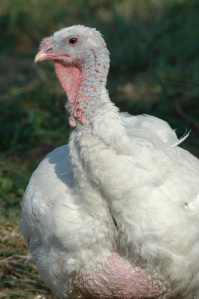
The alarming news that more than 340,000 turkeys have died or have been killed during the recent outbreak of H5N2 bird flu that is sweeping through Minnesota turkey farms will hopefully prompt people to reconsider their food choices.

Turkeys raised on factory farms are especially susceptible to bird flu, as the cramped, filthy conditions are perfect disease reservoirs. Tens of thousands of birds are packed into sheds with no more than 3.5 square feet of space per bird. As bird feces piles up, bacteria fester and spread.

Studies show that bird flu is prone to mutation into strains that are contagious to humans. According to the Centers for Disease Control and Prevention, H5N2’s appearance in North America might increase the likelihood of human infection in this country, and scientists recommend monitoring humans exposed to infected turkeys.

We can all help prevent bird flu and other foodborne illness — and save billions of animals from pain and suffering — by eating vegan foods. Visit PETA.org for more information.

Organizations Team Up in the Wake of a Severed Mountain Lion Foot Found in a Trap

Missoula, Mont. (April 14, 2015) – An unlikely alliance between the Bitterroot Houndsmen Association, Footloose Montana, and In Defense of Animals is calling on Montana’s Department of Fish, Wildlife, and Parks (FWP) for more accountability in the management of mountain lions in the Big Sky State after the gruesome and horrific discovery of a severed mountain lions limb in a foothold trap. The alliance is seeking a reduction in the overall quota of mountain lions in the Bitterroot Valley, by counting trap-related injuries and deaths toward the overall hunting quota, and by holding trappers accountable.

The severed mountain lion foot was discovered around March 24 by a resident in the Bitterroot Valley. He reported deep claw marks on a nearby tree, indicating that the estimated four-year-old male lion was desperately trying to seek shelter and escape the source of pain – a foothold trap set for wolves. Thanks to recreational and commercial trapping, this mountain lion is likely dead now, either succumbing to starvation, attack by other carnivores, shock, or a painful infection of the severed limb.

The illegally set trap had no identification tag attached to it, and was placed outside the official wolf trapping season, which ended on February 28.
According to Anja Heister with In Defense of Animals, “At least 15 mountain lions have been reported to FWP as caught in traps specifically set for wolves in addition to other species over the course of two trapping seasons, between 2012 and 2014. Yet, these tragic trapping-related injuries and mortalities do not count toward the overall quota for mountain lions. They are also considered merely “incidental” and go unpunished.”

The FWP Commission meets this Wednesday, April 15 to deliberate the quota for the 2015 mountain lion hunting season and we strongly encourage them to adopt the inclusion of incidental mortalities. “There is no question that the mortality of mountain lions exceeds what the Commission allows,” said Cal Ruark, former president of the Bitterroot Houndsmen Association. “It is time to reconcile the two numbers and reduce the quota, as well as acknowledging so-called “non-target incidents” as what they are – deaths of animals, which, at a very minimum, need to be recognized and counted.”

The Commission must be empowered and do the right thing as a result of this recent disturbing discovery. The maiming and likely subsequent death of this mountain lion is not an isolated incident and the time has come to make bold changes and offer dynamic solutions in order to prevent further animals from suffering the same horrific fate.

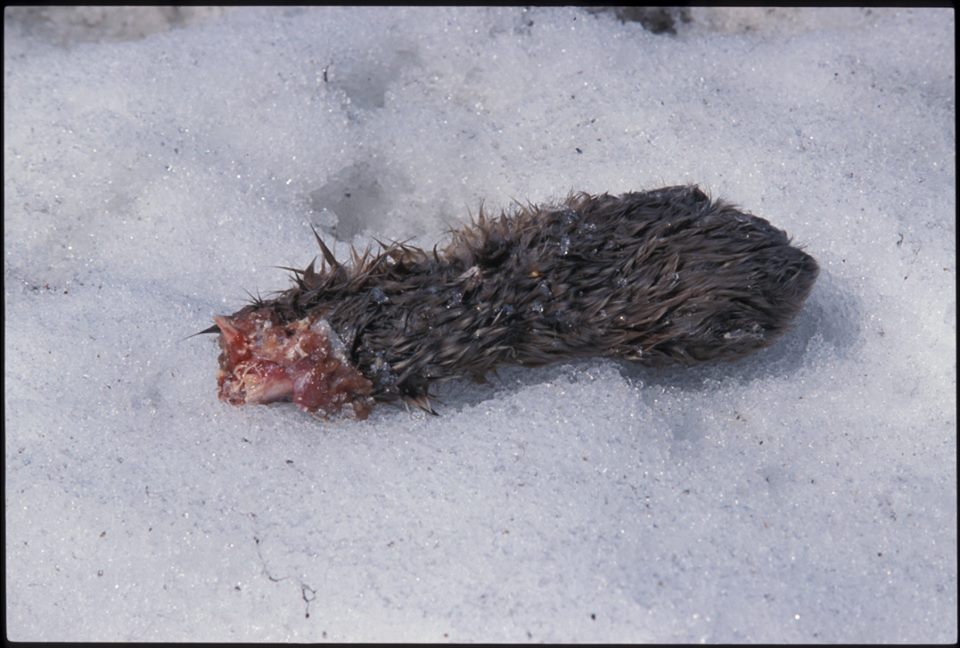
Chewed-off Canadian lynx foot--another trapping victim.  Photo by Jim Robertson

Chewed-off Canadian lynx foot–another trapping victim. Photo by Jim Robertson

The Beef Burden: How Cows Greatly Hurt the Environment

[Listen to this Crap (in bold text)]

by Brian Stallard

http://www.natureworldnews.com/articles/8180/20140722/beef-burden-cows-greatly-hurt-environment.htm

According to a recent study published in the Proceedings of the National Academy of Sciences, beef cattle require 28 times more land and 11 times more irrigation water than pork, eggs, poultry or even diary.

“We have a sharp view of the comparative impact that beef, pork, poultry, dairy and eggs have in terms of land and water use, reactive nitrogen discharge, and greenhouse gas emissions,” lead author Gidon Eshel, from Bard College in New York, told BBC News.

To reach their findings, Eshel and his team collected and analyzed data on five edible livestock industries from 2000 to 2010, as provided by the US Department of Agriculture. Based on consumption models, they then calculated what kind of burden each of these industries placed on the environment.

Being exceptionally inefficient energy converters and a hugely popular source of food, cattle have long been known to have a greater environmental impact compared to other livestock. However, this is the first time that their impact has been quantified.

According to the report, land and irrigation burden aside, the emissions from cattle alone nearly make up the ten-fold impact seen, compared to other livestock.

Methane gas (CH4) has increased in average world volume by an estimated 50 percent compared to pre-industrial levels, according to the US Environmental Protection Agency (EPA). Alarmingly, this gas is far more potent than carbon dioxide (CO2).

“Pound for pound, the comparative impact of CH4 on climate change is over 20 times greater than CO2 over a 100-year period,” the EPA reports.

“The result is that the researchers estimate that over 60 percent of the environmental burden of livestock in the US results from beef,” commenting expert Mark Sutton, from the UK’s Centre for Ecology and Hydrology, told BBC. “Although the exact numbers will be different for Europe, the overall message will be similar: Cattle dominate the livestock footprint of both Europe and US.”

10405311_308608659330466_3235603653435958062_nBut don’t go thinking about veganism just yet. A past Nature World News report detailed a new proposed solution for the environmental burden of sheep in Europe – genetically tweaking the animals to reduce their methane footprint. If a similar technique could be used in cattle populations, we all can keep munching on hamburgers even as the “beef burden” is lightened.

Also see: http://www.natureworldnews.com/articles/14060/20150414/methane-and-climate-change-scientists-struggle-to-solve-four-corners-mystery.htm

Warmer ocean blamed for struggling sea lion pups found at beaches

 Wildlife Photography ©Jim Robertson

Wildlife Photography ©Jim Robertson

Updated 8:08 pm, Wednesday, February 18, 2015

Unusually warm ocean water along the West Coast is to blame for the mass starvation, sickness and deaths of hundreds of sea lion pups in California this winter, scientists said Wednesday.

About 940 sick and starving young sea lions have washed up on California beaches so far this year and were taken into the eight rehabilitation centers between San Diego and San Francisco. That’s four times the number of strandings that occur on average in the first four months of a normal year, marine biologists said.

The number of pinnipeds being treated exceeds the number of rescues during the same period in 2013, a year in which so many sea lions washed ashore that the National Marine Fisheries Service declared a rare “unusual mortality event.”

“We are way above average,” said Justin Viezbicke, the stranding network coordinator for the National Oceanic and Atmospheric Administration Fisheries in California, adding that 550 of the rescued pups were still being treated. “Right now most of our facilities, if they are not at capacity, are close to it. … The reality is that we can’t get to all of these animals. Our capacity to handle all of these animals coming to shore just isn’t there.”

The problem is that the ocean is 2 to 5 degrees warmer than the average for this time of year, a trend that has persisted throughout much of 2014, according to Nate Mantua, a NOAA climatologist.

He said the warming trend has been moving northward and now covers virtually all of the coastal waters of Northern California. He said it is being caused by the same high-pressure system that is causing the drought, but in this case it’s the lack of wind from the north and the lack of deep ocean upwelling those winds churn up that have caused the ocean to warm.

“It is reminiscent of the kind of warming we’ve seen during extreme El Niño events,” Mantua said. “The warming is about as strong as anything that’s in the historical record for the northeast Pacific and the West Coast.”

The odd thing, he said, is that the warming is occurring even though the warming weather pattern known as El Niño is not in effect. And, he said, it’s not just on the surface. The warm ocean temperatures go down about 100 meters, enough to force the fish that sea lions feed on to migrate north, making it harder for the pinniped mothers to find food for their pups.

Dozens of subtropical fish, including yellowfin tuna, pelagic red crabs and green sea turtles, have been found in Central California waters, far north of where they normally go.

Mantua said ocean warming has been observed in the past, but rarely do these conditions last as long as this trend.

More: http://www.sfgate.com/bayarea/article/Warmer-ocean-blamed-for-struggling-sea-lion-pups-6088407.php

DNR Offers Turkey Hunting Tips For Areas Near Bird Flu

Wildlife Photography©Jim Robertson  All Rights Reserved

Wildlife Photography©Jim Robertson All Rights Reserved

MINNEAPOLIS (WCCO) — Turkey hunting season starts Wednesday in Minnesota, but the risks may be a little higher than usual this year.

So far, 13 turkey farms across the state have reported outbreaks of bird flu in their flocks, and nearly 1 million turkeys were killed in order to prevent the virus from spreading.

While DNR officials acknowledge that the virus hasn’t yet been discovered in wild turkeys, they’re still presuming that wild flocks are susceptible to the illness. The Minnesota Department of Health says there is little risk to the public, but the DNR hopes hunters can help find wild birds that may be infected.

Officials are advising hunters not to touch or handle any wild turkeys or other birds with ruffled feathers, swollen wattles, discolored feet or problems walking, and to contact DNR staff immediately.

More safety tips are available on the DNR website.

Black Rhino Officially Extinct

1467436_10151678631130496_1400231111_n

http://www.11alive.com/news/article/312002/40/Western-black-rhino-officially-declared-extinct

LONDON (CNN) — Africa’s western black rhino is now officially extinct according the latest review of animals and plants by the world’s largest conservation network.

The subspecies of the black rhino — which is classified as “critically endangered” by the International Union for Conservation of Nature’s (IUCN) Red List of Threatened Species — was last seen in western Africa in 2006.

The IUCN warns that other rhinos could follow saying Africa’s northern white rhino is “teetering on the brink of extinction” while Asia’s Javan rhino is “making its last stand” due to continued poaching and lack of conservation.

“In the case of the western black rhino and the northern white rhino the situation could have had very different results if the suggested conservation measures had been implemented,” Simon Stuart, chair of the IUCN species survival commission said in a statement.

“These measures must be strengthened now, specifically managing habitats in order to improve performance, preventing other rhinos from fading into extinction,” Stuart added.

The IUCN points to conservation efforts which have paid off for the southern white rhino subspecies which have seen populations rise from less than 100 at the end of the 19th century to an estimated wild population of 20,000 today.

Another success can be seen with the Przewalski’s Horse which was listed as “extinct in the wild” in 1996 but now, thanks to a captive breeding program, has an estimated population of 300.

The latest update to the IUCN Red List of Threatened Species reviews more than 60,000 species, concluding that 25% of mammals on the list are at risk of extinction.

Many plants are also under threat, say the IUCN.

Populations of Chinese fir, a conifer which was once widespread throughout China and Vietnam, is being threatened by the expansion of intensive agriculture according to the IUCN.

A type of yew tree (taxus contorta) found in Asia which is used to produce Taxol (a chemotherapy drug) has been reclassified from “vulnerable” to “endangered” on the IUCN Red List, as has the Coco de Mer — a palm tree found in the Seychelles islands — which is at risk from fires and illegal harvesting of its kernels.

Recent studies of 79 tropical plants in the Indian Ocean archipelago revealed that more than three quarters of them were at risk of extinction.

In the oceans, the IUCN reports that five out of eight tuna species are now “threatened” or “near threatened,” while 26 recently-discovered amphibians have been added to the Red List including the “blessed poison frog” (classified as vulnerable) while the “summers’ poison frog” is endangered.

“This update offers both good and bad news on the status of many species around the world,” Jane Smart, director of IUCN’s global species program said in a statement.

“We have the knowledge that conservation works if executed in a timely manner, yet, without strong political will in combination with targeted efforts and resources, the wonders of nature and the services it provides can be lost forever.”

The DNR’s April 13 election and vote – additional information (“cheat sheet”)

dvoight09's avatarWisconsin Wildlife Ethic-Vote Our Wildlife

CRANE HUNT? 

 5526a15b24442.image

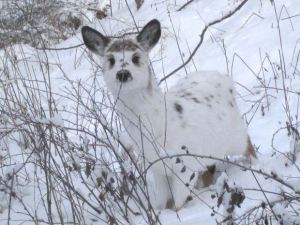
RARE WHITE DEER AND PIEBALD DEER HUNT?

Please network this column to give all Wisconsin Citizens the right to vote and participate in running and electing delegates to represent their interests in nature and wildlife issue – whether it be mining, air quality, water consumption, climate change, the fate of our wildlife and ecosystems – all citizens have the responsibility to attend this one night – and run candidates and vote on what are now (and have been for 88 years) just hunter/trapper/hounder proposals for more exploitation of wildlife. Our wildlife cannot rebound from the market trapping on all public lands – and now the trappers want to trap not just all day 6-7 months for $5 licenses, but add in all night.

You can find all 72 locations for this 88th Annual DNR/WCC all citizen election and vote on the DNR web site with the entire questionnaire…

View original post 348 more words

Conservation group questions accuracy of Idaho wolf numbers

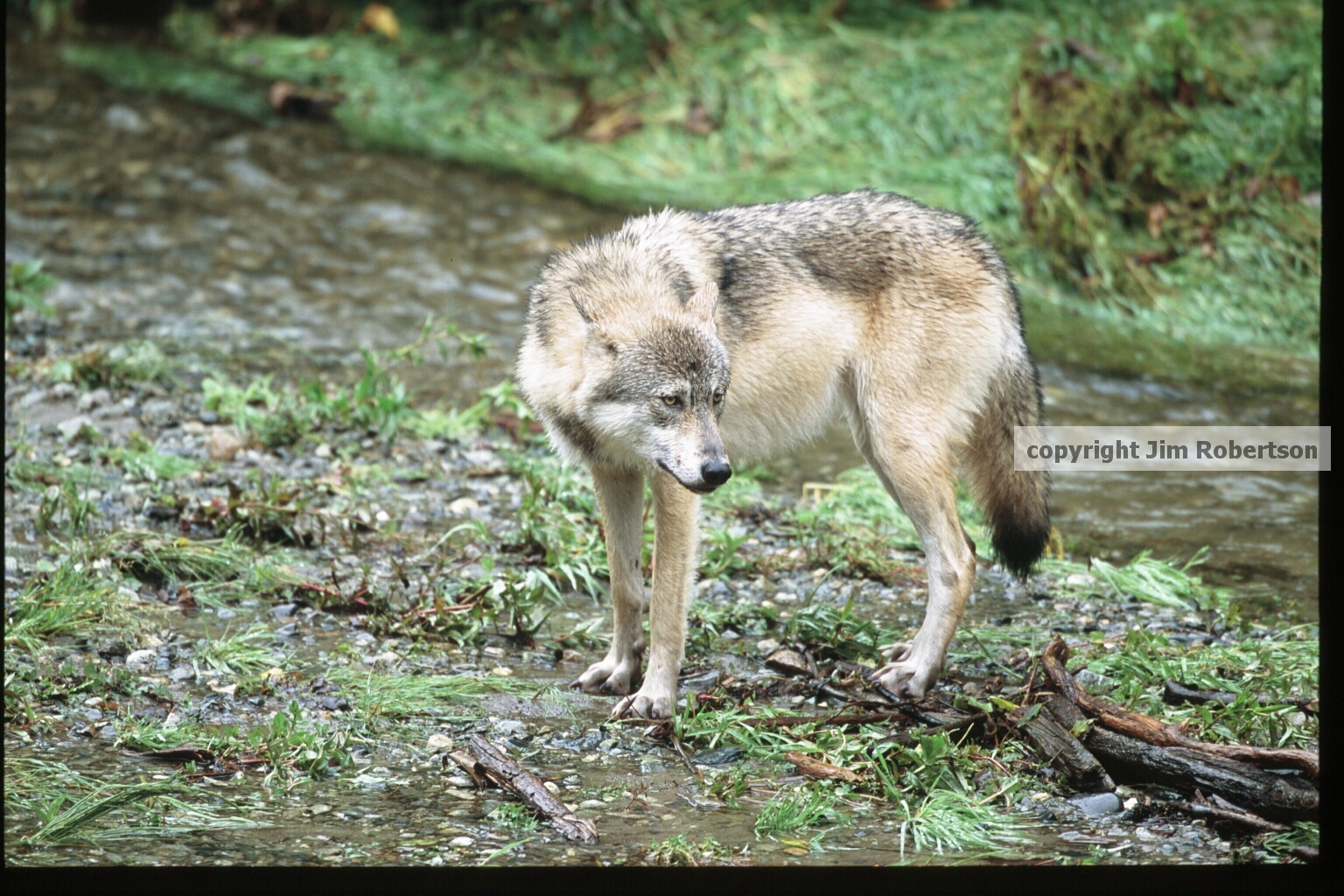
copyrighted wolf in river

http://www.statesmanjournal.com/story/tech/science/environment/2015/04/13/conservation-group-questions-accuracy-of-idaho-wolf-numbers/25702265/?fb_ref=Default

“Since 2009 more than 1,300 wolves have been hunted or trapped in Idaho, and another nearly 500 have been lethally removed from Idaho’s landscape,” Andrea Santarsiere, an attorney with the Center for Biological Diversity, said in a statement. “In the face of these astounding numbers, it’s no wonder that Idaho may have experienced a nearly 50 percent drop in breeding pairs.”

The Idaho Department of Fish and Game in a 70-page report released April 3 said there were at least 770 wolves in the state, with a minimum of 26 breeding pairs, as of Dec. 31, 2014. The Center notes that’s a steep drop from the 49 breeding pairs in 2009, when wolves in Idaho reached their peak.

The Center also questions the state agency’s estimate of 6.5 wolves per pack, a key number as it’s part of an equation — when multiplied by the number of packs in the state— to tally the overall population.

Jim Hayden, a biologist with Fish and Game, defended the state report’s estimate of the minimum number of wolves in Idaho. Hayden is listed as an editor of the report.

“The 770 is a number we’re very confident with,” he said. “We know the actual truth is higher than that, we just don’t know how far higher.”

He said the agency stopped counting breeding pairs of wolves after surveying 43 packs because it’s expensive and the number had cleared the minimum as required by the U.S. Fish and Wildlife Service. The federal agency could retake management control of the Idaho wolf population if numbers fall below certain criteria.

If the state fails to maintain 15 breeding pairs and 150 wolves over any three-year period, or if the population falls below 10 breeding pairs and 100 wolves in any year, the federal agency could take over.

Mike Jimenez, Northern Rocky Mountain wolf coordinator for Fish and Wildlife, said the federal agency reviewed Idaho’s methodology and is confident in the numbers.

“From our perspective, they are far above recovery goals,” he said. “How to manage wolves and hunt wolves — that’s a state issue.”

The wolf population has grown so much, Jimenez said, that biologists can no longer rely on using radio collars when doing counts.

“We’re way past that,” he said. “We have a very large wolf population in the Northern Rockies. We’re trying to reduce the need for radio collars.”

Fish and Wildlife estimates that a minimum of 1,783 wolves in more than 300 packs roamed the six-state region at the end of last year.

Hayden said that radio collars on 32 packs in Idaho were used by Fish and Game to come up with 6.5 wolves per pack, which is an increase from 5.4 wolves per pack the previous year.

But he said the agency is relying more on remote cameras and, this spring, will be collecting scat at wolf rendezvous sites to get DNA samples. The DNA can help determine pack size and the number of pups. He noted the wolf population is expected to jump 40 percent with the addition of pups this spring.

The DNA can also be used to help determine harvest levels by hunters.

Some groups, including the Center for Biological Diversity, would rather there be no harvest.

“We don’t think wolves should be hunted at all,” Santarsiere said. “But with such aggressive killing of a species so recently considered endangered, there at least needs to be careful monitoring.”

Cougar Chews Off Foot to Escape Wolf Trap

Photo Jim Robertson

Photo Jim Robertson

I’ve had more than my share of heart-wrenching experiences with the gruesome evils of trapping. On a walk near our home in Eastern Washington, my dog stepped into a leg-hold trap that clamped down onto his front paw, prying his toes apart. He cried out in terror and frantically tried to shake it off, biting at the trap, at his paw, and at me as I fought to open the mindless steel jaws. The trap continued to cut deeper into his tender flesh and my efforts caused him even more pain. Finally, after many harrowing minutes, I was able to loosen the torture device enough for him to pull his foot free.  

Another dog I freed was caught in two leg-hold traps. One was latched onto her front leg, while the second gripped her hind leg, forcing her to remain standing for untold agonizing hours. Judging by how fatigued and dehydrated she was, she had been stuck there for several days. The sinister traps caused so much damage that a vet had to amputate one of her injured legs.  

With no other hope of escape and feeling vulnerable to anyone that comes along, many trapped animals resort to amputating their own leg. Trappers callously label this grim act of despair “wring-off”. Truly, freedom is precious to any animal desperate enough to take this extreme step. But if they don’t bleed to death or die from infection, they spend the rest of their lives crippled and quite possibly unable to keep up with a demanding life in the wild. Unlike the fictional character “Little Big Man,” who was distraught to the brink of suicide when he found that an animal had chewed off its leg to escape one of his traps, most trappers who find a wring-off are indifferent to the suffering they caused as they begrudgingly pitch the chewed-off limb and reset their trap.   

While I was camped near Bowron Lakes Provincial Park in B.C., Canada, in late March, my dog found just such a discarded limb–the front leg of a trapped lynx. In what has to be one of the more deceitful abuses of trust ever, free roaming animals– safely protected within the arbitrary boundaries of parks– lose all such protection and are deemed “fair game” for trapping as soon as they step across an invisible dividing line. Trappers consider the lands adjoining parks the most “productive” and will pay tens of thousands of dollars for permits to run trap-lines in those areas. I’ve had the displeasure of seeing three-legged coyotes near the North Cascades National Park, and within the Grand Tetons National Park.  

Sidestepping the indisputable cruelty issue, pro-trapping factions try to perpetuate the myth that trapping is sustainable. But time and again entire populations of “furbearers” are completely trapped out of an area, often within a single season. The winter after I found wolf tracks in Alaska’s Katmai National Park, all seven members of a pack who had found a niche in and around that preserve were killed–permissibly “harvested”– by trappers. Though wolves are extinct or endangered in most of the U.S., 1,500 are legally trapped in Alaska each year.

The preceding was excerpt from the book Exposing the Big Game,

http://www.earth-books.net/books/exposing-the-big-game

No animal should EVER go through the evil of trapping. And yet, in Montana, the Missoulian just reported that a mountain lion just got caught in a wolf trap: Mountain lion paw in wolf trap upsets Darby ex-houndsman

http://missoulian.com/news/local/mountain-lion-paw-in-wolf-trap-upsets-darby-ex-houndsman/article_1e1f05bc-0ccf-5603-8882-45982cd49763.html

April 11, 2015 8:00 am  •  by

HAMILTON – A mountain lion paw found torn off in a wolf trap has a former houndsman from Darby asking for change in the way the state manages the predator.

A little over two weeks ago, a friend of Cal Ruark’s dropped off the trap with the severed lion paw in it.

Ruark – a former president of the Bitterroot Houndsmen Association and now a mountain lion advocate – said his friend was antler hunting in the Reimel Creek area, east of the Sula Ranger District, when he made the gruesome find.

The man told Ruark there were deep claw marks in a tree near the location of the trap.

“He told me the trees were all tore to hell,” Ruark said. “The drag on the trap was hung up on a tree and there were claw marks on the trees where the lion had stood up on its back legs and tried to climb.”

Ruark is sure the mountain lion didn’t survive.

“It might have been able to get along for a little while, but it’s dead now,” he said. “It can’t hunt on three legs.”

Every year, mountain lions die after being caught in traps set for wolves or other furbearers.

Under the current rules, those dead lions are not considered under the quota system that Fish, Wildlife and Parks uses to manage mountain lion numbers.

Ruark believes that needs to change. He will take that request before the Fish and Wildlife Commission at its regular meeting this month.

***

KC York of Hamilton is leading an effort place a referendum on the ballot that could ban all trapping on public lands.

York said between October 2013 and February 2015, 32 mountain lions were captured in traps set for furbearers other than wolves. State records showed that 21 died, six suffered some type of damage to their paws, but were released and another five were set free unharmed.

“So 84 percent of those mountain lions captured in non-wolf sets were either dead or injured,” York said. “Only one of those trappings was determined to be illegal.”

In the two years that wolf trapping has been legal in Montana, York said state FWP records show that 16 mountain lions were caught in traps set for wolves. Five of those lions died.

York said 96 percent of the trappings were considered legal.

“You can’t legally trap a mountain lion in Montana,” she said. “These trappings are considered incidental. It goes with the territory of trapping in this state.”

Anja Heister, co-founder of Footloose Montana, said no one knows for sure how often a mountain lion loses a paw or toes to a trap.

“It was a horrific sight,” Heister said about the lion’s paw in the trap. “This was an incident that was actually discovered. No one knows for sure how often it happens. Trappers have a term for it when an animal loses a foot or a toe. They call it twist off or ring off.”

***

The Ravalli Republic contacted Montana Trapping Association president Toby Walrath of Corvallis for a comment on this story. Walrath said he would either provide a written comment or a phone contact for someone else in the organization Thursday night. By Friday’s end, the newspaper had received neither.

Montana Fish, Wildlife and Parks regional wildlife manager Mike Thompson said all he could say about the issue at this point is that it was being investigated.

Ruark said he wants people to know about this.

“There are a lot of people who should be angry about this lion caught in a wolf trap,” Ruark said. “Trappers should be mad because it makes them look bad. Outfitters should be thoroughly angry because they get $5,000 a pop from their clients to kill one and now there’s one less to hunt. The fact that it’s not counted toward the quota should make local houndsmen angry, too. Everyone involved should be upset.

“But unless there’s a consequence, it’s only going to get worse,” he said. “It’s not right to ignore it when a mountain lion dies.”

If someone put all the mountain lions that died after being trapped in a pile and took a photograph, Ruark said people would pay attention.

“From my perspective, these incidental kills should be counted,” he said.

Public Help is Urged: 20 Sea Lions Shot Dead On Northwest Coast

131

http://www.opb.org/news/article/sea-lions-under-the-gun/

20 Sea Lions Dead, Most from Gunshots, On Northwest Coast


In the past two months 20 sea lions have washed up dead in Oregon and Washington. The majority of the animals were shot.

The animals have been found mainly near the mouth of the Columbia River, a hot spot for salmon.

A marine mammal researcher told The Oregonian they’re being killed by fishermen who view them as competition for their catch.

Sean Stanley, with the National Oceanic and Atmospheric Administration’s Office of Law Enforcement in Portland, says people who shoot sea lions face up to 20,000 dollars in fines and a year in prison. But they’re tough cases to crack.

“Public Help is the single largest way in which we catch people who shoot sea lions or violate the marine protection act.”

Sea lions are federally protected but wildlife managers are allowed to kill the ones that eat salmon at Bonneville dam on the Columbia River.

Conservationists fear that sets a bad example for the fishermen and others who interact with these animals elsewhere.

If you have information about sea lion deaths call 1 800 853 1964.