Climate Change is a Bore; Shooting Poachers, a Turn-On

This blog is living proof that, as the media tells us, “we’re bored with climate change” (The BBC suggests today that we’ve moved on from caring about climate change because we’re tired of it). It’s not that there’s nothing new to learn about the issue of whether we, and the Earth, will survive to see another century.

An overview, Melting Accelerates in Antarctica: So Far, 2015 Is Hottest Year Yet, in Truthout.org by Dahr Jamail posted just last night spells out what’s new, and will fill you in on what you may have missed. If you haven’t read the latest reports on anthropogenic climate disorder (or even if you have), I highly recommend it: http://truth-out.org/news/item/30063-melting-accelerates-in-antarctica-so-far-2015-is-hottest-year-yet It can begin to give you an appreciation of the magnitude of this dire situation.

Coincidentally, on April 7th I wrote a semi-satirical post about the lack of interest in climate change and how business as usual will bring it on, entitled, “C’mon Nature, Show Us a Sign!”  https://exposingthebiggame.wordpress.com/2015/04/07/cmon-nature-show-us-a-sign/  As if to prove my point, so far it’s been read by only 31 people. That could almost make one wonder if overpopulation itself is just a hoax. How can there be 7 and a quarter billion people on the planet when only 31 read that post?

Meanwhile the post, “Chorus of Outrage as Obama Administration Approves Arctic Drilling for Shell Oil” only received 23 views.

Now, compare those figures to the 53,436 people so far (6,652 on the first day, followed by 15,094 the next) who have read the article I posted on April 1 about a woman who hunts poachers in Africa.

(Note to anyone writing to spread the word about climate change: You might want to include a photo of a lady cradling a machine gun in front of an American flag, they seem to attract an awful lot of interest.)

Poacher-Hunters-6

Conservationists Challenge Grizzly Killing in Grand Teton National Park

Federally approved ‘take’ of grizzly bears threatens recovery

Grizzly bear and cub in Yellowstone National Park.

Grizzly bear and cub in Yellowstone National Park.  Jim Peaco / National Park Service

Washington, D.C. —(ENEWSPF)–April 6, 2015. Conservation groups have filed a legal challenge against two federal agencies for approving the killing of four grizzly bears, a threatened species, within Grand Teton National Park in northwest Wyoming.

The lawsuit, filed last Friday, April 3, by Earthjustice on behalf of the Sierra Club and Western Watersheds Project, targets September 2013 actions by the U.S. Fish and Wildlife Service (FWS) and National Park Service to allow the lethal “taking” of four grizzly bears over the next seven years in connection with a fall elk hunt in Grand Teton National Park.

“Authorizing the killing of four grizzly bears in a national park is not good management for grizzlies or national parks,” said Earthjustice attorney Tim Preso. “The government should be working to eliminate grizzly mortality threats, not handing out authorizations to kill grizzly bears in one of our nation’s premiere national parks.”

The agencies authorized the challenged grizzly “takings” in response to an incident on Thanksgiving Day 2012 in which three hunters participating in the Grand Teton elk hunt shot and killed an adult male grizzly bear.  Anticipating more such conflicts as the region’s grizzlies increasingly turn to meat-based food sources such as hunter-killed or wounded elk, federal officials in September 2013 approved the killing of four more grizzly bears in connection with future elk hunts in Grand Teton through the year 2022.

In doing so, however, government officials failed to consider the cumulative impacts of the expected Grand Teton “takings” together with other grizzly bear mortality that federal agencies have authorized.  The authorized killing of these four grizzlies, when added to the amount of other similar grizzly  “take” determinations issued by FWS and currently in effect for other actions in the Greater Yellowstone region, could result in the killing of as many as 65 female grizzly bears in a single year. This level of mortality exceeds sustainable levels for female bears set by government biologists by more than three times.

“Allowing four additional grizzly bears – a threatened species – to be killed in one our nation’s most iconic national parks, without even requiring significant measures to reduce conflicts between people and bears, is inexcusable,” said Bonnie Rice with Sierra Club’s Our Wild America campaign. “The Fish and Wildlife Service has repeatedly increased the number of grizzly bears that can be killed, without looking at the broader impact on grizzly recovery in the region.”

“Throughout the Greater Yellowstone Ecosystem the U.S. Fish and Wildlife Service appears to have forgotten basic math,” added Jonathan Ratner of Western Watersheds Project.  “They have been handing out permits for the killing of grizzly bears like candy but they have conveniently forgotten to add up all of the take they have authorized.”

Legal Document: http://earthjustice.org/documents/legal-document/complaint-conservationists-challenge-grizzly-killing-in-grand-teton-national-park

Background:

Federal biologists acknowledge that the growth of the Yellowstone grizzly bear population has flattened over the past decade. Recently, the grizzly population has been faced with the loss of two of its most important food sources in the Yellowstone region—whitebark pine seeds and cutthroat trout—due to changing environmental conditions driven in part by a warming climate. In the wake of these changes, scientists have documented the bears’ transition to a more meat-based diet, but that diet leads to a greater potential for conflict with human activities, resulting in more grizzly mortalities.

Such increasing grizzly bear mortalities are of particular concern because analysis of government grizzly bear conflict and mortality data shows a declining population trend for the Yellowstone-area population from 2007-2013. Veteran grizzly biologist David Mattson documented these findings in a declaration supporting the conservationists’ challenge.

In its decision , FWS reasoned that approved grizzly killing associated with the Grand Teton elk hunt would remain within sustainable levels. However, the conservationists contend that FWS cannot rely on compliance with sustainable grizzly mortality thresholds to justify additional killing of Yellowstone bears unless federal officials consider the impacts of all the grizzly bear mortality they have anticipated across the region.

The Grand Teton elk hunt results from a misguided program of winter elk feeding on the nearby Jackson Hole National Elk Refuge. The longstanding elk feeding program began for the altruistic purpose of sustaining elk through the harsh Northern Rockies winter.  More recently, however, the crowding of elk on winter feed lines has been documented to subject the elk to a severe threat of wildlife disease mortality that outweighs the benefits of feeding.  Further, the practice has led to the artificial inflation of the elk population such that the extraordinary step of hunting in a national park—with associated grizzly bear mortality—has been deemed necessary to control elk numbers.

Matteson Declaration: http://earthjustice.org/sites/default/files/files/Mattson%20Declaration.pdf

About Earthjustice

Earthjustice is the premier nonprofit environmental law organization. We wield the power of law and the strength of partnership to protect people’s health, to preserve magnificent places and wildlife, to advance clean energy, and to combat climate change. We are here because the earth needs a good lawyer.

Source: www.earthjustice.org

Tell Yahoo! to stop featuring endagered whale products on its site

Goal: 15,000 Progress: 12,919
Sponsored by:The Animal Rescue Site

It wasn’t all that long ago that online retail giant Amazon was in hot water for its sale of whale products from Japan. Now, Yahoo! is under fire for doing the exact same thing.

Yahoo! Japan features products like whale jerky, bacon, and canned whale meat from endangered whale species. Yahoo! has banned the sale of endangered animal products from its other sites, but continues to profit from the sale of whale commodities on its Japanese site. Many of the products come from species of whales that are protected by the International Whaling Commission — regulations that Yahoo! is blatantly shirking.

As one of the Internet’s most prominent corporations, Yahoo! should know better than to sell products that are harmful to any animal species. Tell Yahoo!’s CEO Ross Levinsohn to obey the international moratorium and to stop selling endangered animal products immediately.

 http://theanimalrescuesite.greatergood.com/clickToGive/ars/petition/YahooWhaleProducts
<div class=”scriptWarning”>JavaScript is required to sign this petition!</div>

Urgent: Tell Montana Legislators to Reject Bill to Protect Fur Trapping Interests

http://ida.convio.net/site/MessageViewer?dlv_id=37281&em_id=36182.0&printer_friendly=1

In Defense of Animals

On April 7, the Montana Department of Fish, Wildlife and Parks (FWP) House Committee will vote on SB 334, and your voice is urgently needed to defeat this detrimental and deceptive bill aimed at furthering the interests of the Montana’s recreational and commercial trappers and fur dealers.

SB 334 seeks to include furbearing animals under the term “game” animal. This means that the word ‘trapping’would no longer be used, and trapping is then completely subsumed under “hunting” in a sneaky effort to hide a cruel and unnecessary activity that is generally abhorred by the public.

SB 334 would also add three animal species, currently categorized as non-game species—badgers, raccoons and red foxes—to species currently classified as “predators”, so that a fur dealer in Montana could then buy and sell the pelts from these species.

SB 334 was introduced by Rep. Jennifer Fielder, who is on the board of the Sanders County Resource Council, which serves as a front group for militia activity, and she is a strong proponent of transferring federally managed public lands to the state so that privatization and exploitation can ensue. Her husband, Paul Fielder, is a district director of the Montana Trapper Association (MTA), who is heavily lobbying for this bill.

Click here to learn more and take action.

C’mon Nature, Show Us a Sign!

Sometimes I find myself wishing that Mother Nature would hurry up and get serious about this global warming thing already.

No, not just because I secretly want to see the human scourge shed off the face of the Earth. (Not today, anyway.)

What I am talking about is the fact that the very things that should be ending to stave off catastrophic climate change—as well as the ongoing sixth mass extinction—are actually increasing.graph

For example, breeding. Okay, that’s a given, but let’s talk specifics.

Here in the Pacific Northwest, logging the rainforest is not coming to a close in acknowledgement of a warming planet needing all the carbon sequestering (not to mention oxygen—oh yeah, and shade) she can get. Indeed, everywhere I look there’s a fresh new clear-cut, while load after load of precious trees are hauled off in carbon-spewing log trucks to massive ships bound for China.

Now, if timber companies were increasing their “harvest” of evergreens to make way for more fast-growing, deciduous trees like alders or maples that would be one thing. But considering that they routinely use Agent Orange defoliant to kill the natural progression of plants on their “tree farms,” I don’t think they have saving the planet on their minds. Quite the opposite.

As long as there are global warming deniers out there, loggers can continue cutting down the forests like there’s no tomorrow. And anyway, who knows, maybe there won’t be one. I’d call it a self-fulfilling prophecy, but they’re certainly not prophets (profit-makers, maybe).

Another obvious example of an industry that should be calling it quits, but is instead expanding its ruinous ways: Big Oil. While climate scientists are warning us that it’s time to just STOP, Shell has plans to start drilling in the fragile Chukchi Sea (crucial feeding grounds for the grey whales, just south of the Arctic Ocean). Meanwhile, the President is allowing offshore drilling in the Atlantic for the first time.

Perhaps, like the logging companies, the oil barons are seeing the writing on the wall that their days are numbered, so they’re out to get it while they can—before the damned enviros slap them with enough restrictions or regulations to put them out of business for good.

So when I say I wish Nature would show us a sign, I don’t mean another massive hurricane or super typhoon, world record drought or raging inferno. Apparently those aren’t enough to shake some people up and out of their denial-induced torpor. I’m not sure what it’ll take. A total reversal of the jet stream? The icecaps melting and Florida sinking overnight? Spontaneous combustion of the White House?

Whatever it’s gonna be I hope it happens soon, before business as usual makes the whole mess worse than it already is.

page20

Animal Rights is ‘The social justice movement of the 21st century,’ says ‘Unchained’ Jane

http://www.advocate.com/politics/media/2015/04/06/jane-velez-mitchell-giving-voice-voiceless?google_editors_picks=true

Jane Velez-Mitchell: Giving Voice to the Voiceless

BY Trudy Ring

April 06 2015

After a stellar career in traditional broadcast journalism, Jane Velez-Mitchell is wholeheartedly embracing new media — and she’s doing it in the service of what she calls “the social justice movement of the 21st century.”

That movement is animal rights, the focus of Velez-Mitchell’s new website, JaneUnchained, and her online subscription video series, Defining Moments.

“I had been talking to animal advocates for a long time, and they were saying we need to become the media for animals,” she says. The “we” she refers to isn’t just Velez-Mitchell and her partner in life and work, Donna Dennison, but fellow activists she encourages to contribute their own news videos. “Anybody with a cell phone camera can be a photojournalist,” she says.

Well, that may be the case, but most of them don’t have Velez-Mitchell’s résumé. She spent more than a decade as an anchor and reporter for Los Angeles TV station KCAL, plus eight years as a reporter for WCBS in New York City and stints with other major-market stations and on syndicated shows. She won several awards along the way, then gained national fame with an HLN show bearing her name, which ran for six years before it ended last fall.

Over the past couple of decades she also got sober, became a vegan, and came out as lesbian. In 2009 she chronicled it all in a memoir, iWant: My Journey From Addiction and Overconsumption to a Simpler, Honest Life, which became a bestseller and is one of several books she’s authored.

Now she’s enthusiastically harnessing the power of the Internet to report what she calls “some of the most important stories out there.” These include the use of animals in medical experiments, the breeding of them for that purpose, and the treatment of animals in circuses, and what she calls the “institutionalized cruelty” of large factory farms.

Velez-Mitchell notes that she’s been asked why she cares so much about animals and even asked directly, “Why don’t you care about people?” She has a ready answer: “I care about animals because I care about people.”

The raising of animals for food, she says, affects humans in many ways, “from climate change to world hunger.” The grains fed to livestock, for instance, could be used much more efficiently to feed people around the world, she says. “A pig is the most inefficient use of resources,” she comments.

She also sees parallels between the animal rights movement and the work done by LGBT and HIV activists. Animal advocates are using direct action tactics as ACT UP did in the 1980s and ’90s, she says, and they are aware that silence does equal death. “To remain silent about the way [farm animals] are raised and the way they die equals death,” she says.

Medical testing on animals, she adds, sees “sentient beings exploited on the basis that they’re different.” She contends that “there’s tremendous repetition and replication” in these experiments, citing as an example the taking of baby monkeys from their mothers in order to study the effects of maternal deprivation, when there are many human children already experiencing such deprivation. “To remain silent on this is to abrogate moral responsibility,” she says.

No one could accuse Velez-Mitchell of remaining silent. She and Dennison tell these stories through the videos they upload to Facebook and YouTube as well as JaneUnchained. So far they’re generating most of JaneUnchained’s content, along with correspondents Donny Moss, Ken Price, and Katherine Pflieger, but they are encouraging users to contribute videos as well. They started the site last fall and relaunched it with a new format last week. They are also seeking sponsors, with an eye to making the site self-supporting — and they have found their first one in a maker of vegan catnip. “It’s a work in progress, but I feel like it’s really taking off,” Velez-Mitchell says of the site.

More: http://www.advocate.com/politics/media/2015/04/06/jane-velez-mitchell-giving-voice-voiceless?google_editors_picks=true


Trophy Hunting = Legalized Thrill Killing!

Nabeki's avatarHowling For Justice

cartoon-trophy-hunt. bizzarodotcom

Speciesism‘ is the idea that being human is a good enough reason for human animals to have greater moral rights than non-human animals. …a prejudice or bias in favour of the interests of members of one’s own species and against those of members of other species….BBC Ethics Guide

===

Cartoon: Bizzarodotcom

Posted in: Animal cruelty, trophy hunting

Tags: trophy hunting evils, lack of empathy, Speciesism, narcissism

View original post

27 ways to avoid hitting animals

27 ways to avoid hitting animals that may save
your life too!
by Merritt Clifton
The 2015 baby animal season is just beginning.  For the next six months young and inexperienced animals will be following their parents into dangerous situations involving roads and traffic.  The average driver can save many animal lives by becoming above average in just one respect:  recognizing what animals are likely to appear in each place that he or she drives,  and correctly anticipating what those animals’ behavior will be when they are startled by an oncoming car.
Barn swallow babies. (Beth Clifton)
1) The most important tip of all:
It is easier and safer to anticipate animals in the road than it is to miss them once they are in front of you. Watch for motion in roadside grass and shrubs. Remember that most lines in the woods are vertical. If you see something horizontal, it may be an animal.
Read more:

Do We Need Wolves?

http://www.howlingforwolves.org/node/528

March 10, 2015

Article source:
In These Times

Howling For Wolves President and Founder Dr. Maureen Hackett was recently highlighted in the article, “Do We Need Wolves?” in the March, 10 edition of In These Times magazine.

The article explores the history of wolves in the United States – how their population dwindled, and then increased, and what past and current challenges they face. Author John Collins particularly explains the many ways wolves are vital to our ecology – citing Yellowstone National Park’s revitalization after they reintroduced wolves as a case study. Collins also addresses myths about wolves – such as how they actually have a net positive and not net negative as widely believed by hunters, when it comes to deer populations.

Dr. Hackett is quoted in the article explaining support for the use of non-lethal and scientific wolf management practices. She also provides information about state wolf management and the unfortunate negative attitude towards wolves.

Read the full article at the link above.

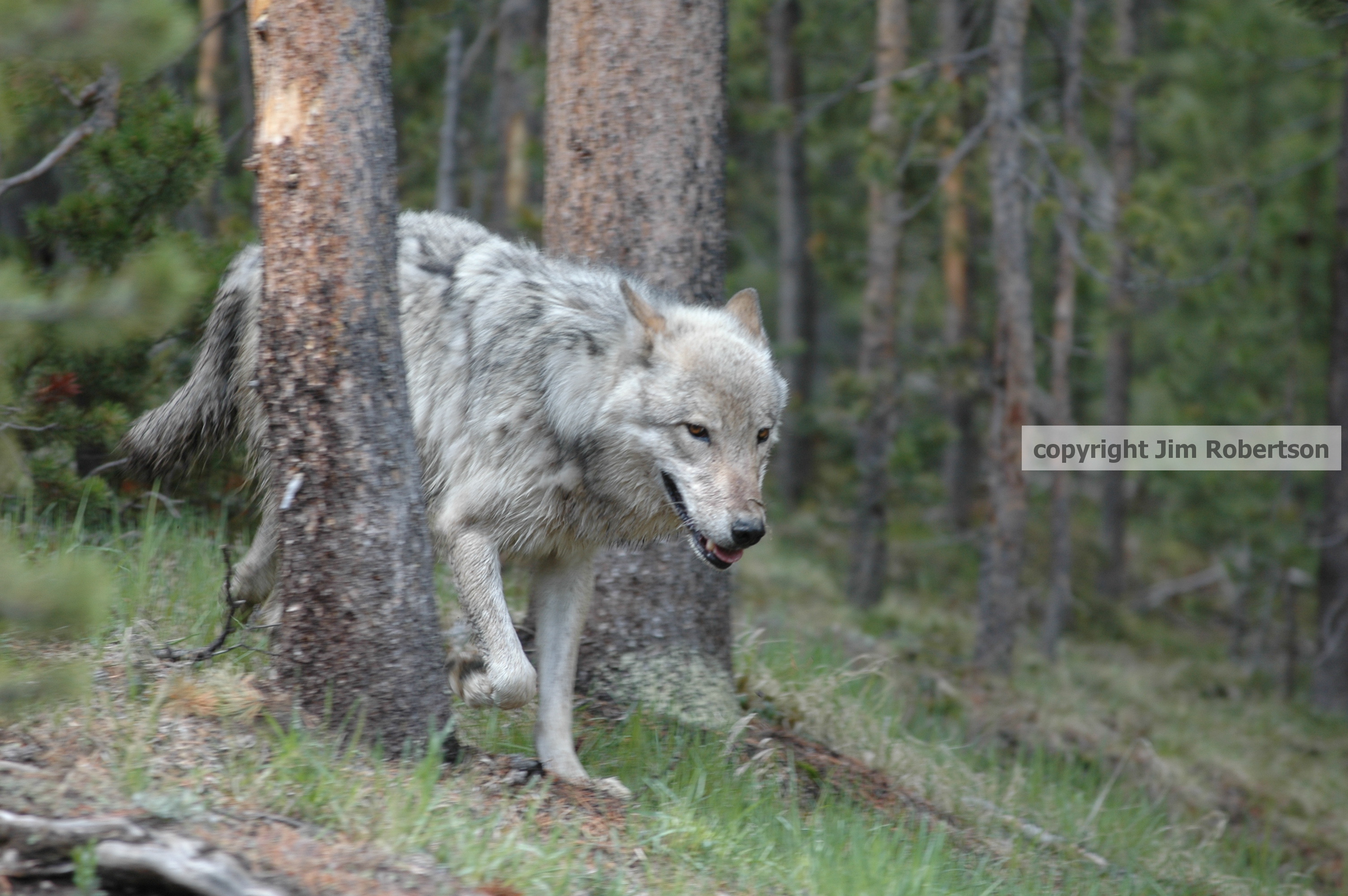
copyrighted Hayden wolf in lodgepoles