You have the power to create change!!

Some good Care2 petitions here.

dvoight09's avatarWisconsin Wildlife Ethic-Vote Our Wildlife

Wisconsin Wildlife Ethic is asking our members and blog followers sign petitions to convey to the Wisconsin legislature, DNR, the Natural Resources Board, and the residents of Wisconsin the following message:

Protect our rare white deer (click here) and sandhill cranes (click here), do not increase trapping on our public lands (click here), and do not extend the bear hunting season (click here).

Signing these petitions is extremely important and time critical! Established hunting and trapping practices have already devastated Wisconsin’s wildlife. Worse yet, the DNR’s proposed rule changes, if enacted, will accelerate the destruction of OUR wildlife.

Also, please attend the DNR’s Spring Meeting (to be held in all of Wisconsin’s 72 counties on Monday, April 13, 2015) where you will have the opportunity to complete a questionnaire that will let the DNR know that any such proposals are unacceptable. At that meeting, you can…

View original post 37 more words

Ode To Magnificence by Louis du Toit

Nabeki's avatarHowling For Justice

ODE TO MAGNIFICENCE
(Louise du Toit — 02-24-2012)

I am wolf

I am
the true spirit
of nature
a perfect creation
walking beside you
guiding your senses
to see
the invisible

I am
a predator
preserving
the delicate balance
of nature

a sentient being
no more evil or righteous
than any other creature

born with everything
I need to survive

I am
intelligent
courageous
strong
a true survivor
devoted to my family
loyal to my pack
the defender of my territory

Mankind
has chosen me
as its enemy
lack of knowledge
brought fear
bred hatred
enveloped
in a dark cloud
of demonic imagination

Like countless
other earthlings
I am shamelessly
persecuted

My true destination
will only become visible

when humans
discard their
imaginary fear
false legends
phantasmal myths

to seek the truth

Wolves in lamar valley_ Earth Justice

Video: Courtesy Louise Du Toit

Photo: Courtesy Earthjustice

Posted in: Biodiversity, gray wolf

Tags: Ode To Magnificence, Animal…

View original post 7 more words

Sometimes kids have Good Instincts

We just found out our niece’s 5 year old daughter has decided to go vegetarian. I wonder if it has anything to do with her recent 3-day visit with her vegan grand-aunt and uncle? Apparently she isn’t a big fan of meat anyway.

Sometimes kids have good instincts about that sort of thing.

Possibly under the delusion that he’d spawned the next Kendall Jones, her father wanted to take her, the 5 year old, bear hunting. Hopefully we’ve heard the last of that misguided notion…

Wildlife Photography ©Jim Robertson

Wildlife Photography ©Jim Robertson


Federal judge rules U.S. Navy Pacific training harms too many marine mammals

Federal judge rules U.S. Navy Pacific training harms too many marine mammals

U.S. Navy–RIMPAC 2012

In a 66-page ruling handed down today, U.S. District Court Judge Susan Oki Mollway in Honolulu ruled that the National Marine Fisheries Services should not have approved the U.S. Navy’s training activities in the Pacific Ocean a couple years ago because they harm too many marine mammals.

“The Navy and Fisheries Service had concluded that, over the plan’s five-year period, the Navy’s use of explosives and sonar, along with vessel strikes, could result in thousands of animals suffering death, permanent hearing loss or lung injuries,” stated an April 1 news release on the ruling from Earthjustice, which legally challenged the Fisheries Service approval in December 2013 on behalf of the Conservation Council for Hawaii, Animal Welfare Institute, Center for Biological Diversity and Ocean Mammal Institute. “Millions of others could be left with temporary injuries and significant disruptions to feeding, breeding, communicating, resting and other essential behaviors. In all, the Navy’s plan would cause an estimated 9.6 million instances of harm to marine mammals.”

That’s a huge number. Nearly three years ago, when I wrote this story on the Navy’s proposed Pacific testing and training activities, the estimate of instances of harm was just around 2 million. Of that, the Navy estimated, the exercises would kill 200 mammals and inflict another 1,600 injuries each year.

For its part, the Navy says it must conduct training exercises in the Pacific, especially using active sonar, to keep the nation safe. This, Earthjustice attorney David Henkin says, doesn’t give the service the right to inflict biological damage wherever they see fit.

“The court’s ruling recognizes that, to defend our country, the Navy doesn’t need to train in every square inch of a swath of ocean larger than all 50 United States combined,” said Henkin in the Earthjustice news release. “The Navy can fulfill its mission and, at the same time, avoid the most severe harm to dolphins, whales and countless other marine animals by simply limiting training and testing in a small number of biologically sensitive areas.”

Mollway’s ruling wasn’t subtle, either, and stated that the Navy exercises violate the Marine Mammals Protection Act (MMPA), Endangered Species Act and National Environmental Policy Act. Here’s her ruling on the MMPA:

“No one is disputing the importance of military readiness, but recognition of that importance does not permit the parties or this court to ignore the MMPA. Although MMPA provisions have been adjusted with respect to military activities, those adjustments do not permit the Navy to skirt the MMPA purely to avoid having its training and testing activities interrupted.”

Mollway was also downright sarcastic and even a little mean:

The government actions that are challenged in this case permit the Navy to conduct training and testing exercises even if they end up harming a stunning number of marine mammals, some of which are endangered or threatened. Searching the administrative record’s reams of pages for some explanation as to why the Navy’s activities were authorized by the National Marine Fisheries Service (“NMFS”), this court feels like the sailor in Samuel Taylor Coleridge’s “The Rime of the Ancient Mariner” who, trapped for days on a ship becalmed in the middle of the ocean, laments, “Water, water, every where, Nor any drop to drink.”

According to this Los Angeles Times story from earlier today, the Navy is still “studying the ruling and could not comment on its details.”

Photo of 2012 RIMPAC exercises: Mass Communication Specialist Seaman Apprentice Ryan J. Mayes/U.S. Navy/Wikimedia Commons

Montana’s wolf population drops

http://www.greatfallstribune.com/story/news/local/2015/04/03/montanas-wolf-population-drops/25248731/?fb_ref=Default

by Tribune Staff 12:02 p.m. MDT April 3, 2015

Montana’s verified wolf population declined by 73, or 12 percent, last year while livestock depredations by wolves continued to decline, dropping about 46 percent from 2013.

The minimum number of wolves counted by Montana Fish, Wildlife and Parks at the end of 2014 was 554 compared to a minimum of 627 wolves counted at the end of 2013 according to Montana Fish, Wildlife and Park’s annual wolf conservation and management report.

Montana’s minimum wolf packs were counted at 134, compared to 152 last year, while breeding pairs increased to 33 from 28 counted last year.

The minimum wolf count is the number of wolves actually verified by FWP wolf specialists. The actual number of wolves is estimated to be 27 percent to 37 percent higher than the minimum count. FWP’s complete report is available online at fwp.mt.gov.

Overall, FWP Director Jeff Hagener said Montana’s wolf population continues to be very healthy and far above federal recovery goals.

“Among the best news is that confirmed wolf depredations on livestock again took a significant drop in 2014,” Hagener said.

Confirmed livestock depredations because of wolves included 35 cattle, six sheep and one horse in 2014, down 46 percent from 2013 losses of 50 cattle, 24 sheep, three horses and one goat. Cattle losses in 2014 were the lowest recorded in the past eight years.

The decline in wolf depredations continues a general downward trend that began in 2009.

“For FWP, and we hope for others, it reinforces the fact that we not only have more tools for managing wolf populations, but that we’re applying them effectively,” Hagener said. “One of our top priorities is to minimize livestock losses, and we think we’re continuing to make a positive impact there.”

The continuing decrease in livestock depredations over the past four years may be a result of several factors including targeted wolf depredation responses in cooperation with USDA Wildlife Services, and the effects of wolf harvest by hunters and trappers.

In the 2014 calendar portion of the 2014-15 hunting/trapping season, 213 were taken by hunters and trappers compared to 231 taken in the 2013 calendar portion of the 2013-14 season.

The total number of known wolf mortalities during 2014 was 308, down from 335 in 2013, with 301 of these mortalities being human-related, including 213 legal harvests, 57 control actions to further reduce livestock depredations (down from 75 in 2013), 11 vehicle strikes, 10 illegal killings, six killed under the newly-enacted Montana State Senate Bill 200, two capture-related mortalities, one euthanized because of poor health and one legal tribal harvest. In addition, one wolf died of natural causes and six of unknown causes.

“Montana’s wolf management program seeks to manage wolves just like we do other wildlife — in balance with their habitat, with other wildlife species and with the people who live here,” Hagener said.

For the purpose of reporting minimum counts to the U.S. Fish and Wildlife Service, Montana is divided into three areas that reflect the former gray wolf federal recovery zones. The three zones cover the entire state and include more than one FWP region. Following is a summary of the 2014 minimum counts verified for those areas:

In the “Northwest Montana” area, counts showed a minimum of 338 wolves in 91 verified packs and 17 breeding pairs, compared to 412, 104, and 16, respectively, in 2013.

In the Montana portion of the “Central Idaho” area counts verified a minimum of 94 wolves in 20 packs, with six breeding pairs, compared to the 2013 counts of 123, 26, and seven respectively.

The Montana portion of the “Greater Yellowstone” counts include a minimum of 122 wolves in 23 packs, and 11 breeding pairs, compared to 132, 22, and five, respectively in 2013.

The recovery of the wolf in the northern Rockies remains one of the fastest endangered species comebacks on record. In the mid-1990s, to hasten the overall pace of wolf recovery in the Northern Rockies, the U.S. Fish and Wildlife Service released 66 wolves into Yellowstone National Park and central Idaho. FWP began monitoring the wolf population, and managing livestock conflicts in 2004. After several court challenges wolves were taken off the Endangered Species list in 2011.

The delisting of wolves in 2011 allows Montana to manage wolves in a manner similar to how bears, mountain lions and other wildlife species are managed, which is guided by state management plans, administrative rules and laws.
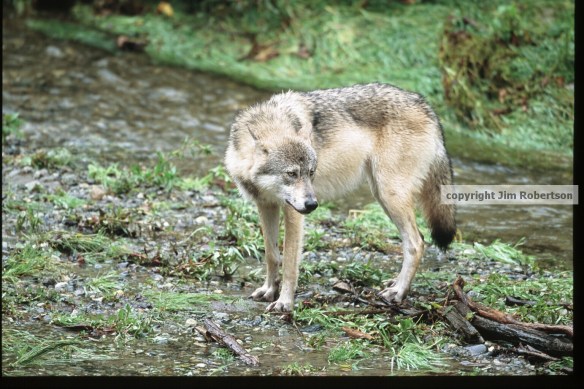
copyrighted wolf in river

Chorus of Outrage as Obama Administration Approves Arctic Drilling for Shell Oil

http://www.commondreams.org/news/2015/04/01/chorus-outrage-obama-administration-approves-arctic-drilling-shell-oil

Thanks to a government ruling on Tuesday, Shell may soon be able to continue drilling in the Arctic, despite risks to the environment and animals who live there. (Photo: Day Donaldson/flickr/cc)

Environmental activists expressed shock and outrage on Tuesday after the U.S. Department of the Interior upheld a 2008 lease sale on the Arctic’s Chuchki Sea, opening the door for continued oil exploration in a region long eyed for drilling by Shell Corporation and increasingly strained under the effects of climate change.

The decision opens up 30 million acres in the Chuchki Sea to fossil fuel exploration and drilling, a move which state and national green groups called “unconscionable.”

“Our Arctic ocean is flat out the worst place on Earth to drill for oil,” said Niel Lawrence, Alaska director of the Natural Resources Defense Council. “The world’s last pristine sea, it is both too fragile to survive a spill and too harsh and remote for effective cleanup.”

In January 2014, the Court of Appeals for the Ninth Circuit ruled that the Interior Department had violated the law when it sold those 2008 leases—a deal that came about during George W. Bush’s presidency, but was upheld two years later by the Obama administration.

The 2014 decision ordered the Interior Department to reconsider the leases. A month later, the department admitted that drilling in the Chucki Sea was likely to have devastating consequences, with a spill risk of 75 percent or more.

“It is unconscionable that the federal government is willing to risk the health and safety of the people and wildlife that live near and within the Chukchi Sea for Shell’s reckless pursuit of oil,” said Marissa Knodel, a climate campaigner with Friends of the Earth. “Shell’s dismal record of safety violations and accidents, coupled with the inability to clean up or contain an oil spill in the remote, dangerous Arctic waters, equals a disaster waiting to happen.”

“Ignoring its own environmental review, the U.S. Department of the Interior has opened the door for drilling in the remote and iconic Arctic Ocean,” said the Sierra Club on Tuesday.

“It’s shocking that the Department of the Interior would knowingly move forward with a plan that has a 75 percent chance of creating a major spill in the Chukchi Sea. We can’t trust Shell or any other oil company with America’s Arctic,” Cindy Shogan, executive director of the Alaska Wilderness League, added. “Shell has proposed an even dirtier and riskier Arctic drilling program for this summer. The Obama administration has seen the impacts of what a major oil spill looks like.”

The Bureau of Ocean Management will next conduct an environmental assessment on Shell’s exploration plan for the Chuchki Sea, which could take 30 days or more.

The Chuchki Sea is home to an estimated 2,000 polar bears and serves as the feeding grounds for migratory gray whales.

“The industrial oil development that Interior hopes will flow from its decision to approve the Chukchi lease sale gives us a 75 percent chance of a large oil spill and a 100 percent chance of worsening the climate crisis,” Rebecca Noblin, Alaska director for the Center for Biological Diversity, added. “I don’t like those odds.”

Tell the U.S. Fish and Wildlife Service to deny a permit to kill 11,000 cormorants

Tell the U.S. Fish and Wildlife Service to deny a permit to kill 11,000 cormorants. ·  Trouble viewing this email? Try our web version.
Audubon logo | ACTION ALERT
OPPOSE CORMORANT SLAUGHTER
arrow pointing at letter
Double-crested Cormorant with eggs
A Double-crested Cormorant protects its eggs on East Sand Island.
Urge the U.S. Fish and Wildlife Service to deny the permit that will allow the Army Corps of Engineers to kill 11,000 cormorants.
Take Action ›

Dear Jim,

The Army Corps of Engineers is moving ahead with a misguided plan to kill 11,000 Double-crested Cormorants—15 percent of the entire Double-crested Cormorant population west of the Rocky Mountains—and destroy 26,000 nests.

In order to carry out this slaughter, the Corps needs a permit from the U.S. Fish and Wildlife Service (USFWS). We have a very short window of time to ask the USFWS to deny the permit and save these birds.

Urge the U.S. Fish and Wildlife Service to deny the permit that will allow the Army Corps of Engineers to kill 11,000 Double-crested Cormorants and destroy 26,000 nests.

The cormorants live and nest on East Sand Island, a globally-significant Important Bird Area (IBA) in Oregon’s lower Columbia River estuary. In the Final Environmental Impact Statement, the Fish and Wildlife Service itself acknowledges that the proposed plan would reduce the population of cormorants below the number they previously said was sustainable. While cormorants do prey on salmon, the fish are endangered because of dams, pollution, habitat loss, and an array of other factors—not because of the cormorants.

According to the Audubon Society of Portland, which is closely tracking this issue, “It is time for the US Army Corps to do a ground-up review of its entire approach to managing birds in the Columbia Estuary.” Audubon opposes the Corps’ plan to slaughter thousands of cormorants and we have urged the Corps and its partners instead to review and rebuild their strategy for management of avian predation on fish on a regional scale. Such a strategy needs to be based on sound science, fully employ and evaluate non-lethal measures of reducing avian predation, and consider a full range of alternatives beyond manipulation and control of native wildlife.

Send a letter today urging the U.S. Fish and Wildlife Service to deny the permit that will allow thousands of cormorants to be killed at East Sand Island!

The Modern Savage: A New Book Questions Why We Eat Animals

https://www.psychologytoday.com/blog/animal-emotions/201504/the-modern-savage-new-book-questions-why-we-eat-animals

There’s a good life beyond beef and after meat

Dr. James McWilliams (link is external)‘ new book called The Modern Savage: Our Unthinking Decision to Eat Animals (link is external) is a very thoughtful work about our meal plans in which he covers the ecological and ethical reasons for not eating nonhuman animals (animals), and shows that labels such as “cage free,” “free range,” and “humanely raised” are not necessarily sound and ethical (the Kindle edition can be found here (link is external)). Furthermore, more “personal” backyard farming in which humans form close relationships with other animals who are usually named before they’re killed for food also raises deep ethical questions.

The book’s description captures what Dr. McWilliams’ book is all about: “In the last four decades, food reformers have revealed the ecological and ethical problems of eating animals raised in industrial settings, turning what was once the boutique concern of radical eco-freaks into a mainstream movement. Although animal products are often labeled ‘cage free,’ ‘free range,’ and ‘humanely raised, can we trust these goods to be safe, sound, or ethical? In The Modern Savage, renowned writer, historian, and animal advocate James McWilliams pushes back against the questionable moral standards of a largely omnivorous world and explores the ‘alternative to the alternative’–not eating domesticated animals at all. In poignant, powerful, and persuasive prose, McWilliams reveals the scope of the cruelty that takes place even on the smallest and–supposedly–most humane animal farms. In a world increasingly aware of animals’ intelligence and the range of their emotions, McWilliams advocates for the only truly moral, sustainable choice–a diet without meat, dairy, or other animal products.”

I fully understand that some people will be tempted to write off The Modern Savage as just another radical’s rant about animal rights, how people who eat other animals are “bad people,” etc. etc. However, I hope they don’t do this before reading the book because this is not what this book is all about. And, whether you agree or disagree with Dr. McWilliams’ analyses and messages, I can’t imagine that his book won’t force you to re-evaluate your values and views on the lives of other animals and perhaps discuss them with other people.

Dr. McWilliams also provides a large number of scientific references for his claims about why eating other animals are environmentally and ethically unwise choices, and I hope readers will take his message seriously and at least begin a move away from eating other animals and animal products. The last paragraph of The Modern Savage says it well: “What I’m asking you to imagine is thus a movement that requires us to become more emotionally in ntune with animals, ethically consistent in our behavior, and better informed about the evolutionary heritage we share with sentient creatures. This movement, whether we join it all at once or gradually, with immediate zeal of reluctantly, will, in the end, triumph over industrial agriculture because it will be, above all else, a bloodless revolution based on compassion for animals, the environment, and ultimately ourselves.”

Dr. McWilliams is right on the mark here and throughout his book. It’s clearly true, and solid science clearly shows, that factory farming is not sustainabile and is an utter waste of water, land, other resources, and of course, the lives of billions of animals. The award-winning documentary “Cowspiracy (link is external)” is a great source for viewing these data (link is external) objectively.

When read with an open mind, I think that The Modern Savage could be a game-changer, especially for those who have resisted making changes to their meal plans because they were unaware of the ecological and ethical issues or because they wrote them off as being sensationalist — radical — fiction. They’re not.

Marc Bekoff’s latest books are Jasper’s story: Saving moon bears (with Jill Robinson), Ignoring nature no more: The case for compassionate conservationWhy dogs hump and bees get depressed, and Rewilding our hearts: Building pathways of compassion and coexistence. The Jane effect: Celebrating Jane Goodall (edited with Dale Peterson) has recently been published. (marcbekoff.com; @MarcBekoff)

End Bobcat Trapping in California

https://takeaction.takepart.com/actions/end-bobcat-trapping-in-california

(Photo:mlorenzphotography/Getty Images)

At the Center for Biological Diversity, we believe that the welfare of human beings is deeply linked to nature — to the existence in our world of a vast diversity of wild animals and plants. Because diversity has intrinsic value, and because its loss impoverishes society, we work to secure a future for all species, great and small, hovering on the brink of extinction. We do so through science, law and creative media, with a focus on protecting the lands, waters and climate that species need to survive.

About the Letter

Over the past few years, a rising demand for bobcat pelts in China and Russia has driven up fur prices and caused a boom in bobcat trapping in California. As a result, trappers have been targeting the boundaries of national parks, luring the cats out of these safe havens and into their deadly snares and cages. The California legislature passed the Bobcat Protection Act of 2013 to protect our parks and wildlife from such commercial exploits. Yet the problem continues because trapping continues in other parts of the state and because the law has yet to be truly enforced.

The California Fish and Game Commission is tasked with this rule making, and one option it is now seriously considering is a statewide ban on all bobcat trapping. But the commission will only choose that option if it hears loud and clear that we value our wildlife alive—not trapped, killed, skinned, and exported to be worn as fur coats in Moscow or Beijing.

Take action—urge the commission to protect these ecologically important California natives by banning all bobcat trapping throughout the state.

https://takeaction.takepart.com/actions/end-bobcat-trapping-in-california